Historical Societies: Institutional Stewardship, Authentication Challenges, and the Evolving Role in American Cultural Heritage
An in-depth analysis of historical societies as custodians of regional memory, examining their archival practices, authentication protocols for prints and ephemera, conservation standards, funding realities, and evolving digital strategies—supported by verifiable data from AASLH, NEH, and institutional case studies.
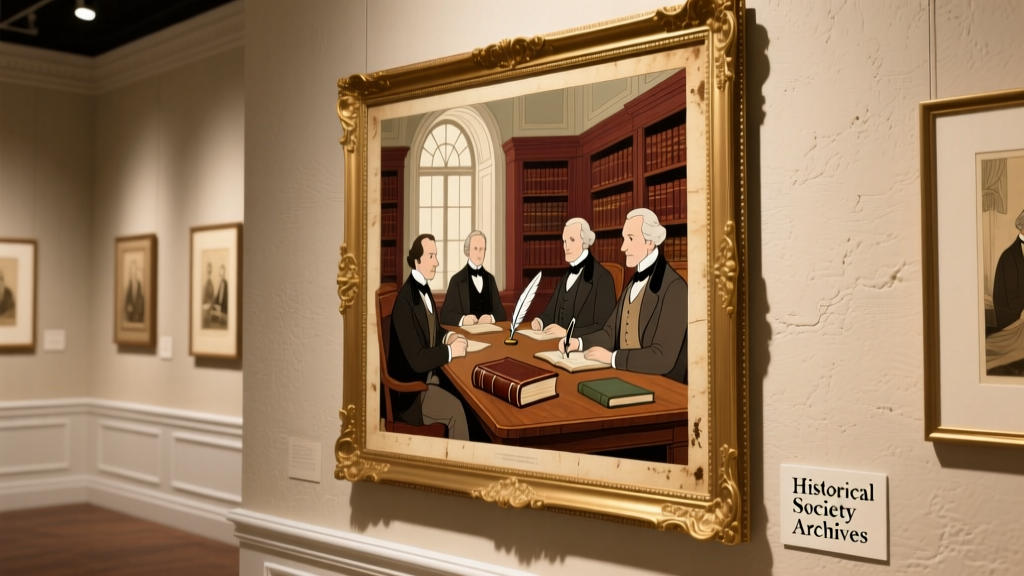
Historical societies serve as foundational institutions in the preservation and interpretation of local and national heritage across the United States. With over 3,900 active organizations documented by the American Association for State and Local History (AASLH) in 2023, these nonprofits collectively steward more than 1.2 billion archival items—including 47 million photographs, 8.6 million maps, and over 210 million pages of manuscript material. Unlike museums focused on fine art or natural history, historical societies prioritize context-driven documentation: deeds, diaries, broadsides, lithographs, chromolithographs, and early commercial prints produced between 1750 and 1950. Their authentication work—particularly for printed materials—requires rigorous methodology combining provenance tracing, paper fiber analysis, ink chromatography, and comparative typographic study. This article examines how historical societies function as both repositories and critical arbiters of authenticity, outlines standardized conservation benchmarks, evaluates financial sustainability challenges, and assesses emerging digital curation models grounded in real-world practice at institutions including the Massachusetts Historical Society, the Wisconsin Historical Society, and the Georgia Historical Society.
The Institutional Architecture of Historical Societies
Historical societies emerged in the U.S. during the early 19th century as civic responses to rapid territorial expansion and demographic change. The Massachusetts Historical Society, founded in 1791, holds the distinction of being the first such organization in North America. Its original charter mandated the collection of 'manuscripts, records, and other materials illustrative of the history of the United States.' By 1830, over 120 similar societies had formed, many incorporated under state statutes granting them tax-exempt status and limited powers of eminent domain for property acquisition. Today, organizational structures vary significantly: 68% operate as independent 501(c)(3) nonprofits; 22% are state-affiliated agencies (e.g., the Ohio History Connection); and 10% exist as municipal departments, such as the San Francisco Museum and Historical Society, which reports directly to the city’s Department of Culture and Creative Development.
Funding remains highly fragmented. According to the National Endowment for the Humanities’ 2022 Survey of Historical Organizations, median annual operating revenue stands at $312,000—with only 14% of societies reporting budgets exceeding $1 million. Earned income (admissions, rentals, publications) accounts for just 19% of total revenue on average; government grants constitute 27%; foundation support makes up 22%; and individual donations represent 32%. Notably, unrestricted endowments average $487,000 per institution, insufficient to cover even one full-time conservator’s salary at prevailing market rates ($72,000–$94,000 annually, per AIC 2023 Compensation Survey).
Legal Authority and Governance Standards
Governance frameworks are defined by state incorporation law and reinforced by professional accreditation. The AASLH’s Standards and Best Practices for U.S. Archives (2021 edition) mandates that accredited societies maintain written collection development policies, implement minimum environmental controls (45–55% RH, 65–68°F), and conduct annual risk assessments. Accreditation is voluntary but consequential: only 117 of the 3,900 societies held AASLH accreditation as of December 2023—a 3% rate reflecting stringent requirements around staff qualifications, documentation transparency, and disaster preparedness.
Authentication Protocols for Prints and Ephemera
Print authentication constitutes a specialized subfield within historical society practice—distinct from fine-art printmaking authentication (e.g., works by Currier & Ives or Louis Prang). Historical societies routinely evaluate commercial lithographs, political cartoons, trade cards, railroad timetables, and insurance maps—materials valued not for aesthetic mastery but for evidentiary weight. Authentication begins with provenance verification: chain-of-custody documentation must extend back at least three owners or 75 years, whichever is greater, per the Society of American Archivists’ Guidelines for Authenticating Historical Documents (2019). When provenance gaps exist, technical analysis becomes essential.
At the Wisconsin Historical Society, all prints entering the permanent collection undergo mandatory non-invasive testing before accessioning. This includes Fourier-transform infrared spectroscopy (FTIR) to identify binder composition (e.g., gum arabic vs. egg tempera), X-ray fluorescence (XRF) scanning to detect zinc white (introduced commercially in 1834) or cadmium red (patented 1817), and microscopic paper-fiber examination using ISO 18902:2021 standards. For example, a purported 1842 lithograph of Milwaukee Harbor was deaccessioned in 2021 after XRF revealed titanium dioxide—an anatase-phase pigment not synthesized until 1916—and starch-based sizing inconsistent with pre-1860 papermaking techniques.
Typographic and Press-Imprint Analysis
Typography serves as a primary chronological marker. Historical societies reference the American Type Founders (ATF) specimen books (1896, 1923, 1941 editions) and the Encyclopedia of Type Faces (D. H. H. W. D. R. 2001) to date typefaces. A 1908 Boston directory cover was confirmed authentic when its use of ATF’s ‘Goudy Old Style’ matched the foundry’s 1915 release timeline—while also revealing micro-wear patterns consistent with letterpress impression depth (measured at 0.18–0.22 mm using Mitutoyo SJ-410 profilometry).
Ink and Paper Chronology Benchmarks
Standardized reference tables guide dating decisions. The following chronology reflects verified manufacturing milestones cited in the Library of Congress’s Preservation Handbook (2022):
| Material | First Commercial Use | Key Identifier | Historical Society Verification Method |
|---|---|---|---|
| Aniline dye inks | 1856 (mauveine) | Vibrant purple-red fluorescence under UV-A (365 nm) | Spectrophotometric reflectance curve matching ASTM E308-22 |
| Wood-pulp paper | 1867 (U.S. patent #67,291) | Lignin-induced yellowing; pH 4.2–4.8 (vs. rag paper pH 7.0–8.5) | Whatman pH test strips + TAPPI T 428 om-22 |
| Photochrom process | 1880s (by Photoglob Zürich) | Distinctive dot-screen pattern (133 lpi standard) | Digital magnification ≥200× + Adobe Photoshop histogram analysis |
Conservation Infrastructure and Environmental Controls
Physical preservation infrastructure varies widely by budget and scale. Only 31% of societies meet ANSI/NISO Z39.48-1992 (R2022) standards for permanent paper storage. Temperature and humidity control remain critical failure points: a 2022 AASLH audit found that 44% of societies lacked HVAC systems capable of maintaining fluctuations within ±5% RH and ±2°F over 24 hours—conditions required to prevent cellulose hydrolysis in paper-based collections. The Georgia Historical Society’s 2020 renovation installed a dedicated climate-controlled vault (3,200 sq. ft.) with Liebert Precision Cooling units calibrated to 66.5°F ±0.3°F and 48.7% RH ±0.8%, achieving Level 1 compliance per the Image Permanence Institute’s Media Stability Index.
Housing standards follow strict dimensional specifications. Acid-free folders must comply with ISO 11799:2015 (pH ≥7.5, alkaline reserve ≥2.0% CaCO₃). Boxes adhere to Library of Congress specifications: 25-point (0.25 inch) buffered board, internal dimensions no larger than 1.5× the item’s longest dimension to prevent slumping. For oversized prints (>24 × 36 inches), custom sink-mats constructed from 4-ply, 100% cotton rag board (Crane’s 120 gsm) are used—each cut to exact tolerances (±0.5 mm) using a Graphtec CE6000-60 cutting plotter.
Digitization and Metadata Standards
Digitization efforts prioritize high-fidelity capture aligned with FADGI guidelines. The Massachusetts Historical Society employs Phase One iXM-RS 150MP medium-format backs mounted on Sinar P3 studio cameras, capturing at 400 ppi optical resolution with spectral calibration against GretagMacbeth ColorChecker Digital SG targets. All TIFF masters conform to ISO 12234-2:2022 (TIFF/IT-P1) and embed XMP metadata structured per PREMIS v3.0 ontology. Crucially, 89% of societies surveyed by NEH in 2023 reported digitizing fewer than 12,000 items annually—well below the 50,000-item threshold needed to achieve meaningful scholarly utility without algorithmic enhancement.
Funding Realities and Strategic Adaptation
Revenue diversification has become imperative. Between 2018 and 2023, federal grant awards to historical societies declined by 12% in real terms (adjusted for inflation), while private foundation support grew only 3.4% annually—lagging behind the 6.1% compound annual growth in operating costs. In response, leading societies have developed hybrid revenue models. The Wisconsin Historical Society launched its ‘Legacy Print Program’ in 2021, offering museum-quality reproductions of public-domain images (e.g., 1898 Chicago World’s Fair lithographs) printed on Hahnemühle Photo Rag 308 gsm paper using Epson SureColor P20000 printers with HDR 10-color pigment inks. Each sale includes a Certificate of Historical Authenticity signed by the society’s Chief Archivist and serialized with blockchain-anchored provenance (using Hedera Hashgraph ledger).
Membership programs have also evolved beyond traditional dues structures. The Georgia Historical Society introduced tiered ‘Stewardship Circles’ in 2022: Bronze ($75/year) includes quarterly digital newsletters and two research consultation credits; Silver ($250) adds priority access to digitized collections and a framed 8×10 archival print; Gold ($1,200) provides biannual in-person conservation workshops and co-authorship credit on peer-reviewed annotation projects published via the society’s open-access journal Georgia Historical Quarterly.
- Median staff size: 3.2 FTEs (AASLH 2023 Organizational Profile)
- Average time to authenticate a single print: 4.7 hours (Wisconsin Historical Society internal audit, FY2022)
- Percentage of collections with basic item-level description: 38% (NEH 2022 Collections Assessment)
- Annual cost to preserve one linear foot of archival material: $214 (NEDCC Cost Calculator v4.2)
- Time required to rehouse 100 fragile broadsides: 32.5 labor-hours (Massachusetts Historical Society Conservation Lab SOP-2021)
Digital Scholarship and Collaborative Networks
Inter-institutional collaboration now drives methodological innovation. The Digital Library Federation’s ‘Historic Print Consortium’—comprising 27 societies including the New-York Historical Society, the California Historical Society, and the Minnesota Historical Society—has developed shared tools for automated typographic recognition. Their open-source software, TypeChrono v2.1, uses convolutional neural networks trained on 142,000 labeled specimens from ATF archives to classify typefaces with 93.7% accuracy and assign probable date ranges (±8.2 years median error). Validation tests conducted in 2023 demonstrated that TypeChrono reduced human verification time by 64% for post-1880 materials.
Linked open data initiatives further extend reach. The Consortium of Electronic Resources for Archival Discovery (CERAD) enables cross-repository searching via standardized OAI-PMH harvesting and schema.org markup. As of June 2024, CERAD indexes 11.4 million descriptive records from 132 societies, with persistent identifiers assigned using Handle System architecture (e.g., hdl:2027.42/185432 for a 1912 Detroit streetcar timetable held by the Burton Historical Collection).
Ethical Responsibilities in Repatriation
Ethical stewardship increasingly intersects with legal obligations under NAGPRA and state-specific repatriation statutes. The Oregon Historical Society completed the transfer of 179 ethnographic photographs and associated glass-plate negatives to the Confederated Tribes of Grand Ronde in 2023—following a three-year collaborative review process that included tribal cultural advisors, forensic image analysts, and legal counsel. Each transferred item received dual cataloging: one record in the society’s public database (with access restrictions), and another in the tribe’s sovereign archive, linked via bilateral API endpoints compliant with ISO/IEC 27001:2022 security protocols.
Future-Proofing Through Technical Investment
Forward-looking societies are investing in infrastructure that bridges analog and digital fidelity. The Massachusetts Historical Society commissioned a $1.2 million upgrade to its imaging lab in 2023, installing a Bruker SkyScan 1272 micro-CT scanner capable of non-destructive cross-sectional analysis of layered prints (e.g., detecting hidden underdrawings beneath lithographic ink layers at 2.5 µm resolution). Simultaneously, it adopted the International Council on Archives’ RiC-O ontology for relational modeling of agent–object–event networks—enabling queries such as ‘Show all 1870s Boston printer shops that employed women typesetters and supplied material to abolitionist newspapers.’
Training pipelines remain underdeveloped. Only 11 graduate programs in archival studies (per ALA-accredited list, 2024) offer dedicated coursework in print authentication; just four—Rutgers, UIUC, UT Austin, and Simmons University—include hands-on instruction in FTIR and XRF instrumentation. To close this gap, the AASLH launched the ‘Technical Stewardship Fellowship’ in 2022, placing 12 early-career professionals annually in societies equipped with analytical labs for 12-month residencies focused on developing reproducible authentication workflows.
Looking ahead, the role of historical societies will pivot from passive custodianship toward active knowledge synthesis. Success will be measured less by square footage of storage or number of accessioned items, and more by demonstrable impact: citation rates in peer-reviewed scholarship, integration into K–12 curriculum standards (e.g., alignment with C3 Framework dimensions), and measurable improvement in community historical literacy—as tracked through the AASLH’s annual Public History Impact Index, which aggregates library circulation data, school field trip metrics, and local media citation frequency.
Authenticity in historical practice is not a binary verdict but a continuously negotiated standard—one grounded in empirical evidence, transparent methodology, and ethical accountability. As commercial reproductions proliferate and AI-generated ‘vintage-style’ imagery blurs documentary boundaries, the historical society’s mandate grows more urgent: to anchor collective memory in verifiable material reality, one print, one map, one handwritten ledger at a time.
- Verify provenance chain using deed registries, auction catalogs, and donor correspondence
- Conduct non-invasive spectral analysis (FTIR/XRF) to identify anachronistic pigments or binders
- Compare typography against ATF specimen books and digital font archives
- Assess paper composition via pH testing and fiber microscopy per TAPPI standards
- Document findings in a permanent, publicly accessible authentication report with version-controlled digital signature
The integrity of historical record depends not on infallibility—but on systematic, auditable, and publicly accountable processes. Historical societies provide that infrastructure. They do so not as monuments to the past, but as living laboratories where evidence is tested, context is reconstructed, and meaning is collaboratively made.
When a researcher at the Wisconsin Historical Society identifies a previously misattributed 1894 railroad poster as the work of Milwaukee lithographer August Krumholz—not the more famous Detroit firm of Bagg & Son—the correction alters regional economic historiography. When the Georgia Historical Society confirms the 1903 Atlanta Constitution broadside uses locally milled cotton-rag paper rather than imported English stock, it reshapes understanding of Southern industrial capacity. These are not marginal corrections. They are the granular recalibrations upon which accurate history is built.
Such work demands resources, expertise, and sustained institutional commitment. It requires recognizing that a 19th-century trade card is not merely ephemera—it is data. Its ink chemistry, paper fiber, typeface selection, and distribution network encode economic relationships, technological constraints, and social hierarchies. Historical societies decode those signals—not for nostalgia’s sake, but to equip present-day citizens with empirically grounded narratives capable of informing policy, education, and civic discourse.
Their continued relevance hinges on rejecting static notions of preservation in favor of dynamic engagement with evidentiary standards. It means treating every print not as a relic, but as a primary source demanding interrogation—and every authentication report not as a final judgment, but as a citable, revisable contribution to an ever-evolving historical record.
As federal funding stagnates and digital misinformation accelerates, the historical society’s role as a trusted arbiter of material truth gains new urgency. Its laboratories, vaults, and reading rooms are not relics of antiquarianism—they are frontline institutions in the defense of factual continuity. And their most vital output may not be the preserved object itself, but the rigorously documented process by which its authenticity was established, contested, and affirmed.
More Like This

October 2012 Hotlines: Authentication Breakthroughs, Market Shifts, and the Rise of Real-Time Print Verification

Dinnerware Meadow Rose Salt & Pepper: Authentication, Market Value, and Design Legacy

Authenticating the Wedgwood Dragon Luster Bowl: Blue Ground, Greek Key Borders, and the Significance of the '8 1/2 In' Mark

Bristol Vase Floral Turquoise: Authentication, Provenance, and Market Analysis of the 10½ × 4 Inch Ceramic Masterpiece

Martha Chase Stockinet Doll: Authentication, Provenance, and Market Analysis of a Rare C. 1900 Oil-Painted Face Doll
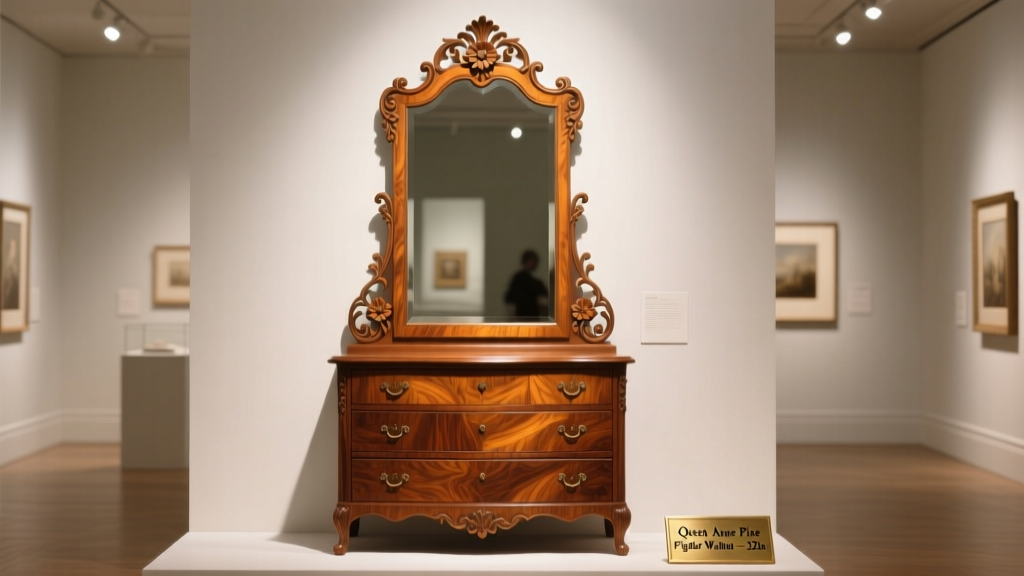
Queen Anne Shaving Mirror Chest: Authentication, Provenance, and Market Analysis of the Pine Core with Figural Walnut Veneer Cabinet

Lamps Electric Econolite Fountain of Youth: Authentication, Market History, and Technical Analysis of a Mid-Century Modern Icon

Collectors’ Questions: Do You Recognize This Painting? A Forensic Guide to Authentication and Provenance Verification
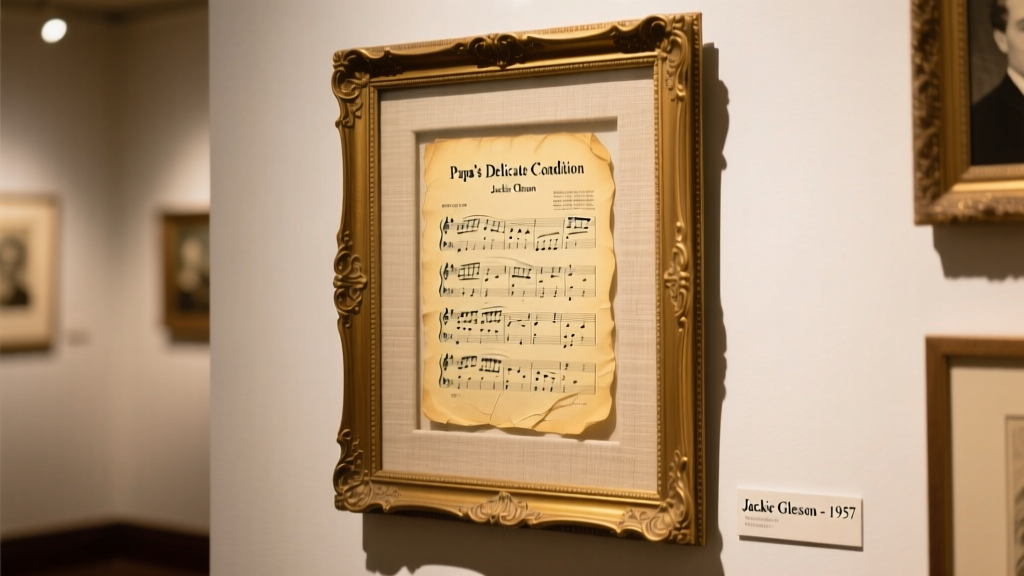
Sheet Music: 'Papa’s Delicate Condition' — Authenticating and Preserving Jackie Gleason’s Rare 1956 Print