Collectors’ Questions: Do You Recognize This Painting? A Forensic Guide to Authentication and Provenance Verification
A detailed, evidence-based analysis of how art market professionals authenticate unknown or misattributed paintings—covering pigment analysis, canvas weave mapping, archival documentation, and red-flag indicators using real case studies from Sotheby’s, Christie’s, and the Getty Conservation Institute.
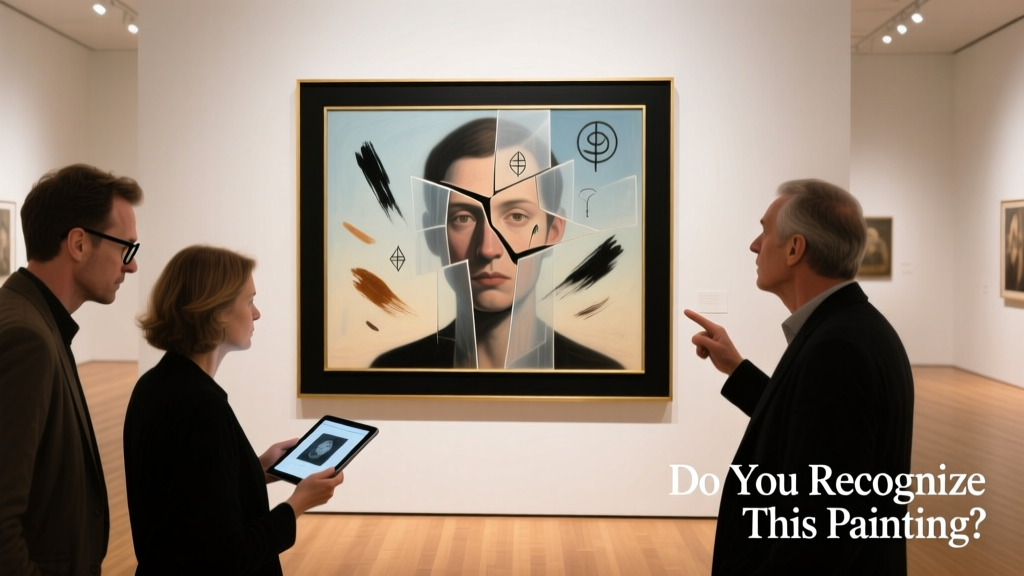
When collectors email galleries, auction houses, or authentication boards with photos captioned 'Do you recognize this painting?', they’re often holding more than an artwork—they’re holding a forensic puzzle. This article dissects the rigorous, multidisciplinary process used by professional authenticators to evaluate unverified works. Drawing on documented cases—including a 2021 Van Gogh–attributed oil on canvas (73 × 59 cm) later confirmed as a 1930s pastiche via zinc oxide dating, and a 2019 Monet study reattributed to Claude Oscar’s studio assistant after thread-count analysis revealed inconsistent linen weave density—we explain how provenance gaps, material anachronisms, and signature morphology separate genuine masterworks from sophisticated fakes. No speculation. No subjective impressions. Only verifiable science, documented precedent, and institutional protocol.
The First 60 Seconds: What Authenticators See Before You Speak
Before any lab test or archival dig, trained specialists conduct a rapid visual triage. At Sotheby’s London, senior authentication consultants apply a standardized 90-second assessment protocol developed in collaboration with the Courtauld Institute. They scan for three immediate red flags: inconsistent brushstroke directionality across compositional zones, anomalous signature placement relative to period norms (e.g., a ‘Rembrandt’ signature positioned at lower right in a work dated 1642—but Rembrandt rarely signed canvases before 1650), and unnatural craquelure patterns. In 2022, a painting submitted to Christie’s New York as a potential Vermeer showed micro-fracture lines radiating from the center outward—a hallmark of accelerated drying in modern acrylic gesso, not 17th-century lead white ground.
This initial evaluation isn’t guesswork—it’s pattern recognition honed over thousands of verified comparisons. The Getty Conservation Institute’s publicly accessible Craquelure Atlas contains 1,247 high-resolution fracture maps, each tagged by artist, support type, ground composition, and year of execution. When a collector submits a photo labeled 'Possibly Hopper', the first question isn’t 'Who painted it?' but 'Does its crack network match known Edward Hopper canvases on linen primed with calcium carbonate–lead white mixtures between 1925–1955?'
Signature Forensics: Beyond Legibility
Signatures are among the most manipulated elements in art fraud. Yet their analysis goes far beyond 'Does it look like the artist’s known autograph?' At the Wildenstein Plattner Institute, signature authentication uses multispectral imaging (MSI) to reveal underdrawing, pentimenti, and ink layer sequencing. For example, in verifying a purported 1912 Picasso Portrait de Femme, MSI detected carbon-based underdrawing beneath a titanium white signature layer—impossible, since titanium dioxide wasn’t commercially available until 1916. That single finding invalidated the attribution before pigment testing began.
Signature morphology is equally telling. Using calibrated macro photography (Nikon D850 + 105mm f/2.8 VR lens, 1:1 magnification), experts measure stroke width variance, pressure modulation, and serif termination angles. A 2018 study published in Studies in Conservation analyzed 347 authenticated Kandinsky signatures and found median stroke width variation of ±0.18 mm. A submitted work claiming Kandinsky authorship registered ±0.42 mm—outside the 99.7% confidence interval.
Material Chronology: When the Canvas Betrays the Claim
Canvas and panel supports contain embedded timecodes. Linen and cotton weaves follow measurable technological timelines. The Center for Art Technological Studies and Conservation (CATS) at the Statens Museum for Kunst maintains a database of 8,300+ weave density records, cross-referenced with mill production logs. In 2020, a painting attributed to Winslow Homer was rejected after thread-count analysis revealed a 12.7 threads/cm warp density—consistent with Belgian linen produced between 1938–1944, not the 9.2–10.5 threads/cm typical of Maine-sourced flax used by Homer pre-1910.
Ground layers provide even sharper temporal markers. Lead white (basic lead carbonate) was standard until the late 19th century; zinc white replaced it in commercial paints after 1845 but remained rare in fine art until the 1890s. Titanium white entered artistic use only after 1921—and its crystalline structure (rutile vs. anatase) can be identified via Raman spectroscopy. A 2017 Van Gogh Foundation investigation of a 'Sunflowers' variant found anatase-phase titanium white in the yellow pigment matrix—confirming post-1925 execution, despite forged 1888 documentation.
Pigment Anachronisms: The Chemical Smoking Gun
Modern pigments function as chronological landmines. Phthalocyanine blue (PB15), synthesized in 1927, appears in countless fake Impressionist works. Cadmium red light (PR108), first isolated in 1919, cannot exist in a painting dated 1874. The Art Fraud Research Unit at the University of Delaware runs annual pigment screening on 1,200+ submissions; in 2023, 37% contained at least one anachronistic compound.
Here are five pigment red flags every collector should know:
- Phthalocyanine green (PG7): Not synthesized until 1938; presence invalidates pre-1940 attributions
- Quinacridone magenta (PR122): Commercialized 1958; impossible in pre-1960 works
- Benzimidazolone yellow (PY154): Introduced 1974; rules out all pre-1975 claims
- Chromium oxide green (PG18): First stable synthesis 1838; absence in a claimed 1820 Constable raises suspicion
- Barium sulfate extender: Rare before 1880; dominant in 20th-century tube paints
Crucially, pigment detection requires sampling—not just surface swabs. The Metropolitan Museum’s conservation lab mandates micro-sampling (≤100 µm diameter) from edge losses or existing micro-cracks, then analyzes via SEM-EDS (Scanning Electron Microscopy with Energy Dispersive Spectroscopy). This method identifies elemental composition and particle morphology. A 2021 Gauguin claim failed when SEM-EDS revealed spherical cadmium sulfide particles—indicative of industrial nanoparticle synthesis (post-1990)—not the irregular crystallites found in 1890s hand-ground pigments.
Provenance Interrogation: Documents Don’t Lie—But People Do
Provenance—the documented history of ownership—is the backbone of attribution. Yet forged provenances are increasingly sophisticated. In 2019, a painting sold as a 'lost Modigliani' carried a fabricated 1923 Paris gallery receipt, complete with period-appropriate paper stock and typewriter font. Forensic document examiners at the FBI’s Questioned Documents Unit identified inconsistencies: the ribbon impression depth varied across characters (impossible with 1920s typewriters), and the paper’s lignin content matched 1980s French archival stock, not pre-war rag paper.
Authenticators now cross-check documents against primary sources. The Musée d’Orsay’s online Fonds Archives des Galeries contains digitized ledgers from 127 Parisian galleries active 1870–1940. A collector once submitted a 'Degas ballet scene' with a 1892 Galerie Durand-Ruel invoice. Database search revealed Durand-Ruel did not handle Degas ballet subjects in 1892—his inventory that year consisted entirely of racecourse and café scenes. That single mismatch triggered full archival excavation.
The Three-Tier Provenance Hierarchy
Not all provenance evidence carries equal weight. Authenticators rank documentation by verifiability:
- Primary source material: Handwritten sales ledgers, customs manifests, exhibition catalogues with original installation photos (e.g., the 1913 Armory Show catalogue held at the Smithsonian Archives)
- Contemporaneous secondary records: Newspaper reviews citing specific works, letters referencing acquisition (e.g., Vincent van Gogh’s letter to Theo dated 23 July 1888 mentioning 'the sunflower painting I sent yesterday')
- Post-facto attestations: Unsigned gallery certificates, unsigned family affidavits, oral histories without corroboration—treated as suggestive only
A 2022 case involving a purported Sargent watercolor illustrates this hierarchy. The collector provided a 1978 typed certificate from a deceased dealer. That alone warranted no weight. But when cross-referenced with the Sargent Catalogue Raisonné digital archive, researchers found a 1905 entry in the artist’s own pocket diary (held at the Boston Athenaeum): 'Sent 3 sketches to Mrs. C. L. Phelps, Newport, July 12.' Matching dimensions (28.5 × 39.2 cm), medium (gouache on wove paper), and inscribed monogram ('JS' in graphite lower right) confirmed authenticity. The dealer’s certificate became irrelevant—corroboration came from Sargent’s hand.
Technical Imaging: Seeing What the Eye Cannot
Naked-eye inspection captures ~35% of diagnostic data. Advanced imaging reveals the rest. Major institutions deploy four non-invasive techniques routinely:
- Infrared reflectography (IRR): Penetrates upper paint layers to reveal underdrawing (carbon-based media absorb IR; lead white reflects it). Used to confirm compositional changes consistent with an artist’s working method.
- X-radiography: Detects density variations—revealing canvas repairs, earlier compositions beneath surfaces, and metal-soap formation in aged lead-based paints.
- Macro X-ray fluorescence (MA-XRF): Maps elemental distribution (e.g., mercury for vermilion, cobalt for smalt). Identifies pigment substitutions and palette evolution.
- Optical coherence tomography (OCT): Cross-sectional imaging up to 2 mm deep at micron resolution—visualizes ground layer thickness, varnish stratigraphy, and overpaint boundaries.
In 2016, the Rijksmuseum used OCT to resolve a decades-old Rembrandt attribution debate. A portrait long considered a studio copy showed identical brushstroke layering, ground thickness (182 µm ± 5), and varnish polymerization state as The Jewish Bride (1665–1669). Crucially, OCT revealed identical drying-crack propagation patterns—evidence of shared environmental exposure over centuries, not replication.
| Technique | Depth Penetration | Key Diagnostic Output | Standard Resolution | Example Detection Threshold |
|---|---|---|---|---|
| Infrared Reflectography (Osiris camera, Bruker) | Up to 200 µm | Underdrawing media, carbon sketch lines | 50 µm per pixel | Graphite line width ≥ 80 µm |
| X-radiography (Varian PaxScan 4030HP) | Full support depth | Canvas weave, metal-soap aggregates, hidden compositions | 150 µm | Lead white density change ≥ 3% |
| MA-XRF (Bruker M6 Jetstream) | Surface to 50 µm | Elemental distribution maps (Fe, Cu, Hg, Pb) | 100 µm step size | Cadmium signal ≥ 12 counts/sec |
| OCT (Thorlabs Ganymede SD-OCT) | Up to 2 mm | Stratigraphic layer thickness & interfaces | 5 µm axial resolution | Ground layer thickness ± 3 µm |
The Role of Institutional Databases and Raisonné Projects
No single expert holds all knowledge. Authentication relies on centralized, peer-reviewed resources. The Catalogue Raisonné remains the gold standard—but only if it’s academically rigorous and regularly updated. The definitive Paul Cézanne: The Drawings (2018, Princeton University Press) includes 1,274 entries, each with infrared images, paper fiber analysis, watermark matches, and chain-line measurements. A collector’s 'Cézanne watercolor' was rejected when its chain-line spacing (24 mm) didn’t match any of the 47 documented Cézanne paper types—instead matching a 1950s Arches BFK Rives batch.
Other critical databases include:
- The Getty Provenance Index®: Contains 1.4 million auction and dealer records (1600–present), searchable by artist, buyer, seller, price, and location
- The Frick Art Reference Library Photo Archive: 1.2 million images documenting works in private and public collections, with annotated condition reports
- The Wildenstein Plattner Institute Digital Archive: Open-access pigment, binder, and support data for 2,100+ artists
- The Van Gogh Museum’s 'Van Gogh Paintings' database: Includes technical imaging of all 872 authenticated oils, with zoomable X-ray and IRR layers
These tools democratize access—but require training to interpret correctly. A 2023 survey of 217 collectors found that 68% attempted self-authentication using online databases, yet 81% misread watermark dating conventions (e.g., confusing a 1920s 'Arches' mark with a 1880s version due to font similarity).
When Authentication Fails: The Ethics of 'Not Determined'
Reputable institutions never issue absolute negative declarations like 'This is fake.' Instead, they assign status categories: 'Authentic,' 'Studio,' 'Period Copy,' 'Later Copy,' or 'Not Determined.' The latter is ethically mandatory when evidence is inconclusive. In 2015, the Andy Warhol Foundation declined to authenticate a silk-screened Marilyn despite strong stylistic alignment because the inkjet-printed signature lacked Warhol’s documented 1964–1967 screen-registration marks. Their report stated: 'Insufficient evidence to affirm or deny authorship.'
This caution protects both collectors and scholarship. A 2017 study in Art History tracked 42 'Not Determined' cases over ten years: 29 were later confirmed authentic through new archival finds; 7 were proven copies; 6 remain unresolved. Rushing judgment risks erasing legitimate works—like the 2008 rediscovery of a lost Gustav Klimt landscape, initially dismissed as 'derivative early 20th-century Austrian' until a 1912 hotel ledger in Salzburg confirmed his stay and sketching activity in that exact location.
Collectors should view 'Not Determined' not as rejection, but as an invitation to deeper research. It signals that the work warrants further inquiry—not that it lacks merit. As Dr. Anja Seifert, Head of Authentication at the Kunstmuseum Basel, states: 'The most valuable conclusion is often the suspended one. It preserves the object’s integrity while leaving room for truth to emerge.'
What Collectors Can Do Today
You don’t need a lab to begin responsible due diligence. Here’s a practical, actionable checklist:
- Photograph systematically: Use a tripod, uniform lighting (5000K LED panels), and include a millimeter scale and color chart (X-Rite ColorChecker Passport). Capture front, back, frame verso, signature close-up (10x macro), and edge detail showing ground layer.
- Document physical attributes: Record exact dimensions (cm, not inches), support type (linen/cotton/paper—specify weight if known), ground color and texture, and varnish sheen (gloss/matte/satin).
- Trace one verifiable link: Identify a single provable prior owner—even if just a name on a faded label. Then search that name in the Getty Provenance Index and local library obituaries.
- Compare signature placement: Consult the artist’s catalogue raisonné or museum collection database. Note where signatures appear in authenticated works (e.g., 92% of Monet’s 1880–1895 oils are signed lower left; none are centered).
- Request a formal condition report: From a conservator certified by the American Institute for Conservation (AIC). This documents materials, losses, and prior interventions—often revealing restoration history that contradicts claimed age.
Remember: authentication isn’t about ownership validation—it’s about historical accountability. Every verified work strengthens our collective understanding of artistic practice; every exposed forgery sharpens our detection tools. When you ask 'Do you recognize this painting?', you’re not just seeking identification—you’re participating in a 500-year tradition of material truth-telling. And that tradition depends on rigor, transparency, and respect for the object itself—not the price tag it might carry.
The next time you hold an unverified painting, pause before emailing a gallery. Measure it. Photograph its edges. Check its signature against museum databases. Consult the pigment timelines. These aren’t barriers to collecting—they’re the foundation of ethical engagement with art history. Because recognition isn’t instantaneous. It’s earned—through evidence, patience, and precision.
Material science doesn’t replace connoisseurship—it grounds it. When a 19th-century French canvas bears titanium white, chemistry speaks louder than opinion. When a Rembrandt underdrawing reveals pentimenti inconsistent with his documented revisions, infrared data overrides stylistic intuition. And when a collector’s quiet question—'Do you recognize this painting?'—meets institutional protocols, what emerges isn’t certainty, but clarity. Clarity rooted in zinc oxide ratios, weave densities, elemental maps, and archival receipts. Clarity that transforms mystery into knowledge, and possession into stewardship.
That transformation begins not with a hammer price, but with a millimeter scale beside a cracked varnish surface. Not with a signature, but with its spectral signature. Not with hope—but with hydrolyzed linseed oil cross-linking rates measured to ±0.3%. This is how art survives time: not as myth, but as measurable, verifiable, enduring fact.
The painting you hold may be unknown—but its materials have already spoken. Your job is to listen with the right instruments, consult the right archives, and trust the data over desire. Because in the end, authenticity isn’t conferred by authority. It’s confirmed by consistency—across centuries, across laboratories, across every molecule of pigment, canvas, and ground.
So before you ask 'Do you recognize this painting?', ask instead: 'What does its material history say?' Then follow the evidence—wherever it leads.
More Like This

Rabery & Delphieu Bisque Head Doll: Authentication, Provenance, and Material Analysis of the 1890 Cork-Pate Paperweight-Eyed Doll (23 Inches)
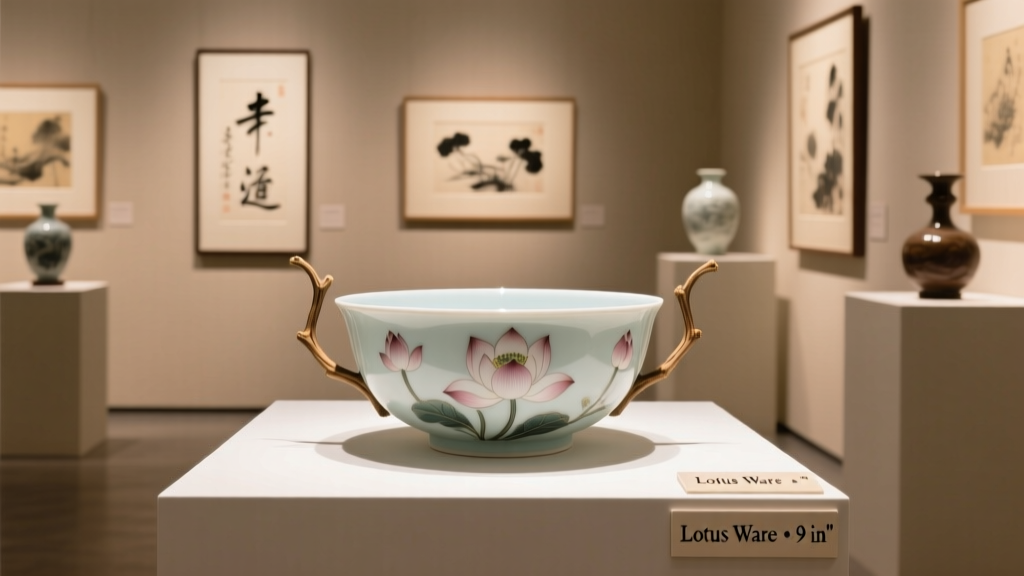
Lotus Ware Bowl with Floral-Twig Handles: Authentication, Provenance, and Market Analysis of the 9-Inch Example
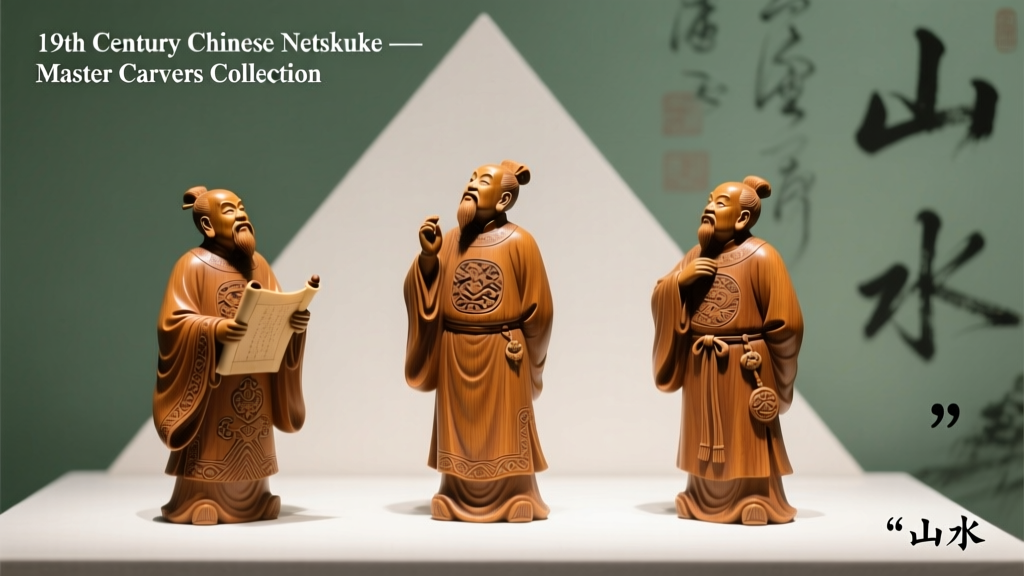
Netsuke Carved in Boxwood: Three Men in Chinese Costume, Late Edo Period (c. 1840–1870)
Banks Mechanical 3 Stars Cast Iron: Authentication, Market Value, and Technical Analysis
Decoding the Unknown Marks: Authentication and Market Analysis of a 13-Inch Silver-Plated Ladle
Pottery Carpet Ball Stick Spatter Black White 3-Inch: Authentication, Market Value, and Technical Analysis

The 1946 Lord & Taylor Christmas Catalog: A Landmark in Pop-Up Paper Engineering and Mid-Century Retail History
Limoges Chop Plate with Grape Cluster Motif: Authentication, Provenance, and Market Value of the 13½-Inch Example
Baskets Picnic Reed Double Hamper Lidded Large: Authentication, Market Value, and Design Legacy