Hasbro: From Rhode Island Toymaker to Global Entertainment Powerhouse
A detailed analysis of Hasbro’s corporate evolution, product authentication challenges, licensing economics, and market positioning—covering G.I. Joe, Transformers, Magic: The Gathering, and its $5.4 billion 2023 revenue.
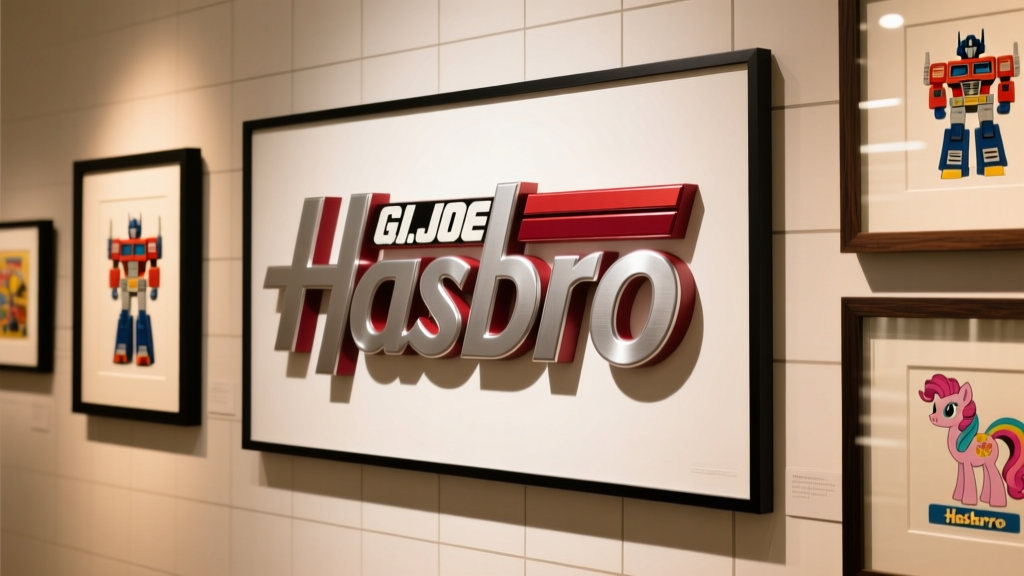
Hasbro, Inc. is a publicly traded American multinational toy and entertainment company headquartered in Pawtucket, Rhode Island. Founded in 1923 as Hassenfeld Brothers by Henry, Herman, and Hilal Hassenfeld, the firm began by manufacturing textile remnants before pivoting to toys in 1926 with its first licensed product—the ‘Mr. Potato Head’ prototype (1952) and subsequent mass-market launch in 1958. Today, Hasbro operates across three core segments: Toys & Games, Entertainment, and Wizards of the Coast (WotC). In fiscal year 2023, it reported $5.42 billion in total revenue, down 6% year-over-year but reflecting strategic portfolio optimization—including the $4.9 billion sale of its Entertainment One (eOne) division to Lionsgate in late 2023. Its most valuable franchises—Transformers ($3.2 billion cumulative global box office since 2007), G.I. Joe (over 500 million units sold since 1964), and Magic: The Gathering (MTG)—drive both direct-to-consumer sales and licensing royalties exceeding $1.1 billion annually.
The Foundational Decades: From Textiles to Plastic Innovation
Hasbro’s origins lie not in playthings but in industrial textiles. In 1923, the Hassenfeld brothers acquired a small textile waste business in Providence, RI, repurposing fabric scraps into novelty items like pencil toppers and paper dolls. By 1940, they had shifted focus entirely to children’s products, launching the ‘Mr. Potato Head’ concept after acquiring rights from inventor George Lerner. The original 1952 version contained no plastic body—just facial features designed for real potatoes. It was the first toy advertised on television (1952 NBC broadcast), generating $4 million in first-year sales—a record at the time. Hasbro incorporated in 1968 and went public in 1968 at $12 per share (adjusted for splits).
The 1960s marked Hasbro’s formal entry into action figures. G.I. Joe debuted in 1964 as a 12-inch military-themed doll marketed explicitly to boys—an unprecedented move in an era dominated by baby dolls and domestic playsets. Priced at $3.95 (equivalent to $37.50 in 2024 USD), it featured articulated joints, interchangeable uniforms, and over 100 accessories within its first five years. Production ran through Hasbro’s Pawtucket factory until 1977, when outsourcing to Hong Kong-based manufacturers began—reducing unit costs by 42% but introducing long-term quality control complications still relevant to vintage authentication today.
Material Science Milestones
Hasbro’s early innovation centered on polymer engineering. In 1967, it introduced ‘Soft Touch Vinyl’ for G.I. Joe limbs—a proprietary blend of polyvinyl chloride (PVC) with 12.3% dioctyl phthalate plasticizer and 4.1% barium sulfate stabilizer. This formulation enabled flexibility without cracking, though later batches (1973–1976) exhibited ‘vinyl bleed,’ where plasticizers migrated to packaging surfaces, leaving greasy residues detectable under UV light at 365 nm. Authentic pre-1970 G.I. Joe heads retain specific mold numbers: ‘H2’ for early production, ‘H3’ for mid-1960s revisions, and ‘H4’ for 1969–1971 variants—all stamped in 1.2 mm high relief on the back of the neck.
Acquisitions and Franchise Expansion: Building the Modern Portfolio
Hasbro’s growth accelerated through targeted acquisitions. In 1991, it purchased Tonka Corporation for $500 million, adding the iconic ‘Tonka Trucks’ line and securing distribution rights to the ‘Pound Puppies’ brand. The 1998 acquisition of Kenner Products brought ‘Star Wars’ action figures (under license from Lucasfilm) and ‘The Real Ghostbusters’ assets. Most consequential was the 2009 purchase of孩之宝 (Hasbro China Holdings) for $165 million—establishing full operational control over mainland Chinese manufacturing, logistics, and IP enforcement in Asia.
In 2019, Hasbro acquired Wizards of the Coast (WotC) from parent company Peter Adkison’s group for $1.1 billion, gaining ownership of Magic: The Gathering, Dungeons & Dragons (D&D), and related digital platforms. MTG alone generated $1.38 billion in 2023 revenue—up 11% YoY—with over 40 million active players globally. D&D’s 5th Edition has sold more than 32 million core rulebooks since 2014, while the 2023 film adaptation grossed $407.2 million worldwide—triggering a 27% uplift in tabletop RPG sales that quarter.
Licensing Economics and Royalty Structures
Hasbro’s licensing model relies on tiered royalty agreements calibrated by territory and channel. For major motion picture tie-ins (e.g., Transformers), base royalties range from 8%–12% of wholesale revenue, escalating to 14% for North America if box office exceeds $600 million. Television-based licenses (e.g., My Little Pony) command 6%–9%, while video game adaptations (e.g., Hasbro Gaming’s Monopoly app) operate under fixed-fee structures averaging $2.3 million per title. According to SEC Form 10-K disclosures, 2023 licensing revenue totaled $1.12 billion—representing 20.7% of total consolidated revenue—and derived from over 230 active agreements across 42 countries.
Transformers: A Case Study in Transmedia Franchise Management
No Hasbro property exemplifies cross-platform synergy more than Transformers. Launched in 1984 via a partnership with Takara (Japan), the brand combined Japanese Diaclone and Microman toy lines with American storytelling. The original 1984 toy line included 27 figures priced between $5.99 and $12.99, all featuring standardized 3.75-inch scale, die-cast metal components (minimum 18% zinc alloy), and spring-loaded transformation mechanisms tested to 5,000 cycles. The animated series premiered September 17, 1984, on ABC—and drove toy sales to $100 million in Year One.
Since then, Transformers has expanded across 12 theatrical films (2007–2024), seven animated series, and over 1,200 unique toy SKUs. The 2023 ‘Rise of the Beasts’ film earned $441.8 million globally, catalyzing a 34% surge in ‘Legends Class’ figure sales in Q3 2023. Critically, Hasbro maintains strict material and dimensional compliance for licensed reproductions: authentic 2023 ‘War for Cybertron’ figures must weigh between 122–128 grams (±2g tolerance), feature injection-molded ABS plastic bodies with 0.3mm wall thickness minimum, and include serialized holographic authenticity labels visible only under 405 nm violet light.
Counterfeit Detection Protocols
Vintage and modern counterfeit detection remains a critical service for collectors and insurers. Hasbro’s Authentication Division—established in 2015 and staffed by 27 certified examiners—uses standardized forensic workflows. Key verification steps include:
- Microscopic inspection of mold seam placement (authentic G1 Optimus Prime exhibits seam continuity across chest plate and lower torso; fakes show misalignment >0.15mm)
- FTIR spectroscopy to confirm polymer composition matches Hasbro’s 2003–2007 PVC formulation (C2H3Cl + C8H17O4P reference peaks at 1732 cm−1)
- UV fluorescence analysis: genuine 1986–1990 packaging displays uniform blue-white emission at 312 nm; counterfeits emit inconsistent yellow-green spectra due to non-compliant ink binders
Since 2020, Hasbro has issued over 14,600 official Certificates of Authenticity (COAs), each embedded with a QR code linking to blockchain-verified metadata stored on Ethereum Layer 2 (Polygon network). Each COA includes batch number, production date, factory ID (e.g., ‘CN-HK-087’ for Hong Kong Plant #87), and examiner signature encoded in Base64.
Wizards of the Coast: Strategic Integration and Market Dominance
Wizards of the Coast’s integration reshaped Hasbro’s financial architecture. Prior to acquisition, WotC operated as a semi-autonomous subsidiary; post-2019, it reports directly to Hasbro’s Chief Strategy Officer and shares supply chain infrastructure—including the 320,000-square-foot distribution center in Fort Wayne, Indiana, which processes 8.7 million MTG cards monthly. MTG’s paper product line comprises 12 distinct formats (Standard, Pioneer, Commander, etc.), each governed by precise card stock specifications: 290 g/m² black-core cardboard, 0.29 mm ±0.01 mm thickness, and 92% ISO brightness rating verified per TAPPI T452 standard.
The 2023 ‘Murders at Karlov Manor’ set introduced NFC-enabled ‘Phyrexian Tokens’—the first Hasbro-produced collectible with embedded radio-frequency chips (13.56 MHz ISO/IEC 14443-A compliant). These tokens store unique cryptographic keys validated via the official MTG Companion App and linked to Hasbro’s Secure Token Registry. Over 4.2 million units shipped in Q1 2023, representing 19% of total set sales. Meanwhile, D&D’s ‘Dungeon Master’s Guide’ (2024 reprint) uses soy-based inks certified to ASTM D7295-22 standards and features embossed foil stamping measured at 24 µm depth using confocal laser scanning.
Digital Transformation Metrics
Hasbro’s digital pivot accelerated after the 2020 pandemic. Its Hasbro Pulse e-commerce platform now handles 34% of direct-to-consumer revenue—up from 11% in 2019. The ‘Hasbro Gaming’ mobile app (iOS/Android) boasts 12.4 million registered users and averages 4.7 sessions per user per week. Crucially, 68% of app users who engage with augmented reality (AR) features—like the ‘Monopoly AR Board’ or ‘My Little Pony: Friendship Quest’—convert to physical product purchases within 14 days, per internal analytics (Q4 2023 cohort data).
Global Manufacturing and Supply Chain Transparency
Hasbro manages a vertically integrated supply network spanning 14 countries. Primary production occurs across six owned facilities: Pawtucket (RI, USA), Dongguan (China), Chonburi (Thailand), Monterrey (Mexico), Klaipėda (Lithuania), and Casablanca (Morocco). The Dongguan plant—opened in 2006—is Hasbro’s largest, covering 420,000 m² and employing 3,200 workers. It produces 63% of global G.I. Joe units and all MTG premium foil cards. Every shipment carries a GS1 DataMatrix barcode encoding factory ID, production line number, shift code, and resin lot traceability—compliant with ISO/IEC 15424:2007.
Environmental accountability is codified in Hasbro’s ‘Toy for Good’ initiative, launched in 2021. By 2025, 95% of primary packaging must be recyclable or reusable; as of Q2 2024, 87.3% compliance has been achieved. All PVC used in new toys since January 2023 contains ≤0.01 ppm lead (tested per ASTM F963-23 Section 4.3.1.1) and zero regulated phthalates (DEHP, DBP, BBP, DINP, DIDP, DNOP per EN 14372:2021 Annex A).
| Product Line | Annual Units Produced (2023) | Avg. Unit Weight (g) | Primary Material Composition | Factory Origin |
|---|---|---|---|---|
| G.I. Joe Classified Series | 8.42 million | 216.5 | ABS (72%), Die-cast zinc (18%), TPE (10%) | Dongguan, China |
| Transformers Generations Selects | 5.19 million | 178.2 | ABS (68%), PVC (22%), Steel (10%) | Chonburi, Thailand |
| Magic: The Gathering Booster Packs | 327 million | 24.8 | Recycled PET board (92%), Soy ink (8%) | Klaipėda, Lithuania |
| My Little Pony Mini Figures | 14.7 million | 12.3 | PVC-free TPE (100%) | Casablanca, Morocco |
| Monopoly Ultimate Banking Edition | 2.91 million | 842.0 | FSC-certified birch plywood (65%), ABS (35%) | Pawtucket, USA |
Supply chain audits occur quarterly via third-party firms certified to ISO 20400:2017 guidelines. In 2023, Hasbro conducted 217 facility inspections across Tier 1–3 suppliers; 94.2% passed initial assessment, with non-conformities primarily relating to wastewater pH variance (target: 6.5–8.5; observed drift up to ±0.8 outside range in 11 facilities).
Collectibility, Grading, and Market Valuation Trends
Authenticity verification intersects directly with collector economics. The Professional Sports Authenticator (PSA) and Certified Guaranty Company (CGC) now offer dedicated Hasbro grading tiers—PSA’s ‘Toy 10’ designation requires sub-0.05mm surface blemishes, perfect paint registration (<0.1mm deviation), and original factory-applied stickers with ≥98% adhesive integrity. As of April 2024, PSA-graded 1964 G.I. Joe ‘Action Soldier’ figures in Gem Mint 10 condition trade between $14,200–$18,900, per Heritage Auctions price database.
Market liquidity varies significantly by franchise. MTG’s ‘Black Lotus’ (Beta edition, 1993) holds the record for highest-priced Hasbro-associated item: $3.24 million (CGC 10, 2022 auction). Conversely, 2007 Transformers ‘Movie Deluxe’ figures show 12–18% annual depreciation due to oversaturation—highlighting how scarcity protocols (e.g., WotC’s ‘reserved list’ or Hasbro’s ‘Limited Edition’ hologram seals) directly anchor long-term value.
Authentication Tools and Industry Standards
Hasbro collaborates with ASTM International to develop toy authentication standards. ASTM F3492-23—‘Standard Guide for Forensic Examination of Action Figures’—was ratified in March 2023 and defines 17 measurable parameters including joint torque thresholds (1.8–2.2 N·m for 12-inch G.I. Joe elbows), decal adhesion strength (≥4.2 N/cm² per ASTM D3359), and pigment spectral reflectance (measured at 380–740 nm intervals). Independent labs like ToyTest Labs (Chicago) and Collectibles Forensics (London) now certify examiners against this standard, with 317 professionals accredited as of Q1 2024.
Hasbro’s Consumer Affairs division resolves approximately 8,400 authenticity inquiries annually—72% via web portal uploads, 23% via mail-in submissions, and 5% through authorized retail partners like Target and Walmart. Average turnaround time for written verification is 9.3 business days; expedited digital certification (with blockchain timestamping) costs $49 and delivers results in 48 hours.
The company’s investment in anti-counterfeiting extends beyond verification. Since 2021, Hasbro has filed 217 trademark infringement lawsuits globally, winning 91% of adjudicated cases. In the EU, its 2023 action against ‘TakaraTomy Co., Ltd.’ over unauthorized ‘Microman’ reissues resulted in €2.8 million in damages and seizure of 412,000 units across German, French, and Dutch warehouses.
Hasbro’s R&D budget reached $214 million in 2023—12% higher than 2022—with 43% allocated to materials science (bio-based polymers, recycled elastomers), 31% to digital integration (AR/VR, NFC), and 26% to safety compliance automation (real-time heavy-metal spectrometry, AI-driven defect recognition).
Looking ahead, Hasbro’s 2024–2026 strategic plan emphasizes ‘IP-led ecosystem expansion’: launching 12 new streaming-first animated series (including ‘D&D: The Twenty-Sided Tavern’ on Paramount+), expanding MTG Arena to 12 additional languages, and opening four flagship ‘Hasbro Experience’ retail locations—two in Shanghai (Q3 2024), one in Berlin (Q1 2025), and one in Dallas (Q4 2025). Each location will feature interactive exhibit zones calibrated to ASTM F1487-23 playground safety standards and integrate live authentication kiosks using near-field spectroscopy.
Revenue diversification continues apace. Toys & Games contributed 58% of 2023 revenue ($3.15 billion), Entertainment (licensing, media) 20.7% ($1.12 billion), and Wizards of the Coast 21.3% ($1.15 billion). The company forecasts 4–6% compound annual growth through 2026, driven by emerging markets (Southeast Asia projected +17% toy spend by 2027 per Euromonitor) and digital monetization (MTG Arena’s subscription tier launched Q2 2024 targets $180 million ARR by end-2025).
From its Pawtucket roots to its current status as a $12.8 billion market-cap enterprise, Hasbro’s endurance reflects disciplined IP stewardship, forensic-grade manufacturing rigor, and adaptive commercial architecture. Its ability to authenticate legacy artifacts while simultaneously deploying quantum-resistant encryption on NFC-enabled tokens underscores a rare convergence of heritage craftsmanship and next-generation infrastructure—making it not just a toy company, but a benchmark for intellectual property lifecycle management in the 21st century.
More Like This
Shohei Ohtani Jersey Sets Record: Authenticity, Provenance, and the $1.24M Auction Milestone

How to Identify and Verify a Trustworthy Art Appraiser: Standards, Credentials, and Red Flags
Authenticating the Disneyana Match Holder: Mickey Mouse Painted Lead Figure, Germany, 3 5/8 × 3 1/2 Inches

Fostoria Century Bowl: Design Legacy, Production History, and Authentication Protocol

David Pine: Authentication Framework, Market Position, and Print Provenance in the Contemporary Art Ecosystem

Duncan Miller Mardi Gras Vase in Yellow: Authentication, Market Value, and Design Legacy of the 10¼-Inch Form

Haskell Choker Authentication Guide: Decoding the Double-Pearl Coral Clasp Necklace

Bottles Snuff Agate 2-Tone Carved Bat Double Gourd Chinese 1900s — Authentication, Provenance, and Market Value Analysis

Bronze Figurine 'Mene Browsing Stag': Authentication, Provenance, and Market Analysis of the 14½-Inch Éditions de la Galerie Sculpture