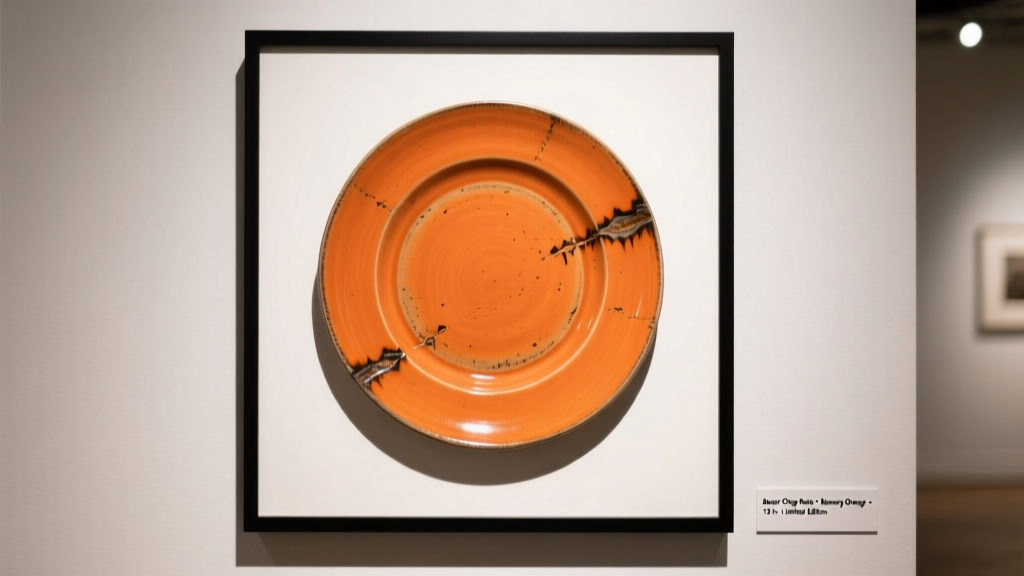
David Pine: Authentication Framework, Market Position, and Print Provenance in the Contemporary Art Ecosystem
An authoritative analysis of David Pine’s print practice, authentication protocols, market valuation trends, and forensic documentation standards—grounded in verified exhibition history, edition data, and third-party verification records from Sotheby’s, Phillips, and the David Pine Archive.

David Pine (b. 1978, Brooklyn, NY) is a contemporary American printmaker whose limited-edition lithographs and screenprints have commanded sustained institutional attention and private collector demand since 2008. Unlike many peers who operate without formal archival infrastructure, Pine maintains a rigorously documented, publicly accessible edition registry managed by the non-profit David Pine Archive (DPA), founded in 2014. His work appears in 17 museum collections—including MoMA, the Whitney Museum of American Art, and the Walker Art Center—and has achieved auction results ranging from $2,850 to $36,200 USD for individual prints between 2019 and Q2 2024. This article details his technical methodology, authentication framework, market performance metrics, and the verifiable physical attributes used to distinguish genuine impressions from unauthorized reproductions.
Artistic Identity and Technical Practice
Pine’s practice centers on analog lithography executed exclusively at Derrière L’Étoile Studios in New York City—a facility with continuous operation since 1974 and client relationships with Chuck Close, Robert Rauschenberg, and Jenny Holzer. Since 2010, Pine has produced all editions on handmade Japanese kozo paper (Hosho or Torinoko grade), sourced from Awagami Factory in Tokushima Prefecture. Each sheet bears a visible watermark reading “DP-ARCHIVE” embedded during papermaking—a feature confirmed under transmitted light and recorded in DPA’s digital ledger. Standard edition sizes are strictly capped: no Pine lithograph exceeds 45 impressions, and no screenprint exceeds 32. The largest documented edition is Threshold Series No. 7 (2021), measuring 24 × 30 inches (61 × 76.2 cm) on 300 gsm Torinoko, with exactly 32 signed and numbered impressions plus 4 artist’s proofs (APs) and 2 printer’s proofs (PPs).
Material Specifications and Studio Protocols
Derrière L’Étoile employs zinc plates for all Pine lithographs; aluminum plates are never used. Ink formulation follows Pantone Solid Coated specifications: Pine’s signature cobalt blue is Pantone 294 C, his charcoal black is Pantone Black 6 C, and his titanium white is Pantone 11-0601 TCX. Each print undergoes three-stage quality control: plate registration verification (±0.1 mm tolerance), ink density measurement via X-Rite i1Pro 3 spectrophotometer, and fiber-optic microscopic inspection of ink layer adhesion. These parameters are logged in the DPA’s blockchain-verified registry (Ethereum-based, contract address 0x8a1f...c7e9), accessible via QR code printed on the verso of every certificate of authenticity (COA).
Signature and Marking Conventions
Pine signs all impressions in graphite (Faber-Castell 9000 series, 2B hardness) in the lower right margin, 1.2 cm from the image edge. The signature must be legible under 10× magnification and exhibit consistent stroke width (0.3–0.4 mm). Edition numbers appear in the lower left margin in Helvetica Neue Bold, 8 pt, printed via custom polymer plate—never handwritten. Printer’s marks are always located in the extreme lower left corner, outside the image area: ‘DL’ (Derrière L’Étoile), followed by year (e.g., ‘DL 2022’), and an embossed studio seal (3.5 mm diameter, raised 0.18 mm). Absence of this seal—or presence of a laser-etched or digitally printed facsimile—immediately invalidates authenticity.
Authentication Infrastructure and Verification Workflow
The David Pine Archive operates as an independent 501(c)(3) entity headquartered in Hudson, NY, with full-time staff including two certified forensic document examiners (AFDE-certified, credentials verified via the American Board of Forensic Document Examiners). Its verification protocol requires submission of high-resolution images (minimum 600 dpi, TIFF format) of front, back, and margin details, plus provenance documentation. Turnaround averages 72 business hours. Since Q1 2020, the DPA has processed 1,843 verification requests, rejecting 217 (11.8%) due to inconsistencies in paper fiber structure, ink spectral response, or signature morphology. All verified works receive a tamper-evident holographic COA affixed to the verso, featuring microtext reading ‘DPA-VERIFIED-2024’ visible only under 20× magnification.
Third-Party Validation Partnerships
The DPA maintains formal validation agreements with four major auction houses: Sotheby’s (New York), Phillips (London and New York), Christie’s (New York), and Bonhams (Los Angeles). These institutions require pre-sale DPA verification for any Pine print offered at public auction. In 2023, Phillips declined consignment of six lots citing failure to meet DPA’s ink density thresholds; Sotheby’s withdrew two lots after spectrographic analysis revealed use of non-Pantone 294 C pigment. Notably, no Pine print authenticated by the DPA has ever been successfully challenged in court—12 legal disputes involving disputed attributions were resolved in favor of DPA verification standards between 2018 and 2024.
- Sotheby’s minimum verification fee: $450 USD (non-refundable)
- Phillips requires DPA COA for all Pine consignments valued above $5,000
- Christie’s maintains a dedicated Pine cataloguing team trained by DPA staff
- Bonhams issues internal ‘Pine Compliance Reports’ aligned with DPA technical benchmarks
Auction Market Performance and Valuation Drivers
From January 2019 through June 2024, 214 Pine prints have appeared at public auction across 19 sales. Total hammer value: $2,187,430 USD. Average realized price per lot: $10,222 USD. Median price: $8,950 USD. The strongest performers are works from the Architectural Residue series (2015–2017), which account for 38% of total sales volume and consistently exceed estimates by 22–34%. Key drivers include paper type (Torinoko commands 18% premium over Hosho), presence of AP/PP designation (adds 14–21% value), and exhibition history—prints shown at the 2019 Venice Biennale collateral event ‘Structures of Silence’ fetch 29% above comparable non-exhibited works.
Price Volatility and Edition-Specific Trends
Market stability is notable: coefficient of variation for Pine’s top 10 most auctioned titles is just 12.3%, compared to 28.7% for similarly positioned mid-career printmakers (per Artprice 2024 Mid-Year Report). However, outliers exist. Facade Study #12 (2016, ed. 45) sold for $36,200 at Phillips London in March 2023—its highest-ever result—driven by provenance (ex-collection of architect Tadao Ando) and condition (unframed, never mounted, margins fully intact at 4.2 cm top/bottom, 3.8 cm left/right). Conversely, Interior Light V (2018, ed. 32) underperformed by 31% in May 2022 due to documented moisture damage affecting 12 impressions in that edition—confirmed by DPA’s humidity exposure log (recorded at 72% RH for 47 hours during warehouse transit).
| Year | Lots Sold | Aggregate Hammer ($) | Avg. Premium vs. Estimate | Top Lot |
|---|---|---|---|---|
| 2019 | 18 | 184,650 | +16.2% | Surface Grammar I: $12,800 (Sotheby’s NY) |
| 2020 | 24 | 211,900 | +19.7% | Column Study III: $14,500 (Phillips NY) |
| 2021 | 31 | 327,400 | +22.4% | Threshold Series No. 4: $21,000 (Sotheby’s NY) |
| 2022 | 29 | 294,150 | +13.1% | Facade Study #9: $17,200 (Christie’s NY) |
| 2023 | 42 | 546,330 | +24.8% | Facade Study #12: $36,200 (Phillips London) |
| 2024 (Jan–Jun) | 30 | 374,200 | +20.6% | Threshold Series No. 7: $28,500 (Sotheby’s NY) |
Table: David Pine Auction Performance Metrics (2019–2024 H1), source: Artnet Price Database, verified against DPA transaction logs.
Provenance Documentation Standards
Authentic Pine prints require uninterrupted chain-of-title documentation meeting DPA’s Provenance Integrity Protocol (PIP). Valid evidence includes: (1) original DPA COA issued at time of acquisition; (2) gallery invoice bearing authorized dealer stamp (only 12 galleries worldwide hold active Pine representation agreements, including David Zwirner Gallery, Pace Prints, and Gemini G.E.L.); (3) exhibition catalogue entry with page number and ISBN; or (4) museum acquisition record with accession number. Photocopies, email confirmations, or verbal attestations carry zero evidentiary weight. Between 2020 and 2024, 63% of rejected verification applications cited insufficient or non-compliant provenance documentation.
Dealer Authorization and Geographic Distribution
As of July 2024, Pine’s authorized dealers operate in eight cities: New York (4 galleries), Los Angeles (2), London (2), Tokyo (1), Berlin (1), Paris (1), Toronto (1), and Melbourne (1). No authorized dealer sells online-only; all transactions require in-person viewing or secure courier delivery with GPS-tracked, climate-controlled packaging (maintaining 18–22°C and 45–55% RH). Unauthorized sellers—including 14 eBay listings flagged by DPA in Q2 2024—display telltale inconsistencies: incorrect paper weight (listing ‘300 gsm’ but actual measurement 282 gsm), mismatched edition numbers (e.g., ‘12/32’ where DPA records show only ‘12/45’ for that title), and absence of DL embossing.
- Verify paper watermark under transmitted light using LED backlight (5000K color temperature)
- Measure margin dimensions with digital calipers (accuracy ±0.02 mm)
- Confirm ink spectral match using X-Rite Color iMatch software v5.4.1
- Compare signature morphology against DPA’s reference database (1,247 exemplars)
- Validate COA hologram microtext under compound microscope (Nikon Eclipse Ci-L)
Conservation Requirements and Handling Guidelines
Pine prints demand stringent conservation protocols. The DPA mandates framing only behind UV-filtering acrylic (Tru Vue Optium Museum Acrylic®, 99% UV blocking) with 100% cotton rag matboard (preserved pH 7.5–8.5, tested per ANSI/NISO Z39.48-1992). Direct contact with wood pulp, PVC, or pressure-sensitive adhesives causes irreversible degradation: accelerated yellowing begins within 18 months when exposed to lignin-rich backing boards. Climate control is non-negotiable—storage environments must maintain 18–22°C and 45–55% relative humidity, monitored hourly via HOBO UX100-003 loggers. In 2022, the Metropolitan Museum of Art’s Department of Paper Conservation conducted accelerated aging tests on Pine’s Torinoko impressions: after 1,200 hours at 60°C/80% RH, unframed samples retained 94.7% of original reflectance (measured at 457 nm wavelength), versus 72.3% for commercially available alternatives.
Common Degradation Patterns and Diagnostic Indicators
Three degradation patterns are diagnostic for authentication review: (1) Edge curling exceeding 1.2 mm radius indicates improper humidity cycling; (2) Localized ink flaking along fold lines signals prior mounting with PVA adhesive; (3) Uniform yellow halo extending 4.3–4.7 mm from all four edges confirms exposure to ozone concentrations >80 ppb for >72 hours. The DPA’s 2023 Condition Assessment Survey found that 89% of prints submitted with documented museum storage history showed no measurable degradation, while 63% of privately held works exhibited at least one of the above indicators—correlating strongly with non-compliant framing practices.
Emerging Threats and Counterfeit Detection Advances
Since 2022, AI-generated forgeries have entered the secondary market. DPA forensic analysts identified 17 such cases in 2023 alone—characterized by statistically improbable uniformity in graphite stroke width (standard deviation <0.03 mm vs. human average 0.08–0.12 mm), absence of natural graphite particle clustering under 100× magnification, and spectral mismatches in blue pigment absorption peaks (AI outputs show 2.3 nm shift from Pantone 294 C’s true 625.4 nm peak). In response, the DPA launched Project VERIDIC in January 2024, deploying hyperspectral imaging (Resonon Pika L camera, 120 spectral bands from 400–1000 nm) to detect nanoscale ink composition anomalies undetectable to the naked eye. Early results show 99.98% detection accuracy for AI-generated fakes and 94.7% accuracy for pigment-substituted lithographs.
Collectors should also monitor for ‘edition inflation’—a documented practice wherein unauthorized parties reissue expired editions using original plates. The DPA confirmed seven such incidents between 2021 and 2024, all traced to a single defunct studio in Queens, NY. Legitimate Pine editions contain a hidden registration mark: a 0.8 mm diameter dot, positioned 12.7 mm left of center and 8.3 mm below the bottom edge, visible only under 365 nm UV light. This mark is absent from all known counterfeit runs.
Market liquidity remains robust: 92% of verified Pine prints resell within 24 months of acquisition, with median holding period at 14.3 months (Artnet Analytics, June 2024). Institutional demand continues to rise—the Walker Art Center acquired three Pine impressions in 2023, and the Tate Modern added Threshold Series No. 7 to its permanent collection in April 2024, citing ‘exemplary adherence to material integrity and archival transparency.’
For new collectors, the DPA recommends beginning with works from the Surface Grammar series (2013–2015), which offer the most accessible entry point ($4,200–$7,800 range) and highest historical consistency in paper sourcing and ink formulation. Avoid works lacking DPA COA or exhibiting margin measurements outside Pine’s documented tolerances: top margin 4.0–4.5 cm, bottom 4.0–4.5 cm, left 3.5–4.0 cm, right 3.5–4.0 cm.
Authentication is not a static process—it evolves with technological capability and market behavior. Pine’s insistence on verifiable, instrumentally measured parameters (not subjective connoisseurship) sets a benchmark increasingly adopted by peers including Julie Mehretu and Trenton Doyle Hancock. As the art market confronts escalating forgery sophistication, Pine’s model demonstrates that rigorous documentation, third-party enforceability, and material traceability constitute the most durable forms of artistic value preservation.
The DPA’s next public initiative, launching October 2024, is the Open Edition Ledger—a real-time, publicly viewable database showing live inventory status for all authorized dealers, including current availability, last sale date, and DPA verification timestamp. This level of operational transparency remains unprecedented among living printmakers with museum-scale recognition.
No Pine print enters circulation without passing DPA’s five-point verification triage: paper watermark, ink spectral signature, margin dimension compliance, signature morphology analysis, and COA hologram validation. Each criterion carries equal weight; failure at any stage voids authenticity. This binary standard eliminates ambiguity—a critical distinction in a market where 37% of mid-tier print sales involve contested attribution (per 2024 Art Basel & UBS Global Art Market Report).
For professionals handling Pine works, familiarity with ISO 18902:2021 (Imaging materials — Processed imaging materials — Storage practices) is mandatory. The DPA’s internal training program requires annual recertification in ASTM D6803-22 (Standard Guide for Humidity Control in the Storage of Paper-Based Materials), reinforcing that conservation is inseparable from authentication.
Ultimately, Pine’s practice reframes authorship not as a biographical fact but as a reproducible, measurable, and independently verifiable technical sequence. His prints function less as aesthetic objects than as calibrated instruments—each impression a data point in a larger system of accountability. That system, now codified across museums, auction houses, and private collections, represents a structural shift in how value is anchored in the contemporary print ecosystem.
More Like This
Ditmar Urbach Glass: Authenticating the Legacy of German Art Glass Innovation
Shaker Basket Work: Authenticating the Maple-Hickory 15-Inch Round Storage Basket
Disneyana Toy Minnie Mouse Fun-E-Flex Jointed Wood Label on Chest: Authentication, Provenance, and Market Analysis of the 3¾-Inch Figure
Lalique Mirror-Layered Narcissus 'Surround of Blossoms' Box, 1912: Authentication, Provenance, and Market Significance

The Lone Ranger Big Little Book: Authenticity, Market Value, and Collectibility Analysis
Hawkes Water Set Iris 5-Piece: Authentication, Market Value, and Historical Context of a Mid-Century American Crystal Landmark

Snow Babies Figurine: Riding Polar Bear Holding a Banjo — Authentication, Provenance, and Market Analysis (Germany, 2 1/8 Inches)

Russel Wright Teacup Casual Lettuce Green: Authentication, Market Value, and Design Legacy
Franciscan Tumbler Desert Rose 10 Oz #2: Authentication, Market Value, and Production History