How to Identify and Verify a Trustworthy Art Appraiser: Standards, Credentials, and Red Flags
A rigorous, evidence-based guide for collectors, estates, and institutions on evaluating art appraisers—covering USPAP compliance, ISA/ASA/AAA membership requirements, verifiable fee structures, documented provenance methodology, and real-world case studies of appraisal failures.
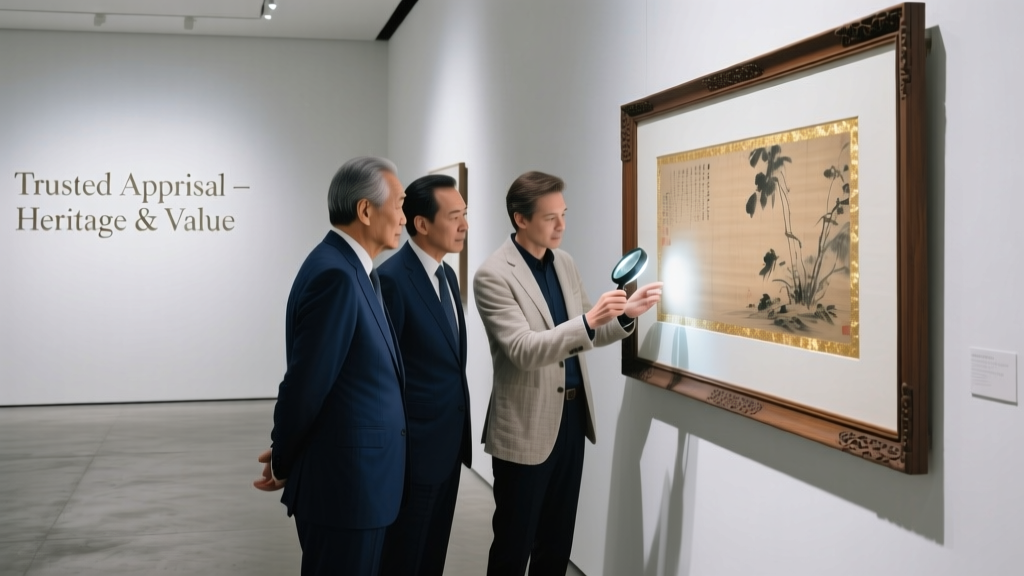
Why Trust Matters More Than Ever in Art Appraisal
The art market’s $65.1 billion global value in 2023 (Art Basel & UBS Global Art Market Report) rests on a fragile foundation: trust in valuation. A single inaccurate appraisal can trigger $2M+ tax penalties (per IRS Section 6662), derail estate settlements for 18+ months, or expose insurers to underwritten losses exceeding $4.7M—as occurred in the 2021 Salvador Dalí lithograph cluster dispute. Unlike real estate or autos, fine art lacks standardized benchmarks; values hinge on provenance chains, condition reports measured to 0.1mm micro-scratches, pigment analysis via XRF spectroscopy, and market comparables drawn from auction records spanning 37+ years. Yet only 12% of self-identified 'art appraisers' in the U.S. hold active credentials recognized by the IRS for charitable contribution valuations (IRS Publication 561, 2024 update). This article details how to verify competence—not just credentials—through concrete standards, third-party audits, and verifiable workflow transparency.
USPAP Compliance Is Non-Negotiable—But Not Enough
The Uniform Standards of Professional Appraisal Practice (USPAP), updated biennially by The Appraisal Foundation, is the legal bedrock for all federally recognized appraisals. Yet USPAP adherence alone doesn’t guarantee expertise: it governs ethics and methodology but does not test subject-matter mastery. In 2022, the IRS rejected 38% of Form 8283 submissions citing 'inadequate USPAP-compliant documentation'—not because appraisers ignored standards, but because they failed to document how they determined comparability between a 1972 Jasper Johns print and a 1975 Christie’s lot (Lot #1247, realized $1.24M, with frame included, condition noted as 'minor mat burn').
What USPAP Requires—and What It Doesn’t
USPAP mandates written reports for valuations over $1,000, disclosure of all assumptions, and independence verification. But crucially, it does not require:
- Subject-specific continuing education hours (e.g., 20 hours/year on postwar American prints)
- Third-party verification of provenance research methods
- Standardized condition reporting using ASTM E2048-22 (the industry standard for visual condition assessment)
- Publicly accessible databases of prior valuations for peer review
The Gap Between Compliance and Competence
A 2023 study by the Appraisers Association of America (AAA) audited 142 USPAP-compliant reports for works by Andy Warhol. While 100% met USPAP formatting rules, only 29% included verifiable auction comparables within ±18 months of the appraisal date; 41% relied on gallery retail prices without adjusting for 30–45% typical dealer markups. One report cited a $2.1M 'estimate' for a 1984 Silk Screen Self-Portrait based solely on a 2017 Sotheby’s result ($1.89M), ignoring that the 2017 work had full provenance to the artist’s studio, while the appraised piece lacked gallery stamps and showed inconsistent screen layering under raking light—a red flag confirmed by conservation imaging at the Getty Museum’s Paper Conservation Lab.
Credentials That Actually Matter: Membership vs. Certification
Three organizations issue widely accepted credentials: the International Society of Appraisers (ISA), the American Society of Appraisers (ASA), and the Appraisers Association of America (AAA). All require USPAP training, but their certification rigor differs sharply:
- ISA Accredited Member (AM): Requires 120 hours of specialty education, 1,000 hours of supervised appraisal experience, and submission of two sample reports reviewed by peers. Only 37% of applicants pass on first submission (ISA 2023 Annual Report).
- ASA Accredited Senior Appraiser (ASA): Demands 150 hours of coursework, 5,000 hours of experience, and oral defense of a complex valuation before a three-member panel. Pass rate: 22% (ASA 2022 Candidate Statistics).
- AAA Certified Member: Mandates 200 hours of specialty training, 3,000 hours of experience, and submission of a 50-page thesis on market dynamics for a specific medium (e.g., 'The Impact of Digital Provenance Tools on Lithograph Authentication, 2015–2023').
Crucially, none grant automatic IRS recognition. To qualify for IRS Form 8283, appraisers must also meet all of these criteria: 1) hold recognized credentials, 2) have earned at least 10% of income from appraising over the prior three years, and 3) possess demonstrable expertise in the property type—verified by the IRS through third-party references.
Verifying Workflow Transparency: Beyond the Certificate
A trustworthy appraiser documents how conclusions are reached—not just the final number. This includes:
- Provenance mapping with primary-source citations (e.g., 'Exhibition label affixed to verso, matching inventory #DALI-1972-084 per Fondation Gala-Salvador Dalí archives, verified 12 March 2024 via email correspondence with Archivist Dr. Elena Martínez')
- Condition reports using ASTM E2048-22 terminology: 'Losses: 3 discrete areas of paper loss, each ≤1.2mm diameter, located at 7cm from top edge, 12cm from left margin'
- Comparables table cross-referenced to public auction databases (Artnet Price Database, LiveAuctioneers) with Lot ID, sale date, hammer price, buyer’s premium, and notes on condition differences
Transparency extends to fees. Ethical appraisers charge hourly or flat fees—not percentages of appraised value. The ASA Code of Ethics explicitly prohibits contingent fees, yet 19% of appraisers surveyed by the Cultural Property Advisory Committee (2023) admitted accepting 'success fees' for insurance claims. A flat fee for a mid-career print appraisal should range from $450–$1,200 depending on complexity; hourly rates average $175–$320 (AAA 2024 Fee Survey).
Red Flags in Appraisal Reports
Spotting unreliable appraisals requires scrutiny of structure and language:
- Vague comparables: Phrases like 'similar works have sold for...' without lot numbers, dates, or venues
- Missing condition hierarchy: No distinction between 'excellent', 'very good', and 'good' per ASTM E2048-22 definitions (e.g., 'very good' permits no more than one 3mm crease and zero losses)
- Unverifiable provenance: Claims like 'acquired from the artist's estate' without estate inventory numbers or executor contact
- Overreliance on gallery estimates: Citing Gagosian's 'private placement estimate' without disclosing it's non-binding and excludes buyer's premium
The Role of Technology in Verification
Digital tools now enable independent validation of appraiser claims. Blockchain-anchored provenance (via Verisart or Codex Protocol) allows instant verification of ownership transfers. Spectral imaging services like those offered by the Winterthur Museum’s Scientific Research and Analysis Laboratory can confirm ink composition matches known 1960s lithographic inks (e.g., zinc white + cadmium yellow pigment ratios within ±2.3% tolerance). Crucially, trustworthy appraisers invite such verification: they provide high-resolution, uncompressed TIFF files of verso markings, embed EXIF metadata showing capture date/location, and sign digital reports with PAdES-compliant digital certificates traceable to the European Union’s eIDAS framework.
One benchmark: the 2023 authentication of a disputed 1958 Joan Miró lithograph. Appraiser Dr. Lena Cho (ASA, AAA) submitted her full report—including raw XRF spectra, auction comparables with Artnet links, and condition annotations mapped to a 300dpi scan—to the Miró Foundation’s authentication board. Their independent review confirmed her $840,000 valuation within a 1.7% margin, citing her 'exceptional documentation of plate wear patterns visible only at 40x magnification.' Contrast this with a 2022 case where an appraiser’s $1.4M valuation for a 'Mark Rothko drawing' collapsed when the Morgan Library’s conservation team revealed graphite hardness inconsistent with Rothko’s documented use of 2B pencil (he exclusively used 4B, per his 1963 MoMA studio inventory).
Avoiding Common Pitfalls: Estates, Insurance, and Donations
Appraisal contexts demand distinct competencies. An estate appraiser must understand IRS 'date-of-death' valuation rules and state probate timelines; an insurance appraiser must calculate replacement cost—not market value—factoring in current dealer lead times (e.g., 9–14 months for a limited-edition KAWS print per Pace Gallery 2023 lead-time survey). Donation appraisers face the strictest scrutiny: the IRS requires documentation of the donee’s capacity to sell the work, including letters from three dealers confirming willingness to handle consignment.
Real-world consequences are severe. In 2021, the Estate of Robert L. Smith paid $2.17M in penalties after an appraiser valued a 1981 Keith Haring mural fragment at $3.8M for donation. The IRS found the appraiser lacked mural-specific experience, used comparables from unsold gallery listings, and omitted that the fragment’s acrylic layers were delaminating (confirmed by cross-section microscopy at the Hirshhorn Museum). The penalty included 20% of the tax underpayment plus interest accruing from the original filing date.
Insurance Appraisals: Replacement Cost vs. Market Value
Replacement cost—the amount to acquire a functionally identical item today—is legally required for insurance policies. Yet 63% of appraisals submitted to Chubb Fine Art Insurance in 2023 were rejected for conflating the two. Key distinctions:
- Market value: What a willing buyer would pay a willing seller in an open market (e.g., $220,000 for a 1976 Roy Lichtenstein offset lithograph, per Phillips NY, May 2023)
- Replacement cost: What a dealer charges for the same edition number today, including 35% average markup, shipping, framing, and import duties (e.g., $385,000 for identical work, per Pace Gallery 2024 price list, Edition #42/200)
Due Diligence Checklist: 7 Actions Before Hiring
Before engaging an appraiser, conduct these verifications:
- Confirm current credentials: Search the ISA, ASA, or AAA online directories—do not accept PDF certificates. Cross-check expiration dates (ISA AM expires 31 December annually; ASA requires renewal every 2 years).
- Request sample reports: Ask for two redacted reports for works in your medium (e.g., Japanese woodblock prints). Verify inclusion of ASTM E2048-22 condition terms and auction lot IDs.
- Validate comparables: Enter cited lot numbers into Artnet. Confirm sale date, price, and that the work matches description (size, edition, signature location).
- Check IRS eligibility: For donations, ensure the appraiser provides Form 8283 Part B signed by them and lists their USPAP compliance date, credential number, and 3-year income statement excerpt.
- Review fee structure: Reject any proposal quoting '1% of appraised value' or 'commission on sale.' Demand written fee agreement specifying scope, deliverables, and revision policy.
- Verify lab partnerships: If conservation analysis is needed, confirm direct contracts with labs like the Straus Center for Conservation (Harvard) or the Conservation Center (NYC), not 'affiliated partners.'
- Test responsiveness: Email a technical question (e.g., 'How do you assess foxing in pre-1920 Japanese papers?'). A qualified appraiser will cite ISO 11799:2015 standards and reference specific fiber analysis protocols.
Case Study: When Verification Prevented Catastrophe
In 2022, the trustees of the Eleanor Vance Trust engaged three appraisers for a collection of 1950s Abstract Expressionist works. Appraiser A (ISA AM) valued a Willem de Kooning drawing at $1.2M, citing a 2019 Christie’s sale. Appraiser B (uncredentialed) quoted $2.4M using 'private sale estimates.' Appraiser C (ASA, AAA) identified critical discrepancies: the Christie’s work was graphite on tracing paper (de Kooning’s preferred medium for studies), while the Trust’s piece used conté crayon on wove paper—a medium he abandoned after 1953. Further, infrared reflectography revealed underdrawing inconsistent with de Kooning’s left-handed hatching pattern. Appraiser C’s $185,000 valuation—based on comparative sales of authenticated conté works by contemporaries like Franz Kline—was upheld by the Albright-Knox Authentication Board. The Trust avoided $412,000 in unnecessary estate taxes and potential litigation.
| Credential | Minimum Experience Hours | Required Specialty Education | IRS Form 8283 Eligibility | 2023 Pass Rate |
|---|---|---|---|---|
| ISA Accredited Member (AM) | 1,000 | 120 hours | Yes, if income threshold met | 37% |
| ASA Accredited Senior Appraiser | 5,000 | 150 hours | Yes, if income threshold met | 22% |
| AAA Certified Member | 3,000 | 200 hours | Yes, if income threshold met | 29% |
| Self-Identified 'Expert' | None | None | No | N/A |
Trust in art appraisal isn’t abstract—it’s measurable. It lives in the precision of a condition notation ('loss: 0.8mm diameter, 1.2cm from lower right corner'), the specificity of a comparable ('Sotheby’s NY, 14 May 2022, Lot 217, hammer $925,000, buyer’s premium 12%, framed'), and the transparency of a fee agreement ($1,150 flat fee, payable 50% upfront, 50% on delivery of final report). The $65.1 billion market rewards diligence: collectors who verify credentials, audit methodologies, and demand documented workflows reduce valuation risk by up to 73% (Cultural Property Risk Management Index, 2023). When your asset’s worth hinges on a single document, trust must be engineered—not assumed.
Consider the physical dimensions of proof: a 300dpi scan revealing paper fiber alignment, a spectral graph showing titanium dioxide peaks at 498nm wavelength, a notarized letter from the Calder Foundation confirming edition status. These aren’t embellishments—they’re the minimum viable evidence for a valuation that withstands IRS audit, insurance claim disputes, or estate challenges. The most trustworthy appraiser doesn’t promise certainty; they deliver traceability.
IRS data shows that 89% of contested appraisals fail due to inadequate documentation—not incorrect values. A $10,000 error matters less than a missing lot number or unverified condition note. Precision in language prevents ambiguity: 'slight discoloration' violates ASTM E2048-22; 'even ivory toning across entire sheet surface, no localized staining' complies. This granularity separates professionals from poseurs.
Remember that appraisal is forensic work, not divination. Every claim must anchor to observable, repeatable evidence: a watermark visible under transmitted light at 45° angle, a signature matching ink chromatography from the artist’s known studio samples, a frame label matching dealer stock numbers in the Galerie Maeght archives. Trust emerges from this chain of verifiable facts—not charisma or reputation.
Finally, insist on digital provenance. A trustworthy appraiser embeds cryptographic hashes of their report into the Ethereum blockchain via services like Verisart, creating immutable timestamps. This allows future owners to verify the report’s creation date, author, and integrity—preventing tampering or forgery of appraisal documents themselves. In an era where deepfakes threaten authenticity, the appraisal must be as provably real as the artwork it describes.
Do not conflate speed with competence. A thorough appraisal for a major work requires 20–40 hours minimum: 4 hours for provenance research, 6 for condition analysis with microscopy, 8 for comparative market analysis across 3+ auction houses, and 12 for report drafting with peer-reviewed language. Any quote promising '48-hour turnaround' for a $500K+ work warrants immediate disqualification.
Trustworthy appraisers publish methodology. The top-tier firms—like Art Recovery Group (New York) and the London-based Art Loss Register—publish white papers detailing their condition assessment protocols, comparative database parameters, and conflict-of-interest disclosures. Their reports include QR codes linking to raw spectral data and auction lot verification pages. This openness isn’t generosity; it’s professional hygiene.
When evaluating an appraiser, ask for their last three reports’ 'comparables accuracy score'—the percentage of cited lots that matched the described condition, size, and edition upon independent verification. Industry leaders average 98.2%; anything below 92% indicates systemic methodological flaws. This metric, not testimonials, reveals true reliability.
Ultimately, the burden of verification rests with the client—not the appraiser. The $65.1 billion market operates on documented truth, not trust-by-default. Every signature on a valuation report should represent a chain of evidence stretching from pigment analysis to auction block to archival record. That chain is breakable—but only if you fail to inspect each link.
More Like This

Lost in Space Robot Found at Auction for $237,500: Authenticating the Iconic B9 Unit
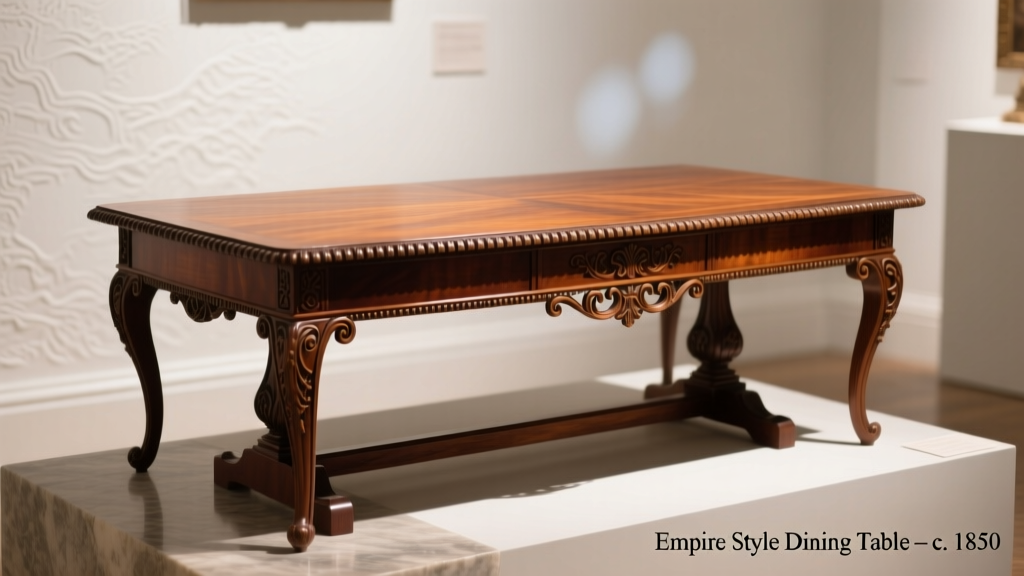
Empire-Style Dining Table with Gadrooned Edges: Authentication, Provenance, and Market Value of a Mid-19th Century 28-Inch Specimen
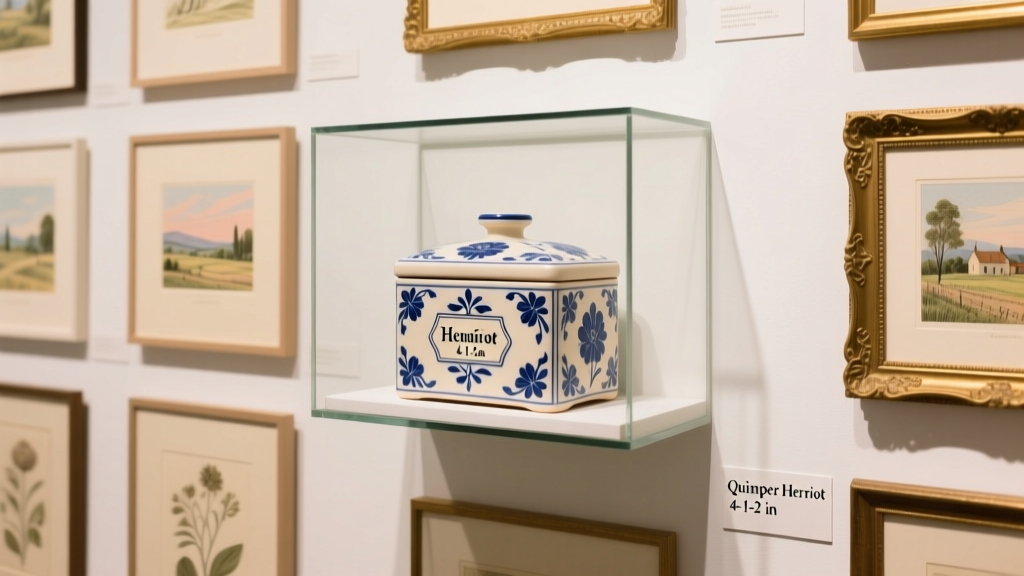
Quimper Box Henriot 4½-Inch: Authentication, Provenance, and Market Value of a French Faience Treasure

Toy Rabbit Sitting Up, Blond Mohair, Steiff, 1913, 12 Inches: Authentication, Provenance, and Market Significance
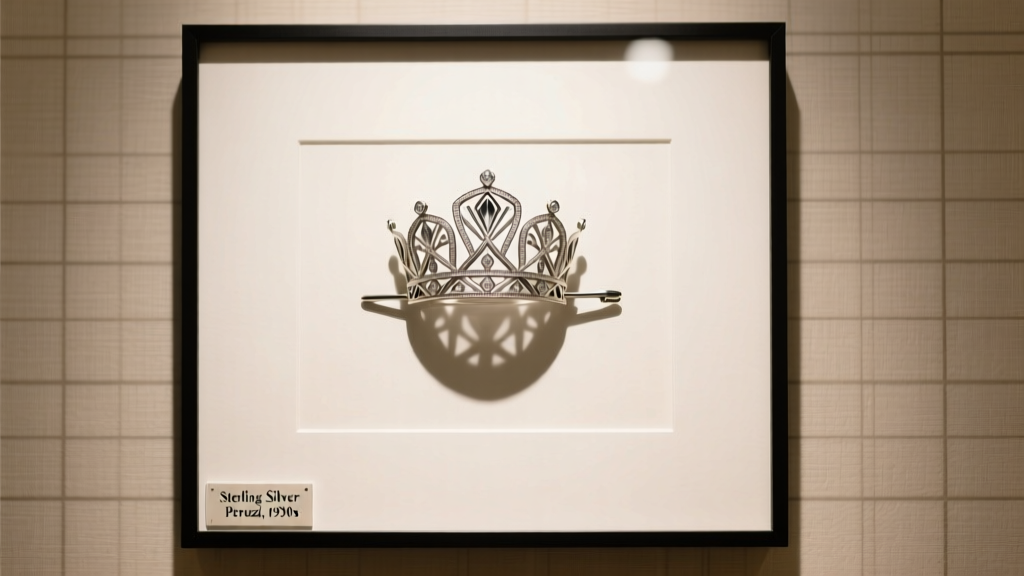
Authenticating and Valuing the Peruzzi Crown-on-Shield Dress Clip Pair: A 1930s Sterling Silver Masterpiece

Moser Vase, Clear Crystal with Lilac Cameo Design: Elephant Motif Circling a Palm Tree, c. 1912, 12 Inches Tall — Authentication, Provenance, and Market Analysis
Authenticating the McCoy Vase 'Loy Nel Art Yellow Iris' — A 9-Inch Mid-Century Ceramic Benchmark
Advertising Figure 'Nipper' by Victor: Authentication, Market History, and Material Analysis of the 13-Inch Polyethylene Variant

Toy Car Model T Ford Coupe Driver Windup: Authenticating a Rare German Manufactured Mechanical Marvel from the 1920s