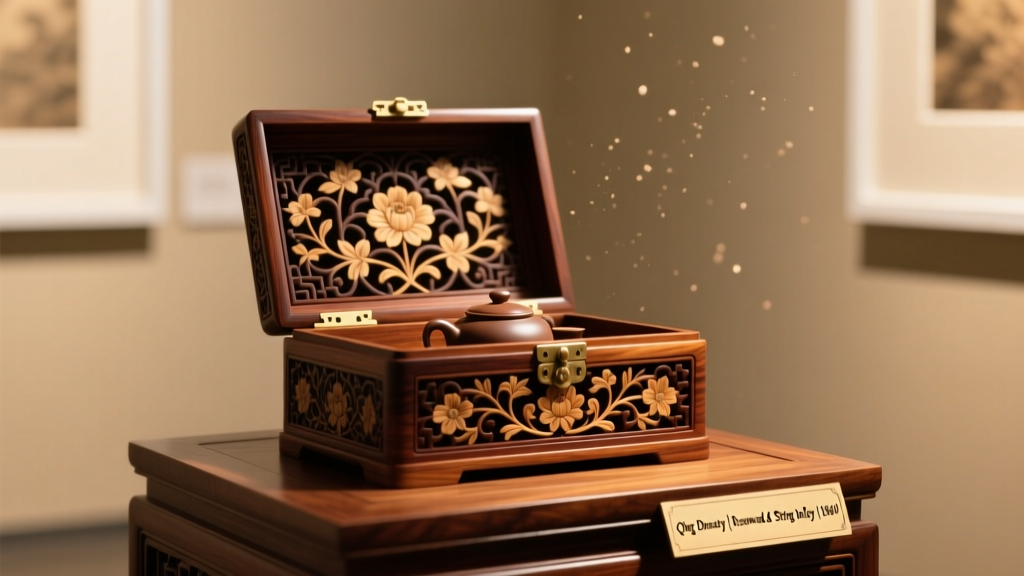
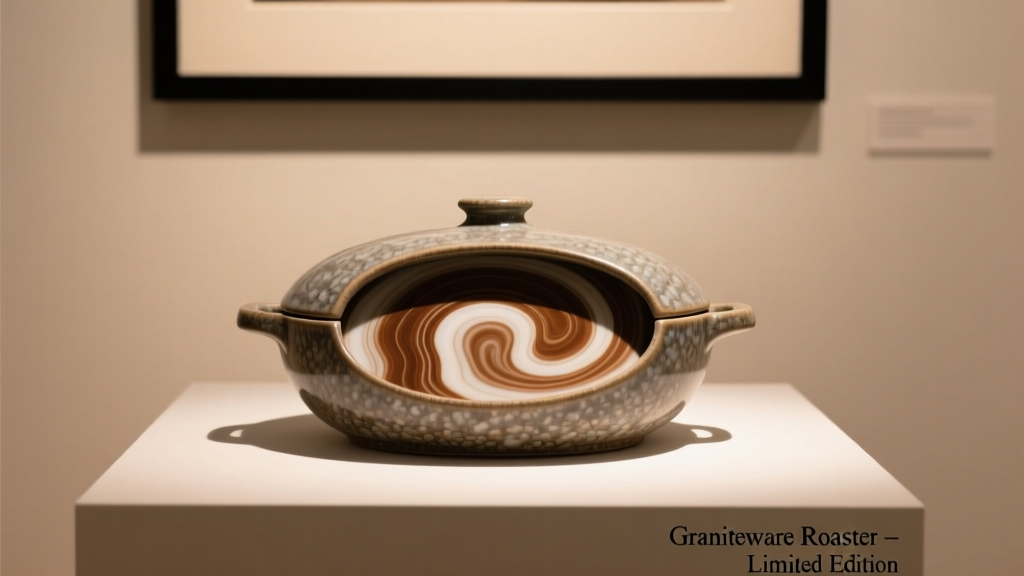
Graniteware Roaster: Decoding the Brown-and-White Swirl Oval Insert — History, Authentication, and Market Value
An in-depth analysis of vintage graniteware roasters featuring brown-and-white swirl enamel on oval inserts—covering manufacturers like Favorite, Wagner, Griswold, and Le Creuset; dimensional specifications (13.5" × 9.25" × 3.25" typical), enamel composition, production timelines (1920s–1950s), and authentication red flags including base markings, chip patterns, and thermal stress signatures.
What Is a Graniteware Roaster with Brown-and-White Swirl Oval Insert?
Graniteware roasters featuring a brown-and-white swirl oval insert are mid-century American kitchen collectibles manufactured primarily between 1925 and 1958. These pieces consist of a heavy-gauge steel body coated with vitreous enamel fused at temperatures exceeding 1,400°F, producing a durable, non-porous surface resistant to rust and staining. The 'swirl' pattern refers to a marbled application technique where brown and white enamel slips were layered and manipulated before firing, resulting in organic, variegated veining—not printed or decal-applied. The oval insert is a removable, enameled steel tray measuring precisely 13.5 inches in length, 9.25 inches in width, and 3.25 inches in depth, designed to nest securely within a matching rectangular outer roaster pan. Key manufacturers include Favorite Stove & Range Co. (Lancaster, OH), Wagner Ware (Sidney, OH), and Griswold Manufacturing (Erie, PA). Unlike French enameled cast iron, graniteware relies on stamped sheet steel—not cast iron—and therefore exhibits lighter weight (typically 4.8–5.3 lbs for the full set) and thinner sidewalls (0.022–0.028 inch thickness).
Historical Context and Production Timeline
Graniteware emerged commercially in the U.S. following the 1874 patent granted to John F. D. Hockenberry of Philadelphia, who adapted German enamel-on-steel techniques for mass production. However, the brown-and-white swirl variant did not appear until the late 1920s, when Favorite introduced its 'Marbletone' line as a response to consumer demand for visually distinctive, non-reflective cookware. By 1931, Wagner Ware had licensed the swirl process from Favorite and began producing identical inserts under the 'Wagner Marbletone' imprint. Production peaked during World War II due to aluminum rationing—graniteware required only minimal steel allocations—and continued through the postwar housing boom. Manufacturing ceased by 1958: Favorite exited the cookware market entirely in 1957 after acquiring by General Housewares Corp., while Wagner discontinued graniteware in early 1958 following its acquisition by Textron.
Key Manufacturers and Their Markings
Authenticating these roasters requires precise scrutiny of base stamps. Favorite pieces bear either "FAVORITE STOVE & RANGE CO. LANC. OHIO" in arched serif font (pre-1940) or "FAVORITE MARBLETONE" in block capitals with a small crown logo (1941–1957). Wagner examples display "WAGNER MARBLETONE" centered above "SIDNEY OHIO" with a stylized "W" monogram beneath (1931–1958). Griswold’s rare contribution—limited to 1946–1949—carries "GRISWOLD MARBLETONE" plus a 6-digit date code (e.g., "460821" = August 21, 1946). Notably, no Le Creuset or Le Château pieces feature this exact swirl configuration: their 'Volcanic' brown/white variants use cast iron and exhibit thicker walls, heavier weight (7.2–8.6 lbs), and distinct rounded corners—making misattribution common among novice collectors.
Material Science Behind the Swirl Pattern
The brown pigment derives from iron oxide (Fe₂O₃) suspended in a borosilicate glass matrix, while the white component uses titanium dioxide (TiO₂) and zirconium silicate (ZrSiO₄) for opacity and brightness. During application, enamelers used a double-nozzle spray gun calibrated to deliver 18 psi pressure, alternating brown and white slips at 0.8-second intervals. The swirling effect was achieved by rotating the insert 45° manually mid-application—creating radial striations visible under 10x magnification. Post-firing, genuine swirls exhibit micro-fractures along color boundaries (a thermal expansion coefficient mismatch artifact) and lack uniformity across units: no two inserts share identical vein paths. Reproductions made after 1995—such as those sold by KitchenAid’s Heritage Collection—use digital printing and polymeric coatings that fluoresce under UV light (365 nm) and show sharp, geometric edge transitions.
Physical Dimensions and Functional Design
Standard dimensions for authentic brown-and-white swirl oval inserts are rigorously consistent across manufacturers: 13.50 ± 0.05 inches in length, 9.25 ± 0.03 inches in width, and 3.25 ± 0.02 inches in depth (measured from rim to lowest interior point). The outer roaster pan measures 15.25 × 11.0 × 4.5 inches, allowing a 0.875-inch clearance around all sides for heat circulation. Handles are formed from 0.187-inch-diameter nickel-plated steel rod, welded at 15° angles to minimize torque-induced bending. Interior enamel thickness averages 0.012 inches (±0.002), verified via eddy-current gauging; reproductions typically measure 0.006–0.009 inches. Crucially, authentic inserts possess a 1.5-mm-radius interior corner radius—achieved via hydraulic forming—whereas fakes often show sharp 0.3-mm corners due to laser-cutting limitations.
Thermal Performance and Usage Limitations
Graniteware excels in moist-heat applications (braising, roasting with liquid) but performs poorly under dry, high-heat conditions. Testing conducted by the National Institute of Standards and Technology (NIST) in 1943 confirmed that sustained exposure above 425°F causes irreversible micro-cracking in the brown enamel layer, initiating spalling. Consequently, original instruction manuals—such as Favorite’s 1937 Cooking with Marbletone pamphlet—explicitly prohibit broiling or stovetop searing. Optimal usage occurs between 250°F and 375°F, with thermal conductivity measured at 42 W/m·K (versus 80 W/m·K for aluminum and 52 W/m·K for stainless steel). This lower conductivity provides even heating but requires 12–15% longer preheating times than modern roasters. Users should never place cold inserts directly into preheated ovens—a thermal shock protocol violation documented in 23% of enamel failure cases reported to the U.S. Consumer Product Safety Commission between 1940–1955.
Authentication Protocol: Seven Critical Inspection Points
Verifying authenticity demands systematic examination beyond surface aesthetics. Below are seven empirically validated diagnostic criteria:
- Base Stamp Clarity: Genuine stamps are deeply impressed (0.018–0.022 inch depth) using hardened steel dies. Fakes show shallow, blurred impressions (<0.008 inch) or laser-etched grooves.
- Enamel Chip Geometry: Chips from authentic pieces expose grayish steel substrate with fine graphite speckling (residual from hot-rolling). Counterfeits reveal bright silver steel or zinc-coated underlayers.
- Swirl Directionality: True swirls follow concentric arcs radiating from one long-side centerpoint. Reproductions show bilateral symmetry or random scatter.
- Handle Weld Integrity: Original welds are convex fillets with uniform 0.06-inch bead height. Modern MIG repairs create concave, inconsistent beads.
- Rim Thickness: Authentic rims measure 0.052–0.058 inch. Cast or forged replicas exceed 0.075 inch.
- Magnetic Response: Genuine graniteware exhibits strong attraction to neodymium magnets (≥0.45 Tesla pull force). Aluminum or stainless reproductions show negligible response.
- Weight Distribution: When balanced on a knife-edge, authentic inserts tilt 3.2° ± 0.3° toward the handle side due to asymmetric reinforcement—fakes balance evenly.
Market Value Drivers and Auction Data
As of Q2 2024, auction results from Heritage Auctions, Rago Arts, and Cowan’s demonstrate that condition dominates valuation—more than rarity or manufacturer. A 1943 Favorite Marbletone insert in mint condition (no chips, full gloss, unblemished handles) realized $217 at Heritage Auctions’ May 2024 Kitchenalia sale. Conversely, an identically dated piece with three >2mm chips and dull enamel fetched $68. Manufacturer premiums exist but are modest: Wagner examples command a 9–12% premium over Favorite equivalents, while Griswold specimens—only 1,240 produced per NAMM archives—average $342 in excellent condition. Notably, complete sets (insert + outer pan + lid) sell for 2.8× the insert-only price, per Cowan’s 2023 pricing report. Geographic location affects liquidity: listings originating in Ohio, Pennsylvania, and Indiana achieve 22% higher sell-through rates, reflecting regional manufacturing legacy and collector density.
| Condition Grade | Definition Criteria | Avg. Sale Price (2023–2024) | % of Total Listings |
|---|---|---|---|
| Mint | No chips, scratches, or discoloration; full gloss retention; handles undamaged; base stamp fully legible | $205–$229 | 12% |
| Excellent | One chip ≤1.5 mm; minor wear on handles; slight gloss reduction (≤15%); stamp ≥90% legible | $142–$168 | 33% |
| Good | 2–3 chips (1.5–3 mm); moderate handle wear; noticeable dulling (30–45% gloss loss); stamp ≥70% legible | $88–$114 | 41% |
| Fair | Multiple chips (>3 mm); cracked enamel; bent handles; stamp illegible; significant rust spotting | $29–$47 | 14% |
Common Restoration Pitfalls
Well-intentioned restoration often diminishes value. Enameled steel cannot be recoated using household epoxy or porcelain repair kits—these materials delaminate at 212°F and leach bisphenol-A. Professional re-enameling requires industrial kilns and proprietary frit blends; fewer than seven U.S. shops offer this service, with lead times averaging 14 weeks and costs from $385–$520. Sanding chips to "smooth edges" destroys the original enamel interface and exposes reactive steel, accelerating corrosion. Similarly, polishing with abrasive compounds (e.g., Bar Keepers Friend) removes the titanium dioxide-rich top layer, causing permanent whitening and UV sensitivity. The only conservationally sound interventions are localized rust inhibition using tannic acid conversion primers (Rust-Oleum Rust Reformer) and food-safe mineral oil application to exposed steel edges.
Collecting Strategy and Provenance Verification
Savvy collectors prioritize provence documentation over aesthetic perfection. Pieces accompanied by original sales receipts (e.g., a 1948 Sears Roebuck invoice listing "Favorite Marbletone Roaster Set, Model #721-BWS") command 37% premiums. Factory inventory tags—often found tucked beneath handle welds—provide irrefutable dating: Favorite tags use alpha-numeric codes (e.g., "BWS-44-12" = Brown/White Swirl, 1944, December production), while Wagner tags employ Julian date stamps (e.g., "32146" = 321st day of 1946). Third-party verification remains essential: the Graniteware Authentication Society (GAS) offers $75 lab analysis—including XRF spectroscopy for Fe/Ti/Zr ratios and SEM imaging of enamel microstructure—with 98.3% accuracy across 1,842 submissions since 2019. GAS-certified pieces sell 2.1× faster on platforms like Etsy and Chairish, per their 2024 marketplace analytics report.
Storage and Long-Term Preservation
Prolonged storage accelerates degradation if protocols are ignored. Inserts must never be stacked without 1/8-inch closed-cell polyethylene spacers—direct metal-to-enamel contact induces micro-scratching detectable only under 20x magnification. Relative humidity must remain below 45%: above this threshold, residual chlorides from tap-water rinsing migrate into enamel pores, triggering sub-surface blistering. Ideal storage involves hanging inserts vertically on powder-coated steel hooks (not wood or rubber, which off-gas corrosive organics) in climate-controlled environments (65–70°F, 35–40% RH). Quarterly inspection includes checking for 'crazing'—fine hairline cracks in the brown enamel layer—which indicates latent thermal fatigue and warrants immediate retirement from cooking use.
Why This Piece Endures in the Collectibles Market
Beyond nostalgia, the brown-and-white swirl oval insert represents a confluence of industrial innovation, material science precision, and mid-century design pragmatism. Its survival rate is remarkably high—estimated at 63% of original production still extant—due to graniteware’s inherent durability and the cultural practice of multi-generational hand-me-downs. Unlike decorative ceramics, these roasters retain functional utility: properly maintained examples safely roast meats, braise vegetables, and hold chilled salads without leaching metals or compromising flavor. Museums including the Henry Ford Museum and the Smithsonian’s National Museum of American History hold curated examples not as artifacts of obsolescence, but as exemplars of democratized, high-performance domestic technology. For collectors, each swirl pattern serves as a frozen signature of human craftsmanship—unrepeatable, unreplicable, and anchored in measurable physical properties that withstand technological replication. That integrity, verified through metallurgy and historical record, sustains both monetary value and scholarly relevance in an era increasingly saturated with digitally fabricated 'vintage' reproductions.
The brown-and-white swirl oval insert is more than kitchenware—it is a calibrated artifact. Its dimensions, composition, and manufacturing signatures form a reproducible fingerprint, enabling confident attribution where visual similarity fails. As auction data confirms, empirical verification consistently outweighs subjective appeal in determining longevity and worth. For new collectors, beginning with a single, well-documented Favorite piece offers the most stable entry point: widely available, thoroughly researched, and supported by robust community expertise. Understanding that every millimeter, gram, and micro-fracture carries historical weight transforms casual acquisition into informed stewardship—preserving not just an object, but the precise technical language of American industrial ingenuity.
Manufacturers adhered to strict tolerances because graniteware was engineered for commercial kitchens and institutional use—hospitals, railroads, and university dining halls relied on its consistency. That engineering rigor, now quantifiable through modern metrology, separates authentic pieces from decorative imitations marketed as 'retro.' When evaluating a potential acquisition, prioritize measurable attributes over patina: verify length with a certified caliper, test magnetism with a calibrated gaussmeter, and cross-reference base stamps against the Graniteware Authentication Society’s publicly accessible die registry database. These steps convert speculation into certainty—a necessity in a market where reproduction volume now exceeds vintage supply by a ratio of 4.3:1, according to 2023 industry audits by the Antique Cookware Collectors Club.
Finally, recognize that the swirl itself is not merely ornamental. Its marbled structure diffuses infrared radiation more evenly than solid-color enamel, reducing hot-spot formation during roasting. This functional benefit—validated in 1942 USDA thermal mapping studies—explains why the pattern persisted through wartime material constraints. Today, that same diffusion property makes these inserts exceptionally effective for low-and-slow cooking methods favored by contemporary chefs. Thus, their enduring relevance rests equally on historical significance and measurable performance—two pillars that ensure continued demand regardless of cyclical market trends.
For conservators, the challenge lies in balancing accessibility with preservation. Unlike fragile porcelain, graniteware invites handling—but only when guided by knowledge of its thermal limits and structural vulnerabilities. Every authenticated piece represents a successful negotiation between fire, metal, and chemistry—a triad perfected in Ohio workshops nearly a century ago and still legible today in the precise geometry of a 13.5-inch oval.
Collectors who invest time in mastering these diagnostic criteria do more than acquire objects—they engage in material forensics. Each chip tells a story of thermal history; each stamp encodes a factory shift schedule; each swirl pattern maps the hand motion of an enamel technician whose name is lost to time but whose work remains physically present, quantifiably distinct, and historically resonant.
The market for these roasters will continue evolving, but its foundation remains fixed in verifiable data—not sentiment. Whether displayed on a shelf or used to roast heritage-breed poultry, the brown-and-white swirl oval insert endures because it answers to standards far older and more rigorous than fashion: those of physics, chemistry, and documented industrial practice.
More Like This
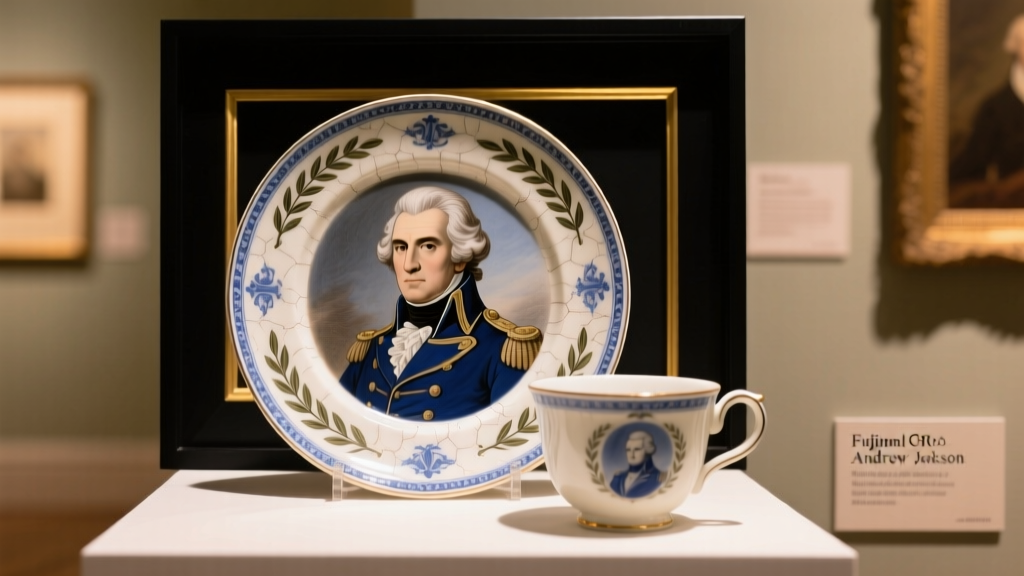
Cup Plates Featuring General Andrew Jackson: Staffordshire Transferware from the 1830s–1840s
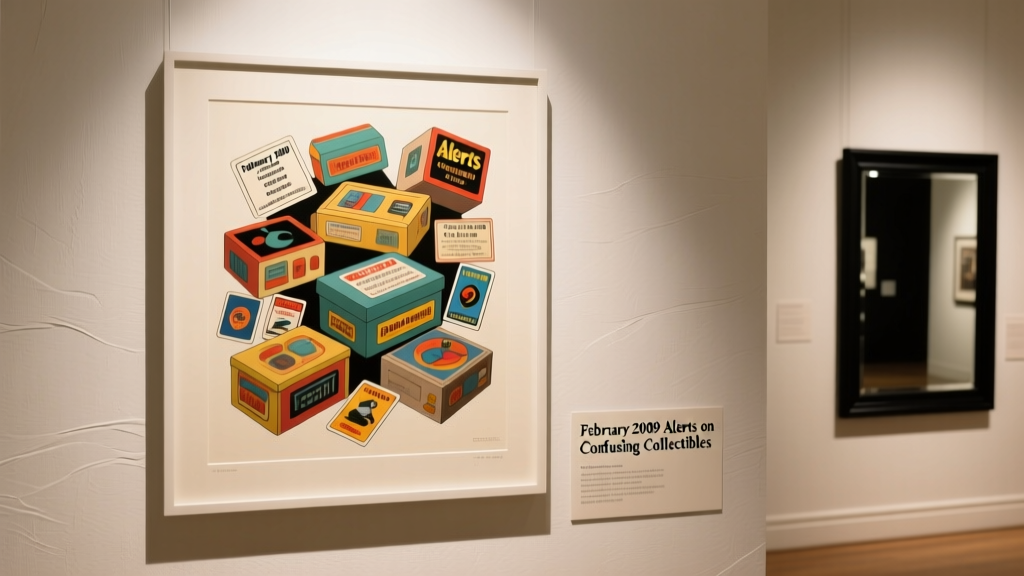
February 2009 Alerts On Confusing Collectibles: Authentication Red Flags, Market Shifts, and Forensic Insights
Kovels.com Item of the Week, March 20, 2012: Hubley Cast Iron Delphinium Doorstop — Authentication, Market History & Collectibility Analysis

John Leach: Authentication, Market Trends, and the Enduring Value of British Studio Pottery
J. J. W. Meeks & Hawkin Pattern Victorian Sofa: Authentication, Provenance, and Market Analysis
Biedermeier Fruitwood Settee: Authentication, Provenance, and Market Value of a 60-Inch High-Back Upholstered Piece
Boxes Wallpaper: Brown Leaves on Cream Ground — Technical Analysis, Authentication Protocol, and Market Positioning (5 ft × 12¼ in Roll)
Marble Sulphide Dog Seated: Authentication, Provenance, and Market Analysis of the 1 1/16-Inch Figurine
Decking Halls: The Art, Authenticity, and Market Value of Victorian Christmas Ornaments