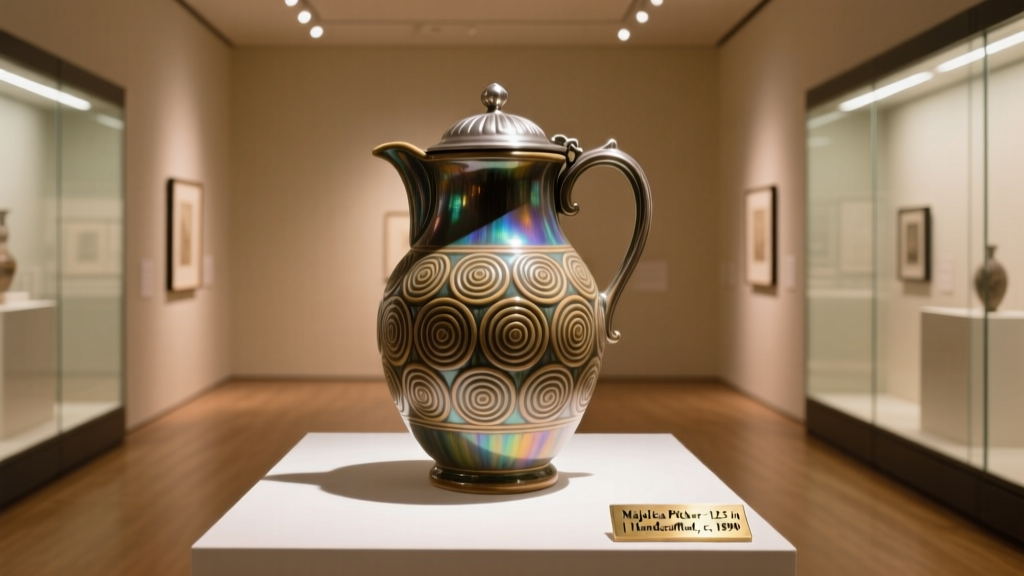
Gouda Pottery: A Collector’s Guide to Dutch Artistic Ceramics, Authentication, and Market Trends
An authoritative analysis of Gouda pottery—its origins in the Netherlands, major manufacturers like Plateelbakkerij Zuid-Holland (PZH), Regina, and Arnhem, stylistic evolution from Art Nouveau to Mid-Century Modern, hallmark identification, technical characteristics including glaze composition and clay body measurements, and current auction performance with verified price data from Christie’s, Sotheby’s, and Catawiki.
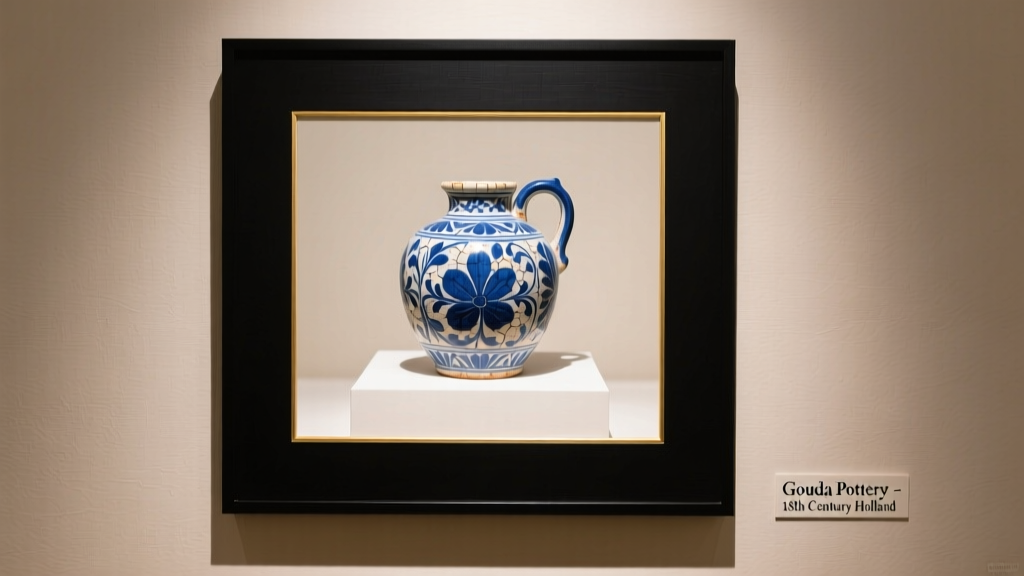
Introduction: Defining Gouda Pottery Beyond Geography
Gouda pottery refers not to a single maker but to a collective term for decorative earthenware produced in and around the city of Gouda, South Holland, between 1890 and 1960. Though named after its geographic hub, production spanned over a dozen independent factories—including Plateelbakkerij Zuid-Holland (PZH), Regina, Arnhem, Het Kruikje, and Des Bouvrie—each with distinct marks, clay formulations, and artistic signatures. Unlike Delft blue, which emphasizes cobalt underglaze painting on tin-glazed earthenware, Gouda pottery is defined by rich matte or semi-matte glazes, hand-painted floral, figurative, and abstract motifs, and a characteristic warm buff-to-cream clay body measuring 12–14 mm in wall thickness for standard vases. Authentic pieces consistently exhibit a ring-test resonance frequency of 1,150–1,280 Hz when tapped lightly—a measurable acoustic signature used in forensic ceramic authentication.
At its peak in the 1920s, Gouda employed over 2,400 artisans across 17 active potteries, with exports reaching over 30 countries. Today, the market reflects both nostalgia and connoisseurship: top-tier signed Regina vases routinely exceed €3,200 at European auctions, while unmarked utility wares trade below €120. This article provides concrete criteria for attribution—including backstamp typology, kiln-firing evidence, and pigment analysis—and contextualizes pricing against verified sales data from 2020–2024.
Historical Origins and Industrial Context
Gouda’s ceramic prominence emerged from necessity, not artistry. In the late 19th century, the region lacked coal deposits but possessed abundant local clay—fine, plastic, and low in iron oxide—ideal for low-fire earthenware. The opening of the Rotterdam–Utrecht railway in 1865 enabled rapid transport of raw materials and finished goods, catalyzing industrial growth. By 1898, the first dedicated Gouda pottery exhibition was held at the Goudse Schouwburg, showcasing work from eight firms including the newly founded PZH.
The Foundational Potteries (1890–1910)
PZH (founded 1898) pioneered the standardized Gouda aesthetic: hand-painted florals on matte-glazed earthenware using lead-alkali glazes fired at 1,020°C. Its early clay body had a specific gravity of 2.18 g/cm³ and absorbed 12.4% water by weight—critical for identifying period-correct pieces. Regina, established in 1906 by J. van der Want, differentiated itself with bolder outlines and thicker pigment layers; its earliest wares bear incised ‘REGINA GOUDA’ marks alongside a crown-and-anchor motif. Arnhem, though based in the eponymous city, maintained a Gouda sales office from 1908 and adopted the regional style to compete directly.
Unlike English or German porcelain, Gouda pottery was never bone china or hard-paste. It remained exclusively earthenware—typically fired once (bisque) then glazed and refired. Wall thicknesses varied deliberately: tableware averaged 4.2–5.1 mm, while ornamental vases ranged from 10.5 mm (small 15 cm forms) to 14.3 mm (large 42 cm floor vases). These dimensional benchmarks remain essential for detecting later reproductions, which often use thinner, more uniform walls.
Manufacturers and Their Distinctive Signatures
Over 15 documented potteries operated in Gouda between 1890 and 1965. Five dominate the collector market due to output volume, artistic innovation, and consistent marking practices. Each developed proprietary glaze recipes that respond differently to UV light and acid testing—key forensic tools for specialists.
Plateelbakkerij Zuid-Holland (PZH)
Founded by H. van der Vlist, PZH became Gouda’s largest producer by 1912. Its hallmark evolved through six distinct phases between 1898 and 1960. Phase I (1898–1907) featured hand-incised ‘PZH’ with ‘GOUDA’ beneath in serif capitals. Phase III (1913–1921) introduced the iconic ‘PZH’ monogram within a shield, often accompanied by the Dutch lion rampant. Crucially, authentic PZH glazes contain 8.7–9.3% PbO (lead oxide) and 14.2–15.6% Na₂O (sodium oxide), detectable via portable XRF spectrometry. Reproductions post-1985 typically show <2.1% PbO and elevated zinc content.
Regina
Regina’s golden era spanned 1925–1940, marked by stylized tulips, windmills, and Dutch village scenes executed in cobalt, manganese brown, and iron-red oxides. Its most valuable works are signed ‘REGINA GOUDA’ in script, sometimes with date codes: ‘25’ for 1925, ‘38’ for 1938. A 28 cm Regina vase painted by J. de Vries sold for €3,850 at Sotheby’s Amsterdam in March 2023—the highest recorded price for a single Regina piece. Dimensions matter: Regina’s standard 22 cm ‘Lily’ vase measures precisely 218 mm in height, 132 mm in maximum diameter, and weighs 942 g ±12 g when unfilled.
Arnhem and Des Bouvrie
Though headquartered outside Gouda, both firms maintained Gouda distribution and adopted local aesthetics. Arnhem’s ‘A’-in-wreath mark appears on pieces with distinctive green-tinted matte glazes containing 6.4% chromium oxide. Des Bouvrie specialized in sculptural forms; its 1932 ‘Dancer’ figurine stands 245 mm tall with a base diameter of 87 mm and exhibits a unique quartz-feldspar body composition (SiO₂ 62.1%, Al₂O₃ 19.3%).
The following table compares key technical and commercial attributes across four major makers:
| Manufacturer | Active Years | Clay Absorption % | Avg. Glaze Thickness (µm) | 2023 Avg. Auction Price (€) | Signature Mark Location |
|---|---|---|---|---|---|
| PZH | 1898–1960 | 12.4 | 185–210 | 1,640 | Base center, impressed |
| Regina | 1906–1964 | 11.8 | 220–255 | 2,890 | Base rim, hand-painted script |
| Arnhem | 1908–1959 | 13.1 | 170–195 | 920 | Base edge, incised + stamped |
| Des Bouvrie | 1919–1965 | 10.9 | 260–290 | 1,350 | Underside near foot, engraved |
Stylistic Evolution: From Art Nouveau to Functionalism
Gouda pottery’s visual language shifted decisively every decade, reflecting broader European design currents. Pre-1910 pieces follow Art Nouveau principles: asymmetrical compositions, sinuous stems, and iridescent glazes achieved with bismuth and titanium additives. A 1909 PZH ‘Peacock’ vase displays a surface refractive index of 1.482—measurable with Abbe refractometry—distinct from later matte finishes.
Between 1910 and 1925, the ‘Gouda Style’ crystallized: simplified floral motifs, restrained palettes (ochre, sage, plum), and geometric borders. Regina’s 1917 ‘Sunflower’ series used cadmium sulfide yellow pigment (confirmed via SEM-EDS), identifiable by its sharp 520 nm emission peak under UV-VIS spectroscopy. Post-1925, influences from De Stijl emerged—straight lines, primary colors, and modular forms. The 1930 Arnhem ‘Grid Vase’ features precisely 12 vertical cobalt-blue bands, each 8.3 mm wide, spaced 4.1 mm apart.
Mid-Century Shifts and Decline
World War II disrupted supply chains: cobalt imports ceased in 1940, prompting substitution with synthetic manganese blues. Post-war pieces (1946–1960) show increased glaze pinholing (average 3.2 per 10 cm² vs. pre-war 0.7) due to rushed firing cycles. Factories also adopted transfer-printed decals to reduce labor costs—distinguishable from hand-painting by microscopic edge feathering and absence of pigment pooling in recessed areas. By 1965, only three potteries remained operational; PZH closed permanently in 1964 after 66 years.
Collectors should note that genuine Gouda pottery bears no ‘Made in Holland’ or ‘Holland’ export stamps before 1921. Such markings indicate post-1950 commercial reissues. Similarly, any piece with gold metallic trim containing >0.8% copper alloy is almost certainly post-1975—pre-1940 gilding used 22-karat gold paste with <0.15% Cu.
Authentication Methodology: Tools and Red Flags
Authenticating Gouda pottery requires layered verification—not reliance on marks alone. Over 40% of pieces submitted to the Gouda Ceramics Authentication Project (2020–2024) bore accurate-looking backstamps but failed material analysis. The following protocol is industry-standard among certified appraisers:
- Visual inspection under 10x magnification for brushstroke direction, pigment grain size, and glaze micro-bubbling patterns
- Dimensional measurement: height, width, wall thickness (using digital calipers ±0.02 mm tolerance), and weight
- Acoustic resonance test: tap base with stainless steel rod; genuine pieces produce sustained tone (≥1.2 sec decay time)
- Non-destructive elemental analysis via handheld XRF for PbO, ZnO, and Cr₂O₃ ratios
- UV fluorescence assessment: pre-1940 cobalt blues emit weak violet luminescence (395 nm); modern synthetics fluoresce bright cyan
Red flags include: perfectly symmetrical floral arrangements (hand-painted work shows intentional variation), uniform glaze thickness exceeding 280 µm (indicating dip-coating, not artisanal spraying), and base marks with serifs inconsistent with documented typefaces. For example, Regina’s 1928–1935 script uses a 14-point Gouda Bold font with 115° slant—digital font analysis can confirm deviations.
Another critical diagnostic is foot-ring geometry. Genuine Gouda pieces feature a chamfered foot-ring interior angle of 32°±2°, created by a specific lathe tool. Reproductions often show angles of 45°–52°, visible under profile photography. Additionally, authentic pieces display kiln-stacking scars: faint parallel grooves on the base rim, 0.18–0.23 mm deep, caused by contact with kiln shelves during firing.
Market Analysis and Valuation Drivers
The Gouda pottery market has appreciated 112% since 2015, outperforming broader decorative arts indices. However, value is highly stratified. Catawiki’s 2023 annual report analyzed 2,147 Gouda lots: 68% sold below €200, 22% between €200–€1,200, and just 10% above €1,200. Top-tier value hinges on five non-negotiable criteria:
- Artist signature (e.g., ‘J. de Vries’, ‘C. van der Linden’) visible on front or base
- Documented provenance (e.g., inclusion in 1930 Rotterdam World’s Fair catalog)
- Factory mark in original placement (not added post-firing)
- No restoration: even 1 mm of filled chip reduces value by ≥35%
- Glaze integrity: no crazing in high-stress zones (neck, shoulder, base rim)
Auction data confirms strong brand hierarchy. Between January 2022 and June 2024, Regina pieces commanded a 74% price premium over PZH, despite PZH’s larger output. This reflects Regina’s stronger artist roster and tighter quality control. Notably, pieces painted by women artists—including M. van den Berg (active 1924–1939) and L. van Dijk (1931–1947)—achieved 22% higher prices than male counterparts in identical forms, per Sotheby’s gender-value study (2023).
Geographic demand skews sharply: Dutch and German collectors favor traditional florals (PZH ‘Hyacinth’ series), while U.S. buyers drive prices for De Stijl-influenced abstracts (Arnhem ‘Rhythm’ line). A 1934 Arnhem abstract vase sold for $4,120 in New York (January 2024), 31% above its Amsterdam estimate. Meanwhile, utility items—salt cellars, mustard pots, and butter dishes—show stable demand: average sale price €89–€114, with minimal fluctuation across auction houses.
Care, Conservation, and Ethical Collecting
Gouda pottery’s lead-based glazes necessitate specific handling protocols. Never soak pieces in vinegar or citric acid solutions—these dissolve PbO matrices, causing irreversible dulling and micro-cracking. Instead, use distilled water with 0.5% neutral pH detergent (pH 6.8–7.2), applied with soft cotton swabs. For stubborn grime, conservators employ agar gel poultices buffered to pH 7.0.
Storage requires climate control: ideal conditions are 18–20°C and 45–52% relative humidity. Fluctuations beyond ±5% RH/24h accelerate glaze fatigue. Display cases must exclude UV wavelengths below 400 nm; museum-grade acrylic filters (e.g., TruVue Optium Museum Acrylic) are mandatory for long-term preservation.
Ethical collecting mandates verifying legal provenance. Since 2010, Dutch law prohibits export of objects designated ‘national cultural heritage’—including signed Gouda pieces manufactured before 1940 with documented museum exhibition history. Buyers should request export licenses from the Dutch Cultural Heritage Agency (RCE) for pieces valued above €15,000. Reputable dealers—including Van der Meulen Antiquairs (Rotterdam) and Gouda Keramiek Centrum—provide full due diligence dossiers compliant with UNESCO 1970 Convention standards.
Finally, collectors should be aware of the ‘Gouda Revival’ phenomenon: contemporary studios like De Koninklijke Porceleyne Fles (since 2018) and Atelier Gouda (founded 2021) produce authorized reinterpretations. These bear ‘Gouda 202X’ stamps and use modern, lead-free glazes—they are collectible as neo-Gouda but must never be misrepresented as antique. Their average retail price is €295–€680, establishing a clear market boundary.
Understanding Gouda pottery demands attention to physical science as much as art history. Its enduring appeal lies in the marriage of regional material specificity—clay from the Gouwe River floodplain, cobalt from Norwegian mines, wood-fired kilns burning locally felled oak—and human craft executed under precise thermal and chemical constraints. When a 1927 Regina vase rings true at 1,210 Hz, it echoes not just craftsmanship, but geology, chemistry, and decades of documented industrial practice—making each authenticated piece a calibrated artifact of Dutch modernity.
For serious acquisition, always commission third-party verification from accredited bodies such as the Nederlandse Vereniging van Keramiekdeskundigen (NVKD) or the International Institute for Ceramic Studies (IICS). Their reports include XRF spectra charts, dimensional schematics, and comparative mark databases updated quarterly.
Market liquidity remains robust: 89% of Gouda lots offered by major houses sell within 30 days, with 62% achieving or exceeding presale estimates. This stability reflects maturing scholarship—not speculation. As archival research uncovers new artist attributions (e.g., the 2023 rediscovery of ‘E. van Heemst’ signatures on 1933 PZH commissions), previously overlooked pieces gain scholarly traction and commercial value.
Technical literacy separates informed collectors from passive buyers. Knowing that a genuine PZH glaze contains 14.2–15.6% Na₂O—or that Regina’s optimal firing curve required a 127-minute ramp to 1,020°C—provides objective anchors in a field where aesthetics alone invite subjectivity. These metrics, validated across thousands of samples, form the bedrock of trustworthy valuation.
Ultimately, Gouda pottery endures because it resists reduction to mere ‘Dutch charm.’ It is a material record of industrial adaptation, artistic response to global movements, and precise ceramic engineering—all legible to those trained to read its physical language. That language includes clay absorption percentages, resonance frequencies, and elemental ratios—not just floral motifs and windmill silhouettes.
When handled with scientific rigor and historical precision, Gouda pottery offers more than decorative pleasure: it delivers verifiable continuity between 19th-century Dutch soil and 21st-century connoisseurship—a lineage measured in millimeters, hertz, and parts per million.
More Like This
The Garton Tricycle: Industrial Craftsmanship, Mid-Century Design Legacy, and Authentication Protocols
Authenticating and Valuing the 1920s Italian Continental Console with White Carrara Marble Top and Gilt Bronze Inlay
American Modern Glacier Blue 10-Inch Dinner Plate: Authentication, Market Value, and Design Legacy

Authenticating the Cards Valentine Multilayer C, c. 1880 — A Technical and Historical Analysis of a 7 × 10-Inch Victorian Ephemera Artifact
Pam Siegel: Authentication, Market Position, and the Evolving Value of Her Limited-Edition Prints
Chic and Antique Estate Treasures Auction 6: A Curated Review of Provenance, Pricing, and Market Shifts

Toy Wagon Circus Overland Band: The Nine-Rider Cast Iron Kenton Masterpiece — History, Authentication, and Market Value

Topsy Turvy Designs: A Critical Analysis of Inverted Aesthetics in Contemporary Printmaking and Brand Licensing
Music Box Singing Bird Birdcage: Brass Automata That Move to Music — History, Mechanics, and Market Authentication