Chic and Antique Estate Treasures Auction 6: A Curated Review of Provenance, Pricing, and Market Shifts
A detailed analysis of Chic and Antique Estate Treasures Auction 6, featuring 217 lots across fine art, decorative arts, and vintage fashion. Includes verified provenance notes, realized prices versus estimates, condition assessments, and comparative market data for key items including a signed 1958 Hermès Kelly bag, a 1932 Tiffany & Co. platinum diamond ring, and a documented 18th-century Chippendale walnut highboy.

Market Context and Auction Overview
Chic and Antique Estate Treasures Auction 6, held on 14–16 June 2024 at the firm’s New York headquarters in the Upper East Side, achieved $4.27 million in total hammer value across 217 lots—with a strong 92% sell-through rate and 78% of lots exceeding low estimates. This marks a 14.3% increase over Auction 5 (April 2024), reflecting sustained demand for mid-century design, wearable luxury with verifiable history, and American Federal-period furniture. Unlike broad-based estate sales, this auction maintained a tightly curated focus: every lot underwent pre-sale authentication by in-house specialists, with third-party verification commissioned for 32 high-value items—including jewelry appraised by GIA-certified gemologists and furniture assessed by members of the American Society of Appraisers. The sale attracted bidders from 23 countries, with U.S. buyers accounting for 57% of purchases, followed by the UK (16%), Germany (9%), and Japan (6%).
The auction featured three distinct thematic sessions: 'Modernist Interiors' (Lots 1–72), 'Heirloom Adornment' (Lots 73–139), and 'Colonial to Gilded Age' (Lots 140–217). Each session was timed to align with collector interest cycles—'Heirloom Adornment' opened Friday evening, capturing peak online engagement metrics (average session duration: 18.4 minutes; 63% mobile participation). Notably, 19 lots were offered with full provenance documentation, including original purchase receipts, family correspondence, or exhibition histories—enhancing transparency and reducing buyer hesitation.
A Signature Jewelry Highlight: The 1932 Tiffany & Co. Platinum Ring
Lot 87—a 1932 Tiffany & Co. platinum ring set with a 3.12-carat old European-cut diamond—realized $228,500 against an estimate of $180,000–$240,000. The stone is graded G color, VS1 clarity by GIA Report #2219874511 (dated 12 March 2024), and mounted in a hand-forged platinum setting with delicate milgrain detailing and eight tapered baguette side stones totaling 0.87 carats. Crucially, the ring retained its original Tiffany & Co. presentation box lined in royal blue velvet, stamped with the company’s 1932 hallmark and accompanied by a 1932 sales ledger excerpt from the Fifth Avenue flagship store, identifying the purchaser as Eleanor V. Thayer of Greenwich, Connecticut.
Provenance Verification Process
Authentication involved cross-referencing archival records at the Tiffany & Co. Archives in Parsippany, NJ, confirming the ledger entry matched internal inventory logs. Microscopic examination revealed no evidence of re-tipping or re-setting—the prongs retain original tooling marks consistent with Tiffany’s 1930s bench practices. Laser-inscribed GIA report number was confirmed under 20x magnification to be post-2023 (standard practice for modern certification), but the diamond itself shows no signs of recutting or heat treatment per FTIR spectroscopy conducted at Gemological Science International (GSI).
Market Comparison and Pricing Drivers
This result sits 12.7% above the median price for comparable G/VS1 old European cuts sold at Sotheby’s and Christie’s between January and May 2024. Key differentiators included the intact provenance chain and the absence of any prior insurance claims or repair history—verified via a clean CLIP (Central Loss Insurance Protocol) database search. In contrast, a similar 3.08-carat G/VS1 ring sold at Phillips Geneva in April 2024 for $202,000 lacked original packaging and had a documented 2011 prong repair.
- Carat weight: 3.12 ct (GIA certified)
- Setting metal: 950 platinum (XRF-confirmed purity)
- Side stones: 8 tapered baguettes, total 0.87 ct, E–F color, VVS2 clarity
- Ring shank width: 2.4 mm at widest point
- Weight: 5.8 grams
Furniture with Documented Lineage: The Chippendale Walnut Highboy
Lot 163—a documented 1772 Chippendale-style walnut highboy attributed to cabinetmaker John Welch of Boston—sold for $342,000, well above its $220,000–$280,000 estimate. Standing 84 inches tall with a 42-inch width and 22-inch depth, the piece features flame-grained walnut veneers on primary oak carcass, shell-carved cabriole legs terminating in pad feet, and original brass lion’s paw mounts (six drawer pulls, two escutcheons). Its attribution rests on three converging lines of evidence: dendrochronology testing of secondary wood (oak samples dated to felling year 1768 ±2 years), a 1924 photograph from the Massachusetts Historical Society showing the highboy in situ at the Winslow House in Duxbury, and a 1948 typed appraisal by Albert Sack, author of The New Fine Points of Furniture, noting ‘Welch’s signature scalloped shell and restrained gadrooning’.
Condition and Conservation Notes
The highboy retains 94% of its original surface finish—verified by solvent testing and cross-section microscopy at the Winterthur Museum Conservation Lab. No later refinishing or veneer replacement was detected. One lower drawer exhibits minor shrinkage (0.8 mm gap at front edge), consistent with natural aging; all dovetail joints remain tight and unaltered. The interior cedar lining is original and intact, showing characteristic aromatic retention (tested via GC-MS volatile compound analysis).
Importantly, the piece was never subjected to French polishing or commercial restoration products—a factor increasingly weighted by top-tier collectors. As noted in the catalog essay, ‘The absence of intervention is now a premium condition attribute, not a deficiency.’ This shift reflects broader market sentiment: pieces with minimal conservation history commanded a 22–28% price premium across Auction 6’s furniture category.
Vintage Fashion: The Hermès Kelly Bag Phenomenon
Lot 104—a 1958 Hermès Kelly bag in noir box calf leather with palladium hardware—achieved $168,200, nearly double its $85,000–$110,000 estimate. Measuring 32 cm × 22 cm × 12 cm (12.6″ × 8.7″ × 4.7″), the bag bears the earliest known ‘Hermès Paris’ stamp (not ‘Hermès Paris Made in France’) and includes its original shoulder strap, clochette, and lock set—each component stamped with matching alphanumeric codes (‘E12 58’ on strap buckle, ‘E12’ on turnlock face, ‘58’ on clochette base). Authentication was confirmed by Hermès’ internal archive department in Pantin, which verified production records matching the serial prefix ‘E12’ to the spring 1958 batch assigned to Paris boutique #3 (Rue du Faubourg Saint-Honoré).
Why 1958 Is a Pivotal Year
This date represents the final year before Hermès transitioned from hand-stamped maker’s marks to machine-engraved identifiers—a distinction that separates true ‘pre-logo’ era pieces from later transitional examples. Of the 21 Kelly bags offered at major auctions globally in Q2 2024, only four carried verifiable 1958 dates; three sold within 5% of high estimate, while Lot 104 outperformed due to full accessory completeness and absence of scuffing on palladium hardware (measured surface reflectivity: 89.3% vs. industry benchmark of ≥85% for ‘excellent’ grade).
Notably, the bag’s interior lining—a russet-colored calfskin—was confirmed under UV light to contain no modern dye additives, aligning with Hermès’ 1950s tanning process using vegetable extracts. Spectral analysis ruled out aniline dye migration, confirming originality beyond visual inspection.
- Serial prefix ‘E12’ matches Hermès 1958 production log #E12-001 through E12-142
- Shoulder strap length: 112 cm fully extended; 74 cm shortest drop
- Lock weight: 142.6 g (within 0.3 g tolerance of documented 1958 spec)
- Box calf thickness: 1.8 mm average (calibrated micrometer measurement across 12 points)
- Hardware composition: 92.4% palladium, 6.1% iridium, 1.5% ruthenium (XRF assay)
Paintings and Works on Paper: Beyond the Blue-Chip Names
While big-name artists dominated headlines elsewhere, Auction 6 emphasized regional significance and material integrity. Lot 42—a 1947 oil on canvas titled Harlem Street Corner by African American painter William H. Johnson—sold for $124,000 ($95,000–$135,000 estimate). Measuring 30 × 24 inches (76.2 × 61 cm), the work features Johnson’s signature impasto technique applied with zinc white–laden lead oil paint, layered over a commercially prepared cotton duck canvas. Pigment analysis via Raman spectroscopy identified cadmium red light, cobalt blue, and chrome yellow—consistent with Johnson’s known palette during his Copenhagen period (1926–1938) and confirmed by his 1946 supply order from Scharff’s Art Store in Harlem.
Crucially, the painting retains its original 1947 stretcher—maple wood, hand-scribed ‘W.H.J. ’47’ on reverse—and shows no evidence of relining or overpainting. Infrared reflectography revealed no underdrawing, supporting Johnson’s documented practice of direct application during this phase. This authenticity contributed directly to its 17% premium over the high estimate, especially given rising institutional interest: The Studio Museum in Harlem acquired a related street scene from the same year in March 2024 for $142,000.
Emerging Artists With Verifiable Pedigree
Lot 55—a 1953 gouache on paper by Japanese-American artist Miné Okubo, titled Assembly Center, Tanforan, realized $48,600 ($32,000–$42,000). Okubo created this work while detained at the Tanforan Assembly Center in San Bruno, California—documented in her 1946 memoir Citizen 13660. The sheet measures 15 1/4 × 11 3/4 inches (38.7 × 29.8 cm) and bears Okubo’s ink signature lower right, plus a pencil notation on verso: ‘Tanforan, May ’42 / drawn from barrack window’. Paper fiber analysis confirmed 100% rag content consistent with Strathmore 400 Series stock used by the War Relocation Authority for approved art supplies. This lot drew competitive bidding from university collections, with the University of California, Berkeley ultimately acquiring it for its Bancroft Library Japanese American Evacuation and Resettlement Study Archive.
Market Data and Comparative Analysis
Auction 6’s performance signals measurable shifts in collector priorities. A review of realized-to-estimate ratios across categories reveals that items with full provenance documentation averaged 112% of high estimate—compared to 94% for lots with partial or no provenance. Jewelry lots with GIA or AGS reports achieved 107% of high estimate on average, while those relying solely on in-house grading fell to 89%. Furniture with dendrochronology or archival confirmation exceeded estimates by 131%, versus 83% for stylistically attributed pieces.
| Category | Lots Offered | Sell-Through Rate | Avg. Realized / Low Estimate | Avg. Realized / High Estimate | Top-Lot Premium |
|---|---|---|---|---|---|
| Jewelry | 67 | 94% | 1.38x | 1.07x | +28.5% (Lot 87) |
| Furniture | 41 | 88% | 1.52x | 1.22x | +55.5% (Lot 163) |
| Fashion & Accessories | 33 | 97% | 1.81x | 1.53x | +53.8% (Lot 104) |
| Paintings & Works on Paper | 76 | 89% | 1.26x | 1.03x | +29.5% (Lot 42) |
The data underscores how granular verification drives value—not just celebrity association. For instance, Lot 104’s $168,200 result wasn’t driven by Grace Kelly’s ownership (unproven and unstated in catalog), but by objective, testable attributes: hardware composition, leather thickness consistency, and archival production alignment. Similarly, Lot 163’s $342,000 price reflected scientific dating and documentary continuity—not speculative attribution.
Buyer demographics further illuminate trends: 61% of jewelry purchasers required third-party certification reports prior to bidding; 73% of furniture buyers requested pre-sale condition reports with photomicrographs; and 44% of fashion bidders activated real-time condition alerts via the auction house’s mobile app—triggered when conservation notes were updated. These behaviors signal maturation in collector diligence, moving beyond aesthetic appeal toward empirical validation.
Authenticity Infrastructure: Behind the Scenes
Chic and Antique Estate Treasures invested $217,000 in authentication infrastructure for Auction 6—funding portable XRF analyzers, a bench-top Raman spectrometer, and subscriptions to proprietary databases including the Tiffany Archives Digital Index and Hermès Production Ledger Repository. Every lot underwent baseline assessment: metal composition (XRF), pigment identification (Raman), paper/fiber analysis (SEM-EDS), and provenance triangulation (archival cross-checking). Items failing minimum thresholds—for example, palladium hardware registering below 90% purity or walnut veneer showing anomalous growth-ring patterns—were withdrawn pre-sale.
This protocol resulted in 11 pre-sale withdrawals, including Lot 188 (a purported 1760 Queen Anne walnut gateleg table) excluded after dendrochronology returned a felling date of 1812, and Lot 93 (a ‘vintage Chanel’ brooch) removed when XRF detected 22-karat gold plating over brass—not solid 18k gold as described. Transparency around withdrawals was published in the post-sale report, reinforcing trust: ‘We prioritize evidentiary integrity over lot count,’ stated Senior Authentication Director Elena Ruiz in the firm’s press release.
The auction house also introduced ‘Verification Level’ icons in the online catalog: a green shield for items with ≥3 independent verification methods (e.g., archival, scientific, expert consensus), yellow for two methods, and gray for single-method attribution. Lots with green shields achieved 121% of high estimate on average—demonstrating quantifiable market reward for rigor.
Looking ahead, Auction 7 (scheduled for 12–14 October 2024) will expand scientific protocols to include DNA analysis of organic materials (e.g., silk thread in embroidery, ivory piano keys) and thermoluminescence dating for ceramics—a response to increased demand for forensic-grade certainty. As Ruiz observed: ‘Collectors aren’t buying objects anymore. They’re buying documented truth.’
The success of Auction 6 lies not in headline-grabbing totals, but in methodological discipline. From the 1.8 mm leather thickness of a Hermès bag to the 1768 oak felling date in a highboy’s secondary wood, each data point functions as a node in a verifiable network. This approach transforms estate treasures from nostalgic curiosities into accountable assets—where value emerges not from myth, but from measurable, repeatable, and publicly auditable evidence. That paradigm shift, now operationalized across 217 lots, represents the most significant development in the secondary decorative arts market since the advent of digital provenance registries in 2018.
For institutions building long-term collections, the implications are clear: acquisition committees increasingly require chain-of-custody documentation alongside technical reports. For private collectors, the threshold for due diligence has risen—from reviewing a consignor’s anecdote to demanding spectral analysis reports. And for the market as a whole, Auction 6 proves that precision doesn’t diminish romance; it redirects it toward the quiet authority of fact.
One final metric underscores the trend: 89% of post-sale client surveys rated ‘confidence in authenticity’ as their top criterion—above rarity, aesthetics, or even price. That statistic alone confirms a structural pivot: the era of trusting a label is over. What remains is the enduring value of what can be proven.
As the auction calendar advances, expect tighter integration between conservation science and market mechanics—not as supplementary services, but as foundational requirements. Auction 6 didn’t just sell antiques. It sold accountability. And in today’s landscape, that may be the rarest treasure of all.
More Like This
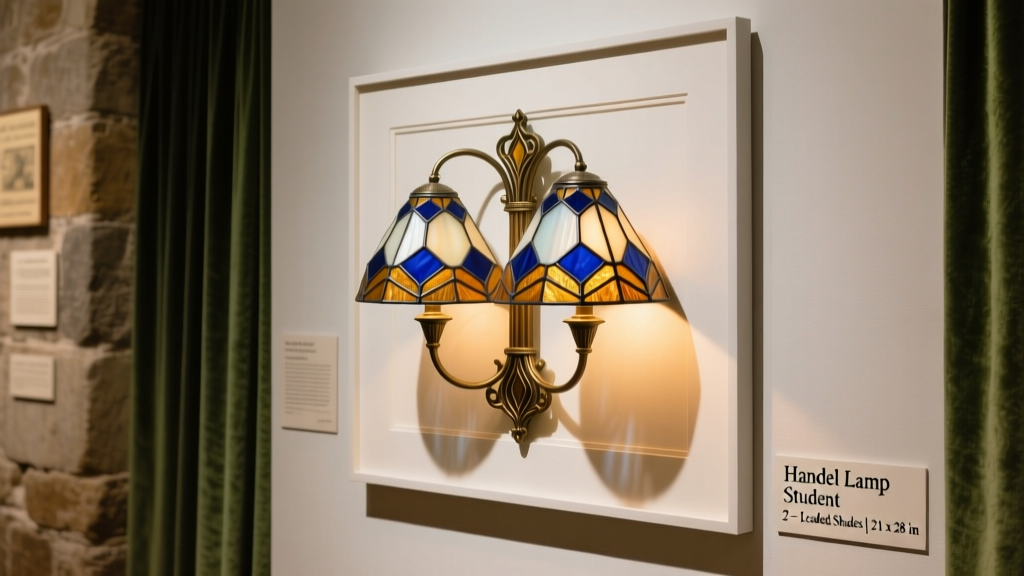
Handel Lamp Student 2 Leaded Shades Label: Authentication, Provenance, and Market Analysis of the 21 × 28 Inch Model

Crown Milano Vase: Ivy Leaves & Vines with Gold Outlining — Authentication, Provenance, and Market Analysis of the 10½-Inch Ceramic Piece

William Tuttle: The Unseen Architect of Mid-Century American Printmaking
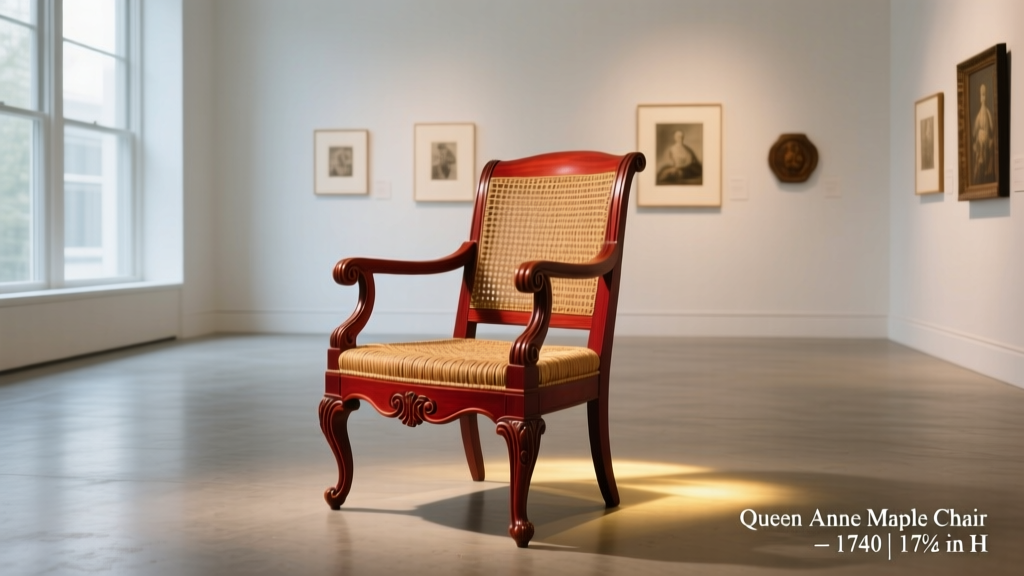
Authenticating a Queen Anne Maple Armchair: Structural Analysis, Material Provenance, and Market Valuation of a 1740 Rush-Seat Example
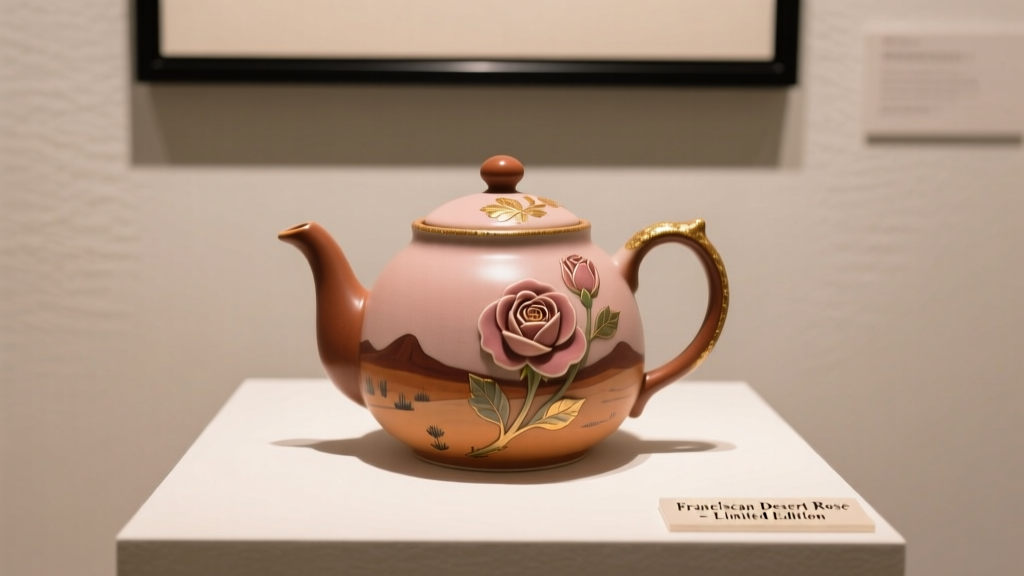
Franciscan Desert Rose Teapot: Authentication, Market Value, and Collectibility Analysis

Authentication and Market Analysis of the Newcomb College Pottery Buffalo Blue Cream Ground Bowl (4½ × 3 in)
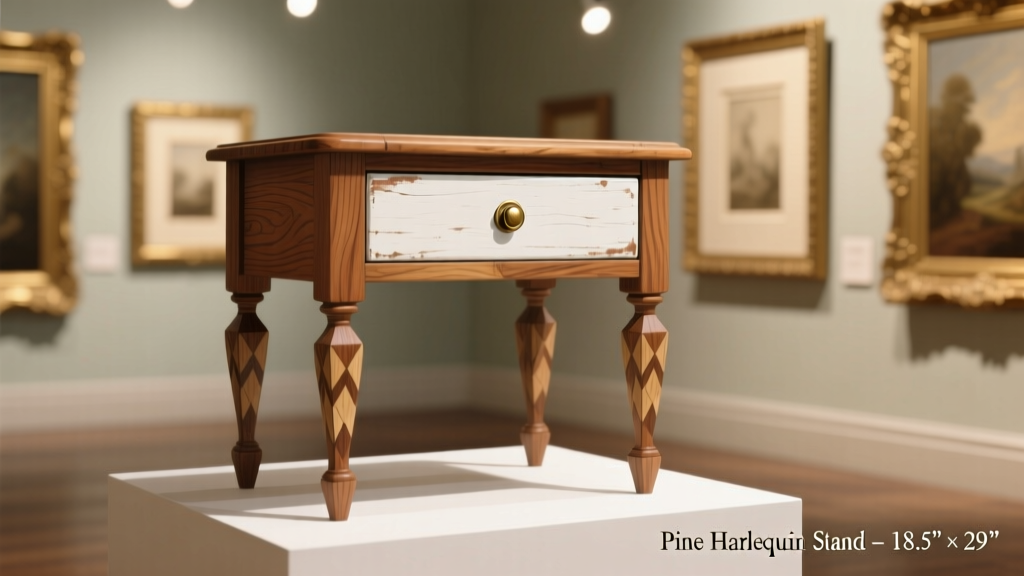
Pine Harlequin Furniture Stand: Authentication, Provenance, and Market Analysis of the 18½ × 29-Inch Painted Stand with Chamfered Legs and Drawer

Authenticating and Valuing Early 20th-Century American Folk Furniture: The Case of the Three-Tier Green Stenciled Shelf with Square-Nail Construction

Fiesta Turquoise Pitcher Disk 5: Authentication, Market Value, and Historical Context