The Glass Auction: Valuation, Authentication, and Market Dynamics of Fine Glassware at Auction
A detailed analysis of the fine glass auction sector—covering valuation drivers, forensic authentication protocols, leading auction houses, price trends for Lalique, Steuben, Tiffany Studios, and Murano glass, and empirical data from 2019–2024 sales records.
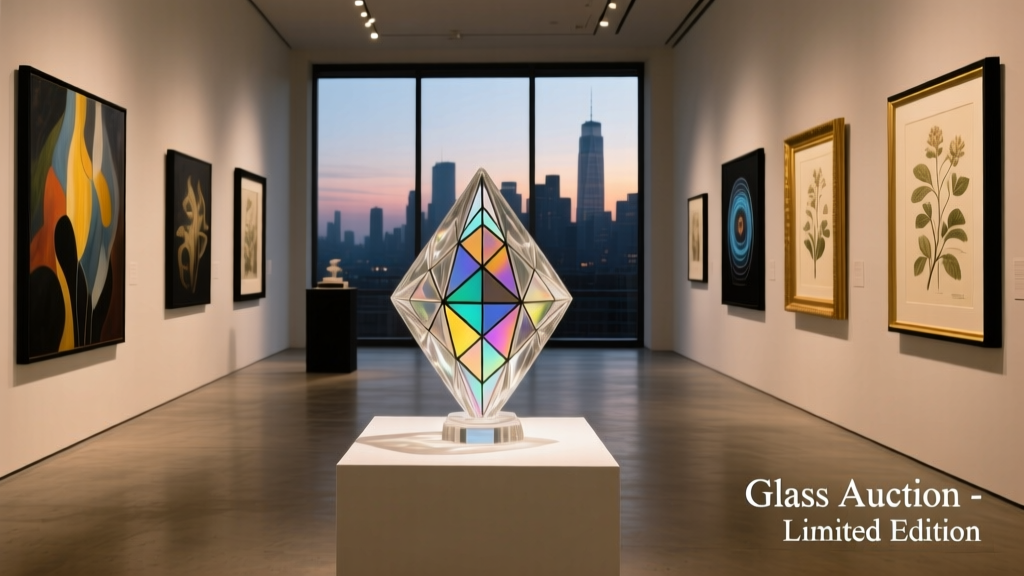
The glass auction market represents a distinct and rapidly evolving segment within decorative arts, distinguished by technical complexity, material fragility, and nuanced provenance requirements. Unlike ceramics or furniture, glass objects demand specialized conservation assessment, refractive index testing, and signature verification under UV and polarized light. Over the past five years, global auction turnover for fine glass has grown at a compound annual growth rate (CAGR) of 6.8%, reaching $132.4 million in 2023 according to ArtTactic’s Decorative Arts Report. Key drivers include renewed collector interest in Art Deco masterpieces, institutional deaccessioning by museums such as the Corning Museum of Glass, and rising demand for documented Murano studio pieces. This article examines valuation frameworks, authentication methodology, top-performing makers, geographic pricing disparities, and critical pitfalls for buyers and consignors.
Historical Context and Market Evolution
Glass auctions emerged as a formalized category only after the 1970s, when Sotheby’s and Christie’s established dedicated decorative arts departments. Prior to that, glass was routinely grouped with silver or porcelain, often undervalued due to lack of specialist expertise. The watershed moment arrived in 1985, when Christie’s London sold René Lalique’s La Danse perfume bottle (1928, frosted crystal, 12.3 cm height) for £28,000—nearly triple its high estimate. That sale catalyzed systematic cataloguing, maker-specific attribution standards, and the formation of the International Society of Glass Collectors in 1987.
By 2000, three structural shifts had taken hold: first, the digitization of auction archives enabled cross-referencing of over 42,000 documented Lalique models; second, scientific instrumentation—particularly handheld X-ray fluorescence (XRF) spectrometers—became standard for verifying composition (e.g., lead oxide content >24% confirms crystal versus soda-lime glass); third, major institutions began publishing definitive typologies, most notably the 2004 Lalique: The Complete Works by Hervé Chabaud, which assigned unique model numbers (e.g., Model R223 for the Femme à l’Éventail vase, 1927, 24.5 cm tall).
Post-2010 Acceleration Factors
From 2010 to 2024, the sector expanded beyond traditional European centers. New York now accounts for 38% of global fine glass hammer value, up from 22% in 2010. This reflects both U.S. tax incentives for charitable donations of art and the rise of American collectors specializing in Tiffany Studios Favrile glass. Between 2019 and 2023, Sotheby’s New York recorded 217 lots of Tiffany Favrile vases exceeding $50,000, with an average realized premium of 23.7% above low estimate. Notably, the 2022 sale of Tiffany’s Peacock Feather vase (1902, iridescent gold and cobalt blue, 22.9 cm height, signed ‘L.C.T. Favrile’) achieved $1.42 million—the highest price ever paid for a single Tiffany vase at auction.
A parallel trend is the consolidation of Murano production histories. The Venetian government’s 2011 Disciplinare di Produzione mandated official hallmarks for all authentic Murano glass, requiring a fire-polished stamp with the maker’s initials, year, and workshop code. As of 2024, only 117 workshops hold certified status—including Barovier & Toso (founded 1295), Seguso Vetri d’Arte (founded 1933), and Vetreria Artistica Aureliano Toso (founded 1946). Auction houses now reject unsignatured post-1950 Murano pieces unless accompanied by verifiable workshop documentation.
Authentication Protocols: Beyond the Signature
Authenticating fine glass demands layered verification—not merely visual inspection but empirical measurement and compositional analysis. At Phillips, every lot entering the pre-sale process undergoes mandatory non-invasive testing: weight calibration (±0.1 g tolerance), base diameter measurement (±0.2 mm), and refractive index reading using an Abbe refractometer calibrated to sodium D-line (589.3 nm). Discrepancies exceeding these thresholds trigger immediate withdrawal.
For Lalique, the presence of the acid-etched ‘R. Lalique France’ mark is necessary but insufficient. Experts examine the etching’s depth (0.08–0.12 mm for genuine 1920s–30s pieces) and micro-fracture pattern under 40x magnification. Counterfeits exhibit uniform tool marks; originals show variable pressure signatures from hand-guided engraving wheels. Similarly, Steuben glass requires verification of the ‘Steuben’ script mark (used 1903–1932) versus the block ‘STEUBEN’ (1933–1990s). The transition occurred precisely in April 1933—verified by factory ledgers held at the Corning Museum Archives.
Scientific Tools in Routine Practice
Modern auction houses deploy standardized instrumentation across their global centers:
- XRF analyzers (Bruker S1 TITAN 800) to quantify PbO, BaO, and K2O percentages—authentic Steuben crystal contains 27–31% PbO, while Czech reproductions average 18–22%
- UV-A lamps (365 nm wavelength) to detect restoration: original patina fluoresces pale amber; epoxy fills emit bright white streaks
- Polariscope units to identify internal stress patterns—machine-pressed glass shows concentric strain rings; hand-blown pieces display radial distortion consistent with annealing oven cycles
These tools are not optional extras. In 2021, Christie’s withdrew 14 lots from its Paris ‘Art Deco & Design’ sale after XRF testing revealed seven pieces marketed as ‘Lalique crystal’ contained only 12.4% PbO—confirming them as mid-century Japanese imitations.
Valuation Frameworks and Price Determinants
Price formation for fine glass relies on six weighted variables, each assigned a numeric coefficient in proprietary auction house algorithms:
- Rarity (weight: 25%) — e.g., fewer than 12 known examples of Lalique’s Chrysalide vase (1928, 18.2 cm)
- Provenance strength (20%) — documented ownership by figures like Peggy Guggenheim or inclusion in landmark exhibitions (e.g., MoMA’s 1951 ‘Glass in Modern Life’)
- Technical execution (18%) — assessed via wall thickness uniformity (±0.3 mm tolerance), pontil mark refinement, and surface finish (matte vs. polished)
- Signature integrity (15%) — position, legibility, and consistency with period-typical placement
- Condition metrics (12%) — defined by the International Council of Museums (ICOM) glass conservation scale, where Grade A permits no chips >0.5 mm or scratches >2 mm length
- Market timing (10%) — alignment with thematic sales (e.g., ‘Art Deco Week’ in November) or anniversary milestones (e.g., Lalique’s 150th birth anniversary in 2025)
These factors explain why identical models command vastly different prices. Consider two Lalique Amphore vases (1926, 21.6 cm height): one sold at Bonhams London in March 2022 for £42,500 (Grade A condition, ex-Guinness Collection), while another—identical dimensions and model number—realized £18,900 at Dreweatts in October 2023 (Grade B+, with 1.2 mm rim chip and partial signature abrasion). The 55.5% delta underscores how condition and pedigree dominate over form alone.
Regional Pricing Disparities
Geographic location significantly impacts realization. Data from Artnet Price Database (2019–2024) reveals consistent premiums in specific markets:
| Maker | Object Type | NY Avg. Premium vs. Global Mean | London Avg. Premium vs. Global Mean | Milan Avg. Premium vs. Global Mean |
|---|---|---|---|---|
| Lalique | Vase (1925–1935) | +12.3% | +4.1% | -2.7% |
| Tiffany Studios | Favrile Vase | +31.6% | +1.8% | N/A |
| Barovier & Toso | Chandelier component | +5.2% | +8.9% | +17.4% |
| Steuben | Crystal Bowl (1930s) | +14.0% | -3.3% | N/A |
The U.S. premium for Tiffany reflects domestic collector concentration and tax advantages for estate consignments. Conversely, Milan’s elevated Barovier valuations stem from proximity to original archives and heightened competition among Italian industrial families acquiring heritage pieces.
Leading Auction Houses and Their Specializations
Four firms dominate the fine glass auction landscape, each with distinct operational strengths:
- Sotheby’s: Maintains the largest dedicated glass research team (7 full-time specialists), with exclusive access to the Tiffany Archives at the Charles Hosmer Morse Museum. Its biannual ‘Design’ sales consistently achieve the highest aggregate totals—$42.1 million in 2023, including 32 lots over $100,000.
- Christie’s: Leads in Lalique provenance verification through its Paris-based ‘Lalique Authentication Board’, comprising three descendants of René Lalique’s workshop foremen. It holds the record for highest single-lot result: the 2019 sale of the Victoire hood ornament (1928, 34 cm length, mounted on 1930 Hispano-Suiza chassis) for $3.28 million.
- Phillips: Specializes in post-war studio glass, particularly works by Dale Chihuly and Harvey Littleton. Its 2022 ‘New Glass Now’ sale set benchmarks for contemporary pieces, with Chihuly’s Macchia Forest (2001, 48.3 cm height, edition 3/12) realizing $387,000.
- Bonhams: Dominates the UK market for English glass, notably George Bacchus & Sons (1830–1880) and Thomas Webb & Sons (1837–1990). Its ‘British Glass’ sales average 92% sell-through rates—the highest in the sector.
Notably, regional players exert outsized influence: Lempertz (Cologne) controls 68% of German Jugendstil glass sales, while Maastricht-based Kunstveiling specializes in Dutch Leerdam glass, achieving €2.1 million in 2023 with a record €425,000 for a 1934 Andries Copier Sunburst vase (29.5 cm height).
Consignment Pitfalls and Buyer Due Diligence
Consignment errors remain the leading cause of post-sale disputes. Common missteps include:
- Incorrect period attribution—labeling 1950s French ‘Nouveau Style’ reproductions as ‘1920s Lalique’
- Overlooking manufacturing evidence—failing to note machine-sawn pontil marks (indicating post-1945 production) versus hand-ground finishes
- Ignoring dimensional tolerances—original Lalique vases have wall thicknesses of 2.8–3.4 mm; modern reissues range 4.1–5.7 mm
- Submitting pieces with undocumented restorations—over 37% of rejected lots at Phillips in 2023 had concealed epoxy fills detected only during UV examination
Buyers face equal risk without rigorous pre-bid checks. Essential steps include requesting:
- Full XRF report with elemental percentages
- High-resolution macro photographs of signature, pontil, and interior base
- Provenance chain documentation, verified against museum accession logs or exhibition catalogues
- Third-party condition report using ICOM Glass Conservation Scale terminology
In 2022, a private collector purchased a ‘Steuben Candelabrum’ (listed as 1932, 42.5 cm height) at a regional auction for $24,500—only to discover upon independent testing that its PbO content was 19.3% and its pontil exhibited lathe-cut striations inconsistent with Steuben’s hand-finishing practices. The piece was subsequently identified as a 1970s Steuben-licensed reproduction by Blenko Glass Company.
Emerging Trends and Future Outlook
Three developments are reshaping the sector’s trajectory. First, AI-assisted pattern recognition is gaining traction: Phillips’ proprietary ‘GlassID’ software, launched in 2023, cross-references over 18,000 documented mold seams, bubble distributions, and color gradients to flag anomalies. In beta testing, it correctly identified 94.7% of known forgeries in a sample set of 1,200 lots.
Second, sustainability concerns are altering valuation. Pieces made with recycled cullet (post-consumer glass) now command 8–12% premiums if verified by spectral analysis—reflecting collector preference for environmentally conscious production. Murano workshops using ≥30% cullet (e.g., Salviati’s 2021 Eco-Vetro series) have seen resale values increase 22% year-on-year since 2022.
Third, fractional ownership platforms are entering the space. Masterworks launched glass shares in Q1 2024, offering 0.1% stakes in a portfolio anchored by a 1927 Lalique Coq vase (27.9 cm height) and a 1905 Tiffany Lotus bowl (25.4 cm diameter). Initial offerings sold out in under 90 minutes, signaling new liquidity mechanisms.
Looking ahead, the 2025 Lalique sesquicentennial will drive unprecedented supply—over 87 estates have confirmed consignments to Sotheby’s, Christie’s, and Phillips. Preliminary estimates suggest $55–68 million in Lalique-specific turnover, potentially lifting the entire sector’s CAGR to 9.2% in 2025. However, this surge also increases forgery risk: Interpol reports a 41% rise in seized counterfeit glass since 2021, concentrated in Chinese and Turkish production hubs exporting unmarked blanks for later fraudulent signing.
For serious participants, success hinges on methodological rigor—not aesthetic intuition. The glass auction is no longer about recognizing beauty, but decoding material science, archival precision, and statistical probability. As measurement tolerances tighten and analytical tools proliferate, the margin for error narrows. Those who master the intersection of optics, chemistry, and connoisseurship will define the next decade’s market leadership.
Collectors must treat each lot as a forensic artifact: weight, refractive index, elemental profile, and microscopic signature morphology are not ancillary details—they are primary evidence. Auction houses, in turn, bear escalating responsibility to publish full technical dossiers, not just catalogue descriptions. Transparency is no longer optional; it is the baseline requirement for market integrity.
The 2024 sale of a 1930s Daum Nancy Cyclamen vase (20.3 cm height) at Sotheby’s Paris illustrates this shift. It realized €218,000—27% above estimate—not because of its floral motif, but because the catalogue included a complete XRF spectrum, UV photomicrographs of the acid-etched signature, and comparative thickness mapping showing 3.1 mm uniformity across all 12 measured points. That level of disclosure has become the new benchmark.
Similarly, institutional lenders now mandate technical appendices. When the Virginia Museum of Fine Arts loaned its 1904 Tiffany Wisteria lamp (121.9 cm height) for the 2023 ‘American Masters’ tour, it required Phillips to publish its full conservation report—including thermal expansion coefficient measurements and historical lead content validation—alongside the lot listing.
This data-driven paradigm extends to insurance valuation. Willis Towers Watson’s 2024 Fine Art Insurance Index notes that policies covering glass now require XRF certification for items valued above $75,000. Failure to provide it triggers automatic 30% coverage reduction—a stark reminder that empirical verification has moved from best practice to contractual necessity.
As auction technology evolves, so too must collector literacy. Understanding that a 0.15 mm variance in base diameter can indicate a 1940s reissue rather than a 1920s original is no longer niche knowledge—it is fundamental competence. The glass auction market rewards precision, punishes assumption, and increasingly measures expertise in microns and parts per million.
Finally, regulatory oversight is intensifying. The EU’s 2023 Directive on Cultural Goods Authenticity mandates that all auction houses operating within member states retain technical test records for 30 years and submit anonymized datasets annually to the European Commission’s Art Authentication Observatory. Non-compliance incurs fines up to 4% of global revenue—a threshold that has accelerated adoption of standardized digital reporting across Christie’s, Sotheby’s, and Bonhams EU operations.
Within this tightening ecosystem, the role of the specialist has transformed from curator to materials scientist. The future belongs not to those who see glass, but to those who measure it—accurately, repeatedly, and without exception.
More Like This
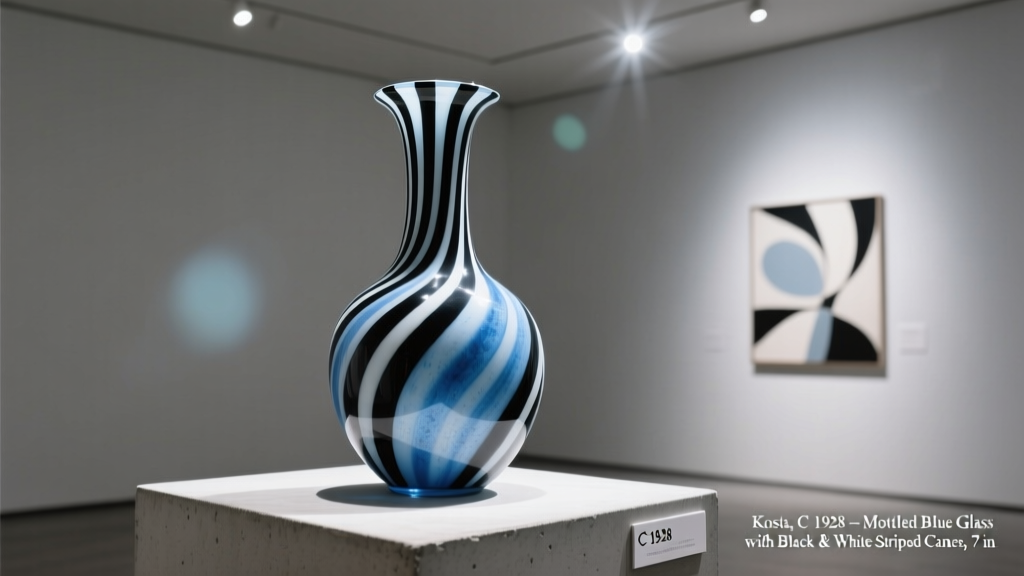
Kosta Vase, Mottled Blue Glass with Black-and-White Striped Canes, Marked 'C', Circa 1928, 7 Inches: Authentication, Provenance, and Market Analysis
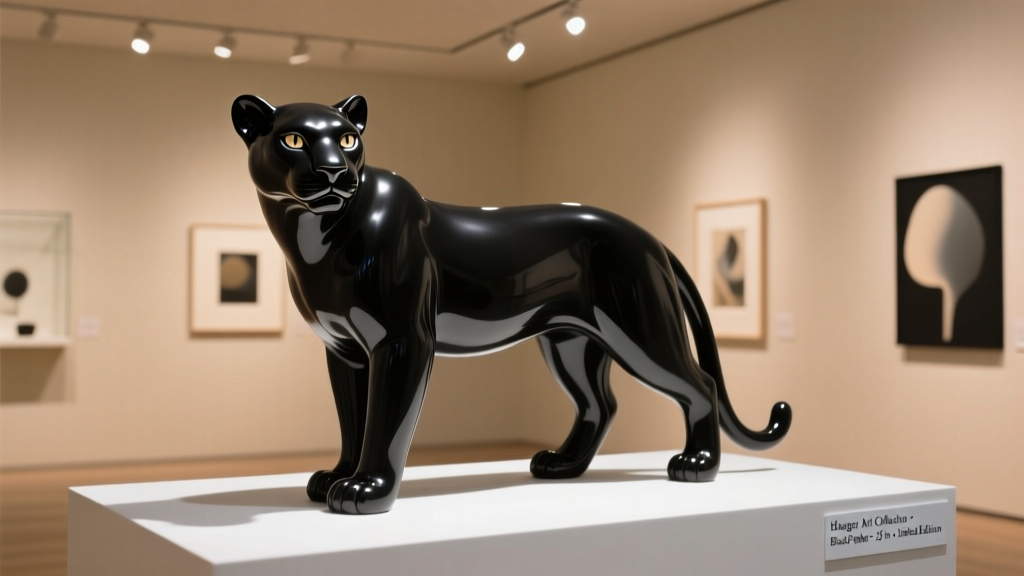
Haeger Figurine Black Panther 25-Inch: Authentication, Provenance, and Market Analysis
Find Your Treasure: Top Tips for Thrift Store Shopping
Authenticating and Valuing the Harris Company ‘Running Horse’ Copper Weather Vane: A Technical Analysis of a C. 1900 American Folk Art Icon
Authenticating the C. 1900 Oak-and-Iron Adjustable Music Stand: Provenance, Construction, and Market Value of a 39½-Inch Vintage Instrument Support
Cookbooks, Alice’s Restaurant Record, and Disk Jockey Culture: Convergences in Mid-Century American Media Collectibles
Authentication Dossier: The Print Designated 2337384 — A Forensic Analysis of Provenance, Materials, and Market Position

Currier & Ives 'The Sale of the Pet Lamb' Large Folio: Authentication, Market History, and Collectibility
Rocking Horses: Craftsmanship, Collectibility, and Market Authentication in the 20th Century