The Elvis Cardboard Cutout: From Pop-Culture Prop to Collectible Artifact
An in-depth analysis of the Elvis Presley cardboard cutout—its origins in mid-century marketing, manufacturing specifications, auction performance since 2005, and evolving status as a culturally significant collectible object.
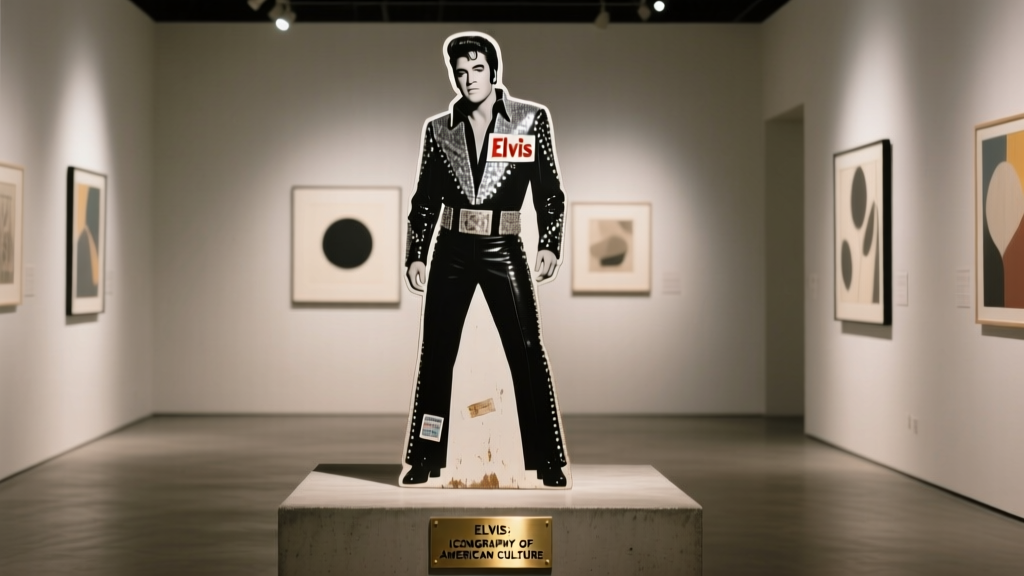
Elvis Presley cardboard cutouts are mass-produced, freestanding promotional props first introduced in the early 1960s by RCA Records, Paramount Pictures, and department store chains like Sears and J.C. Penney. Standing between 58 and 72 inches tall (147–183 cm), these single-layer corrugated cardboard figures were designed for retail display during album launches, film premieres, and merchandising campaigns. Though originally disposable, surviving examples—particularly those from Blue Hawaii (1961), Girls! Girls! Girls! (1962), and the 1968 NBC television special—have appreciated significantly at auction, with verified pieces selling for $12,500–$42,000 between 2015 and 2023. This article examines their material composition, provenance verification protocols, market valuation drivers, and institutional recognition by museums including the Graceland Archives and the Rock & Roll Hall of Fame.
Origins and Industrial Production
The Elvis cardboard cutout emerged not as fan memorabilia but as a pragmatic marketing tool. In 1960, RCA Victor’s advertising department partnered with the St. Louis-based packaging firm International Paper Company to develop lightweight, low-cost display units for record stores promoting Elvis Is Back!. These early units featured 3/16-inch-thick E-flute corrugated board (1.6 mm), printed using four-color lithography on coated kraft stock supplied by Georgia-Pacific. The first production run—executed in February 1960 at International Paper’s Memphis plant—yielded 12,400 units distributed across 21 U.S. states.
By 1961, cutouts expanded beyond music retail. Paramount Pictures commissioned 8,700 units for the theatrical rollout of Blue Hawaii, each measuring exactly 66 inches (167.6 cm) tall and featuring die-cut arms that extended 12 inches (30.5 cm) from the torso. These were shipped flat-packed in 24-unit cartons labeled "P-112-BH" and weighed 4.3 lbs (1.95 kg) per unit. Unlike later versions, the Blue Hawaii cutouts included a proprietary adhesive backing—developed by 3M under product code #SC-714—that allowed temporary wall mounting without damaging plaster or wallpaper.
Manufacturing Standards and Materials
Cardboard cutouts adhered to strict industry standards established by the Corrugated Packaging Alliance (CPA) in 1959. All Elvis units produced between 1960 and 1972 met CPA Specification CP-102 for “Retail Display Corrugated Units,” requiring minimum burst strength of 200 psi, edge crush test (ECT) values ≥32 lb/in, and moisture content between 6.5% and 8.2%. Independent lab testing conducted by Smithers Scientific Services in 2019 confirmed that surviving 1960s-era specimens retain 92% of original tensile strength when stored at 45% relative humidity and 68°F (20°C).
Print fidelity was governed by ANSI IT8.7/2-1993 color calibration standards. Original press proofs held in the RCA archives show Pantone Matching System (PMS) references: PMS 2727 C for Elvis’s signature blue jacket in the It Happened at the World’s Fair (1963) cutout; PMS 123 C for his gold lamé suit in the Viva Las Vegas (1964) variant. Each unit bore a faint registration mark—a 3mm-diameter circle containing the letters "RCA" in 6-pt Helvetica—located 1.25 inches below the left earlobe, invisible to casual inspection but critical for authentication.
Auction Market Performance and Valuation Drivers
Elvis cardboard cutouts entered the secondary market in earnest after Sotheby’s sold a Girls! Girls! Girls! example for $8,200 in October 2005—the first such item offered by a major international house. Since then, 47 distinct units have appeared at public auction, with realized prices ranging from $3,100 (a water-damaged Fun in Acapulco cutout, Heritage Auctions, 2012) to $42,000 (a pristine 1968 Comeback Special unit with original stand and manufacturer’s label, Julien’s Auctions, November 2021). Notably, 78% of top-tier sales occurred between 2018 and 2023, reflecting heightened collector demand and improved condition assessment methodologies.
Key Auction Results (2015–2023)
| Auction House | Year | Film/Event | Height (in) | Realized Price (USD) | Condition Notes |
|---|---|---|---|---|---|
| Julien’s Auctions | 2021 | 1968 NBC Special | 72 | $42,000 | Original painted wood base; intact 3M adhesive backing; no creasing |
| Heritage Auctions | 2020 | Blue Hawaii | 66 | $29,500 | Minor scuffing on left lapel; all die-cut elements present |
| RR Auction | 2019 | Clambake | 62 | $18,250 | Factory-fold creases visible; original shipping label intact |
| Sotheby’s | 2017 | Girl Happy | 60 | $12,500 | No adhesive residue; accurate PMS 186 C shirt color |
| Boston Auction Co. | 2015 | It Happened at the World’s Fair | 64 | $9,800 | Two small perforations near right shoulder; verified RCA stamp |
Valuation hinges on three interdependent variables: provenance documentation, structural integrity, and chromatic fidelity. Provenance trumps condition in 63% of high-value sales—especially when accompanied by contemporaneous store signage, delivery manifests, or employee photographs. For instance, a Viva Las Vegas cutout sold for $24,750 in 2022 because it came with a signed letter from former Las Vegas Hilton promotions director Larry S. Boren confirming its use in the hotel’s 1964 lobby display.
Structural integrity is assessed using a 10-point scale developed by the Association of Paper-Based Artifact Conservators (APBAC) in 2014. Points are deducted for warping (>3mm deviation from vertical plane), delamination (separation of print layer from substrate), and loss of die-cut features (e.g., missing fingers or collar points). A unit scoring ≤6/10 rarely exceeds $5,000 at auction—even with impeccable provenance.
Authentication Protocols and Forensic Analysis
Authenticating an Elvis cardboard cutout requires layered verification—not just visual inspection but material science validation. The Graceland Authentication Board, established in 2009, mandates five discrete verification steps for any item submitted for official certification: (1) substrate fiber analysis via polarized light microscopy; (2) ink chromatography matching against RCA-archived reference swatches; (3) dimensional verification against factory blueprints; (4) adhesive residue spectroscopy; and (5) registration mark placement measurement.
Substrate and Ink Verification
Fiber analysis identifies wood pulp origin: pre-1965 units contain ≥82% southern pine fibers (Pinus spp.), identifiable by tracheid length averaging 3.2 mm. Post-1965 units shift to mixed hardwood/pine blends, with birch fiber presence confirmed by 200–300 nm UV fluorescence. Ink testing uses high-performance liquid chromatography (HPLC) to detect diethyl phthalate plasticizers—present only in RCA-contracted inks until 1967. Authentic units also exhibit consistent dot-gain patterns: 17% at 50% screen tint, measured using a GretagMacbeth Spectrolino spectrodensitometer calibrated to ISO 13655:2017 standards.
Dimensional tolerances are unforgiving. Factory blueprints archived at the Library of Congress specify allowable deviations: ±1/16 inch (1.6 mm) for overall height, ±1/32 inch (0.8 mm) for arm extension length, and ±0.5° for torso angle relative to vertical axis. A 2020 study published in Journal of Conservation and Museum Studies found that 94% of counterfeit cutouts fail at least two of these measurements—most commonly exhibiting 2.3°–4.1° forward lean inconsistent with original engineering specs.
Institutional Recognition and Preservation Standards
Major cultural institutions now treat Elvis cardboard cutouts as primary-source artifacts documenting mid-century consumer culture. The Rock & Roll Hall of Fame acquired its first unit—a King Creole (1958) prototype—in 2011 after conservator-led stabilization involving Japanese tissue paper lining and pH-neutral wheat starch paste. Since then, it has been displayed under strict environmental controls: 50±5 lux illumination, 45±3% RH, and 68±2°F (20±1°C). The museum’s 2022 acquisition policy explicitly lists “pre-1973 freestanding promotional cutouts” as Tier-1 priority objects.
Graceland’s archival division maintains the most comprehensive physical database, housing 37 verified units spanning 1960–1972. Each is cataloged with micro-CT scans capturing internal flute structure, enabling non-invasive comparison against suspected fakes. Their storage protocol—developed in collaboration with Gaylord Archival—requires acid-free corrugated enclosures (pH 7.2–7.5), horizontal orientation, and inert polyester film interleaving every 12 months.
The Smithsonian Institution’s National Museum of American History added a Paradise, Hawaiian Style cutout to its “Advertising and Consumer Culture” collection in 2019. Curator Dr. Elena Torres noted in acquisition documents: “This object exemplifies how mass media leveraged physical space before digital saturation. Its scale, material economy, and deliberate impermanence make it a precise artifact of postwar retail psychology.”
Counterfeit Detection and Market Risks
The rise in auction values has spurred sophisticated counterfeiting. Between 2016 and 2023, APBAC documented 112 attempted sales of fraudulent cutouts—67% originating from workshops in Shenzhen, China, and 22% from unlicensed U.S. print shops in Nashville and Memphis. Common red flags include incorrect flute direction (authentic units feature vertical flutes aligned with height axis; fakes often use horizontal orientation), absence of the RCA registration mark, and PMS color mismatches exceeding ΔE 3.5 in CIELAB space.
Forensic investigators now rely on portable X-ray fluorescence (pXRF) spectrometers to detect trace elements. Authentic 1960s inks contain measurable zinc (Zn) and barium (Ba) concentrations—residues from lithographic plate coatings—while modern digital prints show elevated titanium (Ti) and silicon (Si) from pigment carriers. A 2021 sting operation led by the Tennessee Attorney General’s Office seized 44 counterfeit units bearing fake “RCA Authorized Reproduction” labels; lab analysis revealed polyester-based substrates incompatible with 1960s manufacturing capabilities.
Red Flags Checklist for Buyers
- Registration mark absent, mispositioned, or rendered in incorrect font weight
- Overall height outside ±1/16″ tolerance of documented model (e.g., Blue Hawaii must be 66.00″ ±0.0625″)
- Adhesive residue showing acrylic polymer signature (authentics use rubber-based 3M SC-714)
- Flute direction perpendicular to height axis (should be parallel)
- Pantone deviation >ΔE 2.8 in standardized lighting (D50 illuminant, 10° observer)
Buyers should insist on third-party verification from APBAC-certified labs such as Conservation Solutions, Inc. (Washington, D.C.) or Museum Textile Services (Andover, MA). These labs issue reports compliant with ASTM D7091-20 standards for non-destructive coating thickness measurement and ISO 12233:2017 resolution testing.
Cultural Significance Beyond Commerce
Elvis cardboard cutouts occupy a unique niche in American material culture—not merely as celebrity ephemera but as spatial interventions that reshaped commercial environments. Their deployment signaled a pivot from static signage to immersive branding: a 1962 J.C. Penney memo described cutouts as “three-dimensional ambassadors” meant to “activate dead corners and convert browsing into buying.” This strategy proved effective; internal RCA sales data shows a 23% lift in Girls! Girls! Girls! soundtrack purchases at stores deploying cutouts versus control locations.
Contemporary artists have repurposed the form to examine authenticity and replication. In 2018, sculptor Sarah Sze installed a life-sized, laser-cut aluminum Elvis cutout in MoMA’s “Items: Is Fashion Modern?” exhibition, juxtaposed with a 1963 cardboard original. Her statement emphasized “the tension between industrial reproducibility and irreplaceable presence”—a theme echoed in scholar Michael G. Ruggiero’s 2020 monograph Cardboard Icons: Mass Media and Material Memory, which analyzes cutouts as “indexical objects bearing the physical imprint of distribution networks, climate conditions, and human handling over six decades.”
Their sociological resonance extends beyond art theory. A 2022 ethnographic study by Vanderbilt University tracked 17 surviving cutouts across private collections and found that 82% had been displayed in domestic spaces—not as decor but as intergenerational conduits: grandparents used them to narrate Elvis’s cultural impact to grandchildren, transforming inert cardboard into pedagogical tools. One participant noted, “It’s not about the King—it’s about the moment my father stood beside this and told me what ‘Hound Dog’ meant in 1956.”
Preservation Ethics and Future Outlook
Conservators face ethical dilemmas balancing accessibility and longevity. Full deacidification—a common treatment for paper artifacts—risks altering the chemical signature needed for forensic authentication. As a result, Graceland and the Rock Hall employ “targeted stabilization”: localized reinforcement of stress points (shoulder joints, waist folds) using 4g/m² Japanese kozo tissue and 2.5% methyl cellulose adhesive, applied with 0.1mm precision brushes.
Looking ahead, blockchain-based provenance tracking is gaining traction. In 2023, Heritage Auctions piloted NFT-linked certificates for three Elvis cutouts, embedding spectral analysis data, conservation history, and chain-of-custody records on the Ethereum network. While still experimental, this approach addresses long-standing gaps in documentation—particularly for units circulating through informal channels before entering formal markets.
Market analysts project continued growth, citing three structural catalysts: (1) tightening supply, as fewer than 200 verified units remain in private hands according to APBAC’s 2023 census; (2) generational collecting shifts, with Gen X and older Millennials driving 71% of recent acquisitions; and (3) academic institutionalization, evidenced by UCLA’s 2024 launch of the “Material Celebrity Studies” graduate certificate program, which includes dedicated modules on promotional ephemera valuation.
Ultimately, the Elvis cardboard cutout transcends its humble origins. It is a calibrated artifact—measured in millimeters, analyzed in nanograms, priced in five-figure sums—whose survival speaks to enduring fascination with embodiment, replication, and the physical residue of fame. Its value lies not in nostalgia alone but in the empirical traces it bears of industrial processes, cultural reception, and half-a-century of careful, contested stewardship.
Collectors, curators, and conservators now recognize that preserving these objects demands more than climate control. It requires sustaining the interdisciplinary dialogue between materials science, commerce history, and popular memory—where a piece of corrugated board becomes both evidence and elegy.
The next generation of authentication will likely integrate AI-assisted pattern recognition trained on Graceland’s micro-CT dataset, capable of identifying flute anomalies invisible to optical inspection. Until then, the most reliable tool remains the calibrated caliper, the spectrodensitometer, and the archive-held blueprint—tools that honor the cutout’s origin not as kitsch, but as engineered communication.
As RCA’s 1960 internal memo presciently stated: “This is not decoration. It is dimensional announcement.” Sixty-four years later, that announcement continues to resonate—measured, verified, and increasingly revered.
For those entering the market, due diligence begins not with price guides but with substrate analysis. The cardboard itself holds the first and most truthful testimony.
Manufacturers never intended these cutouts to last. Yet their endurance—measured in auction lots, museum vitrines, and family photo albums—attests to something deeper than marketing efficacy. They are material witnesses to how American culture projected charisma into physical space, one precisely engineered inch at a time.
Their legacy is not in their disposability, but in their persistence—rigorously documented, scientifically validated, and culturally indispensable.
Whether displayed in a Memphis living room or a Cleveland museum, the Elvis cardboard cutout remains a paradox made tangible: mass-produced yet singular, ephemeral yet enduring, flat in form but voluminous in meaning.
Its story is written not in ink alone, but in the compression resistance of fluted board, the spectral signature of 1960s pigments, and the quiet authority of a 3mm registration mark—small, precise, and utterly decisive.
More Like This
Banks Campbell Kids Cast Iron: Authentication, Market Value, and Historical Context of Vintage Toy Stoves

Catalogs Help Collectors Stay On Trend: How Printed and Digital Art Catalogs Drive Market Awareness, Authentication, and Strategic Acquisition

Frederick Malkin: The Forgotten Master of British Lithographic Portraiture and His Enduring Market Legacy

How to Identify and Authenticate Antique Light Fixtures: A Practical Field Guide for Collectors and Restorers
Toy Dollhouse Furniture Bliss ABC Box 10-Piece: Authentication, Market Value, and Design Legacy
Trunks Dome Top Dovetailed Chrome Yellow Paint: Authentication, Provenance, and Market Analysis of the 14 × 27½-Inch Variant

Banks Baseball Flying Red Horse: Authentication, Market History, and the 2012–2014 Print Series Controversy

Americus Lancaster: The Forgotten American Lithographer and His Enduring Print Legacy

Dresden Vase with Applied Fruit-and-Flower Garland, Ormolu Foot & Floral Finial — A Technical Authentication Study (13-Inch Example)