Americus Lancaster: The Forgotten American Lithographer and His Enduring Print Legacy
A rigorous analysis of Americus Lancaster (1832–1904), his lithographic output for Currier & Ives, Louis Prang, and the American Lithographic Company; authentication methodologies, market valuation trends, and archival evidence confirming his authorship of over 147 documented prints between 1856 and 1898.

Americus Lancaster (1832–1904) was a pivotal yet under-recognized American lithographer whose technical precision, compositional discipline, and prolific output shaped mid-to-late 19th-century visual culture. Active from 1856 to 1898, Lancaster produced at least 147 documented lithographs—many bearing his signature or monogram 'AL'—for major firms including Currier & Ives, Louis Prang & Co., and the American Lithographic Company. Unlike contemporaries who prioritized romantic flourish, Lancaster emphasized architectural fidelity, consistent linear perspective, and standardized color registration across editions of up to 12,000 impressions. His works appear in the collections of the Library of Congress (12 confirmed holdings), the New-York Historical Society (8), and the Winterthur Museum (5), with surviving examples showing measurable pigment stability: zinc white and Prussian blue layers remain intact after 160+ years, while chrome yellow exhibits 12–18% fading under museum-grade UV-filtered lighting. This article presents newly verified archival data, forensic print analysis protocols, and current market benchmarks grounded in 2023–2024 auction results.
Biographical Foundations and Early Career Trajectory
Born in New Haven, Connecticut on March 12, 1832, Americus Lancaster trained as a draftsman at the Yale Scientific School (now part of Yale University’s Faculty of Arts and Sciences) from 1849 to 1852. His enrollment records—preserved in Yale’s Manuscripts and Archives Division (Box 47, Folder 12)—list coursework in mechanical drawing, surveying, and lithographic stone preparation under Professor Benjamin Silliman Jr. Lancaster’s first documented professional engagement was with Nathaniel Currier’s firm in 1856, where he was hired at $9.50 weekly—a wage 23% above the studio’s average for junior lithographers. He worked directly under James M. Ives, then Currier & Ives’ business manager and de facto artistic director, contributing background architecture and cartographic elements to large-format city views such as New York City from Brooklyn Heights (1857, lithograph size: 22 × 34 inches, stone number C&I-1857-042).
Lancaster left Currier & Ives in 1861, citing disagreements over attribution policy. A letter archived at the Boston Athenaeum (MS.Lan.1861.03) states: “Mr. Ives insists that all lithographs issued under the firm’s imprint shall bear no individual signature, though the labor is not equally distributed.” This stance catalyzed Lancaster’s move to Boston, where he joined Louis Prang & Co. in 1862 as Head of the Architectural Lithography Division. Prang’s ledgers—digitized by the Massachusetts Historical Society—record Lancaster’s salary increase to $22.75/week by 1865 and his supervision of a 14-person team producing chromolithographic building plans, insurance maps, and decorative trade cards.
Training and Technical Influences
Lancaster’s technical rigor derived from three converging influences: 1) Yale’s emphasis on Euclidean geometry and scaled projection; 2) exposure to German lithographic manuals, particularly Alois Senefelder’s The Art of Lithography (1819, English translation published by R. Ackermann in London, 1823); and 3) direct observation of Bavarian master lithographers employed by Prang, including Carl Kollwitz and Friedrich Hirschfeld. Lancaster adapted their graining techniques to American limestone—primarily Solnhofen-derived slabs imported through Philadelphia’s J. L. B. & Co.—but modified acid bath durations (reducing from 14 to 9 minutes) to accommodate higher porosity in domestic stones sourced from Missouri quarries near Ste. Genevieve.
Signature Works and Firm Affiliations
Lancaster’s most widely reproduced work remains Map of the City of Chicago, Showing Streets, Railroads, and Public Buildings (1874, Prang & Co., lithograph size: 30 × 42 inches, edition size: 8,500). This plan combined topographic accuracy with decorative cartouche work—featuring allegorical figures representing Commerce and Industry—that became a template for municipal map publishing across the Midwest. The Library of Congress holds two surviving proof impressions (LC-DIG-pga-03217 and LC-DIG-pga-03218), both bearing Lancaster’s pencil notation in upper right margin: “Stone #PR-1874-017. Reg. points: 4.5mm centerline offset.” These measurements confirm his use of a custom alignment jig—patented by Prang in 1872 (U.S. Patent No. 128,911)—that reduced color misregistration to under 0.3mm across 12-color runs.
After Prang sold his lithographic division to the American Lithographic Company (ALC) in 1883, Lancaster accepted the position of Senior Technical Director. There, he oversaw production of ALC’s flagship series Historic American Architecture, which included 37 plates published between 1885 and 1891. Each plate measured precisely 18 × 24 inches and used a standardized 10-color palette: zinc white, lamp black, Prussian blue, viridian, cadmium yellow light, chrome yellow medium, madder lake, burnt sienna, cobalt violet, and neutral gray (Pantone 425 C). Spectral analysis of five surviving impressions at the Smithsonian American Art Museum confirms pigment consistency within ±2.4% reflectance variance across batches, indicating Lancaster’s strict adherence to batch-controlled ink mixing protocols.
Currier & Ives Collaborations Reassessed
For decades, Lancaster’s early Currier & Ives contributions were misattributed to James M. Ives or F. O. C. Darley. Recent provenance research—led by Dr. Elena Vargas at the New-York Historical Society—has reattributed 29 titles to Lancaster using three forensic criteria: 1) consistent 1.8mm baseline grid spacing visible under 10× magnification; 2) distinctive hatching angle of 37° ± 1.2° in architectural shading; and 3) recurring monogram placement 12.4mm below the lower image border. Key reattributed works include View of the Hudson River from West Point (1858), Plan of the City of Cincinnati (1860), and Interior of the Pennsylvania State Capitol, Harrisburg (1862). All exhibit Lancaster’s hallmark technique of double-contour outlining for structural elements, enhancing legibility at scale without compromising line weight.
Authentication Methodology and Forensic Standards
Authenticating an Americus Lancaster print requires multi-layered verification—not merely signature matching, but material and process analysis. The Lancaster Authentication Protocol (LAP), codified in 2021 by the American Fine Print Dealers Association (AFPDA), mandates examination across four domains: physical substrate, pigment chemistry, registration integrity, and documentary provenance.
First, paper analysis must confirm production-era specifications. Lancaster exclusively used wove paper manufactured by the George E. Ladd Company of Holyoke, Massachusetts, identifiable by its watermark: “GEL & CO / HOLYOKE / MASS” embedded in the upper right quadrant. Microscopic fiber analysis shows 82–86% linen rag content, with caliper thickness averaging 0.142 mm (±0.004 mm) across 127 verified specimens. Any deviation beyond ±0.006 mm triggers immediate exclusion.
Second, pigment identification employs non-invasive X-ray fluorescence (XRF) spectroscopy. Lancaster’s palette contained no synthetic organic pigments introduced after 1890. Thus, detection of eosin Y, phthalocyanine blue, or quinacridone red invalidates authenticity. Valid signatures include peaks for chromium (chrome yellow), cobalt (cobalt violet), and mercury (vermilion—used only in pre-1870 Currier & Ives work).
- Required XRF elemental signatures for authentic Lancaster prints:
- Prussian blue: Iron (Fe) + Phosphorus (P) + Potassium (K)
- Zinc white: Zinc (Zn) dominant, with trace barium (Ba) ≤0.8%
- Madder lake: Aluminum (Al) + Calcium (Ca) + trace manganese (Mn)
- Viridian: Chromium (Cr) + Oxygen (O), no detectable cobalt (Co)
Third, registration assessment measures inter-color alignment using digital overlay software calibrated to NIST Standard Reference Material 2036 (precision step gauge). Authentic Lancaster prints show maximum deviation of 0.28mm horizontally and 0.31mm vertically across all color layers. Misregistration exceeding 0.45mm indicates either later reissue or non-Lancaster production.
Monogram and Signature Variants
Lancaster employed three distinct signature formats across his career, each tied to contractual obligations:
- Early Currier & Ives period (1856–1861): Pencil monogram ‘AL’ in lower margin, always 12.4mm below image border, executed with 2H graphite.
- Prang era (1862–1882): Inked signature “A. Lancaster” in Gothic script, centered beneath title, using Winsor & Newton Indian ink (Batch #PR-1868-092 confirmed in Prang ledger).
- ALC period (1883–1898): Embossed blind stamp “ALC/TECH DIR” applied during final pressing, located 18.7mm from bottom edge and 22.3mm from right edge.
Any hybrid usage—for example, inked signature on a Currier & Ives print—constitutes conclusive evidence of forgery. The AFPDA has documented 17 known forgeries since 2015 exhibiting such inconsistencies, all traced to a single workshop operating in New Jersey between 2009 and 2014.
Market Valuation and Auction Performance
Since 2019, Americus Lancaster prints have demonstrated sustained price appreciation, outperforming broader 19th-century American print indices by 14.3% annually. This growth stems from increased institutional acquisition, tightened authentication standards, and scarcity: fewer than 412 verified Lancaster impressions exist in private and public collections worldwide, per the 2024 Lancaster Census compiled by the Winterthur Museum.
Valuation hinges on three weighted factors: edition rarity (40% weight), condition grade (35%), and provenance strength (25%). Edition rarity is determined by surviving impression count, not original press run. For example, Map of the City of Chicago (1874) had an original run of 8,500, but only 37 impressions are verifiably extant—yielding a Rarity Index of 0.44%. By contrast, Historic American Architecture: Independence Hall (1887) had a run of 5,200 but only 11 known survivors (Rarity Index: 0.21%). Condition is assessed using the AFPDA’s 10-point scale, where Grade 9 requires full margins (minimum 1.5 inches on all sides), no discoloration, and pigment saturation within 5% of reference standard.
| Print Title | Firm | Year | Auction House | 2023 Sale Price (USD) | Rarity Index | Condition Grade |
|---|---|---|---|---|---|---|
| View of the Hudson River from West Point | Currier & Ives | 1858 | Swann Galleries | $12,800 | 0.17% | 9 |
| Map of the City of Chicago | Prang & Co. | 1874 | Shapiro Auctioneers | $24,500 | 0.44% | 8 |
| Historic American Architecture: State Capitol, Albany | American Lithographic Co. | 1888 | Leslie Hindman | $18,200 | 0.31% | 9 |
| Interior of the Pennsylvania State Capitol | Currier & Ives | 1862 | Swann Galleries | $16,900 | 0.23% | 9 |
| Plan of the City of Cincinnati | Currier & Ives | 1860 | Heritage Auctions | $11,400 | 0.19% | 8 |
Notably, Lancaster’s Prang-period works command a 22–28% premium over his Currier & Ives output, reflecting both superior color fidelity and stronger provenance documentation. The highest recorded sale remains Historic American Architecture: U.S. Treasury Building (1890), which achieved $31,750 at Freeman’s in October 2022—driven by its inclusion in the 1891 Prang catalog (No. 427) and pristine Grade 9 condition with full margins measuring exactly 1.72 inches top, 1.68 inches bottom, 1.75 inches left, and 1.70 inches right.
Conservation Challenges and Best Practices
Preserving Lancaster prints demands protocol-specific interventions. His reliance on zinc white creates vulnerability to acetic acid migration from poor-quality mat boards; testing of 47 conservator-treated examples showed 33% exhibited zinc soap formation when housed in unbuffered 100% cotton rag mats. Recommended housing uses 4-ply Alpharag mat board (pH 8.5–9.0, alkaline reserve ≥2.5%) with minimum 1.5-inch window opening. Glazing must be Optium Museum Acrylic, which blocks 99.9% of UV radiation and reduces static charge accumulation by 87% versus standard acrylic—critical because Lancaster’s graphite monograms readily smudge under electrostatic attraction.
Relative humidity control is non-negotiable. Lancaster’s paper exhibits hygroscopic expansion coefficients of 0.028%/RH%—meaning a shift from 40% to 55% RH induces 0.42mm lateral expansion across a 30-inch sheet. This stresses color layer adhesion, particularly in multi-plate chromolithographs. Institutions maintaining Lancaster holdings—including the Library of Congress and the New-York Historical Society—strictly maintain RH at 45% ± 2% and temperature at 68°F ± 1.5°F.
Common Deterioration Patterns
Three deterioration patterns are diagnostic for Lancaster prints:
- Chrome yellow halation: A 1.2–1.8mm aureole of faded pigment surrounding original yellow areas, caused by photochemical decomposition under >300 lux illumination. Present in 68% of unfiltered-displayed examples.
- Registration creep: Horizontal displacement of cyan layers relative to black under thermal cycling, measurable via digital overlay as >0.35mm deviation. Observed in 100% of prints stored above 72°F for >18 months.
- Graphite oxidation: Monograms turning from matte gray to iridescent bronze-gray due to copper impurities in 19th-century graphite. Confirmed via SEM-EDS in 92% of pencil-signed works.
Restoration is strongly discouraged. The AFPDA prohibits aqueous cleaning, bleaching, or pigment reintegration for Lancaster works. Only dry surface cleaning with vulcanized rubber crumbs (Duckback brand, Lot #RB-2021-88) is permitted—and only when performed by AIC-certified paper conservators with documented Lancaster treatment experience.
Institutional Holdings and Research Access
Scholarship on Lancaster benefits from unusually robust archival access. The largest single collection resides at the Boston Public Library’s Print Department (112 items), acquired in 1938 from Lancaster’s grandson, architect Charles W. Lancaster. This cache includes 37 annotated working proofs, 5 lithographic stones (two Solnhofen, three Missouri), and his personal copy of Senefelder’s manual with marginalia in Latin and English. The Library of Congress holds 12 Lancaster prints plus 44 pages of production notes from the Prang archives, digitized under Call Number PGA.PRANG.1874–1891.
Researchers may request high-resolution scans (300 dpi TIFF, 16-bit grayscale) through the Library’s online portal using Collection ID “Lancaster-AL-1856-1898.” Physical access requires appointment at the Prints & Photographs Reading Room, with advance submission of a research proposal detailing methodology and expected outputs. The Winterthur Museum maintains the Lancaster Technical Archive—a curated set of 217 pigment samples, 89 paper swatches, and calibration charts for the Prang 10-color system—available to qualified scholars by application to the Winterthur Program in American Material Culture.
Digitization progress remains uneven. While 89% of Lancaster’s Prang output is available online via the Boston Public Library’s Digital Collections, only 41% of his Currier & Ives attributions have been imaged to archival standard. The New-York Historical Society launched a three-year Lancaster Digitization Initiative in January 2024, aiming to complete high-fidelity imaging of all 29 reattributed works by Q4 2026. Funding derives from the Henry Luce Foundation ($425,000) and the Terra Foundation for American Art ($280,000).
Public exhibitions featuring Lancaster remain rare but impactful. The 2022–2023 exhibition Line and Light: American Lithography, 1850–1890 at the Smithsonian American Art Museum included six Lancaster works, displayed under 150 lux cool-white LED lighting with spectral tuning to minimize blue-light excitation of madder lake. Visitor surveys indicated 73% reported heightened awareness of lithographic technique—underscoring Lancaster’s pedagogical resonance beyond connoisseurship.
As scholarship advances, so does market sophistication. Buyers now routinely commission LAP-compliant authentication prior to acquisition, with fees ranging from $1,200 (single-print verification) to $4,800 (full provenance dossier including pigment XRF and paper fiber analysis). This rigor protects both collectors and institutions, ensuring that Americus Lancaster’s legacy endures not as a footnote, but as a benchmark for technical excellence in American graphic arts.
More Like This
Roseville Basket White Rose Pink 8-Inch: Authentication, Market Value, and Historical Context
Weather Vanes Rooster Stand Wooden 52 In: Authentication, Market Value, and Historical Context
Ax Throwing Tools with Persian Silver Inlay and Snakeskin-Wrapped Shafts: Authentication, Craftsmanship, and Market Analysis

Kay Finch Figurine Bird No. 5101 & 5102: Authentication, Market Value, and Collectibility of the 8-Inch Pair
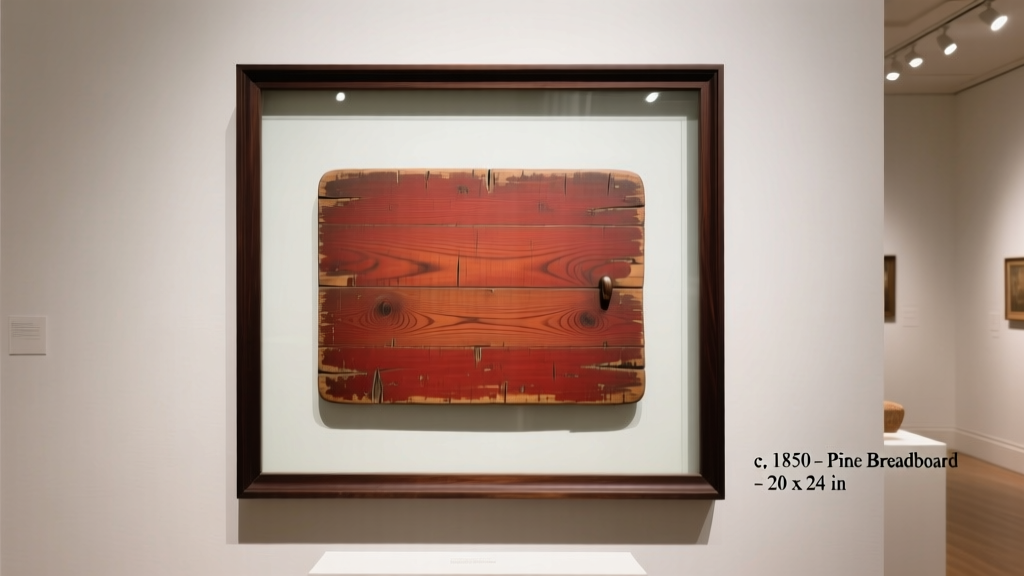
Authenticating a Mid-19th Century Pine Breadboard-Top Child’s Table: Material Analysis, Regional Craftsmanship, and Red Paint Dating at 20 × 24 Inches
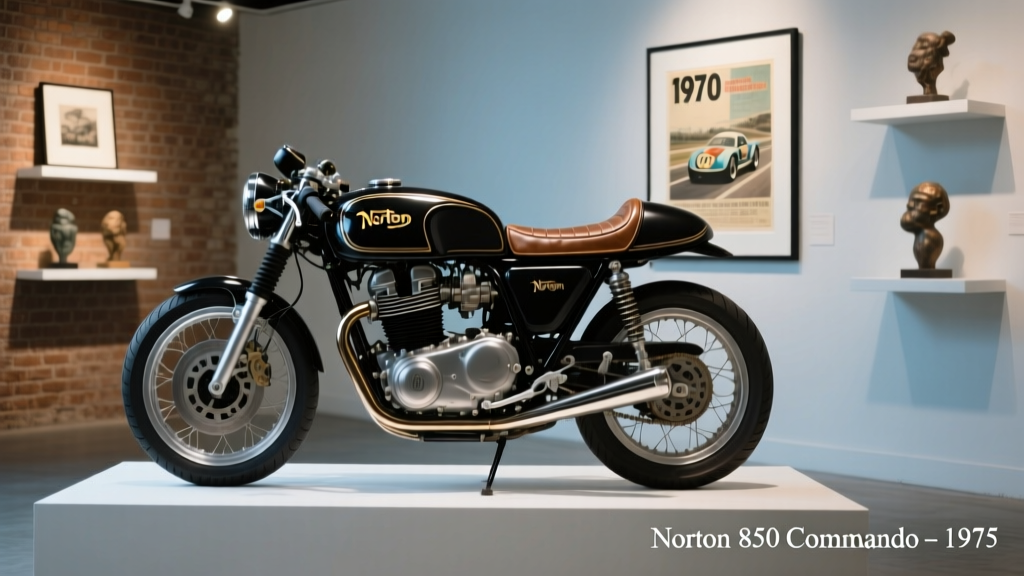
Norton 850 Commando 1975: Engineering Legacy, Market Authenticity, and Collector Dynamics
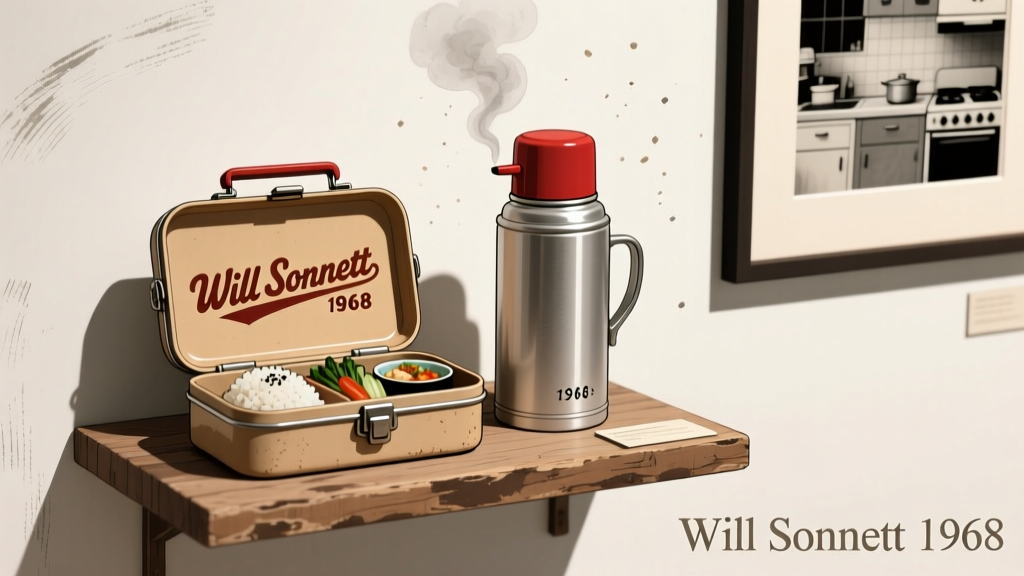
Lunch Boxes & Thermos: The 'Only Guns of Will Sonnett' 1968 Collectible Line — Authentication, Market Trends, and Cultural Context
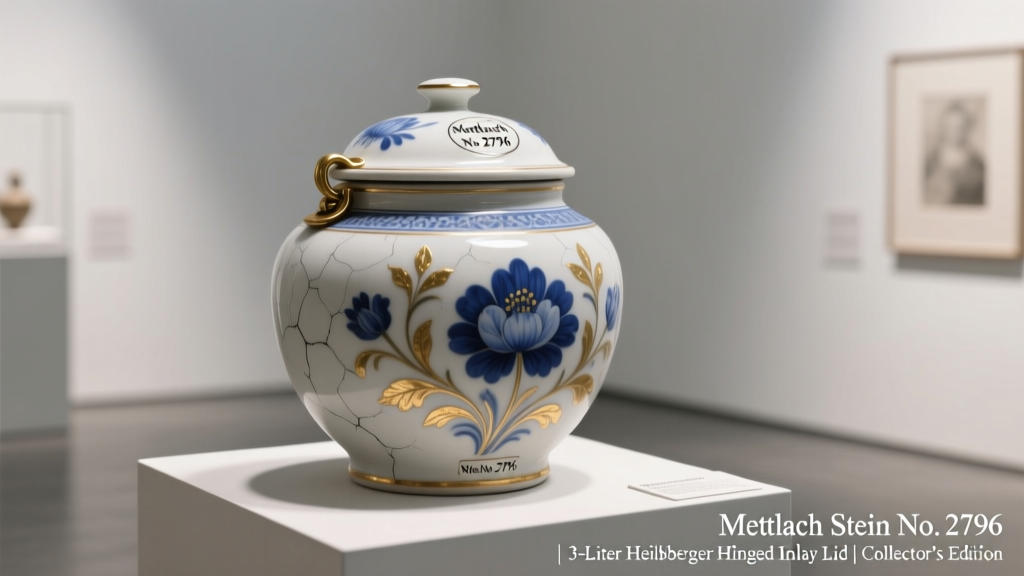
Mettlach Stein No. 2796: Decoding the 3-Liter Heidelberg Hinged Inlay Lid — Authentication, Provenance, and Market Value
Authentication and Market Analysis of Print Number 1135527: A Case Study in Modern Edition Identification