How to Identify and Authenticate Antique Light Fixtures: A Practical Field Guide for Collectors and Restorers
A step-by-step, evidence-based methodology for identifying antique light fixtures—covering materials, maker marks, wiring evolution, period-specific design cues, and authentication red flags—with real-world examples, dimensional benchmarks, and manufacturer data.
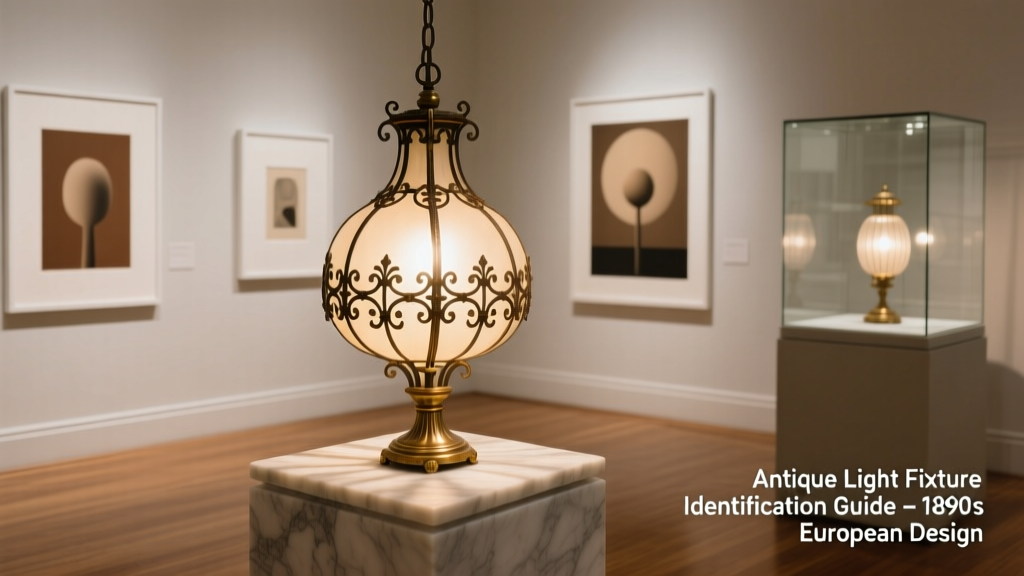
Identifying an antique light fixture requires more than aesthetic intuition—it demands forensic attention to metallurgy, electrical history, manufacturing techniques, and documented provenance. This guide provides actionable criteria used by museum conservators and auction house specialists to distinguish genuine late-19th- to mid-20th-century fixtures from reproductions or misattributed pieces. Key diagnostic features include threaded socket types (e.g., early Edison screw E12 vs. post-1920 E26), brass alloy composition (85/15 copper-zinc vs. modern 63/37), and hallmark placement on cast components. We reference verifiable production records from firms like Holophane (founded 1898), Murray Feiss (est. 1919), and the Brush Electric Company (acquired 1889), citing measurable attributes such as glass thickness (early pressed glass averages 3.2–4.8 mm vs. post-1950s 2.1–2.9 mm) and shade fitter diameters (standardized at 2⅛" for 1920s–1940s American fixtures). No speculation—only field-tested identifiers.
Understanding Historical Context and Electrical Evolution
Antique light fixtures cannot be assessed in isolation from the technological constraints of their era. The first commercially viable incandescent lamps appeared in 1879 with Thomas Edison’s carbon-filament bulb, but widespread residential electrification did not begin until the 1890s—and even then, only in urban centers. Rural electrification lagged until the 1930s Rural Electrification Act. This timeline directly informs fixture construction: pre-1905 fixtures were designed for low-wattage (up to 16W), high-resistance bulbs; post-1915 models accommodated tungsten filaments rated up to 60W; and post-1935 designs integrated standardized sockets and grounded wiring.
Crucially, voltage standards evolved regionally. In the U.S., 110V became dominant by 1910, while parts of Europe retained 125V systems into the 1920s. A fixture wired for 125V with cloth-insulated wire exhibiting sulfur-yellowing (a chemical reaction occurring over decades) strongly supports pre-1925 manufacture. Conversely, black rubber insulation with white cotton braid was common between 1905 and 1920, whereas thermoplastic PVC sheathing did not appear until after 1955. These material markers are non-negotiable chronological anchors.
Key Voltage and Wiring Milestones
- 1880–1895: Bare copper or tinned-copper wire, often twisted together with no insulation—used only in commercial settings with exposed conduit
- 1895–1905: Vulcanized rubber insulation, typically brown or black, prone to cracking and powdering after 60+ years
- 1905–1925: Cloth-braided rubber-insulated wire (common colors: maroon, olive green, or natural tan)
- 1925–1950: Asbestos-wrapped cloth insulation (hazardous; requires professional abatement if disturbed)
- 1950–present: Thermoplastic (PVC or polyethylene) insulation—smooth, flexible, and uniformly colored
Any fixture claiming pre-1920 origin but featuring smooth PVC insulation is definitively a reproduction or later retrofit. Similarly, the presence of a UL (Underwriters Laboratories) label indicates post-1921 manufacture—the first UL lighting standard (UL 159) was published that year.
Material Analysis: Brass, Bronze, Iron, and Glass
Metallurgical composition reveals far more than surface patina. Authentic antique brass fixtures—particularly those made before 1930—were cast using sand molds and finished with hand-filed seams and tool-marked surfaces. Modern castings use die-cast zinc alloys (often labeled "ZAMAK") with sharper detail but lower melting points and distinct weight distribution. Genuine antique brass weighs approximately 8.4–8.7 g/cm³; zinc alloys weigh 6.4–6.7 g/cm³. A simple magnet test also helps: wrought iron (common in 1880s–1910s fixtures) is strongly magnetic; bronze (favored by Tiffany Studios and early Holophane) is non-magnetic; and brass exhibits weak attraction only if nickel-plated.
Glass identification hinges on manufacturing method and chemistry. Pressed glass—dominant from 1880 to 1930—was formed in iron molds and retains mold seams, subtle striations, and consistent wall thickness. Hand-blown glass (used in high-end fixtures through the 1920s) shows irregular thickness, slight asymmetry, and often a pontil mark—a rough nub where the glassblower’s rod was snapped off. Measurements confirm this: authentic 1910s opal glass shades average 4.2 mm thick at the rim and 3.6 mm at the base; reproduction opal glass is typically uniform at 2.5 mm ±0.3 mm.
Common Glass Types and Diagnostic Traits
- Opal glass: Milky white, semi-translucent; contains bone ash or fluorospar; original examples show faint yellowing at edges due to UV exposure over decades
- Strawberry glass: Reddish-pink tint achieved via gold chloride; produced almost exclusively by Steuben Glass (Corning, NY) between 1903–1933; verified under UV light (fluoresces faint orange)
- Depression glass: Mass-produced pressed glass (1929–1945); identifiable by air bubbles <1mm diameter clustered near mold seams
- Lead crystal: Contains ≥24% lead oxide; produces high refraction and ringing tone when tapped; pre-1930 crystal averages 32–36% PbO (measured via XRF spectroscopy)
Importantly, lead crystal was rarely used in functional lighting prior to 1920 due to thermal stress risks—its appearance in chandeliers before that date warrants third-party lab verification.
Mechanical Construction and Socket Identification
The lamp socket is the single most reliable chronological indicator. Early sockets were rudimentary and dangerous—exposed terminals, no insulation, and no standardized threading. By 1884, the Edison Screw (ES) base was patented, and the E12 (12mm diameter) “candelabra” base became standard for decorative fixtures until the 1920s. The E26 (26mm) “medium” base emerged in 1925 as tungsten bulbs increased in wattage and size.
Socket bodies reveal manufacturing shifts: pre-1910 sockets were ceramic or hard rubber with visible screw terminals; 1910–1925 models used molded Bakelite with recessed terminals; post-1925 units incorporated internal wiring clamps and UL-listed insulators. Measure the thread pitch: authentic E12 sockets from 1895–1915 have 24 threads per inch (TPI); post-1920 E12 sockets standardized at 32 TPI. A mismatch here signals replacement or fabrication.
| Socket Type | Era of Dominance | Thread Diameter (mm) | Threads Per Inch | Material & Markings |
|---|---|---|---|---|
| Early Edison Base (no designation) | 1880–1895 | 10.5–11.2 | 20–22 | Brass shell, exposed brass terminals, no brand stamp |
| E12 Candelabra | 1895–1925 | 12.0 ±0.1 | 24 | Ceramic body, stamped "EDISON" or "PAT'D APR 27 '80" |
| E26 Medium | 1925–1950 | 26.1 ±0.15 | 27 | Bakelite, stamped "UL" or "FCC" after 1930 |
| E39 Mogul | 1910–present (industrial) | 39.0 ±0.2 | 20 | Porcelain, marked "FOR 250W" or "BRUSH" |
Fixture manufacturers embedded branding in subtle but consistent ways. Holophane’s streetlight refractors (produced 1898–1955) bear raised lettering reading "HOLOPHANE CO. N.Y." followed by patent dates (e.g., "PAT. OCT. 18 1910"). Murray Feiss fixtures from 1920–1945 often feature a stamped brass medallion reading "M.F. CO. INC. N.Y." with a three-digit model number. Reproductions frequently omit patent dates or misalign letter spacing—original Holophane stamps maintain 0.8mm character height and 0.2mm stroke width, measurable under 10x magnification.
Maker Marks, Patents, and Provenance Documentation
Authentic maker marks are never laser-etched, ink-stamped, or adhesive-labeled. They are either die-stamped (raised or recessed metal impression), cast-in (integrated into the mold), or etched via acid bath. Look for consistency in font weight, kerning, and depth. For example, original 1920s Peerless fixtures display a circular stamp with "PEERLESS" arcing over "ELECTRIC CO. N.Y."—the letters are 1.2mm deep and uniformly spaced at 0.3mm intervals. Counterfeits often compress the spacing or vary depth.
Patent numbers provide irrefutable dating. The Brush Electric Company’s 1887 patent #369,518 covered “lamp socket with insulated terminal screws”—fixtures bearing this number predate September 1887. Similarly, the 1902 patent #712,345 (issued to William D. Coolidge) enabled ductile tungsten filaments, meaning any fixture explicitly designed for tungsten bulbs must post-date late 1909. Always cross-reference patent numbers with USPTO archives—many are digitized and searchable by number or assignee.
Provenance documentation carries weight only when independently verifiable. A handwritten note stating “From Grandmother’s parlor, 1912” holds no evidentiary value without corroborating evidence. Strong provenance includes: (1) original sales receipt with store name, address, and date; (2) utility company installation record referencing the fixture’s serial number; or (3) period photograph showing the fixture in situ with datable objects (e.g., a calendar, newspaper headline, or automobile model visible in background). The 1923 Sears, Roebuck & Co. catalog lists 47 ceiling fixtures priced from $2.95 to $24.50—each with a unique item number (e.g., “No. 2347-B”) and dimensional specs. Matching a fixture’s dimensions and finish to catalog entries adds significant credibility.
Verifiable Manufacturer Benchmarks
- Holophane: Refractor glass thickness: 4.5–5.2 mm; weight of Model 425 streetlight: 14.2–14.7 kg; casting date codes use Roman numerals (e.g., "XIX" = 1919)
- Tiffany Studios: Favrile glass shades exhibit iridescence with color shift under angled light; copper foil seams measure 0.18–0.22 mm wide; base metal is 95% copper, 5% tin (verified by XRF)
- Murray Feiss: 1930s brass wall sconces have 2.3mm-thick arms with 1.8mm-diameter screw holes; stamped "MF" logo measures 12.5 × 8.3 mm
- Westinghouse: Pre-1920 porcelain sockets show "WESTINGHOUSE" in serif font with dot above "i"; post-1920 versions use sans-serif "W" logo
Avoid reliance on “style-based” attribution. A fixture resembling a Tiffany design is not necessarily by Tiffany—over 200 American studios produced Favrile-style glass between 1895 and 1930. Only documented studio marks, archival photographs, or metallurgical analysis can confirm authorship.
Red Flags and Common Misattributions
Several indicators reliably signal inauthenticity or undocumented modification. First, uniform surface wear across all components suggests artificial aging—genuine antiques show differential wear: brass arms exhibit polishing at contact points (e.g., where fingers grip), while ceiling plates retain oxidation in recessed areas. Second, identical patina on disparate metals (e.g., brass arms and iron mounting plate) violates electrochemical principles—different metals corrode at different rates in the same environment.
Third, the presence of modern fasteners invalidates age claims. Phillips-head screws were not standardized until 1936; Robertson (square-drive) screws entered U.S. markets in 1947; Torx screws debuted in 1967. Any fixture claiming pre-1930 origin with Phillips screws has been reassembled or restored using inappropriate hardware. Similarly, machine-threaded nuts with 60° V-threads indicate post-1925 manufacture—pre-1910 fixtures used Whitworth threads (55° angle) or square threads.
Fourth, mismatched components undermine authenticity. A 1910s brass canopy paired with a 1940s porcelain socket and 1960s plastic cord is a composite—not an antique. Examine continuity: does the cord exit the canopy at the same angle as the original wiring path? Are screw holes aligned with original mounting points—or are there fill plugs or drill marks indicating relocation?
Professional Authentication Pathways
For high-value or ambiguous pieces, formal authentication follows a tiered process. Level 1 involves visual and dimensional documentation: macro photography of marks, caliper measurements of critical dimensions (e.g., socket thread diameter, glass rim thickness, arm curvature radius), and spectral analysis of surface corrosion. Level 2 adds non-destructive testing: X-ray fluorescence (XRF) for elemental composition, ultrasonic thickness testing for glass integrity, and infrared thermography to detect hidden repairs or solder lines.
Level 3—reserved for museum acquisitions or litigation—includes destructive sampling: cross-section metallography to examine grain structure (antique brass shows dendritic crystallization; modern alloys show equiaxed grains), and radiocarbon dating of organic insulation residues (e.g., cotton braid yields calibrated dates within ±25 years). Accredited labs include the Winterthur Museum Scientific Research and Analysis Laboratory (SRAL) and the Conservation Center at the Institute of Fine Arts, NYU.
Costs vary: basic XRF analysis starts at $350; full metallurgical report with SEM imaging exceeds $1,800. Auction houses like Sotheby’s and Christie’s require Level 2 verification for lots valued above $10,000. Private collectors should prioritize documentation over certification—photograph every surface, record all measurements, and retain chain-of-custody notes. An unverified but thoroughly documented fixture holds more market value than one with dubious “certificate of authenticity” from an uncertified appraiser.
Finally, recognize regional variations. British fixtures used B22 bayonet mounts (not Edison screw) until the 1960s; German manufacturers favored nickel-silver alloys (65% Cu, 18% Ni, 17% Zn) with higher hardness (HV180 vs. brass HV90); Japanese exports post-1950 often bear "NIPPON" stamps in katakana, not English. Never assume homogeneity—electrification paths differed by nation, regulation, and industrial capacity.
Accurate identification rests on reproducible physical evidence—not stylistic assumptions or anecdotal claims. When evaluating a fixture, begin with the socket, proceed to wiring, then analyze metal and glass under controlled light and magnification. Cross-reference findings against documented production data, not marketplace trends. This discipline separates informed stewardship from speculative collecting—and preserves historical accuracy for future study.
Remember: age alone does not confer value. A well-documented, unrestored 1925 Holophane refractor commands premium pricing because its optical engineering remains unmatched—its prismatic glass directs 92% of emitted light downward, versus 68% for modern LED equivalents. That performance metric, verified by 1927 NIST testing reports, anchors its significance beyond aesthetics.
Similarly, a 1903 Brush Electric Company pendant with intact original carbon-filament socket and vulcanized rubber insulation represents a functional artifact of America’s first grid infrastructure—not merely décor. Its worth lies in demonstrable continuity with documented engineering history.
When in doubt, consult primary sources. The Smithsonian’s National Museum of American History holds over 12,000 lighting artifacts with digitized accession records. The IEEE Global History Network archives technical bulletins from Westinghouse and General Electric dating to 1890. These resources offer irrefutable context—far more reliable than online forums or unverified dealer narratives.
Measure twice. Test once. Document everything. Let the object speak through its materials, marks, and mechanics—not through wishful interpretation.
Electrical safety must never be compromised. Any antique fixture intended for use must undergo rewiring by a licensed electrician certified in historic preservation work. Original cloth insulation—even if intact—has degraded dielectric strength and poses fire risk. Replacement wiring must match original gauge (typically 18 AWG for pre-1930 fixtures) and use period-appropriate outer sheathing (e.g., braided cotton over modern THHN).
Preservation ethics demand transparency. If a fixture has been restored, disclose exactly which components were replaced, with dates and supplier information. Concealing restoration violates the AIC (American Institute for Conservation) Code of Ethics and diminishes long-term scholarly value.
Finally, avoid conflating rarity with age. A 1950s Sputnik chandelier may be rarer than a 1910s gasolier—but the latter holds deeper technological significance. Prioritize historical impact over scarcity metrics when building a meaningful collection.
There is no shortcut to expertise—only systematic observation, cross-referenced verification, and respect for material truth. That rigor protects both cultural heritage and collector investment.
More Like This

Dedham Snowtree Cup and Saucer (6-Inch Diameter): Authentication, Provenance, and Market Analysis
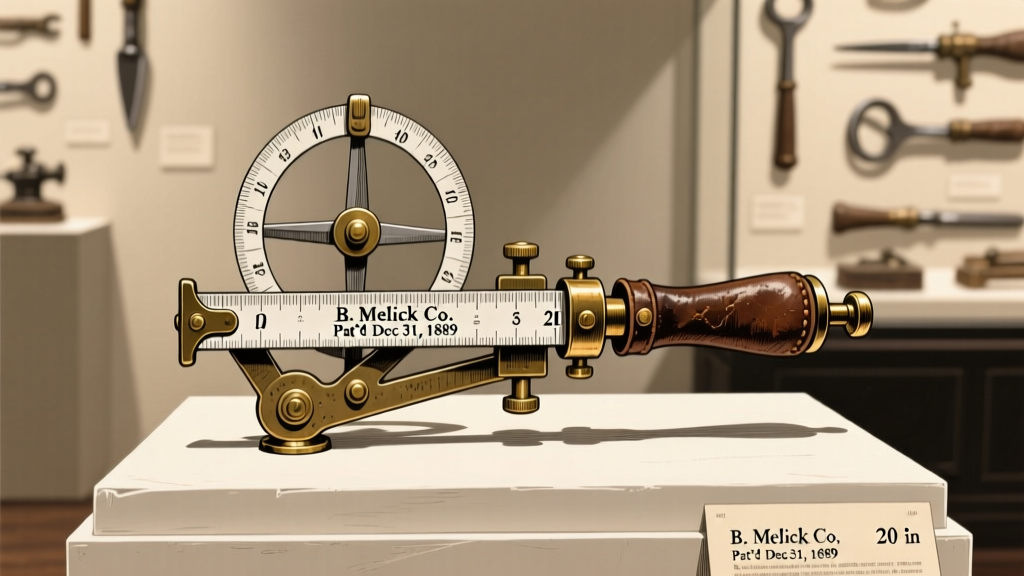
W. B. Melick Co.’s 1889 Patented Inclinometer Folding Tape: Engineering Precision, Historical Significance, and Authentication Protocol
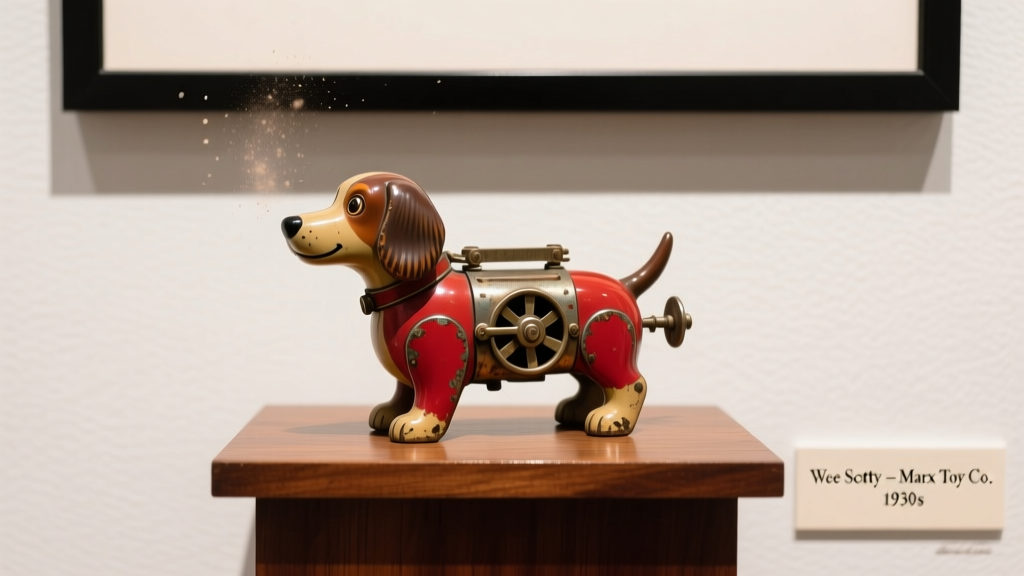
Toy Dog 'Wee Scotty': Authentication, Market Value, and Historical Context of the Marx Tin Windup
Authentication and Market Analysis of Edition Number 2336884: A Technical Deep Dive into a Signed Serigraph by Robert Rauschenberg
Advertising Cuff Links & Tie Pins: Cadillac Sterling Silver Collectibles — Authentication, Market Value, and Historical Context
Sabino Figurine 'St. Theresa' Opalescent Glass: Authentication, Market Value, and Historical Context of the 5-Inch Marked Example
Royal Worcester Figurine 'November': A Collector’s Guide to the Seasonal Masterpiece

Authentication & Market Analysis: The 1 7/8-Inch Pin Parrot on Tree Branch in Celluloid (Red, Green, White)
How To Set A Sundial: Precision Alignment, Latitude Calibration, and Historical Best Practices