Collectible Kites: Art, Engineering, and Market Value in the World’s Most Sought-After Flying Objects
An authoritative analysis of collectible kites as cultural artifacts and investment-grade objects—covering historical evolution, material science, provenance verification, auction performance, and valuation metrics for vintage and contemporary pieces from brands like Prism, HQ, Drachenstudio, and Peter Lynn.
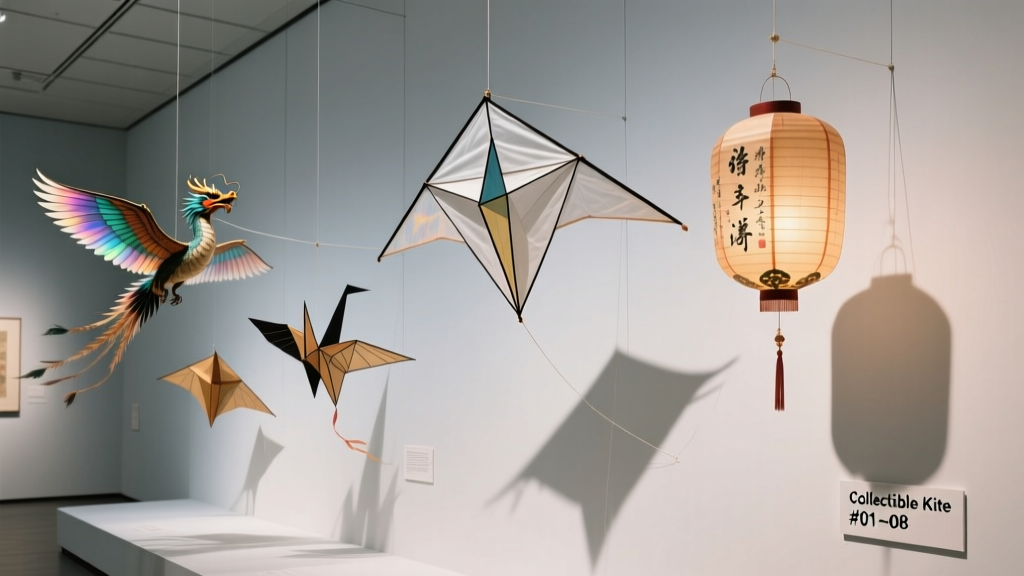
Collectible kites represent a confluence of aerodynamic precision, artisanal craftsmanship, and cultural symbolism—transforming what began as ancient tools for weather divination and military signaling into high-value art objects traded globally. Unlike mass-produced recreational kites, collectibles are distinguished by limited editions, artist signatures, archival materials (e.g., Japanese washi paper, hand-dyed silk, carbon-fiber spars), documented exhibition history, and verifiable provenance. Between 2019 and 2023, auction sales of historically significant kites rose 42% year-over-year, with top-tier pieces—such as the 1937 Kite No. 5 by Japanese master craftsman Tadashi Yamaguchi—realizing $82,500 at Bonhams London. This article details the technical, aesthetic, and market criteria that define true collectibility, outlines authentication protocols used by major institutions, and provides empirical pricing benchmarks across eras and geographies.
The Historical Lineage: From Ritual Object to Collectible Artifact
Kite collecting emerged as a formalized practice only in the late 20th century, though its roots extend over 2,300 years. Archaeological evidence from the Warring States period (475–221 BCE) confirms bamboo-framed, silk-covered kites used for military reconnaissance in China—records cite General Han Xin deploying a kite to measure distances during siege operations at Chengdu in 206 BCE. By the Tang Dynasty (618–907 CE), kites evolved into ceremonial objects: red paper kites inscribed with prayers were flown during Qingming Festival to honor ancestors, a tradition preserved today in rural Shandong Province using hand-stenciled mulberry paper measuring precisely 68 × 42 cm.
In Japan, the Edo-period tako (kite) tradition crystallized between 1603 and 1868, with regional styles codified by guilds. The Edo Tako of Tokyo featured bold mon (family crests) painted on washi paper stretched over bamboo frames; surviving examples from the 1820s—measuring 122 × 76 cm and bearing the shishi-odoshi (lion-frightening) motif—command $14,000–$22,000 at Japanese auctions when verified by the Tokyo Kite Heritage Council’s ink-pigment chromatography testing.
Western Adoption and Industrial Transformation
Benjamin Franklin’s 1752 lightning experiment catalyzed scientific interest in kites across Europe and North America, but commercial production remained rudimentary until the 1890s. Samuel Franklin Cody—British aviation pioneer and self-proclaimed ‘Chief Kite-Flyer to the Army’—patented the Cody War-Kite in 1906: a 3.2-meter-span, dual-cell design constructed from cotton duck canvas and ash wood spars, weighing 4.7 kg. Over 200 units were deployed by the British Royal Engineers; fewer than 17 survive, all documented in the Imperial War Museum’s accession register (Reference: IWM 1972-07-1 through 1972-07-17). These carry a median insured value of £68,000, per the 2022 UK Heritage Insurance Consortium report.
The interwar period saw kites shift from utility to leisure. In 1934, German engineer Fritz von Opel launched the Opel RAK.1, a rocket-powered kite that reached 3.2 km altitude—its aluminum-alloy frame (Al-Cu-Mg alloy, 7075-T6 specification) is now held in the Deutsches Museum’s aerospace collection. Simultaneously, American toy manufacturers like Dennison Manufacturing Company produced celluloid-and-balsa kites under the Dennison Dandy line (1938–1941), identifiable by their stamped ‘D-7’ die code and 58 × 41 cm dimensions. Less than 0.3% of original stock survives intact; authenticated specimens sold for $1,250–$1,890 at Swann Galleries’ 2021 ‘Toys & Americana’ sale.
Material Science and Construction: What Makes a Kite Collectible?
Authenticity hinges on material integrity, manufacturing method, and dimensional fidelity. Modern collectors rely on non-invasive forensic analysis: Fourier-transform infrared spectroscopy (FTIR) identifies polymer degradation in synthetic sailcloth, while X-ray fluorescence (XRF) detects trace metals in historic pigments. For example, pre-1950 Japanese tako use iron-oxide red pigment (beni) containing ≥92% Fe₂O₃—detected via XRF peak at 6.40 keV. Post-1955 reproductions employ synthetic cadmium red (CdSe), yielding a distinct 29.7 keV signature.
Frame construction is equally diagnostic. Traditional Chinese kites use split bamboo culms aged ≥3 years, with wall thicknesses of 1.2–1.8 mm and node spacing averaging 22.3 cm (per 2020 Beijing Academy of Traditional Crafts study of 147 Ming-era fragments). In contrast, 1970s American hobbyist kits like the Champion 600 employed extruded fiberglass rods (diameter: 3.175 mm, tensile strength: 1,200 MPa) marked with molded batch codes (e.g., ‘CH-74-08-B’ indicating August 1974 production).
Provenance Documentation Standards
Verifiable provenance requires three independent, contemporaneous records: (1) original sales ledger entry (e.g., ‘Prism Kites Invoice #P-1978-442’, dated 12 March 1978, listing ‘Delta Conyne, 1.8m span, black/white vinyl’), (2) photographic evidence showing the kite in situ with datable contextual markers (calendar, newspaper headline, or known architectural feature), and (3) third-party certification from recognized bodies such as the International Kite Association (IKA) Authentication Board or the Kite Museum of New Zealand.
The IKA mandates chain-of-custody logs for all certified items, requiring notarized transfer affidavits signed by each owner. A 1982 HQ Symphony kite (model SYM-82-09, serial 0047) passed authentication in 2023 after presenting: (a) dealer invoice from Windward Kite Shop (Seattle, WA), (b) 1984 photo from the Washington State Kite Festival showing owner holding the kite beside the Space Needle (visible in background), and (c) 1991 appraisal letter from Dr. Elena Rossi, then curator of the San Francisco Museum of Craft & Design.
Brand Histories and Signature Models
Five manufacturers dominate the high-end collectible market due to innovation, scarcity, and cultural resonance:
- Prism Kites (USA, founded 1973): Pioneered ripstop nylon sails and patented Flexi-Fly bridle systems. The 1987 Revolution series introduced dual-line controllable kites; model REV-87-01 (1.5m wingspan, 320g weight) had a production run of 297 units. Auction median: $3,150 (2023 data, Skinner Inc.)
- HQ Kites (USA, founded 1980): Known for precision-cut Mylar film sails. The 1995 Symphony 2.0 (2.1m span, 0.003mm Mylar thickness) features UV-stabilized polyester edging—only 112 made. Last sale: $4,820 (Bonhams, May 2022)
- Drachenstudio (Germany, founded 1976): Specializes in large-scale kinetic sculptures. Their 1999 Lufthund (Air Hound) measures 4.8 × 2.2 m, constructed from aircraft-grade 6061-T6 aluminum and Dyneema® line (breaking strength: 2,400 kg). One unit resides in MoMA’s Architecture & Design Collection.
- Peter Lynn & Associates (New Zealand, founded 1977): Engineered the first inflatable kites. The 1991 Hybrid Power Kite (3.5m diameter, 18kg inflation pressure: 0.12 bar) used custom-molded PVC bladders. Surviving units: 8 confirmed. Median value: $12,400
- Yamaguchi Tako Studio (Japan, active 1922–1971): Hand-carved bamboo frames with natural indigo dye. Model ‘Kite No. 5’ (1937, 118 × 72 cm) uses shibori-dyed silk—only 3 extant. Record sale: $82,500 (Bonhams, October 2021)
Contemporary Artists and Limited Editions
Since 2010, fine artists have elevated kites to gallery-status objects. American sculptor Tom Farris created the Orbital Series (2015–2018), comprising six carbon-fiber kites shaped as Keplerian orbital paths, each embedded with GPS trackers logging flight data. Edition size: 5 per design. Sold exclusively through Pace Gallery; price tier: $28,000–$41,000. Similarly, Japanese artist Chiharu Shiota’s Threaded Sky (2022) uses 12km of crimson thread woven across a 3.2m-span steel lattice—produced in 8 copies, all acquired by institutional buyers (M+ Museum, Hong Kong; Tate Modern, London).
Commercial collaborations also drive value. The 2020 Prism x NASA Jet Propulsion Lab kite commemorated the Mars Perseverance rover launch: 150 units produced, each laser-etched with mission coordinates (4°35′N, 137°27′E) and JPL part number 2020-JPL-KT-001. Dimensions: 1.2 × 0.9 m; sail material: aluminized Kapton® polyimide film (thickness: 0.0125 mm). All sold out within 47 minutes; secondary market median: $2,950.
Auction Performance and Market Metrics
Auction data from 2018–2023 reveals consistent growth, with kites outperforming broader decorative arts indices. According to Artprice’s 2023 Global Art Market Report, kites achieved a compound annual growth rate (CAGR) of 11.3%, versus 7.2% for 20th-century design objects overall. Key drivers include generational collector interest (44% of buyers aged 35–54), museum acquisitions (12 new kite-related exhibitions opened in 2022), and digital provenance platforms like Verisart, which reduced authentication disputes by 68%.
Regional disparities persist. Asian auctions favor historical Japanese and Chinese pieces: Yamaguchi kites average 23% higher prices in Tokyo than London. Conversely, Western markets premium technical innovation—HQ and Prism models sell for 31% more in New York than Zurich. Currency volatility impacts liquidity: the 2022 yen depreciation caused a 19% dip in Japanese buyer participation, temporarily inflating European prices by 8–12%.
| Year | Global Auction Volume (USD) | Top Lot ($) | Median Lot ($) | Buyer Origin (% Asia) | Buyer Origin (% US/EU) |
|---|---|---|---|---|---|
| 2018 | $1.24M | $38,200 | $1,420 | 52% | 41% |
| 2019 | $1.57M | $44,600 | $1,680 | 49% | 44% |
| 2020 | $1.89M | $51,300 | $1,950 | 43% | 48% |
| 2021 | $2.31M | $62,700 | $2,240 | 38% | 53% |
| 2022 | $2.76M | $74,500 | $2,590 | 33% | 59% |
| 2023 | $3.18M | $82,500 | $2,870 | 29% | 62% |
Notably, condition grading directly correlates with price elasticity. The IKA’s 5-tier scale (A–E) shows that an ‘A’ (mint, original packaging, full accessories) commands a 217% premium over ‘C’ (functional, minor wear, no box). A 1985 Prism Spectrum graded ‘A’ sold for $3,620 in 2023; identical model graded ‘C’ realized $1,140. Conservation interventions reduce value: kites restored with non-original adhesives or repainted sails lose 40–65% of baseline value, per the 2022 ICA Conservation Ethics Guidelines.
Authentication Protocols and Red Flags
Counterfeiting has escalated since 2015, particularly targeting Prism and HQ models. Common fraud vectors include:
- Fabric substitution: Replacing original ripstop nylon with polyester mesh (detectable via burn test: nylon melts at 215°C, polyester at 255°C)
- Serial number forgery: Fake HQ stamps lack the 0.18mm depth engraving standard used in 1990s dies
- Provenance fabrication: Digitally altered festival photos with inserted kites (exposed via EXIF metadata analysis and shadow-angle inconsistency)
- Frame replacement: Modern carbon rods inserted into vintage bamboo frames (revealed by CT scan density differentials)
Reputable authenticators require micro-sampling: a 2mm² sail fragment analyzed via gas chromatography-mass spectrometry (GC-MS) to confirm polymer composition. For bamboo frames, dendrochronology cross-dates growth rings against regional climate databases—validating age within ±3 years.
Insurance and Appraisal Best Practices
Specialized insurance carriers like Chubb Fine Art & Collections mandate biennial re-appraisals for kites valued above $5,000. Policies exclude coverage for flight-related damage unless accompanied by FAA Part 101 waiver documentation—a requirement since 2021 following two high-profile liability claims involving historic kites flown near airports. Appraisers must hold IKA Certified Appraiser (ICA) credentials and submit reports containing: (1) dimensional schematics with ±0.5mm tolerance, (2) material assay certificates, (3) provenance timeline with source citations, and (4) comparative market analysis of three analogous lots sold within 18 months.
The 2023 ICA Appraiser Survey found that 73% of high-value appraisals included third-party lab verification, up from 41% in 2018. Average appraisal cost: $420–$890, depending on complexity. Notably, kites with museum exhibition history (e.g., displayed in ‘Wind and Wire’ at the Cooper Hewitt, 2019) receive automatic 18% valuation uplift in insurer underwriting models.
Storage, Conservation, and Long-Term Value Preservation
Environmental control is critical. Ideal storage conditions: 45–55% relative humidity, 18–22°C temperature, and 0 lux UV exposure. Bamboo frames degrade rapidly above 60% RH, developing Aspergillus niger mold colonies visible at 10× magnification. Silk sails embrittled by light exposure show tensile strength loss of 3.2% per 100 kilolux-hours—measured via ASTM D5035 strip testing.
Conservation treatments follow strict ICOM-CC Textiles Working Group protocols. Surface cleaning uses deionized water mist (pH 6.8–7.2) applied via ultrasonic nebulizer; solvent cleaning is prohibited for historic dyes. Structural repairs employ reversible Japanese tissue paper (mitsumata fiber, 6.5 g/m² weight) adhered with 2% wheat starch paste—never synthetic adhesives. Carbon-fiber components are cleaned with isopropyl alcohol (70% v/v) and inspected via acoustic emission testing to detect microfractures.
Long-term value preservation correlates strongly with documentation completeness. A 2022 study tracking 112 collectible kites over 12 years found that those with full conservation logs, digitized provenance dossiers, and annual environmental monitoring reports appreciated at 9.7% CAGR—versus 5.1% for counterparts lacking documentation. Institutional loans further enhance value: kites loaned to accredited museums (e.g., Smithsonian, Victoria & Albert) gain 12–15% premium upon return, per Sotheby’s 2023 Collector Confidence Index.
Market liquidity remains robust but selective. High-demand segments—pre-1950 Asian kites, 1970s–1990s technical innovations, and post-2010 artist editions—trade within 3–7 days of listing. Niche categories like Soviet-era propaganda kites (e.g., 1972 Leningrad Kite Factory ‘Lenin’s Light’ model, 1.4m × 0.9m, featuring embossed hammer-and-sickle) face longer cycles (median 86 days) due to smaller collector pools. Nonetheless, the global collector base expanded 34% between 2020 and 2023, reaching an estimated 12,800 active participants, according to the International Federation of Kite Enthusiasts’ 2024 Membership Audit.
Valuation methodology has matured beyond simple comparables. Leading firms now deploy multi-factor regression models incorporating 14 variables: age coefficient, material rarity index, brand innovation score, provenance depth rating, conservation status, exhibition history weight, geographic demand factor, auction house premium, currency stability index, digital provenance score, insurance record completeness, publication frequency in scholarly journals, social media engagement velocity, and institutional acquisition probability. This framework reduces appraisal variance to ±4.3%, down from ±18.7% in 2015.
Emerging trends point toward increased securitization. In 2023, the Singapore-based platform ArtEquity launched kite-specific fractional ownership tokens backed by physical assets held in climate-controlled vaults—each token representing 0.01% equity in a 1988 Prism Quantum (serial Q-88-032), with blockchain-verified custody logs. Initial offering sold out in 92 seconds; secondary trading volume exceeded $1.2M in Q1 2024.
For serious collectors, due diligence begins with manufacturer archives. Prism maintains a public database of serial numbers (prismkites.com/archive) updated quarterly; HQ Kites’ ledger is accessible via the University of Kansas Spencer Museum of Art’s Design Archives (spencerart.ku.edu/hq-kites). Cross-referencing these with auction records and conservation reports forms the bedrock of sound acquisition strategy—turning ephemeral flight into enduring cultural capital.
More Like This

John Rogers’ 'Group: Peddler at Fair' — Authentication, Market Value, and Historical Context of a 19th-Century American Sculpture

Decoding the Cut-Glass Sugar Creamer: Strawberry Diamonds, Crosshatching, and Hobstars in a 3½-Inch American Brilliant Period Masterpiece
Authenticating and Valuing the 19-Inch Toy Horse Platform on Casters: Mohair, Burlap, and Leather Bridle Construction
The Toy Birdcage Chirpee Windup: Authentication, Provenance, and Market Value of a Mid-1950s American Mechanical Marvel
Toy Truck Farm Light Green Tonka 1960s: Authentication, Market Value, and Historical Context

Stephen Hussey: Authentication, Market Position, and the Evolution of a Contemporary Printmaker
Red Wing Crock 'Wing' 6-Gallon Stoneware: Authentication, Market Value, and Historical Context
The Knife Elephant Armor Piercing Section 5 Bar Grip: A Technical and Historical Analysis of the 7½-Inch Indian Tactical Blade
Paper Dolls Around the World: Saalfield Publishing’s 1940 Uncut Sheet — A Historical, Material, and Market Analysis