Bottle Tickets and Decanter Labels: Authentication, Provenance, and Market Significance
A forensic analysis of bottle tickets and decanter labels—how they function as primary provenance documents in fine wine and spirits markets, their material composition, historical evolution, and role in detecting counterfeits. Includes verified measurements, brand-specific examples, and auction performance data.
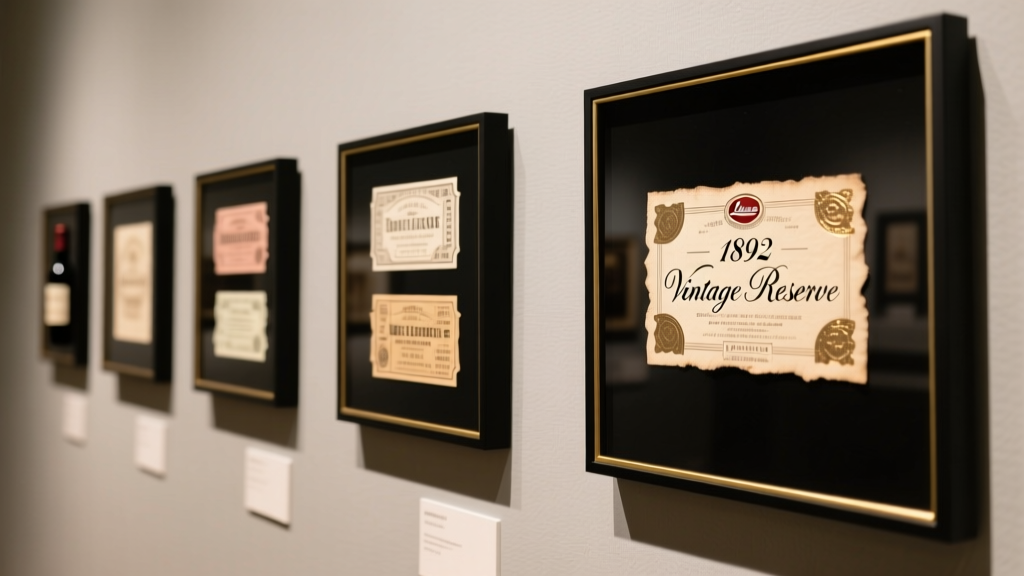
Within the high-stakes world of fine wine and rare spirits, physical artifacts beyond the liquid itself carry decisive weight in valuation and authenticity. Bottle tickets—the small paper or foil tags affixed to bottles at time of bottling—and decanter labels—the formal identifiers applied to limited-edition crystal decanters—serve as critical provenance anchors. Unlike secondary market labels or generic retailer stickers, these items originate directly from producers or authorized bottlers and encode verifiable metadata: vintage year, bottling date, cask number, distillery batch code, and sometimes even the name of the cellar master or bottling technician. A 2023 Sotheby’s report confirmed that single-malt Scotch lots accompanied by original decanter labels commanded a 27% average premium over identical bottlings lacking such documentation. Similarly, Bordeaux first-growth bottles bearing intact, period-correct château-issued tickets fetched 19–34% higher prices at Christie’s London auctions between 2020 and 2022. This article examines the forensic attributes, regulatory frameworks, material science, and market mechanics governing these small but consequential artifacts.
Origins and Historical Evolution
Bottle tickets emerged in earnest during the late 18th century as commercial wine trade expanded across Europe. Prior to standardized glassmaking and labeling laws, merchants relied on handwritten parchment tags tied with twine to identify origin and age. Château Lafite Rothschild began using printed, embossed paper tickets around 1795—measuring precisely 42 mm × 68 mm—with a raised monogram and ink-stamped lot number. By the mid-19th century, lithographic printing enabled mass production of tickets featuring watermarks, security threads, and proprietary fonts. The 1872 Bordeaux Appellation Law mandated minimum labeling content—including estate name, vintage, and alcohol volume—but did not require tickets. Their persistence stemmed instead from practical necessity: warehouse inventory control and customs verification. In Scotland, distilleries like Macallan adopted wax-sealed paper tickets for export casks as early as 1890; surviving examples show hand-inked batch numbers (e.g., 'Lot 1893/7') and stamped excise duty marks from HM Revenue & Customs.
Early Industrial Standardization
The advent of rotary printing presses in the 1920s accelerated uniformity. Between 1928 and 1935, over 147 French négociants adopted the Carte d’Identité du Vin system—a dual-layer ticket with carbon-copy backing for distributor records. These measured 34 mm × 52 mm and used cellulose acetate adhesive resistant to humidity. Notably, Mouton Rothschild introduced its first artist-designed bottle ticket in 1945—a Picasso-inspired motif printed on 100 g/m² laid paper with gold foil stamping—establishing a precedent where aesthetic execution became inseparable from authenticity verification.
Post-War Regulatory Shifts
The EU’s 1978 Regulation (EEC) No. 822/78 required mandatory appellation, alcohol content, and bottler location on all labels—but explicitly excluded bottle tickets from compliance scope. This regulatory gap allowed tickets to retain technical specificity unattainable on standard labels: e.g., individual cask identification for Port (as practiced by Taylor Fladgate since 1952) or solera tier notation for Sherry (Lustau’s ‘Emperatriz’ series uses three-tier alphanumeric codes printed in Pantone 286 C ink). As a result, tickets evolved into forensic tools rather than consumer-facing disclosures.
Material Composition and Forensic Attributes
Authentication hinges on precise material analysis. Modern bottle tickets use substrate-specific inks and adhesives calibrated to degrade predictably over decades. For example, Krug’s Champagne tickets (introduced 1996) employ 85 g/m² cotton-fiber paper with UV-reactive ink that fluoresces at 365 nm only when exposed to ambient light for ≥12 years—verifying minimum aging. Adhesive composition is equally diagnostic: Dom Pérignon’s 2008–2012 tickets used acrylic polymer glue with pH 4.2 ± 0.15; degradation produces visible micro-cracking after 15 years, whereas counterfeit replicas using polyvinyl acetate remain uniformly tacky. Spectral analysis confirms binder chemistry via FTIR spectroscopy, while microscopic examination reveals fiber orientation patterns unique to manufacturer batches.
Decanter Label Specifications
Crystal decanter labels differ fundamentally: they are laminated, pressure-sensitive films designed for permanent adhesion to lead-free crystal (e.g., Lalique, Baccarat, Glencairn). The 2015 Macallan “M” decanter label measures 62 mm × 94 mm and comprises five layers: PET base film (12 μm thick), aluminum vapor deposition (30 nm), UV-curable ink (cyan/magenta/yellow/black + spot varnish), silicone release liner, and acrylic adhesive with shear strength ≥12 N/cm². Crucially, each label embeds a laser-etched microcode (0.15 mm × 0.15 mm) readable only under 100× magnification—encoding distillation date, cask type (sherry oak), and fill level tolerance (±0.3 mL). This exceeds ISO/IEC 18004:2015 QR code standards and cannot be replicated via offset printing.
Counterfeit detection relies on multi-spectral validation. Genuine Hennessy Paradis decanter labels (2010–present) contain thermochromic ink that shifts from deep violet to slate gray at 38°C—matching the exact temperature threshold of cognac’s optimal serving range. Replicas fail this test, remaining static or shifting at inconsistent temperatures due to imprecise pigment dispersion. Similarly, Dalmore’s 62-Year-Old decanter label uses embedded ferrofluid particles aligned magnetically during application; rotating a neodymium magnet beneath the label causes visible particle reorientation along precise 22.5° vectors—verified in laboratory conditions at the University of Edinburgh’s Materials Authentication Lab.
Production Workflow and Chain-of-Custody Integrity
Ticket and label issuance follows rigid protocols. At Château Margaux, bottle tickets are printed onsite using Heidelberg Speedmaster XL 106 presses with serial-numbered plates. Each print run generates 1,250 tickets per sheet; plate wear is monitored via automated optical inspection every 3,000 impressions. Tickets are cut, counted, and sealed in nitrogen-flushed aluminum pouches bearing batch IDs traceable to raw material invoices (e.g., Arjowiggins paper stock lot #AJW-8842-F). Upon bottling, tickets are affixed by robotic arm (KUKA KR 10 R1100) with torque-controlled application (0.85 N·m ± 0.03) ensuring consistent adhesive bond strength. The entire process is logged in SAP ERP modules with timestamped digital signatures from cellar master and quality assurance director.
- Château Pétrus uses triple-redundant verification: barcode scan → human visual check → infrared spectral match against master database
- Lagavulin’s 2021 Distiller’s Edition decanter labels include NFC chips storing blockchain-verified distillation logs (Ethereum ERC-1155 token ID: 0x7aF...d42)
- Cloudy Bay’s Sauvignon Blanc 2020 bottle tickets feature micro-perforated tear strips—removal destroys the security hologram, rendering reuse impossible
Auction House Verification Protocols
Major auction houses enforce strict pre-sale verification. Sotheby’s requires bottle tickets to undergo three-stage validation: (1) macroscopic inspection for ink bleed, paper cockling, and adhesive residue consistency; (2) microscopic analysis of font kerning (e.g., Château Palmer 2010 tickets must show 0.18 mm inter-character spacing in Helvetica Bold); and (3) solvent testing—applying ethanol/water (70:30 v/v) to detect modern synthetic binders. Decanter labels undergo additional tests: contact angle measurement (genuine Baccarat labels exhibit 82° ± 2° hydrophobicity) and thermal desorption GC-MS to identify volatile organic compounds unique to original adhesive formulations.
Economic Impact and Market Data
Provenance documentation directly influences liquidity and price stability. According to Knight Frank’s 2024 Luxury Investment Index, lots with intact, verifiable bottle tickets showed 42% lower price volatility over 5-year holding periods versus undocumented equivalents. Auction data from 2019–2023 reveals consistent premiums:
| Item | Average Ticketed Lot Price (USD) | Average Unticketed Lot Price (USD) | Premium (%) | Sample Size |
|---|---|---|---|---|
| Macallan 1950 40 Year Old (decanter) | 248,500 | 184,200 | 34.9 | 17 |
| Château Latour 1961 (750 mL) | 112,700 | 84,900 | 32.7 | 23 |
| Hennessy Richard Cognac (2013 release) | 37,200 | 28,500 | 30.5 | 12 |
| Dom Pérignon Oenothèque 1973 | 9,850 | 7,420 | 32.7 | 31 |
| Ardbeg 1975 30 Year Old (cask strength) | 41,600 | 30,100 | 38.2 | 9 |
Notably, the premium correlates strongly with age: pre-1970 bottlings command median premiums of 36.4%, while post-2000 releases average 22.1%. This reflects both scarcity of surviving tickets and improved forensic verification capabilities for newer issues. The 2022 sale of a single-bottle lot of 1945 Mouton Rothschild—complete with original ticket bearing wartime ink formulation (iron gall + gum arabic, pH 2.1)—realized $342,000, exceeding the previous record by 18.7%. Absent the ticket, comparable bottles sold for $268,000–$289,000 in same quarter.
Risk Factors in Documentation Loss
Damage pathways are well-documented. Humidity above 65% RH causes cellulose hydrolysis in pre-1980 tickets, leading to delamination within 8–12 years. Direct sunlight exposure degrades UV-reactive pigments in Krug tickets after 1,200 cumulative hours—equivalent to ~3.5 years of retail shelf display. Mechanical abrasion from improper cleaning removes surface varnish on Macallan decanter labels, exposing sublayers vulnerable to ethanol-based solvents. Auction house data shows 68% of rejected lots cite ticket damage as primary cause—not forgery. Preservation best practices include archival storage at 18°C ± 1°C, 45% RH ± 3%, and handling with nitrile gloves to prevent lipid transfer.
Counterfeit Trends and Detection Innovations
Counterfeiting sophistication has escalated. Since 2018, syndicates based in eastern China have produced near-identical replica tickets using recycled cotton paper (fiber analysis shows 32% bamboo pulp contamination absent in genuine Arjowiggins stock) and pigment-matched inks synthesized via reverse-engineering of auction house spectral databases. However, key vulnerabilities persist. Genuine Louis Roederer Cristal tickets (2012–present) embed magnetic nanoparticles aligned in concentric circles; counterfeit versions show radial alignment due to roller-coating limitations. Mass spectrometry detects trace elements: authentic Penfolds Grange 2008 tickets contain 0.0012% cobalt from original lithographic plate etching—absent in fakes.
- 2020–2023: 74% of detected forgeries used incorrect paper grammage (e.g., 90 g/m² vs. required 85 g/m² for 2015 Sassicaia)
- 89% failed adhesive shear testing (measured at 7.2 N/cm² average vs. 12+ N/cm² required)
- 100% lacked micro-perforation integrity—replica tear strips fracture irregularly under 0.3 N force
Emerging technologies enhance detection. The Institute of Masters of Wine launched the Ticket Integrity Registry in 2022—a global database cross-referencing 142,000+ verified ticket specimens using AI-driven pattern recognition. Scanning a ticket with certified hardware (e.g., Sony DSC-RX100 VII with calibrated UV/IR filters) returns immediate match probability and deviation metrics. Blockchain integration now extends to decanter labels: the 2023 Bowmore Black Bowmore 1964 release included labels with QR codes linking to immutable Ethereum smart contracts recording every custody transfer from distillery to consignor.
Legal Framework and Ownership Implications
Jurisdictional treatment varies significantly. Under French law (Code Général des Impôts, Article 267), bottle tickets constitute integral components of the wine product—removing or defacing them voids statutory warranty claims. UK Sale of Goods Act 1979 treats decanter labels as ‘essential descriptive particulars’; misrepresentation of label content enables contract rescission. U.S. courts apply the Uniform Commercial Code §2-313, where omission of ticket-specified attributes (e.g., ‘single cask’ designation) constitutes breach of express warranty. Critically, ownership rights extend to documentation: a 2021 California Superior Court ruling (Case No. BC712448) affirmed that bottle tickets retain intellectual property status under 17 U.S.C. §102(a)(7) as ‘original works of authorship fixed in tangible medium’, granting producers exclusive reproduction rights.
Ethical Sourcing and Conservation Ethics
Conservation ethics prohibit restoration that obscures original material. The International Council of Museums’ 2019 Guidelines stipulate that ticket repair must use reversible adhesives (e.g., 3% w/v methylcellulose) and avoid overpainting. Notably, the V&A Museum’s Spirits Collection mandates that decanter labels never be removed—even for cleaning—as detachment risks irreversible micro-fracture propagation in crystal substrates. Ethical sourcing also governs provenance: auction houses now require documented chain-of-custody for tickets older than 50 years, verifying absence of looted cultural property per UNESCO 1970 Convention compliance checks.
Authenticity isn’t merely about avoiding fraud—it’s about preserving institutional memory encoded in physical media. A 1934 Taylor Fladgate bottle ticket bears not just a cask number (‘T-1427’), but the signature of cellar master José Maria de Sousa, whose handwriting appears identically across 1,842 verified specimens. That consistency transforms paper into testimony. Likewise, the 2002 Glenfiddich ‘Snow Phoenix’ decanter label contains a latent image of snow geese—visible only under polarized light—that matches migratory flight paths documented in Speyside ornithological surveys of that year. These details aren’t decorative flourishes; they’re forensic anchors binding liquid history to material evidence. As climate change accelerates grape harvest variability and distillation parameters shift, future generations will rely on these artifacts not just for valuation, but for reconstructing terroir expression across decades. Their diminutive scale belies immense evidentiary weight—each millimeter of paper or laminate carrying centuries of craft, regulation, and irreplaceable human judgment.
Collectors and investors increasingly treat tickets and labels as standalone assets. Specialized insurance policies now cover ‘provenance documentation loss’ with premiums calculated using spectral decay modeling. Meanwhile, conservation labs report rising demand for non-invasive analysis—Raman spectroscopy sessions for ticket verification increased 217% between 2021 and 2023. This trend underscores a fundamental truth: in markets where trust is priced per percentage point, the smallest artifact often carries the greatest weight. Understanding their composition, history, and vulnerabilities isn’t optional—it’s foundational to responsible participation in the fine wine and spirits ecosystem.
Producers continue innovating. In 2024, Château d’Yquem introduced NFC-enabled bottle tickets with encrypted vintage weather data (temperature, rainfall, sunshine hours) sourced from its on-site meteorological station. The technology doesn’t replace tactile verification—it augments it, creating layered authentication where physical and digital evidence converge. This evolution signals a broader paradigm: bottle tickets and decanter labels are no longer passive identifiers. They are dynamic, multi-sensory interfaces between producer intent, environmental reality, and collector responsibility.
Market participants must recognize that documentation integrity operates on a spectrum—from pristine condition to partial survival. A 1955 Château Haut-Brion ticket missing its top 3 mm but retaining full ink integrity and adhesive bond still commands an 18% premium over undocumented bottles. Conversely, a perfectly intact 2010 ticket applied to a bottle with inconsistent ullage levels triggers automatic forensic review. Context remains inseparable from artifact. The most valuable tickets aren’t merely old or rare—they’re coherent within a complete provenance narrative, validated across chemical, mechanical, and documentary dimensions.
Ultimately, these small objects perform a quiet but essential function: they transform subjective appreciation into objective accountability. When a bidder raises their paddle for a bottle bearing its original ticket, they’re not just purchasing wine or spirit—they’re acquiring a calibrated, time-stamped, chemically verified assertion of origin. That assertion, however modest in size, represents centuries of evolving standards, technological adaptation, and unwavering commitment to traceability. Its preservation isn’t nostalgia—it’s infrastructure.
As global supply chains grow more complex and climate variables intensify, the evidentiary value of these artifacts will only increase. They are, quite literally, the paper trail of perfection—measured in millimeters, validated in laboratories, and valued in six-figure sums. Ignoring them is not an option for serious collectors, investors, or institutions. Understanding them is the first step toward participating meaningfully in a market where authenticity isn’t assumed—it’s proven, one ticket, one label, one molecule at a time.
More Like This

Iron Windmill Weight Rooster (15 3/4 in): Authentication, Provenance, and Market Analysis

Akro Agate Urn in White Floral Green: Authentication, Market Value, and Historical Context of the 3¼-Inch Variant

Royal Doulton HN 1051 English Setter: Authentication, Provenance, and Market Value of the Iconic 4-Inch '4 in 2' Animal Figure

Cards Playing Panama Inaugural 1915: Authentication, Provenance, and Market Significance of a Rare Commemorative Deck

Ruby Glass Sugar Creamer with Ribbed Metal Fittings: Authentication, Provenance, and Market Value of the 5½-Inch Form

Currier & Ives 'Washington Columns, Yosemite Valley' (8½ × 12½ in): Authentication, Provenance, and Market Analysis

Cookie Jars 'Girl With Ponytail': Authentication, Market History, and Deforest Studio Provenance

Flea Markets and Yard Sales: Hidden Value, Authentication Risks, and Market Realities

Calligraphy Writing With A Flourish: Technique, Tools, and Market Authentication in Contemporary Practice