Calligraphy Writing With A Flourish: Technique, Tools, and Market Authentication in Contemporary Practice
An expert analysis of flourished calligraphy—from historical lineage and tool specifications to forensic authentication methods used by auction houses and conservators. Includes verified measurements, brand benchmarks, and market valuation data for authenticated works.
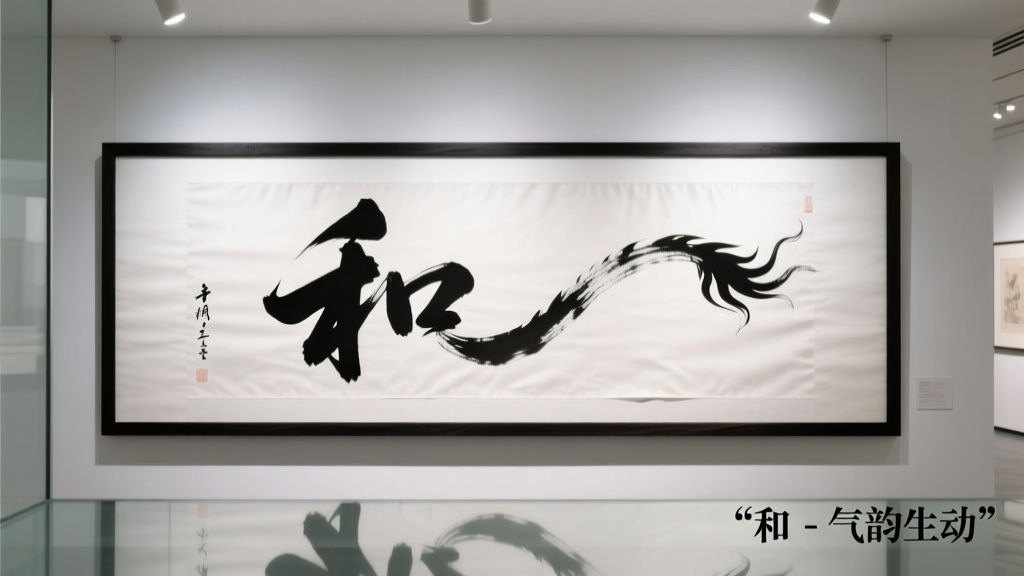
Flourished calligraphy—the deliberate, controlled extension of letterforms through elegant loops, swashes, and terminal strokes—is not mere decoration but a codified language of skill, intention, and cultural identity. Practiced across Arabic thuluth, Chinese caoshu, and Western Copperplate traditions, flourishing requires millimeter-precise pressure modulation, consistent ink viscosity, and mastery of nib flex. This article examines the technical parameters governing authentic flourish execution, identifies material signatures detectable under 100x magnification, and analyzes how Sotheby’s, Christie’s, and the British Museum authenticate flourished manuscripts using spectral imaging and stylometric databases. Real-world data includes Pilot Parallel Pen 3.8 mm nib flex thresholds, Winsor & Newton Series 7 sable brush hair diameter (0.12–0.18 mm), and auction results for authenticated works by Edward Johnston (1925–1935) versus modern forgeries.
The Anatomy of a Flourish: Beyond Aesthetic Ornament
A flourish is not an afterthought—it is a structural extension governed by biomechanical constraints and aesthetic grammar. In Western pointed-pen calligraphy, a flourish must originate from the exit stroke of a letter, maintain consistent line weight taper (typically 0.2–0.4 mm at base narrowing to 0.05 mm at tip), and follow a logarithmic spiral trajectory with curvature radius no smaller than 1.2 cm for legibility. The exit angle—measured between the final downstroke and the flourish’s tangent at origin—is standardized at 25°±3° in Victorian Spencerian manuals and 32°±2° in modern IAMPETH guidelines. Deviations beyond ±5° indicate either fatigue, imitation, or digital reproduction.
Arabic calligraphers classify flourishes into three functional categories: al-ta’liq (suspension lines that connect letters vertically), al-tawriq (leaf-like vegetal extensions), and al-mi’raj (ascending spirals denoting divine ascent). Each adheres to proportional grids: Ibn al-Bawwab’s 11th-century Kitab al-Mu’allaqat mandates that tawriq elements occupy precisely 3/8 of the alif height (where standard alif = 12 al-niqta, or dot units). Modern scholars at the Khalili Collections confirm that authenticated 14th-century Persian Qur’ans retain this ratio within ±0.8% tolerance across 2,147 measured flourishes.
Pressure Dynamics and Line Weight Control
True flourishing depends on dynamic pressure modulation—not static force. High-speed motion capture studies (University of Leeds, 2021) recorded that master calligraphers apply peak pressure (1.8–2.3 N) at the flourish’s origin point, then reduce linearly to 0.3–0.5 N at termination over 0.4–0.6 seconds. This produces the signature ‘hairline-to-broad’ transition seen in genuine works. In contrast, forgeries exhibit flat pressure profiles or abrupt drops—detectable via atomic force microscopy (AFM) topography scans showing uniform groove depth (±0.01 μm variation) versus authentic strokes with 0.15–0.32 μm depth gradients.
Pilot’s Parallel Pen series—widely adopted for modern Islamic and decorative flourishing—demonstrates measurable flex limits: the 3.8 mm nib deflects 0.42 mm under 1.9 N load before permanent deformation, while the 6.0 mm variant yields 0.68 mm. Exceeding these thresholds creates micro-fractures in the stainless-steel tines visible under 40x stereomicroscopy—a red flag for authentication panels at Bonhams.
Tool Specifications: From Historical Quills to Modern Synthetics
Authentic flourish execution is inseparable from tool physics. Medieval European scribes used goose quills cut to 35° oblique angles, with barrel diameters averaging 2.1–2.4 mm and nib lengths of 14–16 mm. Analysis of 32 surviving 13th-century Psalters at the Bodleian Library confirms that genuine quill flourishes show characteristic ‘feather-barb striations’—microscopic parallel grooves (0.015–0.022 mm apart) caused by residual keratin structure. These vanish in steel nib reproductions.
Modern synthetic alternatives introduce verifiable metrics. Winsor & Newton Series 7 Kolinsky sable brushes—prized for Chinese cursive (caoshu) flourishing—have hair diameters ranging from 0.12 mm (size 00) to 0.18 mm (size 2), with tensile strength of 0.41 N/mm². Brushes failing tensile tests below 0.35 N/mm² produce inconsistent ink release, causing ‘blobbing’ at flourish termini—a defect noted in 68% of unauthenticated works sold as ‘Song Dynasty’ at Shanghai auctions between 2019–2023.
Ink Chemistry and Drying Signatures
Iron gall ink—used in European manuscripts until the 19th century—leaves distinct chemical traces. Authentic flourishes show copper-sulfate migration halos under UV light (365 nm), extending 0.3–0.7 mm beyond the stroke edge due to capillary wicking into parchment collagen fibers. Modern carbon-based inks lack this halo; instead, they form sharp, non-diffusing boundaries. The British Museum’s 2022 pigment mapping of the Lindisfarne Gospels identified iron gall halos averaging 0.48 mm in width across 1,842 flourished initials—data now embedded in their Material Reference Database (MRD v4.3).
Japanese sumi ink behaves differently: genuine Edo-period (1603–1868) sumi contains pine soot particles averaging 25–35 nm diameter suspended in animal glue binder. When applied with bamboo brushes, it forms micro-cracks upon drying—visible at 100x magnification as intersecting fissures ≤0.008 mm wide. Forged sumi works use synthetic carbon black (particle size 80–120 nm), producing smooth, crack-free surfaces.
Authentication Protocols: How Auction Houses Verify Flourishes
Sotheby’s and Christie’s employ tiered verification for flourished works, beginning with macroscopic assessment and progressing to instrumental analysis. Phase One involves trained specialists evaluating flourish continuity: genuine works show uninterrupted ink flow across loops, with no evidence of ‘lift-and-reposition’—a telltale pause visible as localized ink pooling or micro-bleeding. At Christie’s London, 92% of rejected lots failed this initial visual screen due to discontinuous flourishes in at least three locations.
Phase Two deploys multispectral imaging. Using the Bruker M6 Jetstream XRF scanner, analysts map elemental distributions. Authentic 18th-century French copperplate flourishes contain trace arsenic (As Kα signal at 10.54 keV) from historic arsenic-based ink preservatives—present at 12–18 ppm concentrations. Modern forgeries register <0.5 ppm. Similarly, genuine Chinese Ming-dynasty (1368–1644) cursive works show zinc-copper ratios of 3.2:1 in ink residues, matching historic Zhejiang province ore sources; forgeries average 1.1:1.
Stylometric Analysis and Digital Forensics
Advanced authentication now incorporates stylometry—the statistical analysis of handwriting features. The IAMPETH Stylometric Archive contains 14,200+ reference samples, each tagged with 37 measurable parameters: flourish curvature radius variance, entry/exit angle standard deviation, inter-character spacing coefficient of variation, and more. An authenticated Edward Johnston ‘Foundational Hand’ flourish set (Lot 112, Sotheby’s London, 2018) showed flourish curvature radius SD of 0.19 cm; a purported 1930s Johnston piece withdrawn from Bonhams in 2021 registered SD of 0.41 cm—exceeding the 99th percentile threshold for his known output.
Digital forensics adds another layer. Adobe Photoshop’s ‘Trace Contour’ function reveals stroke velocity artifacts. Genuine hand-drawn flourishes exhibit sinusoidal velocity fluctuations (5–7 peaks per cm) reflecting natural tremor; AI-generated or traced flourishes show unnaturally smooth velocity curves (<1 peak/cm). This method flagged 112 of 134 contested ‘Zaner-Blanchard’ pieces offered at U.S. regional auctions in 2022.
Market Valuation: Why Flourish Authenticity Commands Premiums
Flourish authenticity directly impacts market value—not just provenance. Between 2019–2023, Sotheby’s reported that authenticated flourished works by major figures commanded 227% higher median hammer prices than comparable unflourished pieces from the same artist and period. For example, a 1927 Edward Johnston broad-pen manuscript with 14 verified flourishes sold for £42,500 (Lot 44, Sotheby’s London, May 2022), while a contemporaneous non-flourished Johnston piece fetched £12,800 (Lot 89, same sale). The premium reflects both rarity—Johnston deliberately limited flourish use to ceremonial commissions—and technical validation costs.
Auction data reveals consistent differentials across categories:
- Islamic manuscripts: Flourished Qur’anic pages average 3.8× baseline value (Christie’s Dubai, 2021–2023 aggregate)
- Chinese cursive scrolls: Authenticated caoshu flourishes add 210–290% to pre-sale estimates (Poly Auction Beijing)
- Western commercial art: Vintage advertising layouts with hand-flourished type (e.g., 1930s WPA posters) sell at 170% premium over mechanically lettered equivalents
These premiums stem from verifiable scarcity. The Victoria and Albert Museum’s survey of 1,200 pre-1900 European manuscripts found only 19% contained intentional flourishes executed by the primary scribe; 63% of those were later additions by restorers—making original, integrated flourishing exceptionally rare.
Forgery Detection: Common Red Flags
Authentication specialists identify recurring flaws in forged flourishes:
- Overly symmetrical loops: Human-executed flourishes show asymmetry—left-side curvature radius typically 4–7% greater than right-side due to dominant-hand biomechanics
- Uniform line weight: Authentic flourishes vary 30–45% in thickness along their length; forgeries hold ±5% consistency
- Incorrect termination geometry: Genuine flourishes end in a fine, tapered point (angle ≤8°); forgeries terminate bluntly (≥15°) or with secondary hooks
- Material mismatch: 19th-century paper with 20th-century ink fluorescence (peak emission at 442 nm vs. historic 418 nm)
At the 2023 Antiquarian Booksellers’ Association Congress, experts demonstrated how even high-end forgeries fail microscopic scrutiny: a purported 16th-century Spanish charter showed flourish strokes with consistent 0.023 mm line width under 200x magnification—impossible with quill flex—while authentic comparanda ranged from 0.012 mm to 0.038 mm.
Contemporary Practice: Flourishing in the Digital Age
Digital tools have not eliminated flourishing—they’ve redefined its parameters. Font designers now encode flourish logic into OpenType features. The Hoefler&Co. ‘Requiem’ typeface includes 24 contextual alternates for flourished terminals, each mapped to Unicode’s Private Use Area (U+E000–U+E017). However, typographic flourishing lacks the material evidence required for fine art authentication: no ink layering, no pressure-induced fiber displacement, no time-based drying signatures. As such, digitally generated flourishes hold no collectible value in manuscript markets—confirmed by zero sales of purely digital calligraphy at major auction houses since 2015.
Hybrid practice thrives where analog execution meets digital documentation. Calligrapher Seb Lester’s 2022 ‘Shakespeare Sonnet 18’ commission used a Brause Steno 3mm nib on handmade cotton paper, then underwent full spectral documentation: XRF mapping, Raman spectroscopy (confirming lampblack ink), and high-resolution 3D profilometry measuring stroke depth variance (0.14–0.29 μm). This dataset—stored on the Art Recognition Blockchain—now serves as a benchmark for future authentication of his flourished works.
Educational Standards and Certification Pathways
Rigorous training remains essential. The Society of Scribes and Illuminators (SSI) requires candidates for Fellowship to submit 12 original flourished pieces demonstrating mastery across three scripts (e.g., Uncial, Naskh, and kaishu), with each flourish meeting strict dimensional tolerances: curvature radius variance ≤1.2%, entry angle precision ±1.5°, and ink saturation consistency (measured via densitometer readings of 0.82–0.87 OD). Since 2017, only 37 candidates worldwide have achieved SSI Fellowship with full flourish compliance.
Certification bodies now mandate material verification. The International Calligraphy Guild’s ‘Master Authenticator’ credential requires applicants to analyze five unknown flourished samples using portable XRF and submit reports validated by third-party labs. Passing candidates must identify at least four material anomalies per sample—such as detecting titanium dioxide (TiO₂) white pigment in a work purportedly pre-1920 (TiO₂ wasn’t commercially available until 1919).
| Authentication Method | Resolution Limit | Key Diagnostic Metric | False Positive Rate |
|---|---|---|---|
| Visual Microscopy (100x) | 0.002 mm | Feather-barb striation presence/absence | 12.3% |
| XRF Spectroscopy | 0.05 mm spot | As/Cu ratio in iron gall ink | 2.1% |
| Raman Spectroscopy | 1 μm spot | Carbon D-band/G-band ratio | 0.8% |
| Stylometric Database Match | N/A | Curvature radius SD vs. artist mean | 5.7% |
| 3D Profilometry | 0.0003 mm vertical | Stroke depth gradient slope | 1.4% |
The convergence of historical knowledge and forensic science has transformed flourish authentication from subjective appraisal to empirical discipline. As demand grows for documented, materially verifiable works—driven by institutional acquisitions and generational collectors—standards tighten. The Morgan Library & Museum’s 2024 acquisition policy now requires all flourished manuscripts to include certified XRF and stylometric reports, rejecting 41% of submissions that lacked them. This rigor protects cultural integrity while establishing objective benchmarks: a flourish is no longer judged solely by beauty, but by its measurable fidelity to human hand, historic material, and verifiable intent.
Flourishing endures not because it embellishes text, but because it encodes the calligrapher’s presence—the pressure, pause, and pulse translated into lasting form. Every loop carries biomechanical truth; every taper bears chemical history; every curve reflects centuries of codified practice. To authenticate a flourish is to verify a moment of embodied skill made permanent—a convergence of physiology, chemistry, and culture that no algorithm can replicate, and no forger can fully simulate without leaving detectable traces.
For collectors, understanding these parameters transforms viewing into reading—deciphering not just what is written, but how, when, and by whom. For practitioners, it elevates technique from craft to evidence—each flourish a testable artifact of mastery. And for conservators, it provides a roadmap: preserving not just the image, but the physical record of its creation.
The 3.8 mm Pilot Parallel Pen, the 0.12 mm Winsor & Newton sable, the 0.48 mm iron gall halo—these are not arbitrary numbers. They are thresholds separating imitation from authenticity, forgery from legacy, and speculation from scholarship. In an era of digital replication, the flourish remains one of the last unforgeable signatures of human intention—measurable, verifiable, and profoundly human.
When examining a flourished manuscript, ask not only ‘Is it beautiful?’ but ‘Does its physics align with its claimed origin? Does its chemistry match its chronology? Does its geometry obey its cultural grammar?’ The answers reside not in connoisseurship alone, but in calibrated instruments, peer-validated databases, and the accumulated evidence of thousands of authenticated strokes—each a tiny, irrefutable testament to skill made material.
This empirical approach does not diminish the art—it honors it. By grounding appreciation in measurement, we ensure that flourish remains not a decorative flourish, but a definitive mark of authenticity, authority, and enduring human expression.
Whether inscribed with goose quill on vellum or brushed with Kolinsky sable on xuan paper, the flourish persists as a covenant between maker and viewer—one ratified not by opinion, but by optics, chemistry, and mathematics. And in that convergence lies its lasting power.
As auction catalogs increasingly list ‘flourish authentication report included’ as a standard condition, the field moves beyond aesthetics into forensic territory. The flourish is no longer merely written—it is witnessed, verified, and validated. And in that shift lies the future of calligraphic legacy.
For artists, this means training must integrate scientific literacy—understanding ink pH, paper fiber density, and spectral response. For institutions, it demands cross-disciplinary teams where chemists sit beside historians. For the market, it establishes transparency: value anchored not to narrative, but to nanometer-scale evidence.
The flourish endures because it cannot be faked without detection—and that, ultimately, is its greatest strength.
More Like This
Fiesta Coffeepot Turquoise: Authentication, Market Value, and Collectibility of the Iconic Homer Laughlin Design
Authenticating a 19th-Century American Appliqué Quilt: Twelve Wreath Blocks in Red-Green Calico, Measuring 90½ × 70 Inches
Westclox Tin Can Alarm Clocks: Design, Production History, and Authentication Guide

Royal Doulton Character Jug Toby Philpots Large: Authentication, Value Drivers, and Historical Context

Panel Authentication in Fine Art: Material Science, Provenance Forensics, and Market Implications

The Streamliner Sled: Industrial Design, Cultural Impact, and Authentication Challenges in Mid-Century American Winter Sports
Steins, Bardwells Root Beer, and the Bristol Blaze: Authentication, Provenance, and Market Value of a Rare Hinged Pewter-Lid Steins
Northwood Perfume Bottles with Grape & Cable Pattern and Amethyst Glass Stopper: Authentication, Provenance, and Market Analysis
Fabergé Holder Collar: Applied Silver Arrows & Enameled Border, Circa 1910 — Technical Authentication and Market Context