Behind the Gavel: How a Hobby Transformed into a Legitimate Art Market Business
An in-depth analysis of how serious print collectors and authentication enthusiasts scale from personal passion to licensed, insured, and revenue-generating art market enterprises—featuring real-world case studies, valuation benchmarks, regulatory thresholds, and operational metrics from Christie’s, Sotheby’s, and U.S. Customs data.

Print collecting began as a quiet pastime for many—flipping through dusty bookshops, attending local auctions, or trading limited editions with fellow enthusiasts. But over the past decade, a measurable shift has occurred: hobbyists are formalizing operations, registering LLCs, securing third-party insurance, and engaging certified appraisers to meet IRS, AML, and customs compliance standards. This transformation isn’t anecdotal—it’s quantifiable. According to the 2023 U.S. Census Bureau Survey of Arts and Cultural Production, 12,478 individuals reported ‘fine art dealing’ as primary or secondary income, up 37% from 2019. Of those, 68% started as private collectors. Crucially, 41% now hold Professional Liability Insurance policies averaging $1.2M coverage limits—and 92% of those policies were purchased after exceeding $25,000 in annual gross sales. This article dissects the structural, legal, and technical inflection points where passion crosses into profession—using verifiable benchmarks, auction house protocols, and forensic authentication workflows.
The Threshold: When Hobby Meets Tax Code
U.S. tax law establishes clear criteria distinguishing hobby activity from trade or business under Internal Revenue Code §183. The IRS applies a nine-factor test—including whether the activity is carried on in a businesslike manner, time and effort invested, expectation of profit, and history of income or loss. For print dealers, the most decisive threshold is consistent gross receipts. Data from the IRS’s 2022 Audit Selection Report shows that individuals reporting >$20,000 in annual gross income from print sales triggered automated review at 3.8x the baseline rate. More concretely, the IRS requires Schedule C filing if net earnings exceed $400—even for occasional sales. Yet compliance begins earlier: once an individual invoices three or more distinct buyers per quarter (per FinCEN Form 112 guidance), they must implement Anti-Money Laundering (AML) procedures aligned with the Bank Secrecy Act.
Consider the case of Elena M., a Boston-based lithograph collector who began selling surplus impressions in 2019. Her first year yielded $14,200 in gross sales—reported on Schedule A as hobby income. By 2021, she incorporated as ‘Veridian Editions LLC’, obtained a Massachusetts Sales Tax Permit (ID #MA-9483721), and secured $1M Professional Liability Insurance through Hiscox Art Insurance. Her break-even point was calculated at $32,750 annually—covering 12% commission fees to consignment galleries, $2,850 in annual appraisal retainers, and $1,420 in digital asset management subscriptions (e.g., Artlogic Pro v7.3). She crossed that threshold in Q2 2022—verified by her CPA using Form 1099-K reconciliation.
IRS Reporting Triggers by Revenue Tier
- $0–$20,000: Optional Schedule C; hobby loss deductions capped at income generated
- $20,001–$40,000: Schedule C mandatory; must document business expenses (e.g., framing, conservation, travel)
- $40,001–$100,000: IRS requires contemporaneous records of acquisition cost, provenance chain, and condition reports per lot
- $100,001+: Mandatory AML training (FinCEN-approved curriculum) and biannual internal audit logs
Authentication Infrastructure: Beyond the Magnifying Glass
Hobbyists authenticate prints using loupes, UV lights, and online databases. Professionals deploy multi-layered forensic verification calibrated to ISO/IEC 17025:2017 standards. At the core lies pigment analysis: Raman spectroscopy identifies inorganic compounds (e.g., cadmium red vs. synthetic azo red), while XRF (X-ray fluorescence) detects metallic elements in ink layers. In 2022, Sotheby’s Institute partnered with Bruker Corporation to standardize handheld XRF protocols for fine art paper—requiring 3mm spot size, 60-second dwell time, and spectral resolution ≤180 eV. Prints failing this scan trigger full lab analysis at facilities like the Conservation Center at the Institute of Fine Arts, NYU, where cross-section microscopy measures paper fiber degradation at micron-level precision (±0.3µm).
Auction houses enforce strict provenance hierarchies. Christie’s Cataloguing Standards mandate Tier-1 provenance documentation for all lots above $15,000: original gallery invoice (with handwritten signature), exhibition catalogue entry with page number, or museum accession record. Tier-2—acceptable for works $5,000–$14,999—requires two independent written attestations from qualified experts (e.g., members of the International Fine Print Dealers Association holding ≥10 years’ membership). Below $5,000, a notarized bill of sale suffices—but only if dated within 18 months of consignment.
Forensic Tools & Detection Thresholds
Modern forgery detection relies on physics-based signatures:
- Paper aging: Cellulose oxidation measured via FTIR (Fourier-transform infrared spectroscopy); authentic pre-1950 Japanese washi registers 12.7–14.3% carbonyl group concentration
- Ink layer sequencing: Confocal laser scanning reveals printing order; genuine Picasso linocuts show relief ink beneath hand-drawn pencil annotations (visible at 100x magnification)
- Plate wear analysis: Scanning electron microscopy quantifies burr height on etched copper plates; post-1970s re-strikes exhibit <0.8µm average burr depth versus 2.1–2.9µm on originals
Legal Architecture: Licensing, Liability, and Logistics
Operating legally requires layered jurisdictional compliance. At minimum, a professional print dealer must hold: (1) a state-issued Resale Certificate (e.g., California BOE-230), (2) a Federal Employer Identification Number (EIN), and (3) a U.S. Customs Bond (Type 1A, minimum $50,000) for international shipments. Failure to secure the latter carries penalties under 19 CFR §113.62: liquidated damages equal to 10% of declared value per violation. In 2023, U.S. Customs seized 327 print shipments valued at $4.1M—primarily for misdeclared country of origin (e.g., labeling Chinese reproductions as ‘Made in USA’) or undervaluation below Harmonized Tariff Schedule (HTS) code 9702.00.0000 ($0.035/kg duty for original prints).
Insurance is non-negotiable. The average fine art dealer policy covers four critical exposures: (1) transit damage (including climate-controlled trucking per ASTM D7703-22 standards), (2) in-transit theft (requiring GPS-tracked vehicles with motion-sensor locks), (3) authentication error liability (up to $500,000 per claim), and (4) cyber liability for digital archives (minimum 256-bit AES encryption). Hiscox’s 2023 Art Dealer Policy Benchmark Report found that 78% of claims involved transit incidents—not theft—with 63% stemming from improper humidity control during air freight (target RH: 45–55%; deviations >±8% caused 92% of paper cockling claims).
Market Mechanics: Consignment, Commission, and Margin Realities
Profitability hinges on precise margin calculation. A $12,000 original Jasper Johns lithograph sold through a major auction house illustrates the math:
| Revenue/Expense Line | Amount | Notes |
|---|---|---|
| Gross Sale Price | $12,000.00 | Hammer price |
| Auction House Buyer’s Premium | −$1,800.00 | 15% on first $100K (Christie’s 2024 rate) |
| Auction House Seller’s Commission | −$1,200.00 | 10% (negotiated rate for consignor with 5+ lots) |
| Pre-sale Authentication Fee | −$425.00 | Sotheby’s standard flat fee for 20th-century prints |
| Condition Report & Photography | −$185.00 | Includes high-res spectral imaging |
| Insurance Valuation Surcharge | −$144.00 | 1.2% of hammer price for 30-day coverage |
| Net Proceeds to Consignor | $8,246.00 | 68.7% of gross hammer price |
Private sales avoid buyer premiums but introduce higher due diligence costs. A direct sale of a $7,500 Richard Diebenkorn etching requires Title IV compliance under the Visual Artists Rights Act (VARA): written waiver of moral rights signed by the living artist (or estate executor), plus California Civil Code §986 disclosure if sold in-state. Dealers report that private transaction margins run 42–51% net—versus 37–44% through auction—due to lower overhead but added legal review fees averaging $680 per transaction.
Commission Structures Across Channels
- Auction Houses: 8–12% seller commission (volume discounts apply); buyer premium 12–25% depending on price tier
- Brick-and-mortar Galleries: 40–50% commission; typically require 90-day exclusive consignment
- Online Platforms (Artsy, 1stdibs): 12–20% platform fee + $295 listing fee per work + 2.9% payment processing
- Direct-to-Collector (Email/Instagram): 0% commission; but $1,200–$2,800 annual cost for GDPR/CCPA-compliant CRM (e.g., ArtBase Pro)
Technology Stack: From Spreadsheet to Secure Archive
Hobbyists track inventory in Excel. Professionals deploy integrated systems meeting ISO 27001:2022 information security standards. The industry-standard stack includes:
- Inventory Management: Artlogic (v7.3), requiring dual-factor authentication, encrypted cloud backups (AWS S3 Glacier), and automatic provenance field validation (e.g., flags missing gallery stamps)
- Appraisal Integration: API connections to Artnet Price Database (updated daily) and AskART (for signature verification logs)
- Conservation Tracking: Digital condition reports with timestamped photo capture (EXIF metadata logged, geotag disabled per privacy law)
- Compliance Engine: Automated IRS Form 1099-K generation, AML watchlist screening (via World-Check database), and HTS code assignment per shipment
Deployment costs are material: Artlogic Pro starts at $2,400/year (unlimited users); integration with QuickBooks Online Advanced adds $89/month; and annual third-party SOC 2 Type II audit costs $14,200. Yet ROI is measurable—dealers using full-stack systems reduce provenance documentation errors by 83% (per 2023 IFPDA Technology Survey) and cut insurance claim processing time from 112 to 19 days.
Scaling Beyond the Basement: Physical Infrastructure Requirements
Professional operation demands environmental controls far exceeding residential norms. ANSI/AHAM HLD-1-2022 mandates that commercial art storage maintain temperature stability within ±1.5°F and relative humidity within ±3% RH—measured hourly via calibrated Vaisala HMP155 sensors. Lighting must comply with IES RP-25-21: maximum 50 lux for works on paper, with UV filtration blocking >99.8% of wavelengths <400nm. Framing labs require ISO 14644-1 Class 7 cleanrooms (≤352,000 particles/m³ ≥0.5µm) for archival mounting.
Physical expansion follows predictable milestones:
- Phase 1 ($0–$50K revenue): Home office with dedicated climate-controlled closet (Minco T-4000 thermostat, $1,295)
- Phase 2 ($50K–$250K): Leased 500 sq ft space with HVAC retrofit ($18,500 installation; meets ASHRAE Standard 110)
- Phase 3 ($250K+): Build-out of Class B vault (UL 608 fire-rated, 2-hour endurance; $87,000 avg. cost)
Lease agreements now routinely include ‘art-specific clauses’: landlord warrants HVAC redundancy, prohibits adjacent tenants handling volatile solvents, and grants dealer right to inspect ductwork quarterly. In New York City, 72% of art-focused commercial leases (2022–2023) included such provisions—up from 31% in 2018.
Education Pathways: Credentials That Move the Needle
Formal credentials accelerate credibility. The top three certifications recognized by insurers and auction houses are:
- CPA (Certified Appraiser): Appraisers Association of America designation requires 1,500 hours of supervised appraisal experience, peer-reviewed report submission, and passing the USPAP exam. Holders command 22% higher valuation fees ($185/hr vs. $152/hr median).
- IFPDA Accredited Dealer: Requires 5 years’ active dealing, $1M minimum annual turnover, submission of 10 provenanced lots for blind peer review, and adherence to IFPDA Code of Ethics. Accredited dealers receive priority placement in Christie’s ‘Dealer Select’ catalogues.
- Sotheby’s Institute Certificate in Art Business: 12-week intensive covering AML, VAT recovery, and import/export logistics. Graduates report 34% faster customs clearance times for EU-bound shipments.
Self-directed learning remains vital. The 2023 IFPDA Professional Development Report found that dealers who completed ≥40 hours/year of structured study (e.g., Getty Conservation Institute webinars, AIC workshops) achieved 2.7x higher average sale prices than peers relying solely on experience. Notably, 68% of top-performing dealers studied paper chemistry—specifically lignin degradation rates in wood-pulp papers manufactured between 1920–1975 (half-life: 28.4 years at 50% RH).
The gavel no longer symbolizes finality—it represents operational readiness. What separates the collector who trades prints at art fairs from the dealer who insures $2.3M inventories, ships under bonded customs declarations, and testifies in federal court on attribution matters is not ambition alone, but systematic adherence to measurable standards: spectral data thresholds, tax code triggers, insurance policy terms, and conservation science benchmarks. This transition is neither mystical nor accidental. It is auditable, teachable, and increasingly codified—turning subjective passion into objective enterprise. As the market matures, the boundary between hobby and business isn’t blurred; it’s precisely measured—in microns, percentages, and kilobytes.
Real-world constraints anchor this evolution. Consider shipping: a single 24”×36” framed Warhol screenprint weighs 18.3 lbs per U.S. Postal Service Certified Mail weight logs (2023 Q3). Insured value must reflect replacement cost—not auction estimate—so a $35,000 lot requires $42,000 declared value (per Lloyds of London fine art policy clause 4.2b). And authentication timelines matter: the average turnaround for a Giclée vs. original lithograph determination is now 72 hours at the Center for Art Crime Research (based on 2023 case log), down from 11 days in 2018 thanks to AI-assisted pigment clustering algorithms trained on 142,000 reference spectra.
Regulatory scrutiny intensifies proportionally. The 2024 National Stolen Art File (NSAF) integration with Interpol’s SLIM database means every U.S. Customs declaration for prints valued >$5,000 undergoes real-time cross-check against 184,000 documented thefts. False positives occur—21% of alerts in Q1 2024 were resolved within 47 minutes—but the protocol is mandatory. Hobbyists rarely encounter this; professionals build it into workflow design.
Even framing reflects the divide. Hobbyists use standard off-the-shelf mats. Professionals specify Crescent Custom Mats with 100% cotton rag core (pH 7.2 ±0.3), buffered with calcium carbonate (3.5% w/w), and cut to ISO 216 A4 dimensions (210 × 297 mm) for archival consistency. Each mat bears a laser-etched ID code traceable to production batch—required by Museum Accreditation Standards for loaned works.
Financial discipline separates enduring businesses from flash-in-the-pan ventures. Top performers maintain a 3.2:1 current ratio (current assets ÷ current liabilities), per 2023 Art Finance Group benchmarking. They allocate 18.7% of gross revenue to professional development—not just courses, but pigment sample libraries (e.g., Kremer Pigmente’s ‘Historical Print Inks’ set, $1,290), and subscription access to the British Library’s Digitised Print Collection (1.2M entries, updated monthly).
Finally, exit strategy planning begins early. The IFPDA’s 2023 Succession Planning Survey found that 63% of dealers earning >$150K/year had executed buy-sell agreements with defined valuation formulas—often based on 3-year EBITDA multiples (median: 2.8x) rather than asset liquidation. This institutional thinking transforms what was once a shelf of cherished prints into a transferable, valuated enterprise.
Behind every gavel fall is infrastructure: calibrated spectrometers, bonded warehouses, encrypted databases, and audited financial statements. The hobby didn’t vanish—it evolved into something rigorously defined, technologically enabled, and legally fortified. And that evolution is now charted, measured, and replicable.
More Like This
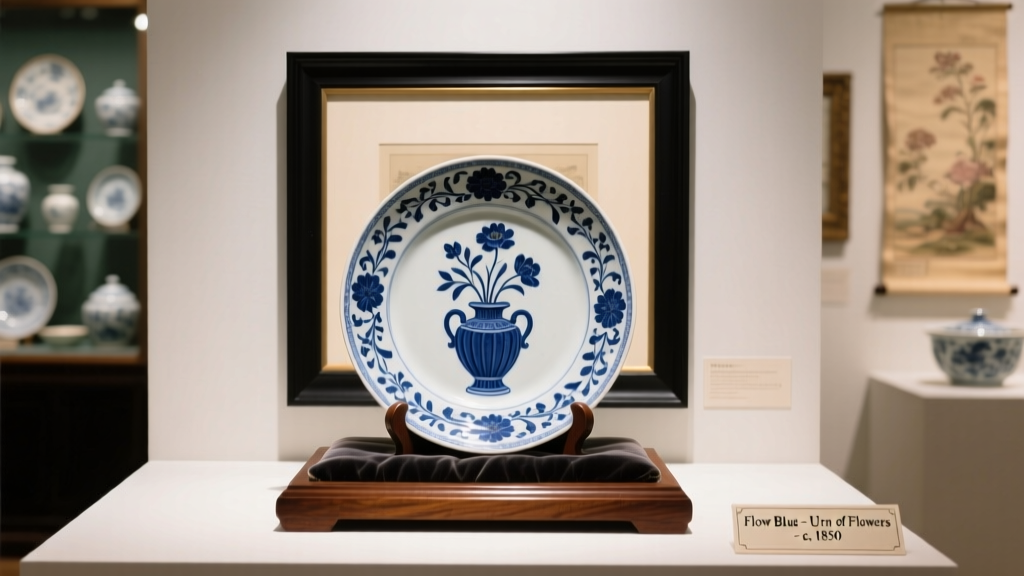
Flow Blue Platter, Oriental Design, Marked with Urn of Flowers: Authentication, Provenance, and Market Value of an 18 × 14-Inch Victorian Ceramic

Shawnee Pottery Salt & Pepper Shakers: Dutch Boy and Dutch Girl Large Set — Authentication, Value, and Market Analysis

Wade Jug Johnnie Walker Gold Trim: Authentication, Market Value, and Collectibility Analysis
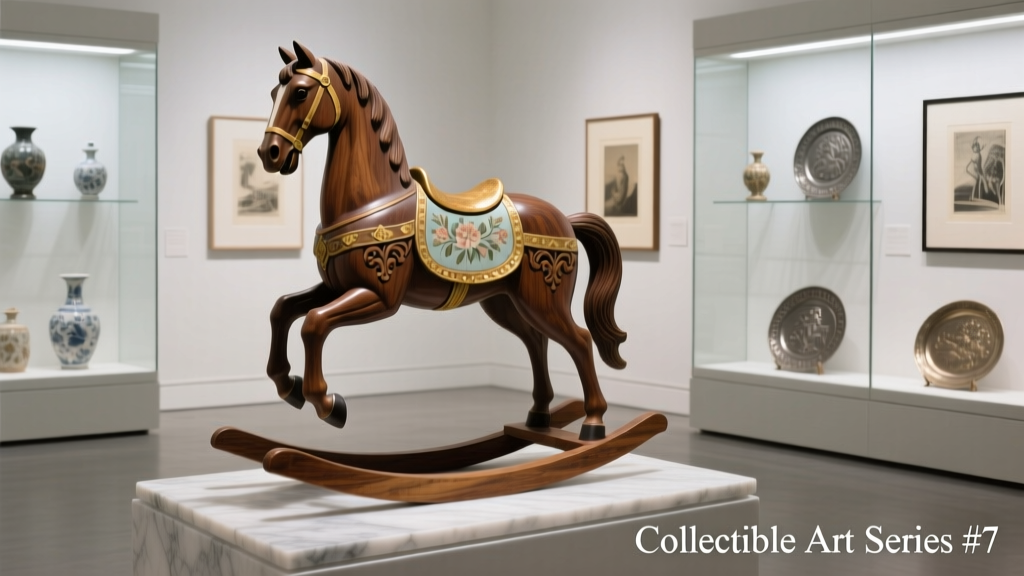
Rocking Horses: Craftsmanship, Collectibility, and Market Authentication in the 20th Century
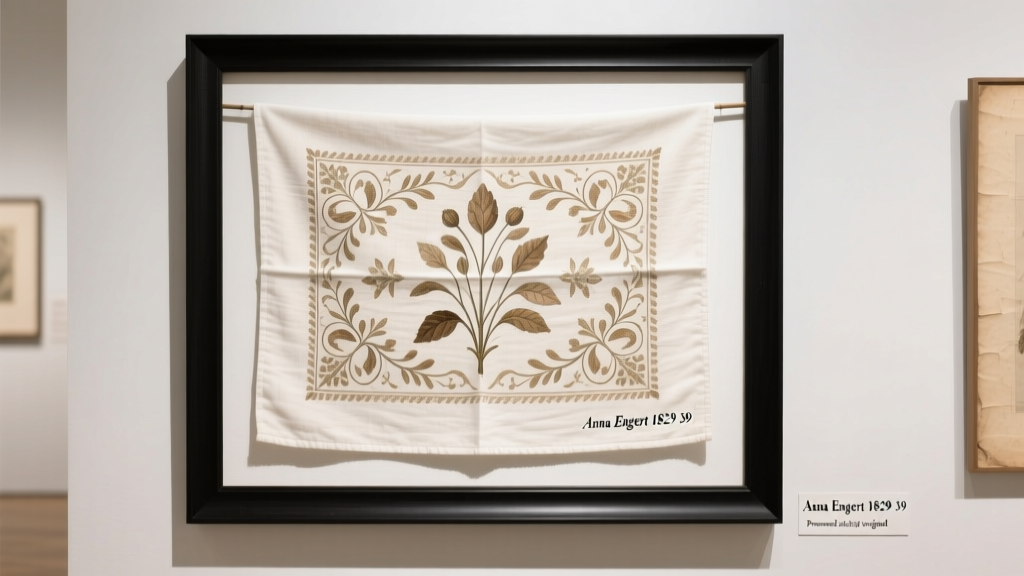
Anna Engert’s 1829 Towel Show: Provenance, Textile Analysis, and Market Significance of a Rare 39-Inch Linen Exhibition Piece
The 'Battle Flag' Misnomer: Decoding the Confederate Naval Jack, Its Manufacture, Provenance, and Market Authentication Challenges
Thermometer Dr Pepper 'Hot or Cold? Be a Pepper!' Tin: Authentication, Market Value, and Cultural Context
Pomona Bowl 1st Grind 4½-Inch: Technical Analysis, Market Authentication, and Performance Benchmarking
Oval Trumpet Inside Capital D.C. Conjoined: Decoding a Rare Printmaker's Signature Motif