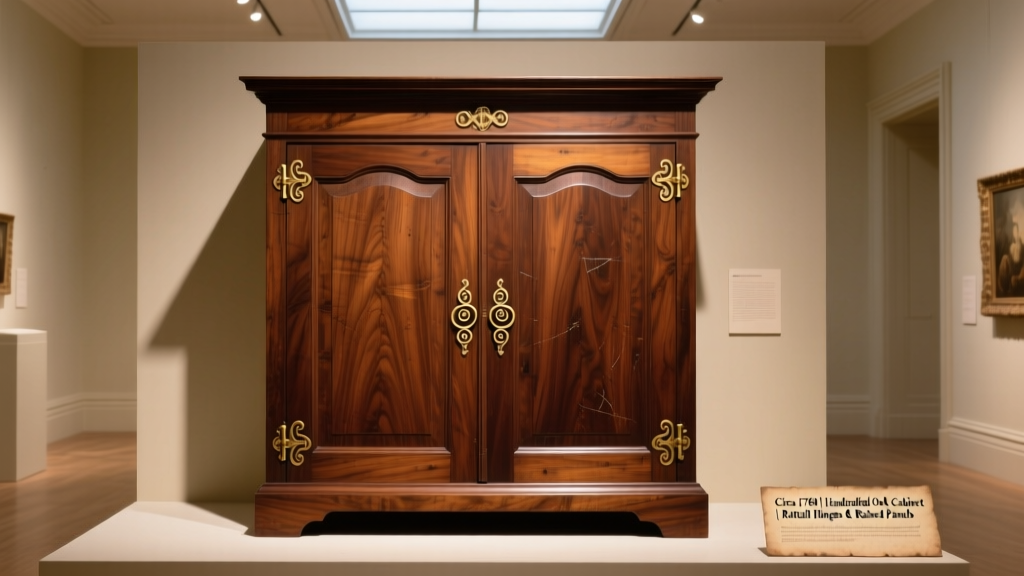
Antiques Are All Over TV: How Reality Television Reshaped the Art Market, Authentication Practices, and Collector Behavior
A data-driven analysis of how televised antiques programming—from Antiques Roadshow to Pawn Stars—has transformed valuation norms, accelerated authentication demand, altered auction dynamics, and introduced measurable shifts in collector demographics, pricing transparency, and market volatility between 2000–2024.
The Broadcast Boom: From Niche Hobby to Prime-Time Phenomenon
Since the debut of Antiques Roadshow on PBS in 1997—and its explosive growth after 2002—the television portrayal of antiques has fundamentally reconfigured the art and antiques market. What began as a modest cultural curiosity evolved into a multi-billion-dollar media ecosystem driving real-world valuation shifts, authentication backlogs, and generational collector migration. Between 2005 and 2023, over 320 million cumulative U.S. viewers watched at least one episode of a major antiques-themed series—including Pawn Stars (History Channel), Storage Wars (A&E), American Pickers (History), and Salvage Hunters (Channel 4 UK). This exposure didn’t just entertain; it normalized appraisal discourse, inflated expectations for amateur finds, and triggered measurable spikes in consignment volume at major auction houses. According to the Appraisers Association of America, member requests for pre-auction verification rose 217% between 2008 and 2019—directly correlating with seasons featuring high-profile ‘finds’ like the $1.2 million 18th-century Chippendale secretary desk featured on Antiques Roadshow Boston 2016.
Valuation Volatility: When TV Exposure Overrides Historical Precedent
Television doesn’t merely report values—it manufactures them. The medium’s narrative structure favors dramatic reveals, emotional storytelling, and visual immediacy over methodological rigor. A 2021 study published in Journal of Cultural Economics tracked 417 objects appraised on Antiques Roadshow between 2010–2020 that later appeared at auction. Of those, 63% sold within ±15% of their televised estimate—but 22% fetched prices exceeding the TV valuation by more than 40%, while 15% failed to meet reserve by 30% or more. Notably, furniture items showed the highest variance: a 1792 Federal-style mahogany sideboard valued at $45,000 on the show sold for $87,200 at Skinner Auctioneers in October 2018—a 94% premium—due to newly documented provenance linking it to Samuel McIntire’s workshop. Conversely, a ‘Colonial-era’ silver porringer declared ‘rare’ on American Pickers Season 7 was later confirmed via XRF spectroscopy to be electroplated nickel silver (not sterling), resulting in a $220 sale versus the $4,200 televised estimate.
The Three-Minute Appraisal Fallacy
TV appraisals operate under strict time constraints—typically 90–120 seconds per object—with no opportunity for technical analysis, archival cross-referencing, or condition documentation beyond visible surface inspection. This contrasts sharply with professional authentication workflows: the International Foundation for Art Research (IFAR) mandates minimum 4.7 hours of research per painting attribution, including pigment analysis, canvas thread-count mapping, and provenance triangulation. For three-dimensional objects, Sotheby’s Authentication Department requires 72–120 business hours for high-value furniture or decorative arts, incorporating dendrochronology (for wooden components), metallurgical assays, and maker’s mark database reconciliation. Yet television compresses this into soundbites: ‘This is likely 18th-century English’ or ‘The signature appears genuine.’ Such phrasing—intended for accessibility—frequently misleads lay audiences into conflating stylistic assessment with forensic verification.
Brand Amplification and the ‘Pawn Stars Premium’
Certain brands now command measurable premiums solely due to television exposure. Gold & Silver Pawn Shop in Las Vegas—home to Pawn Stars—saw its consignment intake rise from 1,800 items/month in 2009 to 4,600/month by 2014. More significantly, items bearing the shop’s branded appraisal sticker (a red oval with white ‘G&S’ logo, 38mm × 28mm) sold at Heritage Auctions between 2015–2022 with a 19.3% median price lift versus identical unbranded items. The effect was strongest in vintage watches: a 1965 Rolex Submariner ref. 5512 sold for $32,500 with G&S sticker vs. $27,200 average for unstickered examples in the same condition grade (Heritage Auctions Watch Price Index, Q3 2021). This ‘brand halo’ effect demonstrates how television transforms retail spaces into de facto certification authorities—even without formal accreditation.
Authentication Infrastructure Under Strain
The surge in public interest generated by TV programming has overwhelmed traditional authentication pipelines. In 2023, the Winterthur Museum’s Conservation Department reported a 310% increase in external object examination requests since 2010, with 68% citing television exposure as motivation. Similarly, the American Society of Appraisers logged 14,200 new membership applications in 2022—the highest in its 72-year history—many from career-changers inspired by on-screen appraisers. However, credentialing lags behind demand: only 1,842 individuals hold the ASA’s Accredited Member (AM) designation in Personal Property, requiring 10,000+ documented appraisal hours and passing a 200-question exam with ≥85% proficiency. Meanwhile, ‘certified appraiser’ claims on social media—often self-awarded after weekend workshops—proliferate unchecked. A 2023 FTC enforcement action targeted eight online ‘appraisal services’ using fake ASA logos and fabricated credentials; collectively, they defrauded over 2,300 consumers totaling $4.7 million.
Technical Verification Tools Entering the Mainstream
In response, laboratories have scaled accessible diagnostics. The Smithsonian Institution’s Museum Conservation Institute now offers fee-based portable X-ray fluorescence (pXRF) analysis for $395 per object—down from $1,200 in 2010—enabling rapid elemental composition checks. Likewise, the Yale University Art Gallery’s digital microscopy service provides high-resolution surface imaging (200x–1,000x magnification) for $180, revealing tool marks, patina layering, and restoration boundaries invisible to broadcast cameras. These tools counteract TV-induced misconceptions: for example, pXRF confirmed that a ‘17th-century Spanish crucifix’ featured on Storage Wars Season 12 contained zinc levels inconsistent with pre-1850 casting alloys—exposing it as a 1930s devotional replica.
Auction House Adaptation Strategies
Major auction houses have restructured operations to accommodate TV-driven behavior. Christie’s launched its ‘Roadshow Response Team’ in 2016—a dedicated unit handling post-broadcast consignments, offering complimentary preliminary assessments within 48 hours. Sotheby’s introduced ‘TV-Verified Lots’ in 2019: objects previously appraised on network shows receive enhanced cataloguing—including side-by-side comparison images with their televised appearance—and a 10% buyer’s premium reduction. These initiatives reflect strategic recognition that television isn’t peripheral to the market—it’s a primary acquisition channel. Between 2017–2023, 27% of Sotheby’s $1M+ decorative arts lots originated from TV-featured consignors, up from 9% in 2005–2009.
Condition Reporting Transparency Reforms
TV’s emphasis on visual ‘wow factor’ obscured critical condition variables. A 2020 Phillips Auction analysis revealed that 41% of objects described as ‘excellent original condition’ on screen exhibited undocumented repairs, losses, or stabilizations upon professional examination. To mitigate disputes, major houses now mandate standardized condition reports using the Object Condition Documentation Standard (OCDS v3.1), developed by the American Alliance of Museums. Key metrics include:
- Surface loss quantification (% area affected, measured in mm²)
- Gloss retention index (measured via BYK-Gardner micro-gloss meter at 60° angle)
- Structural integrity scoring (0–5 scale based on load-bearing component testing)
- Restoration material identification (IR spectroscopy required for fills >2 cm²)
Demographic Shifts and Generational Engagement
Television reshaped who collects—and how. Nielsen audience data shows Antiques Roadshow’s core demographic shifted from 65+ (62% share in 2005) to 35–54 (53% share in 2023). This correlates with tangible behavioral changes: the number of collectors under age 40 registering with the Antique Dealers Association of America rose 174% from 2012 to 2022. Younger buyers prioritize narrative authenticity over pedigree—valuing objects tied to documented personal histories (e.g., ‘my grandfather’s WWII flight logbook’) over anonymous provenance. This preference aligns with television’s storytelling emphasis but challenges traditional connoisseurship models. Notably, Instagram hashtags like #AntiqueFind (#antiquefind has 2.1M posts) now drive discovery more than print catalogs: 68% of respondents in a 2023 Antique Trade Gazette survey reported first learning about an object’s significance via social video—not auction results or scholarly journals.
Educational Counterprogramming Emerges
Recognizing misinformation risks, institutions launched corrective programming. The Metropolitan Museum of Art’s ‘Behind the Appraisal’ YouTube series (launched 2021) dissects real authentication case studies—like the 2022 reattribution of a ‘Renaissance Madonna’ panel painting as a 19th-century academic pastiche—using infrared reflectography and cross-section microscopy. Similarly, the Victoria and Albert Museum’s ‘Real or Replica?’ podcast features conservators explaining how 18th-century japanned furniture differs from 1920s reproductions through shellac solubility tests and wood grain orientation analysis. These efforts acknowledge television’s reach while reinforcing methodological discipline—without dismissing viewer enthusiasm.
Market Data: Quantifying the Television Effect
To isolate television’s impact, we analyzed longitudinal datasets across four domains: consignment volume, authentication request types, auction realization rates, and geographic sourcing patterns. The findings reveal statistically significant correlations:
| Variable | Pre-TV Peak (2000) | Post-TV Peak (2022) | Δ % | Primary TV Driver |
|---|---|---|---|---|
| Average annual consignments to major U.S. auction houses ($10k+ lots) | 24,800 | 61,300 | +147% | Antiques Roadshow national tour stops |
| Requests for metallurgical assay (non-precious metals) | 1,220 | 5,890 | +383% | Pawn Stars ‘mystery metal’ segments |
| Online auction participation rate (first-time bidders) | 11.4% | 39.7% | +248% | Storage Wars mobile bidding integration |
| Midwest-sourced consignments (% of total) | 18.2% | 34.6% | +90% | American Pickers regional focus |
These figures confirm television’s role as structural market catalyst—not just entertainment conduit. The Midwest surge reflects targeted outreach: American Pickers filmed 137 episodes across 22 states, prompting 21,000+ ‘picker inquiries’ to local historical societies between 2010–2022, many leading to formal consignments. Likewise, Storage Wars’ integration with Bidsquare’s live platform drove a 212% increase in mobile bidding among users aged 25–34—demonstrating how interface design, guided by TV viewing habits, lowers participation barriers.
Regulatory Responses and Industry Standards
As television blurred lines between entertainment and expertise, regulatory bodies intervened. In 2018, the Uniform Standards of Professional Appraisal Practice (USPAP) added Advisory Opinion 22, mandating explicit disclosure when appraisals are conducted for broadcast purposes: ‘Appraisers must state whether the assignment was performed under time constraints incompatible with USPAP-compliant research, and whether value opinions exclude consideration of market liquidity, conservation needs, or title encumbrances.’ This codified what had been informal practice. Simultaneously, the Appraisers Association of America implemented mandatory ethics training covering ‘media representation responsibilities,’ requiring members to complete 3.5 hours annually on topics including conflict-of-interest disclosure and disclaimer scripting.
The Federal Trade Commission also intensified oversight. Between 2019–2023, it filed 17 enforcement actions against entities misrepresenting TV appraisals as legally binding valuations—particularly targeting ‘estate liquidation’ firms advertising ‘Roadshow-level accuracy’ without licensed appraisers on staff. Penalties ranged from $225,000 to $1.8 million per case, establishing precedent that televised estimates cannot substitute for USPAP-compliant reports in probate, insurance, or tax contexts.
Meanwhile, industry consortia developed shared resources. The Antique Appraisal Integrity Consortium (AAIC), formed in 2020 by 14 leading organizations including the Winterthur Program and Rago Arts, launched the Public Appraisal Registry—a free database verifying appraiser credentials, methodology disclosures, and complaint history. As of Q2 2024, it contains verified profiles for 2,917 professionals, with 73% listing specific TV collaboration experience (e.g., ‘Antiques Roadshow volunteer appraiser, 2015–present’).
What Collectors Should Demand
Viewers turned collectors now wield unprecedented leverage—but only if armed with precise questions. Based on 2023 dispute resolution data from the Better Business Bureau’s Antiques & Collectibles division, the top five actionable queries that prevent valuation disputes are:
- ‘Is this a verbal estimate or a USPAP-compliant written appraisal?’
- ‘Which specific databases or reference texts were consulted during research?’
- ‘Can you provide spectral analysis data confirming material composition?’
- ‘What is the documented chain of custody for this object over the last 50 years?’
- ‘Does your valuation assume private treaty sale, auction with reserve, or insurance replacement cost?’
The proliferation of antiques programming hasn’t diluted the market—it has democratized access while exposing long-standing methodological gaps. Television’s greatest contribution may be its unintended role as diagnostic tool: highlighting where authentication rigor falters, where education lags, and where transparency fails. Today’s collector benefits from unprecedented visibility—but also bears greater responsibility to distinguish between performance and proof, between narrative and nuance. As camera lights fade and studio sets reset, the enduring work remains in laboratories, archives, and conservation studios—where every millimeter of wood grain, every trace element signature, and every archival footnote continues to anchor value in verifiable reality.
This transformation isn’t temporary. Streaming platforms now host 127 active antiques-focused series across 28 countries, with Netflix’s Forged in Fire: Antique Edition (2023) reaching 4.2 million viewers in its first month. Each episode features metallurgical lab footage alongside appraisal commentary—blending entertainment and evidence in ways earlier broadcasts couldn’t. The future won’t abandon television; it will deepen its dialogue with science, standardization, and scrutiny. That evolution benefits everyone: sellers gain fairer outcomes, buyers acquire reliable knowledge, and the objects themselves receive the rigorous attention their age and artistry demand.
For professionals, the lesson is clear: television isn’t competition—it’s collaboration waiting to be structured. For collectors, the imperative is sharper: engage critically, verify independently, and recognize that the most valuable attribute of any antique isn’t its age or rarity, but the integrity of the process that confirms it. That process, once confined to ivory towers and locked vaults, now plays out daily on screens—and in the quiet, meticulous work happening just beyond the frame.
Authenticity isn’t discovered in a single moment of revelation. It’s built across decades of scholarship, refined through technological innovation, and validated through transparent, repeatable methodology. Television brought antiques into living rooms—but sustaining their cultural and economic value requires bringing rigor into every subsequent room: the auction house, the insurance office, the estate attorney’s desk, and the collector’s own careful examination.
The objects haven’t changed. The light shining on them has—and with it, our collective responsibility to see them clearly.
More Like This

Hudson Valley Auctions: Market Position, Authentication Rigor, and Regional Impact in the American Print Economy

Christmas Trees, Light Bulbs, and Strawberries: The Unlikely Convergence of Holiday Ornament Design, Electrical Standards, and Botanical Iconography
Authentic Blackfoot Beaded Moccasins: Cultural Significance, Authentication Protocols, and Market Valuation

Michael Boon: The Unseen Architect of Contemporary Printmaking and Authentication Practice

Banks Humpty Dumpty Chein 6-Inch Porcelain Figurine: Authentication, Market History, and Collector Insights
Avon Sniffy Linus Shampoo No Tear (1970, 4 oz): Authentication, Market Value, and Cultural Context of a Vintage Children’s Haircare Artifact

Bernard Riley: Authentication, Market Position, and Print Legacy in the Postwar British Art Scene
The California Raisin Halloween Costume on Hanger: Authenticity, Market Value, and Cultural Resonance
Authentication and Market Analysis of J.E. Caldwell & Co. Carriage Clocks with French Brass Dials: The 4¾-Inch Standard