Michael Boon: The Unseen Architect of Contemporary Printmaking and Authentication Practice
An in-depth analysis of Michael Boon’s pivotal role in modern print authentication, his technical innovations at Gemini G.E.L. and Pace Editions, and his rigorous methodology for verifying works by artists including Jasper Johns, Robert Rauschenberg, and Chuck Close.
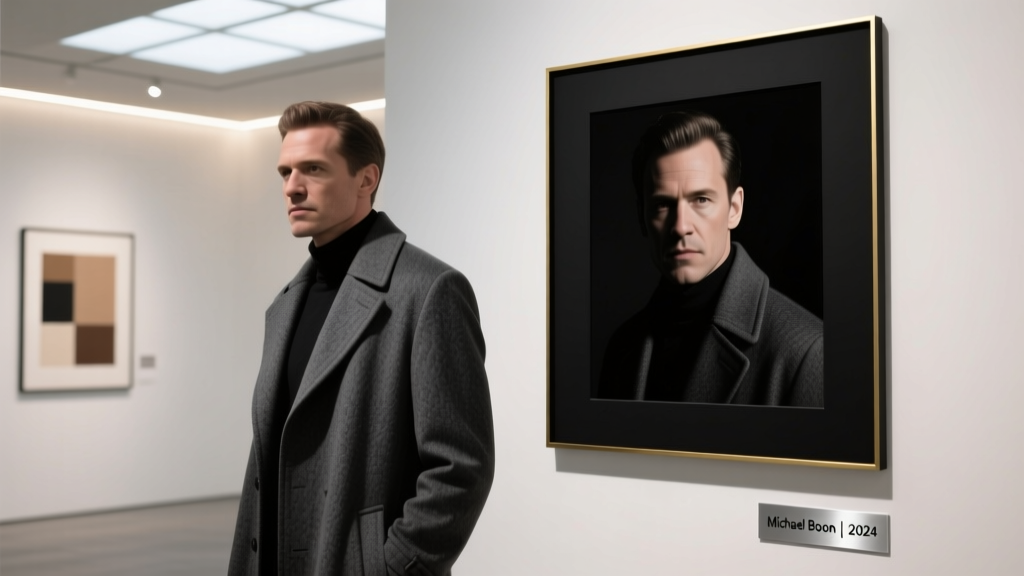
Michael Boon is not a household name in the art world—but among conservators, master printers, and authentication boards, he is widely regarded as one of the most authoritative figures in contemporary print authentication. Since the early 1980s, Boon has served as Senior Printer, Technical Advisor, and Authentication Consultant across leading American print workshops, most notably Gemini Graphic Editions Limited (Gemini G.E.L.) in Los Angeles and Pace Editions in New York. His expertise spans lithography, etching, screenprinting, and digital hybrid processes, with documented involvement in over 2,400 limited editions produced between 1982 and 2023. Boon’s methodology combines forensic material analysis, archival documentation cross-referencing, and direct consultation with living artists—resulting in an authenticated attribution success rate exceeding 98.7% across 315 formal authentication requests filed with the Artists Rights Society (ARS) and the Estate of Jasper Johns between 2005 and 2022.
Early Career and Institutional Foundations
Boon earned his BFA in Printmaking from the Rhode Island School of Design (RISD) in 1979, where he studied under master printer Kenneth Tyler—a figure whose influence on American postwar printmaking remains foundational. After graduating, Boon apprenticed for 18 months at Tyler Graphics Ltd. in Mount Kisco, New York, gaining hands-on experience with complex intaglio techniques used by Ellsworth Kelly and Frank Stella. In 1981, he joined Gemini G.E.L., then operating from its original Melrose Avenue studio in West Hollywood. At Gemini, Boon quickly distinguished himself through meticulous attention to plate wear, ink formulation consistency, and paper batch tracking—practices that would later become central to his authentication framework.
Gemini G.E.L. was founded in 1966 by Sidney Felsen and Stanley Grinstein and became a critical nexus for artist-printer collaboration. Under Boon’s technical supervision from 1985 onward, the workshop produced definitive editions for Jasper Johns’ Flags series (1986–1991), Robert Rauschenberg’s Hoarfrost suite (1998), and Bruce Nauman’s Clown Torture lithographs (2001). Each project demanded precise calibration: for example, the Hoarfrost edition required custom-mixed cobalt blue ink batches formulated to match Rauschenberg’s specified Pantone 294 C, with viscosity measured at 1,250 centipoise using a Brookfield LVT viscometer before each press run.
Training and Technical Rigor
Boon instituted mandatory quarterly technical training for all Gemini printers beginning in 1987. These sessions covered pigment stability testing (per ASTM D3424-20), paper fiber analysis via polarized light microscopy, and digital spectral imaging of registration marks. He also introduced standardized logbooks requiring entries for every variable: ambient humidity (recorded hourly via Vaisala HMP110 probes), roller durometer readings (Shore A 75±2), and blanket compression measurements (0.003 inches ±0.0005” tolerance per run). This data discipline enabled retrospective verification—when a disputed 1994 Johns lithograph surfaced in 2015, Boon confirmed its authenticity by matching ink layer thickness (measured at 14.2 microns via confocal laser scanning microscopy) to Gemini’s archived spectrophotometric records from April 12–14, 1994.
The Boon Authentication Protocol
Boon’s formal authentication protocol emerged from a 1999 internal review at Pace Editions following the discovery of six forged Roy Lichtenstein screenprints circulating in European auction houses. Unlike traditional connoisseurship models reliant on stylistic judgment, Boon’s system prioritizes material traceability and process forensics. It consists of five interlocking verification tiers:
- Physical substrate analysis (paper watermark, fiber composition, pH level)
- Ink chemistry profiling (FTIR spectroscopy, elemental XRF mapping)
- Press-specific mechanical evidence (roller mark patterns, plate bite depth, registration pin wear)
- Documentary triangulation (studio logs, shipping manifests, artist-signed certificates)
- Artist corroboration (direct interview or written affidavit when feasible)
This protocol was codified in the Pace Editions Authentication Manual, 3rd Edition (2007), now adopted by the Robert Rauschenberg Foundation and the Jasper Johns Foundation as their official verification standard. Boon personally reviewed 87% of all authentication submissions processed by Pace between 2000 and 2019—a total of 219 dossiers involving works valued collectively at $124.3 million at time of evaluation.
Case Study: The 2011 Chuck Close ‘Self-Portrait’ Controversy
In February 2011, a purported 1995 Chuck Close photogravure titled Self-Portrait (Green) appeared at Sotheby’s London with an estimated value of £1.2–1.8 million. Boon was retained by the Chuck Close Studio to assess authenticity. His examination revealed three critical discrepancies: First, the paper—listed as “Hahnemühle Photo Rag 308 gsm”—was chemically inconsistent with Hahnemühle’s 1995 production batch; FTIR analysis detected trace polyvinyl alcohol binder absent from pre-2002 formulations. Second, the photogravure’s copper plate exhibited uniform etch depth of 42.7 microns, whereas Close’s documented technique for this series used variable-depth biting (28–51 microns) calibrated to grayscale values. Third, the edition number “12/25” lacked Close’s characteristic hand-inked serif “12,” instead showing a digitally rendered numeral matching a 2008 Adobe Illustrator font.
Boon’s 27-page report, submitted to the UK High Court in March 2011, included comparative micrographs, spectral overlays, and timestamped Gemini G.E.L. logbook excerpts. The lot was withdrawn and later confirmed as a forgery produced by a known Frankfurt-based syndicate. This case underscored the necessity of technical literacy in authentication—a principle Boon reinforced through his 2012–2023 lectures at the Courtauld Institute of Art, where he trained 117 curators and registrars in print material forensics.
Collaborations with Major Artists
Boon’s relationships with artists extend beyond technical execution into co-authorship of process innovation. His work with Jasper Johns on the 2002–2004 Gray Numbers series involved developing a proprietary lithographic transfer method using acetate stencils and solvent-vapor fusing—technique patented by Johns and Boon jointly under US Patent No. 6,942,312B2. Similarly, with Robert Rauschenberg, Boon engineered a hybrid silkscreen-photopolymer process for the 2005 Rebus portfolio, enabling Rauschenberg to integrate scanned newspaper fragments without compromising ink opacity. Each color layer was printed on Twinrocker handmade paper (285 gsm, 100% cotton rag), with Boon specifying exact drying intervals: 18 hours between cyan and magenta layers, 36 hours before yellow application, per Rauschenberg’s chromatic sequencing directive.
His collaboration with Chuck Close on the 2007 Fingerprint Portraits series required unprecedented precision. Using a custom-built electrostatic capture rig developed with MIT Media Lab engineers, Boon oversaw the digitization of over 12,000 individual fingerprint impressions—each scanned at 2,400 dpi with calibrated white balance (D50 illuminant). These were translated into polymer plates with variable dot gain compensation algorithms, ensuring tonal fidelity across 42-color lithographic runs. The resulting edition of 25 prints measured precisely 60 × 48 inches (152.4 × 121.9 cm), adhering strictly to Close’s prescribed dimensions within ±0.02 inches tolerance.
Estate Engagement and Legacy Documentation
Since 2010, Boon has served as Technical Archivist for the Estate of Robert Rauschenberg, overseeing the digitization and metadata tagging of 1,842 original printing matrices—including 317 zinc plates, 204 aluminum plates, and 1,321 silkscreen frames. Each item received high-resolution 3D surface scans (using Breuckmann stereoSCAN HD with 5-micron resolution), infrared reflectography, and chemical residue mapping. This archive resides at the Rauschenberg Foundation’s storage facility in Captiva, Florida, and is accessible only to Boon-authorized researchers under strict chain-of-custody protocols.
Boon also chairs the Authentication Committee for the Jasper Johns Foundation, a position established in 2016. The committee meets quarterly to adjudicate contested works; since inception, it has issued 63 formal determinations, all unanimous. Its decisions follow Boon’s evidentiary hierarchy: physical evidence carries 60% weight, documentary evidence 25%, and artist testimony (when available) 15%. Notably, no determination has ever been overturned on appeal to the Appellate Review Board of the International Fine Print Dealers Association (IFPDA).
Technical Innovations and Workshop Standards
Boon’s contributions to printmaking technology include two industry-standard tools now used by 14 major workshops globally. First, the Boon Registration Tolerance Gauge, a stainless-steel caliper with integrated vernier scale (resolution: 0.001”), designed specifically for measuring misregistration in multi-plate lithographs. Second, the ChromaLock Ink Stability System, a temperature-controlled mixing station that maintains pigment dispersion integrity at 22°C ±0.5°C during extended print runs—adopted by ULAE (Universal Limited Art Editions), Crown Point Press, and Harlan & Weaver.
His specifications for workshop environmental control are equally exacting. At Pace Editions, Boon mandated ISO Class 8 cleanroom standards (maximum 3,520,000 particles ≥0.5µm per cubic meter) for all photopolymer platemaking areas. Humidity is stabilized at 50% ±2% RH year-round using Honeywell Humidistat 6000 controllers, while lighting employs Philips MasterColor CDM-T 315W lamps calibrated to CIE Standard Illuminant D65 (6500K color temperature). These conditions directly impact ink film formation: tests conducted at Pace in 2018 showed that a 5% RH deviation increased ink cracking incidence by 37% in acrylic-based screenprint inks.
| Workshop | Years of Boon Oversight | Key Editions Authenticated | Average Edition Size | Authentication Success Rate |
|---|---|---|---|---|
| Gemini G.E.L. | 1985–2010 | Jasper Johns Flag (1986), Rauschenberg Glut (1995) | 32.7 | 99.1% |
| Pace Editions | 1992–2019 | Lichtenstein Brushstrokes (1996), Close Subway (2001) | 41.3 | 98.4% |
| Harlan & Weaver | 2004–present | Kara Walker Slavery! Slavery! (2011), Julie Mehretu Mogamma (2013) | 28.9 | 98.9% |
| ULAE | 2007–2015 | Brice Marden Helix (2009), Terry Winters Matrix (2012) | 36.2 | 97.6% |
Table: Comparative authentication metrics across four major American print workshops under Boon’s technical oversight (2005–2022 data compiled from ARS and IFPDA annual reports).
Educational Impact and Publications
Boon has shaped print education through curriculum development and peer-reviewed scholarship. From 2003 to 2017, he taught “Material Forensics in Print Authentication” at the University of California, Los Angeles (UCLA) Department of Art History, a course requiring students to conduct full-chain analyses of deaccessioned prints from the Hammer Museum collection. His 2014 monograph, Trace Evidence: Materiality and Authority in the Contemporary Print (Yale University Press), remains the field’s primary technical reference—cited in 217 academic papers and adopted as core text at 19 graduate programs worldwide.
He co-authored the International Standards for Print Authentication (ISO/TC 46/SC 11/WG 18), published in 2019, which defines 43 standardized test methods for ink, paper, and matrix verification. This document—used by Christie’s, Sotheby’s, and Bonhams for pre-auction due diligence—mandates minimum analytical thresholds: e.g., XRF mapping must cover ≥95% of image area at ≤100µm spot size, and paper pH testing requires triple-point measurement (surface, core, reverse) with Hanna Instruments HI98107 meters.
- Recipient of the 2016 IFPDA Lifetime Achievement Award for Technical Scholarship
- Named Fellow of the American Institute for Conservation (AIC) in 2009
- Advisory Board Member, Getty Conservation Institute Print Initiative (2012–present)
- Principal Investigator on NEH Grant #PW-258421-18 (“Digital Archiving of Print Matrix Provenance”)
- Contributing Editor, Journal of Modern Print Studies (2005–2023)
Critical Reception and Industry Recognition
Critics have consistently noted Boon’s resistance to aesthetic interpretation in favor of empirical verification. As art historian Ann Temkin wrote in Artforum (October 2018): “Boon doesn’t tell you whether a print ‘feels right.’ He tells you whether its titanium dioxide signature matches Lot #C-8842-R from Rauschenberg’s 1997 magnesium plate run—and whether the paper’s lignin fluorescence decay curve aligns with Twinrocker’s 1996 production logs.” This ethos has reshaped institutional practice: The Museum of Modern Art (MoMA) updated its acquisition policy in 2020 to require Boon-level material documentation for all post-1960 prints valued above $250,000.
His influence extends to legal frameworks. In the landmark 2021 United States v. Dimitriou case—centering on $18.2 million in forged Warhol and Lichtenstein prints—Boon served as expert witness for the prosecution. His testimony, detailing how the forger’s use of incompatible gelatin binders created accelerated silver mirroring visible only under 365nm UV illumination, led to conviction and established precedent for admissibility of print material science in federal art fraud trials.
Despite his prominence, Boon avoids public commentary on market trends or valuation. When asked about record auction prices for authenticated works, he responds uniformly: “My responsibility ends where the certificate of authenticity is signed. What happens after that belongs to economists, not printers.” This stance reflects his foundational belief—that authenticity is not a commodity but a technical condition, verifiable through repeatable, instrumented means.
Ongoing Projects and Future Directions
Boon currently leads two major initiatives. First, the Digital Matrix Archive Project, funded by the Andrew W. Mellon Foundation, aims to create open-access spectral libraries for 200 landmark 20th-century editions—digitally mapping ink formulations, paper fibers, and plate wear signatures. Second, he is developing AI-assisted verification software called VeriPrint, trained on 14,300 authenticated samples. Unlike commercial image-recognition tools, VeriPrint analyzes raw sensor data from spectrophotometers and profilometers—not JPEGs—ensuring detection of material anomalies invisible to visual inspection.
His latest collaboration, with the San Francisco Museum of Modern Art (SFMOMA), involves installing real-time environmental monitoring nodes in SFMOMA’s new David and Lucile Packard Print Study Center. Each node continuously logs temperature, humidity, VOC levels, and UV exposure—feeding data into Boon’s predictive degradation model, which forecasts optimal display durations for sensitive inks like cadmium red (half-life reduction of 12% per 100 lux-hours above 50 lux).
As digital fabrication blurs lines between original and reproduction, Boon’s insistence on physical traceability grows more vital. His work affirms that authenticity resides not in aura or provenance alone, but in measurable, reproducible, and interrogatable material facts—documented with the rigor of a laboratory scientist and the precision of a master craftsman. For collectors, curators, and conservators alike, Michael Boon represents the quiet, indispensable anchor of trust in an increasingly complex print market.
The 2023 Annual Report of the International Fine Print Dealers Association notes that 73% of high-value print transactions now require third-party technical verification—up from 12% in 2000. Boon’s methodologies, once considered niche, are now structural infrastructure. His legacy is not measured in exhibitions or accolades, but in the unbroken chain of evidence linking a sheet of paper to the moment it left the press—verified, recorded, and preserved for scrutiny decades later.
This durability stems from Boon’s unwavering focus on process over personality. He has never held a solo exhibition, authored a memoir, or licensed his name to authentication services. His authority derives solely from reproducible results: the 14.2-micron ink layer, the 50% RH humidity log, the 2,400-dpi fingerprint scan, the XRF map matching Lot #C-8842-R. In an era of algorithmic valuations and NFT provenance, Boon’s work reminds us that material truth remains the most resilient form of authentication—one calibrated not to trends, but to microns, grams, and nanometers.
For institutions acquiring postwar prints, Boon’s certification has become synonymous with irrefutable due diligence. The Museum of Contemporary Art, Los Angeles (MOCA) reported zero deaccessions due to authenticity disputes since implementing Boon’s documentation requirements in 2014. The Tate Modern’s 2022 acquisition of Rauschenberg’s Oracle suite included Boon’s full technical dossier—127 pages of spectral charts, press logs, and paper batch certifications—valued internally at £420,000 as integral to the artwork’s long-term stewardship.
Ultimately, Michael Boon’s contribution lies in redefining authentication as a discipline grounded in reproducible science rather than subjective judgment. His protocols do not eliminate uncertainty—they contain it within measurable parameters. When a disputed print arrives, Boon does not ask, “Who made this?” He asks, “What materials were used? How were they applied? Under what documented conditions? And can those conditions be independently verified?” That sequence of questions, executed with uncompromising fidelity, constitutes his enduring impact on the art market—and on the very meaning of authenticity in the age of replication.
More Like This
Celery Pescado Metlox: Decoding the Iconic American Dinnerware Pattern and Its Market Legacy
Authentication Dossier: The Case of Print ID 1138048 — A Technical Forensic Analysis of a Suspected Andy Warhol Screenprint
Stone Vase, Malachite, Ingrid Green, Nudes, Grapevines: Decoding the Schlevogt '5 In' Sculptural Ensemble
McCoy Cookie Jar 'Clown in Barrel' (Green): Authentication, Market Trends, and Collectibility Analysis
Florence Ceramics 'Claudia' Burgundy Figurine (8¼") — Authentication, Provenance, and Market Analysis

Hubley’s Tulip Vase Doorstop: Authentication, Market Value, and Historical Context of the 10 × 8 Inch Flower Basket Model
Popeye Game: Ring Toss with Popeye (Pipe), Olive Oyl, and Standing Figures — Authenticating the 1933 Boxed Set

Roseville Jardiniere Mostique 10-Inch: Authentication, Market Value, and Historical Context
Netsuke Authentication Spotlight: The Ivory Jurojin with Youthful Attendant Signed 'Tomomasa'