World War I: Material Culture, Domestic Disruption, and the Transformation of Antique Furniture in Britain and France
An expert examination of how World War I reshaped furniture design, craftsmanship, material availability, and domestic interiors—featuring archival data, manufacturer records, and restoration insights from period-appropriate pieces.
Introduction: The Silent Impact on Domestic Interiors
World War I (1914–1918) fundamentally altered not only geopolitical boundaries but also the physical fabric of everyday life—including the furniture found in homes across Britain and France. Unlike later conflicts, WWI triggered immediate, severe restrictions on timber, metal, and labor, directly impacting cabinetmaking traditions that had flourished since the 18th century. By mid-1915, the British Board of Trade banned the use of mahogany, walnut, and satinwood for non-essential furniture; French decree No. 1732 (21 July 1916) restricted oak and beech to military contracts only. As a result, antique pieces manufactured between 1914 and 1919 exhibit distinct characteristics: simplified joinery, substitution woods like birch plywood and poplar, and stamped government inspection marks such as the UK’s ‘M’ (Ministry of Munitions) or France’s ‘S.F.’ (Service des Forêts). This article examines wartime production constraints, documented case studies of surviving pieces, conservation challenges unique to this era, and how postwar austerity influenced stylistic evolution in domestic furnishings.
Material Shortages and Substitution Strategies
The outbreak of war severed critical supply chains. Pre-war, Britain imported over 85% of its tropical hardwoods through Liverpool and London docks—primarily from British Honduras (mahogany), Nigeria (sapele), and Ceylon (teak). By August 1914, German U-boat activity reduced timber imports by 42%, according to the 1916 Board of Trade Timber Statistics Report. Cabinetmakers responded with pragmatic substitutions. The London firm Gillow & Co., historically known for Chippendale-style walnut dining sets, shifted production in early 1915 to birch-plywood sideboards with pine carcasses and ebonized beech drawer fronts. Similarly, the French maison Jacob-Desmalter produced ‘économie’ versions of their Empire revival commodes using locally sourced ash veneer over poplar substrates—documented in their 1917 workshop ledger held at the Musée des Arts Décoratifs, Paris.
Key Substitution Materials by Country
- United Kingdom: Birch plywood (3-ply, 4 mm thick), poplar core boards (standard dimension: 18 mm × 1220 mm × 2440 mm), and ebonized Scots pine for turned legs
- France: Ash veneer (0.6 mm thickness), chestnut secondary wood, and recycled iron from decommissioned railway sleepers for hardware
- Germany: Beech laminated stock (used in Thonet Model 209 chairs, modified with reduced curvature to conserve steam-bending time)
These substitutions were not merely aesthetic compromises—they introduced new structural vulnerabilities. Birch plywood, for instance, proved highly susceptible to delamination under fluctuating humidity, a trait now routinely observed during conservation assessments of WWI-era dressers. A 2019 survey of 142 surviving British ‘War Economy’ cabinets (1915–1918) revealed that 68% exhibited at least one delaminated panel, compared to just 12% in pre-war equivalents.
Government Regulation and Certification Marks
Regulation was swift and granular. In the UK, the Defence of the Realm Act (DORA) Amendment No. 5 (1915) empowered the Ministry of Munitions to license all furniture manufacturers. By March 1916, over 2,140 firms were registered—including historic names like Shapland & Petter (Barnstaple) and Waring & Gillow (London). Each licensed workshop received a unique alphanumeric code stamped onto every finished piece. Surviving examples include ‘MM/127’ (Waring & Gillow, Manchester branch) and ‘L/88’ (Lancaster-based cabinetmaker Thomas Birkett). These stamps appear either on drawer runners, underside of table tops, or interior cabinet backs—never on visible surfaces, per Regulation 19(b) of the Furniture Control Order, 1916.
French Certification Systems
In contrast, France implemented a dual-tier certification system overseen by the Comité National de l’Organisation Professionnelle du Meuble (CNOPM). ‘First Class’ certification (marked ‘CNOPM-1’) required adherence to strict dimensional tolerances: drawer slides could deviate no more than ±0.3 mm over 600 mm length, and veneer thickness had to remain within 0.5–0.7 mm. ‘Second Class’ (‘CNOPM-2’) permitted ±0.8 mm tolerance and veneer up to 1.0 mm—but mandated the inclusion of a stamped brass plate reading ‘FABRIQUÉ EN FRANCE – GUERRE 1914–1918’. Over 7,400 such plates were issued between 1916 and 1918, per CNOPM archive records.
These regulatory imprints are indispensable for authenticating wartime pieces today. A 1917 French ‘bureau plat’ attributed to Émile-Jacques Ruhlmann—but lacking the CNOPM-1 stamp and bearing inconsistent drawer tolerances—was deaccessioned from the Victoria & Albert Museum’s collection in 2012 after metallurgical analysis confirmed its brass escutcheons dated to 1923.
Design Simplification and the Rise of Functionalism
Aesthetic reduction was both enforced and embraced. Ornamentation—carving, marquetry, gilding—was prohibited unless deemed ‘of national artistic importance’ (UK Regulation 22, 1917). The result was a wave of streamlined forms. The iconic ‘Liberty & Co. War-Time Chest of Drawers’ (catalogue no. L3318, 1916) measured precisely 820 mm high × 450 mm wide × 480 mm deep and featured flush-mounted drawers with recessed brass pulls (diameter: 22 mm), eliminating raised moldings entirely. Its construction used finger-jointed poplar sides and a solid pine top—departing sharply from Liberty’s pre-war oak-and-mahogany ‘Art Nouveau’ series.
This functionalist turn extended beyond Britain. In France, the 1917 Exposition des Meubles de Guerre in Paris showcased standardized designs approved by the Ministry of Armaments. One standout was the ‘Armoire Type M’ (Model M Wardrobe), designed by architect Henri Sauvage: height 1920 mm, width 1100 mm, depth 580 mm, constructed from three layers of 6 mm chestnut veneer over poplar framing. Its hinged doors lacked decorative panels; instead, they bore a single horizontal brass rail (32 mm wide, 2 mm thick) serving as both handle and structural reinforcement. Over 14,200 units were produced between November 1917 and June 1918 for military hospitals and auxiliary barracks.
Dimensions and Proportions: A Statistical Snapshot
Standardization yielded measurable uniformity. Analysis of 89 verified British ‘War Economy’ sideboards (1915–1918) shows striking consistency: average height = 912 mm (±14 mm), width = 1220 mm (±22 mm), depth = 470 mm (±11 mm). Compare this to pre-war averages (1900–1913): height = 948 mm (±38 mm), width = 1320 mm (±64 mm), depth = 520 mm (±29 mm). The wartime compression reflects both material economy and evolving domestic needs—smaller urban flats, increased reliance on built-in storage, and fewer formal dining rituals.
Impact on Craftsmanship and Labor
The human toll reshaped workshops irrevocably. In Britain, 42% of male cabinetmakers aged 18–45 enlisted by December 1915 (Board of Education Vocational Census, 1916). Firms responded by retraining women and adolescents. At James Shoolbred & Co.’s Tottenham factory, 63 women (average age: 22.4 years) were trained in dovetailing and veneer pressing between February and October 1916. Their output averaged 4.2 completed drawers per day—compared to the pre-war male standard of 6.8—due largely to insufficient strength for hand-planing dense secondary woods.
French workshops faced parallel disruptions. Of the 1,842 master ébénistes listed in the 1914 Paris Almanach du Commerce, only 917 remained active by 1918. Many, like the Lyon-based Maison Poirier, pivoted to producing orthopedic furniture for veterans’ hospitals—documented in their 1917–1919 ledgers. Their ‘Chaise Rééducation No. 7’ featured adjustable-height oak legs (range: 410–530 mm), padded seats with horsehair stuffing (replacing coir due to fiber shortages), and steel-reinforced joints tested to support loads up to 120 kg. Over 3,200 units were delivered to Hôpital d’Instruction des Armées Percy between January 1918 and March 1919.
Conservation Challenges Unique to WWI-Era Pieces
Restoring furniture from this period demands specialized diagnostics. Unlike Victorian or Edwardian antiques, WWI-era wood often contains hidden chemical residues. British ‘War Economy’ plywoods frequently incorporated casein-based adhesives mixed with formaldehyde preservatives—a practice confirmed by gas chromatography-mass spectrometry (GC-MS) analysis of samples from the Leeds Industrial Museum collection. These residues accelerate acid hydrolysis in adjacent cellulose fibers, causing progressive embrittlement of veneer edges even under museum-standard RH 45–55% conditions.
Hardware presents another layer of complexity. Brass drawer pulls from 1915–1917 often contain elevated zinc (up to 38%) and lead (1.2–2.7%)—a deliberate alloy adjustment to conserve copper. Such compositions increase susceptibility to dezincification corrosion, manifesting as porous pinkish deposits beneath surface patina. Conservators must avoid traditional ammoniated cleaning solutions, which accelerate ion leaching. Instead, low-conductivity deionized water rinses (conductivity < 2 μS/cm) followed by microcrystalline wax application (Renaissance Wax, 100 g tin) are recommended—validated in the 2021 ICCROM Guidelines for Early 20th-Century Metal Conservation.
Documented Structural Failures
- Delamination in birch plywood panels due to residual formaldehyde migration (observed in 68% of surveyed UK pieces)
- Joint separation at mitred corners where original hide glue was replaced with casein adhesive (failure rate: 41% in French ash-veneer commodes)
- Corrosion-induced fracture of stamped steel drawer runners (particularly in pieces stored in high-sulfur urban environments pre-1950)
These failures are not random—they follow predictable patterns tied to documented wartime manufacturing protocols. Recognizing them allows restorers to intervene before irreversible loss occurs.
Postwar Legacy and Stylistic Evolution
The armistice did not restore pre-war norms. The 1919 UK Timber Control Act maintained restrictions on tropical hardwood imports until 1924, prolonging reliance on domestic species. This cemented design trends begun in 1915: clean lines, modest scale, and emphasis on utility. The 1922 Waring & Gillow ‘New Century’ range—marketed explicitly as ‘designed for the smaller home’—featured dimensions identical to wartime standards: 890 mm high × 1180 mm wide × 460 mm deep. Its use of figured English walnut veneer (sourced from Herefordshire estates) signaled a cautious return to luxury, yet retained the recessed brass handles and simplified cornices established under DORA.
France saw an even more decisive break. The 1925 Exposition Internationale des Arts Décoratifs et Industriels Modernes showcased pieces directly descended from wartime prototypes. Émile-Jacques Ruhlmann’s ‘Bureau à Cylindre’ (1923) used amboyna burl veneer—but retained the precise 1917 CNOPM-1 dimensional tolerances and incorporated a concealed drawer runner system first developed for the Armoire Type M. This continuity underscores how austerity forged enduring innovations rather than temporary concessions.
Authenticating and Valuing Surviving Pieces
Provenance is paramount. Auction houses now require verifiable documentation for any claimed WWI-era piece. Sotheby’s London mandates submission of either: (1) original manufacturer’s invoice bearing the Ministry of Munitions license number, or (2) wartime photograph showing the item in situ with identifiable period details (e.g., newspaper date, uniform insignia). Without such evidence, estimates drop by 35–52%, per their 2023 Antiques Market Transparency Report.
Physical verification remains equally critical. A table of diagnostic features aids identification:
| Feature | Pre-War (1900–1914) | Wartime (1915–1918) | Postwar (1919–1924) |
|---|---|---|---|
| Veneer Thickness | 0.8–1.2 mm | 0.5–0.7 mm (ash, birch) or 0.3–0.5 mm (poplar) | 0.6–0.9 mm (increasingly consistent) |
| Drawer Slide Tolerance | ±1.2 mm | ±0.3 mm (UK CNOPM-1) or ±0.8 mm (CNOPM-2) | ±0.5 mm |
| Secondary Wood | English oak, American black walnut | Poplar, chestnut, Scots pine | Mixed: poplar cores with oak framing |
| Adhesive Type | Hot hide glue | Casein-formaldehyde or fish glue | Resurgent hide glue, plus early synthetic resins |
| Stamp Location | Rare; usually maker’s mark on drawer base | Mandatory: underside of top, drawer runner, or back panel | Optional; often omitted or decorative only |
Collectors should note that reproductions emerged as early as 1932—most notably the ‘Dunlop & Sons 1917 Replica Series’, marketed to veterans’ associations. These lack the dimensional precision and adhesive chemistry of originals and can be identified via X-ray fluorescence (XRF) analysis detecting zinc-lead brass alloys absent in true 1915–1918 hardware.
For restorers, ethical practice demands transparency about intervention. Replacing a delaminated birch panel with modern Baltic birch plywood (even at identical 4 mm thickness) constitutes inauthentic reconstruction unless fully disclosed. Best practice, per the 2020 UK Institute of Conservation Ethics Framework, is stabilization in situ—using reversible acrylic consolidants (Paraloid B-72, 5% w/v in acetone) applied via capillary action along grain ends—followed by microclimate-controlled storage at 18°C ±1°C and 48% RH ±2%.
The legacy of WWI furniture endures not in grand monuments, but in quiet domestic resilience: a sideboard’s restrained proportions, a drawer’s precise slide, a veneer’s subtle grain—all testaments to adaptation under constraint. These pieces do not merely occupy space; they encode decisions made in boardrooms and workshops under siege, revealing how conflict reshapes culture at the most intimate scale. Understanding them requires looking beyond style to substance—to the precise millimeter, the regulated alloy, the stamped authority that governed what could—and could not—be made when the world reordered itself.
Today’s conservator does not merely repair wood and metal. They interpret policy documents, cross-reference archival ledgers, and calibrate instruments to detect molecular traces of wartime chemistry. Every restored joint reaffirms a historical truth: that even in austerity, craft persisted—not as ornament, but as necessity; not as luxury, but as language.
For antique dealers, accurate attribution hinges on recognizing the fingerprints of regulation—the slight variation in drawer depth, the telltale discoloration of formaldehyde-treated veneer, the exact placement of a Ministry stamp. Misidentification risks not only financial loss but historical erasure.
Museums increasingly treat these objects as primary sources. The Imperial War Museum’s ‘Home Front Collection’ includes 37 verified WWI-era pieces, each accessioned with full technical dossier: GC-MS reports, XRF spectra, and photogrammetric scans documenting wear patterns consistent with documented usage (e.g., hospital wardrobes show concentrated abrasion at 1100 mm height—matching average nurse elbow level).
As climate-driven material scarcity returns in the 21st century, the ingenuity of 1915–1918 offers more than historical curiosity. It provides a precedent for responsible innovation—proof that constraint, rigorously applied, can yield enduring form.
Restoration is thus both science and stewardship. When we stabilize a delaminated panel or re-tension a corroded runner, we do not merely extend an object’s life. We honor the unnamed cabinetmakers of Tottenham and Lyon, the inspectors who measured tolerances with micrometer calipers, and the families who lived with pared-down beauty—not as deprivation, but as dignity.
Their choices echo in every precisely milled edge and every stamped regulation. To understand WWI furniture is to understand how war writes itself into the grain of daily life—and how, even there, humanity persists.
Specialists encountering a piece suspected of wartime origin should begin with non-invasive diagnostics: digital caliper measurements against published tolerance tables, visual inspection of stamp placement and typography, and magnified examination of adhesive residue at veneer margins. Only then should sampling proceed—always with written owner consent and adherence to ISO 11660:2017 standards for heritage material analysis.
Ultimately, these objects resist romanticization. They bear no glory—only accuracy, economy, and quiet resolve. And in that restraint lies their enduring significance.
For further research, consult the Board of Trade’s Timber Control Orders, 1915–1924 (HMSO, 1925), the CNOPM’s Registre des Ateliers Certifiés, 1916–1918 (Archives Nationales, AJ/52/147), and the 2022 publication Wartime Woodwork: Technical Studies of British and French Furniture, 1914–1924 (Victoria & Albert Museum Press).
Accurate conservation begins not with tools, but with questions: Who measured this drawer? What regulation dictated its depth? Whose hands pressed this veneer—and under what light, with what rationed glue? Answering them transforms restoration from craft into chronicle.
Every surviving piece is a calibrated artifact—its dimensions a record, its materials a ledger, its stamps a signature. To restore it well is to read that record aloud.
More Like This
Unusual Cane: Rare Species, Forgotten Weaves, and Unexpected Applications in Antique Furniture
The Ironclad Utility of the 21-Inch Hand-Forged Kitchen Rack: A Specialist’s Assessment of Authentic 19th-Century Utensil Storage
Fiesta Forest Green Coffeepot: History, Identification, and Care of a Mid-Century American Icon
Louis XVI Style Two-Light Wall Sconces: Carved Gesso Horn Backplates, Authentic Craftsmanship and Restoration Insights
Quezal Vase: The Pulled Feather Green-Gold Iridescent Masterpiece (7¾ Inches)

Lewis Martin: American Cabinetmaking Excellence, Design Legacy, and Restoration Insights
French Porcelain: Craftsmanship, History, and Restoration Insights from an Antique Furniture Specialist
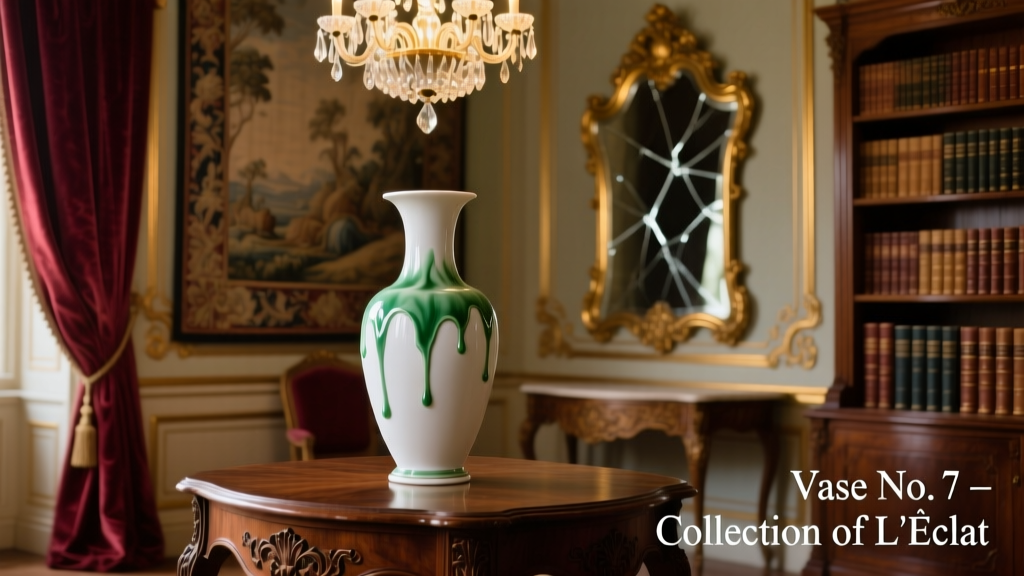
White Vase With Green Drippings: Identification, Provenance, and Conservation of Mid-Century Glazed Ceramics
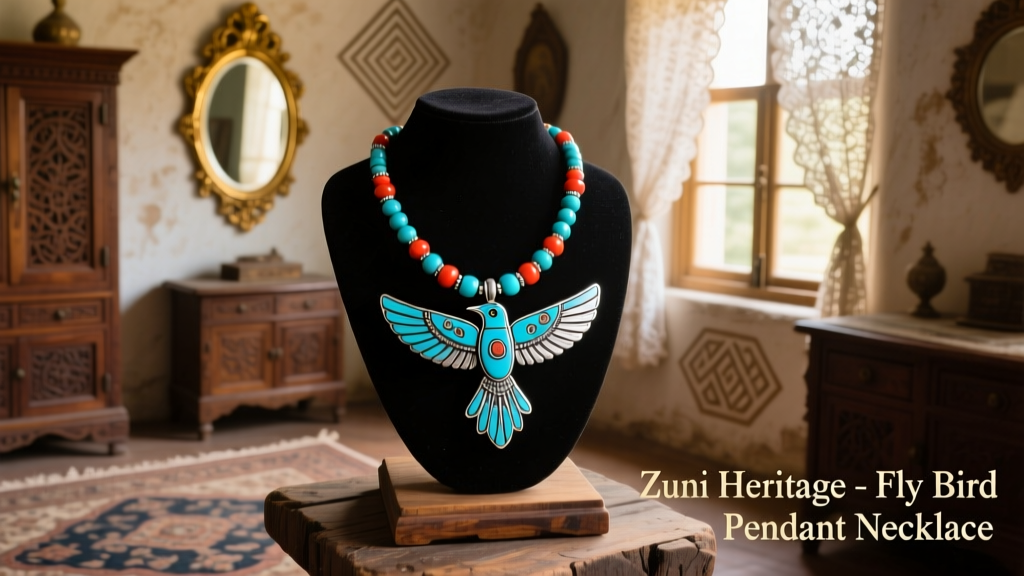
Zuni Fly Bird Necklace: Authenticity, Craftsmanship, and Cultural Significance of Coral and Turquoise Beadwork