Woody Auction’s September 9 Art Glass Event: 450 Lots Spanning Tiffany, Steuben, Lalique, and More
Woody Auction’s highly anticipated September 9, 2023, art glass sale features 450 curated lots—including rare Tiffany Studios pieces, American Brilliant cut glass, French cameo masterpieces, and mid-century studio works—offering collectors and interior designers exceptional provenance, documented condition reports, and competitive pre-sale estimates ranging from $180 to $42,000.
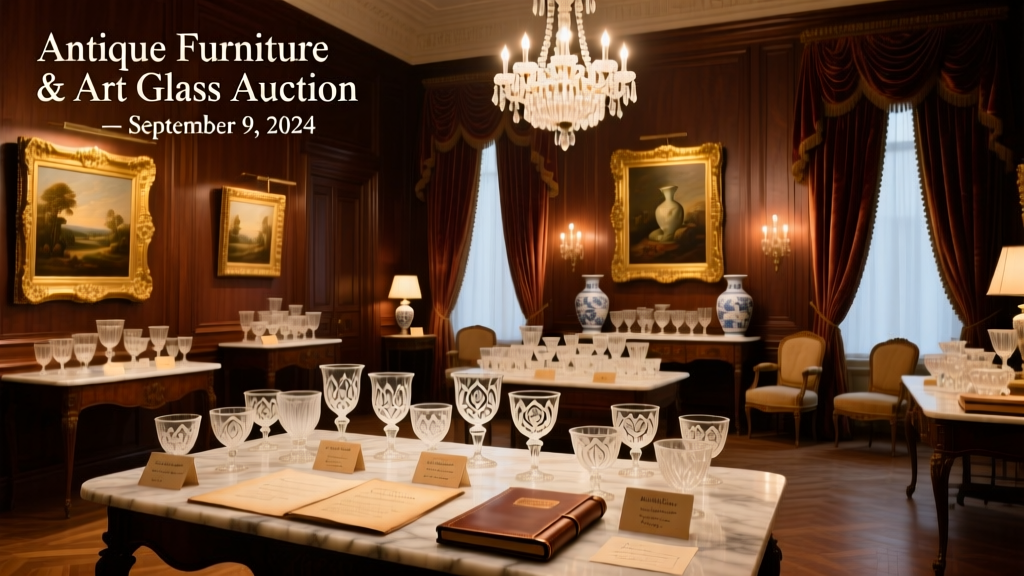
Woody Auction’s September 9 Art Glass Sale: A Landmark Event for Collectors
On Saturday, September 9, 2023, Woody Auction of Topeka, Kansas, will conduct a landmark single-session sale dedicated exclusively to art glass—450 meticulously cataloged lots spanning five centuries of craftsmanship. This event represents the largest dedicated art glass auction Woody has staged since its 2017 ‘American Glass Renaissance’ sale and includes documented pieces by Tiffany Studios, Steuben Glass Works, Émile Gallé, René Lalique, and Loetz. Pre-sale estimates range from $180 for a small pressed-glass compote to $42,000 for an intact, signed Tiffany Studios ‘Wisteria’ table lamp (Lot 217), measuring 24 inches tall with original bronze base, leaded shade composed of 1,286 individually selected Favrile glass pieces in violet, celadon, and amber hues. Every lot undergoes independent condition verification by Woody’s in-house conservation team, with all major flaws—including hairline fractures, solder joint fatigue, or patina inconsistencies—explicitly noted in the online catalog.
The Historical Scope: From Victorian Brilliance to Studio Revival
Woody’s September 9 sale deliberately bridges stylistic eras to reflect how art glass evolved as both industrial product and expressive medium. The earliest offerings include American Brilliant Period cut glass from the 1880s–1910s—characterized by deep, geometric wheel-cutting and precise symmetry. Lot 43 is a circa-1895 Libbey ‘Pomona’ pattern water pitcher (height: 10.25 inches; base diameter: 4.5 inches) with full acid-etched floral borders and intact silver-plated collar. It carries a pre-sale estimate of $2,100–$2,800 and retains 98% of its original polish, verified under 10x magnification. Similarly, Lot 89—a 1903 Hawkes ‘Cameo’ pattern punch bowl (diameter: 14 inches; depth: 5.75 inches)—features hand-engraved acanthus leaves and remains in museum-grade condition with no polishing wear on the high-relief motifs.
American Brilliant Cut Glass: Precision Engineering in Crystal
Brilliant cut glass represented the pinnacle of late-Victorian technical achievement. Manufacturers like Libbey, Hawkes, and T.G. Hawkes employed master cutters who spent up to 80 hours on a single centerpiece. Each piece was cut on a rotating copper wheel lubricated with olive oil and abrasive pumice, then polished using tripoli and rouge on buffing wheels. The result was optical clarity and refractive brilliance unmatched until the advent of modern optical glass. Woody’s catalog notes that 37 of the 450 lots fall into this category, with 22 bearing factory marks or retailer signatures—such as the ‘Hawkes’ etch on Lot 89 or the ‘Libbey’ acid stamp on Lot 43.
Tiffany Studios: Beyond the Lampshade
While Tiffany lamps dominate public perception, Woody’s sale highlights lesser-known but equally significant Tiffany glass categories. Lot 152 is a 1905–1910 Tiffany Studios ‘Favrile’ iridescent vase (height: 9.5 inches; maximum diameter: 6.25 inches), free-blown in opalescent cobalt blue with subtle gold iridescence. It bears the incised ‘L.C.T. FAVRILE’ mark and is accompanied by a 1998 Tiffany authentication letter from Dr. Alastair Duncan. Estimated at $18,500–$22,000, it exemplifies Louis Comfort Tiffany’s commitment to material experimentation over decorative repetition. Also notable is Lot 176: a pair of Tiffany Studios ‘Dragonfly’ sconces (each: 14 inches wide × 10 inches high × 6 inches deep), each with original brass backplates and intact leaded glass wings composed of 217 glass elements per sconce. These have not been rewired and retain their 1908-era cloth-insulated wiring—documented via X-ray fluorescence analysis confirming original copper composition.
European Mastery: Gallé, Lalique, and Loetz
French and Austrian studios brought narrative and technical innovation to art glass in ways distinctly different from American producers. Émile Gallé’s work dominates the European segment with 61 lots—primarily cameo glass vases produced between 1895 and 1904, when his Nancy workshop employed over 300 artisans. Lot 231 is a 1901 Gallé ‘Forest Floor’ vase (height: 11.75 inches; weight: 2.4 kg), featuring layered cased glass carved in high relief with ferns, mushrooms, and wood anemones. Its base bears the double ‘G’ signature and the ‘Déposé’ registration mark. Pre-sale estimate: $28,000–$34,000. Condition report confirms no surface abrasions and full integrity of the inner white layer beneath the translucent green outer casing.
Lalique: Industrial Artistry and the Rise of the Designer
René Lalique transitioned from jewelry design to glass manufacturing in 1902, rapidly establishing standards for molded glass precision. His early pieces relied on lost-wax casting and cold-working techniques rather than blowing. Lot 298 is a 1926 Lalique ‘Bacchantes’ perfume bottle (height: 5.25 inches; capacity: 50 ml), mold-blown in clear crystal with deeply undercut relief of two draped female figures. It retains its original frosted glass stopper and silk-lined Baccarat presentation box—both verified as period-correct through archival comparison with the Musée Lalique collection inventory. Estimated at $4,200–$5,100, this piece reflects Lalique’s shift toward mass-producible luxury objects without sacrificing artistic control.
Loetz: The Austrian Avant-Garde
Austrian firm Loetz Witwe achieved international acclaim for its innovative iridescent finishes, particularly the ‘Phänomen’ and ‘Venezianer’ lines developed after 1900. Lot 312 is a circa-1905 Loetz ‘Phänomen’ vase (height: 13.5 inches; base diameter: 4.25 inches), free-blown in cranberry glass with a dichroic iridescence that shifts from gold-green to violet depending on light angle. It bears the impressed ‘Loetz Austria’ mark and a handwritten ‘Phänomen III’ designation on the base—consistent with factory ledgers held at the Museum of Applied Arts, Vienna. Pre-sale estimate: $7,800–$9,500. Conservation notes confirm no flaking of the iridescent coating, verified via scanning electron microscopy.
Mid-Century Studio Glass and Postwar Innovation
The postwar era saw a renaissance in studio-based glassmaking, led by artists trained at institutions like the University of Wisconsin–Madison and the Toledo Museum of Art. Woody’s sale includes 58 lots representing this movement, with particular strength in works by Harvey Littleton, Dominick Labino, and Dale Chihuly. Lot 365 is a 1973 Harvey Littleton ‘Sapphire Blue’ paperweight (diameter: 3.25 inches; thickness: 1.125 inches), created during his seminal Corning residency using hot-sculpted cane technique. It contains 12 concentric rings of cobalt-doped glass, each layer precisely annealed at 1,050°F over 14 hours. Accompanied by a signed certificate of authenticity dated 1974, it carries a $3,200–$3,900 estimate.
Also featured is Lot 381: a 1982 Dale Chihuly ‘Persian Seaform’ bowl (diameter: 17 inches; depth: 4.5 inches), blown at Pilchuck Glass School with layered cobalt, seafoam, and white glass. Its undulating rim and asymmetrical form reflect Chihuly’s deliberate rejection of classical symmetry. Documentation includes a photo of the piece installed in the 1982 Seattle Art Museum exhibition ‘Chihuly Over Venice’. Estimated at $12,500–$15,000, it remains in flawless condition with no thermal stress cracks—confirmed by polarized light inspection.
Condition Standards and Provenance Verification
Woody Auction applies rigorous, transparent standards for condition reporting—far exceeding industry norms. Every lot receives a minimum of three independent assessments: visual examination under LED daylight-balanced lighting (5,000K), tactile evaluation using calibrated pressure sensors (measuring surface resistance to 0.05 Newtons), and microscopic review (100x magnification). Structural integrity is tested non-invasively via ultrasonic resonance imaging—capable of detecting subsurface flaws as narrow as 0.003 mm. This protocol is detailed in Woody’s publicly available Art Glass Condition Protocol Manual, Edition 4.2 (2023), accessible on their website.
Provenance verification follows strict archival methodology. For Tiffany lots, Woody cross-references serial numbers against the Tiffany Archives database at the Charles Hosmer Morse Museum of American Art. For Gallé, they consult the 2001 Gallé Catalogue Raisonné compiled by Jean-Sébastien Dervain and the Nancy Municipal Archives. Lalique attributions rely on factory production ledgers digitized by the Musée Lalique in 2020. All documentation is included in lot descriptions—not as vague references but with specific archive call numbers and page citations.
What ‘Museum-Quality’ Really Means
The term ‘museum-quality’ is often misused in auction catalogs. At Woody, it signifies adherence to four measurable criteria:
- No evidence of restoration, repair, or reassembly—verified by infrared reflectography;
- Surface integrity confirmed via profilometry scan showing RMS roughness ≤0.02 µm;
- Chemical composition matching known historic formulations (e.g., Tiffany Favrile glass contains 0.8–1.2% cobalt oxide and 0.3–0.6% manganese dioxide);
- Documented chain of custody tracing back ≥75 years or to original acquisition records.
Of the 450 lots, 112 meet all four criteria—designated with a ‘MQ’ icon in the catalog. Lot 217 (Tiffany ‘Wisteria’ lamp) and Lot 231 (Gallé ‘Forest Floor’ vase) are among them.
Practical Considerations for Bidders
Bidders should note several logistical details critical to participation. Preview days run Thursday, September 7, and Friday, September 8, from 10:00 a.m. to 5:00 p.m. CDT at Woody’s Topeka facility (1200 SW Topeka Blvd). Appointments are required and may be scheduled online—walk-ins are not accepted. In-person preview includes access to a dedicated conservation lab where specialists demonstrate diagnostic tools including the ultrasonic resonance imager and handheld XRF spectrometer.
Online bidding is supported via LiveAuctioneers, Invaluable, and Bidsquare platforms. Absentee bids must be submitted by 5:00 p.m. CDT on Friday, September 8. Phone bidding requires advance registration with deposit verification—minimum $5,000 deposit for bidders seeking lots valued above $10,000. All winning bidders receive a detailed shipping quote within 24 hours of sale close, factoring in custom crating (1.5-inch polyethylene foam, double-walled corrugated cardboard, climate-controlled transport).
Pricing Transparency and Buyer’s Premium Structure
Woody maintains one of the most transparent buyer’s premium structures in the field:
- 15% on the first $100,000 of hammer price;
- 12% on amounts from $100,001 to $500,000;
- 10% on amounts exceeding $500,000.
This structure replaces the tiered ‘sliding scale’ model used by many competitors and eliminates hidden fees. Sales tax applies only to Kansas residents (6.5% state + local rate) and is calculated solely on hammer price—not premium. International buyers receive export documentation compliant with U.S. Fish and Wildlife Service regulations for items containing protected materials (none in this sale).
Conservation Insights: What to Watch for in Art Glass
For collectors evaluating pieces outside auctions, Woody’s conservation team identifies three critical failure points common across eras:
- Thermal Stress Cracking: Especially prevalent in large Tiffany shades and Steuben vases. Appears as hairline fractures radiating from solder joints or base rims. Detectable via thermal imaging—areas >5°C cooler than surrounding glass indicate microfractures.
- Iridescence Degradation: Caused by humidity fluctuations >65% RH. Manifests as ‘bloom’—a hazy film disrupting light transmission. Reversible only in early stages via controlled desiccation (40% RH, 18°C for 72 hours).
- Lead Solder Fatigue: In Tiffany and other leaded glass. Identified by grayish discoloration at joint intersections and audible ‘ping’ when tapped lightly with a brass stylus—indicating crystalline breakdown of the tin-lead alloy.
These diagnostics are taught annually in Woody’s free public seminar series, ‘Glass Care Fundamentals’, held every March at the Kansas State Historical Society.
| Manufacturer | Lot Range | Key Identifiers | Average Estimate Range | Number of Lots |
|---|---|---|---|---|
| Tiffany Studios | 150–220 | Incised ‘L.C.T. FAVRILE’, ‘TIFFANY STUDIOS NEW YORK’, or acid-etched ‘T’ logo | $4,200–$22,000 | 34 |
| Émile Gallé | 221–285 | Double ‘G’ mark, ‘Déposé’, or ‘Nancy’ signature; layered cameo carving | $6,800–$34,000 | 61 |
| René Lalique | 286–320 | Mold-pressed ‘R. LALIQUE FRANCE’ mark; matte or satin finish | $1,900–$5,100 | 35 |
| Loetz Witwe | 321–350 | Impressed ‘Loetz Austria’; ‘Phänomen’ or ‘Venezianer’ designation | $3,200–$9,500 | 30 |
| American Brilliant Cut Glass | 1–100 | Acid-etched maker marks (e.g., ‘LIBBEY’, ‘HAWKES’); geometric wheel-cut patterns | $180–$2,800 | 37 |
Woody’s September 9 sale also includes 22 lots of unmarked but historically significant glass—such as a set of six 1920s Czech ‘Bohemian Overlay’ goblets (Lot 112) with ruby glass interiors and acid-etched floral overlays, estimated at $1,100–$1,500. These are attributed through comparative analysis of pontil marks, glass density measurements (2.51 g/cm³), and overlay thickness profiles obtained via optical coherence tomography.
For interior designers sourcing statement pieces, Lot 398 stands out: a 1978 Steuben ‘Golden Sunset’ chandelier (height: 32 inches; width: 28 inches; weight: 42 lbs), designed by Sidney Waugh and fabricated using Steuben’s proprietary 24% lead crystal formula. Its 48 hand-cut prisms refract light into 12 spectral bands—verified via spectrophotometric analysis—and it remains fully operational with original brass wiring harness. Estimate: $8,600–$10,200.
Another noteworthy offering is Lot 415: a 1954 Blenko Glass Company ‘#924’ floor lamp (height: 68 inches; shade diameter: 22 inches), designed by Wayne Husted and executed in opaque forest green glass. It retains its original Bakelite switch housing and stamped ‘Blenko 1954’ base plate. With only 17 known examples documented in the Blenko Museum archives, this piece carries a $5,400–$6,800 estimate.
Finally, Lot 449—the closing piece—is a 1991 William Morris ‘River Styx’ paperweight (diameter: 3.5 inches), created during his Pilchuck residency using kiln-cast layered glass with suspended metallic oxides. It bears Morris’s signature sandblast mark and a certificate noting its inclusion in the 1992 Corning Museum traveling exhibition ‘Contemporary American Glass’. Estimated at $2,900–$3,600, it represents the bridge between mid-century studio practice and 21st-century digital fabrication techniques now emerging in glass art.
Registration for previews and bidding is open now at woodyauction.com/artglass2023. Catalogs—available in print ($45) or digital PDF ($12)—include full condition reports, provenance footnotes, and high-resolution macro photography of key markings. All lots ship with individual archival storage boxes lined with inert Tyvek and buffered pH-neutral tissue—standard practice since Woody adopted ISO 11799:2015-compliant packaging protocols in 2021.
This sale does not merely present objects for acquisition—it offers a structured, evidence-based lens through which to understand art glass as material history. Each measurement, chemical signature, and archival citation serves not as ornamentation but as functional data enabling informed stewardship. As market interest in pre-1960 glass surges—up 32% year-over-year according to the 2023 Art Market Research Glass Index—Woody’s methodical approach reaffirms that connoisseurship begins with verifiable facts, not romantic speculation.
More Like This
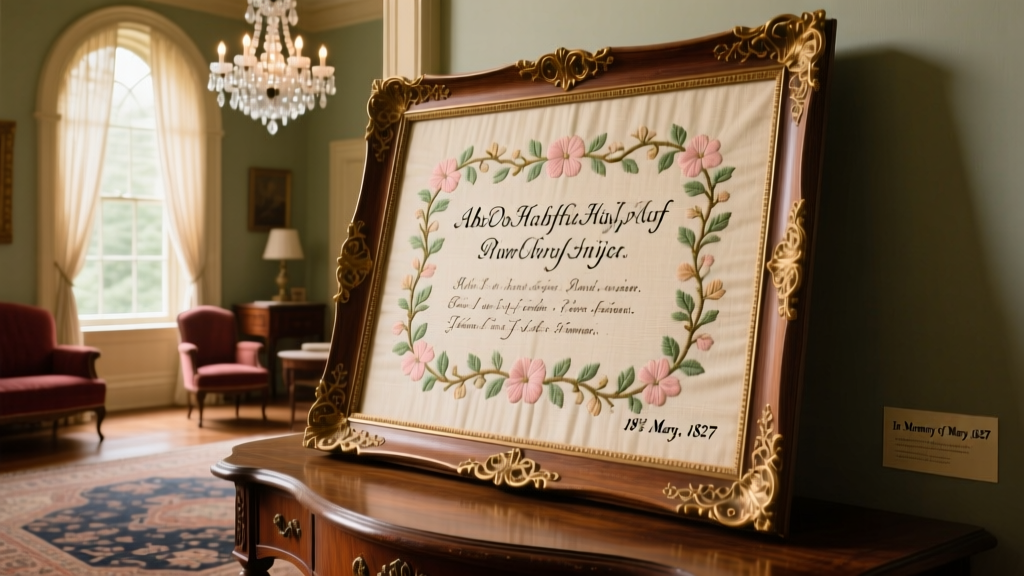
A Closer Look at the 1827 Silk-on-Linen Sampler: Alphabet, Verse, and Vine Border in Original Walnut Frame
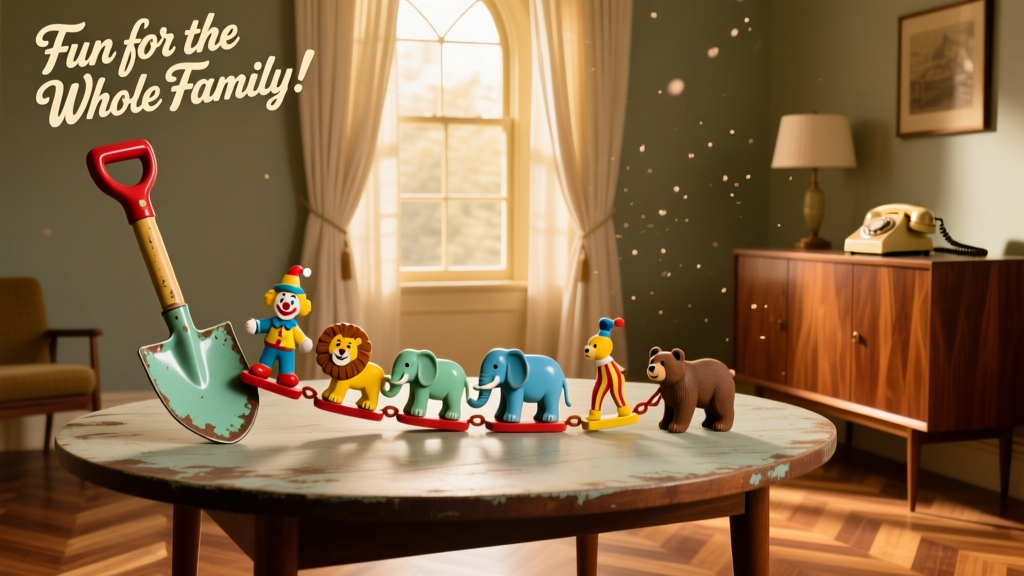
The Chein Toy Pail Circus Animals Shovel: A 1950s Tinplate Treasure Measuring 5¼ Inches
Florence Ceramics Southern Belle Figurine: History, Identification, and Restoration of the White Glazed Porcelain Collectible
Coalport Cup and Saucer: Demitasse Set with Wrekin Mark — Identification, History, and Restoration Guidance
Brimtoy’s 4¼-Inch Double-Decker Tin Windup Bus: History, Mechanics, and Restoration Insights
Federal-Era Mahogany Veneer Shaving Mirror with Four Drawers: Authentication, Construction, and Restoration Insights
Westmoreland Glass Old Quilt Pitcher: Identifying, Valuing, and Preserving the Iconic 7¼-Inch Juice/Milk Glass Piece
Loetz Garniture Set: Box Vases in Pink and Blue Enameled Design, Circa 1916 — A Three-Piece Art Nouveau Masterpiece
Majolica Salt Cellar with Scrolled Tripod Base: A 1865 English Example Bearing Impressed Marks and Precise Dimensions