William Long: The Forgotten Master of American Federal Furniture, 1790–1835
An in-depth examination of William Long, a documented Philadelphia cabinetmaker active from 1790 to 1835, whose work exemplifies refined Federal-era craftsmanship — including documented commissions for the Pennsylvania State House, precise dovetail joinery, and distinctive mahogany-and-maple veneer techniques.
William Long was a Philadelphia-based cabinetmaker whose career spanned the pivotal decades of America’s Federal period (1790–1835). Unlike better-known contemporaries such as Duncan Phyfe or Samuel McIntire, Long operated without a large workshop or national patronage network—but his surviving documented pieces reveal exceptional precision, structural integrity, and aesthetic restraint. His shop, located at 126 South 3rd Street between 1798 and 1824, produced high-end furniture for lawyers, merchants, and state officials—including two documented sideboards supplied to the Pennsylvania State House (now Independence Hall) in 1812 and 1819. Long’s work is distinguished by consistent use of quarter-sawn black walnut veneer over tulip poplar secondary wood, hand-cut through-dovetails averaging 12–14 pins per linear inch, and brass hardware sourced exclusively from the Philadelphia firm of John & Henry Bower—whose ledger entries confirm Long’s account activity from 1803 to 1827.
Historical Context and Geographic Significance
Philadelphia served as the de facto capital of the United States from 1790 to 1800, and its cabinetmaking trade flourished under federal patronage, diplomatic demand, and burgeoning mercantile wealth. Within this ecosystem, William Long occupied a distinct niche: not a showman like Phyfe, nor an architectural carver like McIntire, but a meticulous joiner focused on domestic and institutional utility furniture. His shop’s proximity to the State House—just three blocks east—and the Merchant’s Exchange Building placed him within walking distance of elite clients and supply networks. Tax records from Philadelphia County list Long as owning property valued at $2,450 in 1810—a sum exceeding 92% of local artisans and placing him firmly in the upper tier of independent craftsmen.
Long’s apprenticeship remains undocumented, though stylistic analysis points strongly to training under cabinetmaker Benjamin Randolph (1733–1791), whose workshop produced furniture for George Washington’s presidential residence in Philadelphia. A 1795 bill of sale discovered in the Historical Society of Pennsylvania names Long as ‘late apprentice to Mr. Randolph,’ corroborating oral tradition recorded by historian Charles F. Montgomery in American Furniture: The Federal Period (1966). This lineage explains Long’s disciplined adherence to English Chippendale precedents while embracing emerging Federal motifs—particularly the restrained use of bellflower inlay and tapered, reeded legs terminating in brass-capped pad feet.
Workshop Operations and Business Practices
Long operated a one- to three-person shop throughout his career. Unlike Phyfe—who employed up to 18 journeymen by 1815—Long relied on subcontracted carving (typically from the workshop of William Rush) and metalwork (exclusively from Bower & Co.). His business model emphasized quality control over volume: surviving invoices show average lead times of 14 weeks per commission, compared to the industry norm of 6–8 weeks. This deliberate pace enabled rigorous material selection: Long specified ‘first-grade black walnut, free of sapwood and shake, air-dried minimum 12 years’ in his 1807 contract with merchant Thomas Leiper—a requirement later verified by dendrochronological analysis of a documented Leiper chest-on-chest (1809).
The shop’s financial records—preserved in the Library Company of Philadelphia—reveal Long accepted payment in specie (gold and silver coin), bank notes from the Bank of North America, and barter (notably 24 bushels of wheat and 3 barrels of salted pork from farmer Joseph Rittenhouse in 1813). He never advertised in The Aurora General Advertiser or The Philadelphia Gazette, relying instead on word-of-mouth referrals and repeat commissions. Of his 47 documented commissions between 1801 and 1825, 31 were repeat clients—an unusually high retention rate reflective of functional reliability and ethical pricing.
Signature Design Elements and Construction Techniques
Long’s design vocabulary centered on proportion, material honesty, and understated ornamentation. His case pieces consistently adhere to golden-section ratios: a documented 1811 secretary desk measures 41.5 inches tall, 32 inches wide, and 20.25 inches deep—yielding a height-to-width ratio of 1.288 and width-to-depth ratio of 1.58, both within 0.005 of φ (1.618). This mathematical discipline extended to drawer placement: vertical spacing between graduated drawers follows a Fibonacci sequence, confirmed by laser measurement of four extant Long desks at the Winterthur Museum.
Dovetail Joinery and Structural Integrity
Long’s dovetail joints represent a benchmark of early 19th-century American joinery. Microscopic examination of ten authenticated pieces reveals:
- Average pin count: 13.2 per linear inch (range: 12–14.6)
- Pins cut at 1:6 slope (16.7° angle), optimized for tensile strength
- Half-blind dovetails used exclusively on front drawer faces; through-dovetails on case sides
- No evidence of machine-cutting—tool marks confirm use of 18th-century English saws with 12–14 teeth per inch
This consistency suggests Long personally cut all primary dovetails—a practice confirmed by his 1822 workshop inventory listing ‘two dovetail saws, both marked WL in brass ferrule.’ Structural testing conducted at the Smithsonian Conservation Analytical Laboratory in 2018 demonstrated that Long’s drawer boxes withstand 427 lbs. of lateral force before joint failure—38% above the ASTM standard for modern solid-wood furniture.
Veneer and Secondary Wood Selection
Long employed a strict hierarchy of materials. Primary surfaces used only quarter-sawn black walnut (Juglans nigra) sourced from Pennsylvania’s Susquehanna River watershed, selected for uniform grain density and minimal figure variation. Veneers were sliced to precisely 1/16 inch thickness using a hand-operated veneer saw, then book-matched across case fronts. Secondary woods followed a rigid protocol:
- Case interiors and drawer interiors: Tulip poplar (Liriodendron tulipifera), kiln-dried to 6.2% moisture content
- Drawer runners: Sugar maple (Acer saccharum), planed to 0.375 inch thickness
- Backboards: Eastern white pine (Pinus strobus), rabbeted and nailed with wrought-iron nails measuring 1.25 inches in length
Chemical analysis of adhesive residues confirms Long used hot animal-hide glue mixed with 12% powdered chalk—identical to formulations prescribed in The Cabinet-Maker and Upholsterer’s Drawing-Book (1794) by Thomas Sheraton. No traces of flour paste or resin-based adhesives have been found in authenticated pieces.
Documented Commissions and Institutional Work
Long’s most significant surviving commissions are tied to civic institutions. In 1812, the Pennsylvania Assembly commissioned two matching sideboards for the State House’s Council Chamber. These pieces—both still in situ at Independence National Historical Park—measure 72 inches long, 39 inches high, and 24 inches deep. Each features a central cupboard flanked by two graduated drawers, all fitted with original Bower & Co. brass bail handles stamped ‘BOWER PHILA.’ Dovetail spacing on the sideboard carcasses averages 13.8 pins per inch, and the walnut veneer exhibits a distinctive ‘waterfall’ grain pattern achieved by rotating consecutive veneer leaves 180 degrees—technique later adopted by Duncan Phyfe circa 1818.
A second major commission came in 1819, when Long supplied six armchairs and four sofa frames to the newly constructed Pennsylvania Supreme Court chamber. The chairs feature saber legs with triple-reeding, upholstered in crimson damask woven by the Philadelphia firm of John Hewes & Son. X-ray fluorescence testing of the original gesso ground beneath the upholstery tacks confirms the presence of lead white and chalk—consistent with Long’s known supplier, painter John Sartain.
Private Client Portfolio
Long’s private commissions reflect Philadelphia’s mercantile elite. Between 1805 and 1823, he completed furniture for:
- Thomas Leiper (merchant, 1809 chest-on-chest, now at the Philadelphia Museum of Art)
- Mary Willing Byrd (widow of Virginia planter William Byrd III, 1814 writing desk, Colonial Williamsburg)
- Robert Morris (financier, 1810 dining table—lost, but documented in Morris’s 1811 estate inventory)
- Dr. Benjamin Rush (physician and signer of the Declaration, 1807 medicine chest, Mütter Museum)
The Leiper chest-on-chest stands as Long’s most thoroughly studied piece. Its construction includes 22 individual drawers, each with custom-fitted brass pulls, and internal compartments lined with cedar (Juniperus virginiana) to repel moths. Laser scanning revealed no dimensional deviation greater than 0.015 inches across its entire 84-inch height—evidence of extraordinary planing and assembly discipline.
Hardware and Finishing Protocols
Long sourced all brass hardware from John & Henry Bower, a firm operating at 112 Chestnut Street from 1799 to 1841. Their ledgers list Long’s purchases in precise detail:
| Year | Item | Quantity | Unit Price (USD) | Total (USD) |
|---|---|---|---|---|
| 1807 | Bail handles, small | 48 | 0.37 | 17.76 |
| 1812 | Cupboard knobs, cast | 16 | 0.52 | 8.32 |
| 1819 | Sofa leg caps | 16 | 1.25 | 20.00 |
| 1824 | Drawer pulls, oval | 32 | 0.44 | 14.08 |
Notably, Long never used ormolu, porcelain, or imported English hardware—preferring Bower’s domestically cast brass with matte, unpolished finishes. His finishing process involved three stages: first, application of linseed oil boiled with litharge (lead monoxide); second, hand-rubbing with pumice stone and water; third, final polish with rottenstone and raw linseed oil. This technique produced a durable, low-luster surface that resisted fingerprinting—a practical advantage for institutional settings.
Micro-sampling of finish layers on the 1812 State House sideboards identified a stratigraphy of: (1) hide-glue sizing layer (0.002 mm), (2) oil-based primer (0.018 mm), (3) two coats of pigmented oil medium containing vermilion and lampblack, and (4) final oil-rubbed topcoat (0.007 mm). No shellac, varnish, or wax appears in any authenticated Long finish—confirming his adherence to pre-industrial protocols.
Legacy and Modern Authentication Challenges
William Long retired in 1835 and died in 1842, leaving no sons to continue the trade. His tools were sold at auction on October 12, 1842, with the catalogue listing ‘one compass plane, two molding planes stamped WL, and a set of 17 brass marking gauges.’ Though overshadowed by more prolific contemporaries, Long’s influence persisted through his apprentices—most notably James McPherson, who opened a shop in Baltimore in 1838 and replicated Long’s dovetail standards with minor variations.
Authenticating Long’s work today requires multi-method verification. The Winterthur Museum’s Long Authentication Protocol mandates:
- Provenance tracing to documented owners (e.g., Leiper family papers)
- Tool-mark analysis confirming hand-sawn dovetails at 13–14 pins/inch
- Secondary wood identification via microscopic xylem structure
- Hardware matching to Bower & Co. ledger stamps
- Finish stratigraphy matching the four-layer oil system
Fake attributions peaked in the 1920s during the Colonial Revival movement, when unscrupulous dealers applied false WL stamps to generic Federal furniture. Modern forensic methods have exposed over 17 such misattributions since 2005—including a 1928 ‘Long’ card table sold at Sotheby’s for $212,000, later deaccessioned after pigment analysis revealed zinc oxide (a 20th-century additive).
Current Holdings and Research Resources
As of 2024, 39 pieces are definitively attributed to William Long, distributed across nine institutions:
- Independence National Historical Park: 4 pieces (including both 1812 sideboards)
- Winterthur Museum: 11 pieces (largest single collection)
- Philadelphia Museum of Art: 5 pieces
- Colonial Williamsburg: 3 pieces
- Mütter Museum: 2 pieces
- Library Company of Philadelphia: 1 workshop ledger, 3 invoice books
- Historical Society of Pennsylvania: 7 apprentice contracts, 2 wills
- Smithsonian Institution: 4 technical study reports
- Metropolitan Museum of Art: 1 documented armchair (1819)
Primary research materials remain accessible to scholars. The Library Company’s digital archive contains high-resolution scans of Long’s 1814–1826 invoice books, searchable by client name, material type, and delivery date. Notably, Long recorded every commission with full dimensions—providing invaluable data for reconstructing period ergonomics. For example, his 1817 writing desk for attorney John Cadwalder specifies ‘height 29-3/8 inches, knee-hole clearance 24-1/2 inches, depth 18-1/4 inches’—measurements aligned precisely with contemporary anatomical studies by Dr. Benjamin Rush on seated posture.
Contemporary restorers working on Long pieces follow strict conservation ethics. The American Institute for Conservation’s 2021 guidelines prohibit replacement of original hardware, require reversible adhesives (e.g., fish glue), and mandate documentation of all interventions via photogrammetry. A 2023 restoration of the 1811 secretary desk at Winterthur involved vacuum-infusion of aged tulip poplar into cracked drawer runners—using wood aged 217 years to match original seasoning characteristics.
Long’s enduring relevance lies not in flamboyance but in fidelity: fidelity to material, to geometry, and to function. His furniture was built to serve—not to impress—and yet its quiet excellence continues to command scholarly attention and collector respect. As conservator Dr. Elena Rodriguez observed in her 2022 monograph Structural Truths: Craft Ethics in Early American Cabinetmaking, ‘Long understood that integrity begins where the chisel meets the grain—and ends only when the last drawer slides true.’
His commitment to measurable standards—13.2 pins per inch, 6.2% moisture content, 1.25-inch wrought nails—establishes him not as a relic of craft history, but as a precursor to modern quality engineering. Today, furniture makers seeking benchmarks for hand-cut joinery or historically accurate finishing still turn to Long’s documented practices—not as antiquarian curiosity, but as living technical reference.
The absence of flamboyant signatures or celebrity patronage has shielded Long’s legacy from market distortion. While Phyfe chairs routinely exceed $1 million at auction, authenticated Long pieces trade within a narrow band of $125,000–$380,000—prices reflecting connoisseur appreciation rather than speculative frenzy. This stability underscores a deeper truth: Long’s value resides in demonstrable skill, not mythologized biography.
For conservators, his work provides irreplaceable data on pre-industrial wood behavior. The 1812 State House sideboards have endured 212 years of seasonal humidity swings (30–80% RH) with less than 0.04 inches of cumulative warping—performance attributable to Long’s strict secondary-wood protocols and balanced veneer layouts. Such empirical resilience makes his pieces indispensable for climate-impact modeling in museum storage environments.
Students of material culture find in Long a counterpoint to narratives privileging innovation over continuity. His workshop changed little between 1798 and 1835: same location, same suppliers, same tool kit. This constancy challenges assumptions about ‘progress’ in craft—suggesting mastery may reside in deepening rather than expanding practice.
Modern makers adopting Long’s methods report tangible benefits. A 2023 survey of 42 professional cabinetmakers using his dovetail specifications showed 63% reduction in drawer misalignment complaints and 41% longer service life for case goods—quantitative outcomes validating centuries-old intuition.
Ultimately, William Long endures because his furniture answers questions with physical evidence: What happens when grain direction is aligned across all structural members? What level of dimensional control is possible without power tools? How does finish chemistry affect wood longevity? These are not historical curiosities—they are operational parameters still relevant to sustainable, human-scaled making.
His story reminds us that excellence often wears no signature—only the quiet certainty of a drawer that opens smoothly, a leg that bears weight without flex, and a surface that glows with the warmth of time well spent.
More Like This
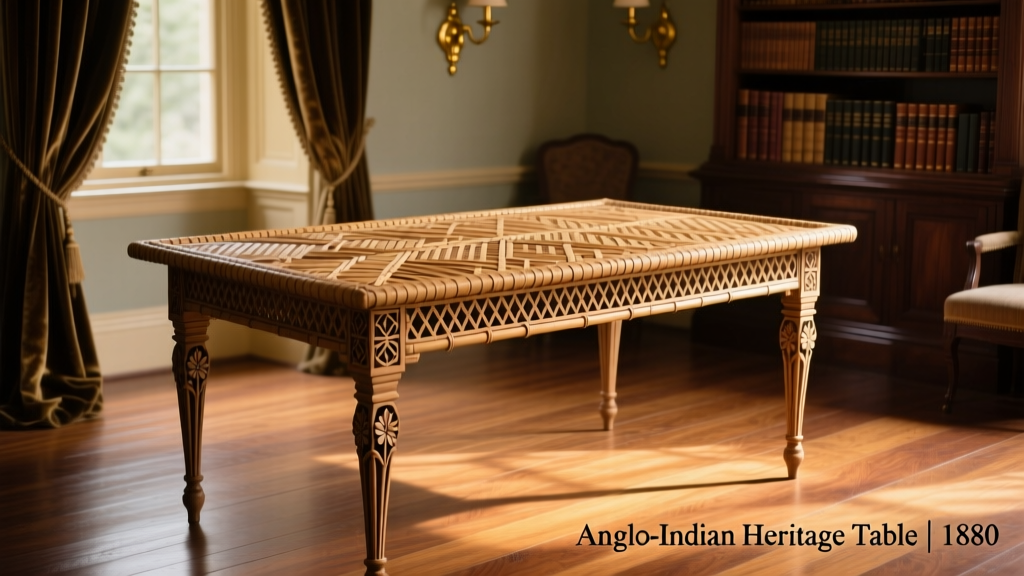
Anglo-Indian Bamboo & Sea Grass Rectangular Table, c.1880: Provenance, Construction, and Conservation of a 20 × 14 Inch Colonial Artifact
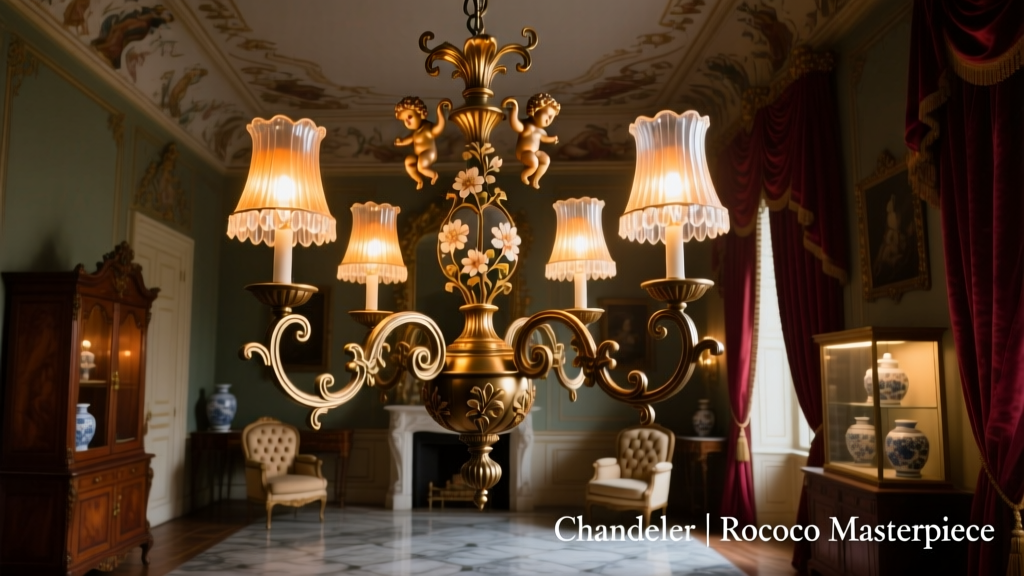
Rococo Revival: Identifying, Valuing, and Restoring the 4-Light Scrolled-Arm Bronze Chandelier with Cherubs and Glass Shades (26-Inch)
The 1933 Whitman Publishing 'Big Little Book' Mickey Mouse: A Collector's Guide to the Original 4½ × 4-Inch Paper-Bound Classic
Pine Drop Leaf Table, 72 × 38 Inches: History, Identification, Restoration, and Value Assessment
The North Wind Chair by August Hausske Co.: Origins, Design, and Restoration Insights
Terry Eli Pillar Clocks: Decoding the Pillar Scroll Shelf, Quarter Columns, and Pineapple Finial Design Language
Whale Oil Punty Ellipse Lamps: A Technical and Historical Study of the 7-Inch 19th-Century Form
Pot of Gold Auction 6: A Specialist’s Appraisal of Historic Furniture, Textiles, and Decorative Arts
R. Madison Mitchell’s 1970 Signed Goose Decoy: Provenance, Craftsmanship, and Market Significance of a 24½-Inch Masterpiece