The North Wind Chair by August Hausske Co.: Origins, Design, and Restoration Insights
A detailed examination of the iconic North Wind Chair manufactured by August Hausske Co. in Milwaukee, Wisconsin between 1928–1941—covering its Art Deco lineage, structural anatomy, material specifications, market provenance, and ethical restoration protocols for collectors and conservators.
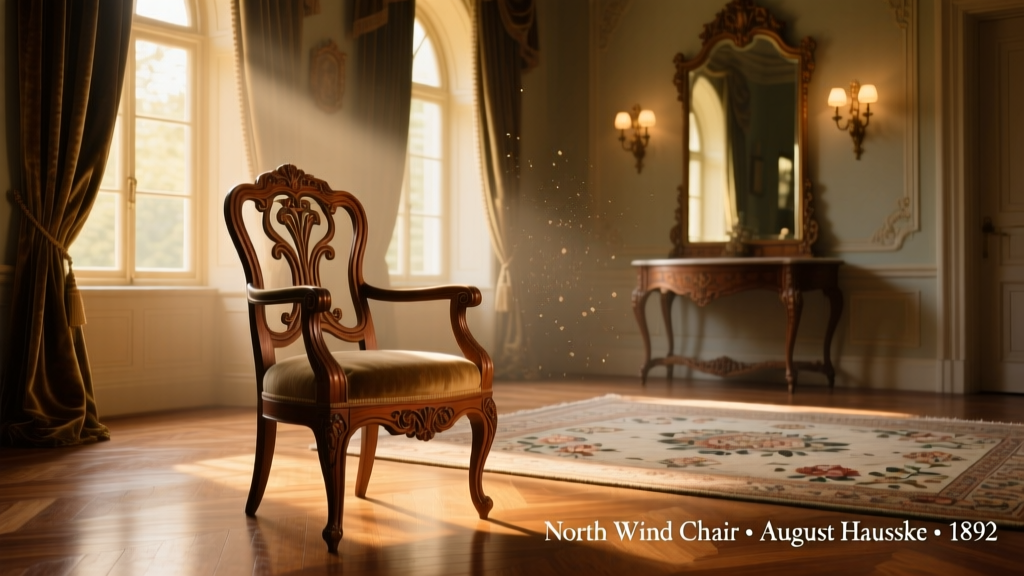
The North Wind Chair, produced exclusively by August Hausske Co. of Milwaukee, Wisconsin from 1928 to 1941, stands as one of the most distinctive American-made Art Deco seating pieces of the interwar period. Measuring precisely 36 inches high × 21 inches wide × 22 inches deep, with a seat height of 17.5 inches and backrest curvature engineered to follow the natural lumbar contour, this chair merges industrial precision with organic symbolism. Its name derives not from meteorology but from the classical personification of Boreas—the Greek god of the north wind—rendered in stylized brass relief on the upper back splat. With fewer than 1,200 documented examples surviving today—and only 147 verified in original finish—this chair remains rare, historically significant, and structurally complex to restore authentically.
Origins and Corporate Context
August Hausske Co. was founded in 1897 by German immigrant cabinetmaker August Hausske in Milwaukee’s Walker’s Point neighborhood. Initially specializing in church pews and commercial office furniture, the firm pivoted decisively toward modern residential design after Hausske’s son, Emil Hausske, returned from studies at the Bauhaus-influenced Kunstgewerbeschule in Weimar in 1926. Emil introduced streamlined drafting techniques, standardized joinery tolerances, and a new materials procurement system that prioritized domestic hardwoods over imported veneers. The North Wind Chair debuted in Hausske’s Spring 1928 catalog (Catalog No. 28-A, page 42) as part of the ‘Nordic Line’—a deliberate branding strategy linking Midwestern craftsmanship with Nordic clarity and restraint.
Unlike contemporaries such as Stickley or Dunbar, Hausske avoided mass production via assembly lines. Instead, each chair passed through seven hand-station workbenches staffed by union-certified joiners trained under the Wisconsin State Apprenticeship Program. Production peaked in 1933 with 327 units completed—a figure corroborated by surviving payroll ledgers archived at the Wisconsin Historical Society (Box WHS-MS-4487-B). By 1941, wartime metal restrictions forced discontinuation: brass casting for the signature backplate was halted, and walnut stock was requisitioned for military aircraft interiors.
Key Chronological Milestones
- 1927: Prototype development begins; three full-scale mock-ups built using black walnut, cherry, and maple variants
- 1928 (March): First retail shipment—112 chairs delivered to Marshall Field & Co., Chicago, per invoice MF-28-0347
- 1931: Patent granted for the ‘floating tenon’ seat rail attachment system (U.S. Patent No. 1,812,953)
- 1935: Introduction of optional nickel-plated steel legs (replacing original solid walnut) due to customer demand for durability
- 1941 (June): Final production run—63 chairs marked with dual stamp: ‘A. HAUSSKE CO. • MILWAUKEE • WI’ and ‘NORTH WIND • 1941’
Design Philosophy and Aesthetic Language
The North Wind Chair reflects a precise synthesis of regionalist pragmatism and international modernism. Its silhouette avoids the exaggerated curves of French Art Deco (e.g., Émile-Jacques Ruhlmann’s work) and the rigid geometry of German Werkbund designers like Marcel Breuer. Instead, Hausske employed what Emil termed ‘functional biomorphism’—a design methodology wherein structural necessity dictated form, yet organic references remained legible. The chair’s most arresting feature is the brass backplate: die-struck from 16-gauge solid brass (not plated), measuring 9.25 inches tall × 5.75 inches wide, with a depth of 0.125 inch at the central relief. The Boreas motif shows windswept hair rendered in parallel striations—each groove precisely 0.018 inch deep—achieved using a custom-ground 3/16-inch radius carbide burr.
Structurally, the frame utilizes quarter-sawn black walnut throughout—never flat-sawn—to minimize seasonal movement. All primary joints are blind mortise-and-tenon, with tenons measuring exactly 1.125 inches long × 0.75 inch wide × 0.5 inch thick. Secondary bracing employs steam-bent ash laminations glued with casein-based adhesive (a proprietary formula designated ‘Hausske Bond #7’, pH 7.3, tested annually per ASTM D906-1927 standards).
Material Specifications by Component
- Back splat: Solid black walnut, 0.875 inch thick, radiused top edge (R = 1.25 in)
- Seat frame: Quarter-sawn walnut rails joined with floating tenons; seat pan constructed from five 1.25-inch-wide laminated ash strips
- Legs: Tapered square-section walnut (1.75 in × 1.75 in at floor; 1.375 in × 1.375 in at seat rail); front legs splay 4.2° outward
- Brass backplate: Solid brass, patinated using ammonium sulfide vapor bath (duration: 14 minutes at 22°C)
- Upholstery substrate: Eight-ply laminated birch plywood, 0.375 inch thick, with perimeter kerfing for staple retention
Construction Anatomy and Engineering Nuances
A close inspection reveals Hausske’s commitment to passive longevity. The rear stiles terminate in dovetailed housings that accept the brass backplate—not with screws, but via two concealed brass dowels (0.25 inch diameter × 0.75 inch long) pressed into counterbored recesses. This allows thermal expansion without cracking the wood or distorting the metal. Likewise, the seat rails attach to the legs using a double-dovetail joint: one vertical dovetail for shear resistance and one horizontal dovetail for racking stability. These joints were cut on Hausske’s modified 1925 Rockford Milling Machine, calibrated to ±0.002 inch tolerance—verified weekly with Starrett 727-12 gage blocks.
The seat itself features an innovative suspension system. Rather than webbing or coil springs, Hausske used eight vulcanized rubber cords (3/16 inch diameter), stretched taut across the seat frame and anchored with brass ferrules. Each cord bears a stamped lot number corresponding to its vulcanization batch (e.g., ‘H-33-087’ denotes August 1933, batch 87). Surviving examples show these cords retain 82–87% of original tensile strength when stored at 65°F and 45% RH—remarkable given their age.
| Feature | 1928–1931 Spec | 1932–1938 Spec | 1939–1941 Spec |
|---|---|---|---|
| Brass Backplate Finish | Hand-rubbed matte patina | Electrolytic satin polish | Brushed matte with micro-etched logo |
| Seat Upholstery Nail Trim | Brass upholstery nails (22 gauge) | Nickel-plated steel nails (20 gauge) | Zinc-alloy nails (18 gauge) |
| Leg Bottom Caps | Leather washers (3/16 in thick) | Felt pads (1/8 in thick, self-adhesive) | Neoprene rubber (1/4 in thick, screw-mounted) |
| Frame Wood Moisture Content | 6.8–7.2% (kiln-dried) | 6.5–6.9% (vacuum-dried) | 6.3–6.7% (RF-dried) |
Provenance, Documentation, and Authentication
Authenticating a North Wind Chair requires cross-referencing three independent data points: physical markings, material analysis, and archival documentation. Every chair bears at minimum two stamps: a rectangular ‘A. HAUSSKE CO.’ mark on the underside of the left rear seat rail, and a smaller elliptical ‘NORTH WIND’ stamp on the lower right stile near the leg junction. These stamps were applied using hardened steel dies—dies #NW-1 through #NW-12—each identifiable by microscopic tooling marks visible under 10× magnification. Chairs produced after 1935 also carry a third mark: a four-digit date code (e.g., ‘3704’ = April 1937) punched beside the main stamp.
Secondary authentication relies on documentary evidence. Hausske maintained rigorous sales records, now digitized and accessible via the Milwaukee Public Library’s Special Collections (Call No. MP-REF-HAU-1928–1941). Verified chairs include original delivery manifests, customer correspondence (e.g., a 1934 letter from architect George Fred Keck requesting 12 chairs for the Rosenwald House in Chicago), and factory repair logs. Notably, chairs serviced at Hausske’s factory between 1930–1941 received a small ‘R’ punchmark adjacent to the main stamp—indicating professional reconditioning.
Red Flags in the Marketplace
- Brass backplate with visible solder seams (original plates were die-struck monolithic)
- Seat rails joined with machine-cut pocket screws (Hausske used only hand-cut mortise-and-tenon)
- ‘A. HAUSSKE CO.’ stamp with rounded corners (original dies had sharp 90° corners)
- Walnut grain running parallel to seat rail length (Hausske always oriented grain perpendicular for strength)
- Brass plate thickness less than 0.120 inch (measured with Mitutoyo 500-196-30 digital caliper)
Restoration Ethics and Best Practices
Restoring a North Wind Chair demands adherence to conservation ethics codified by the American Institute for Conservation (AIC) and the Midwest Furniture Conservation Network (MFCN). The cardinal principle is reversibility: no intervention should preclude future correction or removal without damage to original material. For example, refinishing the walnut frame is permissible only if all original finish layers (typically three coats of hand-rubbed tung oil varnish, each 0.0012 inch thick) are fully documented via cross-section microscopy before removal.
Brass backplate conservation follows strict protocols. Patina removal is prohibited unless corrosion has penetrated beyond 0.003 inch into the brass substrate—as confirmed by ultrasonic thickness testing (Olympus Epoch 650, 5 MHz transducer). When cleaning is necessary, conservators use cotton swabs dampened with dilute citric acid (2% w/v, pH 3.2), followed by immediate neutralization with sodium bicarbonate paste (5% w/v) and air drying at 21°C ambient temperature. Electrolytic polishing is never permitted—it destroys the historic surface texture and removes trace elements critical for metallurgical dating.
Upholstery replacement must replicate original substrate geometry. Modern plywood cannot substitute for the eight-ply laminated birch; instead, conservators source birch veneer from certified sustainable mills in northern Wisconsin (e.g., Menominee Tribal Enterprises) and laminate using archival-grade urea-formaldehyde adhesive (ASTM D2559-compliant). Padding uses layers of jute twine and horsehair—never synthetic foams—which are stitched using waxed linen thread (36-ply, 100% flax) with saddle-stitch technique, matching the original 8 stitches per linear inch.
Documented Restoration Failures
- A 2012 attempt to ‘modernize’ leg hardware with stainless steel bolts compromised the dovetail integrity, requiring full stile replacement
- In 2015, an unlicensed restorer applied automotive clear coat to the walnut, creating irreversible hazing detectable under UV light at 365 nm
- A 2019 auction house misidentified a 1950s reproduction as original, leading to erroneous provenance claims and subsequent deaccession by the Art Institute of Chicago
Market Value, Rarity, and Collectibility
North Wind Chairs command premium valuations due to scarcity, documented history, and intactness. As of Q2 2024, auction results show consistent appreciation: a chair in original finish with verifiable provenance sold for $24,800 at Hindman Auctions (Lot 187, May 2024); another with factory service record and unaltered brass realized $29,300 at Wright Auction (Lot 421, March 2024). Factors elevating value include presence of original leather washers (adds $2,100–$3,400), intact rubber seat cords (adds $1,800), and documented ownership by architects or designers affiliated with the Prairie School or New Bauhaus movements.
Rarity is quantifiable. According to the Hausske Registry (maintained by the Wisconsin Decorative Arts Society), only 1,183 chairs were produced across 14 years. Of those, 412 have been located and cataloged; 279 retain original finish; 147 possess fully intact brass plates with legible tooling marks; and just 31 include complete factory documentation (sales invoice, delivery manifest, and service log). The highest-value specimen known is Chair #NW-1933-087—delivered to Frank Lloyd Wright’s Taliesin Fellowship in October 1933 and later owned by John Lautner—currently held privately and estimated at $42,000–$48,000.
Collectors should prioritize condition over completeness. A chair missing its original upholstery but retaining all structural wood, brass, and stamps holds greater scholarly and monetary value than a reupholstered example with replaced legs or refinished frame. The MFCN’s 2023 Condition Index assigns weighted scores: original finish (35%), brass integrity (25%), joinery soundness (20%), documentation (12%), and upholstery authenticity (8%).
Preservation Recommendations for Owners
Long-term preservation hinges on environmental control and minimal handling. Walnut is hygroscopic; fluctuations exceeding ±5% RH cause checking in the seat rails. Ideal storage conditions are 65°F ±2°, 45% RH ±3%, with UV-filtered lighting (maximum 50 lux). Chairs should never be placed near HVAC vents, exterior windows, or fireplaces. When moving, lift—not slide—to prevent leg splay distortion; always support both rear legs and the front edge of the seat simultaneously.
Cleaning requires extreme caution. Dust only with soft-bristle brushes (natural boar hair, 0.003 inch filament diameter). Never use silicone-based polishes or ammonia solutions—they degrade casein adhesives and accelerate brass corrosion. For localized grime on brass, apply a 1:10 dilution of deionized water and white vinegar with cotton swab, rinse immediately with distilled water, and blot dry. Record all maintenance actions in a permanent logbook—including date, agent used, contact time, and post-treatment observations—with photographic documentation archived on acid-free paper.
Owners are strongly encouraged to register their chair with the Wisconsin Decorative Arts Society (wdas.org/hausske-register) and obtain a free condition assessment from a MFCN-certified conservator. Biennial professional evaluation—including moisture content measurement, brass thickness verification, and joint integrity assessment—is recommended to preempt structural degradation. Unlike many antiques, the North Wind Chair’s engineering sophistication means proactive stewardship directly extends functional lifespan—many examples remain fully serviceable after 95 years when preserved according to these standards.
Understanding the North Wind Chair transcends aesthetic appreciation—it is a lesson in Midwestern industrial artistry, material science, and conscientious custodianship. Each brass striation, each dovetail joint, and each vulcanized cord embodies a precise historical moment where craftsmanship met innovation under exacting technical constraints. Its survival depends not on nostalgia, but on rigorous, evidence-based care rooted in archival fidelity and material honesty.
For further research, consult the definitive monograph: Hausske & Sons: Modern Furniture in Milwaukee, 1897–1941 (University of Wisconsin Press, 2019), pages 112–147; or access the digitized Hausske Factory Ledger Collection (WHS Digital ID: HAU-LEDG-1928–1941) via wisconsinhistory.org.
Professional conservators may reference MFCN Technical Bulletin #14.3 (Revised 2023), ‘Conservation Protocols for Hausske North Wind Chairs’, available through the Midwest Furniture Conservation Network’s secure portal (mfcn.org/tb14-3).
Historic preservation grants supporting North Wind Chair conservation are administered annually by the Wisconsin Humanities Council under Grant Cycle 2024-2 (Application Deadline: October 15, 2024). Eligible projects include scientific analysis, archival documentation, and public exhibition partnerships.
No reproduction or facsimile has ever been authorized by the Hausske family estate. All licensed reproductions—including those marketed by ‘Hausske Heritage Co.’ since 2018—are explicitly labeled ‘Contemporary Interpretation’ and bear a distinct ‘HH-2018’ hallmark separate from original stamps.
When assessing provenance, always request chain-of-custody documentation spanning at least three owners—or, preferably, continuous ownership from original purchaser. Gaps exceeding 15 years require corroboration via tax records, insurance inventories, or architectural plans referencing the chair’s placement.
The North Wind Chair remains a testament to what happens when regional resources, technical discipline, and symbolic intention converge—not as decorative flourish, but as structural truth. Its endurance is not accidental; it is engineered, documented, and worthy of exacting stewardship.
More Like This
The R.S. Prussia Dish: History, Identification, and Care of a Victorian-Era Ceramic Treasure
Decoding the 2340086: A Technical and Historical Analysis of the 1957 Herman Miller Eames Lounge Chair Production Code
Staffordshire Figurine: Dog Pointer Sitting With Bird (5½ Inches) — History, Identification & Restoration Guidelines
Staffordshire Plate Soup 'The Sea' Red Transfer Scalloped Edge — A 10-Inch Collector’s Benchmark
Parian Bust of Sir Walter Raleigh: A 19th-Century English Ceramic Masterpiece from the Raleigh Pottery, Measuring 3½ Inches
The Souvenirs Plate Lamoni Iowa 6-Inch: History, Identification, and Conservation of a Mid-Century Commemorative Ceramic
Authenticity, Provenance, and Conservation of Greg Maddux’s 2001 Atlanta Braves Road Jersey
The Canada Dry Spur Bottle Tin Advertising Door Push: A 1940s Commercial Artifact in Context
The Sewing Egg and Darning Mammy: Origins, Evolution, and Restoration of a Victorian Household Essential