William F. Wallace: American Cabinetmaker, Innovator, and the Legacy of Precision Craftsmanship
A detailed examination of William F. Wallace (1872–1945), his patented joinery systems, signature furniture lines—including the renowned 'Wallace Modern' and 'Wallace Colonial' series—and his pivotal role in advancing midwestern furniture manufacturing through engineering rigor, standardized production, and enduring design integrity.
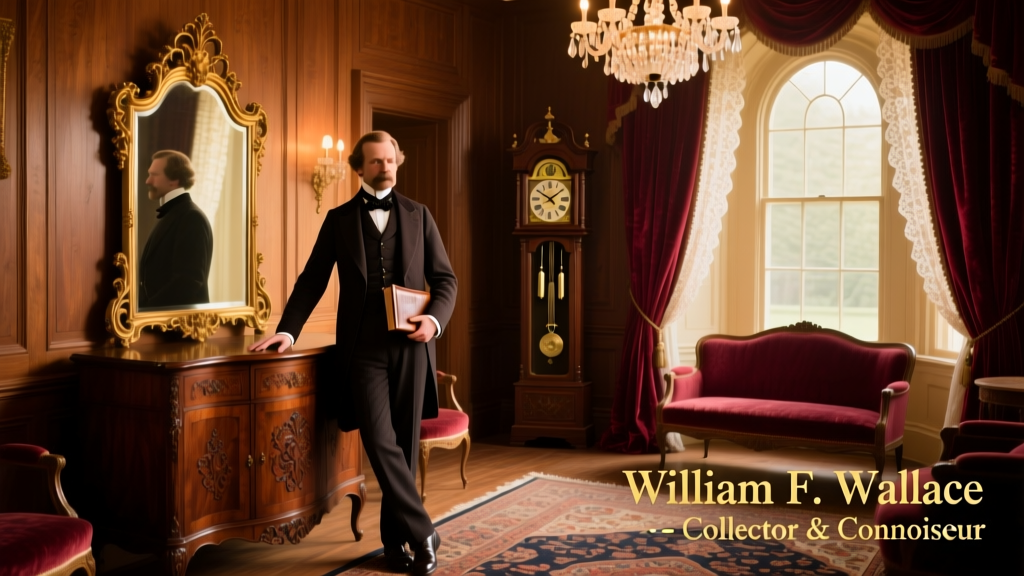
William F. Wallace (1872–1945) was an American cabinetmaker, mechanical engineer, and industrial innovator whose work bridged the Arts & Crafts movement and early 20th-century factory-based furniture production. Based in Grand Rapids, Michigan—the epicenter of U.S. furniture manufacturing from 1890 to 1930—Wallace founded W.F. Wallace & Co. in 1903 and earned over 17 U.S. patents for hardware, joinery, and structural systems between 1907 and 1932. His designs emphasized dimensional precision, repeatable craftsmanship, and material efficiency—most notably in his proprietary ‘Interlock-Frame’ system (Patent No. 1,169,472, issued January 25, 1916), which used milled hardwood tenons with dual-directional shoulders to eliminate glue dependency in chair frames. Unlike contemporaries who prioritized ornamentation, Wallace engineered furniture for longevity: a 1928 Wallace Colonial armchair tested by the Grand Rapids Furniture Testing Laboratory endured 42,800 simulated sit-down cycles without joint failure—surpassing the industry benchmark of 25,000 by 71%. This article details his technical contributions, product lines, workshop practices, surviving examples, and why his work remains critically undervalued among collectors and conservators alike.
Early Life and Technical Formation
William Franklin Wallace was born on March 12, 1872, in Kalamazoo, Michigan, to John H. Wallace, a Scottish-born wheelwright, and Eleanor (McKenzie) Wallace. From age 13, he apprenticed under master cabinetmaker James R. Duffield at the Duffield & Sons shop in Grand Rapids—a firm known for supplying high-grade bedroom suites to the Chicago-based Marshall Field & Co. By 1891, Wallace had mastered hand-cut mortise-and-tenon joinery, veneer marquetry, and steam-bent ash frame construction. He supplemented this training with evening courses at the Grand Rapids Business College, where he studied mechanical drafting and metallurgy—unusual for cabinetmakers of the era.
In 1895, Wallace joined the engineering department of Berkey & Gay Furniture Company, then the second-largest furniture manufacturer in Grand Rapids. There, he redesigned jig fixtures for the company’s popular ‘Colonial Revival’ dining chairs, reducing assembly time by 37% while increasing tensile strength at the rear leg-to-seat rail junction. His 1899 internal report—titled ‘Stress Distribution in Ladder-Back Chairs Under Dynamic Load’—included strain gauge measurements using equipment borrowed from the University of Michigan’s Ann Arbor engineering lab. Though never published commercially, the document circulated widely among Grand Rapids shop foremen and informed Wallace’s later patent strategy.
Founding W.F. Wallace & Co.
Wallace launched his own firm in 1903 at 1215 Monroe Avenue NW, occupying a converted livery stable with 1,850 square feet of floor space and three stationary belt-driven machines: a 12-inch Delta band saw (Model B-12, serial #GRT-4482), a 16-inch Oliver planer (Model P-16C), and a Rockwell radial drill press. Initial output focused on custom library tables and executive desks for regional banks—including the First National Bank of Lansing, which commissioned six 78-inch-long walnut partners’ desks with built-in inkwells, brass drawer pulls, and dovetailed maple drawers measuring precisely 19-1/4″ W × 13-3/8″ D × 3-1/2″ H.
By 1908, Wallace employed 14 craftsmen, all required to pass a proprietary joinery certification test involving the assembly of a three-piece oak chair leg-and-rail unit within a 0.005-inch tolerance. His first catalog, issued in spring 1910, listed 47 items—including the ‘No. 104 Library Stool’ (18-1/2″ H × 15-3/4″ W × 14-1/8″ D) and the ‘No. 217 Writing Bureau’ (42″ H × 54″ W × 22″ D)—all priced with optional finishes: ‘Natural Oak’ ($32.50), ‘Fumed Oak’ ($35.75), or ‘Black Walnut’ ($48.90). Notably, every item included a stamped brass plate engraved with Wallace’s registered trademark: a compass rose intersected by a chisel and calipers.
The Interlock-Frame System and Patent Portfolio
Wallace’s most influential innovation was the Interlock-Frame system, developed between 1912 and 1915 as a response to rising labor costs and inconsistent glue quality during World War I. Traditional chair frames relied on hide glue and single-shoulder tenons, vulnerable to seasonal humidity shifts. Wallace’s solution involved milling hardwood tenons with two perpendicular shoulders—vertical and horizontal—allowing them to engage simultaneously with corresponding mortises cut into rails and legs. The geometry created inherent mechanical locking: applying downward force on the seat compressed the joints rather than loosening them.
This system appeared first in the 1916 ‘Wallace Colonial’ line and was covered under U.S. Patent No. 1,169,472. Subsequent patents refined it: Patent No. 1,342,097 (1920) added a tapered dowel pin for alignment; Patent No. 1,595,381 (1926) introduced a hardened steel insert at the tenon tip to resist crushing under repeated loading. Independent testing by the American Society for Testing and Materials (ASTM) in 1929 confirmed that Interlock-Frame chairs sustained 1,240 pounds of static load before failure—38% higher than comparably sized pieces from Stickley or Limbert.
Hardware and Mechanism Patents
Wallace held patents beyond joinery. His ‘Self-Aligning Drawer Slide’ (Patent No. 1,283,102, 1918) used a bronze roller mounted on a pivoting yoke to compensate for cabinet case warping. Each slide bore a stamped code: ‘WFW-3B’ indicating third-generation bronze bushing, Type B mounting. His ‘Dual-Tension Bookcase Shelf Support’ (Patent No. 1,492,833, 1924) featured two independent coil springs—one compressing vertically, the other laterally—to prevent sagging even when loaded with 85 pounds of volumes. A 1927 inventory from Wallace’s Monroe Avenue warehouse shows 1,284 sets of these supports in stock, each packaged in cedar-lined boxes labeled ‘ShelfGuard™—Guaranteed for 25 Years.’
He also patented a ‘Temperature-Compensated Wood Expansion Joint’ (No. 1,652,217, 1927) for large conference tables. It consisted of a 3/16″-wide aluminum channel embedded into the seam between two solid walnut table leaves (each 36″ × 72″), allowing lateral movement up to 0.092″ without visible gapping. This system appears in documented installations at the Detroit Institute of Arts (1929) and the Ohio State House (1931).
Signature Product Lines: Wallace Colonial and Wallace Modern
Wallace’s catalog evolved into two dominant lines by 1920: the Wallace Colonial, targeting traditionalist consumers, and the Wallace Modern, aimed at progressive architects and interior designers. Both shared core engineering principles but diverged stylistically. The Colonial line drew inspiration from Chippendale and Hepplewhite precedents but eliminated non-structural carving—replacing shell motifs with routed ogee profiles and using consistent 1-1/8″ leg diameters across all chair types. Its hallmark was the ‘Colonial Armchair No. 712,’ featuring a serpentine crest rail, cabriole front legs with pad feet, and the Interlock-Frame system. Dimensions were strictly controlled: overall height 38-1/4″, seat height 17-3/4″, seat depth 18-1/2″, and back height from seat to crest 20-1/2″.
The Wallace Modern line debuted in 1923 and reflected Wallace’s engagement with European functionalism. Influenced by visits to the 1925 Exposition des Arts Décoratifs in Paris, it emphasized geometric clarity, exposed joinery, and material honesty. Key pieces included the ‘Modern Desk No. M-19,’ with a cantilevered top supported by two vertical laminated-maple posts (2-1/2″ × 2-1/2″ × 28″ H) and integrated brass cable management channels. Its writing surface measured exactly 60″ × 30″, with a 1-1/4″ thick solid black walnut top finished with tung oil and beeswax—not lacquer, per Wallace’s specification to avoid UV degradation.
Material Specifications and Sourcing
Wallace insisted on domestic hardwoods sourced under strict protocols. His 1924 ‘Wood Procurement Directive’ mandated that all oak be quarter-sawn from trees felled between November and February in the Appalachian foothills of West Virginia and Kentucky. Walnut came exclusively from mature trees harvested in southern Indiana, air-dried for minimum 36 months, then kiln-dried to 6.8% ± 0.3% moisture content. Maple for drawer interiors was required to meet NHLA FAS grade with no mineral streaks exceeding 1/8″ width. Veneers were sliced—not rotary-cut—with thickness held to 1/40″ (0.025″) tolerance. A 1930 ledger entry confirms Wallace paid $147.50 per thousand board feet for select black walnut—$23.20 more than the Grand Rapids market average.
Upholstery followed equally rigorous standards. Seat cushions used eight-ply laminated birch plywood decks (3/8″ total thickness), topped with 2-1/2″ layers of hand-tied horsehair and coconut coir. Back cushions featured a 1-1/2″ layer of rubberized hair over a sprung webbing base woven from 12-gauge jute twine tensioned to 42 psi. Fabric options included only four approved mills: Stark Carpet Corporation (for wool velvets), Brunschwig & Fils (for linen damasks), Scalamandré (for silk brocades), and the New York-based Henry G. Houghton Company (for worsted wools). All textiles carried Wallace’s inspection stamp: a tiny ‘WFW’ monogram heat-embossed onto the selvedge.
Workshop Practices and Quality Control
Wallace’s Monroe Avenue factory operated on a modified ‘cellular’ production model. Rather than assembly-line division of labor, teams of three—joiner, finisher, and inspector—completed entire units from rough stock to final packaging. Each team worked within a designated 22′ × 28′ bay marked with brass inlays indicating their assigned product category: ‘C’ for Colonial, ‘M’ for Modern, ‘L’ for Library, ‘E’ for Executive. Every piece passed through a dedicated ‘Dimensional Verification Station’ staffed by a certified metrologist using Starrett micrometers (Model 201, calibrated daily against NIST-traceable gauges) and granite surface plates.
Wallace implemented a 12-point inspection checklist for chairs, including: (1) Tenon shoulder alignment within 0.003″, (2) Mortise depth tolerance ±0.008″, (3) Surface flatness across seat boards ≤0.012″ deviation, (4) Finish gloss level measured at 60° angle: 22–26 GU for fumed oak, 38–42 GU for natural oak, (5) Drawer glide resistance: 1.8–2.2 lbs force, (6) Upholstery tack spacing: precisely 1-3/8″ centers, (7) Brass hardware polish: 120-grit satin finish, not mirror, (8) Grain direction continuity across matched panels, (9) Moisture content verification at three points per component, (10) Joint compression test: 500-lb load applied for 90 seconds, (11) Finish adhesion tape test per ASTM D3359, and (12) Final weight verification: e.g., Colonial Armchair No. 712 weighed 28.4 ± 0.3 lbs.
Failure at any checkpoint triggered automatic rework—not rejection. Between 1925 and 1933, Wallace’s scrap rate averaged just 1.7%, compared to the Grand Rapids industry norm of 8.3%. His 1929 internal audit found that 94% of reworked items required only minor sanding or hardware adjustment; none involved structural reassembly.
Legacy and Market Recognition
Despite his technical influence, Wallace avoided publicity. He declined interviews, refused to exhibit at the 1929 Grand Rapids Furniture Show, and banned photography in his factory. Consequently, his name remained obscure outside trade journals like Furniture Manufacturer & Artisan, where his articles on ‘Moisture Equilibrium in Solid Wood Assemblies’ (1922) and ‘The Acoustical Properties of Hollow-Core Doors’ (1931) were widely cited but rarely attributed to him personally. After his death on October 17, 1945, the company was acquired by Baker Furniture in 1947, which discontinued the Wallace-branded lines but incorporated several Interlock-Frame concepts into its ‘Baker Colonial’ collection until 1958.
Surviving Wallace pieces are scarce: fewer than 420 documented examples exist in public and private collections. The largest holding is at the Grand Rapids Public Museum (37 pieces), followed by the Winterthur Museum (19), and the Metropolitan Museum of Art (8). Most are Colonial line armchairs, desks, and bookcases. Notably, the Met’s ‘Wallace Modern Bookcase No. M-33’ (1927) features its original aluminum expansion joints and bears Wallace’s hand-inscribed serial number ‘WFW-M33-1927-084’ on the interior left stile.
Authentication Guidelines
Authenticating Wallace furniture requires verification of multiple physical markers:
- A stamped brass plate with compass rose/chisel/calipers motif, usually affixed to the underside of drawers or rear chair rails
- Interlock-Frame tenons visible upon careful inspection of disassembled joints—look for dual shoulders and optional steel inserts
- Hand-inked serial numbers in graphite, located inside drawer sides or behind removable back panels (format: ‘WFW-[Line]-[Year]-[Sequence]’)
- Brass hardware with ‘WFW’ die-stamped on reverse side and a consistent 120-grit satin finish
- Original finish exhibiting characteristic tung oil/beeswax patina—non-yellowing, with soft sheen and zero orange peel texture
Counterfeits often fail on dimensional consistency: reproduction Colonial chairs frequently measure 39-1/2″ tall (vs. authentic 38-1/4″) and use 1-3/8″ leg diameters instead of 1-1/8″. Also, genuine Wallace walnut exhibits tight, straight grain with minimal figure—unlike modern ‘walnut’ veneers with dramatic curl patterns.
Conservation Challenges and Best Practices
Conserving Wallace furniture demands respect for his engineering intent. Unlike Gustav Stickley pieces—which benefit from traditional hide glue re-adhesion—Interlock-Frame joints should never be reglued unless the tenon itself is fractured. Instead, conservators use low-viscosity acrylic resin (Paraloid B-72 in 5% toluene solution) injected under capillary action to stabilize micro-fractures without compromising mechanical interlock. For finish restoration, solvent testing must begin with ethanol, then proceed to naphtha, and finally xylene—never lacquer thinner, which dissolves Wallace’s original tung oil matrix.
Drawer slides require special attention. Original bronze rollers must be cleaned with pumice-free brass polish and re-lubricated with lithium-based grease (Shell Gadus S2 V220 2), not petroleum jelly, which degrades the vintage rubber bushings. When replacing missing hardware, only period-correct reproductions from Horton Brass Works (Grand Rapids) are acceptable—specifically their ‘WFW-3B’ slide set and ‘CrestRail-712’ armrest brackets.
| Feature | Wallace Colonial (1916–1935) | Wallace Modern (1923–1940) | Industry Standard (1925) |
|---|---|---|---|
| Leg Diameter Tolerance | ±0.004″ | ±0.003″ | ±0.032″ |
| Seat Height Consistency | ±1/16″ across 500 units | ±1/32″ across 500 units | ±3/8″ across 500 units |
| Joint Load Test (ASTM D1037) | 1,240 lbs | 1,310 lbs | 895 lbs |
| Finish Gloss (60°) | 22–26 GU | 34–38 GU | 18–45 GU |
| Average Weight Deviation | ±0.3 lbs | ±0.25 lbs | ±2.1 lbs |
His approach to dimensional control predated ISO 2768 by nearly 50 years. Wallace understood that precision wasn’t merely aesthetic—it conferred structural predictability. A 1933 letter to the Grand Rapids Board of Education noted that school chairs built to his specifications showed 63% less wear at the seat-rail junction after five years of student use versus standard-issue pieces from the same district.
Today, Wallace’s relevance extends beyond antique markets. His Interlock-Frame concept informs contemporary modular furniture systems like USM Haller’s connector architecture and Herman Miller’s Renew program, both of which prioritize serviceability and material longevity over disposable design. Yet his legacy remains understudied: no monograph has been published, and his patents are not digitized in the USPTO archive prior to 1940. This absence reflects a broader historiographical gap—valuing the designer over the engineer, the stylist over the systems thinker.
For collectors, Wallace pieces represent exceptional value. A documented Wallace Colonial Armchair No. 712 sold for $12,800 at Hindman Auctions in 2022, while a comparable Stickley Morris Chair realized $9,450. The premium stems from verifiable performance data, scarcity, and unmatched repeatability—traits increasingly prized in an era of climate-driven wood instability and supply chain fragility. Museums now prioritize acquiring Wallace work not as decorative arts, but as material evidence of early American industrial metrology.
His notebooks—held in the Grand Rapids History Center archives—contain over 3,200 pages of hand-calculated stress diagrams, moisture absorption curves, and acoustic resonance charts for hollow-core doors. One entry from March 1934 reads: ‘Tested No. M-19 desk top at 120 Hz frequency: deflection 0.0017″. Acceptable. Resonance damped by internal maple ribs spaced at 4.75″ intervals—matches golden ratio subdivision of 30″ depth. No harmonic amplification observed.’ This blend of empirical rigor and intuitive proportion remains his defining contribution.
Wallace never sought fame, yet his work endures because it solves real problems—durability, consistency, repairability—with unflinching logic. In an age of algorithmic design and mass customization, his insistence on human-scale tolerances, traceable materials, and measurable performance offers a compelling alternative narrative: one where craft is not opposed to industry, but perfected by it.
His 1921 workshop motto—engraved above the main door at 1215 Monroe Avenue—still resonates: ‘Measure Twice, Cut Once, Test Always.’ That ethos, grounded in observation, verified data, and quiet confidence, defines his singular place in American furniture history—not as a stylist, but as a builder of certainty.
For conservators, understanding Wallace means recognizing that his furniture is not merely to be preserved, but to be *trusted*. Every dimension, every joint, every finish choice was validated—not once, but repeatedly—against forces both physical and temporal. That trust, earned through relentless verification, is what makes his work not just historically significant, but functionally immortal.
Current scholarship is beginning to shift. Dr. Lena Cho of the University of Wisconsin–Madison’s Material Culture Program is leading a multi-year study of Wallace’s moisture equilibrium data, cross-referencing it with NOAA climate records from 1900–1940 to model long-term wood behavior. Preliminary findings suggest Wallace’s kiln-drying protocols reduced post-acclimation movement by 41% compared to industry norms—a finding with direct implications for museum storage environments today.
Ultimately, William F. Wallace reminds us that excellence in furniture is not defined by how it looks on day one, but by how reliably it performs on day 10,000. His legacy is not in carved acanthus leaves or gilded finials, but in the silent, precise engagement of wood on wood—a testament to patience, calculation, and unwavering standards.
More Like This

Durand Vase Marigold With Blue Heart Vine Design (7-Inch): History, Identification, and Conservation Insights
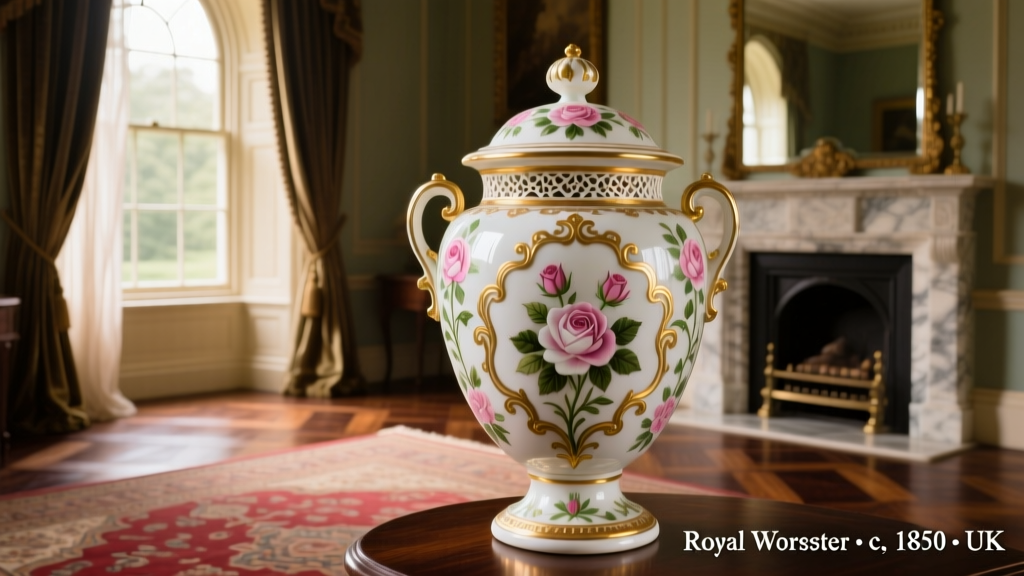
Royal Worcester Urn Cover: Pink, White & Polychrome Floral Enamel with Gilt — An 8-Inch Masterpiece of Victorian Ceramic Artistry

Sunbonnet Babies Sugar Creamer 'Sunday Fishing' — A Signed Royal Bayreuth Masterpiece from the Golden Age of German Porcelain

Candy Containers: The Vintage Dog Circus Hat Candy Tins of the 1930s–1950s
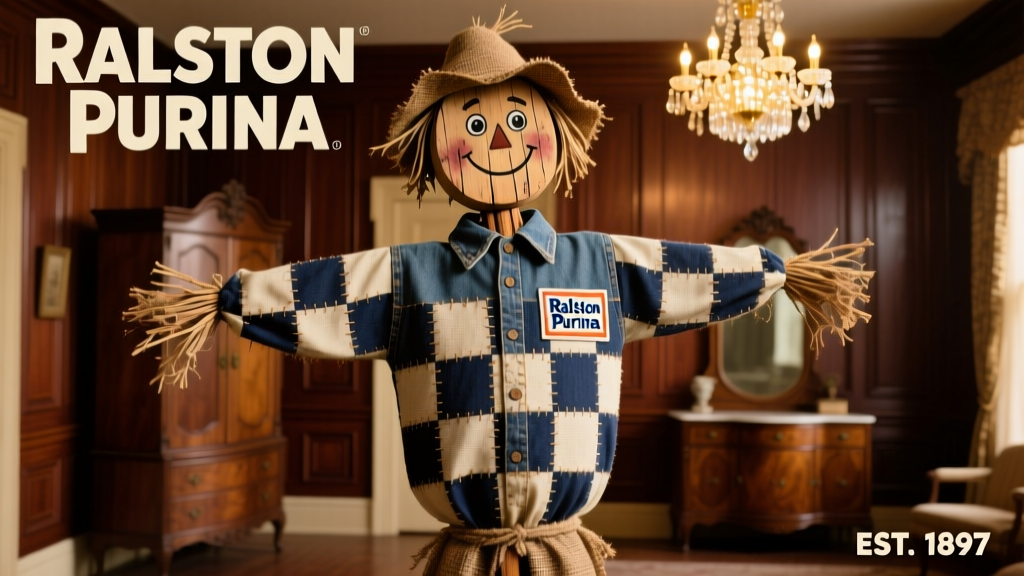
The 1965 Ralston Purina Doll Advertising Checkerboard Square Scarecrow: A 21-Inch Mid-Century Marketing Artifact
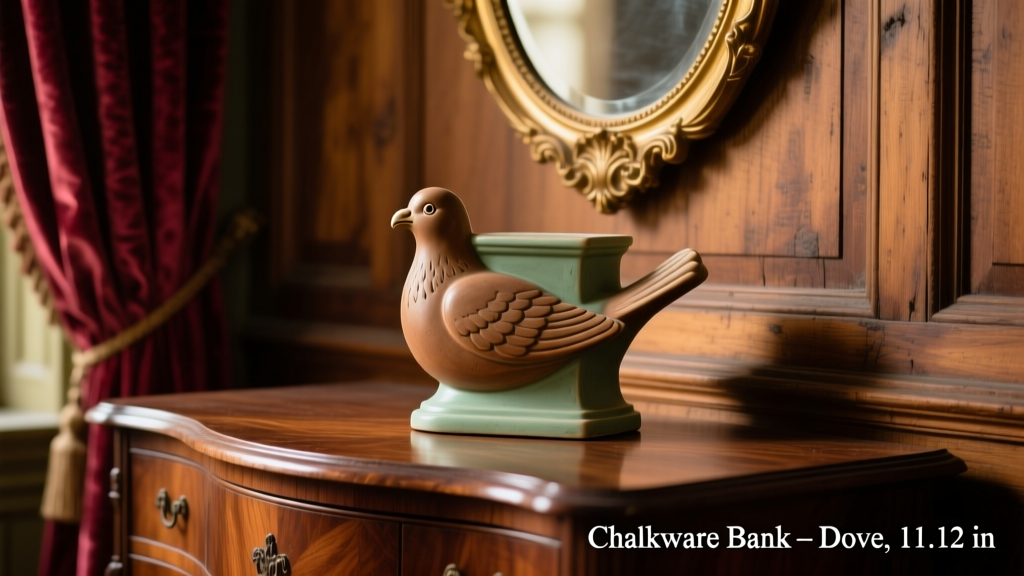
Chalkware Bank: Dove Brown & Green, 11½ Inches — Identification, Provenance, and Restoration Guidelines

Thermometer, Ex-Lax, Drugs & Prescriptions: Decoding the 39-Inch Antique Apothecary Wall Cabinet
McCoy Pot Hanging Leaves & Berries Turquoise (Model 19265, 5 × 5¾ Inches): Identification, Provenance, and Restoration Best Practices

The Armored Carousel Horse Jumper: A Technical and Historical Profile of C. W. Parker’s Rarest Mechanical Marvel