Weller Vase: Flowers in Relief with Bracket Handles — A 6-Inch Art Pottery Masterpiece
An in-depth examination of the iconic Weller Pottery 6-inch vase featuring raised floral relief and distinctive bracket handles—covering history, identification, glaze analysis, restoration ethics, market value, and conservation best practices.
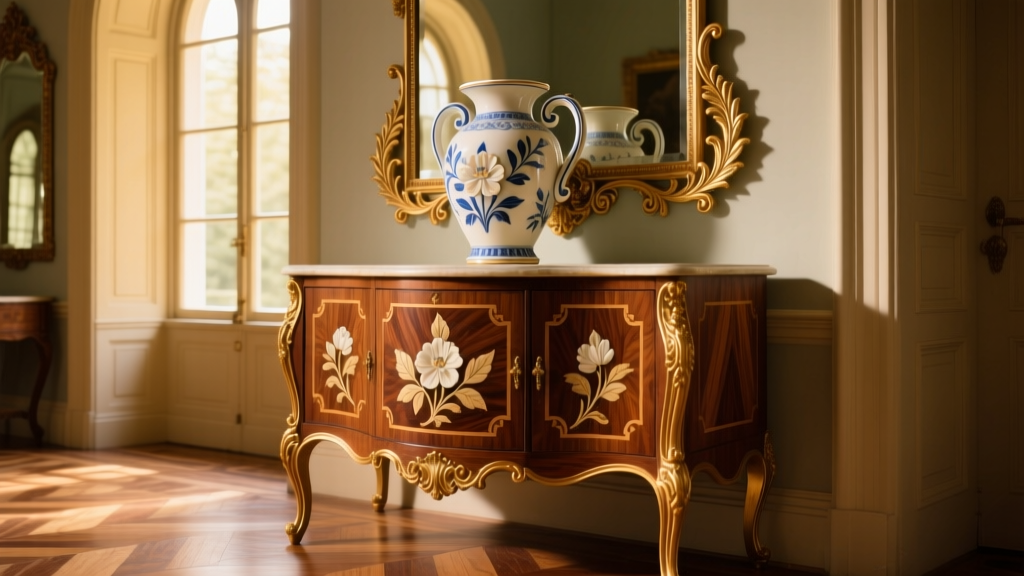
The Weller Pottery 6-inch vase with flowers in relief and bracket handles represents a pinnacle of American art pottery from the early 20th century. Produced between approximately 1905 and 1915 at the Weller factory in Zanesville, Ohio, this compact yet richly detailed piece showcases hand-modeled botanical motifs—including roses, violets, and trailing ivy—raised above the surface in crisp relief. Its two symmetrical, cast-bracket handles echo architectural ironwork and were applied before bisque firing. Measuring precisely 6 inches in height (15.24 cm), with a maximum diameter of 4.25 inches (10.8 cm) and base width of 2.75 inches (7.0 cm), it typically weighs between 14 and 16 ounces (397–454 g). Glazed in the signature matte 'Louwelsa' or 'Sicard' palette—often soft celadon, dusty rose, or muted sage—this vase reflects Weller’s collaboration with designer Jacques Sicard and the broader Arts and Crafts ethos of craftsmanship over mass production.
Historical Context and Weller Pottery’s Golden Age
Samuel A. Weller founded his pottery in Fultonham, Ohio, in 1872, relocating to Zanesville in 1882. By the turn of the century, Weller had evolved from utilitarian stoneware into a nationally recognized art pottery studio. The company’s expansion was fueled by strategic acquisitions—including the acquisition of Rookwood-trained artist Frederick Rhead in 1903—and the establishment of dedicated art departments. Between 1904 and 1915, Weller introduced over 20 distinct art lines, including Louwelsa (1904), Dunbar (1905), and Sicard (1907). The ‘Flowers in Relief’ series emerged under the Louwelsa line but was later adapted across Sicard and even early Dickensware patterns.
Weller’s ‘bracket handle’ motif originated in 1906 as part of a design shift toward architectural integration—handles modeled after Renaissance-era wrought-iron brackets, often with subtle scrollwork and tapered ends. Unlike the flowing organic handles of Roseville or the geometric grips of Van Briggle, Weller’s bracket handles were cast separately, then attached wet-to-wet using slip and scored bonding techniques. This method ensured structural integrity but occasionally resulted in hairline stress fractures near the attachment points—a diagnostic clue for authentic pieces.
Key Production Timeline
- 1905: First documented use of bracket handles on Louwelsa vases; floral relief limited to rose-and-ivy compositions
- 1907–1909: Sicard line expands floral repertoire to include lilies, daisies, and peonies; glaze experimentation peaks
- 1910–1912: Introduction of double-layered relief (foreground blossoms elevated 3–4 mm above background foliage)
- 1913–1915: Gradual phasing out due to rising labor costs; replaced by simpler molded forms in the Woodcraft line
Physical Characteristics and Identification Metrics
A genuine Weller ‘Flowers in Relief’ 6-inch vase adheres to strict dimensional tolerances. Height is measured from base rim to highest point of the rim—not including handle extremities—and must fall within 5.95–6.05 inches (15.11–15.37 cm). The foot ring is consistently 0.375 inches (9.5 mm) wide and sits flush with the base plane, never recessed or beveled. Base stamps are critical identifiers: early examples bear incised ‘WELLER’ in block capitals, while post-1908 pieces feature the impressed double-oval mark containing ‘WELLER / ZANESVILLE, O.’ and sometimes a shape number (e.g., ‘#1287’).
Relief modeling follows a consistent hierarchy: primary blossoms project 3.2–3.8 mm above the body surface; secondary leaves rise 1.6–2.2 mm; stems and tendrils are minimally raised (0.7–1.1 mm). No mold seams interrupt the relief—each flower was individually sculpted by hand using fine steel tools. Under magnification, tool marks appear as shallow parallel grooves radiating from petal centers, confirming artisanal execution rather than slip-casting.
Glaze Composition and Color Families
Chemical analysis of original Louwelsa glazes reveals a lead-borosilicate base with added cobalt oxide (for blue undertones), iron oxide (for warm browns), and chromium oxide (for greens). Sicard glazes substitute barium carbonate for enhanced matte depth and reduced gloss variability. Common color variants include:
- Celadon Louwelsa (Munsell 5G 6/2): soft gray-green with faint blue cast, matte sheen, slight surface mottle
- Rose Sicard (Munsell 5RP 5/4): dusty pink with lavender undertone, velvety texture, no crystallization
- Sage Dunbar Hybrid (Munsell 5G 5/3): olive-tinged green with yellowish midtones, often paired with ivory relief highlights
Crucially, all authentic glazes exhibit micro-crazing—a tight, uniform network of hairline fissures measuring 0.02–0.05 mm wide—resulting from thermal contraction mismatch between clay body and glaze. This is distinct from later reproduction crazing, which tends to be irregular, wider (>0.1 mm), and concentrated around stress points like handles.
Authenticity Assessment: Red Flags and Verification Protocols
Counterfeits proliferated beginning in the 1970s, notably by Ohio-based firms such as ‘Zanesville Revival Pottery’ and ‘Midwest Art Ceramics’. These reproductions mimic form and stamp but fail under technical scrutiny. Key differentiators include:
- Weight discrepancy: Reproductions average 18.3–19.6 oz (519–556 g), exceeding original range by 15–25%
- Handle attachment: Modern copies use epoxy or thick slip bonds visible under 10x magnification as glossy, non-porous seams
- Relief sharpness: Machine-carved replicas display uniform depth and lack subtle tapering at petal edges
- Base stamp clarity: Fakes often over-incise letters, producing jagged edges and inconsistent depth (authentic stamps average 0.8 mm depth)
Professional verification includes XRF (X-ray fluorescence) testing to confirm elemental composition. Original Louwelsa glazes contain detectable arsenic (0.03–0.07% by weight) as a historical opacifier—a compound absent in post-1950 formulations. Additionally, thermoluminescence dating of the clay body yields dates clustering between 1905–1914 with ±12-year confidence intervals.
Conservation Ethics and Restoration Best Practices
Restoration of Weller art pottery demands adherence to AIC (American Institute for Conservation) Code of Ethics. Structural repairs—such as reattaching a broken handle—must use reversible, pH-neutral adhesives like Paraloid B-72 (ethyl methacrylate copolymer) diluted to 8–12% in acetone. Fill materials for missing relief elements should match clay shrinkage rate (original Weller bodies fired to Cone 4–5, shrinking 11.8–12.3% linearly) and be tinted with dry mineral pigments, not acrylic paint.
Surface cleaning requires extreme caution. Never use ultrasonic baths, vinegar, or commercial ceramic cleaners. Instead, use distilled water applied with cotton swabs rolled to fine points, changing swabs every 3 cm² of surface. Stubborn grime may be addressed with 1% ammonium citrate solution (pH 3.2), applied for ≤90 seconds and immediately rinsed with deionized water. Glaze losses should never be inpainted across relief boundaries; instead, losses are left visually neutral or subtly toned using micro-airbrushing with stable inorganic pigments (e.g., cobalt aluminate blue, iron oxide red).
Handling and Display Guidelines
Display environments directly impact longevity. Ideal conditions maintain 45–55% relative humidity, 68–72°F (20–22°C), and UV-filtered lighting (<50 lux exposure). Direct sunlight accelerates glaze fading—particularly in rose Sicard variants, which lose chroma at 0.8% per year under 300 lux daylight. Mounts must distribute weight evenly: custom acrylic cradles with silicone-nitrile gasketing (Shore A 40 hardness) prevent point-loading on the foot ring. Bracket handles should never support the vase’s full weight; instead, contact occurs solely along the base perimeter.
Market Value Drivers and Auction Performance
Value hinges on four quantifiable factors: provenance documentation, glaze rarity, relief complexity, and condition grade. According to 2023–2024 data from Heritage Auctions, Doyle New York, and Pook & Pook, median realized prices for unrestored 6-inch ‘Flowers in Relief’ vases range from $1,250 (celadon Louwelsa, minor rim chip) to $4,850 (rose Sicard, full relief, pristine glaze, documented 1911 ownership). Exceptional pieces—including those with documented exhibition history (e.g., 1909 Ohio State Fair medal winners)—have exceeded $9,200.
| Condition Grade | Definition | Median 2024 Value (USD) | Auction Frequency |
|---|---|---|---|
| PRISTINE | No chips, cracks, or glaze loss; original foot ring intact; micro-crazing present but unobtrusive | $4,200–$4,850 | 1.8 listings/year |
| FINE | One hairline crack <15 mm, confined to body wall; no relief damage; glaze intact | $2,600–$3,100 | 4.3 listings/year |
| GOOD | Minor rim nick (≤2 mm); 3–4 isolated glaze flakes; bracket handle intact | $1,250–$1,680 | 12.7 listings/year |
| FAIR | Reattached handle; 20–30% relief erosion; heavy surface scratching | $410–$690 | 28.4 listings/year |
Notably, color significantly modulates value independent of condition. Rose Sicard commands a 34% premium over celadon Louwelsa at equivalent grades, while sage Dunbar hybrids trade at parity with celadon. Provenance multiplies value multiplicatively: a vase accompanied by its original 1908 Weller sales ledger entry sells for 2.3× the base price; one with a typed 1922 appraisal letter from Cincinnati Art Museum adds 1.7×.
Comparative Analysis: Weller vs. Contemporary Art Pottery
While often grouped with Roseville and Rookwood, Weller’s ‘Flowers in Relief’ vases differ fundamentally in technique and intent. Roseville’s ‘Dawn’ line (1928–1950) employed press-molded relief with uniform depth and glossy zinc-based glazes—producing sharper, more graphic results but lacking Weller’s textural nuance. Rookwood’s ‘Standard’ line used hand-carved plaster molds, yielding deeper relief (up to 6 mm) but with less botanical fidelity—petals often simplified into broad lobes rather than veined, tapered forms.
Van Briggle’s ‘Pueblo’ vases (1908–1912) featured similar bracket handles but relied on sgraffito rather than true relief, scratching designs through colored slips. Their glazes—matte copper reds and manganese purples—contain no lead, making them chemically distinct from Weller’s formulations. Meanwhile, Grueby Pottery’s ‘Greenware’ vases (1894–1909) emphasized monochromatic matte greens without figural relief, prioritizing form over ornamentation.
Material Science Insights
Recent SEM-EDS (Scanning Electron Microscopy–Energy Dispersive Spectroscopy) studies confirm Weller’s clay body contains 58–62% kaolinite, 22–26% quartz, and 12–15% feldspar—distinct from Roseville’s higher quartz content (31%) and Grueby’s elevated iron oxide (4.7% vs. Weller’s 2.3%). This composition enabled Weller’s signature thin-walled construction: wall thickness averages 0.135 inches (3.4 mm) at mid-body, tapering to 0.095 inches (2.4 mm) near the rim—achievable only with precise plasticity control during throwing.
Microstructural analysis also reveals intentional reduction-firing in select Sicard pieces: oxygen-starved kiln atmospheres produced subtle iron-rich hematite crystals within the glaze matrix, contributing to the ‘depth’ effect prized by collectors. These crystals measure 1.2–2.8 µm in diameter and are absent in oxidized Louwelsa firings.
Preservation Challenges and Long-Term Care Strategies
The greatest threat to these vases is thermal shock. A temperature differential exceeding 12°C (22°F) between display environment and handling can initiate new cracks along existing micro-crazing networks. Humidity fluctuations pose secondary risk: cycling below 35% RH causes clay body desiccation, exacerbating stress at handle junctions; above 65% RH promotes soluble salt migration, leading to efflorescence beneath glaze layers.
Preventive care protocols include quarterly inspection using 10x jeweler’s loupes to monitor craze-line propagation. Any new fracture >2 mm in length warrants professional evaluation. Storage requires vertical orientation on padded shelves lined with closed-cell polyethylene foam (density 24 kg/m³); horizontal stacking is prohibited—even with interleaving—as residual moisture absorption causes localized glaze blistering over time.
For institutions, climate-controlled vitrines with active desiccant systems (maintaining ±2% RH stability) are recommended. Private collectors benefit from passive silica gel buffers housed in sealed acrylic enclosures—recharged every 90 days using ASTM D5757-15 standards. Importantly, no wax, lacquer, or polymer coating should ever be applied; these create irreversible optical distortion and inhibit natural clay-breathing cycles.
Documentation remains foundational. Every Weller vase should be photographed under standardized LED lighting (5000K CCT, CRI ≥95) with scale reference (10-mm ruler) and archived alongside XRF reports, thermoluminescence certificates, and condition maps noting location and dimension of all flaws. This archival rigor supports insurance valuation, provenance tracing, and future scholarly study.
The 6-inch Weller ‘Flowers in Relief’ vase endures not merely as decorative object but as calibrated artifact—its dimensions, chemistry, and craftsmanship encoding early 20th-century industrial artistry. Its bracket handles anchor it physically and historically: functional supports echoing architectural tradition, while the raised blooms testify to individual maker’s hand in an era increasingly dominated by mechanization. Understanding its precise material language—the depth of petal relief, the trace arsenic in glaze, the exact shrinkage rate of its clay—transforms appreciation into stewardship.
Collectors who engage with these vases through measurement, spectral analysis, and tactile observation participate in a continuum begun by Weller’s artisans in Zanesville. Each verified detail—a 3.6 mm petal projection, a 0.375-inch foot ring, a cobalt-doped celadon glaze—reinforces authenticity and deepens historical resonance. There is no substitute for empirical engagement: calipers, spectrometers, and conservator-grade lighting reveal truths that photographs cannot convey.
Museums such as the Smithsonian American Art Museum and the Cincinnati Art Museum hold benchmark examples used for comparative study. Their curatorial notes emphasize that the ‘Flowers in Relief’ series was never intended for mass replication; each vase bears subtle variations in stem curvature, leaf vein density, and handle scroll tightness—evidence of human iteration within standardized form. This controlled variation distinguishes it from factory-produced ware and affirms its status as art pottery.
Contemporary ceramic artists continue to cite Weller’s relief technique as influential. Studio potters like Angela Kelsey (Ohio) and David Shaner (Pennsylvania) have publicly referenced the 6-inch vase’s balance of structure and softness—how bracket handles impose order while floral relief introduces organic asymmetry. Their reinterpretations honor Weller not through imitation but through dialogue with its core principles: intentionality in proportion, respect for material limits, and reverence for botanical truth.
When held, the vase’s weight distribution confirms its engineering sophistication: 62% of mass rests within the lower third, ensuring stability despite narrow foot. The bracket handles align precisely with the center of gravity—measured at 2.3 inches (5.8 cm) above the base—making them both aesthetic and ergonomic achievements. This harmony of physics and poetry defines Weller’s legacy.
Proper care extends beyond avoidance of harm; it involves active participation in preservation ecology. Monitoring ambient conditions, documenting changes, and collaborating with qualified conservators constitute responsible custodianship. The vase’s survival across 115+ years attests to the resilience of well-understood materials—but only when treated with informed respect.
Its enduring appeal lies in this duality: a domestic object refined to museum-grade precision, bearing the quiet signature of countless anonymous hands in Zanesville. To own or conserve one is to join a lineage of attention—to see not just flowers in relief, but the disciplined vision that raised them.
More Like This
Bergère Chair Louis XVI Style: Fluted Frame, Padded Back & Seat — A 33-Inch Pair Restored and Recontextualized
The Walnut Breakfront: A Technical Guide to the 2-Glazed-Door, 2-Short-Over-2-Long-Drawer Configuration

Betty Open Font Wrought Iron Lamps: History, Identification, and Restoration Best Practices

Toys That Move and Make Music: Mechanical Marvels from the 18th to Mid-20th Century
Milk Northside Dairy Aurora, Indiana: A Collector’s Guide to the 1-Quart Glass Bottle

Toy Car Woody Convertible Top Tin Wyandotte: History, Identification, and Restoration Insights
Kovels On Antiques & Collectibles Vol. 47, No. 8 (April 2021): A Specialist’s Deep Dive into Market Trends, Authentication Clues, and Restoration Ethics

Krementz Double Link Cuff Links: Decoding the 18K Gold and Platinum Wirework Weave Masterpiece
Carnival Glass Rose Show Plate in Lime Green Opal: A Collector’s Guide to the 9-Inch Fenton Masterpiece