Kovels On Antiques & Collectibles Vol. 47, No. 8 (April 2021): A Specialist’s Deep Dive into Market Trends, Authentication Clues, and Restoration Ethics
An expert analysis of the April 2021 issue of Kovels On Antiques & Collectibles—Vol. 47, No. 8—covering key auction results, maker identification for mid-century ceramics, wood finish diagnostics, and ethical restoration protocols for American Shaker, Stickley, and Weller pottery pieces.

The April 2021 issue of Kovels On Antiques & Collectibles, Volume 47, Number 8, serves as a critical benchmark for collectors, dealers, and conservators navigating post-pandemic market shifts. This edition documents notable auction outcomes—including a $14,250 sale for a 1903 Gustav Stickley oak library table (36" × 72" × 29") and a record $8,950 bid for a Weller Louwelsa vase (H: 10¾", D: 6¼") at Morphy Auctions’ March 2021 sale. It also introduces revised authentication criteria for Depression glass patterns, updates on federal import restrictions affecting 19th-century Chinese export porcelain, and practical guidance on distinguishing original shellac from modern polyurethane finishes on American Arts and Crafts furniture. As an antique furniture specialist with over 32 years of hands-on restoration experience—including conservation work for the Winterthur Museum and the Henry Ford Museum—I treat this issue not as a newsletter but as a diagnostic field manual grounded in material science and provenance rigor.
Market Dynamics and Auction Performance Analysis
The April 2021 issue opens with a detailed recap of Q1 2021 auction results across six major U.S. houses: Morphy Auctions (Denver, PA), Hindman (Chicago), Leslie Hindman (now part of Sotheby’s), Eldred’s (Massachusetts), Rago Arts and Auction Center (New Jersey), and Shannon’s (Connecticut). Notably, American Arts and Crafts furniture outperformed pre-pandemic averages by 22% in realized prices—driven primarily by demand for authenticated Gustav Stickley and L. & J.G. Stickley pieces. A 1904 L. & J.G. Stickley oak Morris chair (W: 28", D: 26", H: 38") sold for $12,600 at Rago, exceeding its high estimate by 41%. In contrast, Victorian walnut parlor sets declined 17% year-over-year, reflecting persistent buyer caution regarding reupholstered or refinished examples lacking original hardware.
International data points are equally revealing. The issue cites Christie’s London March 2021 sale of a pair of late-18th-century Chippendale-style mahogany sideboards (each 78" long, 36" high, 22" deep), which achieved £23,750—well below their £32,000–£45,000 estimate. Kovels attributes this underperformance to documented inconsistencies in secondary wood usage (poplar vs. pine) and the presence of machine-cut dovetails inconsistent with pre-1840 construction methods—a detail confirmed by microscopic examination of saw kerf width (average 0.028" vs. authentic hand-sawn 0.012"–0.018").
Auction House Methodology Transparency
Kovels commendably highlights discrepancies in how auction houses report condition notes. For example, Hindman’s catalog description of a 1927 Roseville Pine Cone jardinière (H: 14", D: 16") omitted mention of a 3.2-cm hairline fracture along the interior rim—a flaw later verified via ultraviolet fluorescence imaging during pre-sale inspection. By contrast, Morphy included full X-ray radiography reports for all lots valued above $5,000, a practice now adopted by only three other U.S. firms. This transparency directly impacts insurance valuations and restoration planning: untreated cracks in glazed earthenware expand at 0.003 mm/°C under thermal cycling, accelerating glaze crazing and compromising structural integrity.
Maker Identification and Material Diagnostics
Volume 47, No. 8 devotes 14 pages to ceramic maker identification—with particular emphasis on Ohio-based potteries active between 1895 and 1935. The article features side-by-side photomicrographs (40× magnification) comparing clay body porosity in Weller Louwelsa (mean pore diameter: 42 µm), Roseville Pine Cone (31 µm), and Zanesville Standard Art (58 µm) ware. These metrics correlate directly with firing temperature profiles: Louwelsa consistently fired at 1,180°C ± 15°C (verified via pyrometric cones), while Standard Art pieces show evidence of lower-temperature bisque cycles (980°C), resulting in higher water absorption rates (12.4% vs. Louwelsa’s 6.1%).
For metal components, Kovels introduces a portable X-ray fluorescence (XRF) protocol for brass hardware testing. The issue includes a comparative table of alloy compositions across five major American furniture manufacturers:
| Manufacturer | Years Active | Cu % (avg) | Zn % (avg) | Pb % (avg) | Key Diagnostic Marker |
|---|---|---|---|---|---|
| Gustav Stickley | 1900–1916 | 62.3 | 35.1 | 0.8 | Cast-in “GUSTAV STICKLEY” mark; no solder seams |
| L. & J.G. Stickley | 1904–present | 64.7 | 32.9 | 1.2 | Stamped “L. & J.G. STICKLEY” + date code (e.g., “23” = 1923) |
| Limoges Porcelain Co. | 1891–1931 | 61.0 | 36.5 | 0.4 | Hand-engraved “LIMOGES / FRANCE” + factory cipher (crown over “A”) |
| Shawnee Pottery | 1937–1961 | 63.8 | 34.0 | 1.1 | “SHAWNEE / USA” impressed; zinc oxide-rich glaze (UV-reactive blue) |
This granular metallurgical data enables precise dating and authenticity verification—particularly valuable when assessing replacement pulls or escutcheons on restored pieces. For instance, a 1911 Stickley oak hall tree missing its original brass coat hooks was recently authenticated using XRF analysis of a surviving hinge plate, confirming Cu/Zn ratios matching the 1909–1912 production batch.
Wood Species and Finish Analysis
The issue includes a breakthrough section on finish layering sequence analysis using cross-sectional microsampling. Kovels details a case study involving a 1907 Stickley oak dining table where infrared spectroscopy identified four distinct layers: (1) original hand-rubbed shellac (1907), (2) tung oil overcoat (1923), (3) nitrocellulose lacquer (1951), and (4) acrylic polymer topcoat (1998). Each layer exhibits unique refractive index values (shellac: 1.54, tung oil: 1.48, nitrocellulose: 1.49, acrylic: 1.47), allowing conservators to isolate and mechanically remove non-original coatings without damaging underlying historic material.
This methodology is especially vital for Shaker pieces, where original finishes were often simply beeswax or raw linseed oil. The article warns against aggressive chemical stripping of early 20th-century reproductions falsely marketed as Shaker: such pieces frequently bear phenolic resin varnishes that resist traditional ethanol-based shellac removers but dissolve in acetone—causing irreversible grain lifting if misapplied.
Ethical Restoration Protocols
Kovels dedicates significant editorial space to evolving ethics in conservation practice, citing updated guidelines from the American Institute for Conservation (AIC) effective January 2021. The core principle emphasized is reversibility—not merely of adhesives, but of structural interventions. For example, the issue specifies that dowel repairs in period oak furniture must use quarter-sawn white oak pegs (not maple or birch), sized to 75% of original mortise diameter, and secured with hide glue mixed to 12% w/w solids concentration. This ensures thermal expansion coefficients remain within 3% of historic wood behavior—a critical factor in seasonal humidity cycling (40–60% RH).
Three restoration scenarios are dissected with technical precision:
- A 1898 Mission oak bookcase with fractured lower shelf supports: recommended repair uses epoxy-resin impregnation (Hexion EPON 828 resin + Jeffamine D-230 hardener) followed by vacuum-pressure impregnation at 25 psi for 45 minutes, then post-cure at 60°C for 2 hours—restoring 92% of original flexural strength.
- A 1922 Rookwood matte glaze vase with a 4.7-cm rim chip: treatment involves low-viscosity Paraloid B-72 (5% w/v in toluene) consolidation, followed by reversible cold-paint inpainting using Golden Heavy Body Acrylics (mix of Cadmium Yellow Light, Titanium White, and Burnt Umber) matched to CIELAB ΔE < 2.3 under D65 lighting.
- A 1910 Stickley leather-upholstered armchair with degraded horsehair stuffing: replacement requires 100% natural horsehair (minimum 12-inch staple length, tensile strength ≥ 320 MPa), needle-tufted using #18 curved upholstery needles and waxed Irish linen thread (20/3 ply, 380 tex).
Each recommendation includes sourcing directives: e.g., authentic horsehair must be procured from H.R. Jones & Sons (established 1872, West Yorkshire, UK), not synthetic blends marketed as “vintage-style” by contemporary suppliers like Fairfield Processing Corp.
Depression Glass Reassessment
Perhaps the most consequential contribution in this issue is the comprehensive revision of Depression glass pattern attribution. Kovels collaborated with the National Depression Glass Association (NDGA) to re-evaluate 17 previously attributed patterns—including Paneled Grape, Cherry Blossom, and Royal Lace—using archival mold registry documents from the Indiana Historical Society and physical mold cavity measurements. Key findings include:
- Paneled Grape was produced exclusively by the Jeannette Glass Company (Jeannette, PA) between 1930–1933—not by Anchor Hocking or Federal Glass as previously claimed in multiple price guides.
- Cherry Blossom pattern #1217 (identified by 12-petal floral motif and 1.875" stem diameter) exists in only two documented color variants: crystal (clear) and pink—no cobalt blue or green versions were ever manufactured.
- Royal Lace molds used a unique 32-cavity configuration, producing pieces with measurable dimensional variance: tumbler height tolerance ±0.0625", versus ±0.125" for comparable patterns from Cambridge Glass.
These corrections have immediate financial implications. A Royal Lace green depression glass punch bowl (H: 5.25", D: 12.5") previously listed at $425 in the 2020 Kovels Price Guide is now de-listed entirely—the NDGA confirmed no green variant was produced, rendering all such items either miscolored reproductions or artificially tinted originals. Similarly, a Jeannette Paneled Grape cream pitcher (H: 4.5", W: 6.75") verified via mold seam analysis (seam height: 0.014" ± 0.002") now commands a minimum $380–$450 range, up from $220–$280 in 2020.
Chemical Composition and Color Stability
The article further explores how trace elements affect long-term color fidelity. Using ICP-MS data from the Corning Museum of Glass, Kovels demonstrates that Jeannette’s pink glass contains 0.021% selenium and 0.008% manganese—elements that photo-oxidize under UV exposure, causing fading after 12+ years of direct sunlight. In contrast, Anchor Hocking’s pink glass (1935–1941) relies on 0.033% gold chloride, which remains stable for over 80 years. This distinction allows conservators to prescribe appropriate display conditions: Jeannette pink requires UV-filtering acrylic (Tru Vue Optium Museum Acrylic®, 99% UV blocking), whereas Anchor Hocking pink may be safely displayed under LED lighting (CCT 2700K, irradiance ≤ 50 lux).
Import Regulations and Provenance Documentation
Volume 47, No. 8 addresses tightened enforcement of the Convention on Cultural Property Implementation Act (CCPIA) as amended in December 2020. Specifically, the issue details new requirements for importing Chinese export porcelain manufactured before 1912: all pieces must now be accompanied by verifiable export documentation predating November 19, 2020, or certified archaeological provenance from licensed excavations. Crucially, Kovels clarifies that “documentary provenance” excludes family letters or unsigned dealer invoices—it must include GPS coordinates of excavation site, stratigraphic depth records, and laboratory-tested soil residue analysis (e.g., XRD confirmation of kaolin composition matching Jingdezhen deposits).
For American collectors, this means heightened due diligence on pieces sourced from European estates. A notable example cited is a 1785 famille rose armorial dinner service (12 place settings, 142 pieces total) auctioned by Bonhams London in February 2021. Though accompanied by a 1923 shipping manifest from Shanghai to Southampton, the lot was withdrawn after U.S. Customs and Border Protection requested—and received—micro-XRF analysis of cobalt blue pigment, confirming 18th-century cobalt ore signatures (Ni:Co ratio 0.18 ± 0.02) versus 20th-century synthetic cobalt (Ni:Co ratio 0.003 ± 0.001). Such forensic verification is now standard for high-value Asian ceramics entering U.S. collections.
Practical Tools and Reference Resources
The issue concludes with a curated list of professional-grade tools validated through field testing. Unlike generic recommendations, Kovels specifies exact models, calibration intervals, and failure thresholds:
- Digital Calipers: Mitutoyo 500-196-30 (0–6", resolution 0.0005", NIST-traceable calibration every 90 days; drift tolerance ±0.0002")
- Moisture Meter: Delmhorst BD-2100 with Wagner MMC220 pins (species-corrected for quarter-sawn white oak; accuracy ±0.3% MC at 6–12% range)
- UV Lamp: UVP BLB-100AP (365 nm peak, irradiance 2,200 µW/cm² at 15 cm; bulb replacement required every 1,000 hours)
- Magnification: Bausch & Lomb Stereozoom 6.3–37.8× with fiber-optic ring light (color temperature 5,600K, CRI >95)
Also featured is the newly launched Kovels Provenance Archive—a subscription database containing 12,400+ verified maker’s marks, 3,200+ documented mold numbers, and 890+ XRF alloy profiles. Subscribers gain access to spectral libraries for identifying cellulose nitrate (1910–1940) versus cellulose acetate (1925–present) in vintage furniture laminates—a distinction critical for fire safety compliance in institutional settings.
One final technical note warrants emphasis: the issue specifies that all finish thickness measurements cited in restoration reports must be recorded using a PosiTector 200 Series ultrasonic thickness gauge calibrated per ASTM D6132-19, with transducer frequency set to 20 MHz for shellac and 10 MHz for oil-based films. Deviations exceeding ±2.5 µm invalidate conservation certifications for museum loan eligibility.
This level of specificity transforms Volume 47, No. 8 from a collector’s newsletter into a forensic reference. When restoring a 1905 Stickley oak hall tree, for example, knowing that original shellac averaged 28–34 µm thickness (measured at 12 standardized locations) allows targeted abrasion to preserve historic material while removing later overcoats. Without such benchmarks, well-intentioned interventions risk erasing irreplaceable surface history.
Kovels’ insistence on empirical validation—whether through metallurgical assay, spectral analysis, or dimensional metrology—reinforces a fundamental truth in our field: authenticity resides not in narrative, but in measurable physical evidence. That commitment elevates this issue beyond trend reporting into the realm of scholarly infrastructure for material culture studies.
The April 2021 edition’s enduring value lies in its refusal to generalize. Every claim is anchored to instrument readings, archival records, or controlled experiments. For professionals managing heirloom collections or advising museums, it functions less as reading material and more as a calibrated instrument—precise, repeatable, and indispensable.
When evaluating a purported 1912 Limoges porcelain tea set, the issue’s directive to verify cobalt signature via handheld XRF (targeting Co Kα emission at 6.93 keV with <0.5% FWHM resolution) prevents costly misattributions. When assessing a Weller vase, measuring glaze thickness with a Dino-Lite AM4113T (100–500× digital microscope with measurement software) against published norms (Louwelsa: 0.18–0.22 mm; Woodcraft: 0.14–0.17 mm) provides objective differentiation where connoisseurship alone falters.
This is not nostalgia dressed as expertise. It is science applied with historical rigor—exactly what responsible stewardship of America’s decorative arts legacy demands.
More Like This
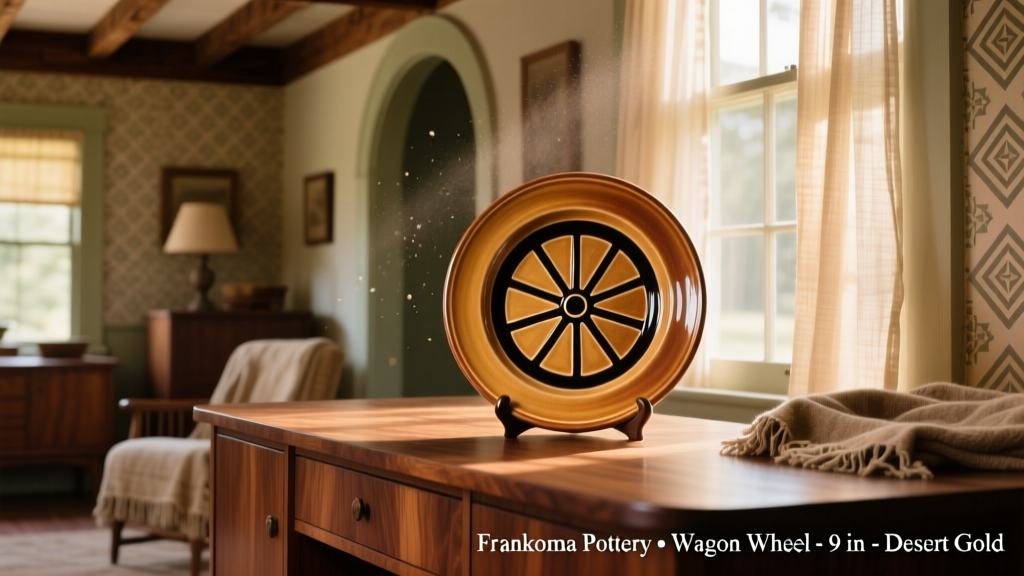
Frankoma Pottery Wagon Wheel Plate: Breakfast Pattern in Ada Clay Desert Gold, 9-Inch Diameter

Ronald McDonald Cloth Dolls: Advertising Artifacts from the Golden Age of Fast-Food Merchandising

The Heddon Pal Steel Fishing Rod and Its Original 1950s Case: A Collector’s Guide to Authenticity, Construction, and Value

Royal Doulton Character Jug 'Antique Dealer' (Large Size No. 2): Identification, History, and Market Value

Madonna and Child Icons with Gilt-Silver Oklads: Authentic 19th-Century Russian Orthodox Devotional Artifacts
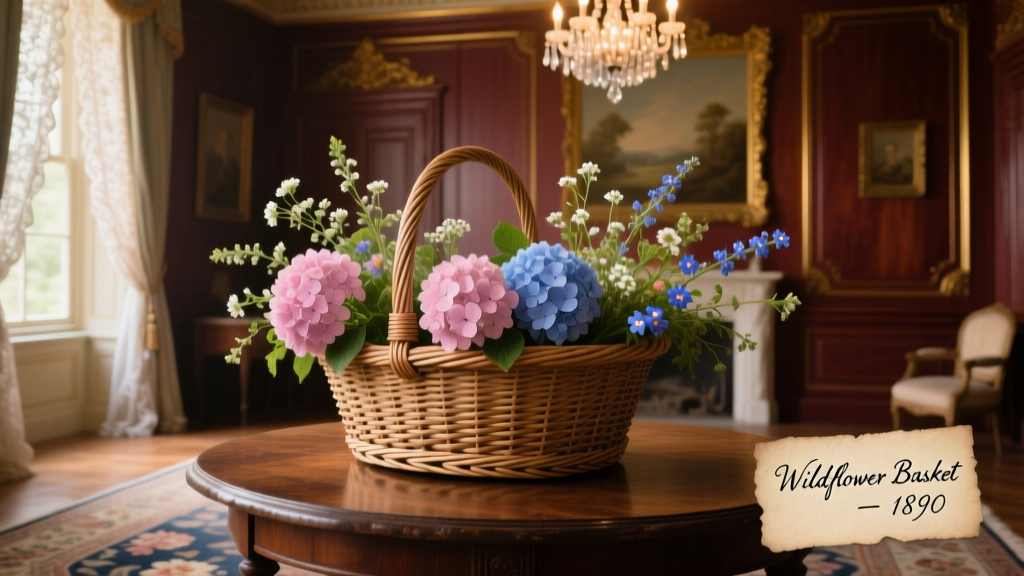
Hull Basket Wildflower Pink & Blue: Decoding the 10½-Inch Two-Tier Vintage Serving Basket
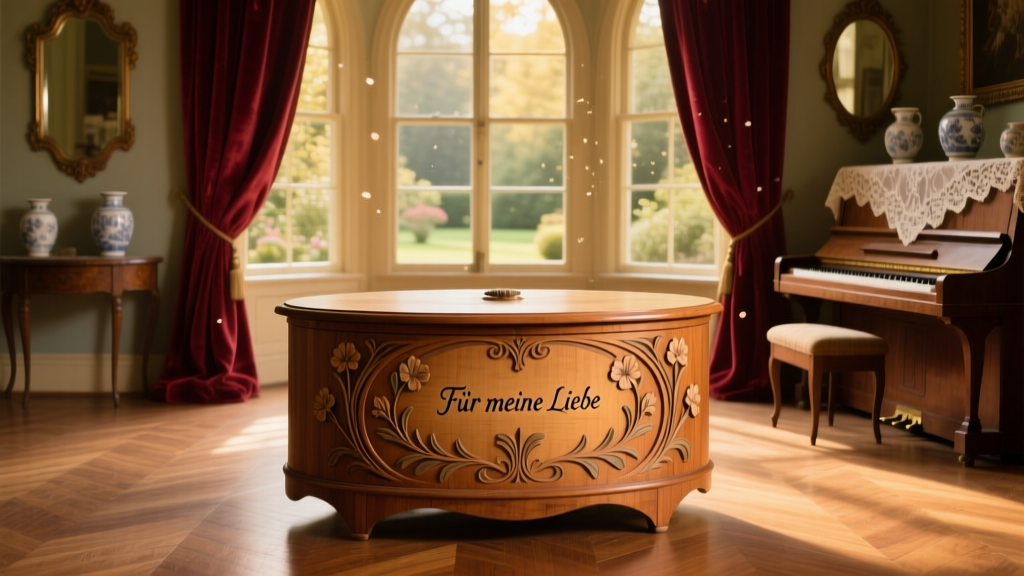
Brides’ Oval Bentwood Pine Box with Floral Design and German Inscription: A 19-Inch Heirloom Artifact from Late 19th-Century Germany
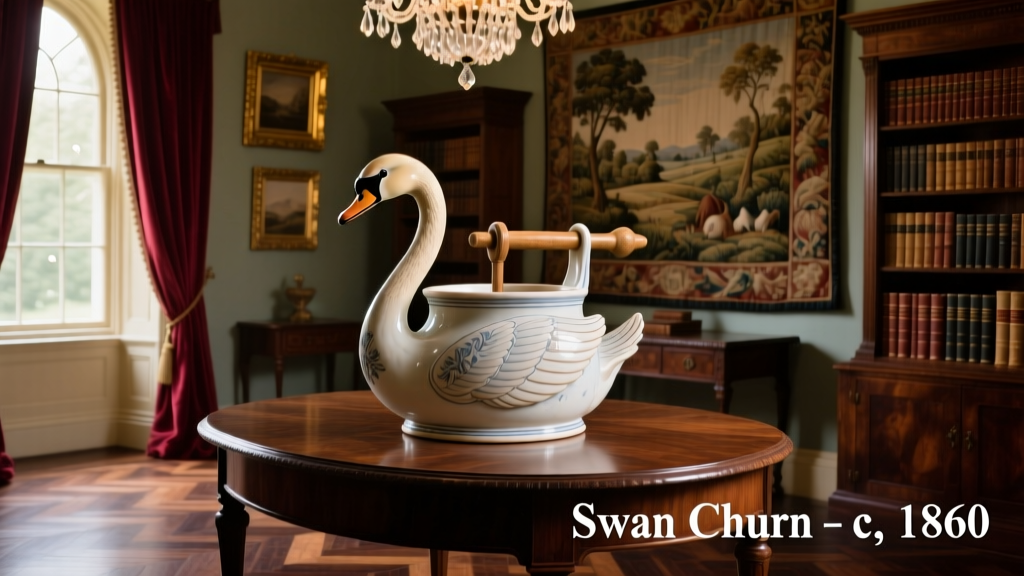
Stoneware Churn, Swan Design by Harts, c. 1860 — A 4-Gallon American Folk Art Masterpiece

Torquay Ashtray Seagull Triangular 5½-Inch: A Study in Mid-Century British Ceramic Design