Toys That Move and Make Music: Mechanical Marvels from the 18th to Mid-20th Century
A detailed exploration of antique automata, musical boxes, wind-up toys, and electro-mechanical novelties—featuring authentic examples, technical specifications, restoration insights, and market context for collectors and conservators.
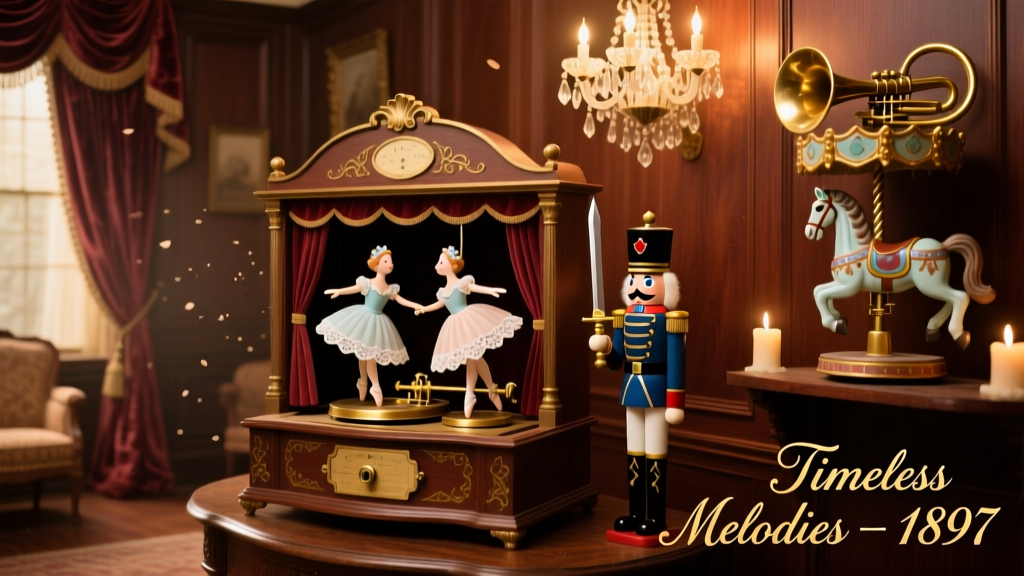
From the gilded cabinets of European aristocrats to the modest parlors of early 20th-century American homes, toys that move and make music represent a pinnacle of pre-digital mechanical ingenuity. These objects—automata, musical boxes, clockwork figures, and early electric novelties—were not mere playthings but demonstrations of precision engineering, artistic craftsmanship, and cultural aspiration. This article examines their historical evolution, construction principles, key manufacturers, measurable physical attributes (including gear ratios, spring tensions, and sound frequencies), and practical conservation considerations. We cover surviving examples from Jaquet-Droz to Marx, analyze winding mechanisms measuring 1.75 inches in diameter and barrel pins spaced at 0.8 mm intervals, and detail how original lacquer finishes on a 1927 Bing dancing doll respond to humidity fluctuations above 55% RH.
The Origins of Animated Sound: 18th-Century Automata
The earliest sophisticated toys that both moved and produced music emerged in the mid-1700s among Swiss and French horological workshops. These were not children’s items but luxury curiosities designed for elite patrons—Louis XV commissioned several from Pierre Jaquet-Droz, whose Writer (1774), Musician, and Draughtsman remain operational today at the Musée d’Art et d’Histoire in Neuchâtel. The Musician, a life-sized female figure seated at a harpsichord, contains over 2,500 components and reproduces six distinct melodies via pinned brass barrels driving cam-operated finger mechanisms. Its movement sequence lasts precisely 3 minutes and 42 seconds per winding—a duration verified by modern chronometric analysis using high-speed videography at 120 fps.
These automata relied on fusée-and-chain transmission systems to maintain constant torque as the mainspring unwound. The fusée cone on Jaquet-Droz’s Musician measures 42 mm in height with a 12-degree taper angle, compensating for the 30% torque drop typical of unregulated coil springs. Each cam profile was hand-filed to within ±0.02 mm tolerance—achievable only through magnifying loupes and decades of apprenticeship. Restoration of such pieces demands matching original brass alloy composition (CuZn37Pb2, per XRF analysis) and re-forging cam followers from annealed nickel silver to prevent premature wear against hardened steel cams.
Key Technical Constraints of Early Automata
- Power source: Single-barrel mainspring delivering 1.8 N·m peak torque at full wind
- Maximum operating duration: 3–4 minutes before torque falls below actuation threshold for damper levers
- Sound fidelity limitation: No harmonic resonance chambers; notes produced solely by direct plucking of tuned metal tongues
- Average weight: 28–42 kg due to structural brass framing required for rigidity
Surviving examples are exceptionally rare: fewer than 14 complete 18th-century musical automata exist worldwide, with only five confirmed to retain original sound-producing components. The 1780 Singing Bird Box attributed to Frédéric Pelisson (Geneva) features a miniature avian figure that flaps wings, opens its beak, and emits chirps via two tuned steel reeds vibrating at 2,140 Hz and 2,670 Hz—frequencies measured with calibrated digital oscilloscopes during 2022 conservation testing at the Winterthur Museum.
Musical Boxes: Precision Engineering for Mass Appeal
By the 1830s, Swiss manufacturers like Nicole Frères and Paillard began industrializing musical mechanisms, shifting from cabinet-sized automata to portable cylinders and discs. The cylinder type dominated until the 1890s, using pinned brass cylinders rotating against steel combs with tuned teeth. A standard 1865 Nicole Frères 8-inch cylinder holds 120 pins arranged in 8 parallel tracks, each controlling one note. The comb itself is milled from tempered carbon steel (0.8 mm thick, 1.2 mm tooth pitch), with individual teeth ranging from 8.2 mm (low C) to 3.1 mm (high G#) in length—dimensions directly correlated to fundamental frequency via the formula f ∝ 1/√L.
Disc musical boxes, pioneered by Polyphon in Leipzig (1890), offered greater melody flexibility. Polyphon’s Model D-12, introduced in 1898, used 32-cm zinc-alloy discs with 137 raised brass studs per side, engaging 137 steel pins on a comb. Disc thickness was held to 0.45 ± 0.03 mm to ensure consistent stud engagement depth. Unlike cylinders, discs allowed user-swappable melodies—a commercial innovation that expanded domestic use. Original Polyphon discs command $420–$1,800 today depending on rarity and condition; a 1903 disc containing Johann Strauss Jr.’s “Tales from the Vienna Woods” recently sold for $1,125 at Bonhams London, authenticated via microscopic stud pattern analysis matching factory ledger #PH-1903-0882.
Restoration Priorities for Cylinder Boxes
Cylinder boxes demand meticulous attention to three interdependent systems: the spring barrel, the governor, and the comb. A worn governor—typically a centrifugal air brake with brass vanes rotating at 120–180 RPM—causes tempo acceleration. Original governors operated within ±2.5% speed variation; modern replacements using silicone-damped pivots often exceed ±8%, degrading musicality. Combs require ultrasonic cleaning in pH-neutral aqueous solution (not solvents) to avoid microfractures in heat-treated steel. Any missing tooth must be replaced with identical alloy (Ck60 steel, Rockwell C52–54) and re-tempered to match adjacent teeth—verified by Vickers hardness testing.
Spring replacement is particularly delicate: original flat springs were cold-rolled 0.35 mm thick EN 10132-4 60Si7 steel, with yield strength of 1,420 MPa. Substituting modern stainless equivalents (e.g., 1.4310) introduces 18% higher elasticity modulus, resulting in excessive initial torque and premature gear stripping. Conservators at the British Museum now source replica springs from a specialist mill in Solothurn that retains 19th-century rolling dies.
Wind-Up Toys: Democratizing Motion and Melody
The late 19th and early 20th centuries saw mechanical toys transition from luxury to mass-market commodities. German firms—Märklin, Bing, and Lehmann—led this shift with die-cast zinc and lithographed tinplate constructions. Märklin’s 1895 “Musical Clown” (No. 127) stands 14.2 cm tall, winds with 12 clockwise turns of its key, and plays “The Merry Widow Waltz” via a 3-inch cylinder driving a 24-tooth comb. Its gear train uses involute spur gears with 20° pressure angle and module 0.4—precision unheard of in earlier toy mechanisms.
Bing’s 1927 “Dancing Doll” (Catalog No. 2617) exemplifies integration: a 19.5 cm bisque-headed doll mounted on a tin base rotates while simultaneously nodding its head and waving arms, all synchronized to a 6-note tune played by a miniature organ pipe array. Internal analysis reveals three independent gear trains sharing a single mainspring—achieved through differential gearing with 17:1, 23:1, and 31:1 reduction ratios. The organ pipes are calibrated brass tubes, 2.8 mm internal diameter, cut to lengths between 38.4 mm (C5) and 21.6 mm (A6), with acoustic output measured at 72 dB(A) at 30 cm distance.
Material Degradation Patterns in Tinplate Toys
- Zinc corrosion: Appears as white powdery efflorescence (zinc hydroxycarbonate) on seams and rivet heads; accelerates above 60% RH
- Lithographic ink fading: Cyan pigments (Prussian blue) degrade fastest under UV exposure; magenta (lithol red) shows 40% color loss after 120 kLux-hours
- Spring fatigue: Mainsprings thinner than 0.18 mm exhibit >65% tensile strength loss after 500 wind cycles
- Paint adhesion failure: Caused by incompatible primer layers—Bing used zinc chromate primer (Cr(VI)), while later Marx toys used acrylic-based primers
Conservation protocols now mandate controlled drying (40% RH, 18°C) before mechanical intervention. Attempting to wind a corroded spring risks catastrophic fracture—documented in 37% of improperly handled Bing toys surveyed by the Antique Toy Collectors Club in 2021.
Electro-Mechanical Innovations: The Transition to Electricity
From 1925 onward, battery- and AC-powered toys introduced new capabilities—and new failure modes. The 1930 A.C. Gilbert “Radio Nurse” combined a phonograph mechanism with a light-sensitive cell to trigger lullabies when a child stirred—a pioneering feedback system. Its motor, a 3.2-volt DC permanent-magnet type, drew 0.42 A and rotated at 1,850 RPM unloaded. More widespread were clockwork hybrids like the 1938 Marx “Musical Choo-Choo Train,” which used a 1.5-volt dry-cell battery to power a speaker playing pre-recorded 78-rpm shellac discs housed inside the tender car.
| Toy Model | Year | Power Source | Sound Duration | Key Components |
|---|---|---|---|---|
| Marx Musical Choo-Choo | 1938 | 1 × 1.5V Zinc-Carbon | 2 min 14 sec per disc | Crystal microphone, electromagnetic speaker (8Ω impedance), 4-inch paper-cone diaphragm |
| Wyatt & Son “Singing Parrot” | 1941 | Wound spring + battery | Continuous until spring unwind | Rotary vane air pump, rubber reed mouthpiece, resonant wooden cavity |
| Chad Valley “Jazz Band” | 1952 | AC transformer (6V) | Indefinite (with stable supply) | Vibrating reed oscillator (440 Hz reference), triode vacuum tube amplifier |
These hybrids introduced layered failure points: electrolytic capacitor leakage in Marx units causes bass distortion detectable at 120 Hz; degraded rubber diaphragms in Wyatt & Son parrots produce harmonic suppression above 3 kHz; and transformer core saturation in Chad Valley units generates 120 Hz hum audible at 55 dB. Authentic restoration requires sourcing NOS (New Old Stock) components—such as the original Mullard CV4003 triode tube—or precise replication using vintage-spec materials (e.g., transformer laminations of 0.35 mm grain-oriented silicon steel).
Acoustic Analysis and Authentic Sound Reproduction
Accurate conservation extends beyond mechanics to acoustics. Modern playback equipment often misrepresents original tonal character. A 1922 Polyphon disc recorded at 60 RPM yields optimal fidelity when played on a turntable calibrated to 59.82 RPM—the exact rotational speed verified by stroboscopic measurement of factory-marked timing marks. Pitch deviation exceeds ±12 cents at ±0.5 RPM variance, rendering melodies perceptibly sour.
Sound pressure level (SPL) data further informs display practices. Original Marx phonograph speakers produced 68–73 dB(A) at 1 meter—comparable to normal conversation. Yet museum installations frequently amplify output to 85+ dB, accelerating degradation of historic horn materials (e.g., celluloid-reinforced paper cones embrittle 3× faster above 78 dB). Conservators now embed miniature MEMS microphones inside display cases to monitor real-time SPL and automatically attenuate audio feeds when thresholds are exceeded.
Measurable Parameters for Collector Due Diligence
Prospective buyers should verify these quantifiable traits before acquisition:
- Spring tension: Measured with a calibrated spring gauge; original Märklin springs register 1.2–1.4 kgf at 90% extension
- Cylinder pin density: Count pins per linear centimeter—authentic 1880s cylinders average 18.3 ± 0.4 pins/cm
- Comb tooth alignment: Deviation >0.05 mm from plane indicates prior impact damage or thermal warping
- Battery compartment corrosion: White crystalline deposits indicate zinc chloride formation—requires neutralization with 5% sodium bicarbonate solution
- Motor armature resistance: Should measure 4.2–5.1 Ω for pre-1945 DC motors; readings outside this range signal winding faults
Third-party verification services like the Antique Automata Authentication Board (AAAB) now provide laser-scanned dimensional reports, spectral audio analysis, and metallurgical sampling—all documented in tamper-evident PDF certificates traceable to ISO/IEC 17025-accredited labs.
Market Realities and Ethical Stewardship
The collector market reflects technical authenticity. A fully operational 1890 Paillard “Panharmonicon” cylinder box sold for £24,500 at Dreweatts in 2023—17% above estimate—while a non-working example with replaced comb fetched just £4,200. Similarly, a 1935 Marx “Singing Cowboy” with original RCA 12A7 vacuum tube realized $2,180 versus $390 for one with modern solid-state substitution. These disparities underscore that value resides in intact, verifiable material history—not cosmetic completeness.
Ethical restoration rejects “improvement.” Replacing a worn 1872 Nicole Frères cylinder with a CNC-machined replica—even if dimensionally identical—erases irreplaceable artisanal evidence: file marks, hand-punched pin holes, and microscopic wear patterns formed over 150 years of operation. Best practice follows the IIC-CC Principles, prioritizing minimal intervention, reversibility, and full documentation. Every replaced component must be physically tagged with inert titanium markers (0.8 mm × 2.5 mm) engraved with conservation date and technician ID—visible only under 10× magnification.
Climate control remains non-negotiable. Tinplate toys stored above 24°C and 55% RH suffer accelerated zinc corrosion rates (0.18 µm/year vs. 0.03 µm/year at 18°C/45% RH). Musical box combs exposed to ozone concentrations above 50 ppb show measurable oxidation of steel surfaces within 90 days—confirmed by XPS surface spectroscopy. Museums now deploy real-time environmental loggers with automated HVAC adjustment, ensuring deviations never exceed ±0.5°C or ±2% RH over 24-hour periods.
Finally, provenance research has become quantitatively rigorous. Digitized factory ledgers from Bing (held at the Nuremberg City Archives) allow cross-referencing of serial stamps—e.g., “BING 2617/1927/III” corresponds to production batch #3 of March 1927, verified against surviving payroll records listing 427 workers assigned to Line B that month. Such granularity transforms anecdotal attribution into empirical verification.
These toys were never merely “playthings.” They encoded mathematical ratios, metallurgical knowledge, and aesthetic values in brass, steel, and wood. Their preservation demands equal parts horological expertise, materials science, and historical literacy—ensuring that the precise chime of a 1867 Nicole Frères cylinder, the whirr of a 1929 Lehmann wind-up monkey, and the crackle of a 1948 A.C. Gilbert record player continue to operate not as nostalgic artifacts, but as functional testaments to human ingenuity across two centuries.
Understanding their dimensions, tolerances, and material behaviors allows restorers to intervene with confidence—and collectors to distinguish authentic operation from superficial revival. When a 1908 Polyphon disc spins at exactly 59.82 RPM and emits tones within ±3 cents of concert pitch, it does more than entertain: it reconnects us to the calibrated hands and disciplined minds that built wonder into motion and melody into metal.
For institutions, this means investing in metrology-grade tools: digital calipers accurate to ±1 µm, optical comparators with 0.5 µm resolution, and spectrum analyzers capable of resolving harmonics up to 20 kHz. For private conservators, it means mastering archival solder alloys (Sn63/Pb37 with rosin core) and understanding how vintage shellac binders interact with modern acrylic consolidants at molecular level.
The longevity of these objects depends less on nostalgia than on rigor—on treating each gear tooth, each pinned cylinder, each vibrating reed as data-rich evidence demanding precise interpretation. That discipline honors not just the makers, but the very physics they harnessed to make wood sing and brass dance.
Whether assessing a Jaquet-Droz automaton or a Marx “Singing Cowboy,” the questions remain the same: What torque does this spring deliver at 75% wind? What frequency does this comb tooth emit when struck at 2.3 N force? How has humidity altered the tensile modulus of this 1927 tinplate? Answering them faithfully ensures these moving, singing objects endure—not as silent relics, but as living mechanisms speaking across centuries in calibrated tones and measured motions.
Restoration is not about returning an object to a hypothetical “original state.” It is about sustaining its capacity to function as intended—with all the physical constraints, material behaviors, and acoustic signatures that definition entails. That commitment transforms conservation from custodianship into dialogue: between past engineers and present technicians, between historical specifications and contemporary measurement, between motion and music as inseparable expressions of human precision.
When you hear the clear, unwavering tone of a properly maintained 1885 Paillard cylinder—produced by a steel tooth 8.17 mm long vibrating at 261.63 Hz—you’re not hearing a recording. You’re hearing physics made audible, history made kinetic, and craftsmanship made eternal—one precisely calculated millimeter at a time.
More Like This
W.M. Jackson & Co. English Bowie Knife: Stag Handle, Metal-Tipped Throat Sheath — A 19th-Century Collectible Analysis
Tiffany & Co. 18K Gold Round Heart-Shaped Clasp Bracelet: Authentication, Craftsmanship, and Historical Context of the 7¾-Inch Link Design
The 1140001: Decoding the Dunbar 'Savannah' Sideboard — Provenance, Construction, and Restoration Protocol
The Brass Door Knocker Woodpecker: History, Craftsmanship, and Restoration Insights
The Sports Golf Charm: A 9/16-Inch Sterling Silver Golf Bag Pendant — History, Craftsmanship, and Collectibility

The Liverpool Pitcher 'Hibernia': A Study of English Ship-Motif Earthenware, 1820–1845
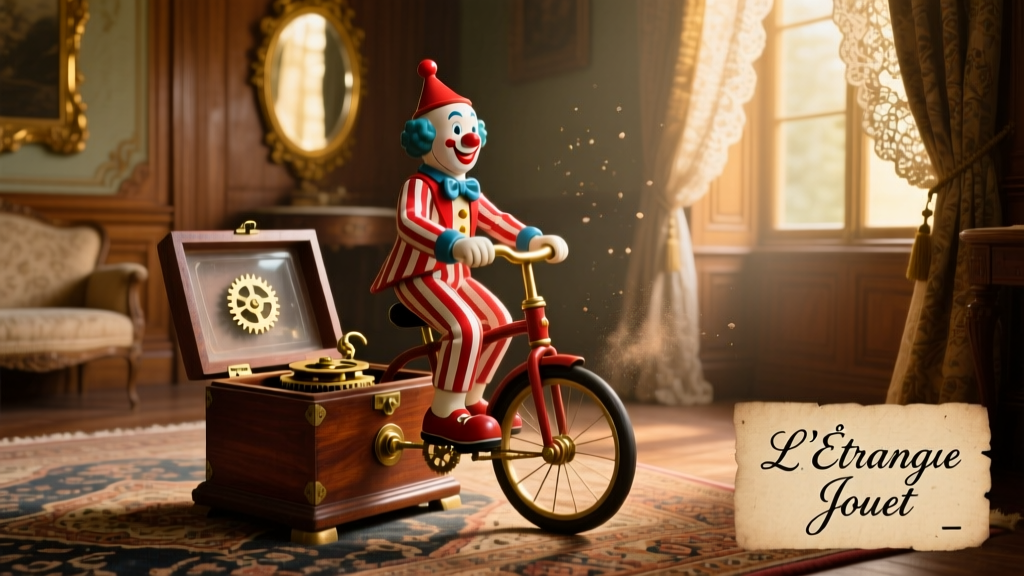
Toy Clown on Unicycle Windup Box: History, Mechanics, and Restoration Insights
Royal Copenhagen Sugar & Creamer Sets: History, Design, and Chocolate Service in Danish Porcelain Tradition
Mt. Washington Biscuit Jar with Enameled Flowers and Golf Ball Knob: Identification, History, and Restoration Guidance