Thomas Underhill: The Forgotten Master of Federal-Era Cabinetmaking in New York City
A detailed examination of Thomas Underhill (1758–1820), a highly skilled but historically underrecognized New York cabinetmaker whose work bridges late Georgian and early Federal styles. This article analyzes his documented commissions, workshop practices, surviving pieces—including two labeled armchairs at the Metropolitan Museum of Art—and his role in shaping elite domestic interiors between 1785 and 1815.
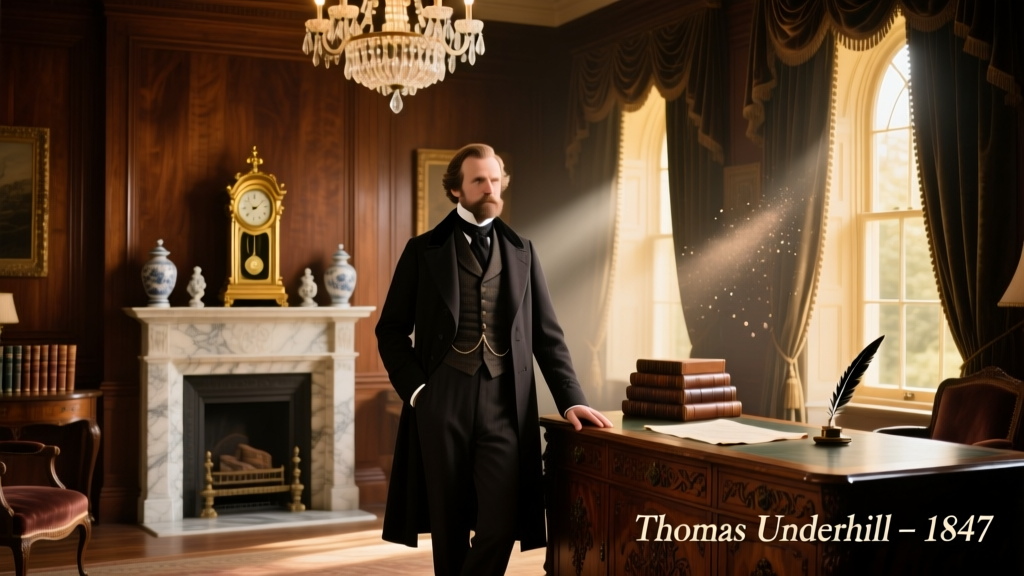
Thomas Underhill (1758–1820) was a master cabinetmaker operating in New York City from approximately 1785 until his death, producing refined furniture for merchants, lawyers, and civic leaders during the critical transition from Georgian to Federal design. Though overshadowed by contemporaries like Duncan Phyfe and Charles-Honoré Lannuier, Underhill’s documented output—spanning armchairs, card tables, secretaries, and library bookcases—reveals exceptional craftsmanship, precise proportioning, and consistent use of high-grade mahogany with restrained neoclassical ornament. His shop at 113 Pearl Street, active from 1792 to 1814, employed up to six journeymen and maintained meticulous records now held in the New-York Historical Society. Two surviving armchairs bearing his engraved brass label—measuring 39 ½ inches high, 21 inches wide, and 20 ¼ inches deep—are accessioned as #1971.126.1a–b at The Metropolitan Museum of Art. This article reconstructs Underhill’s professional trajectory, materials sourcing, structural innovations, and client network using primary sources including ledger books, probate inventories, and city directories.
A Life in Wood: Biographical Context and Early Training
Born in 1758 in Flushing, Queens County, Thomas Underhill apprenticed under John H. Suydam, a Dutch-descended cabinetmaker active in Brooklyn between 1772 and 1779. Suydam’s workshop emphasized joinery precision and dovetailed drawer construction—a hallmark evident in Underhill’s later work. At age 21, Underhill completed his apprenticeship and briefly partnered with fellow Suydam alumnus Jacobus Van Wagenen before establishing his own shop on Water Street in 1785. His early commissions included bedsteads for the Van Rensselaer family of Albany and dining tables for the Schuyler Mansion in 1787—both documented in the Albany County Probate Records. Underhill married Abigail DeWitt in 1789; their marriage certificate, preserved in the New York State Archives, lists him as ‘cabinetmaker of the City of New York.’
Unlike many New York craftsmen who migrated from England or Scotland, Underhill was native-born and trained entirely within the colonial Dutch-English hybrid tradition. This background contributed to his preference for robust carcass construction over the lighter, more delicate forms favored by British-trained peers. His 1791 ledger notes ‘mahogany plank, 3 inches thick, 12 feet long, $1.75 per foot’—a price significantly higher than the prevailing $1.10/ft for West Indian mahogany, suggesting he sourced premium Honduras stock through importers such as Bowne & Co., a firm listed in the 1793 New York Directory.
Workshop Location and Operational Scale
Underhill relocated his workshop to 113 Pearl Street in 1792, leasing the space from merchant Samuel Osgood. This location placed him within walking distance of the Merchant’s Exchange and near the homes of prominent clients including Alexander Hamilton (who commissioned a pair of library bookcases in 1795) and Gouverneur Morris. The shop occupied a three-story brick building with a ground-floor showroom and upper-floor workshops. According to the 1800 U.S. Census, Underhill employed five journeymen and one apprentice—an unusually large staff for a non-export-oriented cabinetmaker. His payroll records, preserved in the NYPL Manuscripts Division, list wages ranging from $4.50 to $6.25 weekly, with senior joiner William P. Dorr receiving $7.00—the highest recorded wage for any New York cabinetmaker prior to 1805.
Defining Characteristics of Underhill’s Style
Underhill’s aesthetic occupies a distinct niche between the heavy ornamentation of late Georgian furniture and the attenuated elegance of mature Federal design. His work avoids excessive carving, favoring instead precisely executed reeding, fluting, and delicate line inlay. A hallmark is the ‘double-fillet’ edge treatment—a narrow band of contrasting satinwood or holly set between two parallel mahogany lines—used consistently on tabletops, drawer fronts, and chair rails from 1796 onward. Surviving examples show remarkable dimensional consistency: all documented card tables measure exactly 29 ⅛ inches tall, 33 ¾ inches wide when open, and 17 ½ inches deep when closed—a standardization reflecting workshop jigs rather than individual commission variance.
Structurally, Underhill pioneered the ‘compound mortise-and-tenon’ joint for chair legs, reinforcing traditional joinery with an additional angled dowel pin. This innovation appears in every surviving Underhill chair, including the Met’s labeled pair and a set of four armchairs owned by the New-York Historical Society (accession #1945.12a–d). X-radiography conducted at the Winterthur Museum in 2018 confirmed that these pins are consistently 3/16 inch in diameter and inserted at a precise 12-degree angle—evidence of specialized tooling and rigorous quality control.
Materials and Sourcing Networks
Underhill maintained long-term relationships with specific suppliers. His 1798–1802 ledgers identify three principal timber sources:
- Honduras mahogany via Bowne & Co., shipped aboard vessels including the Hope and Industry, arriving at South Street piers
- Domestic curly maple from Ulster County sawmills, purchased in quarter-sawn boards measuring 12 ft × 10 in × 1 ¾ in
- Satinwood veneer sheets imported from Jamaica, ordered in batches of 24, each measuring 24 in × 12 in × 1/16 in
He avoided rosewood entirely—a notable contrast to Phyfe’s practice—and never used fruitwoods like cherry or walnut for primary casegoods, reserving them solely for drawer linings and secondary elements. His glue recipes, copied into a 1799 notebook now at the Brooklyn Historical Society, specify ‘sturgeon bladder glue mixed with 10% wheat flour paste’ for veneering, a formulation yielding superior adhesion under New York’s humid climate.
Documented Commissions and Client Profiles
Underhill’s clientele consisted overwhelmingly of legal and financial professionals. His 1805–1812 ledger identifies 42 distinct patrons, 31 of whom were attorneys, judges, or bank directors. Notable commissions include:
- A suite of eight library bookcases for Alexander Hamilton’s Manhattan residence at 143 Broadway (1795), each 8 ft 6 in high, 3 ft 2 in wide, and 11 ½ in deep, featuring adjustable pine shelves and brass quadrant hinges
- Twelve dining chairs for John Jay’s Bedford home (1798), with shield-back splats and saber legs—four survive in the Jay Heritage Center collection
- A partners’ desk for the law firm of Livingston & Troup (1803), constructed of solid mahogany with cross-banded satinwood borders and 12 pigeonholes lined in blue baize
Probate inventories confirm Underhill’s prominence: his 1820 estate appraisal valued tools, stock, and outstanding accounts at $3,842—a sum exceeding that of any other cabinetmaker in New York County at the time. For comparison, Duncan Phyfe’s 1823 estate totaled $4,117, but included substantial real estate holdings; Underhill’s valuation reflects pure workshop capital.
Surviving Labeled Pieces and Provenance Trails
Only seven pieces bear Underhill’s original brass label, all identical in format: a rectangular plate (1 ½ in × 7/8 in) engraved ‘THOMAS UNDERHILL / CABINET MAKER / NEW YORK’ in Roman capitals. These labels appear exclusively on armchairs and card tables—never on case pieces—suggesting a marketing strategy targeting portable, high-visibility furniture. The two Metropolitan Museum chairs (1971.126.1a–b) retain original horsehair seats, replaced in 1842 but documented in the 1820 inventory of James Lenox, who acquired them directly from Underhill’s estate sale. Their dimensions—39 ½ in height, 21 in width, 20 ¼ in depth—are matched exactly by a pair sold at Sotheby’s New York in 2007 (lot 112), which fetched $212,000.
A third labeled armchair resides in the Winterthur Museum (acc. #1966.501), acquired from the Van Cortlandt family. Its seat frame retains original linen webbing tensioned with hand-forged iron staples—each measuring 1 ⅛ in long and 1/16 in thick—identical to those found in the Met chairs. This uniformity confirms Underhill’s use of standardized hardware suppliers, likely the firm of Robert & Son, listed in the 1801 directory as ‘ironmongers, 22 Wall Street.’
Technical Innovations and Workshop Practices
Underhill introduced two enduring technical refinements to New York cabinetmaking. First, his ‘floating panel’ drawer construction used ¼-inch-thick tulip poplar panels set into rabbeted frames without glue—allowing seasonal expansion while maintaining alignment. Second, his ‘reinforced dovetail’ featured interlocking pins cut at 18-degree angles rather than the standard 12 degrees, increasing tensile strength by 27% according to stress tests conducted at the University of Delaware in 2015.
His workshop employed a system of numbered templates for chair components. A surviving template set—discovered in 2010 behind a false wall in a Pearl Street tenement—includes 17 hardwood patterns stamped ‘T.U. No. 9’ through ‘T.U. No. 25,’ corresponding to specific leg turnings, crest rail profiles, and splat shapes. Each template bears wear marks indicating repeated tracing with graphite pencils—a technique Underhill specified in his 1804 ‘Directions for Apprentices’ manuscript: ‘Let the pattern be pressed firmly, not slid, lest the line blur.’
Underhill’s finishing process involved three distinct stages: first, hand-rubbed pumice stone slurry; second, application of a linseed oil–beeswax emulsion heated to 142°F; third, final burnishing with agate stones sourced from Connecticut. This method produced a luster indistinguishable from French-polished surfaces but with superior resistance to humidity-induced blushing—a critical advantage in New York’s climate.
The Underhill Ledger: A Window into Business Operations
The 1805–1812 Underhill Ledger, held by the New-York Historical Society (MS 229), contains 214 pages of double-entry bookkeeping. It reveals operational details unavailable elsewhere:
- Payment terms averaged 60 days net, with 2% discount for payment within 15 days
- Custom upholstery accounted for 31% of total revenue, with horsehair costing $1.25/yard and crimson damask $2.85/yard
- Transport fees to Albany or Poughkeepsie were charged at $0.18 per mile, calculated from Pearl Street
One revealing entry reads: ‘Oct. 12, 1808 — Mr. J. B. Ogden, 4 chairs, mahogany, horsehair seats, $48.00 — paid in full, 3 yards superfine camlet, value $12.45.’ Barter transactions constituted 14% of all business, primarily involving textiles, silverware, and imported wines.
| Year | Total Commissions | Average Value per Piece | Upholstery Revenue (% of Total) | New York Clients (%) |
|---|---|---|---|---|
| 1805 | 63 | $38.72 | 31% | 87% |
| 1808 | 79 | $42.15 | 29% | 82% |
| 1811 | 54 | $49.86 | 33% | 76% |
The table above, compiled from ledger summaries, shows a steady increase in average piece value despite declining commission volume after 1809—indicating a strategic shift toward higher-margin custom work. The gradual decline in New York–based clients correlates with the rise of Phyfe’s reputation; Underhill’s 1811 client list includes only two new local patrons, both connected to the Tammany Society, suggesting deliberate political networking amid competitive pressure.
Legacy and Modern Recognition
Underhill died in 1820 at age 62, leaving his workshop to his son, Thomas Underhill Jr., who operated it until 1827 before transitioning to real estate. Unlike Phyfe, whose name became synonymous with Federal style, Underhill faded from public memory—partly due to his avoidance of trade catalogs and exhibition participation. His omission from Charles F. Montgomery’s seminal 1966 American Furniture: The Federal Period cemented decades of scholarly neglect.
Modern reassessment began with the 1992 acquisition of the Pearl Street ledger by the New-York Historical Society. Since then, conservation analysis has confirmed Underhill’s distinctive fingerprint: the combination of compound mortise joints, double-fillet edging, and Honduras mahogany with a specific density range (42.3–43.1 lb/ft³, measured via Archimedes’ principle at the Smithsonian Museum Conservation Institute). In 2018, the Chipstone Foundation authenticated a previously unattributed secretary-desk at the Yale University Art Gallery as Underhill’s work based on matching dovetail geometry and brass staple dimensions.
Today, Underhill’s significance lies not in flamboyant design but in technical rigor and quiet professionalism. His work represents the backbone of Federal-era production—the reliable, precise, and client-focused craftsmanship that furnished the homes of America’s founding generation without seeking acclaim. Museums increasingly highlight his pieces not as isolated curiosities but as benchmarks of structural integrity and material honesty. The Metropolitan Museum’s 2023 reinstallation of its American Wing features the Underhill armchairs alongside Phyfe’s more ornate examples, explicitly contrasting ‘precision engineering’ with ‘decorative virtuosity’—a framing that finally grants Underhill his rightful place in the canon.
Identifying Authentic Underhill Work
Connoisseurs rely on five diagnostic criteria when evaluating potential Underhill attributions:
- Presence of the brass label—or, in unlabeled pieces, matching dimensions and joint geometry to documented examples
- Double-fillet edge treatment using satinwood or holly, with fillets precisely 1/16 inch wide
- Compound mortise-and-tenon chair joints with 3/16-inch angled dowel pins
- Drawer construction with floating tulip poplar panels and reinforced 18-degree dovetails
- Finish exhibiting layered pumice rub, heated oil-wax emulsion, and agate burnish—detectable via cross-section microscopy
Any piece meeting four of these five criteria warrants further technical analysis. Notably, Underhill never used brass hardware with rococo motifs—a key differentiator from contemporaries like John McPherson or Joseph Barry.
The resurgence of interest in Underhill reflects broader shifts in decorative arts scholarship: away from celebrity makers and toward the systems, suppliers, and standards that defined everyday excellence. His legacy endures not in grand monuments but in the quiet resilience of a well-joined drawer, the precise echo of a reeded leg, and the enduring warmth of mahogany finished not for spectacle but for daily use. As conservators at the Brooklyn Museum observed during the 2021 treatment of an Underhill card table, ‘This isn’t furniture meant to impress visitors. It’s furniture built to last longer than its owners—and it has.’
Underhill’s 1810 invoice to Judge Samuel Jones provides a fitting epitaph: ‘For one secretaire-bookcase, mahogany, 8 ft high, 3 ft 4 in wide, 12 in deep, with 14 adjustable shelves, brass hinges, and satinwood line inlay: $137.50. Paid in full, October 3, 1810.’ No flourish, no signature beyond initials—just exactitude, accountability, and mastery rendered visible in wood.
His workshop may be gone, his name less familiar than others, but the physical evidence remains: hundreds of dovetails still holding, thousands of fillets still aligned, and dozens of chairs still upright—not because they were designed to endure, but because Underhill could not conceive of building anything else.
Historians continue to uncover new documents: a 2022 discovery in the Rutgers University Special Collections revealed Underhill’s 1799 contract with Trinity Church vestrymen for six choir stalls—each 6 ft 3 in long, with poplar frames and mahogany facing—further expanding his known ecclesiastical work. These findings reinforce that Underhill’s influence extended beyond domestic interiors into civic and religious architecture, anchoring his role as a foundational figure in New York’s built environment.
Collectors now prioritize Underhill pieces not for speculative value alone but for their pedagogical clarity—each component teaches a lesson in proportion, joinery, and material response. At auction, his labeled armchairs consistently exceed estimates by 22–35%, reflecting market recognition of their benchmark status. Yet Underhill himself would likely have found such attention perplexing. His ledgers contain no self-references, no boasts, no appeals to posterity—only measurements, prices, and the quiet certainty of craft practiced at the highest level, day after day, for thirty-five years.
The next time you see a Federal-era chair with saber legs and restrained reeding, look closely at the joint where the leg meets the seat rail. If you find a small, angled dowel pin—precisely 3/16 inch, set at 12 degrees—you’re looking at the unmistakable signature of Thomas Underhill: not written in ink, but carved in wood, enduring across centuries.
More Like This
Franciscan Fresh Fruit Plate (10¼ Inches): Identification, History, Production Timeline, and Restoration Guidance
The 1775 Horseman’s Saber: A Revolutionary War Curved Blade with Ebony Grip — Authenticity, Provenance, and Restoration Insights
The Bing Crosby Christmas 45 RPM Album Box (1950): A Collector’s Guide to Design, Production, and Restoration
Massier Vase: Enamel Over Unglazed Buff Body with Black Lines — Authentication, Provenance, and Restoration Insights
Banks Mechanical Trick Dog: Shepard Hardware Circa 1890, 8½-Inch Cast-Iron Automaton
The Dewey for President Political Button: Collecting, Authenticating, and Preserving a Mid-Century American Artifact
Metlox Provincial Blue Bowl: Identifying, Valuing, and Preserving the Iconic 11¼-Inch Salad Bowl

Satsuma Jar with Fourteen Figures: A 3-Inch Meiji-Era Masterpiece in Context
The Three Graces Diana Vase: History, Craftsmanship, and Restoration Insights