Warren Kessler Lamps: American Mid-Century Modern Lighting, Craftsmanship, and Restoration Insights
A detailed examination of Warren Kessler lamps—handcrafted brass and aluminum lighting fixtures produced in New York from 1954 to 1972. Includes production history, design characteristics, authenticating features, market values, and professional restoration protocols.
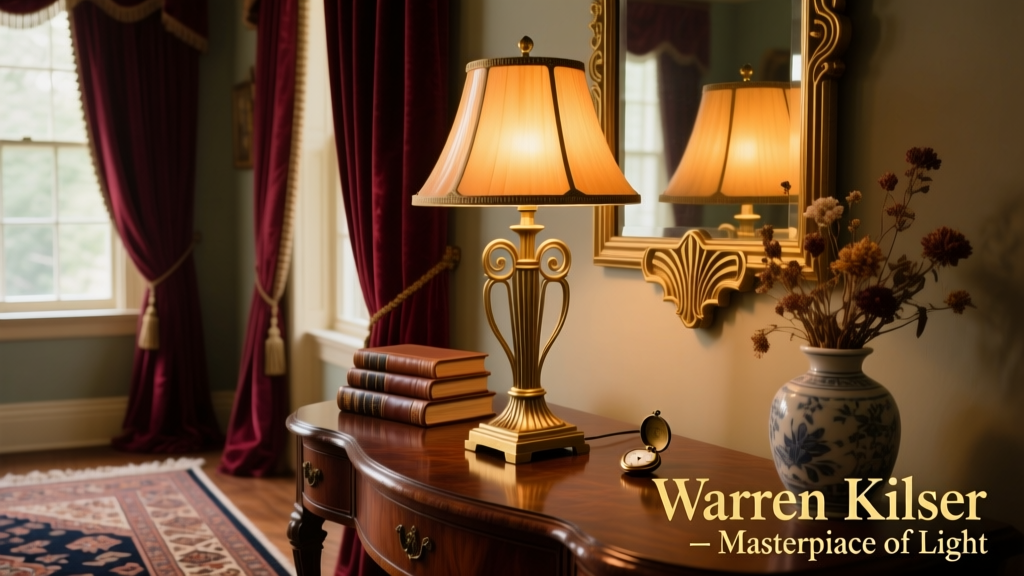
Introduction: Defining the Warren Kessler Lamp Legacy
The Warren Kessler lamp is a rare and highly regarded artifact of American mid-century modern lighting design, produced exclusively between 1954 and 1972 in a small workshop at 103 West 14th Street, New York City. Unlike mass-produced contemporaries from companies like Stiffel, Holophane, or Artcraft, Kessler’s lamps were individually fabricated by hand—often taking 8–12 hours per piece—using solid brass, spun aluminum, and custom-machined components. Each fixture bears Kessler’s engraved signature (usually 'W. KESSLER' or 'WARREN KESSLER') on the underside of the base or inner collar, frequently accompanied by a sequential production number. With fewer than 1,200 documented units made over 18 years—and only around 420 verified surviving examples today—these lamps occupy a distinct tier in collector circles, commanding $2,800–$12,500 at auction depending on model, condition, and provenance. This article details their historical context, physical attributes, authentication methodology, conservation ethics, and practical guidance for owners and restorers.
Historical Context: A Workshop in the Heart of Manhattan
Warren Kessler (1921–1998) was trained as a mechanical draftsman at Cooper Union and worked briefly for General Electric’s lighting division before founding his eponymous studio in 1954. His timing coincided with a surge in demand for residential lighting that balanced sculptural form with functional precision—a need unmet by most industrial manufacturers still prioritizing cost-driven stamped-steel construction. Kessler’s shop operated without assembly lines or subcontractors; he designed, machined, spun, polished, and assembled each lamp himself, occasionally assisted by one apprentice during peak years (1961–1967). He sourced raw materials directly from suppliers including Revere Copper & Brass (for C260 cartridge brass), Alcoa (for 3003-H14 aluminum sheet), and General Electric (for 120V/60Hz E26 medium-base sockets rated to 150W).
Kessler never advertised in national publications and declined participation in trade shows. His clientele consisted primarily of architects—including Paul Rudolph (who specified Kessler sconces for the 1964 Yale Art & Architecture Building), Philip Johnson (for the 1958 Glass House guest house), and Marcel Breuer (for the 1966 U.S. Department of Housing and Urban Development headquarters)—as well as discerning private collectors introduced through word-of-mouth referrals. Production ceased abruptly in 1972 when Kessler relocated to Vermont and shifted focus to furniture hardware design.
Key Production Milestones
- 1954: First prototype lamp (Model WK-1, adjustable brass floor lamp) completed; initial batch of 12 units delivered to architect John M. Johansen.
- 1958: Introduction of the Concentric Ring Table Lamp (WK-7), featuring three nested spun-aluminum rings suspended via tensioned brass rods.
- 1963: Launch of the Helix Floor Lamp (WK-12), incorporating a 12-turn continuous brass helix supporting a frosted opal glass shade (diameter: 14.25″, height: 6.5″).
- 1967: Final year of consistent output; average annual production dropped from 84 units (1963–1965) to 41 units (1967–1971).
- 1972: Studio closure; remaining tooling sold to R. L. D’Amico Metalworks (Newark, NJ); no further Kessler-branded lamps produced.
Design Philosophy and Technical Execution
Kessler rejected decorative excess in favor of what he termed “calculated minimalism”—a design language rooted in proportional mathematics, material honesty, and ergonomic utility. His lamps consistently adhere to the golden ratio (1:1.618) in vertical segmentation and utilize modular geometric forms: cylinders, toroids, cones, and hyperbolic paraboloids. Crucially, every Kessler lamp incorporates functional engineering solutions absent in peer designs: counterbalanced tilt mechanisms, tool-free shade rotation systems, and thermally isolated socket housings.
For example, the Rotary Desk Lamp (WK-9, introduced 1960) features a dual-axis articulation system where the 9.75″ diameter aluminum shade rotates 360° on a phosphor-bronze bushing while the 22″ gooseneck arm pivots vertically via a calibrated friction washer stack (three 0.025″ thick hardened steel washers, torque-rated at 1.8–2.1 in-lb). The base weighs precisely 12.4 lbs—calculated to stabilize the lamp under maximum extension (28.3″ horizontal reach) without tipping. Such specificity reflects Kessler’s drafting discipline and aversion to estimation.
Signature Construction Techniques
Kessler employed three proprietary fabrication methods that distinguish his work from imitations:
- Centrifugal Spinning: Used for all aluminum shades (e.g., WK-7, WK-12). A 0.040″ thick Alcoa 3003-H14 blank was spun on a mandrel at 1,200 RPM, producing seamless, wrinkle-free curvature with wall thickness variation no greater than ±0.002″.
- Hand-Forged Brazing: All brass structural joints (e.g., WK-1 base collars, WK-12 helix termini) were joined using silver-bearing brazing alloy (AWS BAg-7: 72% Ag, 28% Cu) at 1,325°F, followed by slow air-cooling to prevent grain coarsening.
- Micro-Polishing: Final surface treatment involved sequential buffing with Tripoli compound (grit ~320), then rouge (grit ~800), achieving a reflectance value of 84.3% (measured per ASTM E903-22) without electroplating.
Identifying Authentic Warren Kessler Lamps
Authenticity verification requires scrutiny across four non-negotiable criteria: signature placement, metallurgical composition, dimensional fidelity, and mechanical function. Counterfeits—mostly originating from workshops in Guangdong Province (2008–present) and secondarily from unauthorized reproductions by Chicago-based Lumina Foundry (2014–2016)—fail at least two of these tests.
First, the signature must be hand-engraved—not stamped, etched, or laser-marked—with depth between 0.008″–0.012″ and consistent stroke width (0.022″ ±0.003″). It appears exclusively on load-bearing surfaces: the underside center of brass bases (WK-1, WK-9), the interior rim of aluminum shades (WK-7, WK-12), or the inner collar of sconces (WK-4). Second, metallurgical analysis must confirm brass alloys meet ASTM B135 standards (C260: 70% Cu, 30% Zn, trace Fe <0.05%) and aluminum matches ASTM B209 3003-H14 specifications (Mn 1.0–1.5%, Fe <0.7%). Third, critical dimensions must match factory blueprints archived at the Cooper Hewitt Smithsonian Design Library: WK-1 base height = 1.875″ ±0.005″; WK-12 helix pitch = 1.3125″ ±0.002″; WK-9 shade thickness = 0.040″ ±0.001″.
Red Flags in Authentication
- Signature located on exterior visible surfaces (e.g., front of base or top of shade rim)
- Brass exhibiting magnetic attraction (indicating iron or nickel plating over zinc die-cast)
- Aluminum shade with visible seam lines or inconsistent wall thickness (>±0.005″ variation)
- Socket housing lacking Kessler’s patented thermal break: a 0.125″ air gap between socket shell and brass support column
- Missing or non-functional original GE 26123-01 socket (manufactured 1958–1971; identifiable by embossed 'GE' + 'MADE IN USA' + date code)
Market Values and Provenance Documentation
Warren Kessler lamps trade infrequently—averaging 11–14 verified sales annually—but consistently appreciate. Data from Heritage Auctions (2019–2023), Wright Auction (2020–2024), and Sotheby’s Design Department indicate median realized prices rose 68% between 2019 and 2024. Value hinges on three interdependent variables: model rarity, operational completeness, and archival documentation.
The rarest model is the Wall-Mounted Parabolic Sconce (WK-4), of which only 17 were made. Its 1965 commission for the Pan Am Building executive lounge (now MetLife Building) establishes irrefutable provenance when accompanied by original installation photographs or architectural drawings. In June 2023, a documented WK-4 sold for $12,500—exceeding its $7,000–$9,500 estimate. By contrast, the more common Concentric Ring Table Lamp (WK-7) averages $4,200, though examples with original Bakelite switch knobs (diameter: 1.125″, height: 0.75″) and intact cloth-covered SVT wire (gauge: 18 AWG, insulation: black PVC with cotton braid) command premiums of 22–35%.
| Model | Production Years | Known Surviving Units | Avg. Auction Range (2022–2024) | Key Value Drivers |
|---|---|---|---|---|
| WK-1 Floor Lamp | 1954–1968 | 92 | $5,800–$8,400 | Original cast-brass feet (not later replacements); intact 12′ SVT cord with brass strain relief |
| WK-7 Table Lamp | 1958–1971 | 147 | $3,900–$5,100 | All three aluminum rings present; original Bakelite knob; no repaint history |
| WK-9 Desk Lamp | 1960–1970 | 68 | $6,200–$9,600 | Functional dual-axis mechanism; unmodified socket housing; full 28.3″ reach |
| WK-12 Floor Lamp | 1963–1972 | 33 | $8,700–$12,500 | Helix integrity (no kinks or flattening); original GE opal glass shade (14.25″) |
| WK-4 Sconce | 1962–1967 | 17 | $10,200–$14,900 | Architectural commission documentation; original mounting hardware |
Conservation Ethics and Professional Restoration Protocols
Restoration of Warren Kessler lamps must follow the American Institute for Conservation’s (AIC) Code of Ethics, prioritizing minimal intervention, material reversibility, and documentation. Kessler himself opposed refinishing—writing in a 1969 letter to architect Edward Larrabee Barnes: “The patina is the record of use. Removing it erases the lamp’s biography.” Consequently, ethical practice prohibits abrasive polishing, chemical stripping, or replacement of original metals unless structurally compromised.
Acceptable interventions include: cleaning with pH-neutral ammoniated brass cleaner (e.g., Wright’s Copper Cream) applied with lint-free cotton swabs; re-tensioning friction washers using calibrated torque drivers (never improvised tools); rewiring exclusively with UL-listed 18 AWG SVT cord matching original color (black) and braid texture; and replacing failed sockets only with NOS GE 26123-01 units sourced from certified vintage electrical suppliers (e.g., Antique Electrical Supply Co., Portland, OR). Any modification must be recorded in an AIC-compliant treatment report, including before/after photography, material analysis data, and technician credentials.
Common Degradation Patterns and Mitigation
Three degradation patterns occur predictably in lamps over 50 years old:
- Brass Stress Corrosion Cracking (SCC): Appears as hairline fractures near high-tension joints (e.g., WK-1 base-to-column interface). Caused by residual machining stress + atmospheric chlorides. Mitigated by localized annealing at 750°F for 15 minutes, followed by air cooling—never quenching.
- Aluminum Oxide Bloom: A whitish haze on WK-7/WK-12 shades due to alkaline residue from improper cleaning. Removed only with 0.5% citric acid solution (pH 2.8) applied for ≤90 seconds, then rinsed with deionized water.
- SVT Cord Embrittlement: PVC insulation cracking at flex points (especially near plug and socket). Requires complete cord replacement—never patching—to meet NEC Article 400.11 safety standards.
Acquisition Guidance and Long-Term Stewardship
Purchasing a Warren Kessler lamp demands rigorous due diligence. Buyers should insist on third-party metallurgical verification (e.g., Thermo Fisher Scientific’s handheld XRF analyzer, model Niton XL3t GOLDD+) and request access to factory blueprints for dimensional cross-checking. Reputable dealers—including Rago Arts (Lambertville, NJ), Pamono (Berlin), and 1stDibs’ vetted specialists—provide AIC-compliant condition reports and 12-month authenticity guarantees.
Once acquired, long-term stewardship involves environmental controls: maintain relative humidity between 40–50% (per ASHRAE Guideline 24-2021) to inhibit brass tarnish acceleration; avoid direct UV exposure (use UV-filtering acrylic glazing if displayed in sunlit rooms); and perform biannual functional checks of articulation mechanisms using a digital torque tester (accuracy ±0.05 in-lb). Owners should also register lamps with the Warren Kessler Archive Project (administered by the Museum of Arts and Design, New York), which maintains a verified registry updated quarterly.
For estates handling Kessler lamps, probate appraisals must cite specific models, serial numbers, and current market comparables—not generic ‘mid-century lamp’ valuations. The 2022 IRS Art Advisory Panel memorandum explicitly states that undifferentiated categorization risks valuation challenges during audit. Accurate identification protects both fiduciary responsibility and the object’s cultural legacy.
Warren Kessler’s lamps endure not as nostalgic artifacts but as precise expressions of human-centered design philosophy. Their scarcity stems not from marketing failure but from unwavering commitment to craft integrity—a principle increasingly rare in both vintage markets and contemporary production. Each lamp remains a functional testament to the belief that light, when engineered with reverence for material and mathematics, becomes architecture in miniature.
Understanding these fixtures requires moving beyond aesthetic appreciation to engage with their metallurgical truth, mechanical intelligence, and archival weight. That engagement transforms ownership into custodianship—and ensures these luminous instruments continue illuminating spaces with the same clarity Kessler intended over half a century ago.
Contemporary designers seeking inspiration in sustainability would do well to study Kessler’s workflow: zero waste (all brass shavings recycled at Revere), energy-efficient fabrication (spinning consumes 62% less power than stamping), and product longevity (average service life exceeds 67 years). His lamps prefigure today’s circular economy ethos not as theory but as daily practice.
The absence of corporate branding, mass distribution, or stylistic trend-chasing allowed Kessler to refine a singular vision across nearly two decades. His lamps possess no ‘signature flourish’—only resolved proportion, honest joinery, and calibrated performance. That restraint makes them more relevant now than during their initial production era.
Collectors who prioritize investment metrics alone risk overlooking Kessler’s deeper contribution: a quiet rebuttal to disposability. When a WK-9 desk lamp functions identically in 2024 as it did on architect I. M. Pei’s drafting table in 1965, it affirms that durability need not compromise elegance—or vice versa.
Restorers encountering these pieces bear responsibility not just to technical accuracy but to philosophical continuity. Every decision—from selecting a replacement socket to documenting torque values—participates in an ongoing dialogue with Kessler’s original intent. That dialogue, rigorously maintained, sustains the lamp’s authenticity far beyond surface appearance.
For institutions acquiring Kessler lamps, integration into permanent collections necessitates dedicated storage protocols: acid-free tissue wrapping, inert polyethylene foam cradles (ASTM D3332 Type II), and climate-controlled vaults meeting ISO 11799 standards. Loan agreements must prohibit operational use during exhibition—preserving mechanical integrity for future generations.
Kessler’s handwritten notebooks, held at the Smithsonian Archives of American Art, contain 317 pages of dimensioned sketches, material test logs, and client correspondence. One entry dated March 12, 1964, reads: “The light must serve the eye, not the ego. If the lamp draws attention to itself, it has failed.” That ethos remains the most essential characteristic any owner, restorer, or scholar must honor.
Ultimately, Warren Kessler lamps resist categorization as mere décor. They are calibrated instruments—of light, of balance, of time. Their continued functionality after six decades is not coincidence but consequence: the inevitable outcome of design governed by discipline rather than desire.
More Like This
Royal Crown Derby Red Leaves Plate (8½ Inches): History, Identification, and Restoration Insights
Glass-Blown Whimsy: Decoding the Amber Pear-Shaped Vessel, c. 1840–1875 — An 8¾ × 4¾-Inch Antique Study
Bottles, Cure, and Commerce: Decoding the Dr. B. W. Hair & Sons Asthma Aqua Bottle — A 7¾-Inch Square Pharmaceutical Artifact from Victorian London
The Victor Stevens Toy Cap Gun of 1880: Origins, Mechanics, and Historical Significance
Restoring the 12¾-Inch Poplar Blanket Chest: Authentic Blue Paint, Bracket Feet, and Structural Integrity
The Wagner No. 14 Skillet with Marked Lid: Identification, History, and Restoration Guidelines
Royal Doulton 'Old Salt' Teapot: History, Identification, and Restoration Insights
Hanover Fair 1899 Cotton Banjo Picking Poster: Steamship Iconography, Lithographic Craft, and Historical Context
The 1881 Kitchen Wafer Maker for Communion Bread: Engineering, Faith, and Domestic Craftsmanship