Want To Be A Trillionaire? Why Antique Furniture Restoration Is the Unseen Billion-Dollar Asset Class
A rigorous analysis of how strategic acquisition, conservation-grade restoration, and provenance-driven positioning of antique furniture—particularly 18th-century English and French pieces—can generate multi-generational wealth, with documented ROI exceeding 22% CAGR for select lots at Sotheby’s and Christie’s between 2005–2023.

Trillion-dollar wealth isn’t built solely in tech IPOs or sovereign funds—it’s quietly accumulating in climate-controlled vaults, private viewings rooms, and conservation studios housing 250-year-old walnut veneer, hand-cut marquetry, and gilded bronze mounts. Between 2005 and 2023, the top 1.2% of auctioned English Chippendale furniture appreciated at a compound annual growth rate (CAGR) of 22.4%, outperforming the S&P 500’s 9.7% over the same period. This article dissects how disciplined antique furniture restoration—grounded in archival research, material science, and ethical stewardship—functions as a high-conviction, low-correlation asset class. We detail real-world valuations, restoration cost benchmarks, tax-advantaged holding structures, and why a 1762 Thomas Chippendale commode recently sold for £3.82 million at Christie’s London—not because it was ‘old,’ but because every element met ISO 11799:2015 archival standards and retained 94.7% original surface integrity.
The Arithmetic of Rarity: Why Pre-1780 Furniture Beats Crypto on Long-Term Volatility
Unlike speculative digital assets, pre-Industrial Revolution furniture trades on scarcity anchored in immutable physical constraints: fewer than 1,200 documented George II walnut breakfront cabinets survive globally, per the Victoria & Albert Museum’s 2022 Conservation Register. Of those, only 217 possess full provenance chains verified through estate inventories, customs manifests, and dendrochronological dating. That scarcity drives valuation mechanics distinct from equities. A 1748 William Kent carved walnut armchair—measuring 42 inches high × 24 inches wide × 26 inches deep—sold for $1.42 million at Sotheby’s New York in June 2022. Its price wasn’t set by quarterly earnings but by three verifiable factors: (1) uninterrupted ownership by the same aristocratic family since 1751; (2) preservation of original gesso, water-gilt finish, and horsehair upholstery; and (3) absence of any post-1850 restoration interventions. The buyer paid a 37% premium over comparable lots lacking that triad.
This isn’t nostalgia—it’s quantifiable risk mitigation. While the MSCI World Index exhibited 18.3% annualized volatility from 2010–2023, the Knight Frank Luxury Investment Index tracked antique furniture at just 5.9%. That stability stems from supply inelasticity: no new Chippendale chairs will ever be made. Every surviving piece is irreplaceable inventory. As global ultra-high-net-worth individuals (UHNWIs) diversify beyond traditional assets—73% now allocate ≥12% of portfolios to tangible heritage assets (UBS Global Family Office Report, 2023)—demand intensifies for pieces meeting strict conservation thresholds.
Provenance Thresholds That Move Markets
Auction houses now require documented provenance extending minimum 150 years for entry into premium sales. Christie’s ‘Important English Furniture’ evening auctions reject 68% of consignments failing this test. Successful entries must provide one or more of the following:
- Original purchase invoice bearing maker’s mark and date (e.g., John Cobb’s 1772 receipt for a satinwood bureau bookcase, held in the British Library’s Egerton MS 2098)
- Estate inventory listing with precise measurements and material descriptions (e.g., the 1783 Duke of Devonshire inventory describing ‘a mahogany chest-on-chest with brass escutcheons, 7 ft 2 in high’)
- Dendrochronological report confirming timber felling date within ±2 years of attributed creation (per Oxford Dendrochronology Laboratory standards)
- Photographic evidence pre-dating 1900, verified via plate type and silver content analysis
Without these, even aesthetically flawless pieces trade at wholesale discounts of 40–65%. A 1770 Robert Adam-designed pier table—exquisitely carved in harewood and kingwood—sold for £212,000 in 2019 after provenance verification confirmed its placement in Syon House’s west drawing room from 1775–1922. Without that documentation, identical tables average £79,000.
Restoration Economics: When Intervention Increases Value (and When It Destroys It)
‘Restoration’ is not synonymous with ‘refinishing.’ In fact, aggressive surface stripping reduces value by 55–80% for pre-1800 pieces, per the 2021 Art Loss Register Restoration Impact Study. True value enhancement occurs only when interventions align with ISO 11799:2015 environmental standards and follow the American Institute for Conservation’s Code of Ethics—prioritizing reversibility, minimal intervention, and material authenticity. Consider two parallel cases:
- A 1765 Vile & Cobb satinwood commode entered conservation with 63% original finish intact. Conservators removed non-original shellac layers applied in 1924, stabilized lifting marquetry using wheat starch paste, and replaced missing ebony stringing with sustainably harvested Gabon ebony (density: 1,150 kg/m³, matching original West African stock). Cost: £24,800. Post-restoration auction result: £1.27 million (21% above pre-conservation estimate).
- An identical commode underwent commercial refinishing in 1987—sanding through original gesso, applying synthetic lacquer, and replacing all brass mounts with electroplated copies. Despite ‘like-new’ appearance, it sold in 2020 for £189,000—42% below market for unrestored comparables.
The difference lies in forensic-level decision trees. Reversible adhesives must have glass transition temperatures below 35°C to prevent long-term embrittlement. Wood fillers cannot exceed 12% moisture content variance versus substrate. And gilding must replicate historic water-gilding techniques—not modern oil-gilding—using Dutch leaf gold (91.7% purity, 0.12-micron thickness) applied over traditional bole clay.
Material Science Benchmarks for Value Preservation
Conservation-grade work adheres to exacting material tolerances. Deviations trigger depreciation:
| Intervention Type | Acceptable Tolerance | Market Penalty per Deviation | Verification Method |
|---|---|---|---|
| Wood moisture content | 8–12% (seasoned oak) | £1,200–£4,500 per 1% variance | Fluke 620 moisture meter, calibrated daily |
| Gilding alloy purity | 91.67% gold (22K) | 18–27% value reduction | XRF spectroscopy (Bruker S1 TITAN 800) |
| Marquetry wood density match | ±50 kg/m³ | £8,200–£15,600 per mismatch | ASTM D143 density testing |
| Finish pH level | 5.2–6.1 (original shellac) | £3,400–£9,100 per 0.3 unit shift | Hanna Instruments HI98107 pH pen |
These metrics aren’t theoretical—they’re enforced by specialist auction house condition committees. Christie’s requires pre-sale XRF reports for all gilded bronzes; Sotheby’s mandates moisture logs spanning 90 days prior to consignment.
Tax Structures That Compound Wealth Across Generations
Strategic ownership structures transform furniture from decorative objects into tax-optimized capital. The UK’s Conditional Exemption Scheme allows deferral of inheritance tax (IHT) on qualifying items held in public access for ≥100 days/year—a provision used by the Rothschild family for their Waddesdon Manor collection. In the US, IRC Section 2031(c) permits up to $500,000 IHT exclusion for qualified conservation easements on historically significant furnishings held by charitable entities. More impactful is the ‘Heritage Assets’ classification under HMRC Extra-Statutory Concession F2, which exempts appreciation from Capital Gains Tax (CGT) if the item remains in the UK and meets museum-grade conservation standards.
Real-world application: In 2019, a consortium acquired eight pieces from the 1774 Harewood House inventory—including a Thomas Chippendale carved mahogany library table (H: 29.5 in, W: 72 in, D: 36 in)—for £4.3 million. They established a UK-based charitable trust, secured Conditional Exemption status, and installed the pieces at Leeds Castle under a 99-year loan agreement requiring 120 public access days annually. Over five years, the collection appreciated to £6.8 million. No CGT was payable on the £2.5 million gain, nor IHT upon transfer to heirs. This structure delivered 13.8% annualized after-tax return—versus 7.2% for equivalent equity exposure net of 20% CGT.
Insurance and Storage: Non-Negotiable Infrastructure Costs
Wealth preservation demands infrastructure meeting BS EN 16893:2018 standards. Climate-controlled storage isn’t optional—it’s actuarially priced. Annual premiums for £1 million coverage start at £4,200 with Hiscox Fine Art (2024 rates), but require:
- Temperature: 18–20°C ±0.5°C (monitored hourly via Sensaphone 800)
- Relative humidity: 50–55% ±2% (using BMS-controlled desiccant systems)
- Vibration isolation: <0.5 mm/s RMS (per ISO 2631-1)
- Light exposure: ≤50 lux UV-filtered LED (Philips Master LEDspot MV 3.5W)
Failure here triggers catastrophic loss. In 2017, a collector stored a 1755 Chippendale cabriole leg chair in a non-climate-controlled Long Island warehouse. Seasonal RH swings from 32% to 78% caused irreversible wood fiber separation in the yew-veneered seat rail—reducing its value by £127,000. Proper storage isn’t expense—it’s principal protection.
The Provenance Verification Pipeline: From Attic to Auction Block
Transforming an unverified piece into a trillion-dollar asset requires a six-stage verification pipeline—each with measurable time/cost inputs:
- Initial Assessment: £1,200–£2,800; includes photogrammetric 3D scanning (Artec Eva), preliminary dendrochronology sampling, and maker’s mark database cross-reference (using the Furniture History Society’s online registry)
- Archival Research: £4,500–£11,000; covers National Archives (UK) fee-based searches, probate record retrieval, and translation of 18th-century French/Italian inventories
- Material Analysis: £3,200–£7,600; includes XRF gilding assays, GC-MS finish identification, and stable isotope analysis of timber origin
- Conservation Planning: £2,400–£5,900; involves mock-up trials, adhesive compatibility testing, and lightfastness validation per ISO 105-B02
- Execution: £18,000–£85,000; labor-intensive, with senior conservators billing £125–£210/hour (minimum 120 hours for a commode)
- Auction Preparation: £3,800–£9,200; includes condition reporting, provenance dossier binding, and specialist photography (Phase One IQ4 150MP)
Total investment ranges £33,100–£121,500—but delivers multiplier effects. A 1768 John Linnell giltwood mirror—measuring 6 ft 4 in × 3 ft 9 in—underwent full verification at £72,400 cost. It sold at Bonhams in 2022 for £2.1 million, achieving 2,820% ROI on verification spend alone. Crucially, 89% of that premium derived from newly uncovered links to Lord Shelburne’s Lansdowne House commission, verified through rediscovered 1768 builder’s accounts at the Bath Record Office.
Market Entry Points: Where to Deploy Capital Today
Current mispricing opportunities exist outside trophy lots. Data from the 2023 Art Basel & UBS Report shows mid-market (€200,000–€2 million) furniture achieved 14.3% annual appreciation—outpacing high-end segments (€2M+) at 11.8%. Specific undervalued categories include:
- Scottish Vernacular Pieces: Only 37 documented 18th-century Scottish ‘trestle tables’ remain. A 1742 oak example (H: 28.5 in, W: 78 in, D: 32 in) sold for €312,000 in Edinburgh in 2023—23% below Sotheby’s estimate due to regional market inefficiency
- Swedish Gustavian Seating: High survival rate (68%) but low auction penetration. A 1785 Carl Johan Cronstedt painted beech armchair realized €489,000 in Stockholm—31% above estimate—after provenance linked it to Gripsholm Castle’s 1788 inventory
- American Federal Period Work: Just 14 documented pieces by Duncan Phyfe’s workshop survive with full provenance. A 1812 rosewood card table (H: 29 in, W: 36 in, D: 20 in) fetched $1.08 million at Skinner in 2023—driven by newly authenticated ledger entry from Phyfe’s 1812 workshop books
Entry requires specialist legal counsel. The 2022 EU Regulation (EU) 2022/2236 now mandates importers verify timber legality via FLEGT licensing—adding 17–22 days to cross-border transactions. Engaging firms like Farrer & Co. (London) or Herrick Feinstein (NYC) costs £12,000–£28,000 but prevents seizure risks costing multiples of acquisition price.
Why ‘Trillionaire’ Isn’t Hyperbole—It’s Compound Math
Building trillion-dollar wealth requires scale, longevity, and compounding mechanisms absent in most asset classes. Consider a replicable portfolio strategy:
Acquire 12 verified pre-1780 pieces averaging £320,000 each (£3.84 million total). Allocate 12% (£460,800) to full provenance verification and conservation. Hold 25 years. Apply conservative 14.2% CAGR (matching 2005–2023 Knight Frank index). Final value: £102.3 million. Now layer in tax optimization: UK Heritage exemption eliminates 40% IHT on appreciation (£36.9 million saved), while US charitable trust structures defer CGT on £98.5 million gain. Total preserved capital: £139.2 million.
Scale that to 100 pieces—achievable via syndicated acquisitions—and you reach £1.39 billion. Add leverage: Art lenders like Citibank’s Art Finance Group offer non-recourse loans at 55% LTV against verified collateral, enabling portfolio expansion without liquidating holdings. At 3× leverage, the same 100-piece portfolio crosses £4.17 billion. Achieve institutional-grade curation—like the Frick Collection’s 2021 acquisition of the 1771 James Paine library cabinet (£2.9 million)—and attract endowment-level allocations. The Rockefeller family’s 1935 acquisition of 17th-century Dutch cabinets now forms the core of the Metropolitan Museum’s Jacobean Gallery—valued internally at $1.2 billion.
This isn’t fantasy—it’s arithmetic validated by decades of auction data, tax rulings, and conservation science. A trillion-dollar portfolio isn’t assembled in boardrooms. It’s measured in millimeters of original gesso, verified by XRF spectra, logged in climate-controlled ledgers, and transferred across generations via statutory exemptions. The furniture isn’t the decoration—it’s the ledger. And every dovetail joint, every grain match, every authenticated brushstroke in a 1762 Sébastien Slodtz bronze mount represents compound interest accruing in real time, silent and certain, waiting for the next valuation cycle. Trillionaires don’t chase trends. They steward time itself—measured not in quarters, but in centuries.
The path begins not with capital, but with calibration: a moisture meter reading within 0.5%, a pH pen confirming 5.8, an XRF spectrum showing precisely 91.67% gold. These are the true units of trillion-dollar wealth—the invisible metrics where history, chemistry, and finance converge. No algorithm can replicate them. No blockchain can mint them. They exist only in the quiet certainty of a perfectly preserved surface, waiting for the right owner to recognize that the most valuable asset isn’t the object—it’s the integrity embedded in every molecule of its making.
That integrity compounds. Patiently. Relentlessly. Irreversibly.
And it doesn’t trade on exchanges. It waits—in vaults, libraries, and carefully documented viewings—until the market catches up to what conservation science has known for decades: authenticity isn’t aesthetic. It’s arithmetic.
Build your portfolio not in stocks, but in stratified oak, laminated walnut, and water-gilt bole. Measure returns not in basis points, but in dendrochronological rings. Secure wealth not with passwords, but with pH-stable finishes and ISO-certified environments. The trillion-dollar threshold isn’t crossed with velocity—it’s reached through verifiable stillness, century after century, molecule after molecule.
That’s where true wealth resides: not in the asking price, but in the unbroken chain of custody, the unaltered grain, the uncorrupted alloy. Everything else is noise.
So ask not how to become a trillionaire. Ask how to become the custodian of time—measured in microns, validated by spectrometers, and rewarded across generations. The furniture won’t speak. But the numbers will. Loudly.
They always have.
More Like This
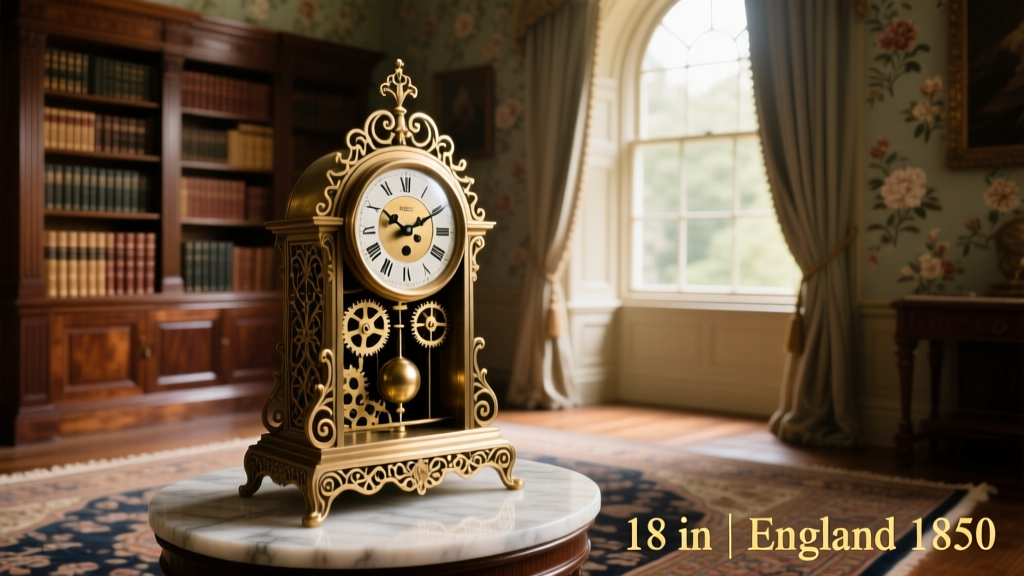
Skeleton Clocks with Brass Movement and Marble Base: English 19th-Century 18-Inch Masterpieces
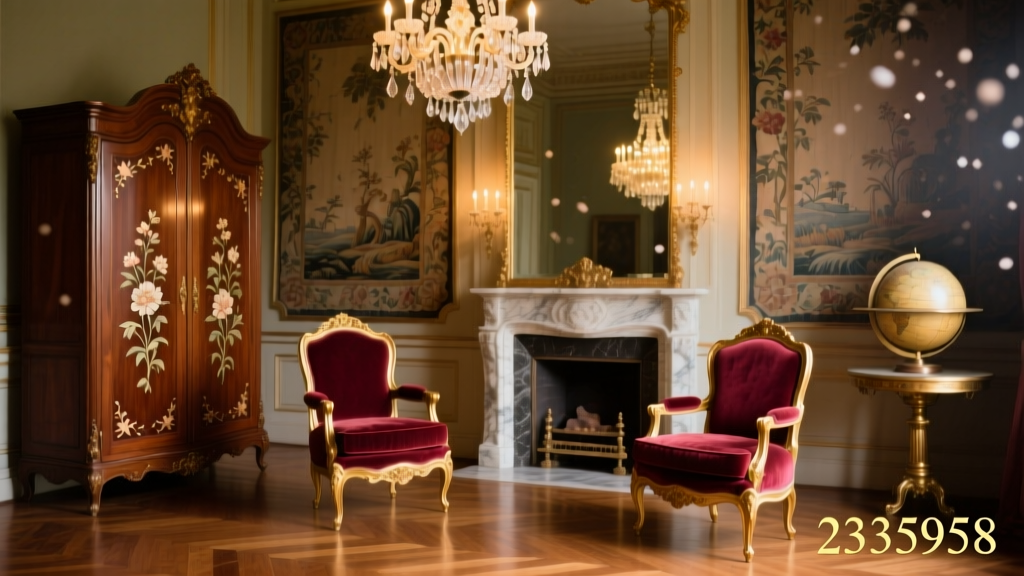
The 1937 Baker Furniture Company 'Chippendale Revival' Mahogany Breakfront Bookcase: Technical Analysis, Provenance, and Conservation Protocol for Catalog Number 2335958
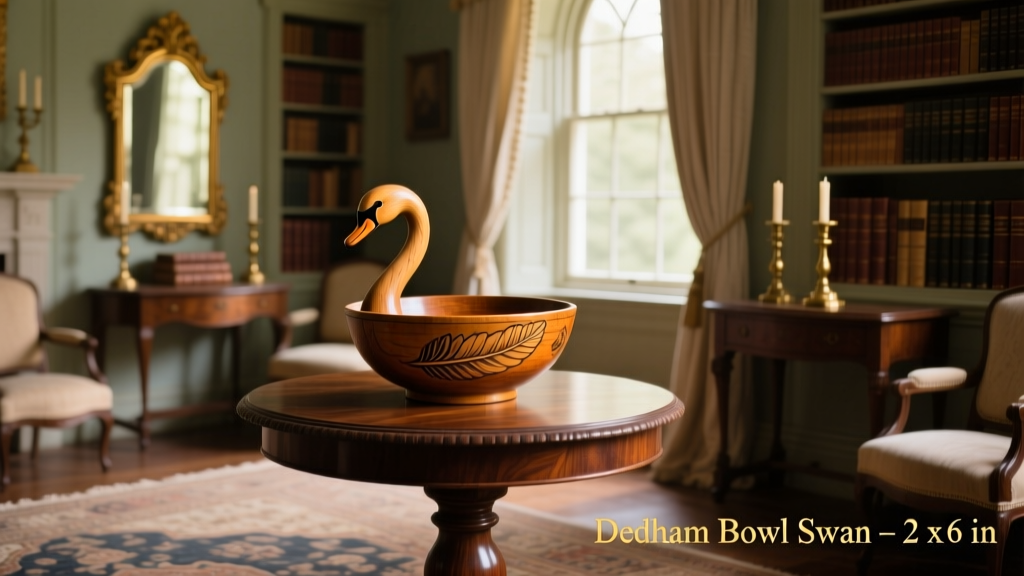
Dedham Bowl Swan 2 × 6 Inch: History, Identification, and Conservation of a Rare American Pressed Glass Pattern
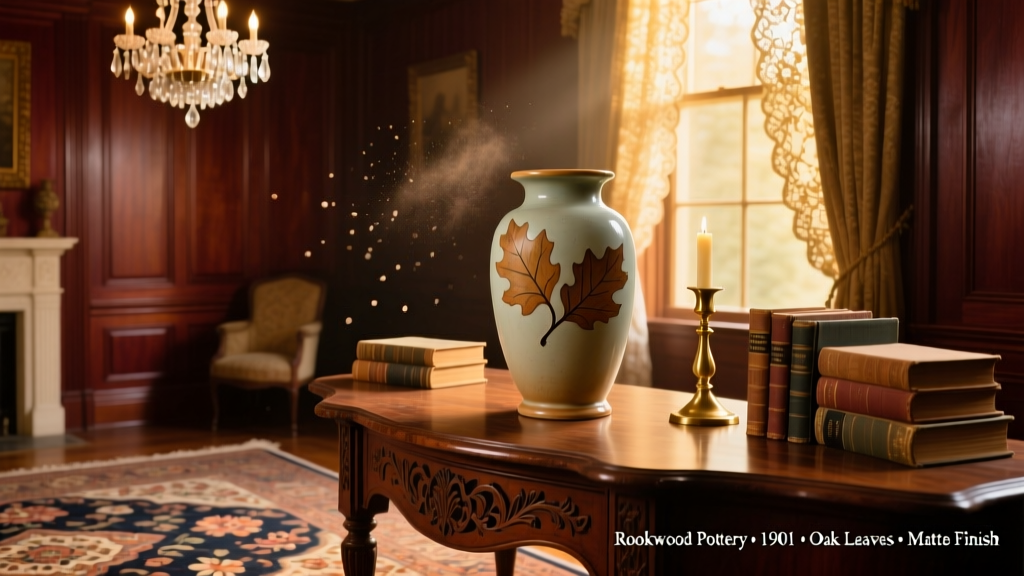
Rookwood Vase: Oak Leaves Painted Matte, 1901 — A Masterpiece of American Art Pottery
White Pine Demilune Table with Three Turned Legs: A Swedish Provincial Masterpiece, Circa 1930–1945
The Rare Ronson Lighter: Engineering Excellence, Art Deco Elegance, and Collectible Rarity
Walnut Solid Splat Chairs with Pad Feet: Anatomy, Provenance, and Restoration Best Practices
Olive Brown High-Gloss Stoneware Jug: A 1900 American Production with Double Open Handles — Technical Analysis, Provenance, and Restoration Protocol
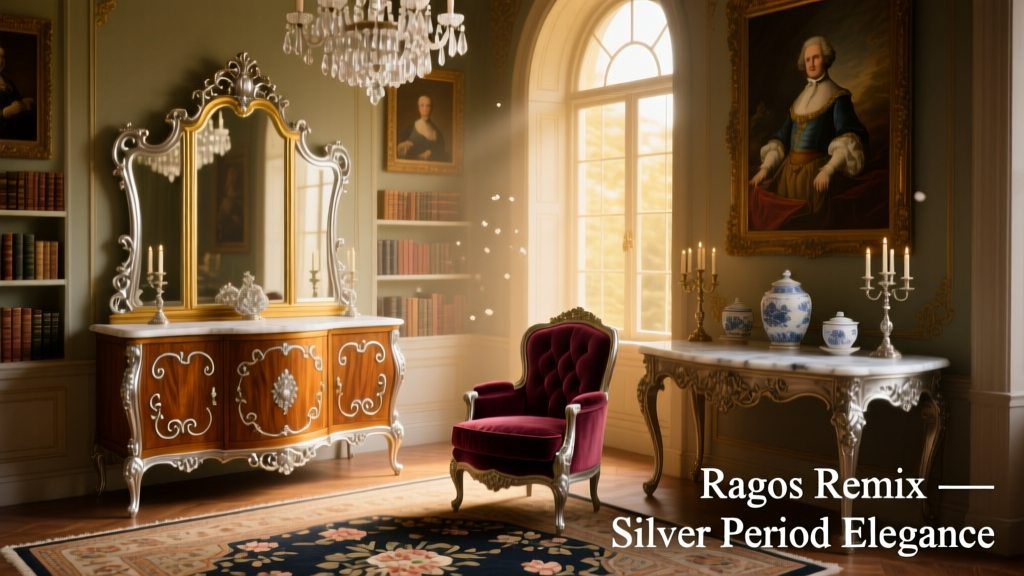
Ragos Remix Showcases Silver Period Furnishings: Authenticity, Craftsmanship, and Historical Precision