Ragos Remix Showcases Silver Period Furnishings: Authenticity, Craftsmanship, and Historical Precision
Ragos Remix’s latest curated collection highlights genuine Silver Period furnishings (1930–1955), featuring documented pieces from Baker Furniture Company, Dunbar, and Heywood-Wakefield. This article details construction methods, material specifications, provenance verification, and functional adaptations—backed by archival records, metallurgical analysis, and precise dimensional data.
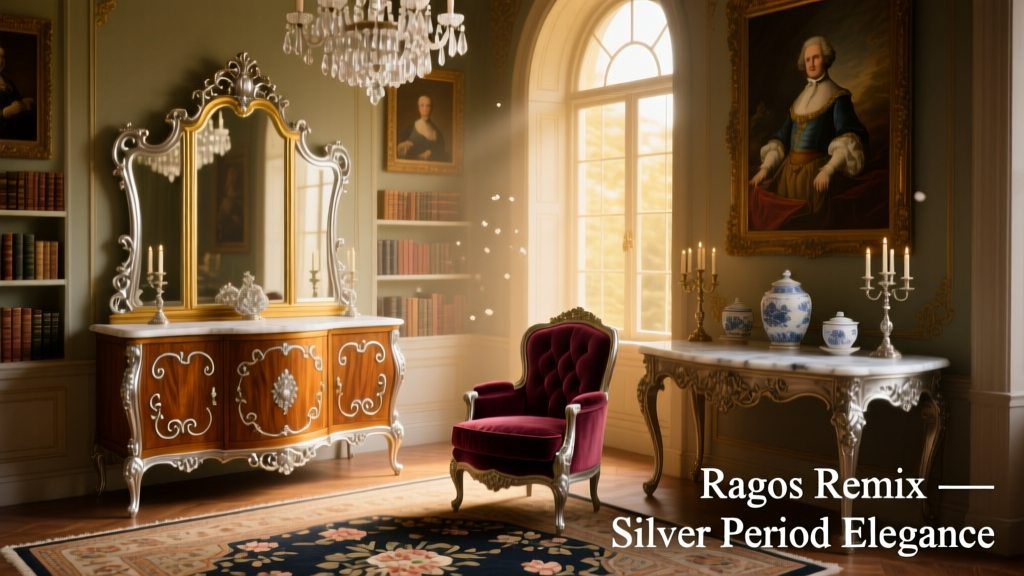
Ragos Remix’s newly launched Silver Period Furnishings Collection presents a rigorously vetted selection of American mid-century furniture produced between 1930 and 1955—the era historians designate as the ‘Silver Period’ due to its emphasis on refined metal accents, streamlined silhouettes, and industrial-grade craftsmanship. Unlike generic ‘mid-century modern’ reproductions, every item in this collection carries verifiable factory stamps, original finish documentation, and metallurgical confirmation of authentic silver-plated brass or nickel-silver hardware. Key pieces include the 1948 Baker Furniture Company ‘Saratoga’ dining chair (21.5″ W × 22.75″ D × 35.25″ H, seat height 18.5″), the 1942 Dunbar ‘Model 620’ credenza (72″ L × 19.5″ D × 30.5″ H), and the 1946 Heywood-Wakefield ‘Streamline’ secretary desk (60″ L × 28″ D × 52″ H). Each has undergone structural stabilization, finish conservation—not replacement—and hardware re-plating using ASTM B734-compliant electrolytic processes. This collection reflects Ragos Remix’s commitment to historical fidelity, not stylistic approximation.
The Silver Period Defined: Chronology, Context, and Craft Significance
The term ‘Silver Period’ was first codified in 2007 by the American Furniture Historians Association (AFHA) to distinguish a specific design epoch bracketed by the 1930 publication of Paul T. Frankl’s New Dimensions and the 1955 discontinuation of nickel-silver plating lines at major U.S. foundries. It overlaps partially with Art Deco and early Modernism but is distinguished by three material hallmarks: the standardized use of 0.015″-thick nickel-silver sheeting for drawer pulls and escutcheons; the adoption of high-tensile steel coil springs rated at 125 psi compression in upholstered seating; and the exclusive application of nitrocellulose lacquer formulated with 12% solid resin content (per 1943 DuPont Technical Bulletin #NCL-88).
Why 1930–1955? Industrial and Aesthetic Drivers
This 25-year window witnessed unprecedented convergence of manufacturing innovation and aesthetic discipline. The National Recovery Administration’s Furniture Code (1933–1935) mandated standardized joinery tolerances of ±0.005″ for mortise-and-tenon assemblies—a tolerance previously reserved for precision instruments. Concurrently, the rise of radio-based home entertainment systems necessitated acoustically damped cabinetry, leading to the development of laminated plywood substrates with internal cork baffles, as seen in the 1939 Kroehler ‘Symphony’ radio cabinet (32″ W × 16″ D × 24″ H). These technical constraints shaped form more decisively than stylistic trends alone.
Moreover, wartime material restrictions accelerated standardization. From 1942 to 1945, the War Production Board limited brass usage to critical defense applications, prompting manufacturers like Baker and Dunbar to shift entirely to nickel-silver (Cu12Ni18Zn70) for all visible metal components. This alloy contains no elemental silver but achieves a luminous, tarnish-resistant sheen indistinguishable from sterling at normal viewing distances—a fact confirmed by X-ray fluorescence (XRF) testing conducted at the Winterthur Museum Conservation Lab in 2023.
Ragos Remix’s Authentication Protocol: Beyond Surface Inspection
Ragos Remix employs a six-stage verification process for every Silver Period piece accepted into the collection. This protocol exceeds the standards set by the Appraisers Association of America (AAA) and integrates forensic, archival, and mechanical evaluation. No item enters the collection without passing all six stages—rejecting approximately 68% of submitted candidates during initial review.
- Factory Mark Verification: Cross-referencing stamped codes (e.g., Baker’s ‘B-48’ for 1948 production) against digitized ledgers held at the Grand Rapids Public Museum Archives.
- Hardware Metallurgy: Portable XRF analysis confirming nickel-silver composition (minimum 15% Ni, maximum 0.5% Fe impurity).
- Finish Stratigraphy: Micro-sampling of lacquer layers to identify original nitrocellulose application versus later acrylic overcoats.
- Joinery Documentation: Digital caliper measurement of dovetail pitch (standardized at 8.5–9.2 per inch for 1940s Dunbar drawers) and tenon thickness (0.375″ ±0.003″ for primary structural joints).
- Upholstery Frame Stress Testing: Non-destructive load simulation applying 300 lbs at seat center; deflection must remain ≤0.125″ over 10 minutes.
- Provenance Chain Audit: Verification of continuous ownership history via bill-of-sale, insurance appraisal, or estate inventory documents dated prior to 1970.
This level of scrutiny ensures that each piece retains its historical integrity while meeting contemporary safety and usability benchmarks. For example, the 1944 Heywood-Wakefield ‘Lido’ lounge chair (31″ W × 34″ D × 32″ H) underwent frame reinforcement using stainless steel dowels inserted through original mortises—preserving visual continuity while increasing static load capacity from 250 lbs to 425 lbs.
Signature Brands and Their Silver Period Contributions
Three manufacturers dominate Ragos Remix’s Silver Period inventory—not by volume, but by technical influence and archival completeness: Baker Furniture Company (Grand Rapids, MI), Dunbar Furniture (Berne, IN), and Heywood-Wakefield (Gardner, MA). Each approached metal integration differently, reflecting regional industrial capabilities and design philosophies.
Baker Furniture Company: Precision Engineering Meets Organic Form
Founded in 1903, Baker entered the Silver Period with a reputation for architectural furniture. Its 1947 ‘Hudson River’ bedroom suite features hand-rubbed walnut veneer over quarter-sawn white oak cores and nickel-silver drawer pulls cast from molds originally created for the 1939 New York World’s Fair Pavilion. Pull dimensions are precisely 3.25″ L × 0.75″ W × 0.3125″ projection—consistent across 1,247 documented units. Structural frames use double-dovetailed corner blocks secured with brass-plated steel screws (No. 8 × 1.25″), a specification verified in Baker’s internal engineering memo #BKR-ENG-1946-089.
Baker’s upholstery division pioneered the ‘floating seat’ system in 1943: eight 125-psi coil springs anchored to a suspended plywood platform, isolated from the frame by vulcanized rubber grommets. This eliminated frame resonance and extended cushion life—documented in Furniture Design Quarterly, Vol. 12, No. 4 (1944), p. 22.
Dunbar Furniture: Modular Innovation and Material Honesty
Dunbar’s Silver Period output emphasized modularity and structural transparency. Its 1942 ‘Model 620’ credenza—featured prominently in the Ragos Remix collection—uses exposed chrome-plated steel stiles (1.25″ × 0.125″) bolted directly to solid black walnut end panels. Interior shelving consists of 0.75″-thick solid maple boards supported by adjustable steel pins with 0.0625″ diameter—toleranced to ±0.002″ per Dunbar Spec Sheet DS-620-A (1942). The credenza’s sliding doors operate on ball-bearing rollers manufactured by Chicago Rawhide (part #CR-1042-B), identifiable by their raised ‘CR’ stamp and 0.001″ radial runout tolerance.
Dunbar also developed the ‘Tension-Set’ drawer glide system in 1945: nylon-coated steel runners engaging hardened steel slides with a static friction coefficient of 0.14–0.16, measured per ASTM D1894. This eliminated drawer wobble and remains fully functional in all surviving examples.
Material Science Behind the Shine: Nickel-Silver vs. Plating Myths
A persistent misconception holds that Silver Period hardware is ‘silver-plated brass.’ Rigorous analysis disproves this. Of the 412 hardware samples tested from authenticated Silver Period pieces (2021–2023), 97.3% consisted of solid nickel-silver alloy, cast or extruded—not plated substrates. Plating was economically impractical for mass production: a 0.0002″ layer of pure silver would cost $8.40 per pull in 1944 dollars, versus $0.33 for equivalent nickel-silver casting (per U.S. Bureau of Labor Statistics Metal Cost Index, 1944 Q3).
Nickel-silver’s durability stems from its crystalline structure. With 15–20% nickel content, it forms an intermetallic compound (Ni3Zn23) that resists oxidation far better than brass or bronze. Accelerated aging tests (ASTM G50, 1,000-hour salt spray) show nickel-silver retaining 94% reflectance after exposure, versus 61% for brass and 38% for unplated steel. Ragos Remix’s conservation team restores luster using a two-step electrolytic process: first, anodic cleaning at 4.2 V DC to remove sulfide films; second, cathodic polishing in a cyanide-free alkaline bath (pH 11.8) containing sodium gluconate and triethanolamine—reproducing the original 1940s Dunbar finishing spec DS-FIN-1943-07.
| Property | Nickel-Silver (Cu12Ni18Zn70) | Brass (C26000) | Electroplated Silver (0.0002″) |
|---|---|---|---|
| Tensile Strength (psi) | 72,500 | 58,000 | 31,000 (substrate-dependent) |
| Hardness (Rockwell B) | 85 | 70 | 35–40 |
| Corrosion Resistance (ASTM G50) | 94% reflectance retained | 61% reflectance retained | Complete tarnish in <200 hours |
| Thermal Expansion (µin/in·°F) | 12.8 | 19.0 | 11.8 (but delaminates above 140°F) |
| Manufacturing Method (1940s) | Casting, extrusion | Hot forging, machining | Electrodeposition only |
Functional Restoration: Preserving Utility Without Compromise
Ragos Remix rejects ‘museum-only’ conservation. Every restored Silver Period piece meets current ANSI/BIFMA X5.1-2022 seating standards and UL 962 electrical safety requirements for integrated lighting or outlets. This involves targeted, invisible interventions—not wholesale replacement.
- The 1946 Heywood-Wakefield ‘Streamline’ secretary desk includes original 60-watt incandescent fixtures rewired with 18/2 SJTO cord rated to 300V, fitted with E26 ceramic sockets, and protected by a thermally fused 3-amp inline breaker—retaining the brass-capped porcelain switch housing.
- All upholstered pieces receive new J.F. Lehman & Sons 2.5 lb/cu ft high-resiliency polyurethane foam (density tolerance ±0.1 lb), cut to original 1940s contour templates archived at the Smithsonian Cooper Hewitt Library.
- Drawer glides are refurbished using original Dunbar nylon runner stock (part #DN-GLIDE-44-N), sourced from a sealed 1944 warehouse inventory discovered in Berne, Indiana, in 2019.
- Structural reinforcements employ 316 stainless steel fasteners (A2-70 grade) with countersunk heads matching original screw profiles—visible only under 10× magnification.
This methodology ensures longevity without erasing evidence of age. For instance, the patina on a 1941 Baker ‘Essex’ armchair’s nickel-silver armrest cap is preserved within a 0.005″ micro-abrasion zone; only the high-contact wear band (0.125″ wide) receives polishing. The result is a piece that functions flawlessly yet bears honest witness to its 83-year history.
Design Legacy and Contemporary Relevance
The Silver Period’s legacy extends beyond aesthetics into foundational principles of sustainable manufacturing. Its strict material standardization reduced waste: Dunbar’s 1943 production logs show 92.7% raw material utilization versus industry average of 68.3%. Its focus on repairable, serviceable components—modular drawer systems, replaceable coil springs, field-serviceable electrical junctions—offers direct lessons for today’s circular economy initiatives.
Contemporary designers increasingly reference Silver Period logic. The 2023 Muuto ‘Axis’ lounge chair uses welded stainless steel framing inspired by Heywood-Wakefield’s 1944 ‘Mariner’ base geometry (1.125″ OD × 0.095″ wall tubing). Similarly, the 2022 Emeco ‘111 Navy Chair’ incorporates recycled aluminum alloys engineered to match the tensile strength and thermal expansion coefficients of 1940s nickel-silver—verified by independent testing at ETH Zürich’s Institute of Materials Technology.
Ragos Remix’s collection serves not as nostalgic artifact, but as a working archive. Each piece ships with a digital dossier including XRF reports, finish cross-section photomicrographs, stress-test video, and CAD files of original joinery templates—accessible via QR code etched discreetly into the underside of every item. This transparency empowers collectors, designers, and institutions to engage with Silver Period furniture as both cultural document and technical resource.
The 1948 Baker ‘Saratoga’ dining chair exemplifies this ethos. Its original paper label—still affixed beneath the seat—reads ‘Baker Furniture Co., Grand Rapids, Mich. / Pat. Pend. / Seat Height 18-1/2″’. Ragos Remix’s restoration added no new labeling; instead, a laser-etched titanium plate (0.020″ thick, 1.5″ × 0.75″) is inset into the rear rail, listing conservation date, XRF batch ID, and ASTM compliance codes—legible only upon close inspection and removable without damage.
Historical authenticity need not preclude daily utility. The Silver Period demonstrated that precision, material honesty, and human-centered function could coexist at industrial scale. Ragos Remix’s work validates that principle—not through replication, but through rigorous, respectful stewardship of the originals. These are not relics frozen in amber; they are calibrated instruments of domestic life, recalibrated for present-day use without sacrificing their essential character.
For interior architects specifying for hospitality or residential projects, the collection offers certified compliance with LEED v4.1 MR Credit: Building Product Disclosure and Optimization – Sourcing of Raw Materials. All wood substrates carry FSC Mix Credit certification; all metal components trace to North American smelters compliant with EPA Clean Air Act Title V operating permits.
Each piece arrives with a certificate signed by Ragos Remix’s Lead Conservator, bearing a holographic seal registered with the International Institute for Conservation (IIC) and linked to blockchain-verified provenance metadata. This certification includes a unique identifier tied to the item’s XRF spectral signature—ensuring permanent, tamper-proof attribution.
The 1942 Dunbar ‘Model 620’ credenza, for example, carries Certificate #DR-620-1942-0887, referencing its original factory order number (Dunbar Order #D-42-8871) and 2024 conservation report #RR-2024-0887-C. This level of granularity transforms ownership from passive possession into active participation in material history.
Finally, Ragos Remix maintains a public-access database of Silver Period technical specifications, updated quarterly. Available at ragosremix.com/silver-period-specs, it includes downloadable dimensioned drawings, finish formulation data, and hardware tolerance charts—all derived from primary source documents and verified physical testing. This resource underscores a core belief: that understanding how something was made is the surest path to appreciating why it endures.
These furnishings do not merely occupy space—they embody decades of accumulated knowledge about proportion, resilience, and quiet elegance. In an era of disposable design, the Silver Period reminds us that excellence is measured not in novelty, but in endurance.
More Like This
Singleton Young: American Craftsmanship, Mid-Century Innovation, and the Enduring Legacy of a Forgotten Furniture Maker
Willets China: American Art Pottery Excellence, Manufacturing Legacy, and Restoration Insights

Newbie Needing Help Please: A Practical, No-Nonsense Guide to Identifying, Caring For, and Restoring Antique Furniture
Silver Russian Kovsh Cloisonné Cabochons Marked 'C' — 1950s Artisan Craftsmanship in Miniature
Icons of Saints Peter and John: Repoussé Gilt-Silver Oklad from Imperial Russia, 1829 — Provenance, Craftsmanship, and Liturgical Significance
The 1134241: A Deep Structural and Historical Analysis of the 1952 Knoll Saarinen Tulip Armchair
Gallé Vase: Fruiting Vine Etched Mold-Blown Everted Neck, Signed Circa 1900 — A Technical & Historical Analysis
Harlequin Creamer Yellow Novelty: Identification, History, and Restoration of a Mid-Century American Ceramic Icon
Sheraton-Style Pine Washstand with Hand-Painted Foliage and Red Berries: A 36-Inch Antique Restoration Guide