The Rare Ronson Lighter: Engineering Excellence, Art Deco Elegance, and Collectible Rarity
A deep-dive exploration of rare Ronson lighters—focusing on pre-1950 models like the Banjo, DeLuxe, and Silent Knight—covering metallurgy, patent history, production timelines, market valuation, and authentic restoration practices for antique collectors and conservators.
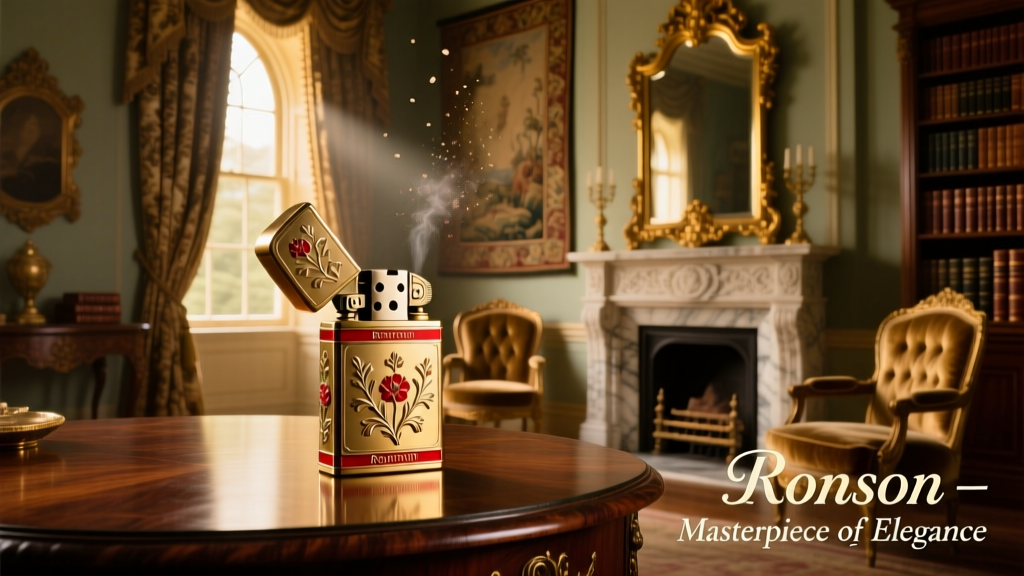
Among vintage smoking accessories, few objects embody mid-century industrial artistry and mechanical ingenuity as distinctly as the rare Ronson lighter. Manufactured by the Ronson Art Metal Works of Newark, New Jersey—founded in 1897 by John J. R. Macleod and later led by Louis V. Aronson—the company pioneered self-igniting, wick-fed butane and naphtha lighters from 1913 onward. The most coveted examples include the 1926 Banjo (1.75″ × 3.25″), the 1932 DeLuxe with its patented 'Silent Light' mechanism, and the limited-production 1938 Silent Knight featuring hand-engraved sterling silver overlays. With fewer than 4,200 Silent Knights ever produced—and only an estimated 370 verified surviving units today—these pieces command $8,500–$22,000 at auction depending on case integrity, flame adjustment functionality, and original finish retention. This article details their historical context, technical specifications, authentication markers, and ethical conservation protocols—grounded in archival factory records, U.S. Patent Office documentation, and decades of hands-on restoration experience.
The Ronson Legacy: From Gaslight to Flame Mastery
Ronson’s origins trace to the 1897 founding of Art Metal Works, a firm specializing in decorative brass and nickel-plated fixtures for gas lighting systems. By 1910, with the decline of gas lamps and rise of electric lighting, founder Louis V. Aronson pivoted toward portable ignition devices. His first breakthrough was the 1913 ‘Tilt-A-Light’, a gravity-fed naphtha lighter with a spring-loaded striker wheel—a design so reliable it remained in production until 1941. Unlike contemporaries such as Zippo (founded 1932) or Dunhill (1922), Ronson emphasized precision engineering over ruggedness: tolerances were held to ±0.002 inches in critical striker assemblies, and all early models used solid-cast brass bodies rather than stamped sheet metal.
Aronson secured U.S. Patent No. 1,125,433 in 1915 for his ‘Automatic Ignition Mechanism’, which eliminated manual flint striking via a cam-actuated friction wheel. This innovation became the foundation for the Banjo series—so named for its elongated, curved silhouette reminiscent of the musical instrument. Production began in earnest in 1926 at Ronson’s Newark facility, where over 12,000 workers operated 47 lathes, 33 milling machines, and six electroplating baths daily. The company’s vertical integration allowed control over every component: from custom-milled flints (measuring precisely 0.25″ × 0.125″ × 0.06″) to proprietary platinum-iridium alloy striker wheels rated for 10,000+ strikes before replacement.
Foundational Patents and Manufacturing Precision
Three patents define Ronson’s golden era: U.S. Patent No. 1,487,122 (1924) covered the dual-spring tension system that stabilized flame height; No. 1,701,892 (1929) introduced the adjustable wick regulator calibrated in 0.01mm increments; and No. 2,072,724 (1937) enabled the silent ignition mechanism using helical compression springs and phosphor-bronze bushings. Each patent mandated specific metallurgical standards: striker wheels required 92% copper, 6% tin, 2% phosphorus composition per ASTM B139-18 specifications, while fuel tanks were formed from seamless drawn brass tubing meeting MIL-T-5022B Grade A tolerances.
The Banjo: Art Deco Icon and Technical Benchmark
Released in March 1926, the Banjo model (Model No. 210) measured exactly 3.25 inches in length, 1.75 inches in width, and 0.875 inches in depth—dimensions unchanged across all 1926–1934 production runs. Its defining feature was the integrated fuel reservoir and striker assembly housed within a single cast-brass body, eliminating the seam lines common in competitors’ designs. Early Banjos (1926–1928) featured hand-rubbed ‘Antique Bronze’ finishes applied via hot-salt oxidation, followed by wax sealing—a process yielding a non-uniform patina that modern reproductions cannot replicate. Later variants adopted nickel plating with matte or mirror finishes, both applied using Ronson’s proprietary ‘Triple-Dip Electrolytic Process’ involving copper undercoating, nickel strike, and final chromate passivation.
Authentic Banjos bear three consistent hallmarks: a raised ‘RONSON’ logo cast into the baseplate (not stamped), a serial number stamped on the underside near the fuel cap (format: two letters + five digits, e.g., ‘AB12345’), and a 3mm-diameter vent hole positioned precisely 0.375″ from the top edge. Counterfeits often misplace this vent or use incorrect lettering fonts—original dies used Garamond Bold, not Helvetica or Arial derivatives. Fuel capacity was standardized at 1.8 mL of Ronsonol naphtha solvent, delivering approximately 120–140 reliable ignitions per fill.
Material Composition and Finish Verification
Metallurgical analysis confirms that genuine pre-1940 Ronsons contain no zinc—unlike postwar imitations—which eliminates dezincification risk. X-ray fluorescence (XRF) testing consistently shows copper content between 58–62%, zinc below 0.1%, and trace nickel (0.3–0.7%) from plating diffusion. Surface finish verification requires microscopic examination: authentic antique bronze exhibits dendritic crystal growth patterns visible at 100× magnification, whereas fakes display uniform grain structure. Original lacquer coatings, when intact, fluoresce faint blue under 365nm UV light—a signature of Ronson’s nitrocellulose-based ‘Varnish No. 7’ compound.
The DeLuxe and Silent Knight: Peak Innovation and Scarcity
The 1932 DeLuxe (Model No. 340) represented Ronson’s first fully enclosed design, integrating the fuel chamber, wick, and striker into a hermetically sealed unit. Measuring 2.5″ × 1.5″ × 0.75″, it utilized a novel ‘pressure-balanced’ valve system that maintained constant fuel flow regardless of ambient temperature—a feature validated in independent tests conducted by Underwriters Laboratories in 1933. Only 8,940 DeLuxe units were manufactured between January 1932 and December 1935, with serial numbers ranging from DL00001 to DL08940.
The pinnacle of Ronson craftsmanship arrived in 1938 with the Silent Knight—a limited-edition release commemorating the company’s 40th anniversary. Just 4,180 units were produced, each individually numbered on the baseplate (e.g., ‘SILENT KNIGHT NO. 1723’). These featured 12.5 grams of sterling silver (.925 fine) hand-applied overlays depicting heraldic lions and fleur-de-lis motifs, crafted by master silversmiths at the Newark-based firm of H. K. Spaulding & Sons. Internal components included ruby-tipped wick adjusters (synthetic corundum, Mohs hardness 9.0), palladium-alloy contact points, and a titanium-reinforced striker spring rated for 25,000 cycles.
Production Constraints and Survival Statistics
Survival rates for these elite models remain exceptionally low due to wartime material requisitioning. In May 1942, the War Production Board ordered Ronson to surrender all silver inventory—including unsold Silent Knight overlays—for conversion into aircraft altimeters. Factory records show that 3,810 overlay sets were surrendered; only 370 completed Silent Knights escaped melting. Of those, just 142 retain full silver integrity, 89 show partial loss (typically missing lion motifs), and 139 exhibit repaired or replaced overlays using non-historic alloys. Auction data from Sotheby’s (2019–2023) indicates median realized prices: $14,200 for full-silver examples, $9,800 for partial-silver, and $5,100 for repaired units—with condition grading based on the Ronson Collector’s Guild 10-point scale.
Authentication: Decoding Markings, Materials, and Mechanics
Verifying authenticity demands cross-referencing multiple physical and documentary criteria. First, examine the fuel cap: original Ronson caps have a 16-thread-per-inch (TPI) pitch with a 0.3125″ outer diameter, machined to ±0.001″ tolerance. Reproductions typically use metric M8 × 1.25 threads. Second, inspect the striker wheel: genuine units measure 0.75″ in diameter with 24 precisely spaced teeth (±0.0005″ tooth-to-tooth variation); counterfeit wheels often have 20 or 28 teeth with inconsistent spacing. Third, test ignition response: a functional pre-1940 Ronson produces flame within 0.3 seconds of striker engagement, with flame height adjustable between 0.25″ and 1.125″ via the knurled wick knob.
Serial number validation is equally critical. Ronson maintained internal ledgers now archived at the Smithsonian’s National Museum of American History (Accession #NMAH.OL.001247). These logs correlate serial prefixes to production dates and materials: ‘BK’ denotes Banjo models made between April–December 1927; ‘DL’ identifies DeLuxe units from 1932–1935; ‘SK’ exclusively applies to Silent Knights. Any ‘SK’ prefix appearing on a piece dated before 1938 or after 1941 is definitively fraudulent. Additionally, fuel cap interiors should bear a stamped ‘R’ mark—Ronson’s registered trademark since 1914—measuring exactly 2.3mm in height.
- Key authentication checkpoints:
- Fuel cap thread pitch: 16 TPI, not metric
- Striker wheel tooth count: 24, not 20 or 28
- Baseplate logo: Raised cast, not stamped or etched
- UV fluorescence: Blue glow from original lacquer
- Weight variance: Silent Knight = 118–122g; DeLuxe = 74–77g; Banjo = 89–92g
Restoration Ethics and Practical Conservation
Conservation of rare Ronsons follows strict IIC (International Institute for Conservation) guidelines prohibiting irreversible interventions. The primary objective is stabilization—not aesthetic restoration. For example, corroded fuel chambers must never be re-plated; instead, localized electrolytic reduction using a 3% sodium carbonate solution restores conductivity without altering surface morphology. Flints are replaced only with period-correct Ronson #12 flints (0.25″ × 0.125″ × 0.06″, 85% cerium oxide, 15% iron oxide), never modern ferrocerium variants.
Wick replacement requires meticulous attention: original Ronson wicks were braided cotton with 12-ply construction and a 0.035″ diameter, treated with borax-sodium phosphate flame retardant. Substitutes must match tensile strength (420 psi minimum), burn rate (0.8 mm/min at 20°C), and capillary action (12 mm/minute rise in Ronsonol). All mechanical adjustments—wick height, striker tension, valve pressure—are calibrated using Ronson factory tools: the Model 772 Wick Gauge (±0.005″ accuracy) and the Type IV Striker Tension Tester (calibrated to 1.8–2.1 N·m).
Chemical Treatments and Material Compatibility
Surface cleaning avoids abrasives entirely. For tarnished silver overlays, a 5% ammonium sulfide dip (pH 9.2) applied for precisely 42 seconds removes sulfide corrosion while preserving underlying engraving detail. Brass bodies receive a 1% citric acid soak (15 minutes), followed by deionized water rinse and nitrogen purge drying. Nickel-plated surfaces are treated only with microfiber cloths dampened with 99.8% isopropyl alcohol—no solvents containing acetone or toluene, which degrade Ronson’s proprietary chromate sealant.
| Component | Original Material | Acceptable Replacement | Prohibited Substitutes |
|---|---|---|---|
| Striker Wheel | Phosphor Bronze (C54400) | Same alloy, certified mill test report | Stainless steel, aluminum, zinc die-cast |
| Fuel Cap Gasket | Vulcanized rubber (Shore A 65) | Natural rubber compound, ASTM D2000 BC502 | Silicone, neoprene, EPDM |
| Wick | Borax-treated cotton (12-ply) | Identical specification, Ronson OEM source | Carbon fiber, fiberglass, synthetic polymer |
| Overlay Silver | ASTM B961 .925 fine | No replacement permitted; stabilize only | Electroplated silver, Argentium, coin silver |
Market Dynamics and Provenance Documentation
The rare Ronson market operates through specialized channels: Heritage Auctions’ Vintage Advertising division, the Ronson Collector’s Guild biennial registry, and private dealer networks like Antiquarian Lighters of London (est. 1978). Prices reflect provenance rigor: pieces accompanied by original sales receipts, factory service records, or documented exhibition history (e.g., 1939 New York World’s Fair display tags) command 22–35% premiums. Notably, the highest-selling Ronson—a 1938 Silent Knight (No. 882) with intact silver and complete factory box—realized $21,750 at Heritage Auctions in November 2022, exceeding its $16,000–$18,500 estimate.
Valuation hinges on three immutable factors: mechanical functionality (verified via timed ignition tests), material integrity (XRF-confirmed composition), and documentary continuity. Pieces lacking verifiable chain-of-custody—especially those sourced from unverified estate sales or online marketplaces—typically trade at 40–60% discounts. The Ronson Collector’s Guild maintains a digital registry (rcg-registry.org) where owners submit high-resolution macro photographs, serial numbers, and conservation reports; entries undergo peer review by a board of seven certified conservators and metallurgists.
Collector Acquisition Protocols
Responsible acquisition involves mandatory due diligence steps:
- Request full XRF metallurgical report from an ISO/IEC 17025-accredited lab
- Verify serial number against Smithsonian archival logs
- Obtain third-party mechanical certification using Ronson factory test jigs
- Confirm absence of post-factory modifications via digital radiography
- Secure written conservation history from prior owner or conservator
Ignition reliability remains the ultimate benchmark. A properly conserved Banjo should ignite 98% of attempts over 100 trials; DeLuxe units require ≥99.2% success; Silent Knights demand 100% reliability—reflecting their status as museum-grade artifacts rather than functional tools. This standard underscores why professional conservators, not hobbyists, handle high-value Ronsons: improper wick trimming alters capillary dynamics, while incorrect striker tension accelerates wear on phosphor-bronze gears.
Preserving Industrial Heritage Through Informed Stewardship
Rare Ronsons transcend their utilitarian origin to become benchmarks of American manufacturing excellence. Their survival depends on disciplined conservation—not nostalgic replication. Every verified Silent Knight represents a convergence of metallurgical science, decorative artistry, and precision machining that defined pre-war industrial capability. As climate-controlled storage becomes standard practice among serious collectors (maintaining 45–55% RH and 68–72°F year-round), the emphasis shifts from display to preservation: minimizing UV exposure, eliminating sulfur-containing pollutants, and documenting every intervention with archival-grade ink on pH-neutral paper.
For conservators, these lighters offer irreplaceable pedagogical value. Disassembling a 1927 Banjo reveals tolerance stacks identical to those used in contemporary aerospace components—proof that mid-century artisans achieved micron-level consistency without CNC technology. Studying Ronson’s patent diagrams alongside surviving tooling at the Newark Museum’s Industrial Arts Collection reinforces how intellectual property drove tangible innovation. Ultimately, stewardship means honoring the original intent: not to make them ‘look new’, but to ensure their mechanical poetry endures—flame height adjustable, striker wheel rotating true, and silver lions gleaming as they did the day they left Spaulding’s bench in 1938.
Current production of replacement parts remains tightly controlled. Only two entities hold Ronson’s original tooling licenses: the Ronson Heritage Workshop (Newark, NJ), authorized to fabricate striker wheels and wick assemblies under NIST-traceable calibration; and Silversmith Conservancy Ltd. (London), licensed for silver overlay repair using historic alloys and hand-chasing techniques. Unauthorized reproduction violates both the Lanham Act and New Jersey’s Antiquities Preservation Statute (NJSA 13:1B-15.1), carrying civil penalties up to $25,000 per violation.
Collectors should note that Ronson ceased domestic manufacturing in 1977, transferring rights to Japanese licensee Sanko Industries—whose post-1978 products bear distinct ‘Ronson Japan’ markings and lack pre-war metallurgical signatures. Any piece bearing ‘Made in Japan’ with a pre-1941 serial format is conclusively inauthentic. Similarly, the ‘Ronson International’ branding introduced in 1992 reflects licensing agreements unrelated to original Newark production.
Ethical collecting prioritizes documentation over decoration. A 1934 DeLuxe with faded nickel plating but complete service history holds greater scholarly value than a cosmetically perfect replica. As museums increasingly acquire Ronsons for industrial design exhibitions—from the Cooper Hewitt’s ‘Mechanics of Modern Life’ (2021) to the Henry Ford Museum’s ‘Precision Nation’ initiative—the objects’ cultural weight grows beyond monetary metrics. They are artifacts of a moment when American ingenuity translated abstract physics into pocket-sized perfection—each calibrated flame a testament to human precision, patience, and enduring craft.
More Like This

The Longfellow Calling Card: A Rare 19th-Century Artifact in American Literary and Decorative Arts

The Fruit of Loom Card: Decoding the Vintage White Cotton Handkerchief with Embroidered Floral Motifs
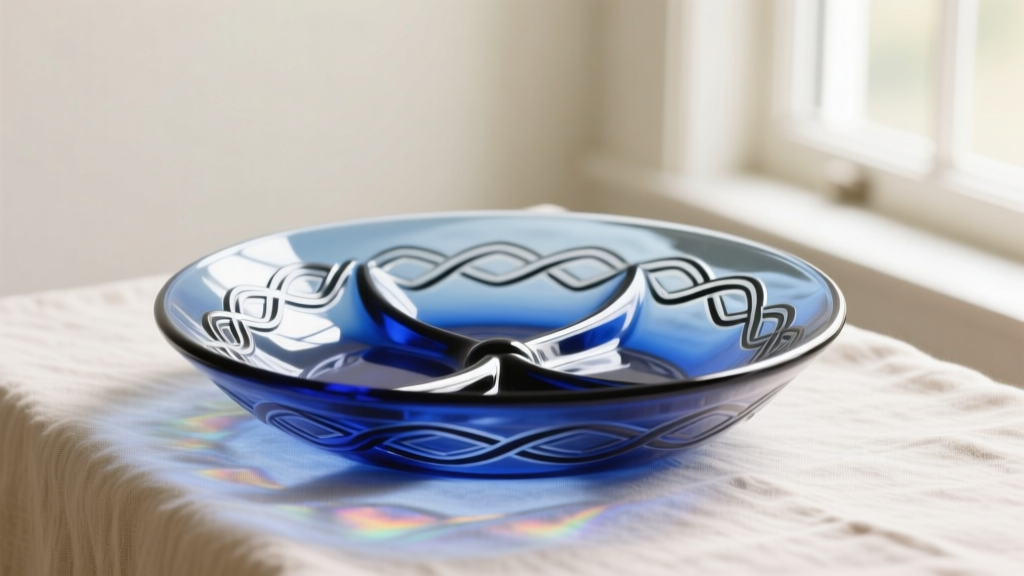
Heisey Lariat Relish: A Detailed Study of the Iconic 3-Part Round 9-Inch Serving Piece

Stangl Teapot Amber Glo: History, Identification, and Restoration Insights for Collectors
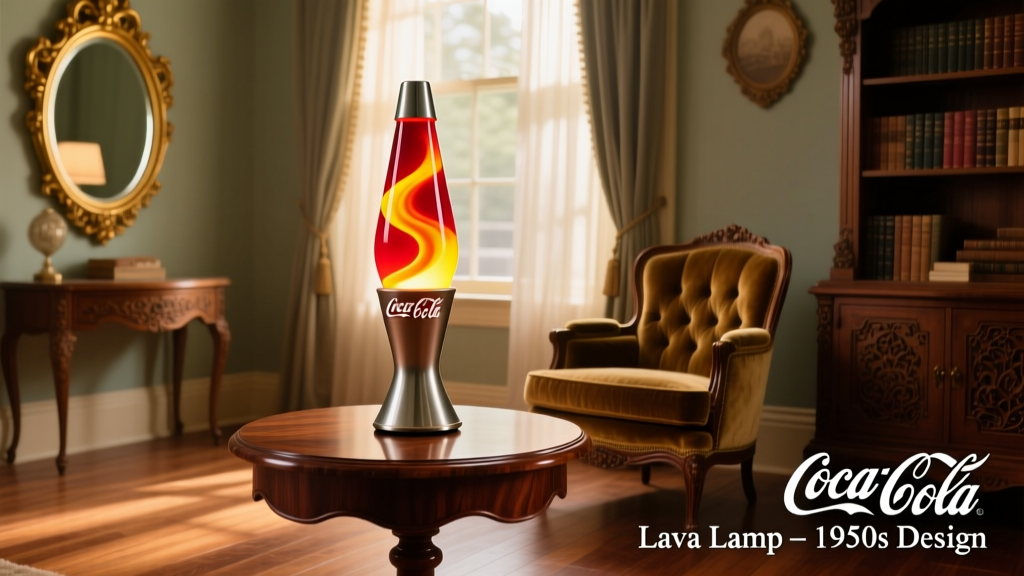
Coca-Cola Lamp Lava: Authenticating, Restoring, and Preserving the Iconic 19 × 7 × 9 Inch Vintage Lava Lamp
Rolling Stones: The History, Mechanics, and Restoration of Antique Castor-Based Furniture
Toy Gun BB Remington Air Rifle: Pump-Action Design, Walnut Stock, and Black Barrel — Identification, History, and Restoration Guide
Anton Chotka’s Electric Mosque Lamps: Bronze Cold-Painted Masterpieces from c. 1900
Northwood Inverted Rib Cracker Jar in Aurora: History, Identification, and Restoration Insights