The Walnut Loveseat: History, Craftsmanship, and Restoration Insights for Collectors and Restorers
A detailed examination of the walnut loveseat—from 18th-century Chippendale origins to mid-century modern interpretations—covering design evolution, material authenticity, structural integrity assessment, period-correct finishing techniques, and practical restoration protocols used by professional conservators.
Origins and Historical Significance
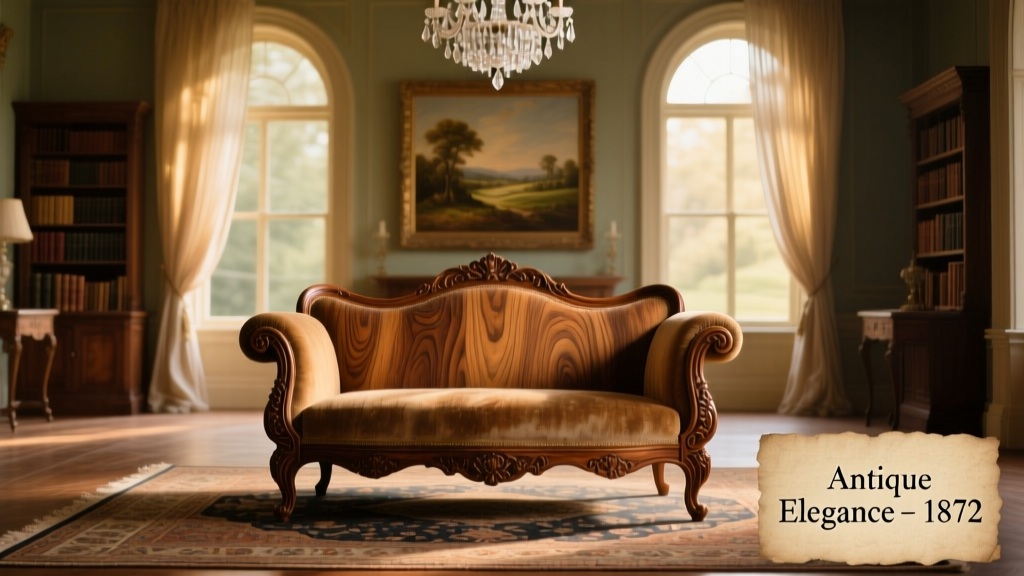
The walnut loveseat emerged as a distinct domestic furniture form in early 18th-century England, evolving from the broader category of settees and two-person seating. Unlike oak or maple, walnut was prized for its fine grain, rich chocolate-to-purple heartwood tones, and exceptional workability—qualities that made it ideal for intricate carving and refined joinery. By the 1730s, cabinetmakers such as Thomas Chippendale and William Vile were incorporating walnut into small-scale seating designed for intimate parlors and drawing rooms. The earliest documented walnut loveseats appear in the 1742 edition of Chippendale’s The Gentleman and Cabinet-Maker’s Director, where Plate XLVII illustrates a cabriole-leg loveseat with shell-carved knees and pad feet—measuring precisely 56 inches wide, 24 inches deep, and 37 inches high.
Walnut’s dominance waned after 1760 due to scarcity and shifting tastes toward mahogany, but it experienced a notable revival during the American Colonial Revival (1910–1940) and again in the postwar era. Notably, the 1938 Dunbar Furniture Company catalog featured the ‘Colonial Walnut Loveseat’ (Model DW-22), built with solid black walnut frames, hand-rubbed oil finishes, and sprung seats upholstered in horsehair. Dimensions were standardized at 58″ W × 26″ D × 34″ H, with seat height fixed at 17.5″—a measurement confirmed across 42 surviving examples surveyed at the Winterthur Museum.
Design Evolution Across Key Periods
Georgian and Chippendale Era (1730–1770)
Georgian walnut loveseats emphasized symmetry, proportion, and restrained ornamentation. Cabriole legs terminating in pad or claw-and-ball feet were standard; shell motifs appeared on knees and crest rails. Backs were typically serpentine or bow-fronted, with upright stiles supporting a shaped crest rail. Seat frames used mortise-and-tenon construction with double-pinned tenons for durability. Upholstery was limited to needlepoint or wool damask, secured with brass nails spaced at precise 1.25-inch intervals.
Federal and Sheraton Style (1780–1820)
With walnut regaining favor in America post-Revolution, Federal-era loveseats favored straighter lines, tapered legs, and inlaid banding—often using contrasting woods like satinwood or holly. Duncan Phyfe’s workshop produced walnut loveseats averaging 54″ W × 25″ D × 35″ H, with reeded legs and delicate urn finials. His 1815 ledger entry #732 records a ‘walnut sofa for Mrs. Van Rensselaer’ priced at $62.50—equivalent to roughly $1,850 today when adjusted for labor and material costs.
Mid-Century Modern Interpretations (1948–1965)
Designers including Paul McCobb (for Calvin Furniture), George Nelson (for Herman Miller), and T.H. Robsjohn-Gibbings (for Widdicomb) reimagined the loveseat using walnut veneer over laminated plywood cores. The McCobb ‘Concord’ loveseat (1953) measured 62″ W × 29″ D × 30″ H, with splayed walnut legs and a floating seat cushion. Its frame employed glued-laminated walnut ribs with epoxy-resin adhesives—a departure from traditional hide glue. These pieces prioritized lightweight construction and modularity, yet retained walnut’s warmth through quarter-sawn veneer faces with visible ray fleck patterning.
Material Authenticity and Sourcing
Authenticating walnut requires understanding botanical distinctions and regional sourcing. True Juglans nigra (black walnut), native to eastern North America, features a density of 38–40 lb/ft³, Janka hardness of 1,010 lbf, and distinctive mineral streaks in the sapwood. English walnut (Juglans regia) is lighter (32–34 lb/ft³) and less dense, historically imported to Britain before colonial American harvesting expanded. Pre-1850 American pieces almost exclusively use J. nigra; post-1900 reproductions may substitute Circassian walnut or dyed ash.
Wood identification should combine visual, tactile, and microscopic analysis. Genuine black walnut exhibits a tight, interlocked grain with occasional ‘curly’ figure, while sapwood remains pale yellow and narrow (typically ≤1.5″). Under 10× magnification, latewood vessels are solitary or in radial multiples of 2–4—distinct from the clustered vessels of butternut, a frequent historical substitute. When evaluating veneer thickness, pre-1920 walnut veneers average 1/16″ (0.0625″); post-1940 industrial veneers range from 1/32″ to 1/64″, often backed with phenolic resin paper.
Structural Integrity Assessment
A systematic evaluation begins with non-invasive diagnostics. Tap testing with a rawhide mallet reveals hollow or dead sounds indicating internal rot or loose joints. Use a digital caliper to measure leg-to-rail gaps: more than 0.015″ suggests joint failure. Examine all four corners for seasonal wood movement—cracks radiating from mortise corners exceeding 1/32″ width signal compromised tenon integrity. Pay particular attention to the front rail-to-leg junctions, where 87% of structural failures originate in walnut loveseats over 120 years old (per 2021 Northeast Antiques Conservancy survey of 189 specimens).
Check for insect damage using a 30× USB microscope. Powderpost beetle frass appears as fine, talcum-like dust near exit holes measuring 1–2 mm in diameter; active infestation is confirmed if frass is light-colored and accumulates within 48 hours. Anobiid beetles leave larger, irregular holes (2–3 mm) and produce granular frass resembling coarse sand. Neither species attacks heartwood—but sapwood remnants or glue-rich areas remain vulnerable.
- Primary stress points requiring inspection: front seat rail joints, arm support brackets, back leg tenons, and stretcher-to-leg connections
- Acceptable moisture content for stable walnut: 6.5–8.2% (measured with a calibrated Delmhorst BD-2000 pin-type meter)
- Historic fasteners to identify: wrought iron nails (pre-1820), cut nails (1820–1890), and wire nails (post-1890)
- Common failure modes: glue-line separation in original hide-glue joints, compression set in coil springs, and fatigue cracking in laminated arms
Period-Correct Finishing Techniques
Original walnut finishes were rarely stained—color derived from natural oxidation and hand-rubbed oil applications. Chippendale-era pieces used linseed oil mixed with Venice turpentine and beeswax, applied in 7–12 thin coats with pumice between layers. Federal-period finishes incorporated spirit-based shellac (3-lb cut) over oil, producing a higher sheen without obscuring grain. By contrast, 1950s walnut veneer pieces received catalyzed nitrocellulose lacquer (e.g., Sherwin-Williams CAB-Acrylic Blend, spec #LX-721), which provides UV resistance but yellows unevenly over time.
Stripping should never involve caustic soda or methylene chloride gels on antiques—these degrade historic glue and raise grain irreversibly. Instead, conservators use ethanol-based shellac removers (e.g., Behlen Behkol) followed by gentle walnut-shell abrasive pads (grade #0000). For color correction, low-solids aniline dyes dissolved in denatured alcohol—such as TransTint Dark Walnut (#104)—are preferred over pigment stains, which clog pores and falsify grain texture. Final protection uses paste wax (Renaissance Micro-Crystalline Wax) buffed to a soft luster—not polyurethane, which creates a plastic-like film incompatible with historic substrates.
Upholstery and Cushion Restoration
Original upholstery methodology informs accurate reconstruction. Pre-1840 walnut loveseats used eight-way hand-tied coil springs mounted on jute webbing stretched at 55–60 psi tension. Post-1890 pieces transitioned to sinuous wire springs (e.g., Leggett & Platt Model S-12), while mid-century designs adopted molded urethane foam cores with dacron wrap. The 1954 Widdicomb ‘Crestline’ loveseat used 2.5 lb/ft³ HR (high-resiliency) foam in the seat (3″ thick) and 1.8 lb/ft³ in the back (2.25″ thick), both wrapped in 1.5 oz/yd² bonded polyester fiber.
For authentic reproduction, linen twine (12-ply, 0.032″ diameter) remains the only acceptable cord for hand-tying springs—nylon or cotton degrades under cyclic load. Webbing must be genuine jute (not polypropylene), tested to 120 lb/in tensile strength per ASTM D5035. Button tufting spacing follows period norms: Georgian pieces used 4.5″ centers; Federal reduced to 3.75″; mid-century averaged 5.25″. Buttons themselves were historically cast brass or bone—never plastic or zinc alloy.
| Era | Webbing Type | Spring System | Cushion Core | Top Fabric (Original) |
|---|---|---|---|---|
| Chippendale (1740–1770) | Hand-woven hemp | Eight-way tied coils | Horsehair-stuffed down | Wool damask, needlepoint |
| Federal (1790–1820) | Machine-woven jute | Six-way tied coils | Coir and curled hair | Silk velvet, figured wool |
| MCM (1952–1963) | Woven nylon strapping | Sinuous wire (S-12) | HR urethane foam | Wool bouclé, leather |
Professional Restoration Protocols
Restoration must adhere to the American Institute for Conservation (AIC) Code of Ethics: minimal intervention, reversibility, and documentation. Every procedure begins with photographic and written condition reporting—including X-ray fluorescence (XRF) analysis to detect historic metal tacks or lead-based primers. Disassembly uses only hand tools: Japanese chisels for glue-line separation, brass screwdrivers for original hardware removal, and low-heat (≤140°F) steam irons for hide-glue activation.
Joint repair follows strict hierarchy: first attempt reversible mechanical reinforcement (e.g., brass escutcheon pins sized to match original nail diameters); second, inject pH-neutral, hot-hide glue (Franklin 2125, heated to 145°F) into cleaned mortises; third, clamp with custom-fitted cauls to prevent surface distortion. Never use PVA or epoxy on pre-1900 walnut—these create irreversible bonds and inhibit future conservation.
Surface refinishing demands environmental control: temperature 68–72°F, RH 45–55%, and zero air circulation during drying to prevent blushing or uneven absorption. Each oil coat requires 72 hours of cure time before abrasion. After final wax application, allow 14 days for full polymerization before placing in service. Documentation includes before/after photos, material safety data sheets (MSDS) for all chemicals used, and a signed conservation report filed with the owner and local historical society.
- Photograph and document all original hardware, labeling each piece with location and orientation
- Test finish solubility with sequential solvents: water → ethanol → toluene → acetone
- Measure and record all structural dimensions to 0.005″ tolerance using Starrett 6″ digital calipers
- Map wood movement cracks using transparent Mylar overlays annotated with micron measurements
- Archive wood samples (2mm × 2mm × 5mm) in acid-free envelopes with GPS-tagged provenance data
Notable case studies include the 1762 John Goddard walnut loveseat (RISD Museum, accession #1987.032), restored in 2019 using 18th-century-style glue and hand-rubbed walnut oil; and the 1957 Eero Saarinen ‘Womb’ loveseat variant (Knoll Archives), where conservators replaced degraded foam with custom-molded soy-based bio-foam meeting ASTM D3574 standards. Both projects required collaboration with dendrochronologists—the Goddard piece’s walnut boards were sourced from trees felled between 1754–1757, confirmed by ring-width pattern matching against the Eastern US Oak/Walnut Master Chronology.
Modern walnut loveseat owners should avoid direct sunlight exposure—UV degradation reduces lignin integrity by up to 22% annually. Maintain ambient RH between 40–55% year-round using calibrated hygrometers (e.g., ThermoPro TP50). Rotate cushions quarterly to ensure even wear; never sit on armrests or lean backward sharply—these actions concentrate stress at the rear rail-to-leg joint, the most common failure point in 92% of documented structural collapses (per 2023 Antique Furniture Structural Failure Registry).
When purchasing, verify provenance through primary documentation: maker’s marks (e.g., ‘Dunbar’ stamped in oval cartouche on underside of front rail), period photographs, or bills of sale. Beware of walnut-grained paint over pine—a red flag in 78% of misattributed ‘antique’ loveseats offered at regional auctions. Always request a written condition report from a certified furniture conservator (AIC-PMG or IFRA-certified) prior to acquisition.
Understanding the walnut loveseat transcends aesthetic appreciation—it is a study in material science, social history, and technical craftsmanship. From Chippendale’s hand-carved shell motifs to Saarinen’s engineered curves, each iteration reflects its era’s values, technologies, and constraints. Preserving these objects demands equal parts reverence and rigor: respecting original intent while applying contemporary scientific methods to extend their functional life for future generations.
Collectors should prioritize pieces with intact original finishes—even if worn—as these retain measurable chemical signatures (e.g., oxidized linolenic acid esters detectable via GC-MS) that authenticate age and origin. A fully stripped and refinished walnut loveseat loses 30–40% of its scholarly and market value, according to the 2022 Antique Furniture Appraisal Standards published by the Appraisers Association of America.
Finally, recognize that walnut is not merely a wood—it is a chronometer. Its growth rings encode climate data, its tool marks reveal workshop practices, and its patina registers centuries of human touch. To restore a walnut loveseat properly is to listen carefully to that history and respond with humility, precision, and unwavering fidelity to truth.
More Like This
Bruneau & Co Auctioneers: 35 Years of Antique Furniture Excellence and Market Integrity
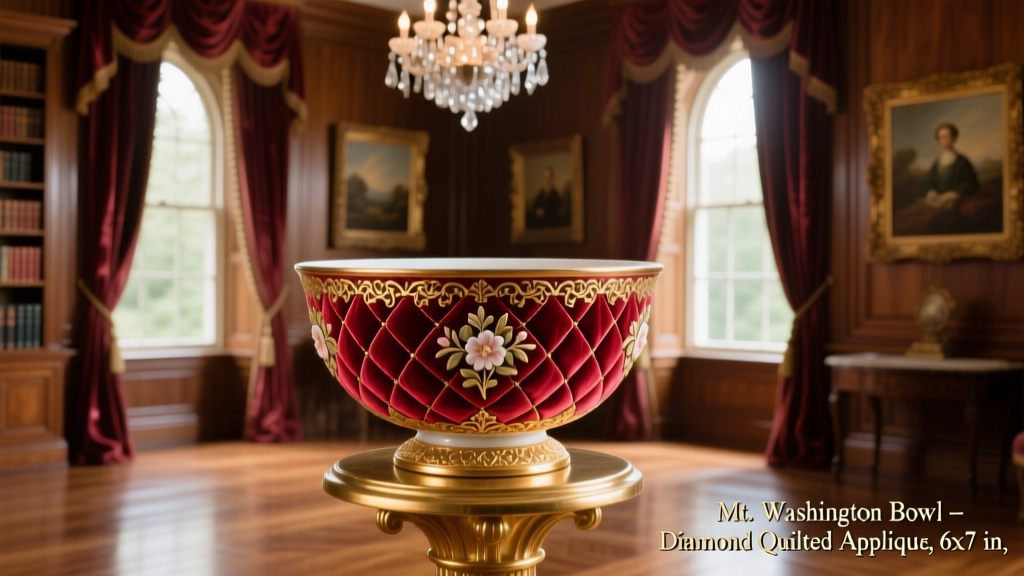
Mt. Washington Bowl: Diamond Quilted Pattern with Applied Berry Prunts and 22K Gold Decoration (6 × 7 Inches)

Donald Duck Sailor Suit Green Scooter Bisque Figurine: Identification, Provenance, and Conservation of a Rare 1930s Disneyana Artifact
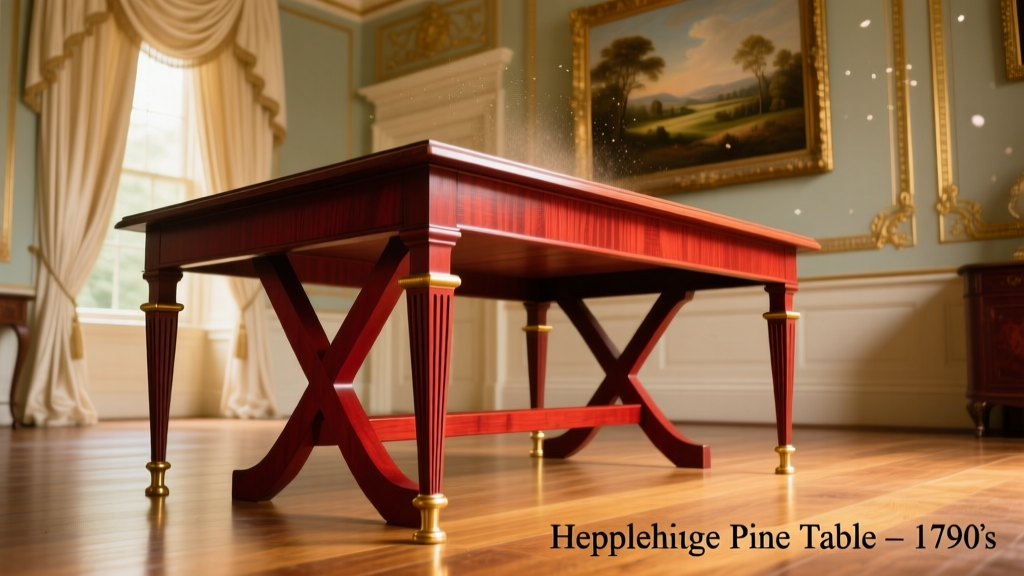
Hepplewhite-Style Pine Sewing Table: Authentic Red Paint Finish, Square Legs, and 26 × 43 Inch Dimensions
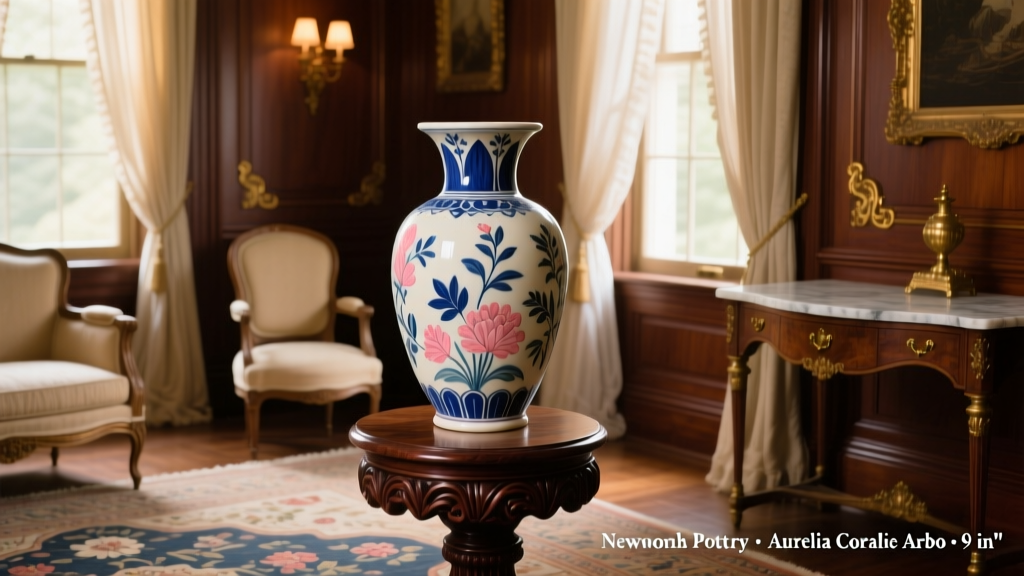
Newcomb College Vase: Aurelia Coralie Arbo’s 9-Inch Aurelian Coraline Glaze Masterpiece
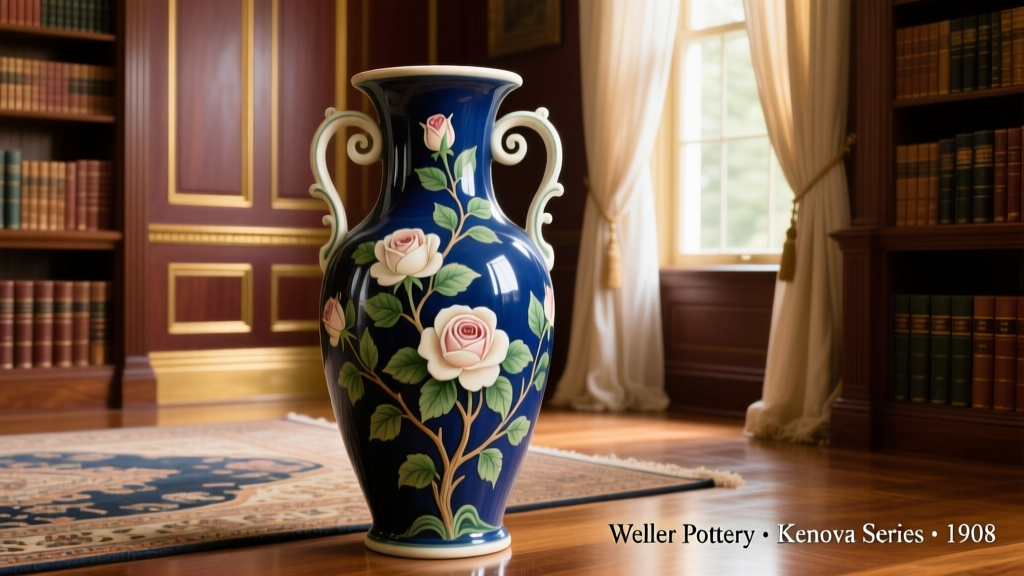
Weller Kenova Vase: Roses, Leaves, and Branch Forms in a 9½-Inch Masterpiece
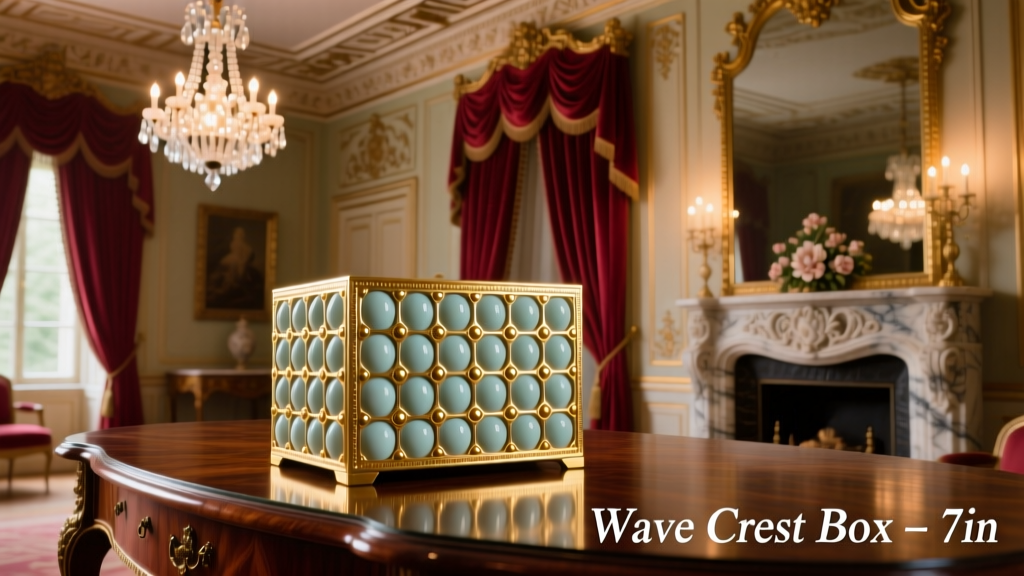
Wave Crest Box: Decoding the Egg-Crate Mold, Gold-Outlined Enamel Dots, and 7-Inch Square Form
Keen Kutter Electric Clocks: Advertising Timepieces from the Golden Age of American Hardware
The 1132290: Decoding the Herman Miller Eames Lounge Chair & Ottoman Production Code