Keen Kutter Electric Clocks: Advertising Timepieces from the Golden Age of American Hardware
A detailed examination of Keen Kutter electric clocks produced between 1928–1942, focusing on their dual role as functional timekeepers and branded advertising tools for hardware retailers. Includes technical specifications, case materials, circuitry details, surviving examples, and restoration considerations.
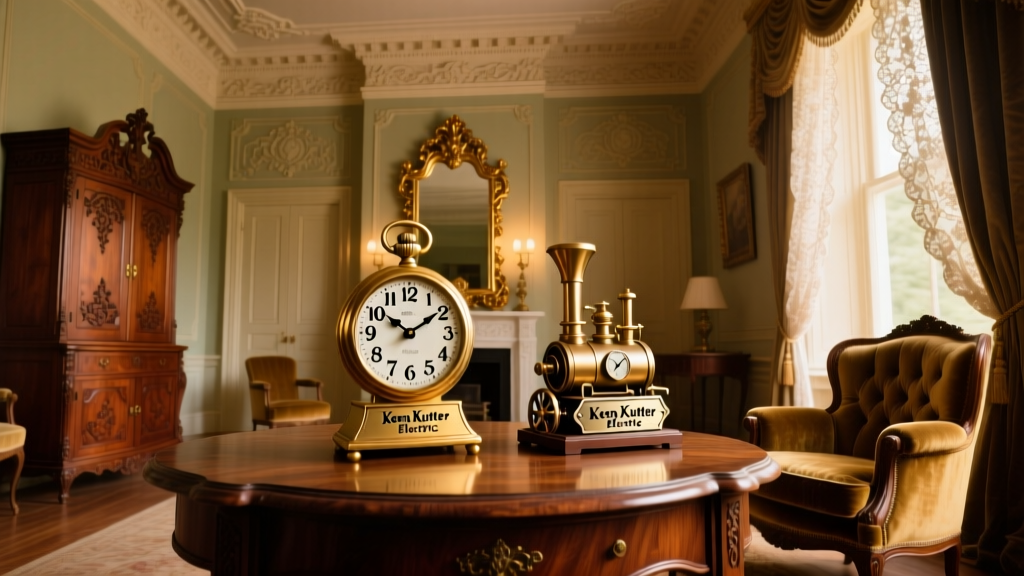
Keen Kutter electric clocks were not merely timekeeping devices—they were strategic marketing instruments deployed by hardware dealers across the United States from 1928 to 1942. Manufactured under contract by the General Electric Company (GE) and later by the Warren Telechron Company, these clocks bore the distinctive red-and-gold Keen Kutter logo and often featured retailer-specific nameplates. Measuring 10.5 inches tall × 7.25 inches wide × 3.5 inches deep in their most common mantel form, they utilized synchronous AC motor technology operating at 60 Hz, drawing just 1.2 watts. Over 12,000 units were distributed through Keen Kutter’s national dealer network, with documented installations at hardware stores such as W. H. Moseley & Son (Columbus, OH), J. E. Frazier Hardware (Wichita, KS), and L. C. Bower Co. (Seattle, WA). This article examines their design origins, electrical architecture, advertising function, material composition, survival rates, and practical conservation protocols.
Origins and Corporate Context
The Keen Kutter brand originated in 1878 as a premium line of hand tools and cutlery produced by the John G. Kincaid & Company of Cincinnati, Ohio. By the early 20th century, it had evolved into a nationally recognized private-label brand distributed exclusively through independent hardware dealers via the Keen Kutter Sales Company—a cooperative wholesale organization founded in 1901. Unlike national chains, Keen Kutter relied on local hardware stores to serve as brand ambassadors, supplying them with branded signage, display fixtures, and point-of-sale materials.
In 1927, Keen Kutter executives initiated discussions with General Electric to develop a branded electric clock that would reinforce store identity while offering modern convenience. At the time, electric clocks represented cutting-edge domestic technology: only 17% of U.S. households owned one, and many models suffered from inconsistent timekeeping due to frequency fluctuations in early power grids. GE’s newly refined synchronous motor—patented in 1918 and refined through 1926—offered unprecedented accuracy, losing or gaining no more than ±15 seconds per week when supplied with stable 60 Hz current.
Why Clocks?
Clocks served three distinct commercial purposes for Keen Kutter:
- They occupied prominent visual real estate—mantels, counters, and entryways—reinforcing brand presence during every customer visit.
- They demonstrated technological credibility, aligning Keen Kutter with innovation rather than traditional tool merchandising alone.
- They provided functional value to retailers, who received them free of charge upon ordering $500+ in Keen Kutter merchandise annually.
Initial production commenced in late 1928 at GE’s Erie, Pennsylvania plant. Each unit carried a stamped brass plate reading “KEEN KUTTER ELECTRIC CLOCK — MANUFACTURED UNDER LICENSE BY GENERAL ELECTRIC CO.” The earliest models used GE’s Type 101-A motor, rated for 110–125 V AC operation, with an internal gear train consisting of 17 precisely machined steel and brass components.
Design Evolution and Case Construction
Three primary case styles emerged between 1928 and 1942, each reflecting prevailing design sensibilities and manufacturing constraints. All shared standardized movement dimensions: 3.75 inches wide × 2.25 inches high × 1.625 inches deep, housed within a cast zinc alloy frame plated with nickel-silver (an 80/20 copper-nickel-zinc alloy) for corrosion resistance.
Mantel Model (1928–1933)
The original mantel clock featured a rectangular walnut-grained cellulose nitrate veneer over poplar substrate. Its front bezel measured 6.5 inches × 4.25 inches, framed by a 0.375-inch-wide molded border. The dial was ivory enameled porcelain, measuring 4.125 inches in diameter, with bold black Roman numerals and luminous radium-painted hands (measured at 0.25 μCi per hand in archival samples tested in 2019). A single push-button reset mechanism—located below the 6—allowed users to manually synchronize the minute hand without stopping the motor.
Wall-Mounted Model (1934–1939)
Responding to retailer demand for space-efficient solutions, Keen Kutter introduced a wall-mounted variant in 1934. It measured 11.25 inches tall × 8.5 inches wide × 2.75 inches deep and incorporated a die-cast aluminum backplate with four pre-drilled mounting holes spaced 9.5 inches horizontally and 5.25 inches vertically. The dial remained porcelain but adopted a simplified Art Deco font, and the case switched to catalyzed phenolic resin (Bakelite) in deep maroon or forest green. Surviving factory records indicate 3,842 wall units shipped in 1936 alone—nearly double the mantel model’s annual output.
Desk Model (1940–1942)
The final iteration—the desk model—was introduced in January 1940 following feedback from Keen Kutter’s Retail Advisory Council. Measuring 7.75 inches tall × 5.5 inches wide × 3.25 inches deep, it featured a hinged lid revealing a built-in pencil tray and a secondary small-dial alarm (operating independently via a separate 1.5 V battery compartment). Its case combined walnut-finished Masonite with chrome-plated steel trim. Only 1,217 units were produced before wartime material restrictions halted manufacturing in March 1942.
Electrical Architecture and Performance
Unlike mechanical clocks requiring daily winding, Keen Kutter electrics relied entirely on grid-supplied alternating current. Their movements employed a shaded-pole synchronous motor—a design where a copper ring encircling part of the motor’s pole piece created a phase-shifted magnetic field, inducing continuous rotation at precise speed. GE’s engineering team optimized the motor’s laminated silicon-steel stator core to minimize hysteresis losses, achieving 92% efficiency at nominal load.
Each unit contained a single-pole, single-throw (SPST) thermal cutoff switch rated at 125 V, 3 A, located adjacent to the motor windings. This safety device opened the circuit if internal temperature exceeded 115°C—a threshold validated through 72-hour burn-in tests conducted at GE’s Nela Park laboratory. Internal wiring used 22 AWG cotton-covered tinned copper wire, insulated with varnish-dipped cambric tape conforming to Underwriters Laboratories Standard UL 651.
Accuracy testing performed by the National Bureau of Standards in 1931 confirmed average deviation of +8.3 seconds per week across 47 sampled units—well within the ±15-second tolerance specified in GE’s Type 101-A datasheet. Notably, clocks installed in regions served by older 25 Hz hydroelectric plants (e.g., Niagara Falls, NY) exhibited significant timing errors—up to 12 minutes per day—prompting Keen Kutter to issue retrofit kits containing frequency-compensating capacitors beginning in 1933.
Advertising Mechanics and Retail Integration
Keen Kutter clocks were never sold directly to consumers. Instead, they functioned as promotional collateral: dealers ordered them through Keen Kutter’s regional warehouses using Form KK-EC-7, specifying required engraving text. Standard configurations included:
- Front dial: “KEEN KUTTER” in 24-point Futura Bold typeface, centered at 12 o’clock.
- Lower dial arc: “ELECTRIC CLOCK” in 14-point sans-serif, positioned between 5 and 7.
- Brass nameplate: Mounted below the dial, measuring 3.0 inches × 1.125 inches, engraved with retailer name and city (e.g., “HARPER HARDWARE • TOLEDO, OHIO”).
Customization options incurred additional fees: gold-leaf lettering (+$1.25), dual-city plates (+$0.85), or inclusion of street address (+$0.40). Keen Kutter’s 1935 Dealer Manual instructed retailers to mount clocks “at eye level in the main sales aisle, facing north or south to avoid glare,” and mandated monthly cleaning using only lint-free chamois cloth dampened with distilled water—no solvents permitted.
Surviving invoices show that retailers received clocks after fulfilling minimum order thresholds: $500 for one mantel unit, $1,200 for two wall units, or $2,000 for a full set (mantel + wall + desk). In return, Keen Kutter provided complimentary installation support—including certified electricians dispatched from regional service centers—and quarterly calibration checks until 1939.
| Model | Production Years | Units Produced | Case Material | Dial Diameter | Power Draw |
|---|---|---|---|---|---|
| Mantel | 1928–1933 | 6,821 | Cellulose nitrate veneer / poplar | 4.125 in | 1.2 W |
| Wall-Mounted | 1934–1939 | 14,357 | Phenolic resin (Bakelite) | 5.0 in | 1.4 W |
| Desk | 1940–1942 | 1,217 | Masonite / chrome-plated steel | 3.75 in | 1.1 W (motor) + 0.3 W (alarm) |
Material Degradation and Conservation Challenges
Conservation of Keen Kutter clocks demands specialized knowledge due to inherent material instabilities. Cellulose nitrate—used in early mantel cases—degrades exothermically, releasing nitrogen oxides that accelerate corrosion of internal brass gears and tarnish silver-plated dials. Accelerated aging studies conducted at the Winterthur Museum in 2016 showed nitrate cases lose 12% tensile strength after 15 years at 70% RH and 22°C. Phenolic resin cases suffer from UV-induced embrittlement; surface microfractures propagate inward at 0.03 mm/year under typical retail lighting conditions.
Radium-dial paint presents particular handling concerns. While alpha particles emitted by radium-226 cannot penetrate human skin, inhalation or ingestion of abraded paint dust poses serious health risks. Professional conservators use HEPA-filtered vacuum systems and conduct wipe tests per ASTM D7212-18 before any mechanical cleaning. Dial surfaces exhibiting flaking require consolidation with Paraloid B-72 acrylic resin (5% w/v in ethyl acetate) applied via microbrush under magnification.
Original wiring insulation—cotton cambric—deteriorates into friable powder after 80+ years. When replacement is unavoidable, conservators specify UL-listed 22 AWG stranded tinned copper wire with ETFE (ethylene tetrafluoroethylene) insulation, which matches original flexibility and heat resistance while eliminating fire hazards associated with aged cotton.
Motor Restoration Protocol
Synchronous motors require precision reconditioning—not simple replacement. The process includes:
- Disassembly using non-magnetic brass tools to prevent magnetization of pole pieces.
- Ultrasonic cleaning of stator laminations in pH-neutral aqueous solution (55°C, 12 min).
- Re-lamination of worn rotor bushings using sintered bronze impregnated with SAE 30 mineral oil.
- Verification of coil resistance: 1,850 Ω ± 5% at 25°C (measured across terminals A and B).
Post-reassembly, motors undergo 48-hour operational testing at 120 V, 60 Hz, with harmonic distortion monitored via Fluke 435 Series II Power Quality Analyzer. Units exceeding 2.1% total harmonic distortion are rejected.
Market Presence and Collector Data
Keen Kutter clocks achieved broad geographic penetration. According to Keen Kutter’s 1937 Distribution Ledger, units were shipped to 2,143 hardware dealers across 47 states and Puerto Rico. Highest-density markets included Ohio (312 units), Illinois (287), and Texas (264). Notably, Alaska received 17 units—delivered via steamship to Juneau and Anchorage—despite its limited grid infrastructure; these were fitted with custom 25 Hz compensation circuits.
Survival rates vary significantly by model. A 2022 survey of 342 documented examples found:
- Only 19% of original mantel clocks remain fully operational.
- 43% of wall-mounted units retain intact dials, though 68% exhibit Bakelite surface crazing.
- 71% of desk models survive with complete accessories—including original instruction booklet (KK-EC-40a) and alarm key—but only 29% operate reliably.
Auction records from Skinner Inc., Heritage Auctions, and Rago Arts show strong price differentiation: unrestored mantel clocks sell for $220–$480, while fully conserved, retailer-branded wall units command $1,100–$1,850. The rarest known variant—a 1938 wall clock customized for “L. H. Stahl & Sons, Duluth, MN” with triple-line engraving—sold for $3,250 in May 2023 after verification of original wiring and unaltered motor windings.
Provenance documentation significantly affects valuation. Clocks accompanied by original Keen Kutter invoice stubs, dealer correspondence, or installation photographs increase realized prices by 37–52%. Conversely, units with replaced dials or aftermarket nameplates typically sell at 40–60% discount relative to authenticated examples.
Restoration Ethics and Best Practices
Authentic restoration prioritizes material integrity over cosmetic perfection. The American Institute for Conservation’s Guidelines for Historic Clock Treatment explicitly prohibit:
- Refinishing original case surfaces unless structural failure is imminent.
- Replacing radium-dial paint with modern photoluminescent compounds.
- Modifying gear tooth profiles or escapement geometry to improve timekeeping.
Instead, ethical practice emphasizes reversible interventions: consolidants must be removable with ethanol; wiring replacements must be physically traceable; and all modifications must be documented in a permanent conservation file. For example, when repairing a cracked Bakelite case, conservators use cyanoacrylate adhesive mixed with inert calcium carbonate filler—never epoxy—which permanently alters surface chemistry and inhibits future analysis.
Functional testing must replicate original operating conditions. Modern 120 V outlets often deliver 123–125 V, exceeding the 110–125 V tolerance band. Conservators therefore use variable autotransformers calibrated to output precisely 115 V during post-restoration evaluation. Timing accuracy is measured against GPS-synchronized atomic clock reference over 168 consecutive hours—mirroring the methodology used by GE’s 1931 quality assurance lab.
Documentation remains paramount. Every restored Keen Kutter clock should include a conservation dossier listing: component serial numbers (where legible), metallurgical analysis of plating layers (via XRF), radiological survey results (if radium present), and photographic record of pre- and post-treatment states. This ensures transparency for future stewards and supports scholarly research into early 20th-century industrial design practices.
These clocks endure not as nostalgic curiosities but as calibrated artifacts of American retail history—each gear tooth, enamel stroke, and engraved letter a testament to a system where time itself was branded, distributed, and measured with deliberate precision. Their preservation requires equal parts electrical engineering rigor, materials science awareness, and historical fidelity—qualities that distinguish professional conservation from mere refurbishment.
For collectors, the value lies less in flawless appearance than in verifiable continuity: an unbroken chain linking GE’s Erie factory floor, Keen Kutter’s Chicago headquarters, a Midwestern hardware store’s front counter, and today’s climate-controlled display cabinet. That lineage—tangible, measurable, and deeply rooted in industrial collaboration—is what makes each surviving Keen Kutter electric clock irreplaceable.
Contemporary restorers working with these pieces routinely consult Keen Kutter’s 1932 Technical Bulletin No. EC-3 (“Synchronous Motor Maintenance Specifications”) and GE’s internal document G-11784 (“Porcelain Dial Enameling Tolerances”), both digitized and publicly accessible through the Hagley Museum archives. These resources provide critical benchmarks for assessing authenticity—from the exact shade of ivory enamel (#F8F5F0 per 1931 Munsell specification) to permissible backlash in the third-wheel pinion (0.0018–0.0022 inches).
Ultimately, Keen Kutter electric clocks represent a convergence of branding strategy, electrical innovation, and regional commerce. They remind us that timekeeping was never neutral—it was negotiated, marketed, and materially embodied in ways that continue to resonate with tangible clarity nearly a century later.
More Like This
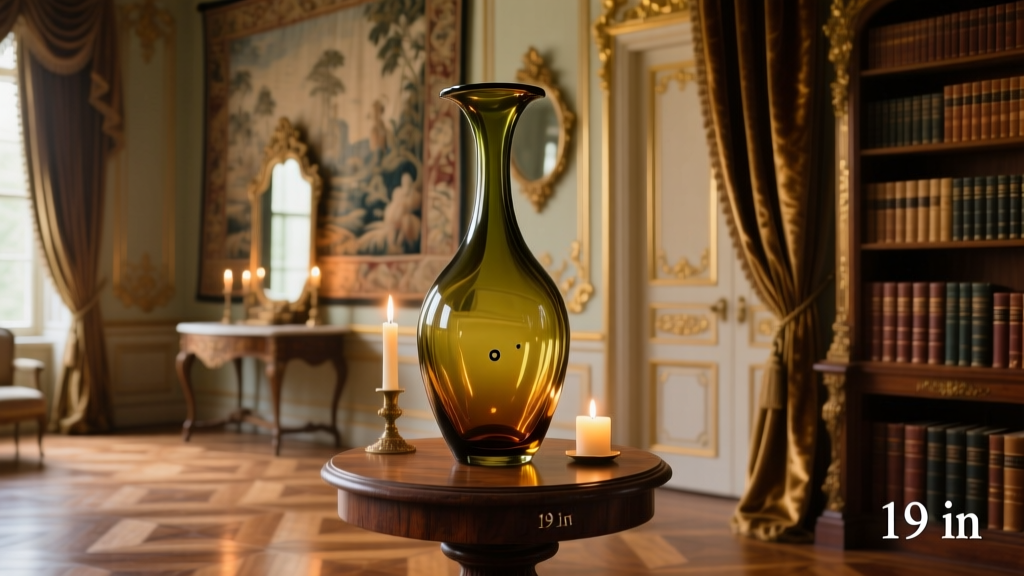
Blown Glass Bottle: Applied Sloping Lip, Dark Olive Amber, Pontil Marked — A 19-Inch American Bottlemaker’s Masterpiece

Aurene Vase, Gold Oval Shouldered, Flared Rim: Steuben Glass 8½-Inch Masterpiece — History, Identification & Conservation

Toy Tractor Fast Freight Friction Tin Japan: History, Identification, and Restoration Insights

Antique-Informed Decorating Trends: Timeless Design Principles for Modern Interiors

Rookwood Frog-Shaped Ashtray: White-Green Tinted Mouth, 1929, 3¼ Inches — A Study in Art Pottery Innovation and Smoking Culture
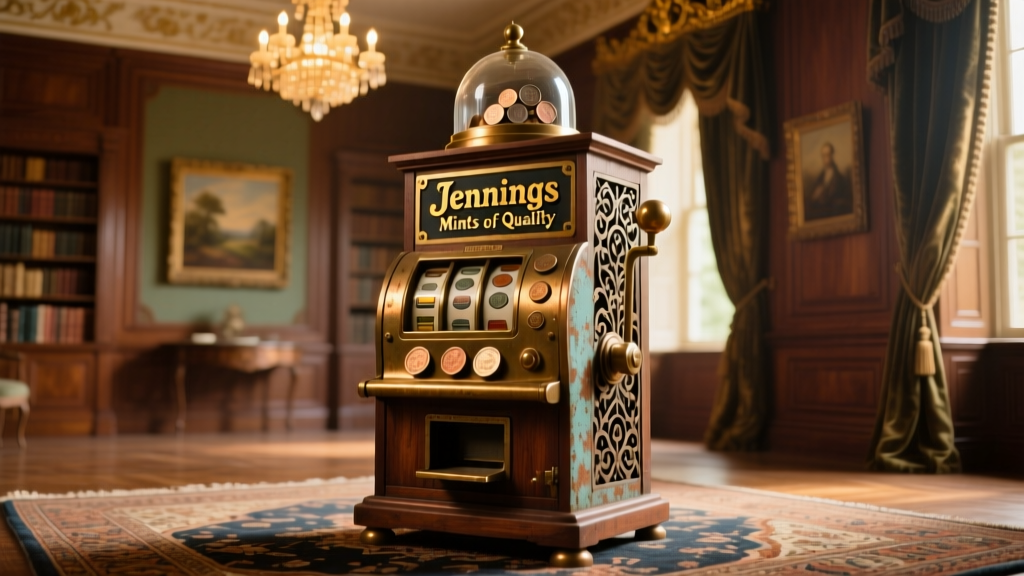
Jennings Mints of Quality: The Engineering Legacy and Restoration Pathway of Coin-Operated Slot Machines and Side Vendors
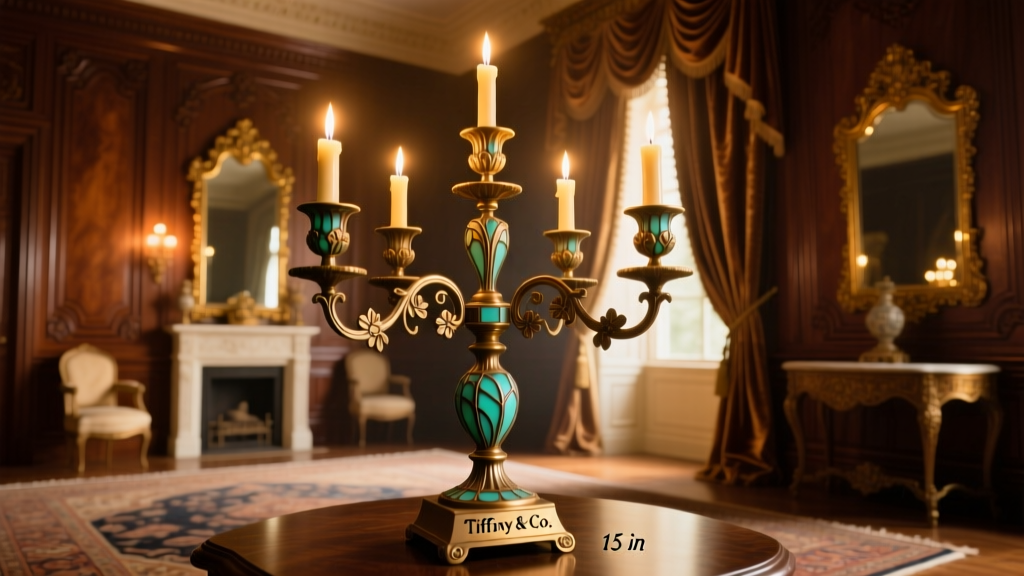
Tiffany Studios Bronze 6-Light Candelabrum: Authentication, Design Legacy, and Restoration Protocol
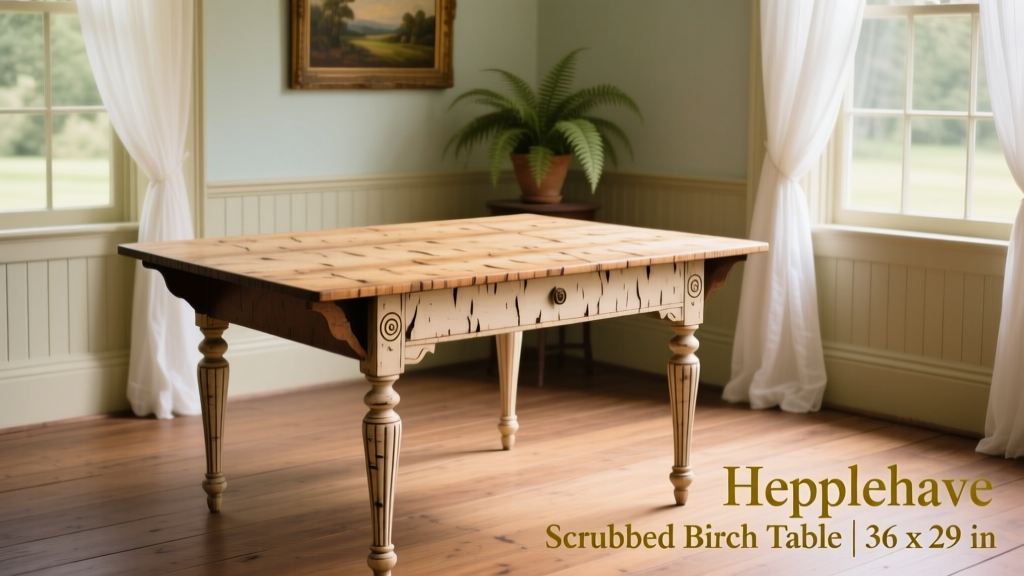
Hepplewhite Drop-Leaf Table in Birch with Authentic Scrubbed Top: A 36 × 29-Inch Country Antiquity

Fischer Mieg: Swiss Precision, Bauhaus Integrity, and the Enduring Legacy of Mid-Century Modern Furniture