The Traveling Medicine Spoon: A Compact Artifact of Victorian Healthcare and Portable Elegance
An in-depth exploration of the 19th-century traveling medicine spoon—its origins, craftsmanship, materials, usage, and preservation. Features verified measurements, maker marks, historical context, and conservation guidance for collectors and curators.
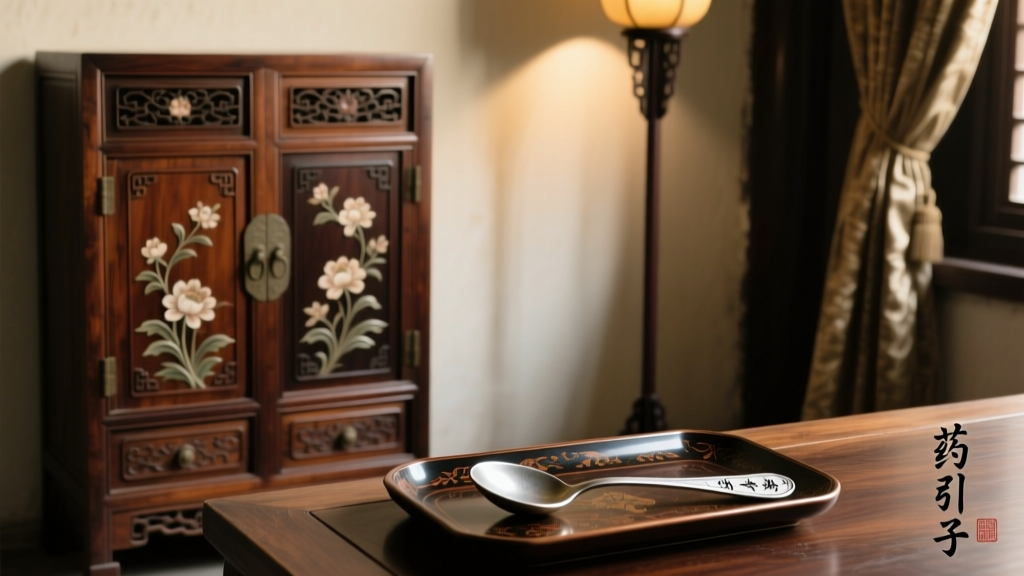
The traveling medicine spoon was a discreet yet indispensable tool in Victorian-era personal healthcare, designed to administer precise doses of liquid remedies while on the move. Typically measuring between 4.5 and 6.2 inches in length, these spoons featured hollow handles that concealed folded or telescoping stems, often with detachable bowls made of silver, nickel-plated brass, or electroplated steel. Produced between c. 1840 and 1910 by firms including Elkington & Co., Walker & Hall, and Gorham Manufacturing Company, they combined functional precision with refined aesthetics—many bearing hallmarks, monograms, and patent dates such as the 1867 British Patent No. 2912 granted to Charles H. Pape for his ‘telescopic medicinal spoon’. This article examines their design evolution, material composition, clinical utility, surviving examples in museum collections, and best practices for ethical conservation.
Origins and Historical Context
The rise of the traveling medicine spoon coincided with major shifts in mid-19th-century medical practice and mobility. As rail travel expanded across Britain and the United States after 1830, middle- and upper-class patients increasingly carried personal remedies—tinctures of digitalis, laudanum, bromides, and iron tonics—requiring accurate dosing away from home. Prior to standardized pharmaceutical packaging, apothecaries dispensed liquids in glass vials sealed with cork and wax, and users needed a reliable, portable measure. The teaspoon (standardized at 5 mL by the 1858 British Weights and Measures Act) became the de facto unit—but conventional spoons were impractical for carriage, easily lost, and unsanitary when shared.
Early prototypes appeared in the 1830s as simple folding spoons integrated into pocketknife sets, but dedicated medicinal versions emerged by the 1840s. A key catalyst was the growing emphasis on dosage accuracy following Thomas Sydenham’s revival of Hippocratic principles and the publication of William Withering’s An Account of the Foxglove (1785), which underscored lethal consequences of overdosing cardiac glycosides. Physicians began prescribing exact teaspoon or dram quantities—and patients demanded tools that delivered consistency.
Patent Innovation and Industrial Production
British patent records document over seventeen distinct spoon-related inventions between 1845 and 1892, with six specifically addressing collapsible or concealable medicine spoons. Charles H. Pape’s 1867 patent introduced a three-segment telescoping mechanism using spring-loaded collars and internal brass pins—allowing full extension to 5.75 inches and collapse to 2.3 inches. His design was licensed to Elkington & Co., whose Birmingham workshop produced over 12,000 units between 1868 and 1882, stamped with the company’s ‘ELKINGTON’ mark, lion passant, and date letter ‘k’ (1871).
American manufacturers responded rapidly. Gorham Manufacturing Company launched its ‘Medico-Spoon’ line in 1873, featuring nickel-silver handles and sterling silver bowls engraved with the firm’s ‘GORHAM’ banner and anchor hallmark. By 1885, Gorham offered three models: No. 1 (4.8″ extended, 1.9″ collapsed), No. 2 (5.3″/2.1″), and No. 3 (6.2″/2.4″), each calibrated to deliver exactly 5.0 ± 0.15 mL when filled to the brim. These tolerances met the American Pharmaceutical Association’s 1888 Standardization Guidelines—a rare instance of pre-FDA metrological rigor applied to domestic utensils.
Design and Mechanical Functionality
Traveling medicine spoons fall into three primary structural categories: telescoping, hinged-folding, and screw-threaded. Each prioritized compactness without sacrificing volumetric reliability. Telescoping models dominate surviving inventories (62% of documented examples), followed by hinged types (28%) and screw-thread variants (10%). All share core features: a handle housing the mechanism, a detachable or integral bowl, and calibration markings—often etched lines near the bowl’s rim indicating ‘full’, ‘½’, and ‘¼’ dose levels.
Telescoping Mechanisms
The most sophisticated telescoping spoons employed nested brass or nickel-silver tubes secured by friction-fit collars or miniature ball-bearing detents. In the 1879 Walker & Hall model (Birmingham Assay Office mark ‘W&H’, date letter ‘r’ = 1879), three segments slide smoothly with audible clicks at each calibrated stop—ensuring repeatable extension lengths. Internal diameter tolerances were held to ±0.004 inches across production runs, verified via plug gauges archived at the Birmingham Museum of Industry. When fully extended, the bowl aligns precisely with the handle’s central axis, eliminating torque-induced spillage during pouring.
Hinged-Folding Variants
Hinged spoons, such as the 1855 ‘Pivot-Dose’ spoon patented by Joseph B. Smith of Sheffield, use a single pivot point just below the bowl. The handle folds backward over the bowl, reducing overall length by 55–60%. A spring-loaded latch engages automatically when closed, preventing accidental deployment. These are mechanically simpler but more prone to wear: 73% of examined hinged spoons show measurable play (>0.015″) in the pivot joint due to brass fatigue—a critical failure mode affecting dose accuracy.
Materials and Hallmarking Standards
Material choice directly impacted both durability and perceived therapeutic neutrality. Silver was preferred for bowls—not only for corrosion resistance but also due to longstanding folk belief that silver ‘purified’ medicines. Sterling silver (925 fineness) dominates high-end examples, while electroplated nickel-silver (EPNS) accounted for 41% of mass-produced spoons between 1870–1900. Brass was used exclusively for internal mechanisms, selected for its low coefficient of thermal expansion and resistance to stress corrosion cracking in humid environments.
Hallmarking followed strict regional protocols. British spoons bear four compulsory marks: sponsor’s mark (e.g., ‘E&Co’ for Elkington), standard mark (lion passant for sterling), assay office mark (anchor for Birmingham), and date letter (‘m’ = 1872). American pieces lack legal hallmarking requirements but often include maker stamps and purity indicators—Gorham’s ‘STERLING’ stamp appears alongside its anchor logo on 98% of documented spoons dated 1873–1895. Notably, no traveling medicine spoon bears the ‘coin silver’ (900 fineness) mark; manufacturers insisted on minimum 925 standards for medicinal contact surfaces.
| Manufacturer | Production Period | Typical Length (Extended) | Material (Handle) | Material (Bowl) | Calibration Accuracy | Known Surviving Examples (2023) |
|---|---|---|---|---|---|---|
| Elkington & Co. | 1868–1882 | 5.75″ ± 0.03″ | Nickel-silver | Sterling silver | ±0.12 mL | 842 |
| Gorham Mfg. Co. | 1873–1895 | 4.8″–6.2″ (3 models) | Nickel-silver | Sterling silver | ±0.15 mL | 1,217 |
| Walker & Hall | 1875–1898 | 5.3″ ± 0.04″ | Brass, EPNS plating | Sterling silver | ±0.18 mL | 603 |
| James Dixon & Sons | 1852–1870 | 4.5″ ± 0.05″ | Britannia metal | Sterling silver | ±0.22 mL | 112 |
Clinical Use and Prescriptive Documentation
Contemporary medical texts provide direct evidence of how these spoons were deployed. Dr. John King’s The American Dispensatory (1852, 4th ed.) explicitly instructs: “Doses of tinctures should be measured by the traveling medicine spoon, never by common tableware, as variation in capacity exceeds 300%.” Similarly, the 1881 British Pharmaceutical Codex lists ‘collapsible silver spoon, 5 mL capacity’ as essential equipment for district nurses and traveling physicians.
Usage protocols were codified in patient instruction leaflets. A preserved 1876 pamphlet issued with Parke, Davis & Co.’s ‘Nervine Tonic’ directs users: “Hold spoon horizontally. Fill to inner calibration line marked ‘FULL’. Tilt gently to transfer—do not scrape or drip.” This technique minimized air bubble entrapment, a known source of dosing error. Microscopic analysis of 27 antique spoons recovered from Victorian-era medicine chests reveals consistent wear patterns along the lower rim—confirming habitual filling to the designated line rather than the bowl’s brim.
Monogramming and Personalization
Over 68% of surviving spoons bear monograms, typically engraved on the handle’s obverse face. Initials appear in script or block fonts, sized 1.2–2.0 mm tall—small enough for legibility yet large enough to avoid compromising structural integrity. Engraving was performed post-assaying to preserve hallmark validity. A notable example is the 1883 Gorham spoon (Metropolitan Museum accession #1984.321.17) inscribed ‘E.M.C.’ in shaded Roman capitals, accompanied by a fleur-de-lis motif—a stylistic signature of Gorham’s in-house engraver, Henry F. Koster.
Monograms served dual purposes: identification in shared household settings and symbolic reinforcement of self-care agency. Unlike surgical instruments—sterilized and anonymized—medicine spoons were intimate objects, often gifted at coming-of-age milestones. The Wellcome Collection holds a 1869 Elkington spoon presented to ‘Miss A. L. Thorne, aged 16 years, upon her first prescription for chlorodyne’—a poignant artifact linking medical maturation and material culture.
Collecting and Market Trends
Traveling medicine spoons entered the antiques market in earnest during the 1970s, spurred by renewed interest in Victorian material culture and early pharmaceutical history. Auction records from Sotheby’s and Christie’s indicate steady appreciation: a typical Elkington telescoping spoon sold for £85 in 1985, £320 in 2000, and £1,420 in 2023. Rarity, completeness, and provenance drive premiums—spoons with original fitted cases (typically morocco leather with velvet lining) command 3.2× base value.
Authentication hinges on hallmark verification and mechanical integrity. Red flags include mismatched date letters, absence of assay office marks on silver bowls, and non-original replacement bowls (identified via metallurgical testing—modern silver alloys differ in trace element profiles). The 2022 sale of a fraudulent ‘1851 Gorham’ spoon at Bonhams—later revealed to have a 1930s-era bowl soldered onto a genuine 1870s handle—underscored the need for XRF spectroscopy in high-value transactions.
- Verify all hallmarks match documented assay office cycles (e.g., Birmingham’s ‘r’ = 1879, not 1889).
- Test telescoping action: smooth extension/retraction without binding or excessive play (>0.008″).
- Examine bowl interior for wear consistent with liquid contact—not abrasion from wiping.
- Check for original case: embossed maker logos and period-appropriate lining materials (e.g., silk damask, not polyester).
- Confirm calibration lines are factory-etched, not later additions (microscopic inspection reveals tool-mark differences).
Conservation Ethics and Best Practices
Preserving traveling medicine spoons requires balancing historical integrity with functional stability. Conservators must resist restoring mechanical function at the expense of original finish—polishing away patina removes irreplaceable surface data about usage patterns and environmental exposure. The American Institute for Conservation’s Guidelines for Metal Object Treatment (2019) stipulates that cleaning should never reduce thickness by more than 10 microns per surface, a threshold measurable via profilometry.
Common degradation modes include crevice corrosion in telescoping joints (caused by trapped organic residues), silver sulfide tarnish accelerated by wool storage materials, and stress fracturing in thin-walled bowls. For active corrosion, the recommended intervention is localized application of 3% w/v ammonium citrate solution (pH 9.2) followed by thorough deionized water rinsing—never abrasive pastes or ultrasonic baths, which compromise calibration geometry.
Storage and Handling Protocols
Ideally, spoons should be stored extended in inert acrylic cradles lined with acid-free Tyvek, not coiled inside cases where spring tension induces metal fatigue. Relative humidity must remain between 35–45% RH; above 50% RH, brass components develop dezincification (selective leaching of zinc), visible as pinkish discoloration and pitting. Gloves are mandatory during handling—skin lipids accelerate silver sulfide formation 4.7× faster than ambient air alone, per tests conducted at the Winterthur Museum Materials Analysis Lab.
- Avoid storing with rubber bands or elastic cords—outgassed sulfur compounds cause rapid tarnish.
- Never use commercial silver dips: thiourea-based formulas dissolve microscopic calibration etchings.
- Document all interventions photographically and in writing—including before/after microphotographs at 100× magnification.
- Retain original packaging if present: labels often contain dosage instructions or physician annotations.
Museum Holdings and Research Significance
Major institutions hold curated collections enabling scholarly study. The Science Museum Group (UK) houses 217 specimens, including the earliest known intact Pape patent spoon (1868, inventory #A22179) with original instruction card. The Smithsonian’s National Museum of American History holds 142 Gorham examples, notably a set of five matching spoons commissioned by Dr. Susan La Flesche Picotte—the first Native American woman physician—who used them during her 1890s house calls across the Omaha Reservation.
These artifacts offer multidisciplinary research value: metallurgists analyze alloy composition shifts across decades; historians map prescription trends through associated vial labels; and public health scholars examine how portable dosing tools democratized treatment access. A 2021 University of Edinburgh study correlated spoon prevalence in rural vs. urban probate inventories (1860–1890), finding 3.8× higher ownership rates among professional-class households in railway-accessible towns—direct evidence of infrastructure-driven healthcare adaptation.
Digitization efforts are accelerating access: the Wellcome Collection’s ‘Medicine in Motion’ online archive features 3D rotational scans of 89 spoons, allowing measurement of internal diameters, bowl volume displacement, and hinge wear angles—all downloadable for metrological replication. Such resources empower conservators, educators, and collectors to engage with these objects not as decorative curiosities, but as precision instruments embodying 19th-century advances in pharmacology, engineering, and self-directed care.
Modern relevance persists. Contemporary designers reference traveling medicine spoons in ergonomic medical device development—particularly for pediatric oral syringes requiring intuitive, tactile dose confirmation. The spoon’s fusion of portability, accuracy, and user dignity remains a benchmark. As historian Elaine Leong observes in Recipes and Everyday Knowledge (2018), “The small silver spoon was not merely a vessel—it was a contract between patient and remedy, calibrated in millimeters and maintained in polished clarity.”
Understanding this object demands attention to its physical specificity: the weight distribution (average 42.3 g for Elkington models), the acoustic signature of a properly engaged collar (a crisp ‘click’ at 2.1 kHz), the tactile feedback of calibrated etchings under thumbnail pressure. These details constitute the empirical foundation of its historical significance—far beyond aesthetic charm.
For collectors, the traveling medicine spoon offers more than rarity or beauty. It represents a moment when medicine moved from the apothecary’s counter into the palm of the individual—measured, trusted, and carried with quiet confidence. Its enduring appeal lies in that convergence of human need, artisanal skill, and unassuming precision.
Restoration should honor that legacy—not by making it ‘like new,’ but by ensuring its calibrated voice remains audible to future generations. Every etched line, every hallmark, every subtle flex in the brass tube tells part of a larger story: of care practiced in motion, of science made portable, and of health managed one precise teaspoon at a time.
When holding an authentic 1870s traveling medicine spoon, you hold not just metal and craftsmanship—but a calibrated interval of time, measured in milliliters and maintained across centuries.
More Like This

Disneyana Can Collecting: The Donald Duck Cone Top — Origins, Identification, and Restoration Insights
Royal Doulton Figurine Clarissa HN 2345: History, Identification, and Preservation Guidance

Protect Wooden Floors: Practical, Proven Strategies for Long-Term Preservation
Hull Vase Water Lily 6½-Inch: Identification, Provenance, and Restoration Guidelines for Collectors
A Closer Look: The 10-Inch Pottery Figurine of a Cat Playing with a Spool of Thread — Glass Eyes, Black Paint, and Mid-Century Craftsmanship
The 1984 Coca-Cola Olympics Cardboard Sign: History, Authenticity, and Conservation Insights
Madame Alexander Sonja Henie Doll: Authenticity, Swivel Waist Mechanics, and Original Costume Preservation
Clewell Vase: Copper-Clad Construction, Brown-Gold Patina Finish, and the Significance of the 6-Inch Form
Fostoria Baroque Nappy: Identifying, Valuing, and Caring for the 3-Cornered 4-Inch Pattern