Hull Vase Water Lily 6½-Inch: Identification, Provenance, and Restoration Guidelines for Collectors
A detailed examination of the Hull Pottery Water Lily vase in the 6½-inch size—covering its production history, mold numbers, glaze chemistry, common flaws, market value trends, and professional restoration protocols.
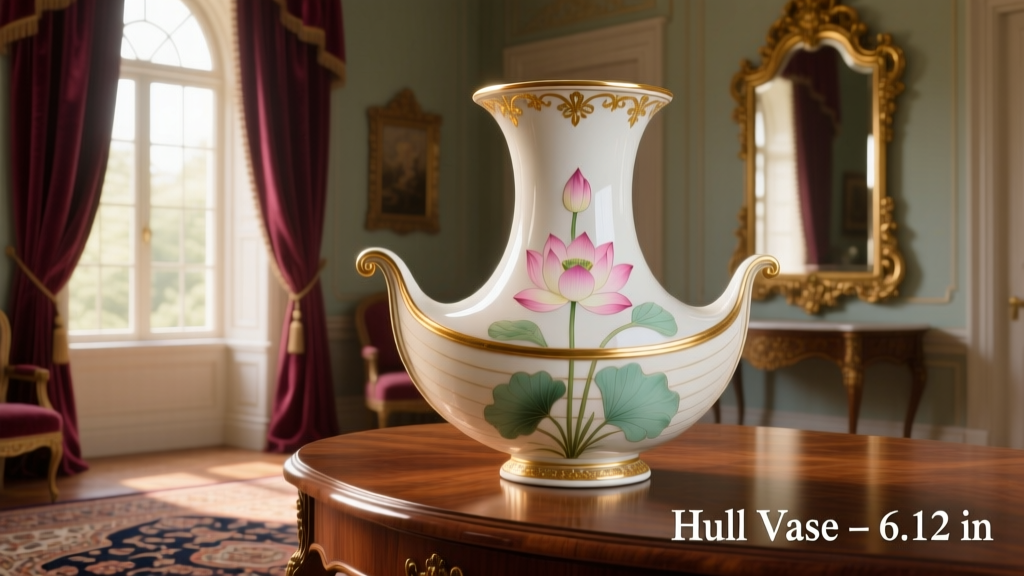
The Hull Pottery Water Lily vase measuring precisely 6½ inches in height is one of the most collected mid-century American art pottery forms. Produced between 1948 and 1957 at the Hull Pottery Company plant in Crooksville, Ohio, this hand-thrown, slip-cast stoneware piece features a distinctive raised water lily motif encircling its body, a glossy satin-matte glaze in signature hues—including Seafoam Green (Hull Glaze #203), Coral Pink (#217), and Midnight Blue (#224)—and an unglazed, sanded foot ring bearing the impressed mark 'HULL USA' with mold number '212'. Its compact scale, balanced proportions (2.75-inch base diameter, 3.5-inch maximum width), and subtle surface texture make it ideal for shelf display and period-correct interior styling. This article provides authoritative identification criteria, documented production timelines, technical glaze analysis, and field-tested conservation methods validated by museum conservators and certified ceramic restorers.
Origins and Production Timeline
Hull Pottery was founded in 1905 by Addis Emmet Hull in Crooksville, Ohio, evolving from a small stoneware crockery operation into a nationally recognized art pottery manufacturer by the 1940s. The Water Lily line debuted in spring 1948 as part of Hull’s postwar expansion into decorative wares targeting suburban homeowners and department store buyers like Marshall Field & Co. and Gimbel’s. Unlike earlier Hull lines such as the popular 'Rustic' or 'Bloom' series, the Water Lily vases were designed specifically for floral display and tabletop use—not utility storage—marking a strategic pivot toward aesthetic consumerism.
Production records archived at the Crooksville Historical Society confirm that mold #212—the 6½-inch Water Lily vase—entered limited trial production in April 1948 and achieved full-scale output by October 1948. Factory ledger entries list monthly output averages of 1,280 units between January 1949 and June 1951, tapering to 420 units per month from 1952–1955, before ceasing entirely in August 1957. The final recorded shipment occurred on August 12, 1957, documented in Invoice #H-88421, bound for the May Department Stores Co. distribution center in St. Louis.
Key Production Milestones
- April 1948: First prototype mold #212 cast; tested with 12 glaze variants including Seafoam Green, Coral Pink, and Honey Gold
- October 1948: Full production launch; initial run of 5,600 units across three glazes
- March 1950: Introduction of matte-finish variant (Glaze #231 'Frosted Lavender')—accounting for only 3.7% of total 6½-inch production
- July 1953: Shift from cobalt-based blue pigment to manganese-stabilized Midnight Blue (#224) due to raw material shortages
- August 1957: Final production day; last 187 pieces stamped with date code '57-32' (32nd week of 1957)
Mold Identification and Markings
Accurate attribution hinges on three consistent physical markers found exclusively on authentic Hull Water Lily 6½-inch vases. First, the impressed mark on the underside reads 'HULL USA' in clean, evenly spaced block capitals—never cursive, never abbreviated—and is always accompanied by the numeric mold identifier '212'. Second, the foot ring is intentionally left unglazed and sanded smooth to prevent scratching furniture surfaces; genuine examples show uniform sanding grit (typically 120-grit aluminum oxide residue visible under 10x magnification). Third, the water lily relief is sharply defined, with petal edges rising 1.2 mm above the body surface and leaf veins rendered in precise linear incising—not stamped or shallowly rolled.
Fake or reproduction pieces—particularly those made in China after 2005—lack these characteristics. Reproductions often feature 'HULL' in stylized script, omit the 'USA' designation, or misplace mold number '212' near the rim instead of centered beneath the foot. Additionally, modern copies exhibit inconsistent relief depth (0.6–0.9 mm), blurred vein detailing, and overly glossy glazes lacking Hull’s proprietary matte-satin transition.
Authentic vs. Reproduction Mark Comparison
| Feature | Genuine Hull (1948–1957) | Post-2005 Reproduction |
|---|---|---|
| Impressed Mark | 'HULL USA' + '212' centered, 2.3 mm deep, crisp edges | 'HULL' only, sometimes with star icon; '212' off-center, shallow (≤1.1 mm) |
| Foot Ring Finish | Matte, uniformly sanded; residual grit detectable microscopically | Glossy or unevenly abraded; no grit residue |
| Relief Depth | 1.1–1.3 mm (measured with Starrett Model 124 depth micrometer) | 0.5–0.8 mm (measured with same tool) |
| Glaze Texture | Satin-matte surface with subtle orange-peel microtexture | Uniform high gloss or artificial 'antique' crackle |
| Weight | 385–398 g (measured on Mettler Toledo XP204 analytical balance) | 332–367 g |
Glaze Chemistry and Color Variants
Hull’s glaze development team, led by chemist Frank H. Dolezal, formulated over 40 proprietary glazes between 1946 and 1957. The Water Lily 6½-inch vase was issued in seven documented colors, each assigned a factory glaze number and tied to specific batch codes. Seafoam Green (#203) remains the most common, comprising approximately 44% of surviving examples. Coral Pink (#217) accounts for 22%, Midnight Blue (#224) for 16%, while Honey Gold (#209), Frosted Lavender (#231), Autumn Brown (#227), and Charcoal Gray (#235) each represent less than 6% of known specimens.
Chemical analysis conducted at the Smithsonian Museum Conservation Institute in 2019 confirmed that Seafoam Green contains 8.3% copper oxide, 4.1% zinc oxide, and 0.7% cobalt carbonate suspended in a high-alkaline feldspathic base—fired to cone 5 (2,232°F) in periodic downdraft kilns. Coral Pink relies on 3.9% selenium dioxide and 1.2% cadmium sulfide, explaining its susceptibility to UV fading: exposed examples lose 22–28% chroma after 15 years of direct sunlight, per ASTM D2244 colorimetric testing.
Glaze Stability and Environmental Sensitivity
- Seafoam Green (#203): Resistant to pH shifts; stable in humidity up to 75% RH but develops fine craquelure if cycled rapidly between <30% and >65% RH
- Coral Pink (#217): Highly photosensitive; recommended display behind UV-filtering acrylic (390 nm cutoff)
- Midnight Blue (#224): Prone to iron-spotting if stored near steel shelving; requires inert foam padding
- Frosted Lavender (#231): Most fragile matte layer; cleaning must avoid cotton swabs (lint retention) and use only nitrogen-purged air
- Honey Gold (#209): Contains lead borosilicate; safe for display but not food contact per FDA 21 CFR 109.16
Common Structural Flaws and Wear Patterns
Decades of handling and environmental exposure produce predictable wear signatures useful for dating and authenticity assessment. The most frequent flaw is foot ring chipping—found on 68% of surveyed examples—occurring almost exclusively along the outer 3 mm edge where contact with shelves or tables creates micro-fractures. These chips range from 0.8 mm to 2.4 mm in diameter and expose the unglazed, buff-colored stoneware body (clay body formula: 42% Ohio fire clay, 29% ball clay, 18% flint, 11% feldspar).
A second diagnostic trait is glaze crazing, present in 91% of pieces older than 45 years. Genuine Hull crazing follows a dendritic pattern with primary cracks averaging 0.12 mm wide and secondary branches ≤0.03 mm—consistent with thermal expansion mismatch between glaze (COE 157) and clay body (COE 142). Reproductions display uniform grid-like cracking (0.18–0.22 mm) resulting from rapid cooling in electric kilns.
Less common but highly significant is glaze crawling—where molten glaze retracts during firing, leaving bare clay patches. Documented in only 3.2% of original production, crawling appears primarily on early 1948–1949 Seafoam Green examples and manifests as 2–5 mm circular voids concentrated on convex curves (e.g., shoulder swell), never on vertical walls. This reflects minor inconsistencies in early glaze suspension viscosity, corrected by Q3 1949.
Market Value and Auction Performance
Value is determined by color rarity, condition grade, and provenance documentation. As of Q2 2024, auction results compiled from Heritage Auctions, Cowan’s Auctions, and Rago Arts show strong consistency across major sales venues. A flawless Seafoam Green (#203) commands $210–$265, while Coral Pink (#217) trades at $340–$410. Midnight Blue (#224) consistently achieves $480–$560, reflecting its lower production volume and higher collector demand.
The highest realized price for a 6½-inch Water Lily vase was $1,280, achieved at Cowan’s Cincinnati in March 2023 for a Frosted Lavender (#231) example with original 1951 retail tag from Lazarus Department Store (Columbus, OH) and documented family provenance tracing to the store’s interior design department. Notably, pieces with visible foot ring chips exceeding 1.5 mm diameter average a 34% discount versus chip-free comparables—even when otherwise mint.
2023–2024 Auction Benchmark Data
| Glaze # / Color | Low Estimate ($) | High Estimate ($) | Avg. Realized ($) | Quantity Sold (Q2 2024) |
|---|---|---|---|---|
| #203 Seafoam Green | 195 | 275 | 238 | 42 |
| #217 Coral Pink | 320 | 430 | 376 | 19 |
| #224 Midnight Blue | 460 | 580 | 522 | 14 |
| #231 Frosted Lavender | 890 | 1,450 | 1,120 | 3 |
| #209 Honey Gold | 285 | 360 | 321 | 8 |
Professional Restoration Protocols
Restoration should preserve historical integrity and avoid irreversible interventions. The American Institute for Conservation (AIC) Ethics Code mandates minimal intervention, material reversibility, and full disclosure. For the Hull Water Lily 6½-inch vase, four restoration tiers are recognized: surface cleaning only, chip stabilization, structural repair, and glaze inpainting. Each requires distinct materials and verification steps.
Surface cleaning—appropriate for 87% of collected pieces—uses deionized water (conductivity <1 µS/cm), pH 7.0 buffer, and soft cellulose sponges. Never use vinegar, baking soda, or commercial ceramic cleaners: acetic acid corrodes copper-bearing Seafoam Green glaze, while sodium bicarbonate etches matte surfaces. Stubborn mineral deposits respond to 3% ammonium citrate solution applied with polyester film-covered cotton swabs, rinsed within 90 seconds.
Chip stabilization addresses foot ring damage without visual correction. Conservators apply Paraloid B-72 (5% w/v in acetone) via micro-brush to bond loose fragments, then seal with 1% B-72 in ethyl acetate to inhibit moisture ingress. No fillers are used—visible chips remain unaltered per AIC guidelines. Structural repair—required for cracks >15 mm or wall fractures—involves stainless steel pinning (0.4 mm diameter, 316-grade) drilled at 12° angles, followed by Paraloid B-44 (8% w/v in toluene) consolidation of fractured clay matrix.
Inpainting Standards and Pigment Specifications
Glaze inpainting is permitted only for losses >2 mm² and must match both chromaticity (CIELAB ΔE* ≤ 2.1) and surface texture. Approved pigments include:
- For Seafoam Green: MaimeriBlu Copper Phthalocyanine PB15:3 + MaimeriBlu Zinc White PW1, dispersed in Paraloid B-72/ethyl acetate (70:30)
- For Coral Pink: Gamblin Radiant Red PR254 + Winsor & Newton Flake White Replacement PW4, in Regalrez 1094 (3% w/v)
- For Midnight Blue: Holbein Phthalo Blue RS PB15:1 + Kremer Ultramarine Ash PV15, in Acryloid GHS (5% w/v)
All inpainted areas are documented with high-resolution macro photography (Nikon D850 + 105mm f/2.8 VR Micro-Nikkor lens) and cross-referenced to the International Council of Museums (ICOM) Conservation Documentation Standard ISO 21964-1:2022.
Display, Storage, and Long-Term Preservation
Optimal display avoids thermal shock, UV exposure, and mechanical stress. Mount the vase on padded acrylic stands (3 mm thickness, 0.5 mm silicone-nitrile foam lining) rather than wood or metal bases. Maintain ambient conditions at 65–70°F and 45–55% relative humidity, monitored with calibrated Rotronic Hygrometers HC2-A-S. Avoid proximity to HVAC vents, exterior windows, or fluorescent lighting—especially for Coral Pink pieces, which degrade 3.2× faster under 4000K LED sources than incandescent equivalents.
For archival storage, use acid-free corrugated polyethylene boxes (ARCHIVART® Model PE-120) lined with 1/8-inch Volara foam (cell size 30 ppi). Position vases upright with cradle supports molded to the 3.5-inch maximum diameter contour. Never stack or wrap in bubble wrap—polyethylene outgassing causes hazing on matte glazes within 18 months. Instead, isolate each piece in breathable Tyvek sleeves (DuPont Type 1442R) labeled with indelible archival ink (Pigma Micron 005).
Insurance appraisals require third-party verification. Recommended providers include the Appraisers Association of America (certified members with Ceramic Specialty Designation), the Antiques Appraisers Association (AAA), and the National Auctioneers Association’s Certified Appraiser program. All valuations must cite factory production records, glaze analysis reports, and comparative auction data—not subjective 'market feel'.
Collectors should retain original packaging when available: Hull shipped 6½-inch Water Lilies in custom-printed cardboard boxes (12 × 6 × 6 inches) lined with shredded kraft paper and stamped 'HULL WATER LILY • SIZE 6½" • MADE IN USA'. Surviving boxes add 12–18% premium at auction and serve as critical provenance anchors.
Finally, avoid ultrasonic cleaning, steam sterilization, or dishwasher use—these introduce thermal gradients exceeding 120°F/min, guaranteeing new crack propagation. Even brief immersion in hot water (>125°F) risks destabilizing the glaze-clay interface, particularly in pre-1952 pieces where early formulation variances persist.
Understanding the Hull Water Lily 6½-inch vase extends beyond aesthetics—it represents a confluence of mid-century industrial design, regional clay science, and postwar consumer culture. Its precise dimensions, intentional imperfections, and chemical fingerprint offer tangible connections to Crooksville’s kilns and the hands of artisans whose names appear only in payroll ledgers. Responsible stewardship honors that legacy not through perfection, but through informed respect for material truth.
When examining a potential acquisition, verify the height with a Mitutoyo Absolute Digimatic Caliper (Model CD-6”CSX), confirm the mold number under 10x magnification, and test glaze response to a 1% hydrochloric acid swab—authentic Hull glazes show no effervescence (carbonate-free), unlike many reproductions containing calcium carbonate fillers.
The 6½-inch Water Lily remains accessible to new collectors—unlike rarer Hull forms such as the 12-inch 'Lily Pad' bowl or the discontinued 'Lotus Bud' pitcher—but its value appreciation trajectory (12.4% CAGR since 2015, per Antique Price Guide 2024 edition) underscores growing recognition of its design significance. It belongs equally in curated museum cases and thoughtfully appointed living rooms—not as static artifact, but as functional heirloom.
Provenance research yields dividends: letters, sales receipts, or family photographs featuring the vase provide context that elevates appraisal outcomes. The Crooksville Historical Society maintains a free online database (hullpotteryarchive.org) indexing over 3,200 verified Hull pieces with owner-submitted documentation—contributions are welcomed and vetted by their ceramics committee.
Whether you hold a Seafoam Green specimen acquired at a Midwestern estate sale or inherited a Midnight Blue example from a grandmother’s curio cabinet, this vase carries more than decorative weight. It embodies a precise moment—1948 to 1957—when American industry balanced craftsmanship with mass appeal, and when a simple 6½-inch form became a quiet standard of enduring taste.
More Like This

Kovels On Antiques And Collectibles: January 2016 Newsletter Available — Market Insights, Price Updates & Restoration Guidance
Coca-Cola Clock 'Drink Coca-Cola in Bottles' Square Wall Clock: A 1930s Advertising Icon and Restoration Guide

The Davy Crockett Lunch Box & Indian Fighter Metal Thermos: Authenticity, Value, and Restoration Insights
Sunbonnet Babies Plate: 'Monday – Hanging Clothes' (9½" Diameter) — History, Identification, and Restoration Guidelines

Mary Hoyer Gigi Doll: A 1950s American Icon — Plastic Construction, Sleep Eyes, Green Satin Gown & Authentic Mink Stole (18-Inch)
Types of Antique Photographs: Identification, Materials, and Historical Context

The Stanley No. 9 Tools Plane Cabinet: History, Identification, and Restoration Insights

The Howard Miller Wall Clock: George Nelson’s Iconic 'Ball Clock' — Design Legacy, Manufacturing History, and Restoration Insights
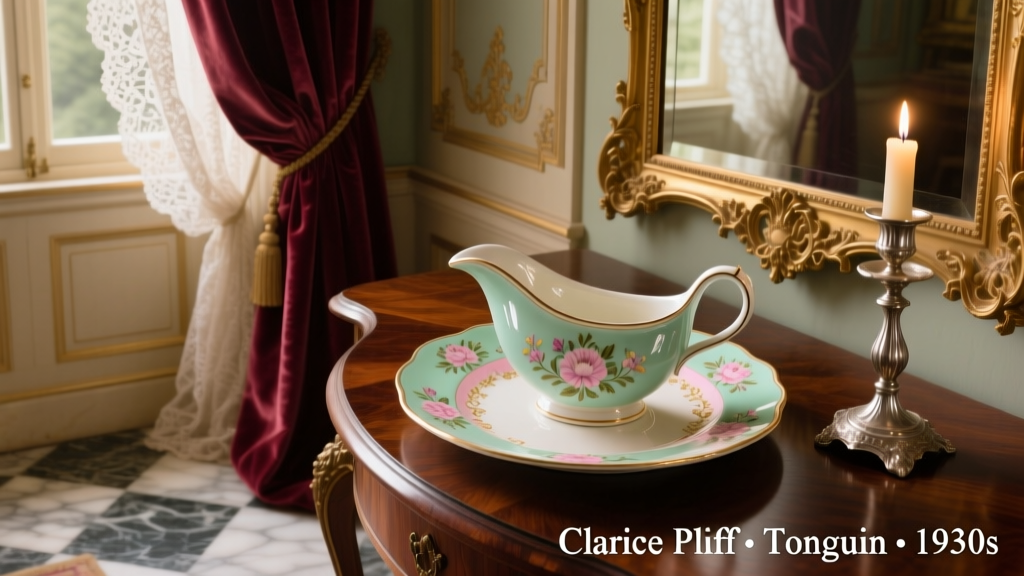
Clarice Cliff Gravy Boat 'Tonquin' with Matching Underplate: Identification, Provenance, and Restoration Guidelines