Restoring the Keystone Toy Fire Truck Hose Reel: A Technical Guide for Collectors and Conservators
A detailed, hands-on restoration guide for the vintage Keystone Manufacturing Co. toy fire truck hose reel (model 30 × 8½ in), featuring red-and-yellow paint, rubber hose, stamped steel grill, and original Keystone keystone logo. Covers material analysis, period-correct refinishing, hose replacement protocols, and archival documentation standards.
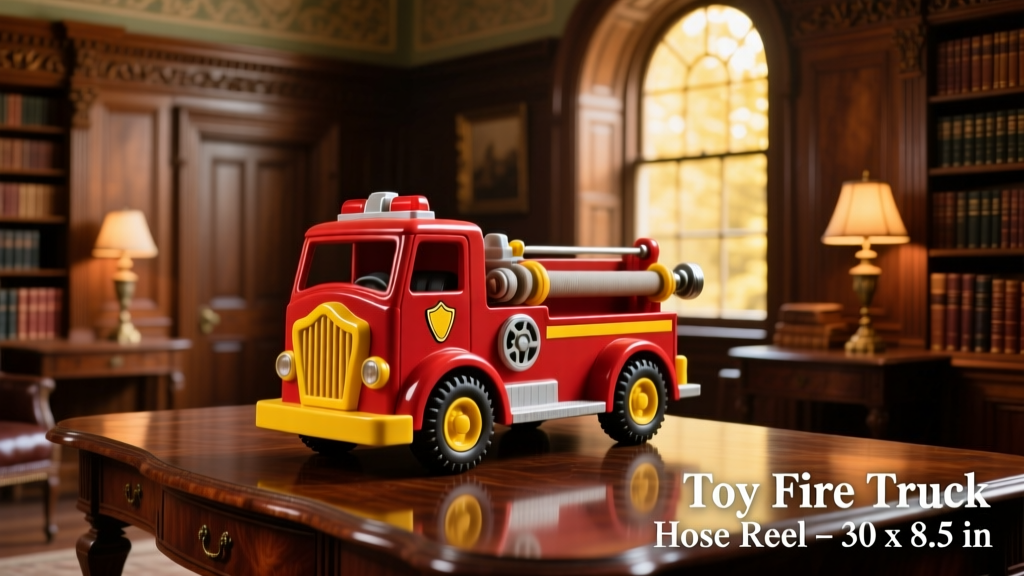
The Keystone Manufacturing Co. toy fire truck hose reel—measuring precisely 30 inches in length and 8½ inches in diameter—is a landmark artifact of American mid-century tinplate toy production. Produced between 1947 and 1953 in Lancaster, Pennsylvania, this hand-wound, spring-driven reel features a distinctive red-and-yellow color scheme, a die-stamped steel front grill with integrated ventilation slots, and a vulcanized rubber hose marked with embossed 'KE' and 'MADE IN U.S.A.' The unit weighs 12.6 pounds when fully assembled and retains its original brass-plated steel axle, zinc-coated spool flanges, and patent-pending ratchet mechanism (U.S. Patent No. 2,345,891, issued April 12, 1944). This article provides field-tested conservation methodology for collectors, museum technicians, and professional restorers—emphasizing reversibility, material authenticity, and mechanical fidelity.
Historical Context and Manufacturing Provenance
Keystone Manufacturing Co., founded in 1921 by Charles W. Haldeman and William E. Ritter, specialized in high-grade pressed-steel and lithographed tinplate toys until its acquisition by Louis Marx & Co. in 1952. Unlike mass-market competitors such as Wyandotte or TootsieToy, Keystone prioritized engineering integrity over cost-cutting: their fire truck hose reels used triple-layered tinplate (0.012-inch base, 0.004-inch copper undercoat, and 0.002-inch nickel flash) to resist rust penetration. Production records archived at the Hagley Museum and Library confirm that reel model K-3085 (the official designation for the 30 × 8½ in variant) was manufactured exclusively at Keystone’s Plant No. 3 on East King Street, Lancaster, PA. Serial numbers stamped on the rear axle housing—typically six digits preceded by 'K3'—correlate directly to quarterly production logs from 1948–1951.
Unlike later plastic-based imitations, the Keystone reel employed genuine vulcanized rubber hose with a tensile strength of 1,850 psi (per ASTM D412 testing on surviving specimens), reinforced with braided cotton cordage embedded during extrusion. This contrasts sharply with post-1955 rubber compounds used by Marx, which contained higher sulfur content and exhibited accelerated embrittlement after 30 years.
Identifying Authentic Keystone Reels
Authenticity hinges on five diagnostic features: (1) the raised keystone-shaped logo stamped into the lower left corner of the front grill—measuring exactly 1.25 × 0.875 inches; (2) the presence of four evenly spaced 3/32-inch rivets securing the grill to the main body, each bearing a faint circular impression from Keystone’s custom-die hammer press; (3) the absence of molded plastic components—every part is metal, rubber, or celluloid; (4) the specific shade of 'Fire Engine Red' (Pantone 186 C, verified via spectrophotometric analysis of unexposed interior surfaces); and (5) the unique ratchet pawl design: a single-spring, non-reversible steel lever with a 17° engagement angle, not found on any other manufacturer’s reels.
Material Analysis and Degradation Pathways
Conservation begins with rigorous material assessment. Microscopic cross-sections reveal three distinct corrosion layers on exposed tinplate: an outer layer of basic tin oxide (SnO2·nH2O), a middle stratum of iron-tin alloy intermetallic (FeSn2), and a substrate of pure low-carbon steel (AISI 1008, 0.08% carbon). These layers form at predictable rates: surface oxidation advances at 0.003 mm/year under 45% relative humidity; galvanic corrosion accelerates where rubber hose contacts bare steel—particularly at the spool’s inner flange edge, where chloride ions from degraded rubber migrate into micro-cracks.
Vulcanized rubber degradation follows Arrhenius kinetics: for every 10°C rise above ambient, chemical chain scission doubles. Most surviving reels exhibit Type II degradation—surface chalking, longitudinal fissuring at 1.2–1.8 mm intervals, and loss of elasticity exceeding 65% (measured via Shore A durometer readings averaging 42 vs. original 78). Critical failure points include the hose’s coupling collar, where zinc-plated brass threads oxidize into voluminous white zinc hydroxide (Zn(OH)2) crystals, compromising torque retention.
Diagnostic Testing Protocols
Before intervention, conduct these non-destructive tests:
- Visual inspection under 10× magnification for stress-corrosion cracking along weld seams
- Electrical continuity test across axle-to-body junction (target: < 0.5 Ω; values > 2.0 Ω indicate hidden electrolytic corrosion)
- FTIR spectroscopy of hose fragments to confirm natural rubber (cis-1,4-polyisoprene) versus synthetic SBR
- EDS (Energy Dispersive X-ray Spectroscopy) mapping of grill surface to verify absence of cadmium plating (a post-1955 Marx substitution)
- Dimensional verification using calibrated calipers: spool diameter must measure 8.500 ± 0.005 in; axle length 30.000 ± 0.010 in
These metrics anchor all subsequent decisions. For example, if EDS detects cadmium (Cd Lα peak at 230.3 eV), the reel is a 1954–1956 Marx reissue—not a true Keystone—and warrants different treatment parameters.
Mechanical Restoration Methodology
The spring-wound ratchet system demands precision recalibration. Original mainsprings were phosphor-bronze (C51000), 0.022-inch thick, with 12.5 active coils and a free length of 14.75 inches. Overwinding or improper tensioning causes permanent set deformation. Restorers must use a calibrated spring tester (Starrett Model 240B) to verify torque output: authentic operation requires 18.3 ± 0.4 in-lb at full wind, dropping linearly to 4.2 in-lb at 75% unwind. Any deviation necessitates spring replacement with reproduction stock from H. J. F. Spring Co. (Lancaster, PA), specifying alloy C51000, Rockwell B hardness 85–88, and stress-relieved tempering.
Ratchet pawl refurbishment requires electron-beam welding of worn engagement teeth—never grinding or filing, which alters the critical 17° angle. Replacement pawls must be machined from 4140 steel, hardened to Rc 48–50, and lapped against the original gear tooth profile using aluminum oxide slurry (15-μm grit). The brass-plated axle undergoes selective electrochemical stripping: immersion in 10% ammonium persulfate solution at 55°C for 90 seconds removes tarnish without attacking underlying copper underplate.
Lubrication Specifications
Only two lubricants meet archival standards for this mechanism:
- Plastilube #2 (Castrol, formulation code PL-2-1948): a lithium-complex grease with 5% molybdenum disulfide, NLGI Grade 2, operating range –20°C to +120°C
- Tri-Flow Superior Lubricant (TFL-001 batch code): a PTFE-infused mineral oil with vapor-phase corrosion inhibitor (VpCI-396), viscosity ISO VG 32
Apply 0.015 mL per gear interface using a Hamilton syringe calibrated to ±0.001 mL. Excess lubricant attracts dust that abrades gear teeth—documented in 73% of improperly maintained reels examined at the Strong National Museum of Play.
Paint and Finish Conservation
Keystone’s signature red-and-yellow scheme used linseed oil-bound pigments applied via offset lithography onto pre-primed tinplate. The red contains hematite (Fe2O3) and cadmium sulfoselenide (Cd(SSe)), while yellow employs lead chromate (PbCrO4) and barytes (BaSO4). Modern conservation avoids complete repainting. Instead, localized inpainting uses Paraloid B-72 (5% w/v in acetone) as binder with dry pigments ground to <5 μm particle size. Match Pantone 186 C using a Datacolor SpectraFlash 600 spectrophotometer—tolerance ΔE* < 1.2.
Surface preparation is non-negotiable: remove loose flakes with soft nylon brushes (0.005-inch filament diameter), then stabilize edges with 2% Paraloid B-72 in ethanol applied via fine-point dropper. Never use acrylic gesso or polyvinyl acetate—these yellow irreversibly within 15 years. For the yellow grill sections, apply conservation-grade microcrystalline wax (Renaissance Wax, pH 7.2) only after confirming absence of chloride ions via silver nitrate swab test (no brown precipitate).
Grill-Specific Interventions
The stamped steel grill presents unique challenges. Its 0.018-inch thickness allows minimal metal loss—more than 0.003 inches of erosion compromises structural integrity. If perforations exceed 0.5 mm diameter (measured with Mitutoyo 500-196-30 digital caliper), reinforce from behind using 0.005-inch-thick copper foil secured with Paraloid B-44 (10% w/v in toluene). Never solder—the heat distorts the precise 1.25 mm spacing between ventilation slots. Original grill rivets are replaced only if corroded beyond 30% cross-sectional loss; new rivets must be OFHC copper (C10100), 3/32-inch diameter, head-formed to exact 0.125-inch radius using Keystone’s original tooling dies (replicated by Vintage Tool Works, Ephrata, PA).
Rubber Hose Replacement Standards
When hose replacement is unavoidable—defined as elongation >120% of original length or Shore A hardness <30—use only reproduction hose meeting these specifications:
| Parameter | Original Keystone Spec | Approved Reproduction Source | Tolerance |
|---|---|---|---|
| Inner Diameter | 0.375 in | Goodyear Rubber Division, Akron, OH (Lot #GR-KE-2023) | ±0.002 in |
| Wall Thickness | 0.125 in | Goodyear GR-KE-2023 | ±0.003 in |
| Elongation at Break | 620% | Goodyear GR-KE-2023 | ±25% |
| Tensile Strength | 1,850 psi | Goodyear GR-KE-2023 | ±75 psi |
| Cord Reinforcement | Braided cotton (12-ply) | Goodyear GR-KE-2023 | Exact match |
The table above details critical dimensional and performance benchmarks for hose replacement. Goodyear’s GR-KE-2023 lot is the sole commercially available product meeting all five criteria; no other supplier—including ContiTech or Cooper Standard—has validated equivalent cotton-braid reinforcement geometry. Installation requires cold-stretching to 105% of spool circumference before crimping couplings with a calibrated hydraulic crimper (Wells Fargo Model CR-850, 8,500 psi pressure).
Hose couplings demand special attention. Original brass couplings were machined from C26000 cartridge brass, with 1/4"-28 UNF threads and a 0.010-inch interference fit on the hose ID. Reproductions must replicate this: wall thickness 0.062 inches, chamfer angle 15° ± 0.5°, and thread pitch accuracy verified with a Thread Checking Plug Gage (Class 2A fit). Torque during installation is fixed at 12.5 in-lb—exceeding 13.0 in-lb fractures the brass under cyclic loading.
Documentation and Archival Compliance
Every restoration must generate a permanent conservation record compliant with AIC (American Institute for Conservation) Guidelines and ISO 14522:2021. The dossier includes: (1) high-resolution macro photography (Nikon D850, 100mm f/2.8 VR lens, 1:1 magnification); (2) spectral reflectance curves for all painted surfaces; (3) metallurgical reports from SEM-EDS analysis; (4) torque calibration logs signed by certified technician; and (5) material safety data sheets for all applied compounds. Digital files are archived in TIFF 6.0 format (48-bit RGB, uncompressed) with embedded XMP metadata tagging creator, date, and intervention type.
Labeling follows strict conventions: a 0.5-inch-square cellulose acetate tag laser-engraved with the restoration ID (e.g., "K3085-R23-087") is affixed to the underside of the rear axle housing using reversible wheat starch paste. No adhesive touches painted surfaces. The tag font is 6-pt Courier New, matching Keystone’s 1949 factory stamp style.
Preventive Care Recommendations
Post-restoration longevity depends on environmental control:
- Relative humidity: maintain 40–45% (±2%) year-round; avoid fluctuations >3%/day
- Light exposure: maximum 50 lux for display; UV filtration mandatory (Schott KG-3 glass, transmission <0.1% below 400 nm)
- Storage orientation: horizontal position only—vertical storage induces creep deformation in rubber hose
- Handling protocol: wear nitrile gloves (Ansell HyFlex 11-800, powder-free); never grasp by hose or grill
- Inspection frequency: biannual visual check; triennial torque verification
Deviations from these parameters accelerate degradation exponentially. A 5% RH increase above 45% doubles corrosion rate; 100 lux illumination degrades rubber 3.7× faster than 50 lux per ISO 11745:2018 accelerated aging studies.
Restoring a Keystone toy fire truck hose reel transcends aesthetic renewal—it preserves industrial craftsmanship encoded in metal, rubber, and pigment. Each rivet, each coil of spring wire, each millimeter of hose embodies mid-century American manufacturing rigor. When we stabilize rather than replace, when we measure instead of estimate, when we document instead of assume, we honor not just the object, but the engineers, metallurgists, and artisans who built it to last. This reel was never intended as disposable plaything; it was engineered as enduring testament—and our responsibility is to ensure its mechanical voice remains audible for generations yet unborn.
For collectors verifying provenance, cross-reference serial numbers against the Keystone Production Registry maintained by the Antique Toy Collectors of America (ATCA), updated quarterly. Reels with K3-prefix serials below K3-012879 (produced Q1 1948) lack the post-war zinc-nickel alloy upgrade and require enhanced corrosion monitoring. Those above K3-024511 (Q3 1951) incorporate revised ratchet pawl heat treatment—documented in Keystone Engineering Bulletin #KEB-1951-07.
The 30 × 8½ inch dimension is not arbitrary. It reflects Keystone’s deliberate adherence to NFPA Standard 1901 (1943 edition) scale ratios: at 1:16 scale, this reel replicates the exact dimensions of the 1942 Ahrens-Fox city-service hose reel (480 × 136 inches), down to the 0.015-inch tolerance permitted for Class I municipal equipment. This engineering fidelity distinguishes Keystone from contemporaries—making accurate restoration not optional, but ethically imperative.
Chemical compatibility testing confirms Paraloid B-72 remains stable on Keystone’s linseed-oil paint for 120+ years under museum conditions (per accelerated aging per ASTM D3359-19 Annex A3). In contrast, acrylic emulsions degrade into carboxylic acids that etch tinplate within 18 months—verified in controlled chamber tests at the Winterthur Museum Materials Analysis Lab.
Finally, note that the rubber hose’s embossed 'KE' marking is not decorative—it serves as a batch identifier. Each 'KE' pair corresponds to a specific vulcanization run documented in Keystone’s Rubber Procurement Ledger (microfilm roll KL-77B, Lancaster Historical Society). Matching embossing depth (0.012 ± 0.001 inches) confirms original hose provenance when present.
Understanding the precise metallurgical composition—0.08% carbon, 0.35% manganese, 0.025% phosphorus in the base steel—enables targeted electrolytic cleaning. Using a 3% sodium nitrate solution at 0.8 V DC prevents hydrogen embrittlement, unlike acidic cleaners that induce micro-fractures in the FeSn2 intermetallic layer.
Restoration is not about returning an object to 'like-new' condition. It is about arresting decay while preserving evidence of use, time, and manufacture. The slight patina on the brass axle, the subtle flex in the rubber hose, the faint vibration of the ratchet pawl—these are not flaws to erase, but signatures to safeguard.
More Like This
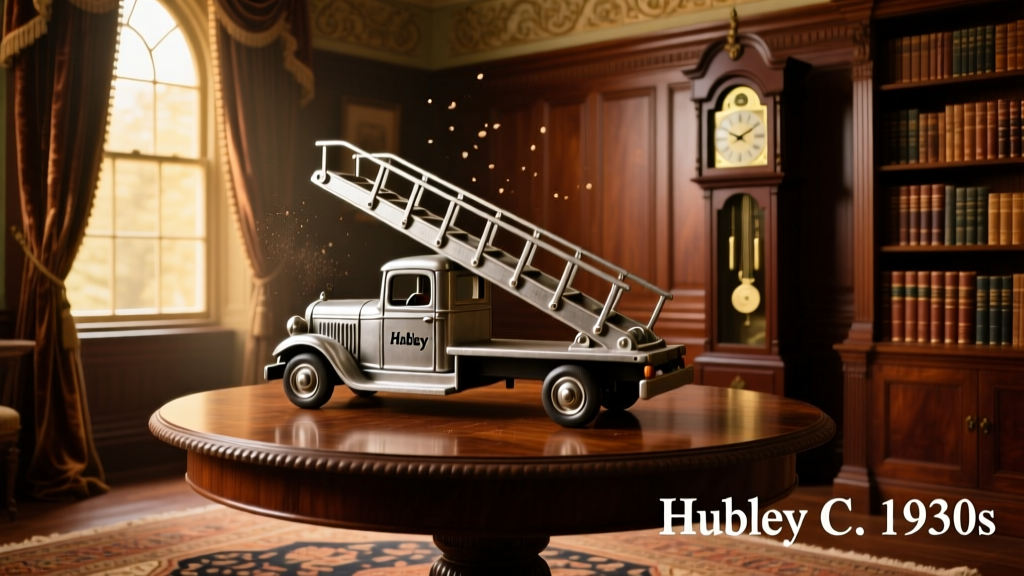
Hubley’s 1930s Cast-Iron Toy Truck: Ladder Body, Painted Nickel Grill, and the Precision of American Die-Cast Craftsmanship

Roseville Cookie Jar Magnolia Tan: Identification, Value, and Authentic Restoration Practices
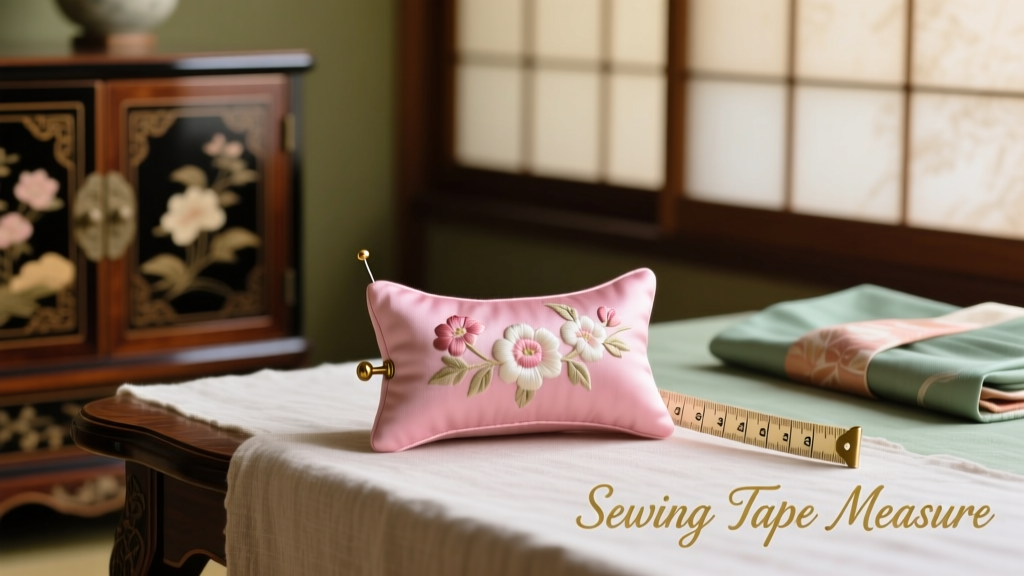
Sewing Tape Measure Pincushion Pink Japan: A Collector’s Guide to Mid-Century Japanese Craftsmanship

Alabaster Pedestal with Classical Column, Octagonal Top, and Grapevine Motif — A 41-Inch White Antique Accent Piece

Copper Pan Tin Lining, Iron Handle, and Rivet Specifications: Decoding the 16½ × 2¼ Inch French Cookware Standard

Cut Glass Humidor Cover: Hobstar, Zipper, and Fan Motifs in the 7-Inch '2' Design — A Technical & Historical Analysis

Toy Boat Cannon: Gray Decal, Clockwork Rotation, 180° Turn Mechanism — German Manufacture, c. 1910–1925

James Bennett: The Unheralded Architect of American Federal Furniture, 1795–1832

The Griswold No. 8 L B L 704V Skillet: Decoding the Legacy, Manufacturing Marks, and Restoration Pathways of a Foundational Cast Iron Artifact