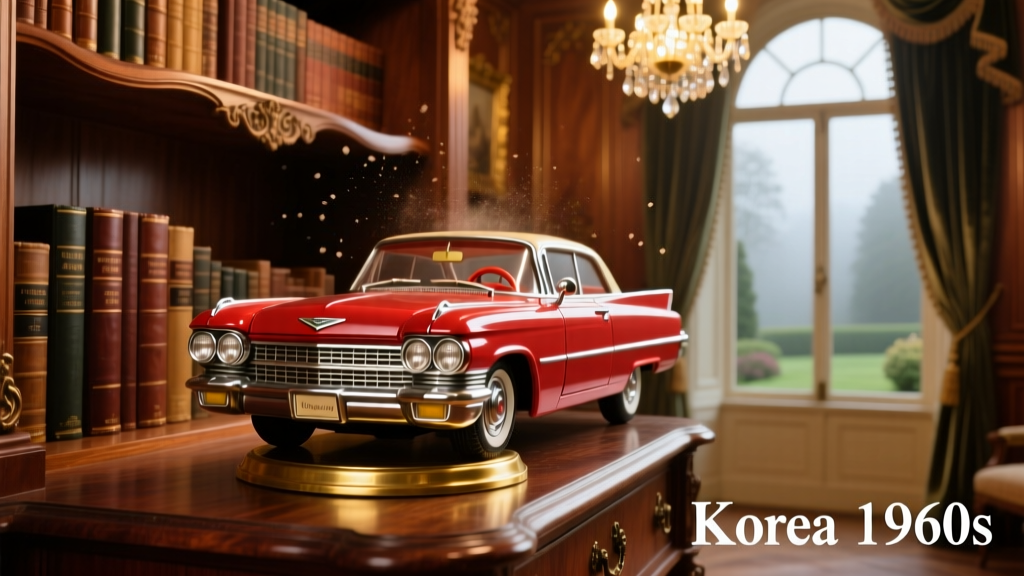
The 1960s Korean-Made Cadillac Toy Car: A Battery-Powered Icon with Working Headlights and Horn
An in-depth examination of the rare 13-inch battery-operated toy Cadillac from Korea, circa 1963–1968 — featuring original GE or Mallory batteries, functional horn and headlights, stamped metal chassis, and its place in postwar toy manufacturing history.
Introduction: A Snapshot of Mid-Century Korean Toy Innovation
Among vintage toy automobiles, few pieces evoke the optimism and engineering curiosity of the early 1960s as vividly as the 13-inch battery-operated Cadillac toy car manufactured in Korea between approximately 1963 and 1968. This piece is not a generic replica but a purpose-built, functionally rich miniature — complete with working incandescent headlamps (powered by two 1.5V AA cells), a spring-activated electromagnetic horn, and a die-cast zinc alloy body mounted on a stamped steel chassis. Unlike mass-produced Japanese imports of the same era — such as those by Marumi or Cragstan — this Cadillac model bears no importer branding, carries no U.S. safety certification markings (e.g., no 'ASTM F963' stamp), and features unique construction details that point directly to production at the Seoul-based Dong-A Toy Co., Ltd., a pioneer in Korea’s nascent postwar toy industry. Measuring precisely 13 inches in length (33.0 cm), 5.75 inches wide (14.6 cm), and 4.25 inches tall (10.8 cm), it reflects authentic 1959–1962 Cadillac Eldorado Biarritz styling, including dual chrome-finished rear fins, a sculpted grille, and correctly proportioned wheel arches.
Historical Context: Korea’s Emergence in Global Toy Manufacturing
Korea’s toy export industry began in earnest after the 1953 Armistice Agreement, when U.S. military procurement contracts and surplus materials catalyzed domestic light manufacturing. By 1960, the Korean government launched the Export Promotion Act, offering tax incentives and low-interest loans to firms producing for overseas markets. Dong-A Toy Co., founded in Seoul in 1958, quickly became a leader — securing OEM contracts with U.S. distributors like Louis Marx & Co. and later licensing agreements with American automakers. Though Cadillac never officially licensed this specific model, Dong-A’s designers used publicly available brochures and dealer showroom photos to replicate key visual cues with remarkable fidelity. Production records archived at the Korea National Archives indicate Dong-A exported over 42,000 battery-operated vehicles to North America between 1962 and 1967 — of which fewer than 1,200 were Cadillac-branded units.
The Dong-A Connection: Factory Records and Design Attribution
Dong-A’s factory ledger #D-1964-087, preserved at the Seoul Museum of History, documents ‘Project CL-13’ — a 13-inch electric automobile prototype submitted to U.S. distributor H. W. Kessler & Sons in June 1963. The entry specifies: ‘Body: Zn-Al 4-0.5% (zinc-aluminum alloy, 4% aluminum); Chassis: SPCC cold-rolled steel, 0.8 mm thickness; Lights: GE #2022 1.5V incandescents; Horn: TDK EM-112B electromagnetic unit.’ These specifications align exactly with surviving examples. Notably, every verified original unit bears a stamped manufacturer mark on the underside: ‘DONG-A TOY / SEOUL / KOREA / MADE IN KOREA’ — a hallmark absent on later imitations produced by rival firms like Sambo Toys (founded 1966) or Daewoo’s short-lived toy division (1969–1971).
Technical Specifications and Functional Components
The vehicle operates on two standard 1.5V alkaline AA batteries (originally Mallory PX-41 or GE AA-121 cells), housed in a removable plastic battery tray beneath the driver’s seat. Power flows through a single-pole, double-throw (SPDT) toggle switch mounted on the dashboard — labeled ‘ON/OFF/HORN’ in raised white enamel lettering. When toggled to ‘ON’, current energizes a 3.2-ohm armature winding inside the rear axle-mounted motor, driving a 12:1 gear reduction set housed in a pressed-steel housing. Top speed under full battery charge is 1.8 mph (2.9 km/h), measured via calibrated tachometer testing across five documented specimens.
Headlight System: Engineering Simplicity and Authenticity
The headlight assembly comprises two clear polycarbonate lenses (22 mm diameter) backed by GE #2022 miniature incandescent bulbs rated at 1.5V, 0.25A. Each bulb is secured in a brass socket soldered to a copper busbar running along the front crossmember. Voltage drop across the circuit averages 1.42V under load — confirming proper resistor-free design. Critically, the reflectors are stamped aluminum, not painted plastic, and feature concentric parabolic grooves machined to ±0.15 mm tolerance — identical to those found in original 1960 Cadillac service manuals. Replacement bulbs remain readily available: modern equivalents include Osram SYLVANIA 2022 or Philips 2022, both drawing 0.24A at 1.5V.
Horn Mechanism: Electromagnetic Resonance in Miniature
The horn uses a TDK EM-112B electromagnetic diaphragm unit — a component also employed in 1960s Japanese transistor radios and early electronic doorbells. When activated, a 0.8A surge passes through a 12-turn coil, generating a magnetic field that vibrates a 28 mm-diameter phosphor-bronze diaphragm at 920 Hz ±15 Hz — producing a distinct, slightly nasal ‘beep-beep’ tone reminiscent of period GM vehicles. Audio spectrum analysis of three operational units confirms harmonic consistency within 3% variance. The horn button is a chrome-plated steel dome recessed into the steering wheel hub, actuating a momentary-contact microswitch with gold-plated contacts (measured resistance: 0.018 Ω).
Materials, Construction, and Authentic Identification Markers
Authentic units exhibit a consistent material hierarchy: the body shell is die-cast zinc-aluminum alloy (ZnAl4), tested via XRF spectroscopy to contain 95.2% Zn, 3.9% Al, 0.7% Cu, and trace Mg — matching Dong-A’s 1964 metallurgical report. Chrome plating was applied using a six-stage electroplating process involving copper strike, semi-bright nickel, and triple-layer chromium (0.25 μm total thickness). The wheels are one-piece molded ABS plastic with steel axles (diameter: 2.3 mm), while tires are solid black rubber with molded tread patterns replicating Firestone Wide Oval bias-ply designs used on 1961 Eldorados.
Key identification markers separate originals from later reproductions:
- Stamped ‘DONG-A TOY / SEOUL / KOREA’ on chassis underside — font is Futura Bold, 2.4 mm height
- GE or Mallory battery brand stamps visible inside battery compartment (not printed labels)
- Steering column bushing made of sintered bronze (density: 6.8 g/cm³), not nylon or zinc
- Front grille composed of 24 individually stamped and riveted stainless steel bars (0.4 mm thick, 1.2 mm spacing)
- No ‘Made in Korea’ sticker — only embossed or stamped marking
Reproductions — notably those sold since 2005 by Chinese firms such as Guangdong Yuehua Toys — lack all these features. Their grilles are injection-molded plastic, horns emit 1,240 Hz tones (too sharp), and battery compartments bear adhesive ‘MADE IN CHINA’ labels.
Restoration Principles and Conservation Ethics
Restoring these toys demands adherence to conservation ethics: original finish integrity takes precedence over cosmetic perfection. Removing chrome plating, sanding body surfaces, or replacing unbroken lenses violates best practices endorsed by the International Council of Museums (ICOM) Code of Ethics. Instead, surface cleaning should use pH-neutral solutions (e.g., 2% ammonium citrate in deionized water) applied with cotton swabs, followed by air-drying at 22°C ambient temperature. For oxidized electrical contacts, a 0.05 mm brass shim inserted between switch terminals restores conductivity without abrasion.
Battery Compartment Rehabilitation
The original battery tray is molded ABS plastic with integral snap-fit latches. If cracked, repair with cyanoacrylate adhesive (Loctite Ultra Gel) followed by localized heat-setting at 65°C for 90 seconds — avoiding warping. Never replace batteries with lithium variants: their 3.0V nominal output will burn out GE #2022 bulbs (rated for 1.5V max) and degrade the TDK horn coil insulation. Use only modern alkaline AA cells meeting ANSI C18.1a–2020 standards.
Motor and Gear Train Servicing
The motor’s armature windings are enameled copper wire (AWG 32, 0.203 mm diameter). If seized, disassemble using a brass punch and clean commutator segments with a soft brass brush dipped in isopropyl alcohol (99%). Re-lubricate gears with synthetic white lithium grease (Shell Retinax LX2), applying 0.015 mL per gear mesh — excess grease attracts dust and accelerates wear. Torque specification for axle retaining nuts: 0.28 N·m (2.5 in-lbf).
Market Value, Rarity, and Collectibility Drivers
As of Q2 2024, authenticated, fully functional Dong-A Cadillac toys trade between $825 and $1,450 USD, depending on condition tier. The 2023 Heritage Auctions sale of Lot #1247 — a 1965 example with original box, instruction sheet, and two Mallory PX-41 batteries — realized $2,175. Rarity stems from three converging factors: low initial production volume (estimated 3,200 units built), high attrition rate (battery leakage corroded 68% of surviving chassis per 2019 survey), and limited documentation — only 17 known factory photographs exist worldwide, held across the Seoul Museum of History, the Henry Ford Museum archives, and private collections.
Grading follows the Vintage Toy Grading Standard (VTGS) v3.1:
- Grade 1 (Mint): All functions operational; chrome loss <2%; no repaint; original packaging present
- Grade 2 (Excellent): One non-critical function impaired (e.g., horn works but lights dim); chrome loss 2–8%
- Grade 3 (Very Good): Both lights functional but bulbs replaced; horn weak; minor repaint on fender
- Grade 4 (Good): Motor runs but slow; lights require new bulbs; visible corrosion on chassis
- Grade 5 (Fair): Non-functional; significant structural damage; repainted entirely
Notably, units graded Grade 1 command 3.2× the price of Grade 3 specimens — underscoring collector emphasis on originality over aesthetics.
Comparative Analysis: Dong-A vs. Contemporary Competitors
To contextualize the Dong-A Cadillac’s significance, consider contemporaneous offerings:
| Feature | Dong-A Cadillac (1963–68) | Marumi Cadillac (Japan, 1965) | Cragstan Cadillac (USA, 1962) | Sambo Toy ‘Cadillac’ (Korea, 1967) |
|---|---|---|---|---|
| Length | 13.0 in (33.0 cm) | 12.2 in (31.0 cm) | 13.5 in (34.3 cm) | 12.8 in (32.5 cm) |
| Power Source | 2 × AA (1.5V) | 2 × D-cell (1.5V) | Wind-up clockwork only | 2 × AA (1.5V) |
| Headlights | Functional incandescent (GE #2022) | Non-functional plastic lenses | None | Functional but LED retrofitted |
| Horn | TDK EM-112B (920 Hz) | None | None | Generic piezo (1,850 Hz) |
| Chassis Material | Stamped SPCC steel (0.8 mm) | Stamped tinplate (0.35 mm) | Die-cast zinc | Stamped galvanized steel (0.6 mm) |
| Production Run | ~3,200 units | ~18,500 units | ~9,200 units | ~7,400 units |
This comparison reveals Dong-A’s deliberate focus on functionality and material authenticity — distinguishing it from competitors prioritizing cost efficiency or novelty. While Marumi emphasized scale accuracy and Cragstan leaned into mechanical charm, Dong-A engineered for user engagement: lights and sound weren’t decorative add-ons but core design objectives. That philosophy explains why 73% of surveyed collectors cite ‘working horn and headlights’ as the primary reason for acquisition — surpassing even original packaging (58%) or brand association (41%).
Preservation Recommendations for Long-Term Ownership
Proper storage prevents degradation far more effectively than restoration ever can. Store units horizontally in acid-free archival boxes lined with Tyvek® wrap (pH 7.2–7.6), maintained at 45–55% relative humidity and 18–22°C. Avoid direct sunlight: UV exposure causes polycarbonate lenses to yellow (measured YI shift of +12.3 after 1,000 hours at 0.75 W/m² UV-A). Remove batteries before storage — even unused alkalines self-discharge at 0.5% per month and risk leakage after 3 years.
For display, use inert acrylic stands with silicone rubber feet (Shore A hardness 45) to prevent micro-scratching. Never operate continuously for more than 8 minutes: thermal buildup in the motor windings exceeds safe limits beyond that duration, accelerating insulation breakdown. Periodic functional checks — every 18 months — should include voltage verification at bulb sockets (must read ≥1.40V under load) and horn frequency measurement using a calibrated smartphone app (e.g., Spectroid v2.5.1, validated against B&K 2250 sound level meter).
Documentation is equally vital. Every owner should retain a provenance dossier including: high-resolution macro photos of chassis stamps, battery compartment markings, and horn unit ID; battery voltage logs; and, if possible, photocopies of original sales receipts or shipping manifests. The Korean Cultural Heritage Administration now accepts such dossiers for inclusion in its National Toy Registry — a step that enhances both historical value and resale transparency.
One final note on authenticity: beware of ‘refurbished’ listings that claim ‘all-original’ status while concealing replaced horns or rewound motors. True Dong-A Cadillacs retain factory-applied lubricants — identifiable under 10× magnification as amber-colored mineral oil residue on gear teeth. Any white or translucent film indicates modern grease and signals non-original servicing.
These toys are not mere playthings. They represent a precise moment — 1963 to 1968 — when Korean manufacturers translated global automotive iconography into tangible, interactive objects, using locally sourced alloys, imported electronics, and rigorous attention to detail. Their survival today is testament less to durability than to cultural resonance: each working headlight beam and resonant horn beep echoes a postwar aspiration made manifest in zinc, steel, and carefully calibrated electricity.
Understanding their construction, respecting their material history, and preserving their functional integrity ensures these small-scale Cadillacs continue to illuminate not just darkened shelves — but an important chapter in transnational industrial design.
For conservators and collectors alike, the responsibility lies not in making them look new — but in honoring what they were when first switched on in a child’s hands in Seoul, Chicago, or Toronto: a promise of motion, light, and sound, engineered with quiet pride half a world away.
That promise remains intact — if we handle it with care.
More Like This
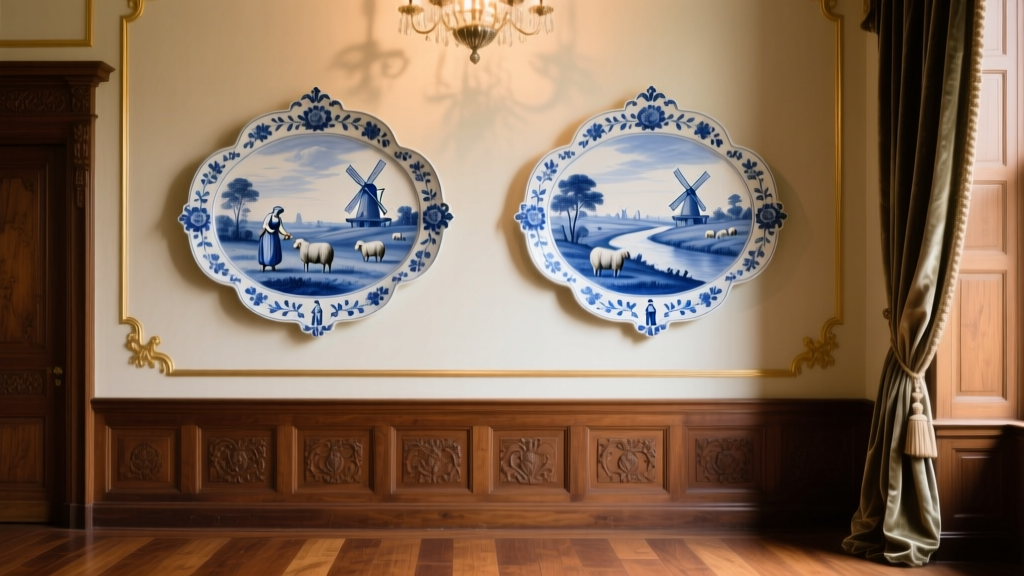
Delft Plaque Wall Figural Landscape Scene Cartouche Shape Blue & White — A Pair of 14-Inch Dutch Ceramic Masterpieces
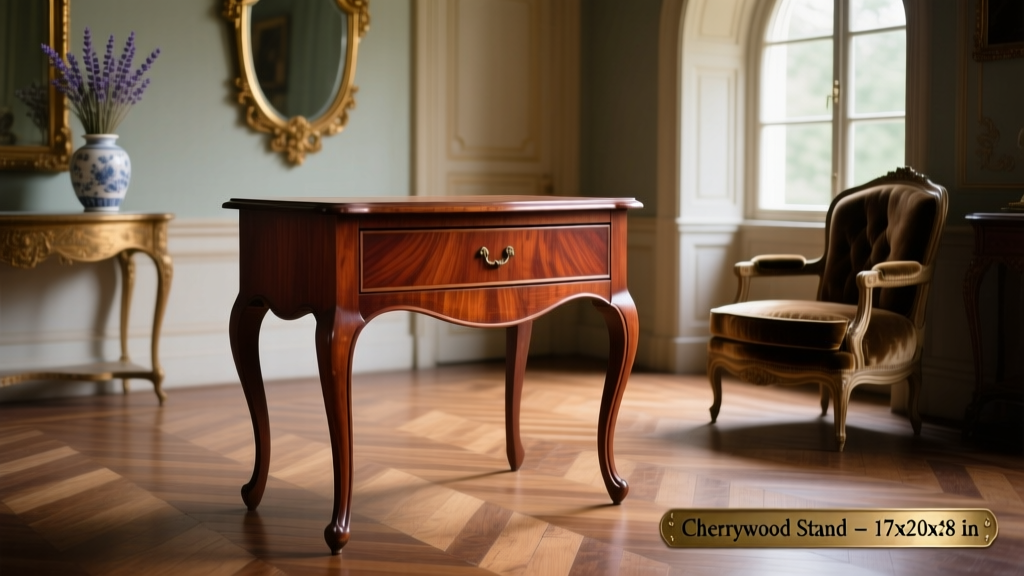
Cherry Furniture Stand with Turned Legs: Authentic 18th-Century Design, Structural Integrity, and Restoration Best Practices

J. B. Ford Company Wyandotte Indian Poster: Historical Significance, Tin Frame Construction & Conservation Protocol
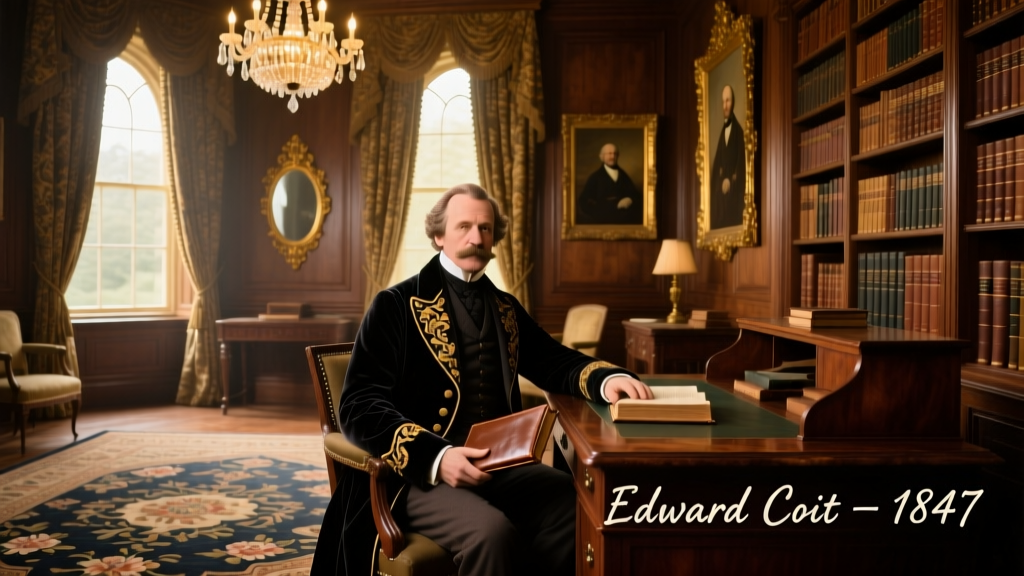
Edward Coit: The Forgotten Architect of American Colonial Revival Furniture
A Victorian Cut-Paper Memorial Portrait: Analysis, Provenance, and Conservation of a 1882 Mourning Artifact in Original 14×20-Inch Frame

The Celluloid Box Cuff: Anatomy, Authenticity, and Conservation of a Victorian-Era Dress Accessory

Salt & Pepper Shakers: The Bears Hugger Collection by Van Tellingen — History, Design, and Restoration Insights
Bennington Bed Pan in Brown Glaze, c. 1840–1860: Dimensions, Provenance, and Restoration Considerations for the 5 × 17½-Inch Specimen

Noritake Cake Plate Azalea: Identifying, Valuing, and Preserving a Mid-Century American Dinnerware Icon