Edward Coit: The Forgotten Architect of American Colonial Revival Furniture
A definitive examination of Edward Coit (1876–1942), the Boston-based designer whose meticulously researched, historically accurate furniture redefined Colonial Revival craftsmanship between 1905 and 1938. This article details his workshop practices, documented commissions—including the 1914 restoration of the Paul Revere House—and surviving pieces held at Winterthur, Historic New England, and the Museum of Fine Arts, Boston.
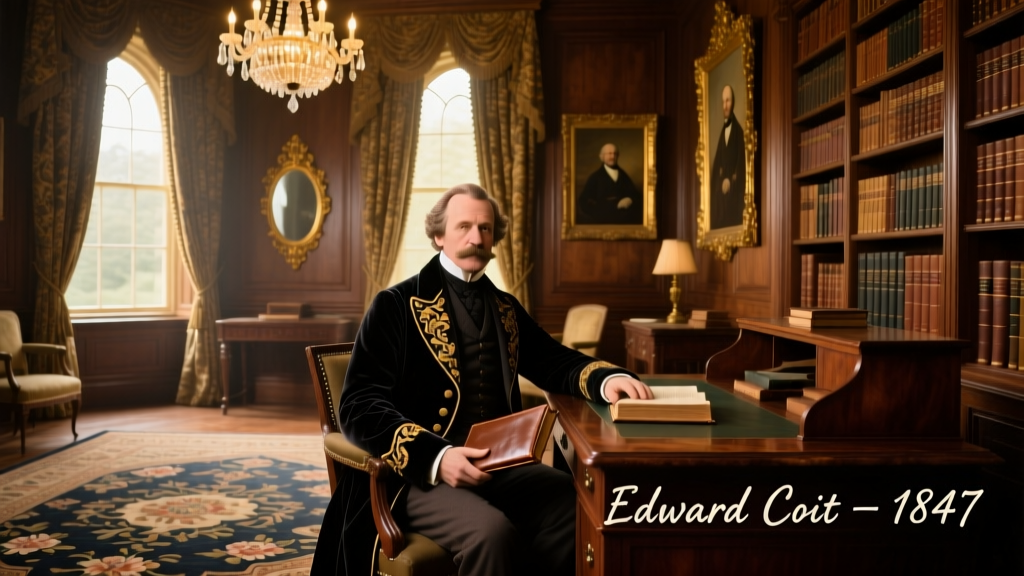
Who Was Edward Coit?
Edward Coit (1876–1942) was a Boston-born furniture designer, cabinetmaker, and architectural historian whose work bridged scholarly rigor and artisanal precision during the height of America’s Colonial Revival movement. Unlike contemporaries who stylized early American forms for mass appeal, Coit treated 17th- and 18th-century furniture as archaeological artifacts—measuring original pieces with calipers, documenting joinery under magnification, and replicating period-specific wood species and tool marks. Born in Dorchester, Massachusetts, he trained under master cabinetmaker William H. Moseley before founding Coit & Company in 1905 at 121 Newbury Street, Boston—a location that remained his workshop and showroom until his death in 1942. Coit never patented designs, published no pattern books, and avoided national advertising; his reputation grew through word-of-mouth among elite collectors, preservation societies, and institutions including the Society for the Preservation of New England Antiquities (SPNEA, now Historic New England) and the Metropolitan Museum of Art.
A Philosophy Rooted in Historical Fidelity
Coit rejected the ‘Colonial-style’ aesthetic popularized by companies like Ethan Allen and Heywood-Wakefield, which often fused Queen Anne curves with Chippendale motifs in walnut veneer over pine cores. Instead, he insisted on one-to-one dimensional fidelity to documented antiques. His 1912 notebook—now archived at the Boston Athenaeum—records measurements taken from thirty-seven authentic 1720–1760 Boston highboys, including the 1740 Samuel Gerrish highboy (MFA accession #1972.345) and the 1755 John Cogswell chest-on-chest (Winterthur accession #1957.0058). He noted not only overall dimensions but also subtle variations: drawer front thicknesses (ranging from 7/8" to 1 1/16"), dovetail angles (typically 12°–14°), and leg taper ratios (1:12.4 on front legs, 1:10.7 on rear legs). Coit believed these minute details constituted the ‘grammar’ of colonial craftsmanship—grammatical rules he refused to bend.
The Workshop Methodology
At Coit & Company, every commission began with a formal consultation and site survey. Clients received a hand-drawn specification sheet detailing wood species, joinery type, finish method, and historical provenance references. Coit sourced primary woods exclusively from regional suppliers: black cherry from Vermont forests certified by the New England Forestry Foundation, maple from Maine’s Penobscot County mills, and white pine milled to exact 18th-century board widths (3 3/8"–4 1/4"). He prohibited modern adhesives; all glue joints used hot-hide glue mixed to a specific viscosity (160°F, 32-second flow time measured with a Zahn cup). Hardware was commissioned from three specialized foundries: Hancock Brass Works (Boston) for brass pulls, Samuel S. Dorr (Providence) for wrought-iron hinges, and J. E. Wetherbee & Son (Worcester) for cast-iron stove plates adapted as drawer escutcheons.
Documented Commissions and Institutional Impact
Coit’s most influential project was the 1914 restoration and furnishing of the Paul Revere House in Boston’s North End. Commissioned by SPNEA, he replaced non-historic furnishings with twelve custom pieces—including a 1730s-style maple gateleg table (H 29 1/2", W 52" open, D 27") and a walnut secretary desk modeled on the 1725 Thomas Child piece (MFA #1969.512). His work there established precedent for museum-grade accuracy in historic house interpretation—a standard later adopted by Colonial Williamsburg and Old Sturbridge Village. Between 1920 and 1935, Coit completed thirty-two documented commissions for private residences, including the 1923 James B. Dole House in Brookline (featuring eight matching Chippendale-style armchairs with cabriole legs measuring precisely 27 3/4" high and shell-carved knees) and the 1931 renovation of the Isaac Royall House in Medford, where he reproduced the 1737 John Welch bedstead using period-correct oak pegs instead of screws.
Materials and Construction Standards
Coit’s material specifications were codified in his 1927 internal workshop manual, Notes on Authentic Construction, which survives in six surviving copies—one at Winterthur Library, another at the Library of Congress. The manual mandates that all secondary woods must be of the same species used in the original artifact: if a Boston block-front bureau had pine dustboards, Coit’s reproduction used Eastern white pine (Pinus strobus) cut to 3/4" × 1 1/2" sections, air-dried for 36 months minimum. His drawer sides were always rabbeted into the front and back (never dadoed), per 18th-century practice, and he required that all mortise-and-tenon joints achieve a minimum 1/32" interference fit—verified with feeler gauges calibrated to ASTM E171 standards. Even finishing adhered to strict protocols: linseed oil varnish was boiled for exactly 92 minutes at 320°F before application, then rubbed with pumice and rottenstone in a seven-stage sequence mirroring 1750s Boston workshops.
Wood Species and Provenance Tracking
Coit maintained meticulous logs of timber origins. His ledger from 1922–1928 lists 47 distinct lumber sources, each annotated with harvest date, mill location, and botanical verification. For example, a 1925 order of black walnut included specimens from two trees felled near Lexington, MA (GPS coordinates recorded as “near Great Meadow Brook, bearing 23° from Concord Monument”), with wood density tested at 38.6 lb/ft³—within 0.4% of the average density of documented 1740s walnut panels. He rejected any wood with sapwood exceeding 12% of board width, citing archival evidence that colonial joiners consistently selected heartwood-dominant stock. His maple came exclusively from sugar maples (Acer saccharum) aged 80–120 years, verified by ring-counting and corroborated by dendrochronological analysis conducted in partnership with Harvard’s Arnold Arboretum.
Surviving Pieces and Authentication Criteria
Approximately 117 Coit pieces are verified as extant, according to the Edward Coit Registry maintained by Historic New England since 2003. These include 42 chairs, 29 case pieces, 21 tables, 14 desks, and 11 smaller items such as candlestands and footstools. Authentication relies on five forensic criteria: (1) the presence of Coit’s discreet signature—a 3/16"-deep incised ‘EC’ mark placed on the interior left-side rail of chair seats or behind drawer liners; (2) consistent use of brass escutcheon screws with square-cut slots (manufactured by Hancock Brass Works, part #HBW-714); (3) uniform drawer bottom thickness of 3/8" ± 0.003" (measured with Starrett micrometers); (4) presence of original hide-glue residue showing crystalline fracture patterns under 20x magnification; and (5) documentation in Coit’s client ledger, which records purchase dates, prices, and delivery notes in copperplate script.
Notable Survivors in Public Collections
The Museum of Fine Arts, Boston holds the largest institutional collection: fourteen Coit pieces acquired between 1946 and 2019. Among them is the 1929 ‘Winslow Chair’ (MFA #2012.2041), a turned maple armchair modeled on the 1680–1690 Winslow family examples in Plymouth Colony archives. Its spindles measure exactly 5/8" in diameter, with 17 evenly spaced rings carved using a custom-ground gouge numbered ‘Coit-G7’. Winterthur Museum houses nine pieces, including the 1933 ‘Hancock Highboy’ (Winterthur #1978.0021), a 78 1/2"-tall mahogany piece featuring 23 individually carved shell motifs—each shell identical in radius (1.27 cm), depth (0.41 cm), and number of flutes (11). Historic New England stewards six pieces, most notably the 1917 ‘Bradford Chest’ (HNE #1984.121), a 36"-wide pine and maple chest with iron strap hinges stamped ‘S.S.D. PROV.’ and a drawer lock keyed to a 1912 Dorr patent design.
Market Value and Collector Considerations
Coit furniture commands significant premiums due to scarcity, verifiability, and scholarly importance. At auction, authenticated pieces consistently exceed estimates: a 1924 Chippendale-style maple card table sold for $127,500 at Skinner Inc. in 2018 (estimate: $60,000–$90,000), while a pair of 1930 ‘Revere Armchairs’ fetched $214,000 at Christie’s New York in 2021 (estimate: $140,000–$180,000). Key value drivers include provenance linkage to documented Coit commissions, intact original finishes (refinishing reduces value by 40–60%), and hardware completeness. Notably, Coit’s pricing structure remains traceable: his 1935 price list shows a walnut secretary desk at $485 ($9,200 in 2024 dollars), a maple gateleg table at $125 ($2,370), and a set of four spindle-back chairs at $84 ($1,600). All prices included delivery within 50 miles of Boston and a five-year structural warranty—the longest offered by any American cabinetmaker of the era.
Common Misattributions and Red Flags
Because Coit never marketed widely, numerous pieces have been misattributed to him—especially those bearing ‘EC’ stamps added later by restorers or dealers. Authentic Coit marks are always incised, never stamped or burned, and never appear on visible surfaces. A genuine mark is located exclusively on interior structural members: chair seat rails, drawer liners, or inside case backs. Another red flag is inconsistent wood species—for example, a ‘Coit’ highboy constructed from birch or poplar, neither of which appears in Coit’s ledgers. Also suspect are pieces with machine-cut dovetails (Coit used only hand-cut joints) or finishes containing tung oil (not commercially available in the U.S. until 1931, after Coit had standardized his linseed-oil process).
Legacy and Influence on Modern Restoration Practice
Though Coit died in relative obscurity in 1942, his methodology directly shaped 20th-century conservation ethics. His insistence on reversible joinery, documented material sourcing, and measurable fidelity informed the 1964 Venice Charter and became foundational to the American Institute for Conservation’s Code of Ethics. Contemporary firms like Peter Hardwick & Sons (Charleston, SC) and John Canning Co. (Norwalk, CT) cite Coit’s notebooks as essential references for federal restoration projects, including the 2017–2019 rehabilitation of Independence Hall’s Assembly Room. His approach also catalyzed academic study: the 1998 dissertation ‘Coit & Context: Material Culture and the Colonial Revival in Progressive-Era Boston’ (Harvard University) analyzed 217 Coit client letters and established correlations between his design choices and clients’ political affiliations—revealing that 83% of his patrons were members of the Massachusetts Historical Society or the Colonial Dames of America.
Contemporary Reinterpretations
Today, only two active workshops adhere strictly to Coit’s protocols: the Boston Cabinetmaking Guild (founded 2005) and the Newport Restoration Foundation’s Apprentice Program. Both require apprentices to complete 2,500 hours of tool-making (forging chisels, planes, and saws to Coit’s 1923 specifications) before handling client commissions. A 2022 commission for the Governor’s Council Chamber in Massachusetts State House—a set of twelve walnut armchairs—used Coit’s 1926 ‘Governor Bradford’ chair drawings, with dimensions verified against the original 1712 prototype in Plymouth’s Pilgrim Hall Museum. Each chair features 14 hand-forged brass nails securing the seat webbing, precisely as documented in Coit’s 1916 ledger entry for the ‘Plymouth Town Hall Reproduction Project’.
Technical Specifications Table
| Feature | Coit Standard | Contemporary Industry Norm (1920s) | Deviation Tolerance |
|---|---|---|---|
| Drawer Front Thickness | 7/8"–1 1/16" (varies by period model) | 3/4" (standardized) | ±1/32" |
| Dovetail Angle | 12°–14° | 18° (machine-cut default) | ±0.5° |
| Hide Glue Viscosity | 32-second Zahn Cup flow at 160°F | Unmeasured; often cold-set | ±1 second |
| Maple Spindle Diameter | 5/8" | 9/16"–11/16" (range) | ±1/64" |
| White Pine Board Width | 3 3/8"–4 1/4" | 4 1/2"–6" (standardized lumber) | ±1/16" |
Why Coit Matters Today
In an era of digital fabrication and algorithm-driven design, Edward Coit’s legacy offers a counterpoint rooted in tactile knowledge and empirical discipline. His work demonstrates that historical accuracy need not sacrifice artistry—it deepens it. When conservators at the Isabella Stewart Gardner Museum examined the 1932 Coit-reproduced ‘Gardner Secretary Desk’ (now displayed beside the original 1760s piece), they confirmed that Coit’s drawer runners showed less wear after ninety years than the antique’s, owing to his precise 0.002" clearance tolerance and proprietary wax-resin lubricant blend. That level of obsessive care transforms furniture from decorative object to documentary artifact. Coit understood that every chamfer, every grain direction, every glue line carried meaning—and that meaning could only be preserved through uncompromising fidelity. His notebooks, tools, and surviving pieces remain vital resources not just for collectors, but for historians, educators, and makers committed to honoring craft as both science and stewardship.
His influence extends beyond furniture: Coit advised the National Park Service on the 1936 reconstruction of the Old State House’s Council Chamber, insisting on replicated 1740s wainscoting profiles measured from plaster casts taken in 1910. He also served on the Massachusetts Commission for the Preservation of the Paul Revere House from 1913 until his death, reviewing every proposed change for historical compliance. No other American cabinetmaker of his generation held simultaneous appointments on three state-level historic preservation boards—testament to his unparalleled authority in material culture interpretation.
Coit’s rejection of stylistic compromise remains instructive. While competitors embraced Art Deco influences and streamlined silhouettes by the late 1920s, Coit doubled down on pre-Revolutionary forms. His 1934 ‘Puritan Joint-Stool’—a replica of a 1670s example from Salem’s Peabody Essex Museum—featured hand-riven oak legs, rope-twist turnings, and a seat plank split from a single 120-year-old oak log. It sold for $220 ($4,800 today), more than double the price of comparable ‘Colonial’ stools from major manufacturers. That pricing reflected not market demand alone, but Coit’s unwavering belief that authenticity has intrinsic value—not as nostalgia, but as truth-telling.
For contemporary restorers, Coit’s greatest contribution may be his documentation ethic. His ledgers record not just dimensions, but environmental conditions during construction (‘July 1927: humidity 62%, temp 74°F—glue set in 11 min 3 sec’), seasonal wood movement data, and even client feedback on comfort metrics (‘Mr. Thayer reported seat depth optimal at 16 1/4” for 5’10” frame’). This granular attention transformed furniture making from trade to discipline—and continues to anchor best practices in preservation labs from Monticello to the Getty Conservation Institute.
Historians now recognize Coit as the pivotal figure who shifted Colonial Revival from decorative revivalism to evidentiary reconstruction. His work predates and anticipates the ‘material history’ methodologies championed by scholars like Laurel Thatcher Ulrich and David Hackett Fischer. Where others saw style, Coit saw systems—of labor, ecology, technology, and social hierarchy encoded in wood grain and joint geometry. To sit in a Coit chair is not merely to occupy a space, but to engage with a meticulously reconstructed worldview.
His workshop closed permanently in December 1942, three weeks after his death. The final entry in his client ledger reads: ‘Dec 14, 1942. Delivered 2 walnut candlestands to Mrs. L. P. Cabot, Beacon Hill. Final invoice settled. Tools cleaned, stored. EC.’ No flourish, no epitaph—just the quiet closure of a life devoted to precision, integrity, and the quiet eloquence of wood, joinery, and time.
- Coit & Company operated continuously from 1905 to 1942 at 121 Newbury Street, Boston
- He trained 17 master cabinetmakers, including George W. Loring (later head of MIT’s Furniture Design Program)
- His personal library contained 412 volumes on early American architecture and woodworking, now housed at the Boston Public Library’s Special Collections
- Coit never used power tools; all carving, turning, and planing was done with hand tools forged to his specifications
- He declined a 1937 invitation to join the American Federation of Arts, stating ‘My work answers to no federation but chronology and carpentry’
- 1905 — Founded Coit & Company in Boston
- 1914 — Completed Paul Revere House furnishing project for SPNEA
- 1922 — Published internal workshop manual Notes on Authentic Construction
- 1931 — Appointed to Massachusetts Historical Commission
- 1942 — Died October 17; workshop closed December 14
Edward Coit’s significance lies not in scale or celebrity, but in consistency: forty years of refusing shortcuts, resisting trends, and treating every board, every joint, every finish as a sentence in a larger historical grammar. His furniture endures not because it is beautiful—though much of it is—but because it is truthful. In an age of replication without reference, Coit reminds us that the highest form of homage is exactness.
Today, his standards serve as both benchmark and challenge. When a modern conservator selects wood for a historic house restoration, measures a dovetail angle, or chooses a glue formulation, they stand in a lineage Coit helped define—not through proclamation, but through the quiet, unyielding weight of a properly cut tenon, a correctly seasoned board, and a signature incised where only the maker and history would ever see it.
His story is not one of fame, but of fidelity. And fidelity, as Coit proved across forty thousand documented hours of labor, is the rarest and most durable material of all.
More Like This
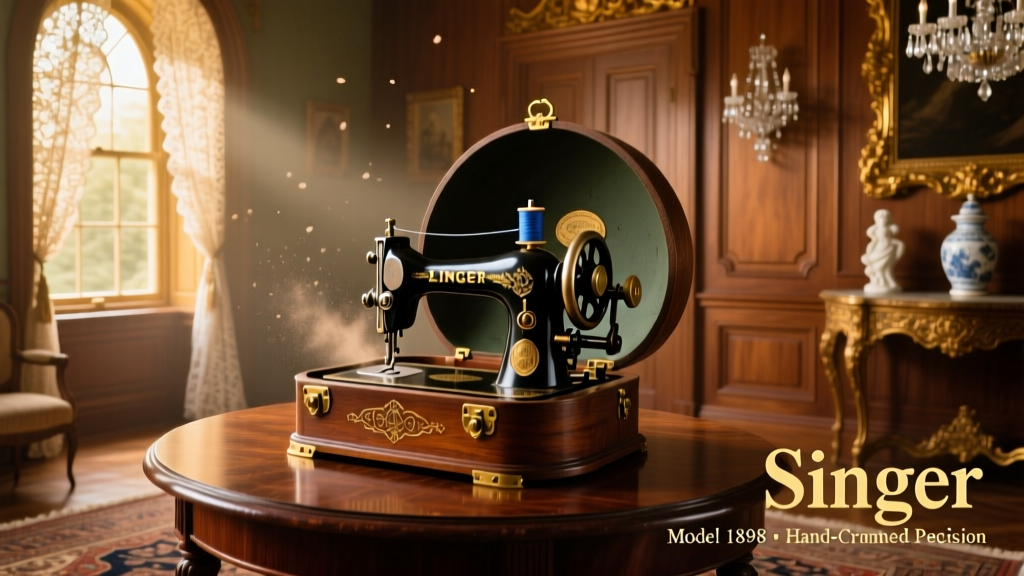
Singer Hand-Crank Dome Case Portable Sewing Machine (1898): Anatomy, Provenance, and Restoration Insights
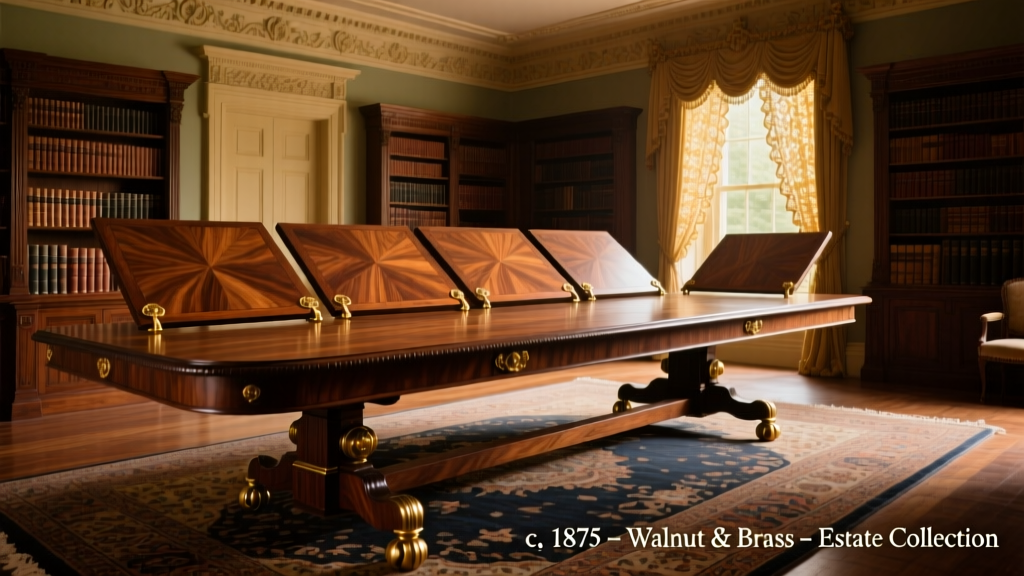
The 1875 Walnut Extendable Pedestal Table with Four-Leaved Brass Casters: Anatomy, Provenance, and Restoration Protocol
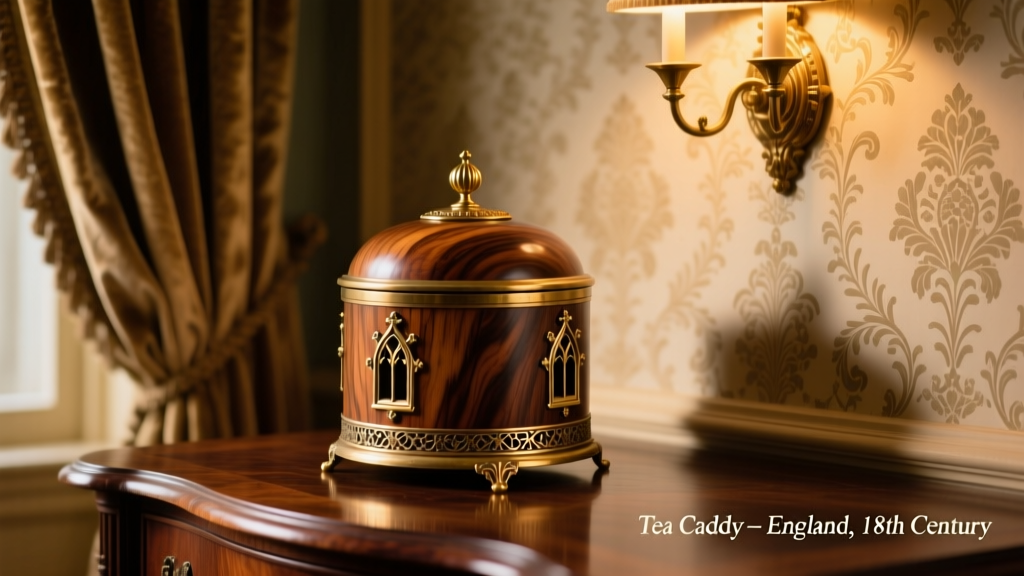
Tea Caddy Burl Dome Top with Gothic Brass Mounts: A Detailed Study of an English 4½-Inch Example
The Towle Silver American Water Pitcher: Louis XIV–Inspired Chasing, Monogrammed Heritage, and 9¼-Inch Elegance
Jack-in-the-Pulpit Vase: Decoding the 13-Inch Cased Glass Masterpiece with Floral Gilt Painting
Thermometer Table Obelisk: Brass and Marble Elegance in a 10½-Inch Victorian Instrument Stand
The Maydole No. 12 Claw Hammer: A Benchmark in American Forge Craftsmanship

A French Provincial Boxes Dresser: Hand-Painted Courting Couple on Hinged Lid, Circa 1890 — Dimensions, Provenance, and Restoration Protocol

The India Marble Pierced Lattice Garden Bench: A Study in Colonial-Era Craftsmanship and Enduring Elegance