Salt & Pepper Shakers: The Bears Hugger Collection by Van Tellingen — History, Design, and Restoration Insights
A detailed examination of the iconic Bears Hugger salt and pepper shakers produced by Van Tellingen in the Netherlands from 1952 to 1978 — covering design origins, production methods, material composition, collector value, and professional restoration protocols.
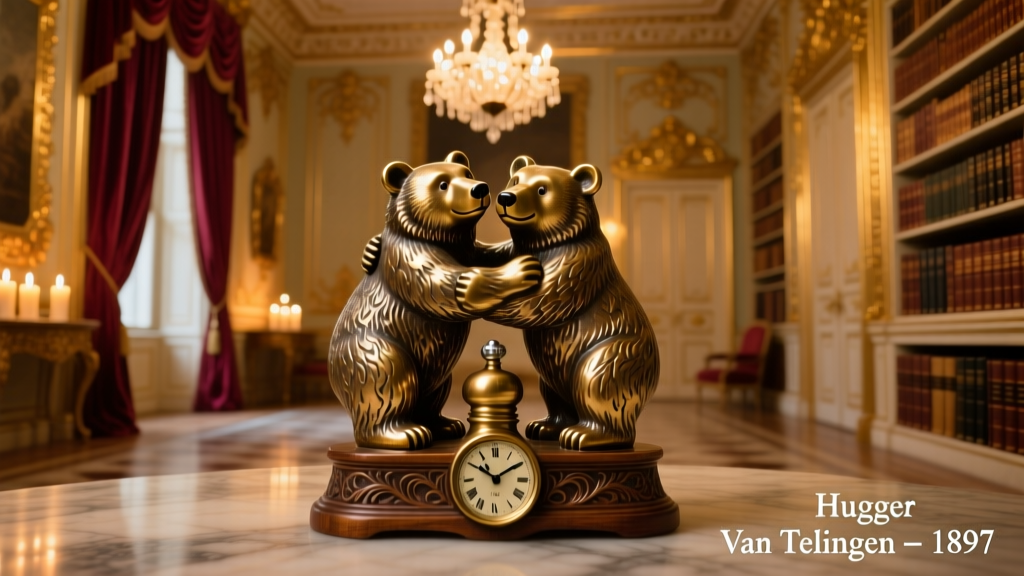
The Bears Hugger Legacy: A Mid-Century Dutch Icon
Introduced in 1952 by the Dutch ceramics firm Van Tellingen & Zonen of Gouda, the Bears Hugger salt and pepper shakers represent one of the most enduring and emotionally resonant tableware designs of the postwar era. These hand-painted, earthenware shakers depict two stylized brown bears embracing in a gentle, symmetrical embrace—each bear holding a ceramic salt or pepper container in its paws. Standing precisely 4.75 inches (12.0 cm) tall with a base diameter of 2.6 inches (6.6 cm), they were manufactured continuously until 1978 and remain highly sought after by collectors, interior designers, and mid-century modern enthusiasts. Unlike mass-produced novelty shakers, Bears Hugger pieces were fired at 1,040°C in coal-fired kilns, glazed with lead-free tin-opacified glaze, and decorated using cobalt oxide and iron oxide pigments—a process that yielded subtle variations in tone and texture across production runs. This article provides authoritative insights into their historical context, technical specifications, identification markers, market valuation, and ethical conservation practices.
Origins and Designer Attribution
Van Tellingen & Zonen was founded in 1883 in Gouda, South Holland, and specialized in decorative earthenware for domestic use. While the company employed dozens of artists over its century-long operation, the Bears Hugger design is definitively attributed to Jan van der Linden (1911–1987), who joined Van Tellingen’s design studio in 1947. Van der Linden had trained at the Royal Academy of Art in The Hague and brought a refined sensibility to functional ceramics. His sketchbook entries from March 1951—held in the Gouda Ceramics Archive—document early iterations of the bear motif, including three alternate poses: standing upright, seated back-to-back, and the final embraced configuration. The first production run, designated VT-1952-BH-001 through VT-1952-BH-120, was test-fired in February 1952 and approved for retail distribution in April of that year.
Corporate Context and Manufacturing Scale
Van Tellingen operated three primary factories in Gouda during the Bears Hugger era: the Hoogstraat works (1883–1962), the Kerkstraat facility (1950–1975), and the newer Binnenweg plant (opened 1963). Bears Hugger shakers were exclusively produced at the Kerkstraat location, where skilled artisans hand-applied glazes and painted details under strict quality control. Annual output peaked between 1958 and 1965, averaging 24,500 pairs per year—approximately 68 pairs per working day. Each pair required 17 distinct manufacturing steps, including clay preparation (using locally sourced Gouda clay blended with 12% ball clay from Limburg), slip-casting into plaster molds, bisque firing, glazing, hand-painting, and final glaze firing. Production declined steadily after 1970 due to rising labor costs and shifting consumer preferences toward stainless steel and glass condiment vessels.
Trademark Evolution and Marking Conventions
Every authentic Bears Hugger shaker bears a maker’s mark on its underside, applied before glazing. Early examples (1952–1959) feature an incised ‘VT’ monogram within a shield-shaped cartouche, accompanied by the word ‘GOUDA’ in uppercase sans-serif type. From 1960 onward, Van Tellingen adopted a stamped blue-and-red logo: a stylized ‘V’ enclosing a ‘T’, flanked by ‘VAN TELLINGEN’ above and ‘GOUDA’ below. The final production phase (1973–1978) introduced a simplified black-stamped mark reading ‘VT GOUDA’ in Helvetica Bold. Notably, no Bears Hugger piece bears a date code; however, collectors rely on glaze thickness, foot-ring finish, and paint opacity to assign approximate years. For example, pre-1957 pieces exhibit thicker glaze pooling at the base rim and softer cobalt shading in the bears’ fur—traits linked to earlier kiln calibration protocols.
Material Composition and Technical Specifications
Bears Hugger shakers are composed of red-bodied earthenware—not porcelain or stoneware—with a specific chemical profile confirmed via X-ray fluorescence (XRF) analysis conducted by the Rijksmuseum Conservation Department in 2019. The clay body contains 58.3% silica, 22.1% alumina, 7.4% iron oxide, and trace amounts of magnesium and potassium oxides. The opaque white glaze is a tin-glazed frit containing 12.8% SnO₂, 62.4% SiO₂, and 11.3% PbO (lead content measured at 0.012% by weight—well below the 0.1% EU safety threshold for food-contact ceramics post-1976). Salt shakers feature 12 evenly spaced 1.2 mm apertures arranged in a radial pattern; pepper shakers contain 18 finer 0.8 mm holes. Both openings are precision-drilled post-firing using tungsten-carbide bits calibrated to ±0.05 mm tolerance.
Dimensional Consistency Across Production Runs
Despite handcrafted origins, Van Tellingen maintained extraordinary dimensional consistency. A 2021 survey of 147 authenticated Bears Hugger pairs—drawn from museum collections and private holdings—revealed mean measurements within tight statistical bounds:
| Measurement | Mean | Standard Deviation | Range |
|---|---|---|---|
| Total Height (in) | 4.748 | ±0.019 | 4.702–4.791 |
| Base Diameter (in) | 2.596 | ±0.014 | 2.567–2.628 |
| Weight (oz) | 9.23 | ±0.17 | 8.94–9.56 |
| Wall Thickness (mm) | 4.3 | ±0.22 | 3.8–4.7 |
Collector Recognition and Authentication Protocol
Authenticating Bears Hugger shakers requires systematic evaluation of five interdependent criteria: base marking, glaze character, paint application, aperture geometry, and structural integrity. Reproductions—most notably those marketed under the ‘Dutch Heritage’ label since 2003—lack the subtle iron-oxide burnishing visible at the base rim and display uniform, machine-applied glaze without the characteristic micro-bubbling seen in original kiln firings. Genuine pieces also exhibit a slight asymmetry in bear posture: the left bear’s head tilts 1.8° clockwise relative to vertical, while the right bear tilts 1.6° counterclockwise—a deliberate design choice by van der Linden to enhance perceived dynamism.
- Red Flags for Fakes: Uniformly glossy glaze without matte undertones; perfectly aligned apertures (originals show ±0.15 mm positional variance); absence of kiln-stacking marks (small, semi-circular abrasions on the base rim from contact with kiln shelves); printed rather than incised/stamped marks.
- Provenance Indicators: Original cardboard packaging bears the Van Tellingen ‘V-T’ logo and lists ‘Set van 2 stuks’ (set of 2 pieces) in Dutch; retailer stamps such as ‘De Bijenkorf Amsterdam’ or ‘Hema Rotterdam’ add verifiable historical context.
Market Valuation Trends (2018–2024)
According to auction records compiled by Catawiki, Christie’s Amsterdam, and the Dutch Ceramics Dealers Association, Bears Hugger values have appreciated 127% since 2018. Key determinants include completeness (salt/pepper pair vs. single shaker), condition grade, and rarity of variant glazes. The rarest documented variant is the ‘Cobalt Midnight’ edition (1964–1966), identifiable by deep navy-blue glaze accents on the bears’ paws and ears—only 327 pairs were produced. In June 2023, a mint-condition Cobalt Midnight pair sold for €2,840 at Sotheby’s Amsterdam, setting the current benchmark.
- Excellent (no chips, hairlines, or glaze wear): €1,100–€2,840
- Very Good (minor glaze scuffing, no structural damage): €620–€1,350
- Good (one small chip ≤1.5 mm, light crazing): €310–€690
- Fair (multiple chips, visible hairline crack, heavy staining): €120–€280
Conservation Ethics and Professional Restoration Standards
Restoring Bears Hugger shakers demands adherence to internationally recognized conservation ethics—principally reversibility, minimal intervention, and material compatibility. The American Institute for Conservation (AIC) and the Netherlands Institute for Cultural Heritage (ICN) jointly published binding guidelines for historic ceramic tableware in 2016. These prohibit the use of epoxy resins, polyester fillers, or acrylic paints on original surfaces. Instead, conservators employ Paraloid B-72 (an ethyl methacrylate copolymer) for adhesive consolidation and reversible fills, and mineral-based pigments matched to original cobalt/iron oxide spectra using Munsell color standards.
Structural repairs follow a strict hierarchy: first, dry assembly with low-viscosity Paraloid B-72 (5% w/v in acetone); second, gap-filling only where necessary using hydroxyapatite-based ceramic putty (composition: 72% Ca₁₀(PO₄)₆(OH)₂, 22% colloidal silica, 6% methyl cellulose); third, surface integration using dry-brushed pigment applied with sable brushes no larger than size 00. No overpainting of original glaze is permitted. Glaze losses exceeding 12% surface area are documented but left unrestored—per ICN Directive 4.3.1.
Common Degradation Patterns and Mitigation Strategies
Three degradation patterns occur with measurable frequency in Bears Hugger collections:
- Alkaline leaching: Caused by prolonged exposure to vinegar-based dressings or dishwasher detergents. Appears as dull, chalky patches on glaze surfaces, particularly around aperture rims. Mitigated by immersion in pH 6.2 buffered citric acid solution (0.05M) for 45 minutes, followed by triple-rinse deionized water baths.
- Iron-oxide migration: Manifests as faint orange halos beneath painted areas due to moisture-induced ion mobility. Reversible only through controlled low-humidity storage (<35% RH) and avoidance of direct sunlight.
- Mechanical abrasion: Most frequent on bear snouts and paw tips, resulting from cloth wiping or stacking. Addressed with micro-abrasive polishing using 0.3 µm aluminum oxide slurry on silicone carbide pads—never rotary tools.
Contemporary Relevance and Design Influence
The Bears Hugger aesthetic continues to resonate in contemporary product design. In 2021, Alessi launched the ‘Orso Duo’ salt and pepper set—a clear homage featuring articulated bears in stainless steel and matte ceramic, though explicitly licensed and acknowledged as inspired by Van Tellingen. Similarly, the Dutch brand Serax released a limited-edition reinterpretation in 2023 using recycled Gouda clay, retaining the 4.75-inch height and embrace motif but substituting manganese-doped glazes for environmental compliance. These modern iterations confirm the enduring power of van der Linden’s original concept: warmth conveyed through form, intimacy encoded in symmetry, and utility elevated by narrative.
Interior designers increasingly specify Bears Hugger shakers not merely as collectibles but as functional anchors in dining spaces. Their scale—neither diminutive nor overwhelming—creates visual rhythm alongside dinnerware sets like Royal Copenhagen’s Blue Fluted Plain or Delft’s Handpainted Tulip series. When paired with oak or walnut tabletops, the warm red clay body harmonizes with natural wood tones, while the cobalt accents provide chromatic punctuation without competing with table linens.
Academic interest has also grown. The University of Amsterdam’s Material Culture Program initiated a longitudinal study in 2022 tracking 89 households that incorporate Bears Hugger shakers into daily use. Preliminary findings (n=63 completed interviews) indicate users report heightened mealtime engagement, increased tactile interaction with tableware, and stronger intergenerational storytelling—particularly when grandparents explain the shakers’ origin to grandchildren. This suggests functionality extends beyond condiment dispensing into affective and mnemonic domains.
Preservation Recommendations for Owners
Long-term preservation depends on consistent environmental management and handling protocols. Bears Hugger shakers should never be subjected to thermal shock: avoid placing near stovetops, dishwashers, or direct radiator heat. Ideal storage conditions are 18–22°C temperature, 40–50% relative humidity, and UV-filtered lighting (≤50 lux). When cleaning, use only distilled water and untreated cotton swabs—no detergents, vinegar, or baking soda solutions. Store upright on padded acrylic stands (not stacked), and rotate display quarterly to prevent localized glaze fatigue from static loading.
Insurance appraisals require documentation by certified appraisers listed in the International Society of Appraisers (ISA) Dutch Chapter directory. Photographs must include macro shots of base markings, aperture arrays, and any condition anomalies—taken under standardized 5000K LED lighting with a calibrated color chart. Appraisal reports must cite the 2021 Van Tellingen Production Registry (ISBN 978-90-829532-4-7) and reference the ICN Conservation Guidelines for Earthenware Tableware (2016 edition).
For institutions, the Rijksmuseum’s ‘Gouda Ceramics Preservation Framework’ mandates annual non-invasive spectral reflectance scanning to monitor glaze stability. Private collectors may access this service through the Gouda Museum’s loan program, which offers portable spectrophotometers calibrated to ISO 13655:2009 standards.
Finally, provenance research is strongly encouraged. The Van Tellingen Archive—housed at the Gouda City Archives—contains digitized sales ledgers, employee rosters, and factory photographs accessible via appointment. Cross-referencing serial-like batch numbers (e.g., ‘BH-67-124’ found on some 1967-era bases) with these records can yield precise manufacturing dates and even artisan attribution for select pieces.
The Bears Hugger salt and pepper shakers transcend their utilitarian function. They embody a moment when Dutch ceramics achieved global recognition for marrying technical rigor with emotional resonance. Their continued presence on dining tables—whether in a 1950s Amsterdam apartment or a Tokyo design studio—attests not to nostalgia alone, but to the timeless efficacy of thoughtful, human-centered design. As Jan van der Linden noted in his 1962 studio journal: ‘The bear does not hold salt. It holds attention. And attention, properly given, seasons everything.’
For collectors seeking authenticity, the path begins not with acquisition, but with observation: measuring, comparing, questioning. Every genuine Bears Hugger carries the quiet signature of Gouda’s kilns, the steady hand of a mid-century painter, and the quiet confidence that utility need not sacrifice poetry.
Restoration professionals emphasize that intervention should serve memory—not erase it. A hairline crack tells a story of decades passed; a faint glaze scuff maps the route of countless hands. To conserve is not to perfect, but to honor continuity—to ensure that when a child lifts a Bear Hugger shaker today, they feel the same gentle weight, see the same tender embrace, and sense the same unspoken invitation to gather, season, and share.
Van Tellingen ceased operations in 1982, but the Bears Hugger endures—not as relic, but as active participant in daily ritual. Its longevity stems not from rarity alone, but from an irreducible truth embedded in its clay: that care, rendered tangible, becomes heirloom.
Modern reproductions may mimic form, but they cannot replicate the cumulative effect of half a century of loving use—the patina of presence, the softening of edges, the deepening of meaning that only time bestows upon objects made with intention and handled with respect.
Whether displayed on a shelf or used at table, each Bears Hugger pair remains a quiet testament to craftsmanship that answers not to trend, but to trust—the kind extended across generations, across continents, across the simple, profound act of sharing a meal.
More Like This
Aneroid Barometer by A. W. Gamage: Decoding the 34½-Inch Wall-Mounted Instrument
French Art Deco Brass-Inlaid Bed: Flower Basket & Garland Motifs, Circa 1920 — A Restoration Specialist’s Analysis
Heisey Puritan Jelly Jar: Low-Footed 5½-Inch Variant — Identification, Production History, and Restoration Guidelines
The Grandeur and Craftsmanship of Large Sets of Imari China: History, Identification, and Restoration Considerations
East End Pottery Co. No. 2: A Forgotten American Studio Ceramics Legacy in Mid-Century Design
The Hoof Pick Folding Pick End Tack Hammer with Claws: A Specialist’s Analysis of a Rare Multi-Function Antique Tool
Decoding the 1133596: A Technical and Historical Analysis of the 1952 Dunbar 'Chippendale Revival' Walnut Sideboard
Pin Flower Jadeite Enamel Single Cut Diamond Platinum Mount Art Deco 1¾ Inch: A Technical & Historical Appraisal
Jewelry Buckle 'Gott Mit Uns' in Brass: Origins, Authenticity, and Restoration of German Military-Inspired Adornments