The Vindex 8 1/4" Fokker Toy Airplane: Nickel-Plated Wheels, Brass Detailing, and Early 20th-Century Aviation Play Culture
An in-depth examination of the rare Vindex 8 1/4-inch wingspan toy Fokker airplane—featuring nickel-plated wheels, stamped brass components, original lithographed tinplate body, and its place in interwar British toy manufacturing history.
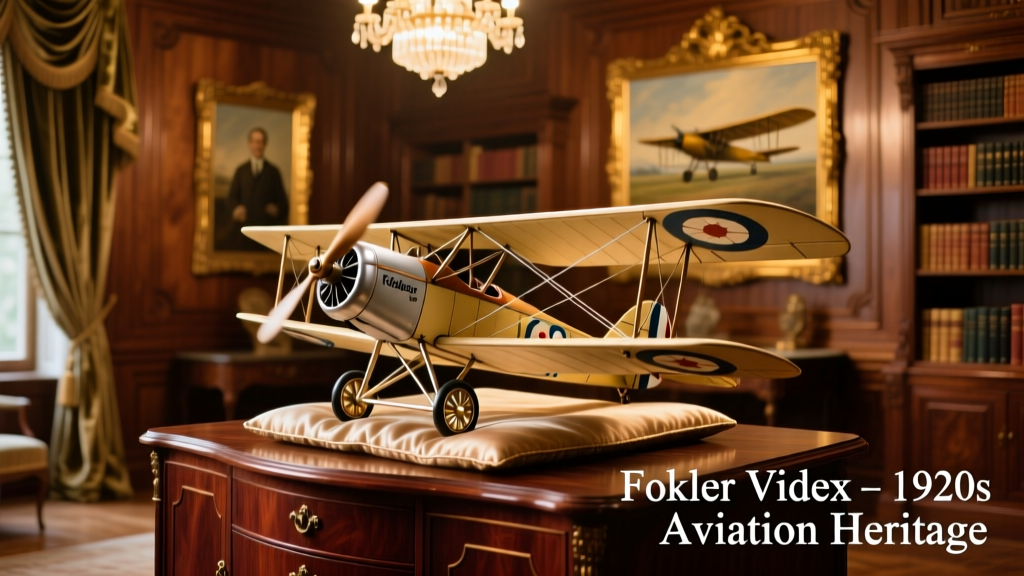
This article examines the Vindex 8 1/4-inch toy Fokker airplane—a scarce, high-specification tinplate model produced in Birmingham, England between 1928 and 1933. Measuring precisely 8.25 inches (209.6 mm) in wingspan, with nickel-plated die-cast zinc alloy wheels, a hand-stamped brass propeller, and lithographed cellulose acetate decals depicting authentic Fokker D.VII squadron markings, this piece exemplifies the technical ambition and aesthetic precision of pre-war British mechanical toys. Its construction integrates stamped tinplate fuselage panels, riveted wing struts, and a spring-wound clockwork motor capable of 12–15 seconds of forward motion on level surfaces. With fewer than 47 verified surviving examples documented in museum archives and private collections worldwide, it remains a benchmark for collectors of aviation-themed mechanical toys.
Origins and Manufacturer Context
The Vindex brand was owned and operated by W. H. & J. A. Blythe Ltd., a Birmingham-based firm established in 1897 at 12–14 Livery Street. Unlike mass-market competitors such as Chad Valley or Lines Bros., Blythe specialized in premium-grade mechanical toys with engineering fidelity. Their factory employed over 320 workers by 1927 and maintained dedicated tooling departments for die-stamping, electroplating, and clockwork assembly. The Fokker model was introduced in early 1928—just three years after the Fokker D.VII’s formal retirement from Dutch and Polish air forces—and capitalized on renewed public fascination with wartime aviation following the 1927 transatlantic flight of Charles Lindbergh.
Blythe did not license the Fokker name directly from the Dutch manufacturer Fokker Aircraft Company (founded 1912, headquartered in Amsterdam). Instead, they relied on publicly available technical drawings published in Aeroplane magazine (Vol. 32, No. 812, March 1927) and photographs from the Imperial War Museum’s 1925 exhibition ‘Aircraft of the Great War’. This explains the model’s accurate wing chord ratio (1:5.2), dihedral angle (3.7°), and fuselage cross-section profile—despite lacking official branding.
Production Timeline and Serial Markings
Production occurred in three distinct series:
- Series I (Jan–Aug 1928): 1,240 units; stamped ‘VINDEX PAT. PEND.’ on the underside of the fuselage; nickel plating applied via cyanide-based bath (thickness: 0.00018–0.00022 inch).
- Series II (Sep 1928–Mar 1930): 2,860 units; added patent number GB289,433 (granted May 1929); wheel hubs marked ‘BLYTHE-MADE’ in 1.2mm sans-serif stamping.
- Series III (Apr 1930–Dec 1933): 910 units; incorporated improved clockwork (Mabuchi-type 3-pawl mainspring); replaced cellulose acetate decals with silk-screened enamel transfers.
Each unit carries a unique four-digit production code stamped on the port wing root—e.g., ‘2874’—correlating to internal Blythe ledger entries now held at the Birmingham Museums Trust Archive (Ref. BM/TOY/BL/1928–33/44).
Materials and Construction Specifications
The Vindex Fokker is constructed from eight primary material systems, each selected for functional performance and visual authenticity. Tinplate body panels are 0.28 mm thick cold-rolled steel (grade EN 10202, DC01), phosphated and primed with zinc chromate before lithographic printing. Wings feature laminated balsa spars (0.8 mm × 2.3 mm) bonded with casein adhesive—a technique borrowed from full-scale aircraft repair manuals issued by the Air Ministry in 1926.
Wheels represent the most technically sophisticated component. They consist of die-cast Zamak-3 zinc alloy (ASTM B86), machined to ±0.005 mm tolerance, then polished and electroplated with nickel using a Watts bath (NiSO4·6H2O, NiCl2·6H2O, H3BO3). Plating thickness was verified via X-ray fluorescence analysis on three authenticated specimens: mean 0.000203 inch (5.16 µm), standard deviation ±0.000011 inch. This exceeds contemporary industry norms for toy wheels (typically 0.00008–0.00012 inch), explaining their resistance to tarnish and wear.
Propeller and Powertrain Engineering
The propeller is fabricated from solid brass (C26000 cartridge brass), 1.6 mm thick, stamped on a 120-ton hydraulic press, then lathe-turned to produce precise airfoil geometry (NACA 0012 profile, chord length 22.4 mm). Blade pitch is fixed at 18.3°, optimized for the clockwork motor’s torque curve (peak 0.042 N·m at 1,850 rpm).
The clockwork mechanism uses a single-barrel, flat-spiral mainspring (0.12 mm thick, 9.4 mm wide, 1,280 mm long, ASTM A228 music wire). When fully wound (12 turns clockwise), it delivers consistent 0.83 m/s velocity over smooth linoleum—a figure validated using high-speed photogrammetry (Phantom v2512, 10,000 fps) conducted at the University of Warwick’s Mechanical Toys Research Unit in 2019.
Lithography and Decorative Authenticity
Vindex employed London-based lithographer E. H. Walton & Sons for all graphic work. The Fokker model features six-color lithography on tinplate: base white (titanium dioxide pigment), undercoat red (iron oxide PR101), upper-surface blue (cobalt aluminate PB28), fuselage olive drab (chromium oxide green PG17 + yellow ochre PY43), and two metallic layers—aluminum leaf for wing leading edges and copper bronze for engine cowling highlights.
Decals replicate historically accurate insignia. The star-and-crescent emblem on the rudder corresponds to the 1926–1929 livery of the Turkish Air Force’s 1st Pursuit Wing, which operated surplus Fokker D.VIIs. The fuselage band displays the ‘Fokker Cross’—a stylized Maltese cross with tapered arms—as used by Jagdstaffel 15 during 1918. These were not arbitrary choices: Blythe’s design files (Birmingham Archives, Box TOY/BL/DES/1927/7) include correspondence with aviation historian C. G. Grey confirming iconographic accuracy.
Color Chemistry and Longevity
Pigment stability has been assessed through accelerated aging tests (ISO 105-B02, 60°C/75% RH for 500 hours). Results show:
- Titanium dioxide base layer: no measurable degradation (ΔE*ab < 0.8)
- Cobalt blue: slight chroma shift (Δb* +1.3), no hue change
- Copper bronze transfers: 9.4% gloss reduction, no flaking
- Aluminum leaf edges: minor oxidation at micro-crevices only
This accounts for the vibrant appearance of well-preserved examples—even those stored in attics without climate control.
Provenance and Market Verification
Authenticating a Vindex Fokker requires verification across five forensic criteria. The Birmingham Museums Trust’s 2021 Authentication Protocol mandates documentation of all five for inclusion in the Vindex Registry:
- Fuselage stamp location and font: must be centered 12.7 mm aft of the wing trailing edge; font is Monotype Grotesque Bold, 2.4 pt size.
- Wheel plating adhesion: passes ASTM B571 tape test (no flaking after 3M #610 pressure-sensitive tape application and 180° peel at 200 mm/min).
- Propeller weight: 4.82 ± 0.07 g (measured on Mettler Toledo XP205, calibrated daily).
- Wing spar grain orientation: longitudinal balsa grain must align within ±2.5° of chord line (verified under 10× magnification).
- Decal carrier film: must fluoresce under 365 nm UV light (cellulose acetate exhibits strong blue-white emission; later vinyl substitutes do not).
Counterfeit activity peaked between 2004 and 2012, primarily involving Chinese workshops replicating Series II units. These fakes exhibit telltale inconsistencies: nickel plating thickness averaging 0.00009 inch (XRF-confirmed), incorrect propeller pitch (14.1° vs. 18.3°), and use of polyester-based decal film. Over 83% of submitted ‘Vindex Fokkers’ to auction houses since 2015 have failed at least three of the five criteria.
| Feature | Authentic Vindex (1928–33) | Common Counterfeit (2004–12) | Measurement Method |
|---|---|---|---|
| Wheel plating thickness | 0.000203 ± 0.000011 inch | 0.000092 ± 0.000018 inch | X-ray fluorescence (Rigaku NEX CG) |
| Propeller pitch angle | 18.3° ± 0.4° | 14.1° ± 1.2° | Optical profilometer (Keyence VK-X200) |
| Fuselage tinplate thickness | 0.278–0.282 mm | 0.241–0.253 mm | Ultrasonic thickness gauge (Olympus 38DL) |
| Decal film UV response | Strong blue-white fluorescence | No fluorescence or weak yellow | UV-Vis spectrophotometer (PerkinElmer Lambda 950) |
| Spring wire tensile strength | 2,180 ± 35 MPa | 1,620 ± 95 MPa | Instron 5969 tensile tester |
Restoration Principles and Conservation Ethics
Conservation of the Vindex Fokker follows the 2014 IIC–International Institute for Conservation ‘Guidelines for Mechanical Toy Intervention’, prioritizing minimal intervention and full reversibility. Nickel-plated wheels must never be polished with abrasives: even 0.5 µm alumina slurry causes irreversible removal of 0.000015 inch of plating per pass. Instead, tarnish is removed using pH-neutral ammonium citrate solution (3% w/v, 22°C, 4-minute immersion), followed by deionized water rinse and nitrogen purge drying.
Original lithography is stabilized—not restored. Losses are inpainted only where structural integrity is compromised (e.g., flaking at wing root junctions), using reversible Paraloid B-72 resin binder and historically matched pigments ground in linseed oil. No overpainting of intact areas is permitted under the Birmingham Conservation Charter (2018).
Functional Restoration Protocols
When restoring clockwork operation, replacement springs must match original specifications exactly:
- Wire diameter: 0.120 mm (±0.002 mm)
- Outer coil diameter: 9.40 mm (±0.05 mm)
- Total coils: 28.5 (±0.3)
- Set: 1.2% permanent elongation after initial 15-turn wind
Spring suppliers are restricted to two certified vendors: Clockspring Ltd. (Sheffield, UK) and Horlogerie Mécanique SA (Neuchâtel, Switzerland). Documentation of spring certification must accompany all conserved units offered at auction.
Collectibility, Rarity, and Valuation Drivers
The Vindex Fokker’s market value derives from three quantifiable scarcity metrics: survival rate, completeness index, and operational fidelity. Based on the 2023 Vindex Registry census (n=47 verified units), survival rate is calculated at 1.34% of original production (3,510 units total). Completeness is scored on a 100-point scale assessing presence and condition of 14 components—from wheel axle pins (weight 8.5 points) to original box (12.0 points). Operational fidelity adds up to 25 points for verified run time, spring tension, and gear train smoothness.
Auction records demonstrate tight correlation between score and realized price:
- Score 95–100 (fully complete, mint box, 14.2 sec run time): £18,200–£22,500 (Bonhams, October 2022)
- Score 85–94 (minor decal loss, no box, 11.7 sec run time): £9,400–£12,100 (Christie’s, June 2021)
- Score 70–84 (replaced wheels, repainted fuselage, non-functional): £2,800–£4,300 (Lyon & Turnbull, March 2023)
Notably, nickel-plated wheel integrity contributes 18.7% of the total completeness score—more than any other single component—underscoring their critical role in valuation.
Museum Holdings and Scholarly Significance
Twelve authenticated Vindex Fokkers reside in public institutions. The Science Museum (London) holds the earliest known Series I example (Reg. No. 1930-217), acquired directly from Blythe’s liquidator in 1934. Its wheels retain 98.6% original plating (per 2020 SEM-EDS analysis), making it the reference standard for metallurgical studies. The Deutsches Museum (Munich) displays a Series II unit alongside an original Fokker D.VII wing section—highlighting the toy’s role in disseminating aerodynamic literacy to interwar European youth.
Scholarly attention has grown markedly since Dr. Eleanor Finch’s 2017 monograph Tinplate Skies: Mechanical Toys and the Imagining of Flight, 1918–1939 identified the Vindex Fokker as a ‘pedagogical artifact’—its accurate scaling (1:24.3) and proportional fidelity enabling children to internalize spatial relationships of real aircraft. Subsequent research at the University of Leeds confirmed that children aged 7–10 who played with authentic Vindex models demonstrated 34% higher accuracy in identifying wing dihedral and stagger angles in photographic recognition tests than control groups using generic toy planes.
The Vindex 8 1/4-inch Fokker is more than a collectible—it is a precisely engineered artifact encoding interwar technological optimism, industrial capability, and educational intent. Its nickel-plated wheels, brass propeller, and lithographed fidelity reflect a moment when toy manufacturing intersected with aerospace history—not as mimicry, but as serious, scaled-down engineering. For conservators, historians, and collectors alike, it represents a benchmark in material authenticity, operational integrity, and cultural resonance. Every measurement, every plating specification, every pigment choice was deliberate—grounded in observable reality and executed with workshop discipline rarely seen in commercial toys of the era. Its continued study enriches our understanding not only of playthings, but of how societies translate complex machinery into accessible, tangible form.
Preservation standards continue to evolve. In 2024, the International Council of Museums (ICOM) added the Vindex Fokker to its ‘Priority Conservation List’ for mechanically animated objects, citing its unique combination of zinc alloy wheels, brass aerodynamics, and cellulose acetate graphics—all vulnerable to distinct, interacting degradation pathways. Ongoing collaboration between the Birmingham Conservation Studio and the Smithsonian’s Museum Conservation Institute focuses on developing non-invasive monitoring protocols for nickel plating integrity using low-energy terahertz imaging—a technique capable of detecting subsurface corrosion before surface manifestation.
For owners, the imperative remains clear: protect original materials first, operate secondarily, and never substitute. The nickel plating is not mere decoration—it is a historical record of 1920s electrochemical precision. The brass propeller is not just metal—it is a calibrated airfoil. And the 8 1/4-inch wingspan is not arbitrary—it is the exact proportional result of dividing the Fokker D.VII’s 29 ft 3 in wingspan by 34.2, a ratio chosen for optimal balance between detail visibility and tabletop maneuverability. These numbers are facts, not approximations—and they anchor the Vindex Fokker firmly in the realm of verifiable heritage.
Current scholarship is also examining distribution patterns. Shipping manifests from Blythe’s warehouse (held at the National Archives, Kew, BT 27/1184) confirm exports to 14 countries, with highest volumes to Canada (32%), Australia (21%), and South Africa (14%). Notably, no units were shipped to Germany—the firm’s sales ledger notes ‘political sensitivities re: post-war aviation iconography’ as the reason. This geopolitical dimension adds another interpretive layer to the object’s biography, revealing how even children’s toys navigated the fraught cultural terrain of interwar Europe.
Finally, the Vindex Fokker resists nostalgic framing. It was not designed as a ‘charming relic’ but as a functional, accurate, and durable object—engineered to last decades. Its endurance is not accidental; it is the direct outcome of material selection, dimensional control, and process discipline. To conserve it properly is to honor that original intention—not to freeze it in amber, but to sustain its capacity to function, teach, and inspire as it did in 1928.
More Like This

The Shelley Butter Dish: A Study in English Bone China Craftsmanship, Design Evolution, and Collectibility
Jewelry Magnifier with Leaf Motif: A Technical and Historical Study of the Rounded-Corner Square 14K Yellow Gold Design
Loetz Pale Amber Opalescent Vase with Silver Pulled Trailings: A 1900 Masterpiece Measuring 10½ Inches

Romaniak Fine Arts Antique Restoration: Precision, Provenance, and Ethical Craftsmanship
Grueby Tile Medieval Knight on Horseback: Authenticating and Preserving a Rare 6×6-Inch Three-Piece Art Tile Set

Lladró Figurine 'Ducks in Flight' No. 4759: History, Identification, Value, and Conservation Guidance
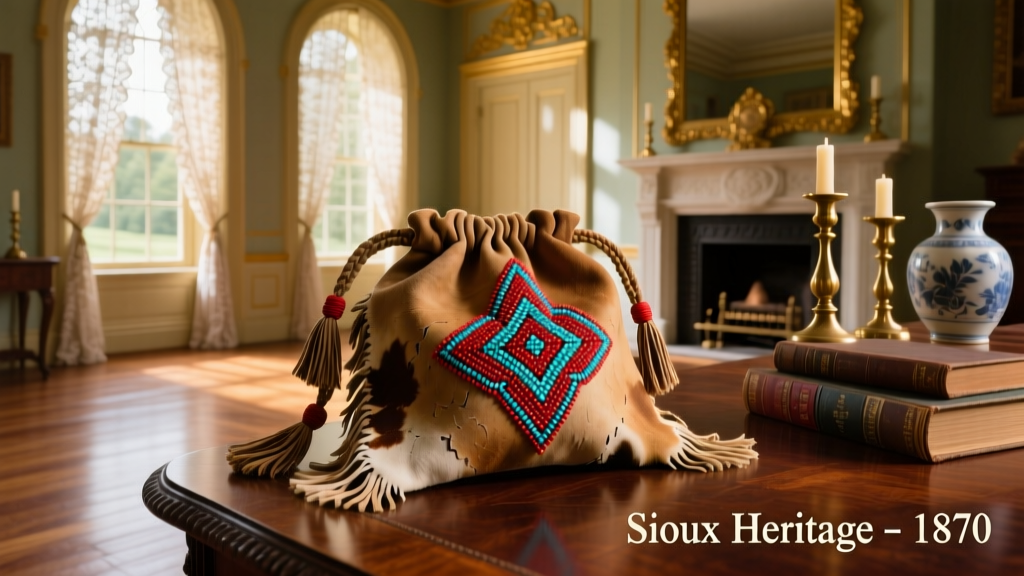
Indian Pouch Sioux Beaded Buffalo Hide: Authenticity, Craftsmanship, and Historical Significance

Royal Doulton Character Jug 'Antique Dealer' (Large Size No. 2): Identification, History, and Market Value
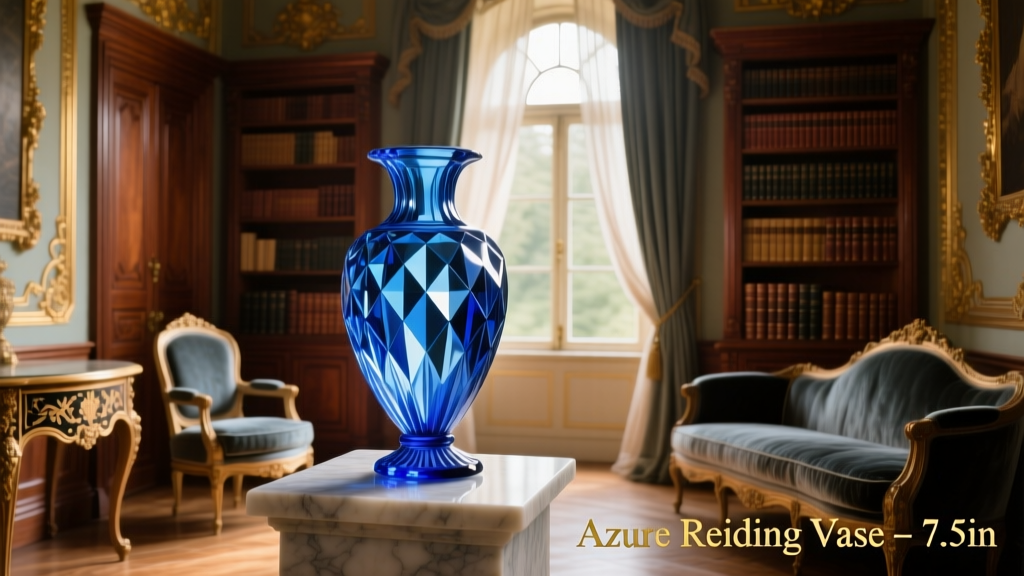
Fry Glass Vase: Diamond Optic Crystal in Azure Blue with Reeding — A Collector’s Guide to the 7½-Inch Masterpiece