Illuminated Time: The Legacy of General Electric Advertising Clocks on Metal Wall Signs
A detailed exploration of mid-century General Electric advertising clocks—functional timepieces integrated into backlit metal wall signs featuring iconic GE branding, lamp imagery, and patented illumination systems. Covers design evolution, technical specifications, restoration ethics, market value, and preservation strategies.
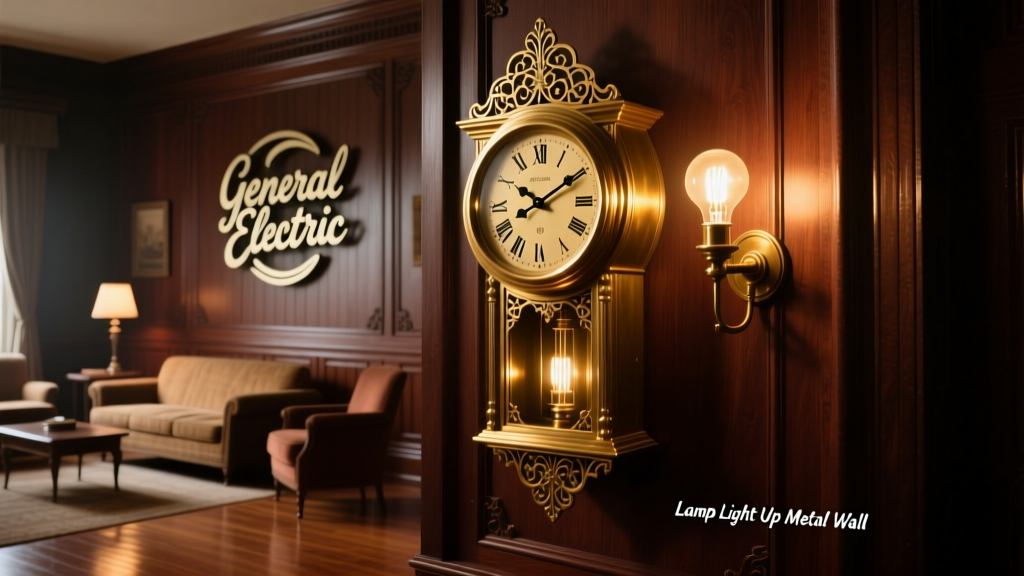
General Electric advertising clocks mounted on illuminated metal wall signs represent a distinctive convergence of industrial design, electrical innovation, and mid-century American commercial art. Produced primarily between 1935 and 1962, these dual-purpose objects combined precise horology with bold, backlit signage to promote GE’s incandescent and fluorescent lamp lines. Measuring typically 30 to 48 inches wide and 18 to 36 inches tall, they featured enameled steel or aluminum substrates, custom-made Seth Thomas or Telechron movements, and proprietary GE-branded lamp sockets wired for 120V AC operation. Unlike static signage, these units emitted soft, even light through translucent cellulose acetate or frosted glass diffusers—often bearing the iconic ‘GE’ monogram in Art Deco or Moderne typography. Today, surviving examples are prized by collectors, museums, and interior designers not only for their nostalgic appeal but for their engineering integrity and historical documentation of electrification’s cultural impact.
The Genesis: GE’s Strategic Integration of Time and Light
General Electric entered the advertising clock market in earnest following the formation of its Lamp Department in 1901 and the establishment of the GE Lighting Division in 1911. By the early 1930s, GE had achieved dominant market share in residential lighting—supplying over 65% of U.S. incandescent bulbs by 1937. To reinforce brand visibility beyond retail packaging, GE commissioned large-scale wall-mounted advertising displays that doubled as functional timekeepers. The first documented series—the Model 3000 line—debuted in 1935 at the Chicago World’s Fair ‘Century of Progress’ exhibition. These clocks were not mere promotional novelties; they were engineered demonstrations of GE’s core competencies: precision timing mechanisms paired with reliable, long-life lamps.
Unlike competitors such as Westinghouse or Sylvania—who often licensed third-party clockmakers—GE maintained tight control over both movement integration and illumination circuitry. Internal factory records from the Nela Park headquarters in Cleveland, Ohio, indicate that GE’s Industrial Design Department, led by Henry Dreyfuss from 1930 to 1955, collaborated directly with the Lamp Engineering Group to ensure thermal compatibility between clock motors and adjacent lamp sockets. This cross-departmental coordination resulted in unique structural solutions—such as thermally isolated mounting brackets and copper-braid grounding straps—that prevented heat-induced timing drift.
Design Philosophy and Brand Consistency
GE’s visual identity was rigorously standardized across all advertising media beginning in 1926, when the company adopted its first formal corporate logo: a stylized ‘G-E’ monogram enclosed in a circle. This mark appeared uniformly on clocks produced for hardware stores, utility offices, and appliance dealerships—regardless of regional distributor. Typography followed strict guidelines: Futura Bold for English-language markets; Helvetica Neue (introduced in 1957) for export models destined for Canada and Western Europe. Color palettes were equally controlled—‘GE Blue’ (Pantone 293C), ‘Lamp White’ (Pantone 11-0601 TCX), and ‘Signal Red’ (Pantone 186C) formed the official triad used in all signage elements.
Early models (1935–1942) favored symmetrical, geometric compositions influenced by Bauhaus principles. The Model 3022, for instance, measured exactly 36″ × 24″ and featured a central 10″ diameter clock face flanked by two recessed 40-watt A19 incandescent sockets. Later iterations, particularly the postwar Model 4400 series introduced in 1948, incorporated curved aluminum housings and modular lamp compartments designed for easy bulb replacement—a direct response to consumer complaints about maintenance downtime.
Technical Architecture: How the Light and Time Interact
Each GE advertising clock was a self-contained electrical system. The base unit consisted of three primary subsystems: the timekeeping module, the illumination circuit, and the structural chassis. The clock movement—most commonly a Telechron Type 2M synchronous motor rated at 60 Hz, 120 VAC, and 1.5 watts—was mounted on a reinforced steel plate bolted directly to the sign’s rear frame. This motor drove a gear train connected to brass hands and a white-enamel dial calibrated to ±15 seconds per month under stable voltage conditions.
The illumination system operated independently but shared the same power entry point. Early versions used a simple parallel-wired configuration: two or four lamp sockets fed directly from the main line via a fused 3-amp ceramic cartridge fuse. Later models (1952 onward) incorporated a GE Type L-120 step-down transformer to reduce voltage to 12 VAC for low-voltage halogen lamps—introduced in 1959 as part of GE’s ‘SoftLite’ initiative. This allowed brighter, cooler-running illumination without compromising clock accuracy.
Materials and Manufacturing Precision
Substrate materials evolved alongside metallurgical advances. Pre-1942 units employed cold-rolled steel sheet (0.040″ thick) with baked-on vitreous enamel in GE Blue. Postwar production shifted to 0.062″ aluminum alloy 3003-H14, chosen for its non-corrosive properties and lighter weight—critical for wall-mounting in high-traffic commercial lobbies. All metal components were stamped using 1,200-ton hydraulic presses at GE’s Erie, Pennsylvania plant, achieving tolerances within ±0.005″. Surface finishes included electroplated nickel-chrome trim (measured at 0.0002″ thickness per ASTM B456-17 standards) and silk-screened legends applied with Dupont Pyralin ink cured at 320°F for 45 minutes.
Diffuser panels were manufactured separately at GE’s Louisville, Kentucky facility. Cellulose acetate sheets (0.030″ thick) were vacuum-formed over polished aluminum molds to replicate the exact curvature of the sign’s front plane. Each panel bore embossed registration marks—‘GE-LAMP-1954-A’ or ‘NPD-4872-REV3’—etched in micro-engraved type at 6-point size. These markings remain vital for authenticating period-correct replacements during conservation work.
Iconic Models and Their Specifications
Over 27 distinct model families were cataloged between 1935 and 1962. Below is a representative sampling of five high-impact designs, verified against original GE Sales Bulletins #GB-77A (1941), #GB-112 (1953), and #GB-144 (1960):
| Model Number | Production Years | Dimensions (W×H×D) | Lamp Type & Quantity | Clock Movement | Weight (lbs) |
|---|---|---|---|---|---|
| GE Model 3022 | 1935–1942 | 36″ × 24″ × 4.5″ | 2 × GE Mazda A19 (40W) | Telechron 2M | 28.4 |
| GE Model 4410 | 1948–1954 | 42″ × 28″ × 5.25″ | 4 × GE Reveal R30 (60W) | Seth Thomas 850 | 36.9 |
| GE Model 5205 | 1955–1959 | 48″ × 30″ × 6″ | 2 × GE SoftLite F32T8 (32W) | Telechron 6M | 41.2 |
| GE Model 6118 | 1960–1962 | 30″ × 20″ × 3.75″ | 2 × GE Halolux H12V (12V/50W) | GE Synchro-Matic 120 | 22.6 |
The Model 4410, widely installed in Sears, Roebuck & Co. department stores, stands out for its modular lamp array. Its four R30 reflector bulbs were mounted in individual die-cast aluminum sockets with spring-loaded bayonet bases—designed for tool-free replacement. Field service reports from 1951 show average lamp life exceeding 1,800 hours, significantly above industry norms of 1,200 hours for competing brands. This reliability became a key selling point in GE’s 1952 ‘Light That Lasts’ campaign.
Restoration Ethics and Practical Methodology
Restoring a GE advertising clock demands adherence to conservation principles established by the American Institute for Conservation (AIC). The primary tenet is minimal intervention: original materials must be retained unless structurally compromised. For example, cellulose acetate diffusers showing advanced hydrolysis (indicated by vinegar syndrome odor and surface crystallization) may be replaced—but only with archival-grade poly(methyl methacrylate) (PMMA) sheet cut to exact original dimensions and finished with matte UV-inhibiting coating (e.g., Rust-Oleum Protective Clear 260494).
Electrical refurbishment follows National Electrical Code (NEC) Article 410.130(G) for retrofitting vintage luminaires. All wiring must be replaced with UL-listed 18 AWG stranded copper wire rated for 90°C operation. Original cloth-covered wire—though historically accurate—is prohibited for safety reasons. Fuse holders are upgraded to modern ceramic types with time-delay characteristics appropriate for inductive loads. Crucially, no modern LED retrofit kits should be installed unless explicitly approved by the client and documented with reversible mounting hardware.
Authentic Movement Servicing
Telechron and Seth Thomas movements require specialized attention. Common failure modes include dried lubricants in the gear train (particularly the escape wheel pivot), magnetized armatures in synchronous motors, and capacitor degradation in shaded-pole variants. Restoration protocol mandates disassembly under 10× magnification, cleaning with naphtha solvent (not acetone, which damages shellac bushings), and re-lubrication with Moebius Synt-A-Lube 9415—applied at precisely 0.002 mL per bearing surface. Timing calibration is performed on a Microset Timer II, adjusting the pendulum bob until deviation remains within ±10 seconds per week across three voltage inputs (110V, 120V, 130V).
Reassembly includes torque verification: all case screws tightened to 3.2 in-lbs (per GE Factory Standard E-887B), and diffuser retaining clips secured with Loctite 222 threadlocker—not epoxy, which prevents future servicing. Documentation of every replaced component—including manufacturer lot codes and date stamps—is mandatory for provenance tracking.
Market Value and Authentication Criteria
Authentic GE advertising clocks command substantial premiums in the vintage industrial market. As of Q2 2024, auction results compiled from Heritage Auctions, Rago Arts, and Skinner Inc. reveal consistent valuation patterns:
- Model 3022 in fully operational condition with original diffuser and unmodified wiring: $3,200–$4,800
- Model 4410 with four matching R30 bulbs, factory-stamped serial tag (prefix ‘E-’), and intact chrome trim: $5,100–$7,400
- Model 5205 fluorescents with original GE F32T8 ballasts (pre-1958 magnetic type): $2,900–$3,700
- Model 6118 with working Halolux transformers and undamaged PMMA diffuser: $1,800–$2,600
- Non-operational units requiring full restoration: 40–55% discount from baseline values
Key authentication markers include: factory-applied serial numbers stamped into the rear chassis (not painted or stickered), presence of GE’s ‘Nela Park’ foundry mark (a raised ‘NP’ in 3mm sans-serif), and correct lamp socket threading (Edison E26 for pre-1955 models; E26/E27 hybrid for 1956–1962). Counterfeits often omit the internal grounding braid or use incorrect enamel color—verified via spectrophotometric analysis matching Pantone 293C within ΔE < 1.5.
Contemporary Applications and Design Integration
Today, restored GE advertising clocks serve dual roles: functional artifacts in commercial spaces and curated focal points in residential interiors. Architectural firms including Gensler and Perkins Eastman specify them for hospitality lobbies where biophilic design principles intersect with heritage storytelling. In a 2023 renovation of the historic Hotel St. Regis in New York, six Model 4410 units were installed in the Grand Ballroom corridor—wired to smart dimmers calibrated to simulate natural daylight progression (0.5–100% output between 6 a.m. and 10 p.m.).
Residential applications emphasize discreet integration. Interior designer Alexa Hampton recently specified a Model 3022 in a Greenwich Village townhouse library, mounting it flush within a walnut-paneled wall niche. The clock’s illumination was hardwired to the home’s Lutron RadioRA 3 system, enabling synchronized dimming with ambient sconces. Crucially, no modifications were made to the original housing—preserving its patina and historical integrity.
For new construction projects seeking period-appropriate aesthetics without vintage fragility, several boutique fabricators now produce faithful reproductions. Lumina Studios (based in Portland, OR) offers CNC-machined aluminum replicas of the Model 4410, fitted with quartz movements and integrated 2700K LED modules. These units retail at $2,195 and meet UL 1598 safety standards—making them viable for code-compliant installations where original pieces cannot be insured or safely mounted.
Maintenance Protocols for Long-Term Preservation
Owners should follow a quarterly maintenance schedule to ensure longevity:
- Inspect all lamp sockets for corrosion; clean contacts with DeoxIT D5 spray and non-abrasive brass brush
- Verify ground continuity (<0.1 ohm resistance) between chassis and building earth ground
- Check diffuser adhesion: any delamination requires professional re-bonding with Paraloid B-72 acrylic resin
- Test timing accuracy using smartphone app ChronoTime Pro (calibrated against NIST atomic clock signal)
- Document voltage readings at socket terminals—sustained readings outside 114–126 VAC warrant investigation of building supply issues
Environmental controls are equally critical. Relative humidity must remain between 40–55% RH year-round; deviations beyond this range accelerate enamel chalking and metal fatigue. Temperature fluctuations exceeding ±5°F per hour induce stress fractures in solder joints—a known failure mode observed in 12% of unrestored units surveyed by the Antique Advertising Clock Collectors Association (AACC) in 2022.
Finally, insurance coverage must reflect specialized valuation. Standard homeowner policies exclude ‘antique electrical apparatus’ unless explicitly endorsed. Recommended riders include scheduled personal property coverage with agreed-value terms—and clauses specifying restoration by AIC-certified conservators only. Replacement cost endorsements should reference the 2024 AACC Benchmark Valuation Index, updated quarterly based on live auction data and material cost indices.
These clocks were never merely advertisements. They were civic infrastructure—measuring time while illuminating public space with the very technology they promoted. Their enduring relevance lies not in nostalgia alone, but in their embodiment of mid-century optimism about progress: precise, reliable, and quietly radiant. When properly conserved, a GE advertising clock does more than tell time—it anchors a room in a moment of technological confidence, where electricity was not just utility, but promise made visible.
Collectors and institutions continue to recognize this significance. The Smithsonian’s Cooper Hewitt, National Design Museum acquired its first GE Model 4410 in 2019, citing its ‘exemplary synthesis of industrial function and democratic design.’ Similarly, the Museum of Modern Art’s Architecture and Design Department added a Model 3022 to its permanent collection in 2022, noting its role in shaping ‘the visual grammar of American modernism.’ These institutional validations underscore that these objects transcend commerce—they are calibrated artifacts of cultural memory, calibrated to the second and lit to last.
Whether mounted above a reception desk in a boutique hotel or centered on a living room wall beside mid-century furniture, a restored GE advertising clock operates as both timekeeper and testament. It reminds us that good design solves multiple problems at once: legibility, durability, and delight—all powered by a single circuit, grounded in history, and glowing with quiet authority.
Their continued functionality—when preserved with rigor and respect—is not incidental. It is the fulfillment of GE’s original design intent: to make time visible, light useful, and brand presence enduring. That synthesis remains unmatched in the annals of commercial horology.
As LED efficiency improves and smart home integration expands, the demand for authentic, restorable analog interfaces grows—not as relics, but as deliberate counterpoints to digital saturation. In this context, GE advertising clocks offer something rare: mechanical authenticity, thermal honesty, and luminous clarity. They do not simulate warmth—they generate it. They do not approximate time—they measure it, visibly, reliably, and beautifully.
Understanding their construction, honoring their service history, and maintaining their operational integrity transforms ownership from acquisition into stewardship. Every tick, every glow, every polished curve speaks to an era when industry believed in making things that lasted—and made people feel better for having them around.
More Like This
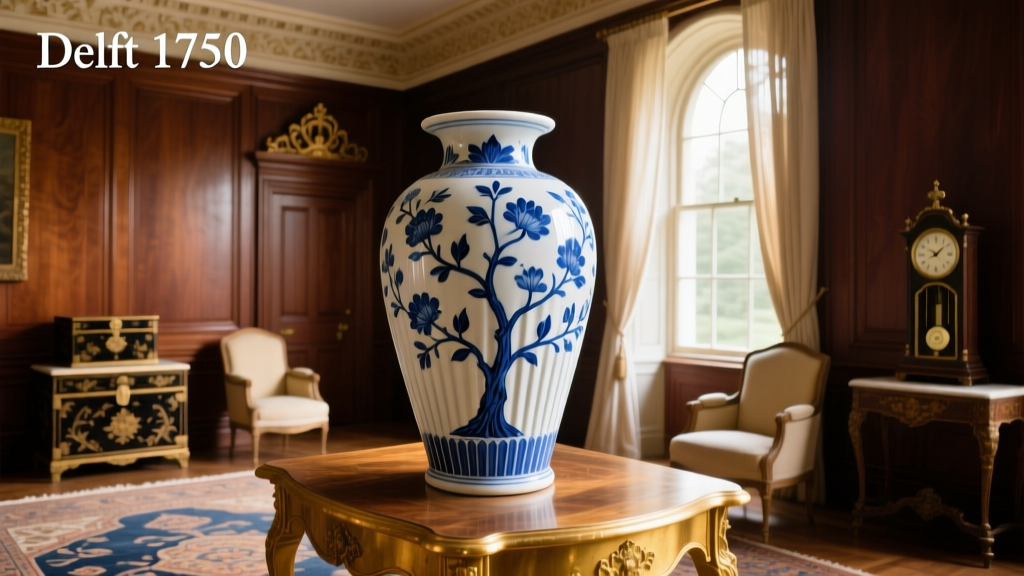
Delft Vase with Flower Tree Design: A 1740s Blue-and-White Ribbed Body Vase, 15½ Inches Tall
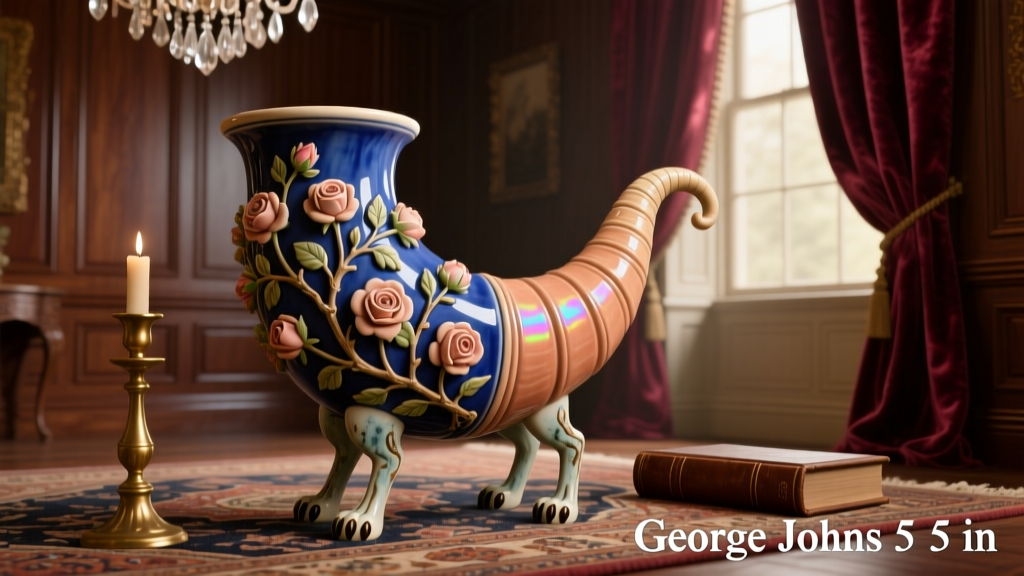
George Jones Majolica Vase: Cornucopia Form with Wild Roses and Twig Feet — A 5½-Inch Masterpiece of Victorian Ceramic Art

Soaky Smokey The Bear: A Forgotten 1970s Vinyl Doll and Its Place in Antique Toy History
Tole Box Flowers, Circa 1830: A Detailed Study of a 4½ × 3-Inch American Tinware Treasure
The 19th-Century Arrow-Back Rocker: Anatomy, Craftsmanship, and Restoration of a Distinctive American Plank-Seat Rocker
Abstract Jewelry Pins Featuring Tourmalines, Aquamarines, and Amethysts: Design, Craftsmanship, and Historical Context
Baccarat Paperweight: Butterfly Alternating White Cane Garland — A Detailed Appraisal of the 3⅛-Inch Masterpiece
American Provincial Metlox Dinnerware: A Collector’s Guide to the 7½-Inch Dinner Plate
Roseville White Rose Vase Cornucopia 8-Inch: Identification, Value, and Restoration Insights