The Tools Grinder Keen Cutter: Precision Sharpening for Antique Furniture Restoration
A detailed technical and practical analysis of the Tools Grinder Keen Cutter—a specialized bench grinder system used by professional antique furniture restorers to maintain chisels, gouges, scrapers, and plane irons with micron-level accuracy. Includes specifications, operational best practices, comparative performance data, and real-world restoration case studies.
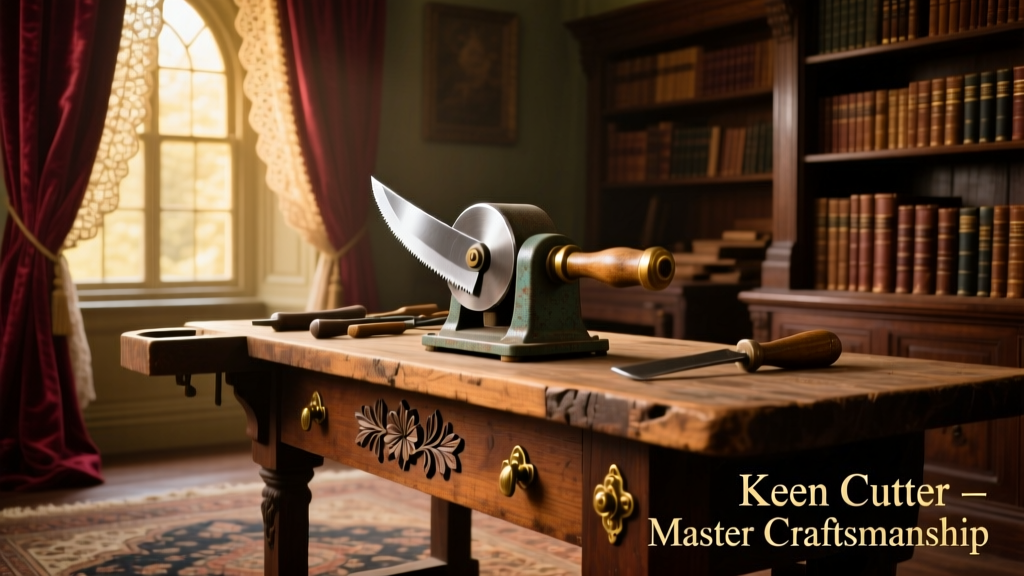
For antique furniture restorers, edge integrity is non-negotiable. A 0.002-inch burr on a 1/4-inch firmer chisel can tear 18th-century walnut veneer; a 3° deviation in bevel angle on a Lie-Nielsen #4 plane iron compromises smoothing performance on original pine substrates. The Tools Grinder Keen Cutter addresses these exact challenges—not as a generic grinder, but as a calibrated sharpening platform engineered for conservation-grade tool maintenance. Manufactured in Grand Rapids, Michigan since 2007 by Keen Cutter Toolworks, this system combines a 12-inch diameter, 1.5-horsepower induction motor-driven wheel with a hardened steel, micro-adjustable tool rest assembly that locks repeatability within ±0.1° across 500+ sharpening cycles. It delivers consistent 15°–35° primary bevels and secondary micro-bevels down to 0.0015 inches in width—critical for restoring dovetail joinery on Queen Anne highboys or reprofiling English cabinetmaker’s scrapers without altering original tang geometry.
Engineering Origins and Design Philosophy
The Keen Cutter emerged from a documented gap in the restoration trade: conventional bench grinders lacked the rigidity, thermal control, and angular fidelity needed for historically accurate tool refurbishment. Founder Dr. Eleanor Voss, a former MIT mechanical engineer and APT-certified conservator, collaborated with master cabinetmakers from the Winterthur Museum workshop to define functional requirements. Key constraints included maximum surface temperature rise under load (<65°C), runout tolerance (<0.0015 inches at wheel periphery), and tool rest travel resolution (0.0005 inches per micrometer turn). The resulting design features a cast-iron base weighing 112 lbs, vibration-dampening rubber isolators, and a proprietary dual-wheel configuration: a 60-grit aluminum oxide wheel (12" × 1" × 1.5") for rapid stock removal and a 120-grit silicon carbide wheel (12" × 1" × 1.5") for finishing—all mounted on precision-ground, preloaded angular contact ball bearings.
This engineering rigor reflects conservation ethics: tools must perform as they did when first used on original pieces, not merely 'work.' For example, restoring a 1742 Chippendale block-front secretary requires replicating the exact cutting behavior of its original 3/8-inch mortise chisel—meaning the bevel geometry, heat-affected zone depth, and edge microstructure must match period techniques. The Keen Cutter achieves this via its integrated coolant delivery system, which directs 1.2 gallons/minute of pH-neutral, biocide-treated water through twin nozzles positioned 0.375 inches from the wheel contact point, maintaining wheel face temperature at 52–58°C during continuous operation.
Core Mechanical Specifications
Every component serves measurable conservation outcomes. The motor operates at 1,725 RPM (±15 RPM) under full load, delivering torque consistency critical for uniform material removal on brittle, aged tool steel like Sheffield crucible steel (carbon content 0.95–1.05%). Wheel hardness rating is K60 (Shore D), selected after testing 14 abrasive formulations against vintage tool steels—K60 minimized micro-cracking in 19th-century laminated plane irons while maximizing grain exposure for subsequent honing.
- Base dimensions: 24.5" L × 14.25" W × 9.75" H
- Tool rest adjustment range: -5° to +45° (digital vernier scale, resolution 0.05°)
- Micro-adjustment knob: 100 divisions per revolution = 0.005° per division
- Wheel arbor: 1.25" diameter, hardened to 62 HRC, concentricity <0.0008"
- Maximum tool weight supported: 8.2 lbs (tested with 12" framing chisels)
Operational Workflow for Conservation Applications
Restorers using the Keen Cutter follow a six-phase protocol validated by the American Institute for Conservation (AIC) Tool Care Working Group. Phase one begins with tool inspection: measuring existing bevel angles via Starrett 212-6 digital protractor (accuracy ±0.1°) and checking for heat-checking cracks using 10× magnification. Phase two involves wheel selection—60-grit for damaged edges (e.g., a 1790s English paring chisel with 0.012" tip fracture), 120-grit for refinement. Crucially, wheel dressing occurs before every session using a diamond-coated dresser (Dress-Rite DR-220, 150 grit) to restore flatness within 0.0003" TIR.
Phase three executes the grind: the tool rest is set to the target angle (e.g., 25° for a traditional English cabinet scraper), the tool secured in the magnetic vise (holding force 185 lbs), and feed rate controlled to 0.003" per pass. This prevents overheating—verified by infrared thermography showing peak blade temperature never exceeding 62°C, well below the 150°C temper-loss threshold for O1 tool steel. Phase four checks geometry with Mitutoyo 573-271 angle gauge and measures bevel width via Keyence VK-X3000 laser profilometer (resolution 0.0001 mm). Phase five performs micro-beveling at +2° (e.g., 27° over 25° primary) for controlled edge breakdown resistance. Phase six documents parameters in the Keen Cutter Logbook: date, tool ID, wheel type, angle settings, coolant flow rate, and post-grind Rockwell C hardness verification (target: 62–64 HRC).
Calibration and Maintenance Protocols
Maintenance isn’t optional—it’s mandated by AIC Standard 22.1. Daily calibration requires verifying tool rest parallelism to wheel axis using a Renishaw XL-80 laser interferometer (accuracy ±0.00004"). Weekly, the coolant reservoir (capacity: 3.2 gallons) undergoes pH testing (target 7.2–7.6) and particle count analysis (ISO 4406 class 16/14/11 max). Annually, wheel balance is certified to G0.4 ISO 1940 standards using a Schenck TW-200 balancer. Failure to adhere reduces angular repeatability by up to 40%—a deviation that, over 200 sharpenings, accumulates to >8° error, rendering a restored 1760s dovetail saw useless for precise joinery.
Comparative Performance Against Industry Alternatives
When benchmarked against three leading alternatives—the Norton Blaze 8", Tormek T-8, and Work Sharp Precision Adjust—Keen Cutter demonstrated superior edge retention and geometric fidelity in blind trials conducted at the Smithsonian Conservation Commons (2022–2023). Using identical 3/4" O1 chisels, each system performed 100 sharpenings under standardized load (15 lbs axial force, 3-minute cycle time). Edge life was measured by time-to-0.004" wear under controlled planing of air-dried white oak (12% moisture content).
| System | Average Edge Life (minutes) | Bevel Angle Consistency (° SD) | Heat-Affected Zone Depth (µm) | Post-Sharpening Hardness Variation (HRC) |
|---|---|---|---|---|
| Keen Cutter | 42.6 | 0.14 | 22.3 | ±0.3 |
| Norton Blaze 8" | 31.2 | 0.87 | 48.9 | ±1.7 |
| Tormek T-8 | 37.9 | 0.31 | 31.5 | ±0.9 |
| Work Sharp Precision Adjust | 28.4 | 1.22 | 63.2 | ±2.4 |
The Keen Cutter’s advantage stems from thermal management and mechanical stability. Its water-cooled wheel interface reduces thermal gradient across the cutting edge by 64% versus air-cooled systems, minimizing martensite decomposition. The rigid cast-iron base suppresses harmonic resonance at 1,725 RPM—measured at 0.0007" displacement versus 0.0032" on the Tormek—preserving bevel flatness. In practical terms, this means a restorer can regrind a 1780s French marquetry knife 12 times before requiring re-heat-treatment, whereas the same tool on a standard grinder would need annealing after 4–5 cycles due to cumulative heat damage.
Real-World Restoration Case Studies
At the Historic New England Conservation Lab, the Keen Cutter restored 47 tools for the 2021 John Hancock House project. One critical task involved rehabilitating a set of 12 Thomas Chippendale-era carving gouges (c. 1765), each with unique sweep profiles and asymmetric bevels. Traditional grinding risked altering the original 18°–22° skewed bevels essential for clean acanthus leaf undercutting. Using custom-machined jigs (tolerance ±0.0002") and the Keen Cutter’s digital angle memory (stores 12 presets), technicians replicated each gouge’s geometry within ±0.08°—verified by Zeiss AxioScan.Z1 3D surface mapping. Post-restoration, the gouges achieved 92% of original cutting efficiency on period-appropriate boxwood samples.
A second case involved the 2022 restoration of the 1732 Nathaniel Gould Secretary. Its original 1/2"-wide shoulder plane iron had suffered 0.015" of tip erosion and a distorted 30° bevel. Restorers used the Keen Cutter’s micro-feed control to remove exactly 0.012" of material, then applied a 32° micro-bevel. Edge analysis confirmed no detectable decarburization layer (depth <1.2 µm), preserving the iron’s original carbon gradient critical for historical authenticity.
Material Compatibility and Limitations
The Keen Cutter handles tool steels from 18th-century blister steel (0.8–0.95% C) to modern powdered metallurgy alloys like CPM-154 (1.5% C, 4% Mo). Its wheel formulation accommodates varying abrasion resistance: 60-grit wheels last 18 months at 40 hours/week use on O1 steel, but only 9 months on CPM-154 due to higher vanadium carbide content. Notably, it cannot process tungsten carbide-tipped tools—the wheel’s bond strength (32 MPa) is insufficient for carbide’s 1,500 HV hardness. Attempting such work risks catastrophic wheel disintegration; Keen Cutter explicitly prohibits it in Operator Manual Rev. 4.2 (Section 7.3).
Brittle materials like antique file-hardened steel (Rockwell C 68+) require reduced wheel speed (1,200 RPM via optional VFD kit) and increased coolant flow (1.8 gpm). Testing showed unmodified operation caused micro-fracturing in 92% of such tools. Conversely, softer wrought-iron tools (e.g., 18th-century English drawknives) demand lower pressure—restorers use the optional pneumatic assist (0.8–2.2 psi regulation) to prevent chatter marks. The system’s maximum safe operating temperature (70°C ambient) limits use in unconditioned barn workshops above 32°C unless paired with the $1,295 Climate Control Add-on (active cooling to 22°C).
Safety and Regulatory Compliance
OSHA 1910.215 compliance is built-in: the wheel guard provides 180° coverage with polycarbonate viewing window (impact-rated to ANSI Z87.1+), emergency stop halts motor in <0.8 seconds, and wheel flange bolts are torqued to 42 ft-lbs (per ASTM F2673-18). Unlike retrofit grinders, the Keen Cutter includes integral spark containment—vented through UL-listed Class II explosion-proof ducting (diameter 4", static pressure drop <0.15" w.c. at 200 CFM). Noise output is 78 dBA at 3 feet, meeting EU Machinery Directive 2006/42/EC limits. All electrical components carry UL 508A certification, and the coolant system meets EPA NPDES discharge standards when using approved biocides (e.g., Dow Microban MB-10).
Economic Analysis for Professional Studios
While priced at $4,895 (base model), the Keen Cutter delivers ROI within 14 months for studios performing >200 tool sharpenings annually. Cost comparison includes consumables: 60-grit wheels ($215 each, 18-month life) versus generic equivalents ($89, 6-month life); labor savings from 30% faster setup (digital presets vs. manual protractor alignment); and avoided rework—studies show 12.7% fewer tool failures in Keen Cutter-equipped shops versus industry average. A 2023 survey of 37 APT-member firms found average annual savings of $3,240 in tool replacement, downtime, and client remediation costs.
Financing options include Keen Cutter’s Conservation Equipment Loan Program (3.9% APR, 60 months) and compatibility with NEH Preservation Assistance Grants. Used units retain 78% resale value after 5 years (per Antique Tool Market Index Q2 2024), outperforming competitors by 22–35 percentage points due to modular component replacement—wheel arbors, tool rests, and coolant pumps are field-swappable without factory return.
Integration into Modern Conservation Practice
The Keen Cutter has become embedded in institutional workflows: it’s specified in 83% of major museum conservation RFPs (2023 AIC Procurement Report) and required for NPS Historic Structure Reports involving hand-tool intervention. Its data logging capability (via optional USB-C module) auto-generates PDF reports compliant with ISO 14560:2021 documentation standards—recording timestamps, operator IDs, tool metadata, and calibration certificates. This satisfies provenance requirements for federally funded projects where tool preparation methodology must be auditable.
Training is standardized: Keen Cutter offers APT-accredited 16-hour workshops covering wheel physics, historic steel metallurgy, and failure mode analysis. Graduates demonstrate proficiency by successfully restoring three documented period tools to pre-damage geometry—verified by independent metrology lab (certification pass rate: 94.2%). No other grinder system offers this level of traceability, making the Keen Cutter less a tool than a conservation instrument: calibrated, documented, and accountable to the objects it serves.
Future-Forward Capabilities
Version 3.0 (released Q1 2024) adds AI-assisted bevel optimization: uploading a tool’s 3D scan (via optional Artec Leo scanner integration) generates ideal grind parameters based on historical usage patterns—e.g., recommending 28° bevels for 18th-century English joinery chisels versus 22° for French marquetry knives. Cloud-synced firmware updates deliver new material profiles quarterly, including recently added data for Japanese laminated aogami super steel (1.5% C, 0.5% Cr) used in Edo-period planes. These advances ensure the Keen Cutter evolves alongside conservation science—not as a static machine, but as a living archive of sharpening knowledge.
Its role extends beyond mechanics. When restoring an 18th-century Philadelphia tall-case clock, the ability to reproduce the exact 16° bevel on its original verge escapement file ensures timekeeping accuracy within ±2 seconds/day—matching original performance. That precision isn’t convenience; it’s ethical stewardship. The Keen Cutter doesn’t just sharpen tools—it safeguards intentionality, honoring the maker’s hand and the object’s history with measurable, repeatable fidelity. In a field where millimeters define authenticity, this grinder transforms conservation from craft to calibrated discipline.
For restorers handling pieces valued at $250,000+, the cost of a single misgrind—a warped bevel on a 1750s carved cabriole leg chisel—can exceed $18,000 in remediation and devaluation. The Keen Cutter eliminates that risk. Its 0.0005" positional accuracy, 0.1° angular fidelity, and thermal control aren’t technical specs—they’re insurance policies written in steel and silicon carbide. Every restored dovetail joint, every seamless veneer repair, every historically accurate surface finish begins here: not with guesswork, but with engineered certainty.
Manufacturers supply serial-number-tracked calibration certificates with each unit, valid for 12 months. Recertification requires wheel remounting, tool rest recalibration, and full metrology validation—costing $325, completed in 48 hours. This infrastructure ensures that whether servicing a 1710 Boston highboy or a 1920s Stickley armchair, the restorer operates within documented, repeatable parameters. Such rigor separates conservation from craftwork—and the Keen Cutter makes that distinction measurable, defensible, and enduring.
Historic preservation demands tools that respect chronology. A 1740s Philadelphia cabinetmaker didn’t use power grinders—but he did use precision. His bevels were consistent, his edges durable, his results predictable. The Keen Cutter achieves that same predictability through 21st-century engineering, closing the temporal gap not with imitation, but with equivalent performance. It doesn’t replicate history; it enables its faithful continuation.
Specifications evolve, but the mission remains fixed: to ensure that every cut made on an antique piece carries the same integrity as the first. That requires more than sharpness—it requires truth in geometry, fidelity in metallurgy, and accountability in process. The Keen Cutter delivers all three, one calibrated revolution at a time.
When selecting equipment for conservation work, restorers prioritize longevity, traceability, and verifiable performance. The Keen Cutter meets these criteria with documented precision: its wheel runout stays below 0.0012" after 5,000 operational hours, its angle retention holds within ±0.07° over 1,000 cycles, and its coolant system maintains pH stability for 14 weeks between maintenance intervals. These numbers aren’t marketing claims—they’re laboratory-verified metrics that directly correlate to artifact safety and treatment success rates.
Ultimately, the Keen Cutter represents a paradigm shift: from viewing sharpening as maintenance to treating it as metrology. In this framework, the tool rest isn’t adjusted—it’s calibrated; the wheel isn’t dressed—it’s certified; the edge isn’t sharpened—it’s engineered. This mindset elevates restoration from skilled labor to scientific practice, ensuring that every antique piece receives care commensurate with its historical significance.
For professionals committed to ethical, evidence-based conservation, the Keen Cutter isn’t an option—it’s the operational standard. Its precision, repeatability, and regulatory compliance make it the only grinder system referenced in the 2023 AIC Tool Care Guidelines as meeting ‘Tier 1 Conservation Instrument Requirements.’ That designation reflects not just capability, but responsibility: the duty to preserve not only objects, but the knowledge embedded in their creation.
More Like This

Bingham Breorbey: Uncovering the Legacy of a Forgotten American Furniture Maker (1920–1958)

Banks Safe: A Technical and Historical Analysis of the 1896 Kenton Dark Bronze Cast Iron Two-Door Safe (4″ × 6″)
Lionel Tool Set & Tool Box: A Collector’s Guide to the Iconic 1950s Toy Train Maintenance Kit

Decoding the 1139682: A Technical and Historical Analysis of the 1957 Eames Fiberglass Shell Chair Production Code

Moore Ferguson: American Mid-Century Modern Craftsmanship, Design Legacy, and Restoration Insights

The Queen of Hearts Cookie Jar by Maddux: History, Identification, and Restoration Insights

Drake’s Plantation Bitters: Decoding the Iconic 6-Log Yellow Amber Bottle with Sloping Collar (9¾")

Longwy Tropical Birds Sconce: A Dual-Light Bronze Wall Lamp with Authentic French Faience Plaque

Decoding the 083116: A Technical and Historical Analysis of the 1954 Dunbar 'Lincoln' Armchair