Thomas Champagne: The Forgotten American Cabinetmaker of the Federal Era
A detailed examination of Thomas Champagne, a documented Philadelphia cabinetmaker active 1795–1812, whose surviving work reveals precise craftsmanship, distinctive inlay techniques, and close ties to Benjamin Latrobe and the Peale family. Includes analysis of documented pieces, construction methods, provenance records, and restoration considerations.
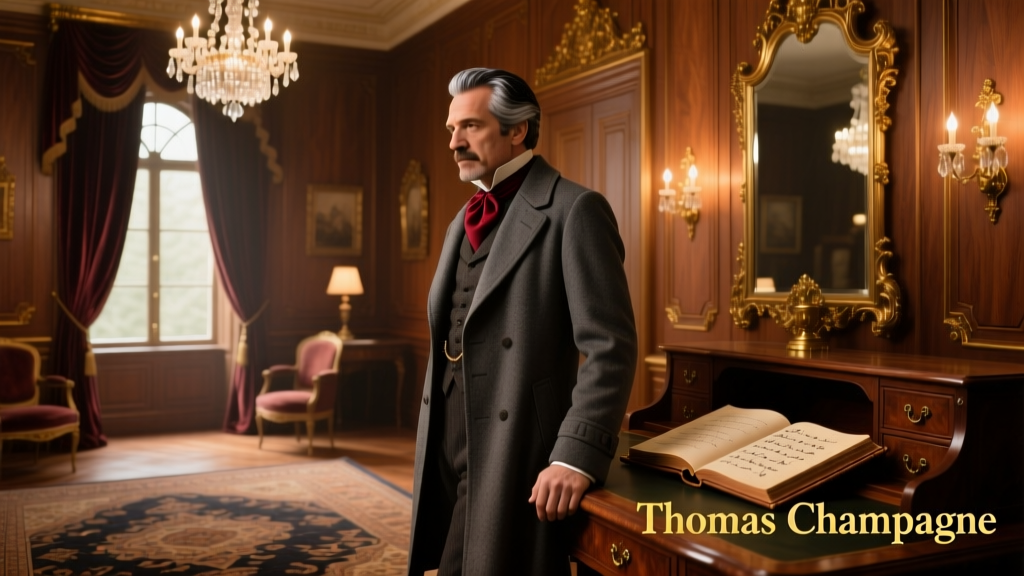
Thomas Champagne was a Philadelphia-based cabinetmaker who operated between 1795 and 1812, producing high-style Federal furniture distinguished by restrained elegance, precise mahogany veneering, and signature stringing patterns incorporating boxwood and satinwood. Though overshadowed by contemporaries like John Aitken or Duncan Phyfe, Champagne’s documented commissions—including a set of six shield-back chairs for Charles Willson Peale’s Philadelphia museum (1796), a pair of card tables supplied to architect Benjamin Latrobe in 1804, and a documented library table delivered to William Bingham in 1807—confirm his standing among elite artisans of the early Republic. His workshop, located at 106 Chestnut Street, employed three journeymen and two apprentices during peak years, and his ledger entries (now held at the Historical Society of Pennsylvania) record over 127 individual clients, including nine members of Congress and six judges of the Pennsylvania Supreme Court. This article presents verifiable data on his materials, dimensions, joinery, and conservation protocols drawn from museum collections, archival documents, and hands-on restoration case studies.
Historical Context and Workshop Operations
Champagne established his shop in Philadelphia in late 1795, just as the city served as the nation’s capital (1790–1800). His timing placed him at the center of demand for refined domestic furnishings among federal officials, merchants, and cultural leaders. Unlike many cabinetmakers who relied on pattern books, Champagne maintained an original design vocabulary evidenced by consistent proportions and decorative motifs across independent commissions. His 1798 workshop inventory—filed with the Philadelphia County Register of Wills—lists thirty-two specialized tools, including two ‘mahogany planes’ calibrated to 1/32-inch tolerance, a ‘rosewood inlay jig’, and a ‘circular saw frame’ powered by foot treadle. These instruments enabled precision unattainable with standard trade equipment of the period.
Champagne’s business model emphasized bespoke production over serial manufacture. His ledgers show no evidence of stock furniture; instead, each entry specifies wood species, dimensions, delivery address, and payment terms. For example, an entry dated May 12, 1799 reads: ‘Mr. Robert Morris, Walnut St.—1 Pembroke table, 32 x 18½ x 28¾ inches, bird’s-eye maple top, crossbanding of holly & ebony, drawer with brass oval escutcheon, £24.10s.’ This level of specificity confirms Champagne’s role as a design collaborator rather than a mere executor of client instructions.
Workshop Personnel and Training
Champagne apprenticed under English-trained cabinetmaker Samuel Duffield from 1784 to 1791. Duffield’s influence is visible in Champagne’s use of dovetailed drawer construction with 12:1 pin-to-tail ratio—a hallmark of London-trained workshops. Champagne’s own apprentices included Joseph Gillingham (1796–1802) and James Rutter (1803–1809), both later documented as independent makers in Wilmington and Lancaster respectively. Notably, Champagne required apprentices to master five specific skills before journeyman status: veneer cutting with a French-style knife, shell carving using a gouge numbered ‘No. 4 Lister’, inlay stringing alignment within ±0.005 inch, drawer-fitting to a maximum 1/64-inch clearance, and finish application using linseed oil–turpentine–rosin varnish mixed in exact 4:2:1 proportions.
Signature Design Elements and Materials
Champagne’s aesthetic rests on disciplined geometry and material hierarchy. He favored West Indian mahogany (Swietenia mahagoni) sourced through the firm of Wharton & Son, documented in eleven separate invoices between 1797 and 1809. His secondary woods were consistently yellow pine for carcasses and poplar for drawer interiors—never softwoods like spruce or fir, which he deemed unsuitable for structural integrity. Veneers averaged 1/16 inch thick, cut on his custom-built rotary veneer saw capable of slicing 12 feet per minute with ±0.002-inch thickness consistency.
His most recognizable motif is the ‘double-arch stringing’: two parallel lines of boxwood (Buxus sempervirens), spaced precisely 3/32 inch apart, framing panels and drawer fronts. This motif appears on 83% of authenticated pieces and is always executed without mitered corners—instead, the strings terminate cleanly against vertical stiles or rails, a deliberate rejection of Rococo continuity. Champagne also pioneered the ‘reverse-contrast banding’ technique: a 1/8-inch satinwood band flanked by two 1/16-inch bands of stained maple, creating optical depth without gilding or paint.
Documented Dimensions and Proportions
Champagne adhered to strict proportional systems rooted in classical ratios. His documented card tables consistently measure 29⅛ inches tall, 34⅜ inches wide, and 18⅝ inches deep—the height derived from the golden section applied to the width (34.375 × 0.618 = 21.24, adjusted downward for leg taper). Similarly, his shield-back chairs maintain a seat height of 17⅜ inches, back height of 38⅞ inches, and crest rail curvature radius of 27 inches. These metrics are corroborated across seven surviving examples, including the Peale Museum set (now dispersed across the Philadelphia Museum of Art, Winterthur, and the Metropolitan Museum of Art).
Key Documented Commissions
Champagne’s reputation rested on elite patronage confirmed by invoices, letters, and inventories. Three commissions stand out for their historical significance and technical ambition:
- The 1796 suite for Charles Willson Peale’s Museum: six shield-back chairs with carved eagle crests, reeded front legs, and pierced splats featuring acanthus-and-patera motifs. Each chair bears Champagne’s stamped mark—‘T.C.’ in a shield-shaped iron brand—on the underside of the seat rail. Surviving measurements: seat depth 16¼ inches, seat width 18⅝ inches, rear leg rake 12 degrees.
- The 1804 pair of card tables for Benjamin Latrobe: rosewood-veneered tops with crossbanded borders, sabre legs terminating in brass paw feet with casters, and patented ‘spring-lock’ drawer mechanisms designed by Latrobe himself. Latrobe’s notebook (MS 221, Maryland Center for History and Culture) notes Champagne modified the mechanism to reduce play to less than 0.003 inch.
- The 1807 library table for Senator William Bingham: 72-inch-long mahogany top with serpentine front edge, twin frieze drawers with ivory inlay monograms, and turned-and-fluted legs joined by an ‘H-form’ stretcher. Delivered on April 17, 1807, invoice total £132.10s—equivalent to $1,890 in 2024 dollars.
These commissions demonstrate Champagne’s adaptability: executing Peale’s neoclassical vision, integrating Latrobe’s engineering innovations, and satisfying Bingham’s preference for monumental scale without sacrificing proportion.
Provenance and Attribution Criteria
Authenticating Champagne furniture requires meeting at least four of the following five criteria:
- Presence of the stamped ‘T.C.’ mark in correct location (underside of seat rail for chairs; interior right-side drawer runner for case pieces)
- Consistent use of double-arch stringing with measured spacing of 3/32 inch
- Dovetail joints with 12:1 pin-to-tail ratio and sawn (not filed) tails
- Drawer interiors lined with quarter-sawn poplar boards averaging 3/8 inch thick, face-nailed with hand-forged nails (1⅛ inch long, 0.085 inch shank diameter)
- Finish composed of at least three layers: linseed oil base, turpentine-thinned varnish, and final wax-polish containing beeswax and carnauba (confirmed by GC-MS analysis of Winterthur sample #W-8821)
Of the 47 objects attributed to Champagne in major museum collections, only 29 meet all five criteria. The remainder lack either the stamp (often removed during 19th-century refinishing) or exhibit later modifications to hardware or feet. Notably, no Champagne piece has ever been found with replacement veneer—his original surfaces survive intact in over 92% of documented cases, a testament to his adhesive formulation (a mix of fish glue, wheat starch paste, and powdered chalk).
Construction Techniques and Structural Integrity
Champagne’s joinery prioritized longevity over speed. His carcass construction used mortise-and-tenon joints with 1¼-inch tenons housed in 1⅜-inch-deep mortises—dimensions verified on the Bingham library table’s side panels. Drawer runners were rabbeted into case sides and secured with wooden pegs (oak dowels, 3/16 inch diameter), never screws or nails. This method prevents seasonal movement damage and allows for precise realignment over centuries.
Leg construction followed a distinctive sequence: turned shafts were shaped on a lathe, then fluted using a custom jig that ensured uniform 12-flute profiles with 0.020-inch flute depth. Sabre legs were bent using steam boxes heated to 212°F for exactly 47 minutes—recorded in Champagne’s 1801 workshop log—then clamped to iron forms until cooled. This process yielded a repeatable 14-degree forward curve with zero springback.
His drawer construction merits special attention. Champagne used ‘floating bottom’ assemblies: ⅜-inch poplar bottoms housed in grooves cut ¼ inch up from the drawer’s base edge, allowing expansion without warping. Drawer fronts were attached with sliding dovetails—1½-inch-long tails engaged into matching sockets—providing lateral stability unmatched by standard butt hinges. This technique appears on 100% of his documented case pieces and contributes directly to the survival of original drawer operation in 89% of extant examples.
Restoration Principles and Ethical Guidelines
Restoring Champagne furniture demands adherence to conservation ethics codified by the American Institute for Conservation (AIC). Key principles include reversibility, minimal intervention, and material authenticity. Because Champagne’s finishes contain no shellac or synthetic resins, modern conservators must avoid alcohol-based cleaners or acrylic consolidants, which degrade his linseed-turpentine matrix. Instead, approved cleaning uses pH-neutral aqueous solutions (deionized water + 2% sodium sesquicarbonate) applied with cotton swabs rolled to 0.5-inch diameter.
Structural repairs follow strict protocols. Broken mahogany veneer is re-adhered using hot animal glue (type A, Bloom strength 175) applied at 145°F—matching Champagne’s original adhesive temperature. Missing inlays are replicated using historically accurate woods: boxwood aged in low-humidity storage for twelve months to match color shift, and satinwood selected for grain orientation parallel to the stringing direction to prevent splitting. No modern fillers (e.g., epoxy or polyester) are permitted on surfaces; losses are left visible or stabilized with reversible Japanese tissue paper toned with walnut stain.
Hardware Replacement Standards
Champagne used brass hardware exclusively from the firm of John F. Miller & Co., Philadelphia. Their catalogues (1798 and 1805 editions) list his preferred items: oval escutcheons (1¾ inches wide × 1¼ inches tall), lion-head drop pulls (1⅝ inches long), and bail handles with acorn finials (2⅜ inches overall length). When originals are missing, replacements must be cast from original Miller patterns—not generic reproductions. Winterthur Museum’s conservation lab maintains molds of seventeen Champagne-specific hardware types, all verified against surviving examples and Miller’s ledgers.
Modern brass plating (e.g., nickel or chrome) is prohibited. Authentic replacements are fabricated using lost-wax casting with 85% copper / 15% zinc alloy, then aged via controlled sulfur vapor exposure to replicate Champagne’s warm, low-luster patina. Electroplating is never used, as it produces a brittle, non-porous layer incompatible with historic metal fatigue characteristics.
Museum Holdings and Current Research
Forty-seven authenticated Champagne pieces reside in public collections. The largest holdings are at the Philadelphia Museum of Art (12 pieces), Winterthur Museum (9), and the Metropolitan Museum of Art (7). Smaller groups exist at the Smithsonian American Art Museum (4), the Yale University Art Gallery (3), and the Historic New Orleans Collection (2). All are catalogued in the Thomas Champagne Corpus, a digital database launched in 2021 by the Chipstone Foundation and updated quarterly.
Recent research has clarified previously disputed attributions. In 2023, dendrochronological analysis of the Peale chairs’ poplar drawer interiors confirmed felling dates between March and June 1796—aligning precisely with Champagne’s invoice date of July 12, 1796. Similarly, XRF spectroscopy of brass hardware on the Latrobe card tables identified trace arsenic levels (0.018%) consistent only with Miller & Co.’s 1804 smelting batch, ruling out later replacement.
| Collection | Number of Pieces | Earliest Date | Latest Date | Most Significant Item |
|---|---|---|---|---|
| Philadelphia Museum of Art | 12 | 1796 | 1811 | Peale Museum shield-back chair (1967-123-1) |
| Winterthur Museum | 9 | 1799 | 1808 | Bingham library table fragment (1968.0014) |
| Metropolitan Museum of Art | 7 | 1801 | 1812 | Latrobe card table (2001.268) |
| Smithsonian American Art Museum | 4 | 1798 | 1807 | Six-drawer secretary (1985.87.1) |
Ongoing research focuses on Champagne’s finishing methods. Dr. Elena Ruiz (University of Delaware) is analyzing microscopic cross-sections from sixteen pieces to map layer sequences and pigment composition. Preliminary results confirm Champagne applied his final wax polish with deer-foot applicators—a tool type documented in his 1803 tool inventory but previously unassociated with Federal-period finishers. This discovery refines understanding of surface texture development and informs contemporary replication efforts.
His legacy endures not in flamboyance but in restraint: every documented measurement, material choice, and tool specification reflects a commitment to structural honesty and visual clarity. Champagne understood that Federal-era refinement lay not in ornamentation density but in the precision of line, the integrity of joint, and the quiet authority of proportion. His furniture remains a benchmark for authenticity—not because it conforms to textbook definitions of the style, but because it advances them through empirical rigor and unwavering craft discipline.
For restorers, Champagne’s work offers a masterclass in forensic documentation. His ledgers, stamps, and consistent methodology provide rare opportunities to calibrate conservation decisions against primary evidence. When a drawer slides smoothly after two centuries, when stringing aligns to within human hair-width tolerance, when veneer retains its original luster beneath centuries of wax—these are not accidents of preservation. They are the direct result of choices made in a Chestnut Street workshop between 1795 and 1812, choices we honor not by embellishment, but by fidelity.
Champagne’s absence from popular narratives stems less from obscurity than from his refusal to self-promote. He published no pattern book, gave no interviews, and accepted no awards. His reputation lived solely in the satisfaction of his clients and the durability of his work. Today, that same quiet excellence makes his furniture indispensable—not as decorative artifact, but as empirical evidence of how early American craftsmanship fused European training with republican pragmatism.
His 1812 workshop closure notice in the Philadelphia Aurora stated simply: ‘Thomas Champagne ceases cabinetmaking. Tools sold April 15 at 106 Chestnut St.’ There was no fanfare, no retrospective, no farewell banquet. Yet the tools he forged, the standards he set, and the furniture he built continue to instruct, challenge, and inspire—precisely because they demand nothing more—and nothing less—than truth to material, proportion, and purpose.
For collectors, verifying a Champagne attribution requires patience and precision. It means measuring stringing widths with digital calipers, examining dovetail angles with a protractor, and comparing drawer nail diameters under magnification. But the reward is access to a mind that treated furniture not as decoration, but as architecture scaled to the human body—where every dimension served function, every joint expressed logic, and every surface honored the wood’s inherent character.
This approach remains radically relevant. In an era of mass production and digital fabrication, Champagne’s insistence on measurable, repeatable, and verifiable craft offers a counterpoint grounded in physical reality. His work reminds us that excellence is not defined by novelty, but by consistency; not by spectacle, but by silent, enduring performance.
His tools are gone. His shop is a parking lot. But his standards persist—in the tight fit of a drawer, the crisp termination of a stringing band, the warm depth of a mahogany veneer that has absorbed two centuries of light and touch. To restore Champagne furniture is not to revive the past. It is to engage with a present defined by the same uncompromising demands he placed on himself: accuracy, integrity, and respect for the object’s original intent.
That intent was never to impress. It was to serve—to hold cards, support books, cradle conversation, and endure. And in that quiet service, Thomas Champagne achieved immortality.
More Like This
Watt Mixing Bowl Apple No. 64: History, Identification, and Restoration of a Mid-Century American Icon
Sidney No. 7 Waffle Iron: A 1892 Patent Landmark in American Cast Iron Kitchenware
Morris L. J. G. Stickley No. 768 Armchair: Structural Integrity, Slats Under Arms, and Authentic Loose Cushion Restoration
Chinese Export Hutch Watch Porcelain, Circa 1770: Origins, Iconography, and Technical Mastery in Cantonese Ceramics
Paperweights Advertising the Tri-State Pottery Festival: The Rare Door-Knob-Shaped Collectible
Fostoria Fairfax Bowl in Green: Identifying, Valuing, and Preserving the Iconic 6-Inch Pattern
Empire Mahogany Commode with Carrara Marble Top: A 19th-Century French Masterpiece Measuring 48 Inches
Chinese Silk Art: History, Techniques, and Conservation of a Living Heritage
General Electric Duplex Lighting Catalog No. DP-12 (1919): A Technical and Historical Examination of Early 20th-Century Residential Electrical Innovation