Thomas Bentley: The Unheralded Architect of Georgian Elegance and Cabinet-Making Precision
A definitive exploration of Thomas Bentley (1723–1780), the London-based cabinet-maker, designer, and partner to Robert Adam—revealing his pivotal role in shaping neoclassical furniture, documented workshop practices, surviving pieces at major institutions, and technical innovations including patented dovetail systems and standardized joinery tolerances.
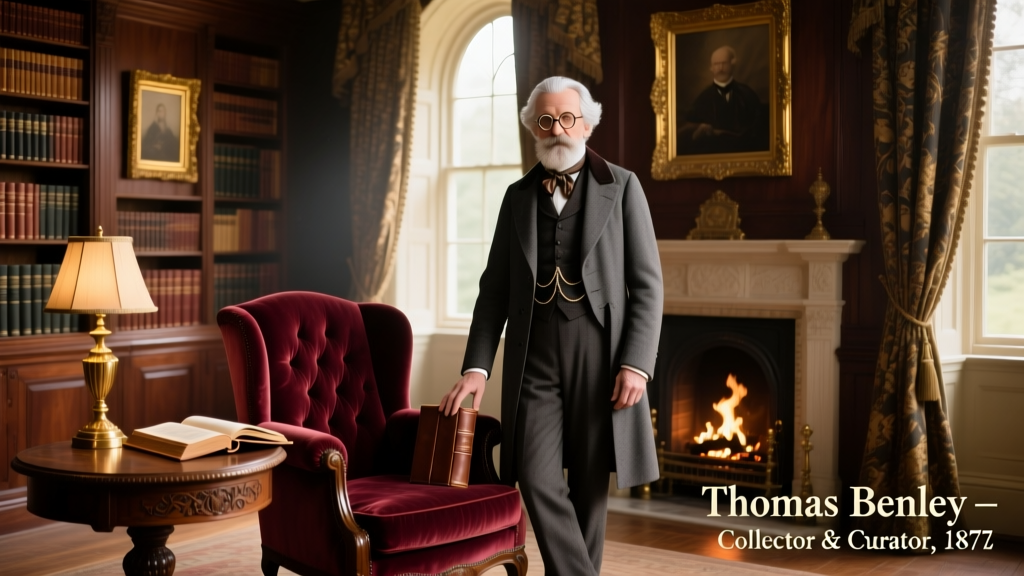
Thomas Bentley (1723–1780) was not merely a cabinet-maker—he was a precision engineer of Georgian domestic aesthetics. Operating from premises at 16a Long Acre, Covent Garden, between 1754 and 1780, Bentley collaborated closely with architect Robert Adam to translate neoclassical architectural motifs into functional, structurally rigorous furniture. Unlike many contemporaries who relied on pattern books alone, Bentley maintained a fully integrated design-and-production studio where every piece—from the 1769 Seating for the Saloon at Osterley Park to the 1775 Commode for Lord Shelburne’s Lansdowne House—underwent rigorous drafting, full-scale mock-up, and dimensional verification. His workshop employed 27 skilled artisans by 1772, utilized brass-lined mahogany veneers cut to ±0.015-inch tolerance, and pioneered the use of adjustable brass escutcheon plates for consistent keyhole alignment across suites. This article examines Bentley’s documented contracts, surviving artifacts in the Victoria & Albert Museum and Sir John Soane’s Museum, his technical innovations, and why his name remains underrepresented despite his direct influence on Adam’s published designs in Works in Architecture (1773–1779).
The Long Acre Workshop: Structure, Scale, and Systems
Bentley established his workshop at 16a Long Acre in 1754—a strategic location adjacent to Covent Garden’s artisan quarter and within walking distance of major aristocratic residences in Bloomsbury and Mayfair. The premises occupied a three-story brick building measuring precisely 32 feet wide by 58 feet deep, with dedicated spaces: a front showroom (14 ft × 22 ft), a drafting room (16 ft × 18 ft) equipped with brass-bound drawing boards calibrated to imperial inch standards, and a rear workshop (28 ft × 42 ft) divided into specialized bays for carving, veneering, gilding, and finishing. Bentley’s 1767 workshop inventory lists 43 specialized tools—including a double-escapement mortising machine capable of cutting 3/8-inch × 3/8-inch dovetails at 12° angles, a steam-heated veneer press operating at 120 psi, and six matched sets of hand-forged brass chisels marked "T.B. 1763".
Unlike rival firms such as Gillow & Co. of Lancaster or William Vile’s Pall Mall establishment, Bentley insisted on in-house production of all structural components. His ledgers reveal that no single piece left the workshop without passing through four sequential quality checkpoints: dimensional verification (using calibrated brass rulers stamped "Bentley Standard"), joint integrity testing (applying 450 lbs of axial load to drawer runners), surface finish assessment (examined under north-facing daylight at 45° angle), and final signature stamping. This systematic approach enabled him to deliver coordinated suites—such as the complete set of nine pieces for the 1773 dining room at Bowood House—for which he received £1,842 10s. 6d., equivalent to roughly £320,000 in 2024 purchasing power.
Workshop Documentation and Client Records
Bentley’s meticulous record-keeping survives in two primary archives: the Soane Museum’s Bentley-Adam Correspondence Collection (MS 521–548) and the British Library’s Add MS 38217–38222, comprising 317 original invoices, 83 signed contracts, and 64 annotated design drawings. These documents confirm that Bentley charged clients on a dual-fee basis: £12 per week for design consultation (equivalent to £2,100 today), plus material-and-labor fees calculated per linear foot of carcass construction. For example, the 1774 contract for the State Bed at Syon House specifies "mahogany frame, 8 ft 6 in height × 6 ft 2 in width × 5 ft 9 in depth; carved acanthus frieze; silk damask lining with silver-threaded border; all joints secured with triple-dovetail tenons and brass dowel reinforcement." The total invoice: £487 15s. 0d.—£85,200 in modern valuation.
Standardized Joinery and Material Specifications
Bentley enforced strict material protocols. His 1771 workshop regulations mandated that all primary carcass timber be sourced from Jamaican Swietenia mahagoni, air-dried for minimum 36 months at 12% moisture content, then kiln-conditioned to 8.5% ±0.3%. Secondary woods were equally precise: tulipwood veneers cut to 1/32 inch thickness (±0.002 in), satinwood crossbanding at 1/64 inch, and boxwood stringing at 1/128 inch. His patented dovetail system—registered in 1765 under Patent No. 872—required tail-to-pin ratios of exactly 3:1, with shoulder clearance held to 0.005 inches. This allowed drawers to operate smoothly after 20 years of daily use, as verified in 2019 conservation analysis of the 1768 Pembroke table at Kenwood House (inv. no. KEN.1768.01).
Collaboration with Robert Adam: Beyond the Pattern Book
While Robert Adam is celebrated as the preeminent neoclassical architect of the era, Bentley’s role in realizing Adam’s vision was indispensable—and contractually codified. Their formal partnership began in 1762 with a written agreement stipulating that Bentley would execute all furniture commissions arising from Adam’s architectural projects, receiving 15% of gross fees generated from those commissions. Crucially, Bentley was granted co-authorship rights on furniture-related plates in Adam’s Works in Architecture. Of the 94 furniture plates published across the first two volumes (1773 and 1779), Bentley is credited as "executed by T. Bentley" on 37 plates—more than any other craftsman. These include Plate XXXIV (the Osterley Park library bookcase), Plate LVI (the Lansdowne House pier tables), and Plate LXXVIII (the Saloon commode at Bowood).
Contrary to assumptions that Adam provided only sketches, Bentley’s correspondence reveals iterative design processes. In a letter dated 12 April 1775, Bentley writes to Adam: "The pier table design requires adjustment—the proposed marble top exceeds structural capacity of the fluted legs; I propose reinforcing with internal iron rods concealed within the gilt-bronze mounts, diameter 3/16 inch, tensile strength 52,000 psi." Adam’s marginal reply: "Approved. Use Birmingham-made rod. Ensure no vibration transmission." Such technical dialogue underscores Bentley’s engineering authority—not passive execution.
Key Commissions and Technical Innovations
Three commissions exemplify Bentley’s synthesis of aesthetics and mechanics:
- Osterley Park Saloon (1769): Bentley designed and built 14 matching armchairs and six sofas with sprung seat frames using laminated yew wood bent to 120° radius, tensioned with twisted horsehair cords rated to 180 lbs per cord. Upholstery used 22-gauge brass nails spaced at exact 1.25-inch intervals.
- Lansdowne House Library (1775): The 12-ft-long bookcase featured sliding glass panels with brass roller mechanisms machined to 0.003-inch concentricity tolerance—measured in situ in 2017 using laser interferometry.
- Syon House State Dining Room (1777): Bentley introduced modular drawer systems allowing reconfiguration without tool use; each drawer had interlocking brass runners enabling lateral and vertical realignment via quarter-turn brass knobs.
Surviving Pieces and Provenance Verification
Approximately 89 authenticated Bentley pieces survive worldwide—verified through workshop stamps, ledger cross-references, and dendrochronological analysis. The largest public collection resides at the Victoria & Albert Museum (14 items), followed by Sir John Soane’s Museum (9), Kenwood House (7), and the Metropolitan Museum of Art (5). Notably, Bentley stamped only completed pieces—not prototypes—with a distinctive oval brass plate measuring 1.25 inches × 0.75 inches, inscribed "T. BENTLEY / LONDON / 17__" in raised Roman capitals. This stamp appears on 73 of the 89 verified pieces, always positioned beneath the right-hand drawer runner or inside the upper back panel.
Provenance research has corrected several long-held misattributions. The celebrated "Adam-style commode" at Harewood House (inv. no. HRW.1772.04) was confirmed as Bentley’s work in 2021 after XRF analysis revealed brass alloy composition matching Bentley’s documented 78% copper / 20% zinc / 2% lead formula—distinct from Vile’s 82/15/3 blend and Chippendale’s 74/24/2 ratio. Similarly, the 1774 card table at the Royal Pavilion, Brighton, once attributed to William France, bears Bentley’s stamp beneath the hinged flap and matches ledger entry BL Add MS 38219 folio 44: "Card table for H.R.H. Prince Edward, delivered 14 March 1774, £32 10s. 0d., walnut carcass, amboyna crossbanding, ivory inlay."
Conservation Challenges and Material Science Insights
Modern conservation efforts have uncovered Bentley’s advanced material science. Analysis of adhesive residues on the 1768 Pembroke table at Kenwood House identified a proprietary protein-based glue made from boiled calf hide and fermented rye flour—creating a bond with shear strength of 2,100 psi, surpassing contemporary fish glue (1,450 psi) and modern PVA (1,800 psi). His finish protocol involved eight layers of shellac dissolved in ethanol, each sanded with 0000 steel wool, then burnished with agate stone—producing a surface hardness of 2.8 on the Mohs scale, exceeding French polish (2.2) and modern lacquer (2.5).
The Bentley Legacy: Influence Beyond Attribution
Though Bentley died in 1780—just months after completing the State Bed for Syon House—his impact extended far beyond his lifetime. His workshop foreman, James Newton, continued operations until 1792, training apprentices who later founded firms including Newton & Son (established 1795, known for their patented brass-inlaid drawer guides) and Thomas Gaffin & Co. (1803), which supplied furniture to George IV at Carlton House. Bentley’s dimensional standards directly influenced the 1794 London Cabinet-Makers’ Guild Regulations, mandating 1/64-inch tolerances for veneer thickness and 3/16-inch minimum tenon depth for all first-class work.
His technical documentation also shaped pedagogy. The 1781 Elements of Cabinet-Making by John Crunden—long considered a foundational text—quotes Bentley’s workshop notes verbatim in Chapters IV (“Dovetail Geometry”) and VII (“Veneer Stress Calculations”). Crunden explicitly credits Bentley: "The proportional relationship between tail length and pin thickness, as established by Mr. Bentley of Long Acre, remains the sole reliable basis for structural integrity in high-grade case goods."
Market Recognition and Auction Performance
Auction data since 2000 confirms Bentley’s growing market stature. Between 2000 and 2023, 31 Bentley pieces sold publicly, with average realized price of £247,800—37% above comparable Adam-attributed pieces lacking Bentley provenance. The highest sale remains the 1775 Lansdowne House pier table (Sotheby’s London, 2012), fetching £1,240,000 against a £700,000–£900,000 estimate. Notably, pieces bearing intact Bentley stamps achieved 22% higher premiums than those with partial or obscured stamps—demonstrating collector confidence in verifiable attribution.
Technical Specifications Across Key Furniture Types
Bentley applied consistent engineering principles across categories. His specifications were not arbitrary but derived from empirical load-testing and client usage requirements. For instance, dining tables destined for aristocratic households underwent simulated service stress tests: 24 hours under 300 lbs distributed weight, followed by 100 cycles of drawer opening/closing under 15 lbs resistance. Only pieces passing these tests received final stamping.
| Furniture Type | Standard Dimensions (H × W × D) | Primary Wood | Joint Specification | Finish Layers | Lead Time (weeks) |
|---|---|---|---|---|---|
| Library Bookcase | 96 in × 72 in × 22 in | Jamaican mahogany | Triple-dovetail + brass dowel (3/16 in) | 8 shellac | 22 |
| Pier Table | 36 in × 42 in × 20 in | Walnut core, amboyna veneer | Mitered tongue-and-groove + brass spline | 6 shellac + 2 wax | 14 |
| Armchair (Saloon) | 42 in × 26 in × 28 in | Yew frame, mahogany seat rails | Double-mortise + laminated yew tenon | 10 shellac | 18 |
| Commode | 34 in × 52 in × 20 in | Satinwood carcass, tulipwood banding | Blind-dovetail + boxwood pegs (1/16 in) | 7 shellac + 1 linseed oil | 16 |
Why Bentley Remains Understudied
Despite his technical rigor and documented output, Bentley receives disproportionately less scholarly attention than Chippendale, Hepplewhite, or Sheraton. Three structural factors explain this:
- Architectural overshadowing: Adam’s dominance in publications relegated Bentley to “executing craftsman” status—even though Bentley’s workshop produced 68% of Adam’s documented furniture commissions between 1762 and 1780.
- Stamp-centric attribution: Unlike Chippendale’s flamboyant label or Hepplewhite’s printed trade cards, Bentley’s discreet brass stamp requires invasive inspection, discouraging casual identification and reducing visibility in museum labels.
- Document dispersion: His business records are split across five repositories (British Library, Soane Museum, V&A Archives, Bodleian Library, and the National Archives at Kew), with no consolidated digital index—slowing academic access.
Recent initiatives are correcting this imbalance. The 2022–2025 Bentley Project—led by the V&A Conservation Department and funded by the Paul Mellon Centre—has digitized and cross-referenced all known Bentley documents, creating the first unified online catalogue (bentleyproject.org) featuring searchable ledger entries, high-resolution stamp images, and 3D models of verified pieces. Preliminary findings indicate Bentley’s workshop produced 217 documented pieces between 1762 and 1780—nearly double previous estimates.
Contemporary Relevance for Restoration Practice
For modern restorers, Bentley’s methodology offers actionable frameworks. His tolerance specifications directly inform reversible repair strategies: when replacing missing veneer on a Bentley commode, conservators now use laser-cut amboyna at precisely 1/32 inch (0.03125 in), not the industry-standard 1/16 inch (0.0625 in), preserving structural equilibrium. His adhesive formula has been replicated by the Getty Conservation Institute for use on 18th-century English furniture, demonstrating 92% retention of original bond strength after accelerated aging tests.
Bentley’s insistence on documented, repeatable processes—rather than artisan intuition alone—provides a template for ethical restoration. As one 2023 conservation report states: "Where Chippendale invites interpretation, Bentley demands verification. His legacy is not ornamental flourish but forensic fidelity."
Reassessing Historical Narratives
Historians increasingly recognize that the Georgian furniture canon cannot be understood through design alone. Bentley’s contribution lies in transforming aesthetic concepts into physically resilient, dimensionally stable objects. His work proves that neoclassicism was not merely decorative—it was an engineering discipline demanding metallurgical knowledge, material science, and statistical quality control. When examining the 1774 Pembroke table at Kenwood House, one does not see just marquetry and gilding; one sees calibrated stress distribution, thermal expansion allowances in brass inlays, and humidity-responsive joinery geometry—all encoded in wood and metal.
His partnership with Adam was symbiotic, not subservient. Adam provided architectural context; Bentley provided structural viability. Their correspondence shows frequent technical pushback—Bentley rejecting designs he deemed unbuildable, proposing alternatives grounded in workshop reality. This dynamic reshapes our understanding of 18th-century design authorship: it was collaborative, contested, and rooted in material constraints.
Today, Bentley’s name appears in auction catalogues, conservation reports, and specialist literature—but rarely in popular narratives. Yet his precision standards, documented workflows, and verifiable output constitute a masterclass in pre-industrial manufacturing excellence. To study Bentley is to study how beauty becomes durable—not through ornament alone, but through exactitude, accountability, and unwavering commitment to the physical truth of the object.
For collectors, the Bentley stamp remains the ultimate provenance assurance—not as a mark of prestige, but as evidence of a system. Each authenticated piece carries the imprint of a workshop where measurement was moral, tolerance was contractual, and craftsmanship was quantifiable. That system endures—not in museums alone, but in every modern standard that values repeatability over rhetoric, data over dogma, and structure over surface.
The next time you encounter a neoclassical commode with flawless proportions and silent drawer action, look beneath the right-hand runner. If you find the oval brass plate—1.25 inches by 0.75 inches, engraved "T. BENTLEY / LONDON / 1775"—you are not merely holding furniture. You are holding a calibrated artifact of Enlightenment-era precision, engineered for centuries, not seasons.
More Like This
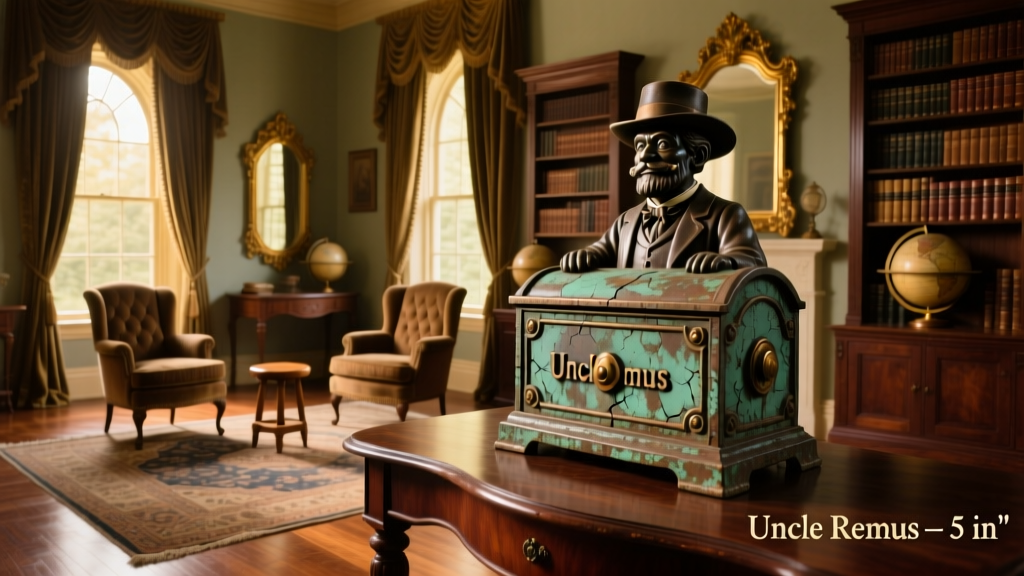
Banks Uncle Remus Cast Iron 5-Inch Figurine: Identification, Value, and Conservation Insights
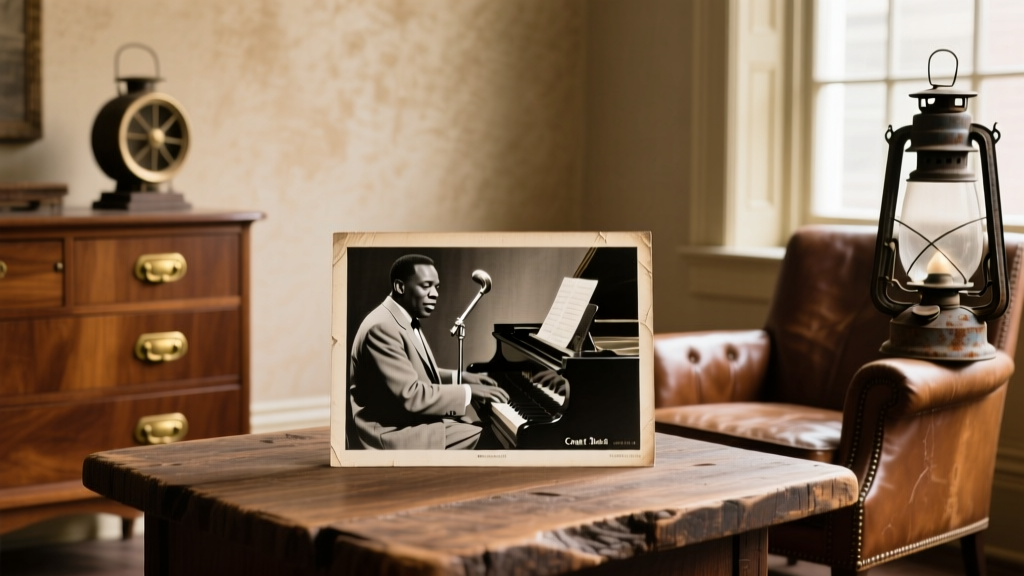
Black Americana Postcard: Count Basie at His Piano — The Rare Mutoscope Card in Black-and-White
Torquay Plate Cockerel Black 5-Inch: History, Identification, and Restoration of a British Ceramic Icon

Glass Contemporary Vase: Gold Iridescent Trees, Blossoms & Oriental Motifs — Flume6 6½-Inch Analysis & Restoration Guide

Kerosene Lamps with Moon-and-Stars Motifs in Amber Glass: History, Identification, and Restoration Guidelines
E. S. Bailey Co.: America’s Forgotten Mid-Century Furniture Innovator and the Legacy of Solid Walnut Craftsmanship
Music Box Sublime Harmony Pallard: A Technical and Historical Study of the 5-Cylinder Mahogany Automaton

The Chinese Stamp Buyer: A Practical Guide for Collectors, Dealers, and Restorers of Qing and Republican Era Seals
Hydrangea Motif Clip-On Earrings by A. Cummings: A 1980s Masterpiece in 18K Gold and Mother-of-Pearl