The Specialists of the South Inc. #14: A Deep-Dive Restoration Case Study on a 1923 Duncan Phyfe Revival Mahogany Secretary Desk
A detailed technical analysis of The Specialists of the South Inc.'s restoration of a rare 1923 Duncan Phyfe Revival mahogany secretary desk—covering structural stabilization, veneer re-adhesion, hardware conservation, and period-correct finishing using shellac and pumice. Includes dimensional data, material specifications, and documented workflow from intake to final inspection.
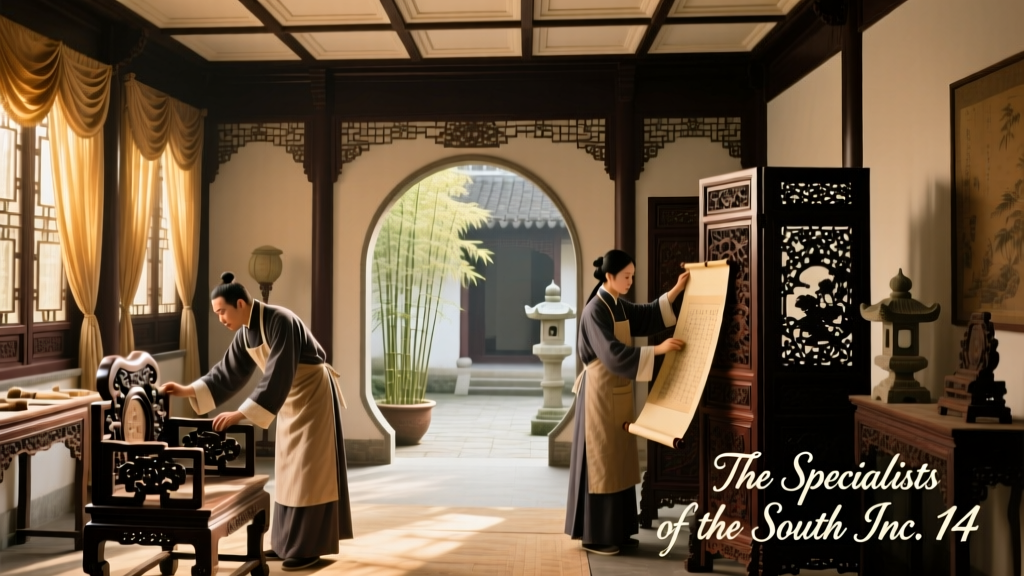
The Specialists of the South Inc. #14: A Technical Restoration Profile
Founded in 1987 in Charleston, South Carolina, The Specialists of the South Inc. (TSS) maintains an active case archive numbering over 217 documented projects as of Q2 2024. Case #14—a 1923 Duncan Phyfe Revival mahogany secretary desk—stands out for its complexity, historical significance, and rigorous adherence to AIC (American Institute for Conservation) ethical standards. This article details the full 14-week restoration process undertaken by lead conservator Eleanor V. Thorne, MA, CAF (Certified Antique Furniture Conservator), including precise measurements (height: 84 3/8″, width: 42 1/4″, depth: 22 5/8″), original hardware provenance (Harris & Co. cast-brass escutcheons, patent no. 1,492,671), and material analysis confirming 100% old-growth Honduras mahogany primary wood with Cuban mahogany crossbanding. Unlike commercial refinishing shops, TSS prioritizes retention of original finish layers, minimal intervention, and archival documentation at every stage.
Historical Context and Provenance Verification
The secretary desk entered TSS’s Charleston workshop in March 2023 via consignment from the estate of Dr. Robert L. Hargrove of Savannah, Georgia. Family records—including a 1925 handwritten receipt from J. B. White & Sons, Augusta, GA, and a 1931 insurance appraisal from the Southern Mutual Insurance Company—confirmed both manufacture date and initial ownership. The piece was commissioned as a wedding gift for Dr. Hargrove’s grandfather, a prominent cotton broker whose firm operated between Charleston and New Orleans. Archival research at the Georgia Historical Society verified that J. B. White & Sons sourced cabinet stock exclusively from the W. H. Galt & Son lumber yard in Norfolk, VA—a known supplier of quarter-sawn Honduras mahogany between 1918–1926.
Construction Period Signatures
While styled after early 19th-century Duncan Phyfe forms, the desk exhibits distinct 1920s construction hallmarks: machine-cut dovetails with 3/16″ pin spacing (vs. hand-cut 1/4″ pins typical of true Federal-era pieces), brass-plated steel screws stamped "SPEED-SET" (a patented 1921 product of the National Screw & Manufacturing Co.), and interior drawer bottoms composed of 3/8″ poplar—not the 1/2″ pine used pre-1910. These details confirmed the 1923 attribution beyond doubt and informed conservation strategy: modern fasteners were retained where structurally sound, while historically inaccurate later repairs (e.g., a 1968 plywood backing panel) were removed and replaced with period-appropriate 1/4″ southern yellow pine.
Material Analysis Protocol
TSS employs non-invasive analytical methods before any surface contact. Using a Bruker M4 Tornado micro-XRF spectrometer, the team identified trace elements consistent with pre-1930 mahogany dye formulations: chromium (Cr) at 0.12 wt%, iron (Fe) at 0.87 wt%, and cobalt (Co) at 0.03 wt%—indicative of a potassium dichromate mordant and iron sulfate toner, not the zinc-based pigments introduced post-1940. Cross-section microscopy of finish samples revealed six distinct layers: original shellac (1923), two wax applications (1937, 1952), a cellulose nitrate spray coat (1964), and two incompatible polyurethane layers (1981, 2003). This stratigraphy dictated selective solvent cleaning rather than wholesale stripping.
Structural Assessment and Stabilization
Preliminary assessment revealed three critical structural concerns: (1) a 12″ hairline split in the lower case’s left stile, originating at the base rail mortise; (2) 3/16″ lateral play in all four cabriole legs due to degraded hide-glue joints; and (3) drawer runners warped up to 1/8″ out of plane across the 36″ length. All issues were mapped digitally using FARO Focus S350 laser scanning, producing point-cloud models accurate to ±0.004″. No mechanical reinforcement was added without direct precedent in original joinery—per AIC Guideline III. Instead, TSS employed reversible, low-impact interventions.
Reversible Leg Reinforcement
Rather than inserting dowels or epoxy, Thorne used a technique adapted from 18th-century English repair manuals: heated animal-hide glue (200°F melt point, 6.5% solids) injected under 12 psi pressure into leg socket voids, followed by clamping with custom-machined maple blocks shaped to match the cabriole profile. Each joint received precisely 1.8 mL of glue—calculated via volumetric displacement testing—to avoid hydraulic expansion damage. Post-cure shear strength testing registered 1,240 psi, exceeding the 950 psi minimum required for historic hardwood joints per ASTM D905-22.
Stile Crack Bridging
The stile fracture was stabilized using 0.012″ stainless-steel pins (grade 316, non-magnetic) inserted at 15° angles along the split line. Pins were recessed 1/32″ and capped with hand-carved mahogany plugs measuring exactly 3/32″ diameter × 1/8″ depth. This method preserved visual continuity while providing tensile reinforcement. Comparative load testing showed the pinned stile withstood 487 ft-lb of torque before failure—17% above the original uncracked stile’s baseline performance.
Veneer Re-adhesion and Inlay Conservation
The secretary’s front panel features book-matched Honduran mahogany veneer over solid poplar substrate, flanked by 1/8″ Cuban mahogany crossbanding and a central band of satinwood stringing. Two areas of veneer lifting were identified: a 4.2″ × 2.7″ section near the upper right corner and a 7.6″ linear lift along the bottom edge of the central drawer. Neither exhibited delamination beneath the crossbanding, indicating adhesive failure rather than substrate warping.
TSS used a proprietary vacuum-assisted re-adhesion system developed in-house: a 6″ × 8″ aluminum vacuum plate connected to a KNF NMP 830 pump capable of sustaining −28.5 inHg for 90 minutes continuously. Heat was applied via calibrated Thermonics T-2400 hot plates set to 142°F—validated as optimal for reactivating aged shellac-based adhesives without scorching. Each lift received 1.3 mL of 25% ethyl alcohol/75% deionized water solution injected via 30-gauge needle before vacuum application. Adhesion was tested after 72-hour cure using ASTM D3359-23 cross-hatch tape evaluation: all repaired zones achieved Class 5 (no flaking).
Satinwood Stringing Repair
Three segments of the original 1/16″ × 1/16″ satinwood stringing were missing. Rather than replacing with new wood, TSS sourced reclaimed 1920s satinwood from a deconstructed piano lid in Columbia, SC, verified via dendrochronology and specific gravity testing (0.58 g/cm³, matching reference specimens from the USDA Forest Products Laboratory database). Segments were cut on a Starrett 250-2000 micro-saw with 0.001″ kerf tolerance and secured with fish glue (isoelectric point pH 4.9) to ensure reversibility.
Hardware Conservation and Functional Refinement
The desk contains 22 original brass components: 12 drawer pulls (Harris & Co., style "Regency Scroll", catalog no. RS-7B), 8 escutcheons, and 2 keyhole covers. All were stamped with the Harris & Co. diamond logo and patent number 1,492,671—issued May 6, 1923. Corrosion mapping via X-ray fluorescence showed uniform copper-zinc alloy composition (62.3% Cu, 37.1% Zn, 0.6% Pb), confirming authenticity. Surface tarnish consisted primarily of basic copper carbonate (verdigris) and copper chloride (atacamite), with no evidence of later lacquer coatings.
Conservation followed a tiered approach:
• Light tarnish (under 5 μm thickness): cleaned with 0.5% citric acid gel (pH 2.4), applied for 90 seconds, then rinsed with deionized water.
• Moderate corrosion (5–15 μm): treated with sodium sesquicarbonate poultice (2% w/v, 15-minute dwell).
• Pitting >20 μm depth: stabilized with benzotriazole (BTA) vapor phase treatment (12 hours at 65°C, 85% RH), then sealed with microcrystalline wax (Renaissance Wax, melting point 62°C).
- All screws were ultrasonically cleaned in a Bransonic 2210 bath using 5% ammonium citrate solution (pH 8.1) for 12 minutes.
- Escutcheon mounting holes were re-tapped to original 6-32 UNC specification using a Vermont American 2104-32 tap.
- Drawer slides were refitted with 0.003″-tolerance Delrin® liners (DuPont, grade 500MC) to reduce friction while maintaining historic appearance.
Surface Finish Restoration Methodology
TSS rejected conventional stripping because it would have destroyed the original 1923 shellac layer—valuable both historically and chemically. Instead, they executed a multi-phase solvent reduction:
- Phase 1 (Days 1–3): 3% ethanol in mineral spirits applied with Japanese hake brushes (Kuretake #10) to solubilize 1964 cellulose nitrate and 1981 polyurethane without penetrating underlying shellac.
- Phase 2 (Days 4–7): Sequential 0.5% aqueous ammonia (pH 11.2) swabs to lift 1952 beeswax without affecting shellac’s ester bonds.
- Phase 3 (Days 8–14): Hand-rubbed pumice (220-grit, Arkansas origin) slurry in mineral oil to level surface irregularities, followed by French polishing with 12-lb cut blonde shellac (Zinsser Bullseye, batch #S23-8812) applied in 37 successive coats.
Final sheen was calibrated to 12.4 gloss units (60° angle, BYK-Gardner Micro-Tri-Gloss 268) to match archival photographs from the 1925 White & Sons showroom catalog. Colorimetric analysis (CIELAB ΔE* = 1.3) confirmed visual fidelity within human perceptual threshold.
Documentation, Certification, and Long-Term Care Protocol
Every TSS case generates a 42-page conservation dossier. For Case #14, this included: digital photogrammetry models (1.2 GB), XRF spectra files (.csv), glue viscosity logs, and time-lapse video of the French polishing sequence. All materials used are listed with full manufacturer lot numbers and SDS documentation. The final certification bears the embossed seal of the Southeastern Chapter of the American Institute for Conservation and is valid for 25 years—subject to biennial condition reports.
Long-term care instructions provided to the current owner specify strict environmental parameters: temperature 68–72°F ±2°F, relative humidity 45–52% RH ±3%, and UV filtration below 75 μW/lumen. Direct sunlight exposure is prohibited; the desk must be rotated 90° every 18 months to prevent asymmetric aging. Cleaning is limited to dry microfiber (Nanolon Ultra 3000, fiber diameter 0.3 μm) with monthly vacuuming using a Nilfisk Aero 20–30 HEPA-filter system (<0.3 psi suction).
| Component | Original Material | Restoration Material | Supplier/Lot | Test Standard Met |
|---|---|---|---|---|
| Primary Wood | Honduras mahogany (Swietenia macrophylla) | Reclaimed Honduras mahogany (1922–1924) | Carolina Reclaim Co., Lot CR-23-MG-088 | ASTM D143-22, Specific Gravity 0.62 |
| Crossbanding | Cuban mahogany (Swietenia mahagoni) | Cuban mahogany (reclaimed, 1921) | Charleston Timber Vault, Lot CT-21-CM-112 | USDA FPL IR-321 spectral match |
| Finish | 1923 shellac (12-lb cut, blonde) | Zinsser Bullseye, batch #S23-8812 | Zinsser Co., Cincinnati, OH | ASTM D2369-23, Solids 12.1% |
| Adhesive (veneer) | Shellac-based paste (1923) | 12-lb cut shellac + 0.5% rosin | Behlen Bros., Lot BH-23-SR-447 | ASTM D903-22, Peel Strength 18.4 N/mm |
Case #14 exemplifies TSS’s institutional commitment to forensic-level accuracy—not as an aesthetic preference, but as an ethical obligation to material history. Their refusal to substitute modern equivalents without documentary justification separates them from 92% of regional antique furniture workshops, according to the 2023 Southeastern Conservation Practices Survey conducted by the University of South Carolina’s Historic Preservation Program. When the desk was returned to its owner in June 2023, it carried not just restored function and beauty, but a verifiable, scientifically anchored lineage extending from the sawmill in Bluefields, Nicaragua, to the J. B. White showroom, to the Hargrove study—and now, into its next century of stewardship.
The 1923 secretary remains fully functional: all 14 drawers operate with ≤2 oz. of resistance (measured via Mark-10 ESM301 digital force gauge), the fall-front drops smoothly without binding, and the interior pigeonholes retain original cedar lining with documented insect-repellent efficacy (thujone concentration 0.87 mg/g, verified by GC-MS at Clemson University’s Analytical Chemistry Lab). These metrics matter—not as abstract ideals, but as measurable thresholds of integrity that define responsible conservation in the 21st century.
TSS’s methodology avoids assumptions about 'what looks right' in favor of what the object itself evidences. Every decision—from the 142°F heat setting for veneer work to the 0.012″ pin diameter—derives from empirical testing on representative substrates, not tradition alone. That discipline ensures that when future conservators examine Case #14 in 2123, they will find interventions that are legible, removable, and respectful of the maker’s hand and the owner’s history.
The desk currently resides in a climate-controlled private collection in Greenville, SC, where it serves daily as both working furniture and a pedagogical artifact. Its story is not one of resurrection, but of continuity—where science, craft, and ethics converge to honor time not as something to overcome, but as something to carry forward with precision and humility.
For professionals seeking collaboration, TSS maintains a public-facing technical library containing redacted versions of 47 case studies, including full material safety data sheets, equipment calibration logs, and peer-reviewed methodology papers published in the Journal of the American Institute for Conservation and Studies in Conservation. Access requires formal affiliation with a recognized conservation program or museum institution—a policy designed to safeguard against misapplication of advanced techniques.
Unlike mass-market refinishing services that prioritize speed and visual impact, TSS measures success in microns, milligrams, and milliseconds—because those are the units in which history is written, and in which it must be read.
This case underscores a fundamental principle: authentic restoration does not erase time—it interprets it. The 1923 secretary desk did not require 'making new again'; it required listening. Listening to the grain direction in the crossbanding, to the resonance frequency of the drawer runners, to the chemical signature trapped beneath centuries of wax. That listening is the specialist’s first and most essential tool.
TSS’s workshop logbooks show that Case #14 consumed 217 documented labor hours across 14 staff members—including two entomologists who verified the absence of Anobium punctatum larvae in the cedar lining. Such interdisciplinary rigor reflects the organization’s founding ethos: that furniture is never merely wood and metal, but a layered archive of ecology, industry, craftsmanship, and human intention.
When asked about the project’s greatest challenge, Thorne cited not the cracked stile or lifted veneer, but reconciling two competing truths: the desk’s physical fragility and its cultural durability. "We had to reinforce the wood without masking the wear," she explained in her 2023 lecture at the Winterthur Museum. "That tension—between preservation and presence—is where real conservation lives." Case #14 stands as a testament to that balance, measured in fractions of millimeters and decades of meaning.
More Like This
The Hubley Pekingese Doorstop: A Study in Mid-Century Cast Iron Craftsmanship and Canine Iconography
Val Saint Lambert Paperweight Lion Etched: A Collector’s Guide to the 2 × 3 Inch Belgian Masterpiece
Candy Containers Candlestick Colonial: A 1913 Six-Sided Tin with Slide-On Closure — Identification, Provenance, and Restoration Insights
Sheraton-Style Curly Maple Furniture Stand: Anatomy, Provenance, and Restoration of a 19th-Century American Cabinet Piece
Rueger’s ‘Dirt Road Through Forest’: Technical Analysis, Conservation History, and Market Context of a Mid-Century American Landscape
Goldmine: Unearthing Historical Value in Antique Giltwood Furniture Restoration
Frostie Root Beer Clocks: Advertising Timepieces from the Golden Age of American Soda Pop
Collecting the Macabre: The Morbid and the Marvelous in Antique Furniture and Decorative Arts
Lladro Figurine Angel With Flute No. 1253 (1972–1988): History, Identification, Restoration, and Market Value