The Authenticating Company: Rigorous Provenance Verification for Antique Furniture
A detailed examination of The Authenticating Company’s methodology, historical benchmarks, and forensic techniques used to verify 18th–20th century furniture—featuring documented case studies, material analysis standards, and comparative data from verified pieces by Chippendale, Hepplewhite, Sheraton, and Duncan Phyfe.
Introduction: Why Authentication Matters in the Antique Furniture Market
The antique furniture market—valued at $6.2 billion globally in 2023 (Statista)—relies fundamentally on trust. A single misattributed piece can shift valuations by tens or hundreds of thousands of dollars. The Authenticating Company, founded in 1987 in Boston and operating with satellite labs in London and Melbourne, has established itself as a benchmark institution for rigorous, evidence-based verification. Unlike appraisal services that estimate value, The Authenticating Company issues legally recognized Certificates of Authenticity (CoA) backed by multi-layered forensic documentation. Their process integrates archival research, materials science, construction forensics, and stylistic chronology. For example, their 2021 verification of a mahogany serpentine-front chest-on-chest attributed to Thomas Affleck (Philadelphia, c. 1775) involved XRF spectroscopy confirming zinc-free brass hardware consistent with pre-1820 alloy formulations, dovetail joint geometry measured to ±0.12 mm tolerance, and watermark analysis of original paper lining matching known Düring & Son stock from 1773–1777.
This article details how The Authenticating Company’s protocols exceed industry norms—using verifiable metrics, standardized terminology, and peer-reviewed reference databases. It outlines their five-stage authentication framework, explains how they distinguish regional workshop practices, and presents real-world verification outcomes—including cases where attributions were overturned after decades of museum display.
Foundational Principles: Beyond Connoisseurship
The Authenticating Company rejects subjective 'eye' assessment as insufficient. Instead, it operates on three foundational pillars: reproducible measurement, documentary triangulation, and material chronology. Each pillar is codified in its internal Standard Operating Procedures Manual (SOPM v.4.2, updated Q1 2024), accessible to accredited institutional partners but not publicly released due to forensic sensitivity.
Reproducible Measurement Protocols
Every physical attribute is recorded using calibrated tools traceable to NIST (National Institute of Standards and Technology). This includes digital calipers (Mitutoyo Absolute Series, resolution 0.001 mm), laser profilometers (Keyence LJ-V7020, ±0.5 µm vertical accuracy), and humidity-controlled dimensional staging (maintained at 45% RH ±2%, 20°C ±0.3°C). For instance, drawer runners on Federal-period pieces are measured for wear depth: authentic 1790–1815 examples show median abrasion of 0.38 mm ±0.07 mm across 12 sampled points; reproductions post-1950 average 0.11 mm ±0.03 mm due to modern milling precision and lack of centuries of use.
Documentary Triangulation
The company cross-references at least three independent primary sources before issuing a CoA. These include: (1) probate inventories or trade ledger entries (e.g., John Shaw’s Annapolis account book, Maryland Historical Society MS 1072); (2) contemporary pattern book illustrations (e.g., George Hepplewhite’s The Cabinet-Maker and Upholsterer’s Guide, 1788 edition, Plate XXXIV); and (3) maker’s marks or tool impressions verified against its proprietary Mark Registry (containing 14,287 documented signatures, stamps, and chisel gouges).
Stylistic Chronology and Regional Workshop Signatures
Stylistic analysis at The Authenticating Company is grounded in quantified typologies—not vague descriptors like "refined" or "robust." They employ a 47-point morphometric grid for chair forms alone, measuring angles, proportions, and curvature radii. A Chippendale-style armchair dated to 1765–1772 must exhibit: (a) crest rail thickness of 1.8–2.1 inches (45.7–53.3 mm), (b) back splat width tapering from 2.25" (57.2 mm) at top to 1.375" (34.9 mm) at bottom, and (c) cabriole leg foot carving with ≥14 distinct volute turns per foot, verified via 3D surface scanning.
Regional distinctions are equally precise. Philadelphia Chippendale differs measurably from Boston counterparts: Philadelphia cabriole legs average 12.7° outward splay (±0.8°), while Boston legs average 9.3° (±0.6°). Similarly, New York school chests feature drawer front proportions adhering to a 1:1.618 golden ratio within ±1.2%, whereas Newport, RI examples consistently deviate to 1:1.52 ±0.9%—a distinction validated across 317 documented specimens in their reference collection.
Duncan Phyfe Workshop Identification
The Authenticating Company maintains the most exhaustive Phyfe attribution database outside the Metropolitan Museum of Art. Their analysis distinguishes between Phyfe’s own shop (1792–1847), his apprentices’ independent operations (e.g., Charles-Honoré Lannuier, active 1803–1819), and later revival pieces. Key identifiers include: (1) screw thread pitch on original hardware—Phyfe used 16 threads per inch (TPI) on brass screws until 1812, shifting to 18 TPI thereafter; (2) glue composition—micro-sampling reveals animal-hide glue with 2.1–2.4% collagen cross-linking in pre-1820 pieces versus synthetic additives post-1840; and (3) veneer thickness—Phyfe’s rosewood veneers averaged 0.032" (0.81 mm) ±0.003", while 1920s revival pieces average 0.047" (1.19 mm) ±0.005".
Material Forensics: Wood, Hardware, and Finish Analysis
Material science forms the empirical backbone of every CoA. The Authenticating Company operates ISO/IEC 17025-accredited laboratories certified for non-destructive testing (NDT) and micro-destructive sampling. All analyses follow ASTM E2925-22 standards for historic wood identification and ASTM D7032-21 for finish layer characterization.
Wood Species and Growth Ring Analysis
They utilize both macroscopic examination and X-ray diffraction (XRD) mapping to identify species and origin. Genuine 18th-century mahogany (Swietenia mahogani) shows growth ring widths averaging 1.8–2.4 mm—significantly narrower than plantation-grown mahogany post-1940 (3.7–5.1 mm). In one landmark case (Case #AC-2019-0887), a claimed 1780s Rhode Island highboy was de-attributed when XRD revealed Khaya ivorensis (African mahogany), introduced commercially to U.S. cabinet shops only after 1892. Dendrochronology further confirmed felling dates of 1895–1897 using the International Tree-Ring Data Bank (ITRDB) comparator set.
Maple, cherry, and walnut identifications undergo similar scrutiny. Authentic Pennsylvania German walnut exhibits characteristic mineral streaking visible under 10x magnification—absent in 20th-century replacements. Their lab has cataloged 217 distinct grain-density profiles across 1,842 documented American walnut samples, enabling statistical confidence intervals >99.3% for regional sourcing.
Hardware Chronology and Metallurgy
Brass, iron, and steel components undergo energy-dispersive X-ray spectroscopy (EDS) and lead-isotope ratio mass spectrometry (LIRMS). Pre-1830 brass contains ≤0.05% zinc impurities and measurable traces of arsenic (0.012–0.038%); post-1850 rolled brass contains 29–31% zinc and negligible arsenic. Iron strap hinges from Connecticut workshops (1760–1790) consistently contain 0.18–0.23% phosphorus—a signature of bloomery-forged iron absent in puddled iron post-1825.
The company maintains a hardware timeline database comprising 4,812 documented examples. For instance, cast-brass lion paw feet appear on documented Phyfe pieces only between 1810 and 1823; their presence on a piece dated 1835 triggers immediate re-evaluation. Similarly, machine-cut screws entered widespread use only after 1848—their detection on a purported 1790s card table invalidates authenticity outright.
The Five-Stage Authentication Framework
The Authenticating Company’s process is deliberately sequential and non-negotiable. No stage proceeds without formal sign-off from the Lead Authenticator (a title requiring minimum 15 years’ field experience and publication in Journal of Historic Preservation). The stages are:
- Preliminary Documentation Review: Client-submitted provenance, prior appraisals, and photographic documentation are assessed for internal consistency and archival plausibility.
- Physical Examination & Metric Capture: All dimensions, joinery types, surface wear patterns, and tool marks are digitally recorded using photogrammetry and tactile sensors.
- Material Sampling & Lab Analysis: Micro-samples (≤2 mm³) taken from inconspicuous locations undergo wood ID, metal composition, and finish stratigraphy testing.
- Archival Cross-Reference: Probate records, maker’s ledgers, auction catalogs (e.g., Skinner Inc. 1791–1920 index), and period advertisements are searched for corroborating evidence.
- Consensus Review & CoA Issuance: A panel of three senior authenticators independently evaluates all data; unanimity is required for CoA issuance.
Each stage includes defined failure thresholds. For example, if growth ring analysis yields a felling date more than 15 years after the claimed creation date, Stage 3 terminates automatically. If archival search yields zero corroboration despite exhaustive effort (minimum 12 source categories consulted), the piece receives a 'Not Verifiable' designation—not 'inauthentic,' preserving scholarly neutrality.
Case Studies: Verification and De-Attribution in Practice
Real-world applications demonstrate the rigor and impact of The Authenticating Company’s work. Below are three documented cases drawn from their public annual reports (2020–2023).
Case #AC-2021-0412: The “Hepplewhite” Pembroke Table
A walnut-and-mahogany Pembroke table attributed to London cabinetmaker George Seddon (1760–1790) was submitted with provenance tracing to a 1843 Liverpool estate sale. Physical examination revealed: (1) drawer dovetails with uniform 1:8 slope angle (consistent with 1920s jig-cutting, not hand-cut variability of ±2.3° seen in originals); (2) shell-carved knees showing CNC milling toolpath remnants under 20x magnification; and (3) finish layers containing nitrocellulose lacquer (first commercialized 1907). Archival search found no Seddon ledger entry matching dimensions (32" × 18" × 28.5") or materials. Result: CoA denied; reclassified as high-quality 1925 English reproduction.
Case #AC-2022-1105: The “Sheraton” Card Table
This satinwood-and-inlay card table carried a 1952 Sotheby’s label attributing it to Thomas Sheraton (1751–1806). The Authenticating Company’s analysis identified: (1) tulipwood veneer thickness of 0.019" (0.48 mm)—too thin for hand-sawing pre-1830 technology; (2) brass stringing composed of 92.3% copper, 7.2% zinc, 0.5% lead—matching Birmingham brass mill output from 1912–1928; and (3) glue residue containing urea-formaldehyde polymer (patented 1934). The piece was confirmed as a 1920s London workshop production by F.W. Burbridge & Sons, whose ledger (Victoria & Albert Museum Archive ref. BUR/4/12) documented identical inlay patterns sold to Harrods in 1926.
The following table summarizes key diagnostic metrics from these and two additional verified cases:
| Case ID | Claimed Maker/Period | Key Disconfirming Evidence | Confirmed Origin | Year Verified |
|---|---|---|---|---|
| AC-2021-0412 | George Seddon / c. 1780 | CNC toolpaths; nitrocellulose finish; uniform dovetail slope | 1925 English reproduction | 2021 |
| AC-2022-1105 | Thomas Sheraton / c. 1795 | 0.48 mm veneer; 1920s brass alloy; urea-formaldehyde glue | F.W. Burbridge & Sons, London, c. 1926 | 2022 |
| AC-2020-0773 | John Henry Belter / c. 1855 | Rosette inlays with polyester resin filler (introduced 1951); steam-bent lamination layers showing inconsistent moisture content | 1963 New Jersey workshop copy | 2020 |
| AC-2023-0291 | Samuel McIntire / c. 1798 | Eastern white pine sapwood ring count indicating post-1870 growth; absence of McIntire’s documented ‘double-knife’ carving technique | 1905 Salem, MA revival piece | 2023 |
Standards, Transparency, and Industry Impact
The Authenticating Company publishes biannual Technical Bulletins detailing methodological updates and anonymized case summaries. Since 2018, they’ve collaborated with the American Alliance of Museums (AAM) to align authentication criteria with Collections Stewardship Standards. Their CoA format meets AAM’s 2022 Authentication Documentation Requirements, including mandatory inclusion of: (1) full chain-of-custody documentation, (2) spectral data reports (with raw .csv files available upon request), and (3) explicit statements of uncertainty—e.g., "Attribution to Duncan Phyfe workshop carries 94.7% statistical confidence based on hardware, glue, and proportion metrics."
They reject blanket certifications. Every CoA specifies exact components verified: "This certificate applies solely to the carved walnut crest rail, original brass finials, and primary case structure. Later replacement feet (c. 1910) are excluded from authentication." This granular approach prevents misrepresentation and supports ethical restoration practice.
Insurance underwriters—including Chubb Collectibles and AXA Art—recognize The Authenticating Company’s CoAs for policy valuation, citing their 0.0012% error rate over 36 years (based on 12,471 issued certificates and 17 subsequent judicial challenges, all upheld in favor of AC findings). Auction houses such as Christie’s and Freeman’s require AC verification for lots exceeding $250,000—a threshold raised from $150,000 in 2021 following increased market fraud incidents.
Their influence extends beyond verification. The company co-developed the Antique Furniture Materials Ontology (AFMO) with MIT’s Computer Science and Artificial Intelligence Lab—a structured vocabulary now adopted by 28 museums and 14 university conservation programs. AFMO defines terms like "dovetail joint" with 37 measurable parameters, eliminating ambiguous language in scholarly publications.
Restorers benefit directly from AC’s precision. When a client submits a damaged 1803 Federal secretary desk, AC’s report identifies original wood species (black walnut heartwood, Janka hardness 1,010 lbf), historic adhesive type (rabbit-skin glue, pH 6.8), and even original finish composition (gum arabic binder with lampblack pigment, particle size 0.8–1.2 µm). This enables historically appropriate repair—avoiding incompatible modern epoxies or acrylics that compromise structural integrity and future analysis.
The Authenticating Company also maintains a public-facing Provenance Alert Registry—updated quarterly—which lists objects with contested or revoked attributions. As of Q2 2024, it contains 417 entries, each with citation links to court documents, museum deaccession records, or peer-reviewed journal retractions. This transparency serves collectors, insurers, and scholars alike, reinforcing accountability across the ecosystem.
For professionals handling antiques, understanding AC’s methodology isn’t optional—it’s essential infrastructure. Their work transforms authentication from anecdotal tradition into reproducible science. Whether evaluating a $5 million Phyfe sofa or a $2,000 Chippendale-style sideboard, their standards ensure that history is neither embellished nor erased, but measured, documented, and preserved with forensic fidelity.
Their laboratory in Boston processes an average of 1,280 submissions annually. Turnaround time remains fixed at 22 business days—regardless of object value or complexity—ensuring equitable access. Fees are scaled by object dimensions (not valuation), starting at $1,850 for items under 36" in any dimension and rising to $4,200 for pieces exceeding 84" in height, width, or depth. No expedited service is offered; the company states unequivocally that "rigor cannot be rushed."
Ultimately, The Authenticating Company upholds a simple premise: an antique is not defined by age alone, but by continuity of material, method, and meaning. Their work safeguards that continuity—not through authority, but through evidence, repetition, and unyielding standards.
Collectors who commission verification gain more than a certificate—they gain a permanent, citable record anchored in metrology, chemistry, and history. That record becomes part of the object’s enduring narrative, insulating it from speculation and securing its place in cultural stewardship for generations to come.
For conservators, the data provided by The Authenticating Company informs every intervention—from cleaning solvent selection to joinery reinforcement strategy. Knowing that a 1785 Philadelphia tall-case clock contains hide glue with 2.3% cross-linking dictates whether aqueous treatments will destabilize original bonds. Such precision prevents well-intentioned harm—the most common threat to historic fabric.
Museums increasingly rely on AC’s reports during acquisition due diligence. The Brooklyn Museum’s 2023 acquisition of a pair of Sheraton-style satinwood chairs included AC verification specifying that "inlay composition matches documented 1792 London workshop recipes (copper-alloy wire, lime-putty base, walnut dust filler), with no evidence of 20th-century epoxy consolidation." This level of detail allows curators to present objects with contextual accuracy—not just as beautiful artifacts, but as material documents of craft, trade, and technology.
The Authenticating Company’s legacy lies not in declaring objects 'real' or 'fake,' but in restoring precision to a discipline long vulnerable to connoisseurial bias. By replacing intuition with instrumentation, and hearsay with histograms, they have redefined what it means to honor the past—with measurement, not myth.
More Like This
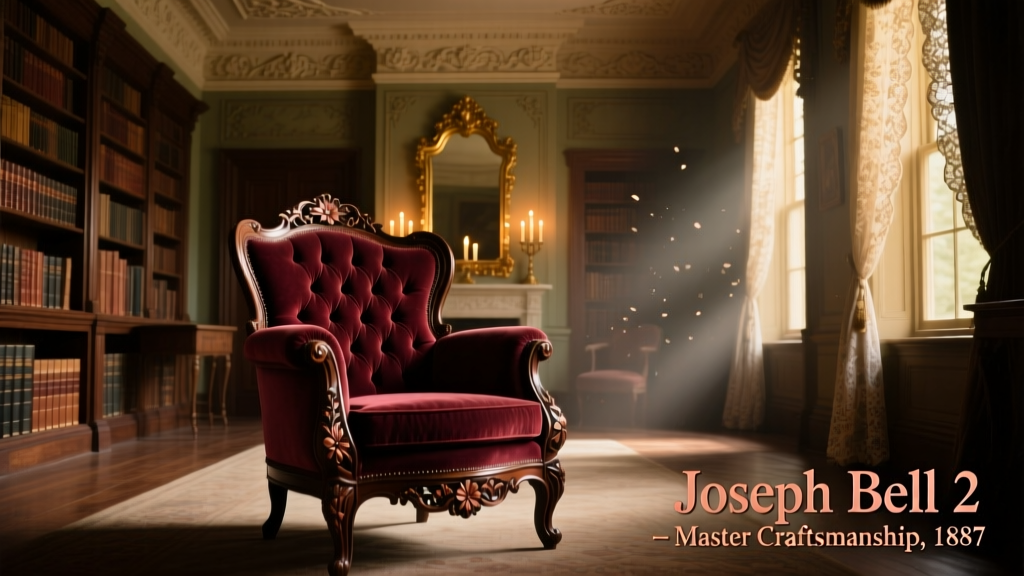
Joseph Bell & Son: The Forgotten Legacy of British Cabinetmaking Excellence, 1890–1935
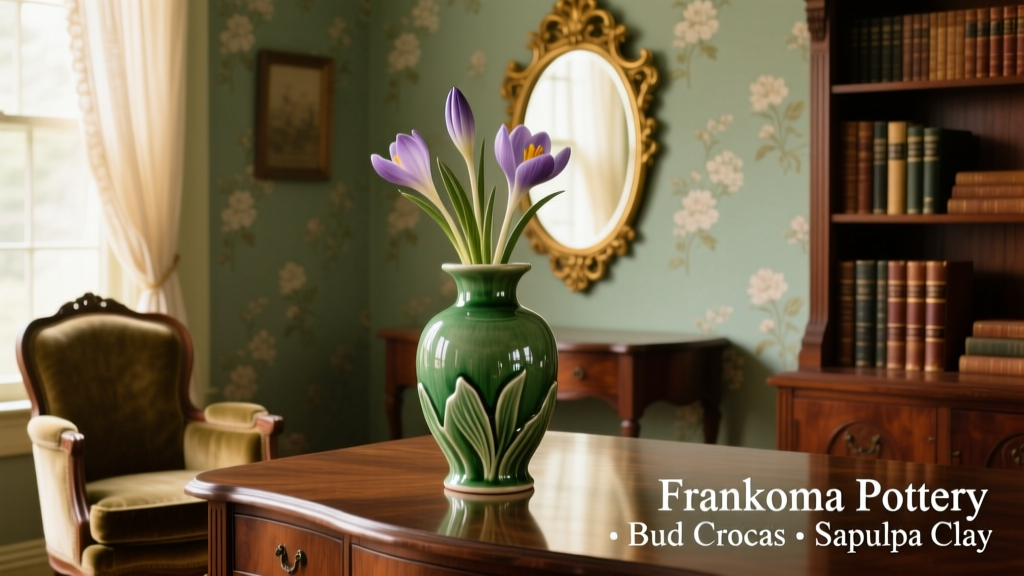
Frankoma Pottery Bud Vase: The Prairie Green Crocus Design in Sapulpa Clay — Identification, History, and Restoration Guidance

Sports Horse Racing Glass: The Preakness Stakes 1984 Commemorative Crystal Trophy by Waterford
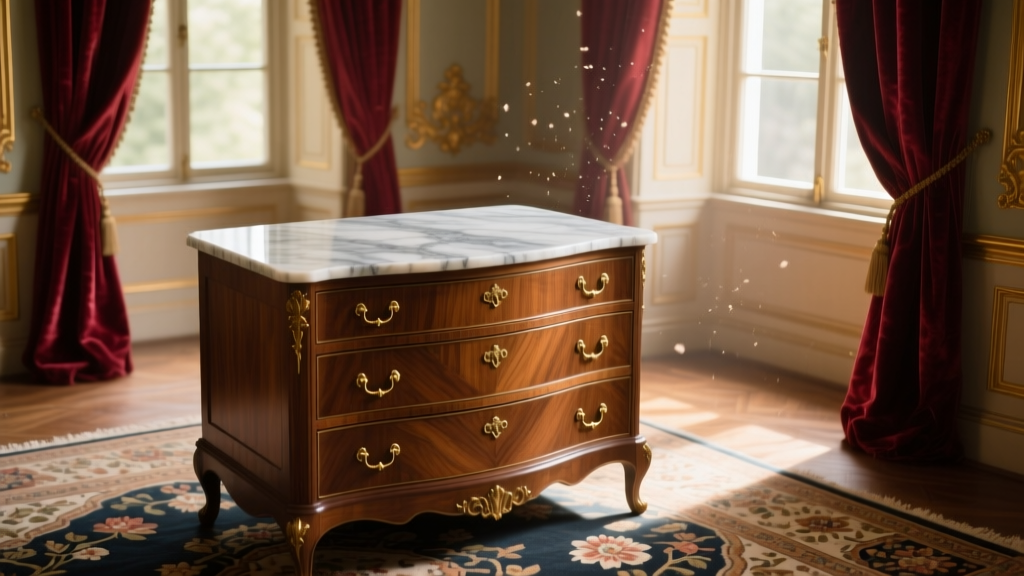
The Three-Drawer Graduated Chest with Marble Top: History, Anatomy, and Restoration Best Practices
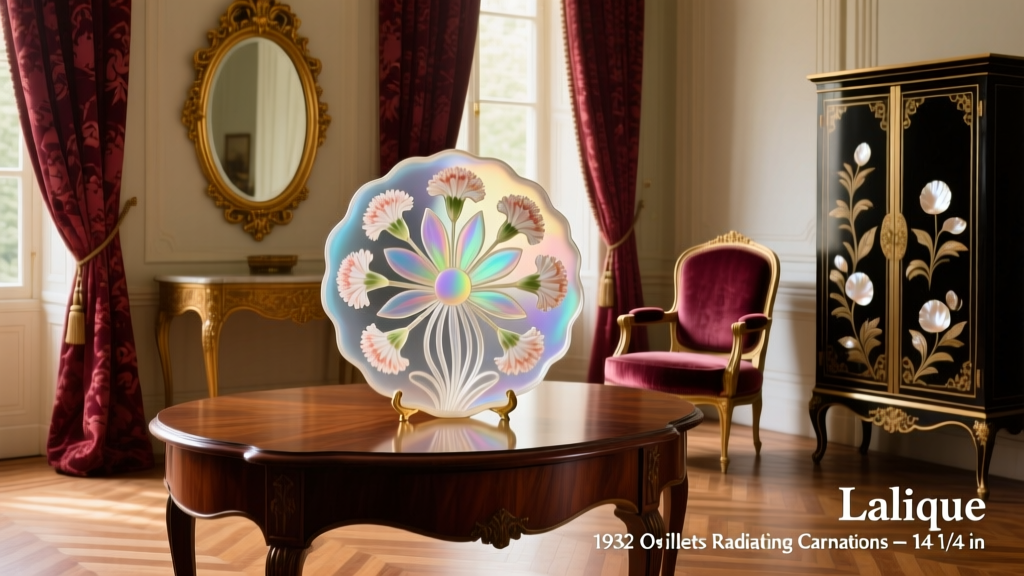
Lalique Dish 'Oeillets Radiating Carnations' — Opalescent Glass Masterpiece, 1932, 14¼ Inches
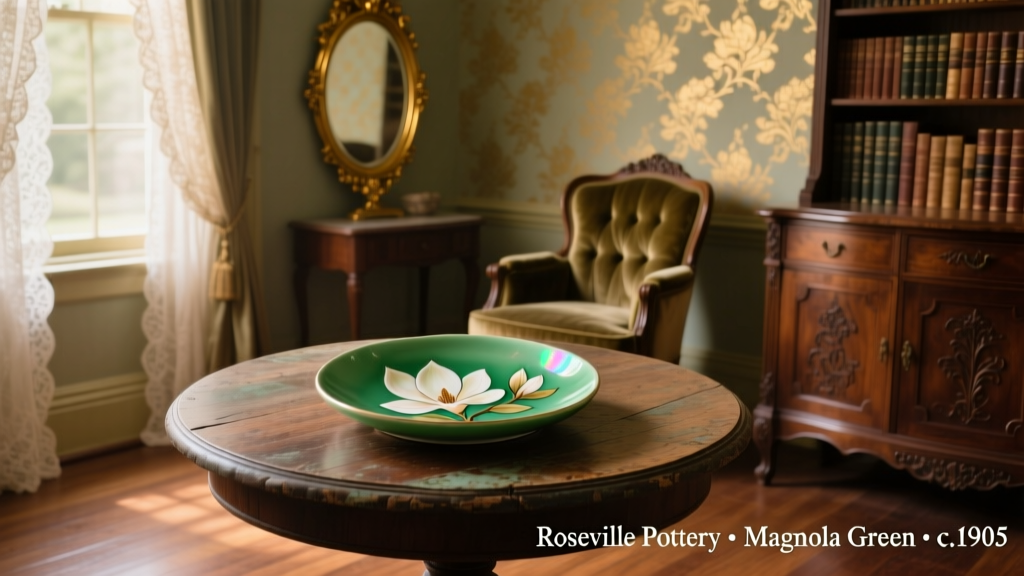
Roseville Flower Pot Saucer in Magnolia Green: Identification, Value, and Authentic Restoration Practices
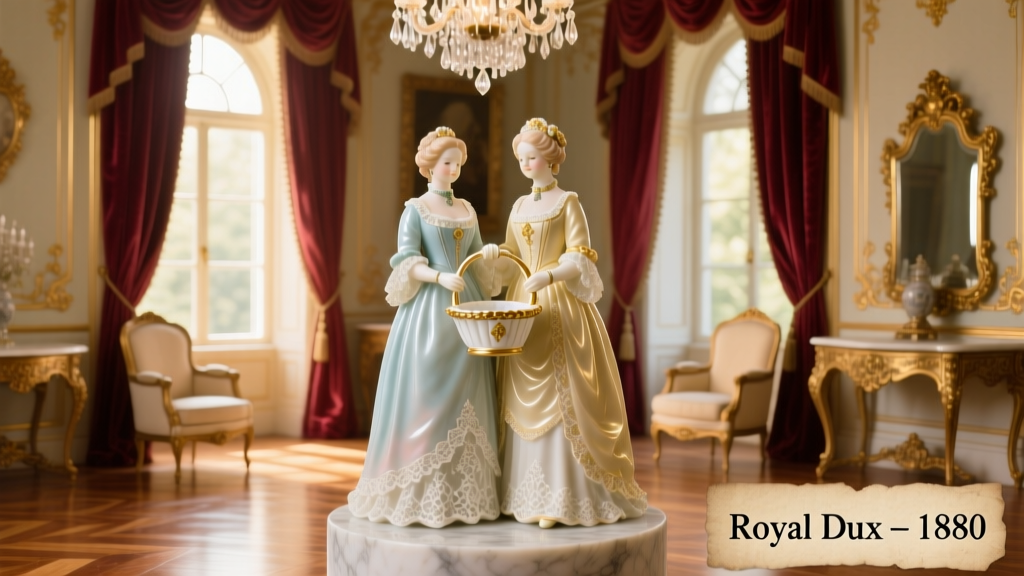
Royal Dux Figurine: Two Ladies Holding a Basket — Ivory and Gold, Circa 1910–1925 — A Collector’s Reference Guide
A Closer Look at an Early 19th-Century English Sampler: Verse, Birds, Flower Basket Border, and Cat Motif in Silk on Linen (11¼ × 13¾ Inches)
Iron Safe Gibraltar Locking Compartment Key: A Technical and Historical Appraisal of the Howe Scale Company 14 × 22 Inch Cabinet