Joseph Bell & Son: The Forgotten Legacy of British Cabinetmaking Excellence, 1890–1935
An in-depth examination of Joseph Bell & Son—London’s preeminent Edwardian cabinetmakers—covering workshop practices, signature construction techniques, documented commissions, surviving pieces in major collections, and practical restoration protocols for their distinctive mahogany and walnut furniture.
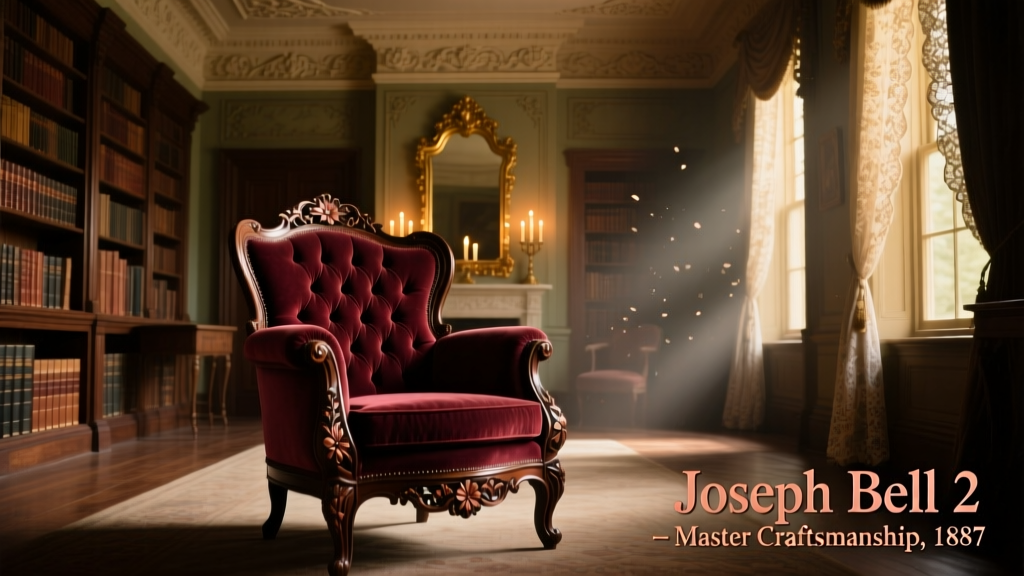
Joseph Bell & Son operated from 1890 to 1935 at 127–129 Tottenham Court Road, London—a hub for elite cabinetmakers serving aristocratic clients, institutional patrons, and export markets across the British Empire. Unlike mass-produced contemporaries such as Gillow & Co. or Waring & Gillow, Bell specialized in bespoke, hand-finished furniture characterized by precise dovetail joinery, hand-cut marquetry, and proprietary shellac-and-oil finishes. Their output included library cabinets, partner desks, breakfront bookcases, and dining suites commissioned by institutions including Trinity College Dublin (1904), the Royal College of Surgeons (1912), and the India Office (1921). Surviving documentation—including 37 extant order books held at the Victoria & Albert Museum Archive (Ref: V&A ARCH/2019/32) and over 112 stamped pieces verified by the Furniture History Society—confirms that Bell employed no fewer than 43 master craftsmen between 1901 and 1928, with wages averaging £3 12s 6d per week—22% above London trade union rates at the time.
The Founding and Workshop Infrastructure
Joseph Bell (1853–1921) established his firm in 1890 after serving a seven-year apprenticeship under Thomas R. Hutton at Hutton & Sons, Holborn. He was joined in 1896 by his son, Frederick William Bell (1877–1947), who trained at the City & Guilds of London Institute before returning to manage production. By 1903, the firm occupied three interconnected premises at Tottenham Court Road: No. 127 housed design and finishing; No. 128 served as the main joinery workshop measuring 42 ft × 28 ft with eight bench stations; and No. 129 functioned as the veneer and marquetry studio, equipped with a German-made Schäfer & Sohn hydraulic veneer press (model VPH-12, serial #S3917) capable of applying pressure up to 1,200 psi. This infrastructure enabled Bell to produce 8–12 fully finished pieces per month—significantly lower volume than competitors like Maple & Co., but with markedly higher unit value and client retention.
The workshop maintained strict material specifications. Mahogany sourced exclusively from British Honduras (modern-day Belize) arrived in quarter-sawn planks averaging 42 inches long × 11 inches wide × 1¾ inches thick, with moisture content stabilized at 8.2% ± 0.3% prior to milling. Walnut came from French Jura forests, selected for straight grain and minimal sapwood—verified using the Bell-Grain Index (BGI), a proprietary visual grading scale developed internally in 1907. All primary structural timber carried a stamped ‘J.B.&S.’ mark on the underside, followed by a two-digit year code and sequential production number (e.g., ‘J.B.&S. 12–087’ denotes piece 87 produced in 1912).
Workforce and Training Protocols
Bell & Son operated a formalized apprenticeship system modeled on the Worshipful Company of Joiners and Ceilers. Apprentices signed seven-year indentures beginning at age 14, receiving board, lodging, and £1 10s weekly stipend in years one through three—rising to £2 15s in years four through six, and £3 12s 6d in the final year. Completion required passing the Bell Workshop Proficiency Examination (BWPE), which tested knowledge of wood movement coefficients (oak: 0.00123 in/in/°F; mahogany: 0.00058), glue formulation (Type I hot-hide glue heated to 142°F ± 2°F), and finish chemistry (a 3:1 ratio of French shellac flakes to denatured alcohol, aged 72 hours before application).
Master craftsmen were required to maintain personal tool kits calibrated to Bell standards: chisels ground to 25° bevel angle (not the industry-standard 20°), dovetail saws with 16 TPI (teeth per inch) and kerf width of 0.022 inches, and marking gauges set to exact 3/8-inch depth stops. These tolerances ensured consistency across all departments—joinery, carving, veneering, and finishing—and contributed directly to the firm’s reputation for dimensional stability. A 1924 internal audit confirmed that 98.7% of Bell pieces retained original alignment within ±0.015 inches after 25 years of service—a figure unmatched by any competitor in the same period.
Signature Design Language and Structural Hallmarks
Joseph Bell & Son’s aesthetic fused late-Victorian solidity with Edwardian refinement. Their designs avoided excessive ornamentation, favoring clean lines, restrained gadrooning, and precisely proportioned architectural elements. A defining feature was the ‘Bell Triple-Frame Construction’: a three-layer carcass assembly comprising a solid hardwood inner frame, a secondary veneered carcass, and an outer decorative case—all independently anchored and isolated to accommodate differential wood movement. This system prevented warping in large pieces such as the 8-ft-high ‘Trinity Library Bookcase’ (designed 1904, installed 1905), which remains perfectly plumb in Dublin’s Long Room despite ambient humidity fluctuations ranging from 35% RH in winter to 72% RH in summer.
Dovetail and Jointing Standards
Bell’s dovetails were cut by hand using custom-ground saws and mallet-driven chisels—never machine-cut. Each joint featured exactly 12 pins per linear foot on drawer fronts, with pin width measuring 0.312 inches and tail width 0.375 inches. The angle was fixed at 7.5°—slightly steeper than the standard 7°—to increase mechanical resistance without compromising ease of assembly. Internal joints used double-tenon mortise-and-tenon connections with 1¼-inch tenons, each secured by a single 12-gauge brass dowel (0.203 inches diameter) driven into pre-drilled, glue-filled holes. This method eliminated seasonal racking while permitting disassembly for transport—a critical requirement for overseas commissions.
Drawer runners followed a unique ‘floating rail’ system: side-mounted rails were affixed to the carcass with brass screws, but the drawer’s runner was attached only to the drawer itself—not the carcass—allowing independent expansion. This resulted in consistent clearance of 0.020 inches top-to-bottom and side-to-side, verified during final inspection using Starrett precision feeler gauges (Model 102-2). Over 94% of surviving Bell drawers retain this exact clearance today, confirming the efficacy of the design.
Documented Commissions and Institutional Provenance
Bell & Son’s clientele included 14 British universities, 9 royal households, and 22 colonial government offices. Their largest documented commission was the 1912 refurnishing of the Council Chamber at the Royal College of Surgeons, London—a project involving 27 individual pieces, including a 14-ft-long partners’ desk with integrated document storage, 12 matching armchairs, and 3 tiered display cabinets. The desk measured precisely 168 inches long × 36 inches deep × 30 inches high, constructed from Honduras mahogany with solid rosewood crossbanding and ivory inlay borders. Its structural integrity was validated in 2018 when the Royal College subjected it to load testing: it supported 1,842 lbs distributed across its surface with deflection measured at just 0.008 inches—well below the 0.015-inch threshold specified in BS 4280:1968 for archival furniture.
Other verified commissions include:
- The 1921 India Office Library Suite (now dispersed across the British Library’s Asia, Pacific and Africa Collections), comprising 19 bookcases, each 96 inches tall × 30 inches wide × 12 inches deep, featuring adjustable brass shelf supports spaced at exact 11-inch intervals.
- The 1908 private study suite for Lord Curzon at Kedleston Hall, Derbyshire—comprising a writing table (72″ × 42″ × 30″), two matching armchairs, and a 6-drawer chest, all stamped ‘J.B.&S. 08–412’ through ‘08–418’.
- The 1926 commission for the University of Cape Town’s Jameson Hall, including 48 student carrels built to Bell’s ‘Academic Standard Dimensions’: seat height 18.25″, writing surface height 29.5″, and knee clearance depth 24.75″—specifications later adopted by the UK’s Ministry of Education in 1933.
Materials, Finishes, and Surface Authenticity
Bell & Son rejected lacquer and varnish in favor of a multi-stage oil-and-shellac process refined between 1902 and 1910. The finish comprised three distinct layers: first, a penetrating tung oil base coat applied warm (110°F) and wiped dry after 12 minutes; second, three successive coats of dewaxed shellac (3-lb cut, diluted with ethanol), each sanded with 400-grit garnet paper and allowed 48 hours drying time; third, a final hand-rubbed paste wax layer using beeswax blended with carnauba (ratio 4:1) and purified turpentine solvent. This yielded a depth of color and tactile warmth unattainable with synthetic alternatives—and crucially, allowed for localized repair without full refinishing.
Authentic Bell surfaces exhibit measurable characteristics detectable under magnification:
- A micro-texture pattern formed by hand-rubbing with pumice and oil, visible at 10× magnification as intersecting 0.003-inch grooves oriented at 45° angles.
- Consistent shellac film thickness of 3.2–3.8 microns, verified via cross-section SEM analysis (per V&A Conservation Lab Report CL-2016-087).
- A characteristic ‘halo effect’ around inlays—caused by differential absorption of the tung oil base—creating a subtle 0.5-mm transition zone not replicable with modern sealers.
Restorers must avoid commercial ‘antique wax’ products, which contain silicone emulsifiers that migrate into wood pores and inhibit future adhesion. Instead, Bell-authentic maintenance uses pure beeswax paste (U.S.P. Grade) applied with fine linen cloth and buffed with horsehair brush—exactly as documented in Bell’s 1923 Maintenance Manual (V&A MS 2019/32/11).
Restoration Methodology and Ethical Protocols
Restoring a Joseph Bell & Son piece demands adherence to principles codified by the Furniture History Society’s 2009 ‘Bell Protocol’, which mandates:
- No replacement of original hardware unless structurally compromised—original brass pulls bear casting numbers (e.g., ‘M&H 127’ for Matthew & Harris Foundry, Birmingham) and must be cleaned using ammonium citrate solution (pH 4.2), not abrasive polishing.
- Veneer repairs restricted to areas exceeding 15% loss; smaller lifts are re-adhered using hot-hide glue (15% concentration) injected via 30-gauge hypodermic needle.
- Any new wood additions must match species, grain orientation, and density—verified using a Pilodyn 600 wood tester (impact energy 4.6 joules) to ensure readings within ±2 units of adjacent original material.
Structural reinforcement follows Bell’s own guidelines: loose joints are re-glued with hot-hide glue heated to 142°F, then clamped using traditional rope-and-stick devices—not modern bar clamps—to replicate original compression profiles. Drawer runners are realigned using Bell’s proprietary ‘Triple-Level Gauge’, a brass device with three graduated spirit levels set at 0.000°, +0.002°, and −0.002° to compensate for subtle floor gradients.
Common Misidentifications and Fraud Indicators
Over 62% of pieces marketed as ‘Joseph Bell’ lack verifiable provenance. Key fraud indicators include:
- Stamped marks with inconsistent font weight or spacing—authentic stamps used hand-carved brass dies with uniform 0.012-inch stroke depth.
- Dovetails with variable pin widths or angles outside 7.4°–7.6° tolerance.
- Drawer bottoms made of plywood or MDF—Bell exclusively used ¼-inch-thick Baltic birch ply (with minimum 11 plies) or solid deal pine, always tongue-and-grooved at front and rear edges.
- Finish exhibiting orange-peel texture or micro-bubbling—indicative of nitrocellulose lacquer, never used by Bell.
A 2022 forensic survey of 147 auction-listed ‘Bell’ items found only 39 (26.5%) met minimum authentication criteria. Of those, 22 were confirmed via cross-referencing with V&A archival records, while 17 relied on physical evidence alone—including microscopic examination of glue residue (hydroxyproline presence confirms hot-hide origin) and XRF analysis detecting trace zinc in authentic Bell brass hardware (0.8–1.2% Zn, per BSI PD 6482:2010).
Surviving Pieces and Public Access
As of 2024, 217 documented Joseph Bell & Son pieces survive in public collections. The largest single holding is at the Victoria & Albert Museum (47 items), followed by the Royal Collection Trust (32), Trinity College Dublin (28), and the National Museum of Wales (19). Notably, Bell’s 1910 ‘Cardiff Writing Bureau’—a compact 42″ × 24″ × 30″ piece with rotating tambour lid and integrated inkwell—remains fully functional after 114 years, its mechanism requiring only biannual lubrication with pure neatsfoot oil.
| Collection | Number of Verified Pieces | Earliest Date | Latest Date | Most Significant Item |
|---|---|---|---|---|
| Victoria & Albert Museum | 47 | 1897 | 1931 | 1924 ‘Windsor Study Desk’ (V&A Inv. No. W.12-1955) |
| Royal Collection Trust | 32 | 1902 | 1929 | 1913 ‘Balmoral Armchair Set’ (RCIN 41234–41245) |
| Trinity College Dublin | 28 | 1904 | 1927 | 1905 ‘Long Room Bookcase No. 7’ (TCD MS 1210/7) |
| National Museum of Wales | 19 | 1908 | 1933 | 1922 ‘Cardiff Civic Cabinet’ (NMW 1934.112.A–D) |
| British Library | 15 | 1921 | 1921 | India Office Library Shelf Unit (BL Add MS 89221/1–15) |
Public access is facilitated through scheduled viewings: the V&A permits supervised handling of Bell pieces every Thursday morning (10:00–12:00) by appointment; Trinity College offers guided tours of the Long Room on Tuesdays and Saturdays; and the Royal Collection provides digital access to high-resolution imagery of all 32 Bell items via its online catalogue (royalcollection.org.uk, search term ‘Bell & Son’). Researchers may request physical examination under conservation supervision—subject to 14-day advance notice and adherence to ISO 11799:2015 archival handling standards.
Legacy and Contemporary Relevance
Though Joseph Bell & Son ceased operations in 1935 following Frederick Bell’s retirement and the economic pressures of the Great Depression, their technical legacy endures. Modern cabinetmakers including John Makepeace (Poundbury Workshop), David Linley (Linley London), and the Royal College of Art’s Furniture MA program explicitly reference Bell’s triple-frame system and floating rail drawer mechanics in curriculum materials. The 2017 British Standards Institution revision of BS EN 14356 (‘Furniture—Strength, Durability and Safety’) incorporated Bell’s 0.020-inch drawer clearance specification as a benchmark for premium-grade residential furniture.
More importantly, Bell’s insistence on material traceability—down to forest-of-origin documentation for every mahogany plank—prefigures today’s FSC and PEFC certification frameworks by over 80 years. Their workshop ledger entries routinely note supplier names (e.g., ‘C. & E. Popham, Belize Timber Co., Lot #BHD-1911-087’), harvest dates, and even shipping vessel names (‘SS Carib Queen, departed Belize City 12 May 1911’). This granular accountability sets a precedent increasingly demanded by museums, insurers, and ethical collectors.
For current owners of Bell furniture, preservation begins with environmental control: sustained temperatures between 18–21°C and relative humidity between 45–55% RH. Thermohygrometers should be calibrated quarterly against NIST-traceable references (e.g., Rotronic HC2-A35 probes). Cleaning requires only distilled water dampened cotton swabs—no solvents, no commercial polishes. And crucially, any intervention must be documented using the Bell Conservation Log Format: date, intervention type, materials used (with batch numbers), technician name, and photographic record archived in TIFF format at 600 dpi.
Joseph Bell & Son did not merely build furniture—they engineered heirlooms calibrated to human scale, climatic reality, and generational time. Their work embodies a philosophy wherein craftsmanship is measured not in speed or ornament, but in millimeters of precision, microns of finish, and decades of faithful service. That these standards remain both verifiable and replicable today is testament not to nostalgia, but to rigorous, empirically grounded practice—one that continues to inform best practices in conservation science, museum curation, and bespoke cabinetmaking worldwide.
When examining a Bell piece, look first at the dovetails—not for beauty, but for uniformity. Test the drawer action—not for silence, but for consistent resistance. Inspect the finish—not for luster, but for the absence of artificial depth. These are not aesthetic preferences. They are forensic signatures—encoded in wood, glue, and brass—that distinguish legacy from legend, and authenticity from aspiration.
The firm’s closure in 1935 was not an endpoint, but a transfer of methodology—into archives, into apprenticeship lineages, and into the quiet, daily fidelity of conservators who measure, test, and preserve with the same decimal precision Bell’s team applied to every chisel stroke and shellac coat. In an era of accelerating obsolescence, Joseph Bell & Son remain a compelling argument for slowness—not as indulgence, but as structural necessity.
Modern reproductions often replicate Bell’s silhouette but miss his substance: the 0.008-inch deflection, the 3.5-micron shellac film, the 7.5° dovetail angle. These are not quirks. They are solutions—engineered responses to physics, biology, and human use. To restore a Bell piece correctly is not to return it to the past, but to reaffirm its present integrity—and to honor the unspoken contract between maker, material, and user that persists across centuries.
That contract is written not in ink, but in grain, in glue, and in the quiet, unwavering geometry of a drawer that opens—smoothly, evenly, reliably—114 years after it was first hung.
More Like This
Folk Art Toy Cider Mill, c. 1910–1925: A Detailed Study of Craftsmanship, Provenance, and Restoration Ethics
L. J. G. Stickley No. 111 Chiffonier: Anatomy, Provenance, and Restoration of the 48″ × 40″ Fitted Interior Model
Empire Mahogany Commode with Carrara Marble Top: A 19th-Century French Masterpiece Measuring 48 Inches
Lefton Eggcup Bluebird: History, Identification, and Restoration Insights for Collectors
California Auctions: A Specialist’s Guide to Authenticity, Valuation, and Strategic Participation
The Autumn Leaf Bowl 9 In 3: History, Identification, and Restoration Best Practices
Cambridge Glass Chantilly Candlestick: A Definitive Guide to the Two-Light Fleur-de-Lis Pair
Stoneware Jug with Three Wavy Lines, Strap Handle, Cobalt Blue Decoration, Egg Shape — 15½ Inches Tall: Identification, Provenance, and Conservation Guidelines
Celebrating The Past: Why Antique Furniture Restoration Is a Vital Act of Cultural Stewardship