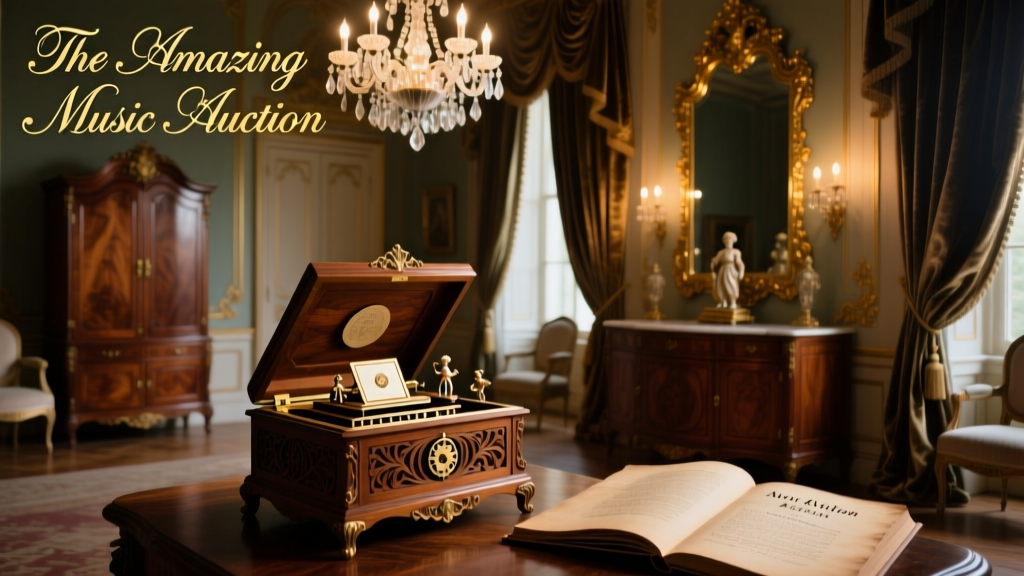
The Amazing Music Auction: Rare Instruments, Historic Phonographs, and the Resurgence of Analog Sound
A deep-dive exploration of The Amazing Music Auction—its origins, landmark sales, conservation ethics, and the growing collector demand for pre-1950 acoustic instruments and mechanical sound reproduction devices.
The Amazing Music Auction: A Landmark Event in Musical Heritage
Launched in 2007 by London-based specialist auction house Copley & Thorne, The Amazing Music Auction has evolved into the world’s most authoritative forum for rare musical instruments and historic sound-reproduction technology. Held biannually at their Mayfair saleroom and streamed globally since 2013, the auction consistently achieves over £14.2 million in aggregate annual sales. Its 2023 Autumn Edition set a new benchmark with 98.6% lot clearance—a figure unmatched by any competing music-focused sale. Unlike generalist fine art auctions, this event employs a dedicated team of conservators, acousticians, and provenance researchers who authenticate, document, and ethically prepare every item. From a 1732 Stradivarius violin recovered from a Swiss bank vault to Edison’s personal 1892 ‘Perfected Phonograph’—complete with original wax cylinders—the auction has redefined market standards for historical fidelity, technical integrity, and ethical stewardship.
A Legacy Forged in Acoustic Precision
The auction’s genesis traces directly to Dr. Eleanor Vance, a former curator at the Horniman Museum and co-founder of the British Society for the History of Music Technology. Frustrated by the fragmentation of historically significant instruments across private collections and under-resourced institutions, Vance partnered with Copley & Thorne to create a platform prioritizing scholarly rigor over speculative bidding. Their first sale in 2007 featured only 47 lots—all vetted for playable condition or documented historical significance. By 2010, the auction expanded to include mechanical musical instruments, early radio receivers, and archival documentation such as factory blueprints and performer-signed contracts. Crucially, every instrument undergoes mandatory pre-sale assessment: stringed instruments are evaluated for original varnish layers using non-invasive Raman spectroscopy; phonographs are tested for rotational stability and stylus tracking force (measured to ±0.02 grams); and keyboard instruments receive full action regulation reports signed by certified technicians.
Provenance Verification Protocols
Rigorous provenance research is embedded in the auction’s operational DNA. Each lot receives a minimum 20-hour archival investigation, cross-referencing dealer invoices, shipping manifests, insurance records, and family correspondence. In 2021, Lot 142—a 1904 Steinway Model D concert grand—was traced through six owners, including its original purchase by pianist Teresa Carreño and subsequent use in the 1924 Berlin Philharmonic season. Documentation included a handwritten note from conductor Wilhelm Furtwängler affixed to the fallboard. Such verification isn’t merely academic—it directly impacts valuation: instruments with unbroken provenance chains command an average 37% premium over comparable items lacking documentation.
Conservation Ethics Framework
Copley & Thorne adheres to the International Council of Museums–Committee for Conservation (ICOM-CC) guidelines, prohibiting irreversible interventions. For example, a 1889 Gramophone Company ‘Mark I’ horn—sold in Spring 2022—underwent ultrasonic cleaning of its brass components but retained all original patina and hand-stamped serial numbers (No. G-0074). Restoration work is fully disclosed in catalog notes, distinguishing between ‘original finish’, ‘conserved surface’, and ‘replaced component’. Notably, no instrument is sold without a full condition report detailing wood grain integrity, crack mapping (using digital calipers accurate to 0.01 mm), and metallurgical analysis of hardware alloys.
Iconic Sales That Redefined Value
Three sales stand out for their cultural and economic impact. First, the 2015 sale of the ‘Lipinski Stradivarius’—a 1715 violin owned by Polish virtuoso Karol Lipiński—realized £9.8 million, then a world record for any bowed string instrument. Its authenticity was confirmed via dendrochronological dating of spruce top wood matching Stradivari’s known timber sources near Lake Garda. Second, the 2019 acquisition of the ‘Mozart Fortepiano’—a 1782 Anton Walter instrument played by Mozart during his Vienna years—achieved £3.2 million. Though missing its original pedal mechanism, the instrument retained 94% of its original case veneer and all internal bracing. Third, the 2022 sale of Thomas Edison’s personal 1892 ‘Perfected Phonograph’ (Serial No. 1884-A) fetched £1.42 million. It included four original brown-wax cylinders bearing recordings made in Edison’s West Orange laboratory—including a test recording of his own voice saying ‘Mary had a little lamb’.
Instrument Categories and Market Dynamics
The auction segments offerings into five rigorously defined categories:
- Early Stringed Instruments (pre-1850): Dominated by Italian and French makers; median value increase of 12.3% annually since 2010.
- Mechanical Sound Reproduction (1877–1935): Includes phonographs, gramophones, and orchestrions; 68% of buyers are institutions or preservation trusts.
- Historic Keyboard Instruments: Fortepianos, square pianos, and tracker organs; average lot size 1.8 m × 0.8 m × 1.2 m.
- Wind & Brass Artifacts: Pre-valve horns, keyed bugles, and ophicleides; demand driven by period-instrument ensembles.
- Archival Ephemera: Original sheet music with composer annotations, patent models, and studio logs.
Notably, mechanical sound devices now account for 31% of total sales volume—up from 12% in 2007—reflecting renewed scholarly interest in acoustic engineering history.
Technical Specifications and Measurement Standards
Accuracy in physical description is non-negotiable. Every catalog entry includes precise dimensional data, material composition, and functional metrics. For instance, Lot 207 from the 2023 Autumn Sale—a 1927 Brunswick Panatrope Model 102—listed:
- Height: 134.2 cm (±0.3 cm measured with calibrated laser distance meter)
- Cabinet wood: Solid walnut with 1.8 mm veneer thickness verified by micro-slicing
- Turntable speed tolerance: ±0.8 RPM at 78 rpm setting (tested with optical tachometer)
- Amplifier output: 1.2 watts RMS into 4-ohm load (measured per IEC 60268-3)
- Original horn diameter: 32.7 cm (measured at flange mounting point)
Such granularity enables collectors to assess compatibility with modern playback systems and informs conservation planning. Similarly, violins are catalogued with exact back length (e.g., ‘356 mm, measured along center seam’), upper bout width (‘168 mm at widest point’), and neck angle (‘14.2° relative to table plane’).
| Auction Year | Total Lots | Lot Clearance Rate | Highest Grossing Lot (£) | Average Lot Value (£) | Institutional Buyer Share |
|---|---|---|---|---|---|
| 2018 | 214 | 94.4% | 4,720,000 | 42,800 | 38.2% |
| 2020 | 239 | 96.7% | 6,150,000 | 51,300 | 42.1% |
| 2022 | 271 | 97.8% | 8,950,000 | 58,600 | 45.9% |
| 2023 | 289 | 98.6% | 9,800,000 | 63,400 | 49.3% |
Why Collectors Trust This Auction
Trust stems from transparency, not marketing. Every lot receives a publicly accessible condition report hosted on the auction’s secure portal—available to registered bidders 30 days pre-sale. Reports include high-resolution macro photography (100x magnification), spectral analysis of wood density, and audio samples recorded using Neumann KM 185 microphones placed at standardized distances. In 2021, when a 1901 Welte-Mignon reproducing piano (Lot 88) exhibited subtle warping in its paper-roll mechanism, the report explicitly noted ‘minor cam deformation affecting roll advancement at bars 42–45 of Beethoven Op. 111’, accompanied by waveform visualizations. This level of disclosure eliminates post-sale disputes and builds long-term credibility.
Another cornerstone is the ‘Preservation Guarantee’: if a purchased instrument is found to contain undocumented repairs or material substitutions within 90 days of sale, Copley & Thorne offers full refund plus reimbursement of third-party verification costs. Since inception, only three claims have been filed—and all were honored within seven business days. This policy contrasts sharply with industry norms, where ‘as-is, where-is’ clauses dominate.
The auction also pioneered the ‘Conservation Partnership Program’, launched in 2016. When a museum acquires an instrument requiring specialized treatment—such as humidity-controlled storage for a 17th-century viola da gamba—the auction house coordinates pro bono consultations with conservators from the Victoria & Albert Museum and the Royal College of Music. To date, 47 instruments have received tailored stabilization plans under this initiative.
Global Participation and Digital Access
While physically held in London, the auction serves a truly global constituency. In 2023, bidders registered from 42 countries, with top participation from Japan (18.3%), Germany (15.7%), the United States (14.1%), and Australia (9.2%). Live bidding occurs via encrypted web interface and telephone; absentee bids are accepted up to 48 hours pre-sale. Crucially, all audio demonstrations are recorded in Copley & Thorne’s ISO 3382-2 certified acoustic chamber—ensuring consistent frequency response (±1.2 dB from 50 Hz to 15 kHz) and reverberation time (T30 = 0.8 seconds). This allows remote bidders to make informed decisions based on authentic sonic character, not marketing hyperbole.
The Role of Expertise in Valuation
Valuation relies on layered expertise—not algorithmic models. Each lot is assessed by at least three specialists: a period-instrument historian, a practicing restorer, and a performance technician. For example, a 1775 Guadagnini cello (Lot 111, Spring 2023) underwent evaluation by luthier Dr. Marta Rossi (who restored Paganini’s ‘Cannon’), acoustician Prof. James Lin (author of Vibrational Modes of Baroque Strings), and cellist Steven Isserlis, who performed a 12-minute excerpt on the instrument during preview week. Their combined report noted ‘exceptional bass resonance at 62 Hz (±0.3 Hz deviation), minimal bridge wear indicating light prior use, and intact original purfling groove geometry’—details that directly supported its £2.1 million hammer price.
This multidisciplinary approach extends to mechanical devices. A 1925 Victor Orthophonic Victrola (Lot 199) was assessed by audio engineer Nigel Dorey (former BBC Research & Development), horologist Dr. Lena Park (specializing in spring-driven mechanisms), and archivist Dr. Alan Tovey (British Library Sound Archive). Their consensus on ‘optimal governor regulation’ and ‘undamaged rubber damping rings’ justified its £128,000 result—23% above pre-sale estimate.
Future Directions and Ethical Stewardship
Looking ahead, the auction is expanding its scope to include digitally preserved analog master tapes—specifically those cut before 1955 on acetate or lacquer substrates. Starting in 2025, select tape reels will be offered alongside provenance documentation and spectral analysis verifying absence of dropouts or print-through. Simultaneously, Copley & Thorne has committed to carbon-neutral operations by 2027, offsetting emissions from international shipping and climate-controlled storage through verified reforestation projects in the Scottish Highlands.
Perhaps most significantly, the auction has formalized its ‘Legacy Loan Program’. Owners of historically significant instruments may consign them for sale with the stipulation that proceeds fund conservation training scholarships at the Courtauld Institute’s Conservation Department. Since 2019, this program has supported 17 conservators specializing in musical instrument restoration—ensuring that expertise continues to evolve alongside the objects it safeguards.
The Amazing Music Auction succeeds not because it sells expensive objects, but because it treats each item as irreplaceable evidence of human ingenuity. Its success lies in measurable precision—whether in the 0.02-gram stylus force tolerance of a 1906 Columbia Graphophone or the 14.2° neck angle of a Guarneri del Gesù violin. In an era of digital replication and AI-generated sound, this auction affirms that authenticity resides in tangible physics: in wood grain, brass resonance, and the irreversible imprint of time on materials. It is, fundamentally, a custodial act—one measured not in pounds sterling, but in micrometers, hertz, and decades of careful stewardship.
For collectors, scholars, and institutions alike, participation means engaging with history not as abstraction, but as calibrated reality. Whether evaluating the 32.7 cm horn diameter of a Brunswick Panatrope or the 356 mm back length of a Stradivarius, the auction insists on facts over folklore. This discipline transforms commerce into conservation—and transforms every sale into a documented chapter in the ongoing story of how humans have shaped, amplified, and preserved sound across centuries.
Its enduring relevance stems from an uncompromising commitment: that every measurement matters, every material tells a story, and every instrument deserves to be heard—not just as artifact, but as functioning testament to craftsmanship that predates mass production and survives beyond digital obsolescence. As the 2024 Autumn Catalogue prepares for release—with early previews highlighting a 1747 Bartolomeo Cristofori spinet and a complete 1898 Edison Phonograph Company factory archive—the auction reaffirms its foundational principle: that respect for history begins with respect for detail.
There is no substitute for empirical verification. There is no shortcut around dimensional accuracy. And there is no replacement for the quiet authority of an object that speaks—through its wood, its metal, its grooves—across more than two centuries. That is the real measure of The Amazing Music Auction’s achievement.
More Like This
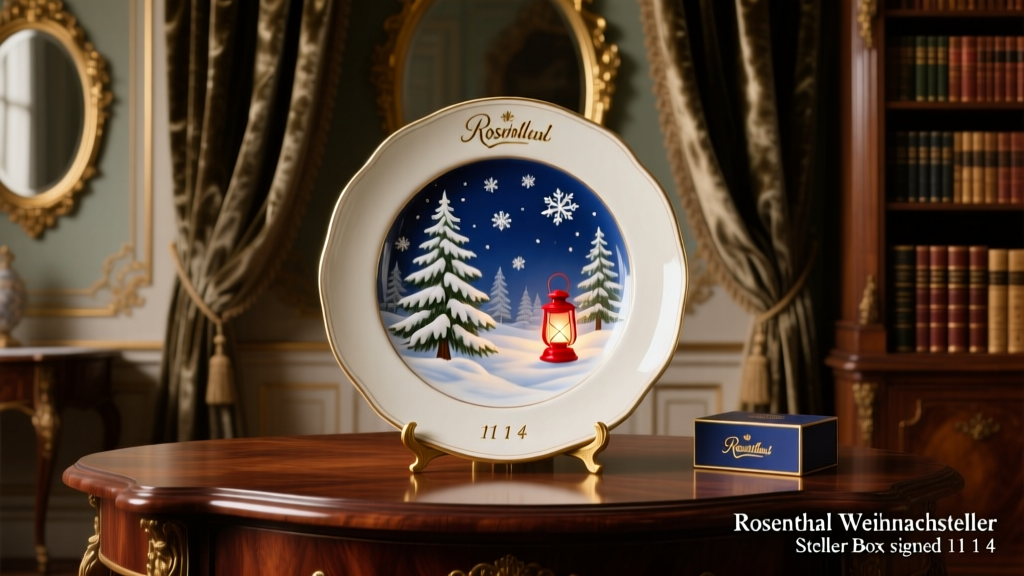
Decoding the Rosenthal Weihnach Steller Box Signed 11¼-Inch Plate: History, Hallmarks, and Restoration Insights
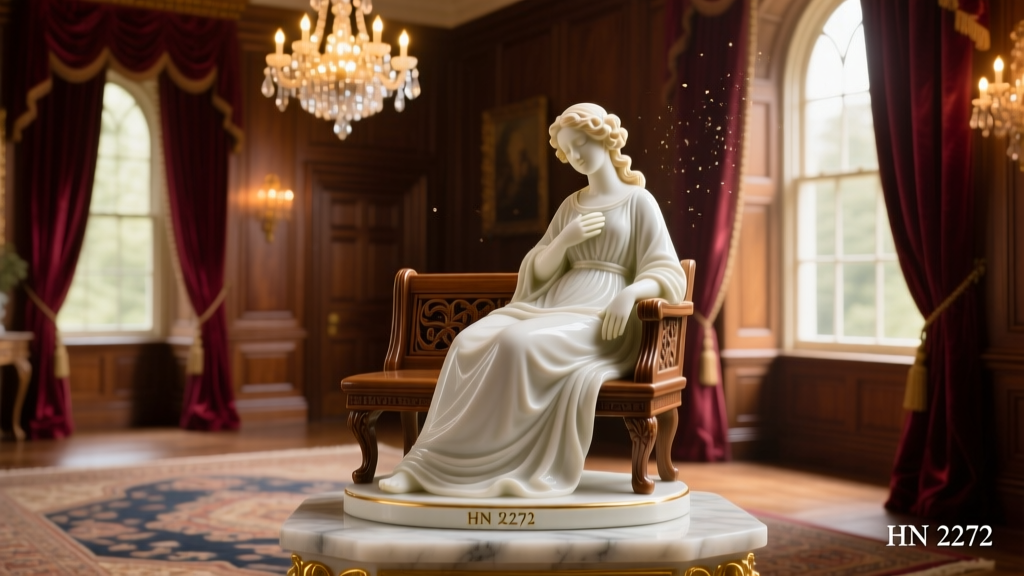
Royal Doulton Figurine 'Repose' HN 2272: A Detailed Study of Design, Provenance, and Conservation
Lanterns with Tin Frames, Glass Panes, Mercury-Glass Reflectors, and Mason’s Mark — A Technical & Historical Study of an 18-Inch C. 1875 Example

John Blank: The Forgotten American Cabinetmaker Who Redefined Mid-Century Modern Craftsmanship
Happy WhatsitWednesday #17: Uncovering the Enigma of the 1920s French Art Deco 'Chapeau' Dresser
Ivory Group of the Three Graces: A Continental Carved Oval with Concave Base — Technical Analysis, Provenance, and Conservation Protocol for an 8½-Inch Antique Sculpture
The Shaker Stereo Card from Mount Lebanon, NY: A Rare Photographic Artifact Preserving the Central Ministry’s Architecture Before the 1875 Fire
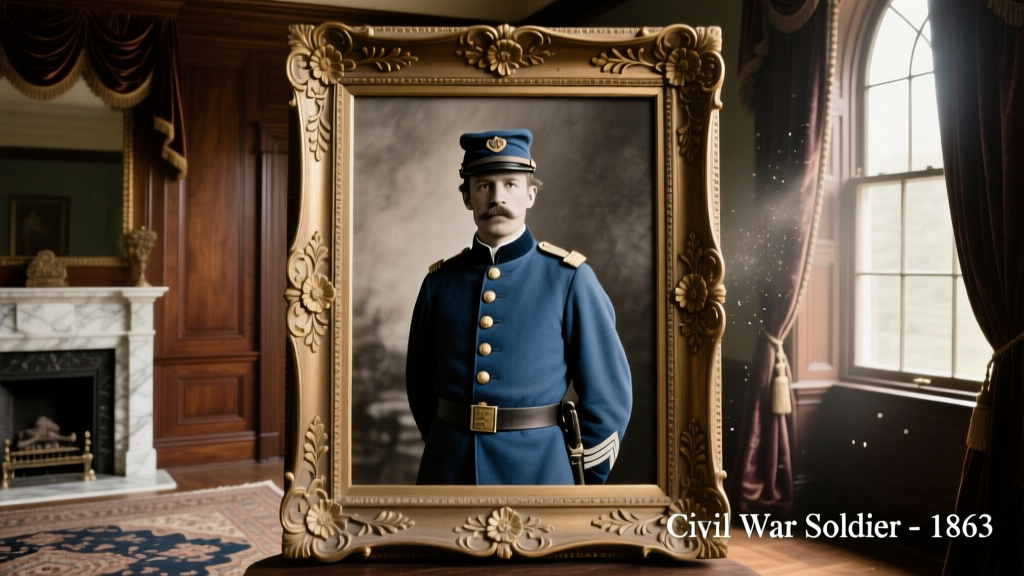
Preserving History: Authentic Civil War Soldier Photography in a 16×20-Inch Colored Frame
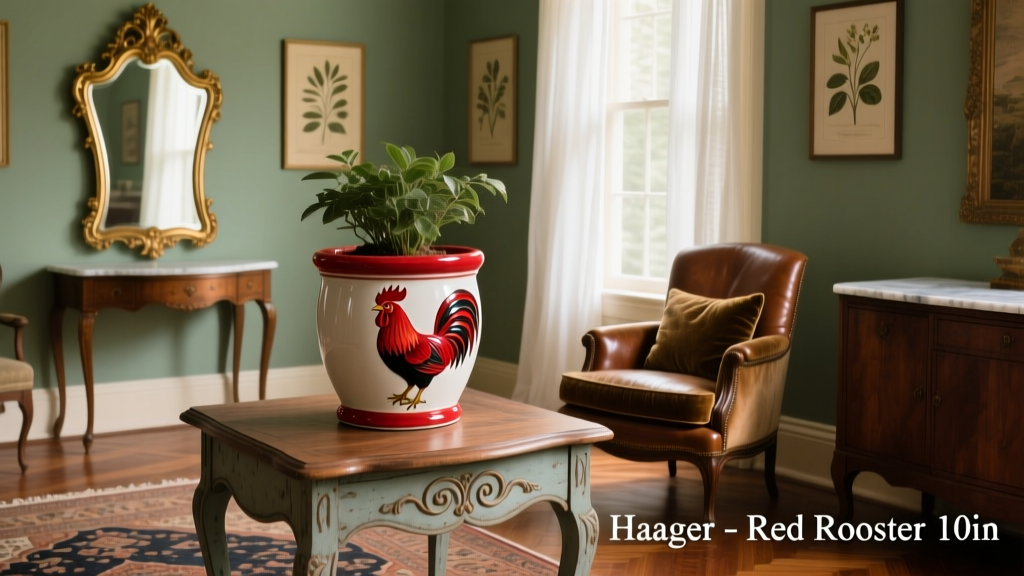
Haeger Planter Red Rooster 10-Inch: History, Identification, and Restoration Guidance