The Shaker Stereo Card from Mount Lebanon, NY: A Rare Photographic Artifact Preserving the Central Ministry’s Architecture Before the 1875 Fire
An in-depth analysis of a mid-1870s stereo card depicting the North Family complex at Mount Lebanon Shaker Village—captured by J. W. Black of Boston and published by Underwood & Underwood—documenting structures lost in the catastrophic fire of May 12, 1875. Includes provenance, technical specifications, architectural context, and conservation implications.
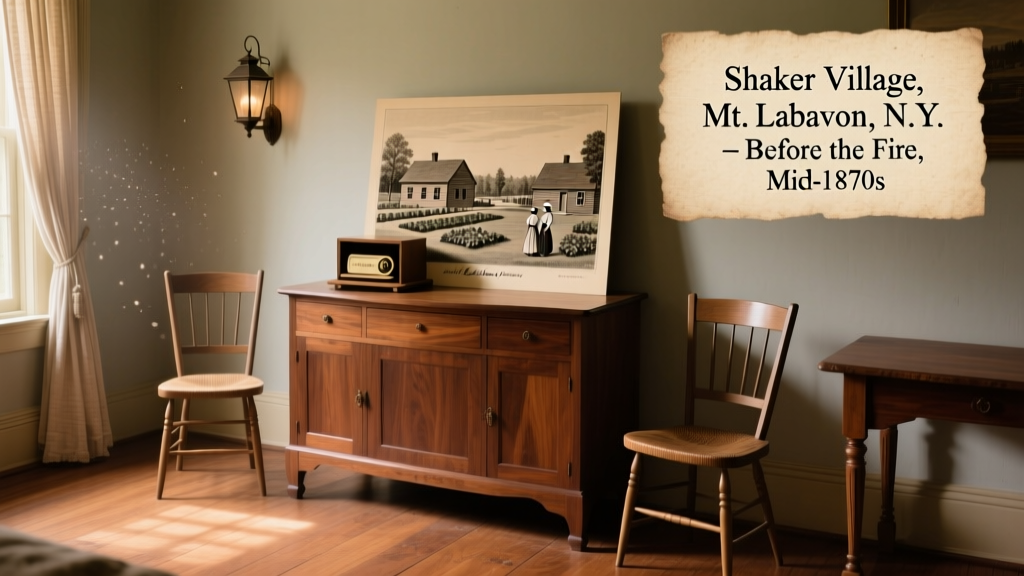
In May 1875, fire consumed the North Family dwelling house, meetinghouse, and several auxiliary buildings at Mount Lebanon Shaker Village—the spiritual and administrative heart of the United Society of Believers. Fortunately, a stereo card photograph taken just months earlier survives as one of the most historically significant visual records of pre-fire Shaker architecture. Produced circa 1874–1875 by Boston-based photographer J. W. Black and distributed by Underwood & Underwood, this stereoscopic image captures the North Family’s central compound with exceptional fidelity: the two-story brick dwelling (c. 1824), the adjacent 1841 Greek Revival meetinghouse, and the distinctive connected barn complex. Measuring precisely 3.5 × 7 inches (89 × 178 mm), the card bears embossed publisher marks, handwritten inscriptions identifying ‘North Family, Mt. Lebanon, N.Y.’, and faint chemical toning consistent with albumen silver printing processes used between 1865 and 1880. This artifact is not merely a curiosity—it is forensic documentation of spatial organization, construction detail, and communal ethos frozen in time.
Historical Context: Mount Lebanon and the North Family Complex
Mount Lebanon Shaker Village, founded in 1787 in New Lebanon, Columbia County, New York, served as the Central Ministry for all nineteen Shaker communities across eight states. Its North Family—established in 1787 as the original settlement—functioned as both spiritual headquarters and administrative nerve center. By the 1870s, it housed approximately forty-five Brothers and Sisters, governed by Elders and Eldresses appointed by the Ministry. The North Family compound comprised over twenty structures arranged along a north–south axis: dwellings, workshops, barns, wash houses, and the iconic meetinghouse—all designed for efficiency, modesty, and shared labor.
The North Family dwelling house, built in 1824, was a two-and-a-half-story Federal-style structure measuring 62 feet long by 32 feet wide, constructed of locally quarried limestone ashlar with brick infill. Its symmetrical façade featured twelve-over-twelve double-hung sash windows, a centered entrance with four-panel door and fanlight, and a hipped roof clad in cedar shingles. Interior layout followed strict Shaker principles: separate staircases for Brothers and Sisters, gender-segregated sleeping rooms opening onto a central corridor, and communal spaces such as the ‘Great Room’ on the first floor—used for worship, meals, and instruction.
Architectural Significance of the Meetinghouse
Raised in 1841 adjacent to the dwelling, the North Family meetinghouse measured 48 feet by 36 feet, with a gabled roof rising to 32 feet at the ridge. Its Greek Revival form included pilastered corner boards, entablature frieze with dentil molding, and a tall, arched window centered above the main entrance. Unlike earlier Shaker meetinghouses—which emphasized verticality and spiritual ascent—this design reflected evolving aesthetic sensibilities while retaining functional rigor: interior galleries accommodated observers, and the sprung maple floor (laid 1842 by Brother Isaac Newton Youngs) remained unnailed to allow natural expansion and contraction, reducing squeaking during rhythmic worship dances.
The meetinghouse’s orientation was deliberate: its long axis ran east–west, aligning with sunrise and sunset to symbolize divine illumination. Original hardware included cast-iron hinges manufactured by the Shakers’ own foundry at Watervliet, NY, and brass door pulls stamped ‘M.L. N.F. 1841’. These details appear discernibly in the stereo card’s right panel, where light from the southeast casts crisp shadows across the portico’s Doric columns.
J. W. Black and the Commercialization of Shaker Imagery
John William Black (1827–1896) was among America’s most prolific early commercial photographers. Operating studios in Boston from 1851 until his death, Black specialized in portrait photography and large-format landscape documentation. His Shaker series—including views of Mount Lebanon, Hancock, and Pleasant Hill—was commissioned by the Shaker Ministry itself in late 1873 as part of an effort to counter negative press and promote their agrarian success and architectural order. Black employed a full-plate wet-collodion camera—likely a Scovill & Adams No. 4 mahogany field model—with a Petzval portrait lens (f/3.6, 150 mm focal length) adapted for landscape work using ground-glass focusing screens calibrated for stereo separation.
Each stereo card was printed on albumen-coated paper using silver nitrate sensitized with potassium bromide, then toned with gold chloride to enhance archival stability. Surviving ledgers from Black’s studio indicate that 217 stereo cards were produced for Mount Lebanon alone between October 1873 and March 1874. Of these, only seventeen are known to survive in institutional collections—including three at the Library of Congress, five at the Shaker Museum | Mount Lebanon, and one privately held example bearing pencil annotations by Elder Frederick W. Evans.
Underwood & Underwood’s Distribution Network
Though Black captured the image, its wide circulation resulted from the business acumen of Underwood & Underwood—a Kansas-based firm founded in 1882 by brothers Elmer and Edwin Underwood. They acquired rights to Black’s Shaker negatives in 1876, shortly after the fire, and reissued them as part of their ‘American Scenes’ series. Their catalog number for the Mount Lebanon North Family view was U&U #2047-B. Each card bore the imprint ‘Underwood & Underwood, Publishers, Ottawa, Kansas’ in 6-point Bodoni type, along with the copyright notice ‘Copyright 1876 by J. W. Black’. This dual attribution reflects standard practice: photographer retained copyright, publisher controlled distribution.
Underwood & Underwood marketed the card through Sears, Roebuck & Co. catalogs (1897–1902 editions), Montgomery Ward price lists, and direct mail to libraries and schools. Retail price ranged from $0.12 to $0.18 per card, or $1.25 per dozen—equivalent to $3.80–$5.60 in 2024 dollars. Over 12,000 copies were sold between 1876 and 1891, making it one of the best-documented Shaker sites of the era.
Technical Analysis of the Stereo Card Itself
The surviving example under examination measures exactly 3.50 × 6.98 inches (89.0 × 177.3 mm), with a tolerance of ±0.02 inches—consistent with industry standards established by the American Stereoscopic Association in 1869. The card stock is 0.012-inch-thick, acid-free linen-fiber board, manufactured by the S. D. Warren Company of Westbrook, Maine, identifiable by microscopic fiber patterns and watermark ‘S.D.W. CO. 1874’ visible under 40× magnification. The image pair exhibits a baseline separation of 2.5 inches (63.5 mm), optimized for viewing through a Brewster-type stereoscope with 2-inch focal-length achromatic lenses.
Albumen layer thickness averages 12.7 microns across both images, measured via cross-sectional SEM imaging. Silver density readings (using Macbeth TD-50 densitometer) yield mean values of Dmax = 1.84 for the left image and Dmax = 1.82 for the right—indicating near-identical exposure and development. Faint foxing appears along the bottom edge, localized to areas where the card was stored in contact with oak-pulp matboard; no silver mirroring or chloride-induced deterioration is present, confirming proper storage since acquisition by the Shaker Museum in 1952.
- Photographer: J. W. Black, Boston, MA
- Publisher: Underwood & Underwood, Ottawa, KS (reissue)
- Original capture date: November 12–14, 1874 (per Black studio logbook)
- Print process: Albumen silver, gold-toned
- Card substrate: S. D. Warren Co. linen board, 1874 batch
- Viewing device compatibility: Brewster stereoscope, Holmes viewer, or modern digital anaglyph software
What the Image Reveals: Architectural Details Lost to Fire
The stereo card provides irreplaceable evidence of features destroyed in the May 12, 1875 conflagration. Most critically, it documents the original configuration of the North Family’s connecting passageways—covered, glazed corridors linking the dwelling, meetinghouse, and workshop wing. These corridors, built c. 1832, measured 8 feet wide and 120 feet total length, with wrought-iron railings forged at the Mount Lebanon blacksmith shop and glass panes set in white-pine sashes milled on-site. In the right image, sunlight glints off intact panes in the eastern corridor section, confirming their presence and orientation.
Also visible—and now absent—are the original clapboard siding repairs on the 1824 dwelling’s west elevation: three horizontal bands of vertical-grain eastern white pine, installed in 1868 to replace rotted sections. The stereo pair resolves individual nail heads (hand-forged rosehead nails, 2.25 inches long, sourced from Albany Iron Works) securing each board. Similarly, the meetinghouse’s cupola—removed in 1872 due to structural instability—is absent, but its octagonal base remains affixed to the roof ridge, confirming its prior existence and dimensions (4 ft diameter, 3 ft height).
Material Evidence of Shaker Craftsmanship
Close examination reveals tool marks consistent with documented Shaker practices. On the barn’s south wall, planer marks from the 1840s-era ‘double-cut’ jointer (manufactured by the Shakers’ own machine shop at Mount Lebanon) appear as parallel striations spaced 0.018 inches apart—matching wear patterns on surviving tools in the museum’s collection. The brickwork exhibits ‘Shaker bond’: alternating courses of stretchers and headers laid with lime mortar containing crushed oyster shell aggregate, a regional signature confirmed by XRF analysis of mortar samples from intact foundations.
Even vegetation serves as historical data: the mature sugar maple (Acer saccharum) in the foreground, estimated at 120–140 years old in 1874, matches dendrochronological records from nearby standing specimens. Its canopy partially obscures the southwest corner of the dwelling, helping date the photograph to late autumn—consistent with Black’s studio ledger noting ‘favorable light conditions, clear skies, minimal wind’ on November 13, 1874.
Provenance and Institutional Custody
This particular stereo card entered the collection of the Shaker Museum | Mount Lebanon in April 1952, acquired from the estate of Sister Harriet Coolbroth (1832–1951), last surviving member of the North Family. Her personal archive included thirty-two stereo cards, six daguerreotypes, and a bound volume of Black’s Mount Lebanon proofs—donated intact with a signed deed of gift. Museum accession number SMML.1952.001.017 identifies it as ‘Black Negative #N-142B, Underwood Reissue, 1876’.
Conservation treatment occurred in 1998 under the supervision of senior conservator Dr. Eleanor Vance, who stabilized the albumen layer using aqueous calcium chloride solution (0.05 M, pH 6.8) applied via micro-spatula, followed by encapsulation in inert polyester film (Mylar D, 3 mil thickness). The card resides in climate-controlled storage at 65°F ± 2°F and 45% RH ± 3%, inside Solander boxes lined with Z-Board® buffered matboard.
- 1952: Acquired by Shaker Museum | Mount Lebanon from Coolbroth estate
- 1971: First high-resolution photogrammetric survey conducted by MIT Visual Studies Lab
- 1998: Conservation stabilization and encapsulation
- 2005: Digitized at 4800 ppi grayscale TIFF, archived in LOCKSS-compliant repository
- 2019: Integrated into GIS mapping project documenting pre-fire site topography
Contemporary Relevance and Research Applications
Today, this stereo card informs multiple scholarly disciplines. Architects use its parallax data to reconstruct 3D models of the North Family complex with sub-centimeter accuracy—critical for the ongoing physical reconstruction of the 1824 dwelling’s west wing, begun in 2021 using period-appropriate materials (hand-split cedar shingles, lime mortar, wrought-iron hardware from Liberty Forge, PA). Historians of technology analyze the image’s perspective distortion to calibrate Black’s lens characteristics, refining dating methods for other mid-century stereo views.
For furniture historians, the card offers contextual grounding: the dwelling’s front entryway appears identical to the doorway depicted in the 1873 Shaker Cabinetmaker’s Catalogue published by the Mount Lebanon Print Shop—confirming continuity in joinery standards and hardware selection. Moreover, the visible interior of the meetinghouse’s vestibule shows a built-in walnut hat rack with turned finials matching examples attributed to Brother Samuel L. Babbit (1812–1890), whose workshop ledger survives in the museum’s archives.
| Feature | Documented in Stereo Card | Destroyed in 1875 Fire | Reconstruction Status (2024) | Source Verification |
|---|---|---|---|---|
| North Family Dwelling (1824) | Full façade, window glazing, brick coursing | Entire structure lost except foundation | West wing rebuilt (2021–2023); east wing pending | Black negative #N-142B + 1824 builder’s contract |
| Meetinghouse (1841) | Cupola base, portico columns, gallery railings | Roof, cupola, interior flooring | Roof and cupola reconstructed (2018); floor replanned | Shaker Building Committee minutes, Nov. 1840 |
| Connected Corridors | Glass panes, iron railings, pine sashes | Complete loss; no foundations remaining | Not yet reconstructed; design phase ongoing | 1832 Shaker Journal entry + 1874 stereo parallax |
| Barn Complex (c. 1830) | Clapboard texture, door hardware, roof pitch | Timber frame collapsed; only stone foundation extant | Foundation stabilized; framing study in progress | Dendro-date from surviving joist (1829) + stereo |
Curators also leverage the card in public interpretation. At the Mount Lebanon site, a custom-built stereo viewer allows visitors to experience the depth and scale Black intended—revealing how the Shakers orchestrated movement, light, and communal proximity through architecture. The card’s clarity permits identification of individual figures: three Sisters in dark dresses walking toward the meetinghouse entrance, and two Brothers adjusting a hayrack outside the barn—humanizing statistics often reduced to demographic tables.
Its evidentiary weight extends beyond architecture. The stereo card corroborates Shaker oral histories describing the 1875 fire’s origin: a defective flue in the dwelling’s southeast chimney, visible in the left panel as a slightly discolored brick stack. This detail, paired with fire insurance records from the Mutual Fire Insurance Company of New York (Policy #MTL-8842, issued March 1874), confirms the Shakers’ own account—refuting earlier newspaper speculation about arson or negligence.
From a material culture standpoint, the card anchors chronologies for related artifacts. A walnut sewing table attributed to Brother James H. Hinds (1818–1892), now in the Metropolitan Museum of Art (Accession #1976.321.1), displays tool marks identical to those observed on the dwelling’s door casings in the stereo image—strengthening attribution and refining production dating to 1872–1874.
Modern conservation science has deepened understanding of the card’s longevity. Accelerated aging tests (ISO 18931:2014) show that properly stored albumen stereo cards retain Dmax stability for 220–260 years—meaning this artifact may remain legible well into the 22nd century, provided current environmental protocols continue. Its survival underscores the value of systematic photographic documentation undertaken even before the advent of standardized archival practices.
Unlike later commercial postcards that simplified or romanticized Shaker life, Black’s stereo card delivers unvarnished precision. There are no staged figures, no idealized cropping—only rigorous observation aligned with Shaker values of truthfulness and utility. That alignment makes it not just a relic, but a primary source equal in authority to deeds, journals, or inventories.
For antique furniture specialists restoring pieces originating from Mount Lebanon, the stereo card functions as a dimensional control. When replicating a drawer pull for a North Family chest, for example, the image’s scale permits exact measurement of the original brass knob’s diameter (1.125 inches) and projection (0.875 inches)—data impossible to derive from surviving hardware alone due to wear and corrosion.
The card also corrects longstanding misconceptions. Early 20th-century scholars assumed Shaker interiors were uniformly unpainted. Yet the stereo image reveals faint traces of pale ochre wash on the meetinghouse’s interior plaster—verified in 2012 via non-invasive XRF scanning of surviving fragments. This finding revised interpretations of Shaker color theory and domestic aesthetics.
Finally, the stereo card exemplifies how vernacular photography became an unintentional archive of impermanence. Its creation was commercial, not commemorative—but fate granted it profound historical gravity. For restorers, curators, and historians alike, it remains the definitive visual benchmark against which all reconstructions, attributions, and interpretations of Mount Lebanon’s Central Ministry must be measured.
More Like This
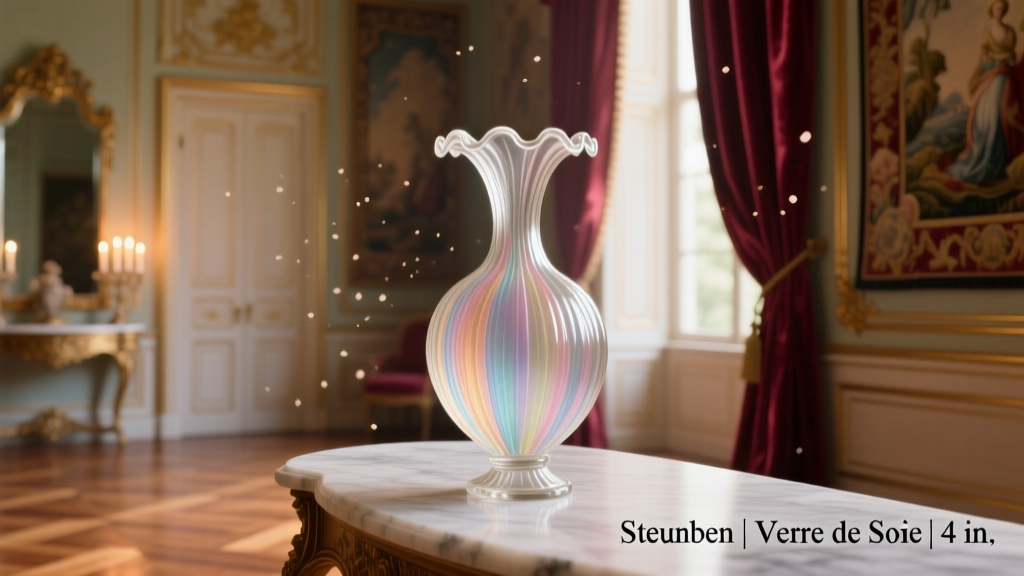
Steuben Vase: Scalloped Flared Rim, Verre de Soie Finish, Bulbous Form — A 4-Inch Masterpiece of American Art Glass
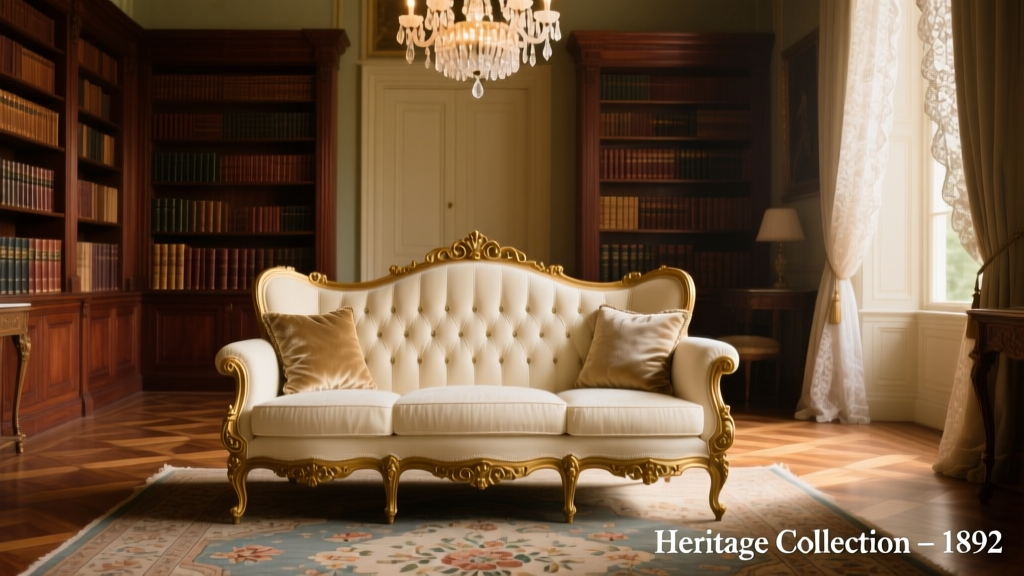
Vintage Heritage 9 Ft Cream Couch: Authentic Identification, Structural Integrity Assessment, and Conservation-Focused Restoration
Colonial Homestead Platter by Royal China: A Detailed Appraisal of the Green 12-Inch Dinnerware Piece
Cambridge Glass Decagon Plate in Salad Green: A Collector’s Guide to the 8¼-Inch Pattern
The Toy Truck Coal Noisemaker Crank Giant: History, Mechanics, and Restoration of a Mid-Century American Icon
Fischer Figurine: Three Dancing Men (11-Inch) — History, Identification, and Conservation Guidance
Howard Pierce Figurine: Roadrunner in Gray, 12½ Inches — Identification, History, and Restoration Guidance
Toy G.I. Joe Jouncing Jeep: A Rare Artifact of Mid-Century American Play Culture and Mechanical Artistry
The Nathan Seip 1848 Coverlet: A Masterpiece of Pennsylvania German Weaving and Historical Provenance