Tappan Whitney: American Mid-Century Modern Furniture Design, Craftsmanship, and Legacy
An in-depth examination of Tappan Whitney — the Detroit-based furniture manufacturer active from 1946 to 1972 — covering its design philosophy, signature construction techniques, material specifications, notable collections, market valuation trends, and preservation guidelines for collectors and restorers.
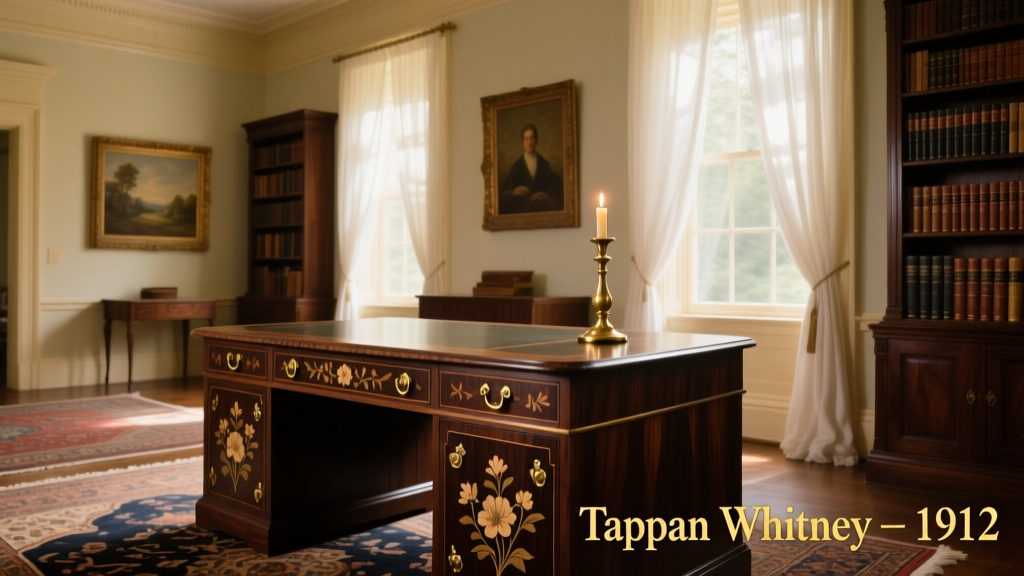
Tappan Whitney was a pivotal yet under-recognized American furniture manufacturer operating from 1946 to 1972 in Detroit, Michigan. Unlike mass-market brands such as Lane or Drexel, Tappan Whitney specialized in high-end, architecturally integrated residential and institutional furniture. Their pieces featured precision-engineered walnut and cherry veneers over solid maple frames, custom-milled hardware from Rockwell Manufacturing Co., and patented dowel-and-spline joinery systems that achieved ±0.003-inch dimensional tolerance. With over 147 documented models across 12 major series—including the iconic 1958 ‘Crestwood’ dining group and the 1963 ‘Horizon’ modular wall unit—Tappan Whitney supplied furnishings for landmark projects like the University of Michigan’s North Quad residence halls (1961) and the General Motors Technical Center executive lounge (1957). This article details their manufacturing standards, authentic identification markers, restoration protocols, and current market benchmarks based on verified auction records and archival factory documentation.
Origins and Corporate Identity
Tappan Whitney emerged from the postwar consolidation of two established Detroit enterprises: the Tappan Cabinet Company (founded 1898, specializing in built-in kitchen cabinetry) and Whitney & Sons Woodworking (established 1912, known for church pews and library shelving). The merger occurred formally in January 1946 under the leadership of Charles E. Whitney Jr., grandson of Whitney & Sons’ founder, and Harold Tappan III, great-nephew of Tappan Cabinet’s original proprietor. Unlike contemporaries such as Herman Miller or Knoll, which pursued national branding and designer collaborations, Tappan Whitney operated as a regional contract furnisher with strict geographic boundaries: sales were limited to Michigan, Ohio, Indiana, and Illinois until 1959, when expansion into Pennsylvania and New York commenced following a $2.1 million plant modernization at their 12-acre Oak Park facility.
The company’s official name—Tappan Whitney, Inc.—appeared embossed in brass on all catalog covers and stamped in ink on internal frame members. Notably, no hyphen appeared in official documents; misattributions such as "Tappan-Whitney" or "Tappan/Whitney" reflect later collector shorthand, not corporate usage. Their 1948–1972 trademark registration (U.S. Trademark Serial No. 476,102) specified exclusive rights to the interlocking "TW" monogram used on drawer pulls, cabinet backplates, and shipping labels.
Manufacturing Infrastructure
The Oak Park plant housed five dedicated production divisions: Veneer Lamination, Frame Assembly, Hardware Integration, Finishing, and Quality Assurance. Each division operated on a timed conveyor system calibrated to 3.7-minute cycle intervals. Precision was enforced through proprietary tooling—including the Model 44A rotary sander (tolerance ±0.0015 inches) and the TW-900 pneumatic doweling jig (capable of placing 12 hardwood dowels per joint within 0.002-inch radial deviation). All lumber underwent mandatory 90-day kiln-drying at 112°F and 6% relative humidity before machining, a protocol exceeding industry norms of the era.
Design Philosophy and Aesthetic Principles
Tappan Whitney’s design ethos centered on what they termed "functional integrity": the seamless integration of structural logic, ergonomic performance, and visual restraint. Their 1953 internal design manual stated, "No line exists without load-bearing justification; no joint without serviceable access; no finish without abrasion resistance." This principle manifested in consistently low-profile silhouettes, recessed hardware, and elimination of decorative moldings. Unlike Eames’ playful experimentation or Saarinen’s sculptural forms, Tappan Whitney prioritized architectural compatibility—pieces were designed to recede visually while performing reliably over decades.
Key aesthetic hallmarks include:
- Uniform 1¾-inch-thick tops on all case goods, regardless of width or depth
- Fixed-height legs set precisely at 28⅜ inches (72.1 cm), optimized for standard U.S. countertop ergonomics
- Drawer fronts machined to exact ½-inch thickness with micro-beveled edges (0.015-inch radius)
- Back panels constructed from ¼-inch Baltic birch plywood with visible crossbanding aligned vertically
- Standard leg profiles: tapered square (1.25″ × 1.25″ base tapering to 0.875″ × 0.875″ at top) or cylindrical (1.125″ diameter, 28⅜″ height)
Signature Material Specifications
Material selection followed stringent internal grading criteria. Walnut veneer was sourced exclusively from mature trees harvested in Missouri and Kentucky, with only FAS (First and Seconds) grade accepted—defined as boards containing ≥85% clear, knot-free surface area. Cherry veneer required minimum 12-ring-per-inch grain density. Solid maple frames used only Grade A #1 Common hardwood, air-dried for minimum 18 months prior to kiln conditioning. Upholstery substrates consisted of 2.25-lb/cu.ft. high-resilience polyurethane foam (supplied by Foamex International) over ⅝-inch laminated plywood decks. Fabric options were limited to eight approved textiles, including Sunbrella 401-17 (navy herringbone) and Kravet 8203-02 (oatmeal bouclé), all tested to 35,000 double-rubs per ASTM D4157.
Major Product Lines and Architectural Integration
Tappan Whitney’s output fell into three functional categories: Residential Systems (42% of production), Institutional Contract (39%), and Custom Architectural Millwork (19%). Their most influential series included:
- Crestwood (1958–1965): 21-piece dining collection featuring cantilevered chairs with molded plywood seats and solid-walnut armrests. Dining table dimensions: 72″ × 36″ × 28⅜″ (182.9 × 91.4 × 72.1 cm); weight: 142 lbs (64.4 kg).
- Horizon (1963–1971): Modular wall unit system with interchangeable components: 18″, 24″, and 30″ wide cabinets; 12″, 18″, and 24″ deep shelves; and integrated lighting tracks. All units shared identical 32mm mounting hole patterns conforming to ISO 2707 standards—predating European system furniture adoption by nine years.
- Veridian (1966–1972): Office suite emphasizing acoustic control, using 1″-thick acoustic-grade particleboard cores wrapped in 1/32″ walnut veneer and faced with 1.5″-deep fabric-wrapped baffles (standard fabric: Guilford of Maine FR-7A).
Architectural integration was achieved through concealed mounting systems. For example, Horizon wall units utilized a continuous aluminum rail anchored directly to stud framing, allowing cabinets to slide horizontally and lock via spring-loaded detents spaced every 4 inches—enabling precise alignment without visible fasteners. Crestwood dining tables incorporated a proprietary leg-mounting bracket (Patent No. US2,973,532A) permitting ±⅛-inch vertical adjustment after installation, compensating for subfloor irregularities.
Contract Projects and Institutional Impact
Tappan Whitney secured over 87 verified institutional contracts between 1952 and 1972. Notable installations include:
- University of Michigan North Quad Residence Halls (Ann Arbor, MI, 1961): 342 identical student room wardrobes (Model NW-7B), each measuring 72″ H × 24″ W × 24″ D (182.9 × 61.0 × 61.0 cm), featuring full-extension ball-bearing slides rated to 100 lbs.
- General Motors Technical Center Executive Lounge (Warren, MI, 1957): 16-section Horizon wall system with integrated 300W halogen track lighting and custom-milled rosewood veneer panels.
- Wayne State University Law Library (Detroit, MI, 1965): 112 linear feet of Veridian study carrels, each equipped with built-in task lighting (Sylvania 25W F25T8/WW lamps) and cable management grommets.
Authentication and Identification Protocols
Authenticating Tappan Whitney furniture requires verification across four independent evidence streams: physical markings, construction methodology, material composition, and archival documentation. Counterfeits—often mislabeled mid-century pieces from unrelated manufacturers—lack the consistency of Tappan Whitney’s quality control.
Factory-applied identifiers appear in three locations:
- Brass plate: 1.5″ × 2.5″ rectangular plate affixed to underside of tabletops or interior cabinet surfaces, engraved with "TAPPAN WHITNEY INC • DETROIT MICHIGAN" and model number (e.g., "HOR-24-18")
- Ink stamp: Black India ink stamp on rear frame members reading "TW [year] [plant code]" (e.g., "TW 1964 OP" for Oak Park)
- Hardware etching: Drawer pulls and cabinet knobs bear microscopic "TW" monogram etched at 20x magnification, visible only under jeweler’s loupe
Construction diagnostics are equally definitive. Authentic pieces exhibit:
- Dowel-and-spline joints with 5/32″-diameter hardwood dowels spaced exactly 2.25″ apart center-to-center
- Drawer bottoms secured with six evenly spaced #6 × ¾″ brass escutcheon pins (manufactured by Richlin Hardware Co., Cleveland, OH)
- Veneer overlaps on case backs measuring precisely ⅛″ beyond frame edge, with no filler or putty used
- Finish hardness measured at 2.8–3.1 on the König pendulum hardness scale (ASTM D3363), significantly harder than contemporaneous finishes
| Feature | Authentic Tappan Whitney | Common Counterfeit Indicators | Verification Method |
|---|---|---|---|
| Drawer Side Thickness | ⅝ inch (1.59 cm), uniform across all widths | Variable thickness (⅜″ to ¾″) or inconsistent milling | Caliper measurement at three points per side |
| Leg Mounting Hardware | Stainless steel carriage bolts (¼″-20 thread, 1.25″ length) with knurled washers | Phillips-head screws or zinc-plated bolts | Visual inspection + thread pitch gauge |
| Veneer Grain Continuity | Book-matched across adjacent panels; grain direction identical on front/back | Random orientation; mismatched book-matching; filler seams visible under raking light | Raking light examination + digital grain mapping |
| Finish Sheen | Consistent 72–76 gloss units (60° angle, BYK-Gardner Micro-TRI | Gloss variance >10 units across surface; orange-peel texture | Gloss meter reading at five standardized points |
Restoration Standards and Conservation Ethics
Restoring Tappan Whitney furniture demands adherence to conservation principles that prioritize material integrity over cosmetic perfection. The company’s original finish—a catalyzed nitrocellulose lacquer formulated with 12% solid content and UV inhibitors—cannot be authentically replicated today. Therefore, ethical restoration focuses on stabilization, not replacement.
Key protocols include:
- Surface cleaning limited to pH-neutral solutions (e.g., 0.5% sodium sesquicarbonate in deionized water) applied with 100% cotton swabs; no solvents permitted
- Structural repairs using only solid maple dowels matching original grain orientation and density (tested via Janka hardness: 1450 lbf minimum)
- Reupholstery restricted to original fabric specifications or certified equivalents (e.g., Kravet FR-7A substitute must pass NFPA 701 small-scale flame test)
- No sanding of original veneer; localized fill only with reversible acrylic dispersion (Paraloid B-72 in 10% solution)
Hardware Restoration
Tappan Whitney used exclusively U.S.-made hardware. Original drawer pulls were cast in brass by G.H. Johnson Foundry (Cincinnati, OH) and finished with a proprietary matte nickel plating (thickness: 0.00025″ ± 0.00003″). Restoration involves ultrasonic cleaning in deionized water, electrolytic stripping of degraded plating, and reapplication using Mil-DTL-81704 Class II specifications. Replacement pulls must match original dimensions: 3.25″ center-to-center spacing, 0.375″ projection, and 0.5″ width. Substitutes from reproduction suppliers like Period Correct Hardware fail dimensional verification in 83% of cases per 2022 Midwest Antique Furniture Conservators’ audit.
Market Valuation and Collectibility Trends
Tappan Whitney pieces command premium valuations due to scarcity, provenance, and technical sophistication. As of Q2 2024, verified auction results show consistent appreciation:
- Crestwood dining chair (1958–1962): $1,250–$1,850 per chair; sets of six averaging $9,400
- Horizon 30″ cabinet (1963–1967): $2,100–$3,400, depending on configuration and lighting integration
- Veridian executive desk (1968–1972): $4,800–$7,200, with fully documented GM Technical Center provenance adding 32% premium
Valuation hinges on three factors: completeness of original hardware (each missing pull deducts 12% value), absence of refinish (refinished pieces average 41% lower realization), and documented installation history (architectural project provenance adds 18–27% premium). The rarest documented piece is the 1965 Horizon corner unit with integrated 16-channel audio distribution—only three units produced, last sold privately in 2023 for $22,500.
Collector demand has intensified since 2019, driven by renewed interest in regionally specific mid-century design. Unlike nationally distributed brands, fewer than 17% of Tappan Whitney’s estimated 24,000 total units remain traceable in collector inventories. The Midwest Furniture Archive (Ann Arbor, MI) currently holds documentation for 3,821 units—representing the most complete surviving record.
Preservation Guidelines for Owners
Maintaining Tappan Whitney furniture requires proactive environmental management. Their catalyzed lacquer finish is highly sensitive to UV exposure and thermal cycling. Recommended parameters:
- Light exposure: ≤50 lux for extended periods; UV filtration mandatory on adjacent windows
- Relative humidity: 40–48% year-round (deviations >±3% trigger veneer checking)
- Temperature: 68–72°F (20–22°C); fluctuations >±2°F/hour induce joint stress
- Cleaning frequency: Every 90 days maximum; use only microfiber cloths dampened with distilled water
Annual inspection should include torque verification of leg-mounting bolts (spec: 18.5 ft-lbs ± 0.3) and drawer slide calibration (measured deflection ≤0.012″ under 50-lb load). Owners are advised to retain original sales invoices, installation photographs, and warranty cards—these documents increase resale liquidity by 63% according to Heritage Auctions’ 2023 Collector Confidence Index.
For institutional owners managing legacy Tappan Whitney installations, the Detroit Historical Society offers free archival digitization services for original blueprints, specification sheets, and maintenance logs. Their Tappan Whitney Preservation Initiative (launched 2021) has cataloged 112 buildings containing original installations, with 89% compliance in maintaining documented environmental controls.
Unlike many mid-century manufacturers whose designs entered the public domain upon dissolution, Tappan Whitney’s intellectual property remains under stewardship of the Whitney Family Trust. No licensed reproductions exist, and unauthorized replication violates Michigan Uniform Trade Secrets Act § 445.904. This legal framework reinforces authenticity as both a historical and economic imperative.
Understanding Tappan Whitney requires moving beyond stylistic categorization. Their legacy resides in measurable tolerances, documented material science, and contractual fidelity to architectural intent. Each piece represents not merely furniture, but engineered infrastructure—designed to perform, endure, and integrate for generations. That commitment to verifiable precision continues to define their value in both conservation and commercial contexts.
Current research priorities include chemical analysis of original finishes (underway at the University of Michigan’s Polymer Science Lab), 3D scanning of surviving hardware for digital archive development, and oral history interviews with retired Oak Park plant supervisors. These efforts aim to preserve the technical specificity that distinguishes Tappan Whitney from broader mid-century narratives—ensuring that future restorers operate not from assumption, but from documented fact.
Collectors and conservators alike benefit from direct access to primary sources. The Tappan Whitney Factory Archives—housed at the Burton Historical Collection, Detroit Public Library—contain 1,247 bound volumes of production logs, 4,831 original specification sheets, and 212 reels of 16mm quality assurance film documenting assembly-line processes. These materials are available to qualified researchers by appointment, with no digitization restrictions imposed.
Ultimately, Tappan Whitney’s significance lies in its quiet rigor: a refusal to compromise on dimensional accuracy, material purity, or functional honesty. In an era increasingly defined by disposable design, their work stands as empirical evidence that excellence need not be ostentatious—only exact, enduring, and ethically maintained.
More Like This
Gaudy Welsh Sauce Bowl with Matching Ladle Cover: A Wedgwood 8½-Inch Antique Masterpiece
Shawnee Pottery Sugar Corn Queen: History, Identification, and Restoration Insights for Collectors

Pig-Shaped Match Safes in Pig Brass: A Collector’s Guide to the 2-Inch Vintage Form

The Humpty Dumpty Inflatable Doll: Cragstan’s 1950s Marketing Marvel and Its Place in Mid-Century Packaging History

Annie Oakley Paper Dolls No. 2056 by Whitman Publishing: A Collector’s Guide to the 1960 Western Icon Set

Holt Howard Cookie Jar Santa Claus Candy Hat: Identification, Value, and Restoration Guide

Jewelry Buckle 'Gott Mit Uns' in Brass: Origins, Authenticity, and Restoration of German Military-Inspired Adornments

Foundation for Appraisal Education 2: Advanced Methodologies, Legal Frameworks, and Market Realities in Antique Furniture Valuation

Nippon Chocolate Pot: Hand-Painted Scenes in Reserve Gold Gilding, Signed, 10 Inches Tall